
The Concept of Analytics

I start just about all my Power Point presentation trying to get a sense of where the audience is with their comprehension of analytics.

Per Wikipedia, the definition of analytics is simply the discovery and communication of meaningful patterns in data.

1508982_603376689807778_4892012849582809050_n

While most people have an idea of what analytics is: data, analysis, metrics, and business intelligence are just the start… it is an abstract concept that is difficult to summarize in a sentence or two.

Most business leaders know that they need more analytics based decision making in their operations, however few have figured out how to obtain it as analytics software or engaging high priced consultants doesn’t suffice.

This approach is more about empowering analytical thinking then it is teaching a technological skill. I have found that being able to harness the power of analytics is as much an art as it is a science. In the end, analytics is about three things; finding data, analyzing it and communicating the results.

Over the next several blog posts, I will take the core slides of my standard Introduction to Analytics Power Point and share the content here.

When I think of analytics and what it can do to empower people, companies and ideas, I always think of this quote:

“Far better is it to dare mighty things, to win glorious triumphs, even though checkered by failure… than to rank with those poor spirits who neither enjoy nor suffer much, because they live in a gray twilight that knows not victory nor defeat.”  – Theodore Roosevelt
Training, Training, Training, There Is No Other Solution

The the longer I am here in the Philippines, working in the BPO industry, the clearer this concept becomes.

As of today, there are over 2,000 analyst jobs available on jobstreet.com.ph

If you take all the students enrolled in all the recently analytics centric courses imagine that wouldnt even fill up 1/4 of the open slots.

So when I saw this image…

707022c7-f35e-4427-91c0-653a382a3689-medium

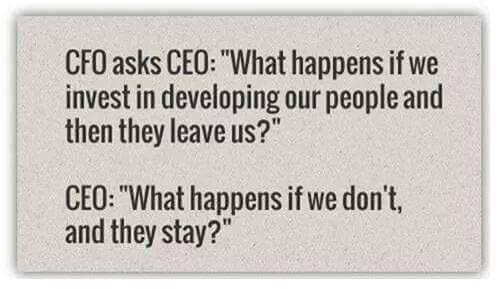
I’m immediately thinking this is where so many decision-makers continue to get it wrong… you HAVE to invest in training your own people and/or training near hires. If you keep trying to pirate someone, you are just making the problem worse.

You end up with a mix of undertrained (and undermotivated) lifers and job-hoppers ready to take off as soon as something that pays more comes along.

Preparing For Your Interview… Here Are Some Things To Consider

https://www.linkedin.com/pulse/recruitment-interview-skills-awareness-survey-results-preater

Came across this interesting article that seems to tie into something we have found to be true. Most candidates fail the interview because they are classified as either unprepared and/or nervous.

“There are many things that can let a candidate down on the day and the most common cause, as stated many, many times, is lack of preparation. Listening skills, asking interesting questions and being negative about a former or current employer were also popular subjects raised over and over.”

Preparation can cover quite a range of activities:

  • Personal Appearance
  • Punctuality
  • Company Knowledge
  • Relating ones skills to the job
  • Knowledge of the job

Personal Appearance has become so downplayed in recent years, especially in the call center industry where candidates rarely even get to a level of business casual. When someone does dress up, it really stands out. It’s a real competitive advantage that few take advantage of. Plus its simple psychology… when you dress up you act up and when you dress down you play down.

practice

Punctuality is another old school interview skill that seems to have gone by the wayside and has a devastating impact on candidates. So often little merit is placed on being on time, which means the candidate is rushing once they realize they will not make the appointed time. Then they are frazzled and not in a calm state when they interview. Plus the interviewer is perturbed. Never a good way to get the ball rolling in your favor.

This is a no brainer, but still in this day and age of easy to access knowledge, more than half the candidates who come across my desk have not studied up on the company. It shows such total lack of respect it’s a 100% guarantee of interview failure. And for the candidates it usually means the first of many empty answers.

Relating ones skills is something you think most candidates would be doing when they read the job posting. But often I find they just read what they wanted to read and not what was actually there. So there is a big mismatch between candidate and employer expectations. Never a good way to show you are prepared for the interview, lets alone worthy of being trusted with a job.

Knowledge of the job is often another issue and here in BPO land, the biggest one I see if people who want to work in a call center, but really don’t enjoy speaking English. See my previous blog for my thoughts on this one.

So, one of the things we are doing in our training classes is coaching candidates on how to be successful interviewees. If nothing else, at least they are given insights into how to pass the interview, something that 90% of our initial applicants are failing to do.

Conversational English > That Elusive Skill Stopping So Many Call Center Careers From Getting Started

Learning a foreign language is tough for most of us. I took two years of Spanish in high school and didnt try very hard. I got average grades and really didnt pick up a lot. Then I spent six months in Japan, immersed in Japanese culture and picked up it very fast… didn’t learn how to write much, but my conversational Japanese became passable.

Three years into living in the Philippines and my Tagalog is ok, I can follow along most conversations but still struggle with pronunciation because most of my day is spent speaking English.

English-Only-Please-499x728

Conversational expertise in a language is really hard if you don’t have the chance to speak the language everyday. And that brings us to the topic at hand. Conversational English as a requirement for call center employment.

There is such irony in the fact that so many Filipinos want to work in a call center because it means good, stable pay and benefits. But proportionally so few Filipinos really want to push themselves to learn how to master Conversational English. In a land deeply connected to the U.S. and awash in American culture… many Filipinos only speak English when forced too.

When they get into the application process for call center jobs, they fail because even though they understand English and have had years of English language study, they just havent spoken it enough to pass the interview.

So to all those who try and fail, to all those trainees who keep trying and to all the future applicants… the only way to secure that well paying job with good benefits is to practice. Force yourself to speak as much English as possible.   Always love Tagalog and keep speaking it, but practice, practice, practice…  English Only Please!