

http://www.talentedphilippines.com/
Came across this new book and just ordered it. Im pretty excited about it.
In a nutshell… Talented Philippines answers critical questions for multinational corporations currently operating in, expanding or establishing operations in the Philippines.
Some of the key questions tackled in the book:
What are the critical business issues for multinationals in the Philippines?
What are the key talent management implications?
How have the Philippine’s best organizations addressed those challenges?
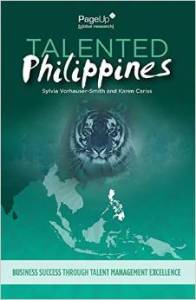
Talented Philippines was created to address the critical business and HR issues impacting the Philippines today as the country continues to transform. Based on the responses of more than 650 business and HR practitioners at the forefront of HR innovation, thought leadership and implementation in the country, the book explores the people management priorities across small, medium and large enterprises operating in the Philippines. Combined with numerous case studies that highlight the experiences of leading organizations and insight from a wide cross-section of public and private sector enterprises, Talented Philippines offers global best practices for multinational companies looking to leverage the great promise of this flourishing nation and its talented workforce.
This is well timed as the last year has seen a quickening of the talent war in the Philippines as the issue of a skills mismatch between job seekers and employers has really come to a head. It is a must read for anyone involved in the BPO industry in the Philippines.
However, there is one thing that based on what I see so far, is missing form this book. The fact that no matter how awesome a company’s HR practitioners are… they are still trying to find talent when it is truly lacking in a natural state. As a companion piece to this book, would be solid advice on how, when, where and why to invest more in training… especially pre-hire training and training geared towards internal advancement.
No matter how great an HR team is, they still have to get the right people in the door to apply and that seems to be the issue… because even in country of 90 million there is just not enough Filipinos with the skill sets and/or aptitude for a BPO career right now. The demand will only be met if the supply is given more training, more preparation and more data to make good career decisions.

If you like this book, you will probably enjoy my new book as well. Putting Your Data to Work is a guidebook designed to help Filipinos get started with building a good analytics culture in their business. Connect with me if you are interested in purchasing a copy for only 600 PHP.
HR & Recruitment Analytics – The recruitment and retention of top talent is the biggest challenge facing just about every organization. DMAIPH is a leading expert in empowering HR & Recruitment teams with analytics techniques to optimize their talent acquisition and management processes. Contact DMAIPH now at analytics@dmaiph.com or connect with me directly to learn how to get more analytics in your HR & Recruitment process so you can rise to the top in the ever quickening demand for top talent.


 Decision-Making, Analytics & Intelligence > Philippines