“The best way to predict the future is to create it.”

The future can be a scary and uncertain place. But rather than simply trying to predict what might happen, what if we took a more active role in shaping the future ourselves? 

We have the power to shape our own destinies, and the best way to do so is by taking action in the present. Rather than passively waiting for the future to unfold, we can actively work towards creating the outcomes we want to see.

This mindset is particularly relevant in today’s fast-paced, rapidly changing world. By focusing on what we can control and taking concrete steps towards our goals, we can help shape a future that aligns with our values and aspirations.

Whether it’s in our personal lives, our careers, or our communities, we all have the power to make a difference. By taking action today, we can help ensure a better tomorrow for ourselves and those around us.

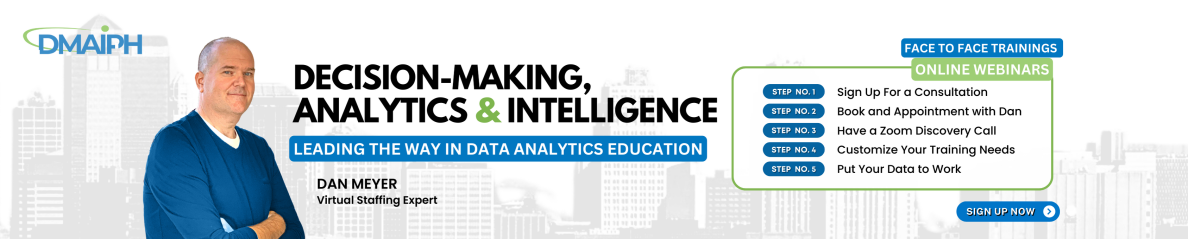
Daniel Meyer is the head of Sonic Analytics, an analytics firm that has been in the Big Data industry for over 20 years and has offices in Manila, the San Francisco Bay Area, and Ocala, Florida. He is an accomplished author, public speaker, and business expert specializing in virtual staffing and process automation.

Dan is known for providing big data analytics solutions, including business intelligence and data storytelling, to small businesses seeking to improve their use of data, virtual staffing, and technology. He strongly believes in using analytics for civic responsibility, and offers training, consulting, and education to promote this advocacy.

With his experience in training over 10,000 Filipinos, Dan is passionate about empowering the youth with valuable skills, such as graphic design, video editing, and data analytics. His objective is to equip them with the necessary abilities to harness the dynamic employment opportunities that lay ahead for millions of Filipinos.

The Top Industries in the Philippines Benefiting from Analytics

Data analytics is a powerful tool that can help organizations across a wide range of industries to make better business decisions. In the Philippines, there are several key industries that are benefiting from the use of data analytics. 

Banking and Finance – Data analytics is helping banks and financial institutions to better understand their customers, manage risk, and improve profitability. By analyzing customer data, banks can identify patterns and trends, personalize their offerings, and detect fraud.

Healthcare – In the healthcare industry, data analytics is helping to improve patient outcomes and reduce costs. By analyzing patient data, healthcare providers can identify risk factors, personalize treatments, and optimize resource allocation.

Retail – Retailers are using data analytics to gain insights into customer behavior, preferences, and purchasing patterns. This information is being used to optimize product offerings, marketing strategies, and store layouts.

Telecommunications – The telecommunications industry is leveraging data analytics to improve network performance, customer service, and product offerings. By analyzing network data, telecom providers can identify areas where service is poor and take corrective action.

Manufacturing – In the manufacturing industry, data analytics is being used to optimize production processes, reduce waste, and improve quality control. By analyzing production data, manufacturers can identify bottlenecks, optimize workflows, and reduce costs.

Overall, data analytics is transforming industries across the Philippines by providing powerful insights and enabling better decision-making. As more and more organizations begin to adopt data analytics, we can expect to see even greater impact across a wide range of industries in the coming years.

Get ahead of the competition by learning from one of the best in the industry. Book Daniel Meyer for a speaking engagement in your company and start improving your data analytics skills now.

Daniel Meyer is the head of Sonic Analytics, an analytics firm that has been in the Big Data industry for over 20 years and has offices in Manila, the San Francisco Bay Area, and Ocala, Florida. He is an accomplished author, public speaker, and business expert specializing in virtual staffing and process automation.

Dan is known for providing big data analytics solutions, including business intelligence and data storytelling, to small businesses seeking to improve their use of data, virtual staffing, and technology. He strongly believes in using analytics for civic responsibility, and offers training, consulting, and education to promote this advocacy.

With his experience in training over 10,000 Filipinos, Dan is passionate about empowering the youth with valuable skills, such as graphic design, video editing, and data analytics. His objective is to equip them with the necessary abilities to harness the dynamic employment opportunities that lay ahead for millions of Filipinos.

Data-Driven Success: 5 Key Metrics Call Centers Need to Track

Data analytics is playing an increasingly important role in optimizing call center operations. By analyzing key metrics, call centers can identify trends, pinpoint areas for improvement, and take corrective action to ensure they are providing a positive customer experience.

  1. First Call Resolution (FCR) – Data analytics can help call centers identify the reasons why customers call back, allowing them to take corrective action to reduce call volumes and improve FCR rates.
  1. Average Handle Time (AHT) – Data analytics can break down AHT into different components, such as talk time, hold time, and after-call work time, to identify areas where efficiency can be improved.
  1. Customer Satisfaction (CSAT) – Data analytics can help call centers understand the factors that drive customer satisfaction, such as agent performance, wait times, and issue resolution rates. This information can be used to take corrective action and improve CSAT scores.
  1. Abandoned Call Rate (ACR) – Data analytics can identify patterns and trends in call volumes and ACR rates, allowing call centers to take corrective action to reduce ACR and improve customer experience.
  1. Service Level – Data analytics can track and analyze call volumes, allowing call centers to ensure they are properly staffed to meet service level targets.

By leveraging data analytics, call centers can optimize their operations and improve the overall customer experience. Tracking these key metrics and using data to inform decision-making can lead to more efficient and effective call center operations.

Ready to take the first step in upskilling your employees? Schedule a speaking engagement with Daniel Meyer today and discover the benefits of data analytics for your business.

Daniel Meyer is the head of Sonic Analytics, an analytics firm that has been in the Big Data industry for over 20 years and has offices in Manila, the San Francisco Bay Area, and Ocala, Florida. He is an accomplished author, public speaker, and business expert specializing in virtual staffing and process automation.

Dan is known for providing big data analytics solutions, including business intelligence and data storytelling, to small businesses seeking to improve their use of data, virtual staffing, and technology. He strongly believes in using analytics for civic responsibility, and offers training, consulting, and education to promote this advocacy.

With his experience in training over 10,000 Filipinos, Dan is passionate about empowering the youth with valuable skills, such as graphic design, video editing, and data analytics. His objective is to equip them with the necessary abilities to harness the dynamic employment opportunities that lay ahead for millions of Filipinos.

“Without data, you’re just another person with an opinion.”

Opinions are a dime a dozen, and everyone has one. But when it comes to making informed decisions and solving complex problems, opinions alone just don’t cut it. That’s where data comes in.

In today’s world, where information overload is a constant threat, it’s more important than ever to rely on data to guide our actions. By collecting, analyzing, and interpreting data, we can gain insights that we might otherwise miss, and make decisions that are based on evidence rather than just intuition.

So the next time you find yourself forming an opinion, ask yourself: what data do I have to support this view? And if the answer is “none”, it might be time to step back, gather some information, and approach the issue from a more data-driven perspective.

Remember, without data, we’re just another person with an opinion. But with good data, we have the power to make informed decisions and create positive change in the world.

Show your support by liking and sharing this post!

Daniel Meyer is the head of Sonic Analytics, an analytics firm that has been in the Big Data industry for over 20 years and has offices in Manila, the San Francisco Bay Area, and Ocala, Florida. He is an accomplished author, public speaker, and business expert specializing in virtual staffing and process automation.

Dan is known for providing big data analytics solutions, including business intelligence and data storytelling, to small businesses seeking to improve their use of data, virtual staffing, and technology. He strongly believes in using analytics for civic responsibility, and offers training, consulting, and education to promote this advocacy.

With his experience in training over 10,000 Filipinos, Dan is passionate about empowering the youth with valuable skills, such as graphic design, video editing, and data analytics. His objective is to equip them with the necessary abilities to harness the dynamic employment opportunities that lay ahead for millions of Filipinos.

Challenges and Opportunities in the Data Analytics Landscape in the Philippines

The Philippines is rapidly emerging as a key player in the global data analytics industry, driven by a growing pool of skilled talent, strong government support, and an increasing demand for data-driven insights across various sectors. However, like many emerging markets, the country faces a range of challenges that could hinder its long-term success in this field. 

Increasing Demand. Data analytics is experiencing a surge in demand in the Philippines, driven by the growth of the country’s business process outsourcing (BPO) industry, which has a significant presence in the data analytics space. The sector is projected to grow at a compound annual growth rate (CAGR) of over 20% in the coming years.

Talent Availability. The Philippines boasts a growing pool of highly skilled data analytics professionals, thanks in part to strong government support for education and training initiatives in the field. However, the talent shortage remains a challenge, with the need for more highly skilled data analysts and scientists continuing to outpace supply.

Technology Adoption. While many Philippine companies have recognized the importance of data analytics, they are still in the early stages of adoption, with many relying on basic analytics tools and techniques. A lack of advanced technology infrastructure and resources is a major challenge for companies looking to leverage data analytics for business insights.

Data Security and Privacy. As more companies in the Philippines collect and analyze large volumes of data, ensuring the security and privacy of this information has become a top priority. Regulatory compliance and data protection laws have also become more stringent, requiring companies to implement robust data protection measures.

Competition. The Philippines faces strong competition from other emerging markets, such as India and China, which have also made significant strides in the data analytics space. In order to stay competitive, Philippine companies must continue to invest in talent development, technology infrastructure, and data protection measures.

Clearly, the data analytics industry in the Philippines is experiencing rapid growth and is expected to play an increasingly important role in the country’s economic development. However, the industry faces several key challenges, including talent shortages, technology adoption, data security and privacy, and competition from other emerging markets. Addressing these challenges will be critical for the long-term success of the industry and its contribution to the Philippine economy.

Don’t miss out on the opportunity to learn from Dan’s extensive knowledge in process automation. Contact us now to schedule a speaking engagement in your company.

Daniel Meyer is the head of Sonic Analytics, an analytics firm that has been in the Big Data industry for over 20 years and has offices in Manila, the San Francisco Bay Area, and Ocala, Florida. He is an accomplished author, public speaker, and business expert specializing in virtual staffing and process automation.

Dan is known for providing big data analytics solutions, including business intelligence and data storytelling, to small businesses seeking to improve their use of data, virtual staffing, and technology. He strongly believes in using analytics for civic responsibility, and offers training, consulting, and education to promote this advocacy.

With his experience in training over 10,000 Filipinos, Dan is passionate about empowering the youth with valuable skills, such as graphic design, video editing, and data analytics. His objective is to equip them with the necessary abilities to harness the dynamic employment opportunities that lay ahead for millions of Filipinos.

5 Reasons Why Data Analytics is Critical for Call Center Operations Success

Data analytics is becoming increasingly important in call center operations as companies seek to improve customer experience, increase efficiency, and stay ahead of the competition. By leveraging data analytics tools and techniques, call centers can gain valuable insights into customer behavior, employee performance, and operational processes that can help drive strategic decision-making and improve overall performance.

  1. Improving Customer Experience 

By analyzing customer data such as call transcripts, feedback forms, and social media interactions, call centers can gain a better understanding of customer needs and preferences. This information can then be used to tailor customer interactions and improve overall customer experience.

  1. Optimizing Staffing Levels

Call centers can use data analytics to forecast call volumes and staffing requirements, ensuring that the right number of agents are available to handle incoming calls at all times. This can help reduce wait times, increase first-call resolution rates, and improve overall customer satisfaction.

  1. Reducing Operational Costs

Data analytics can help identify inefficiencies in call center operations, such as long call times, high transfer rates, or frequent call escalations. By addressing these issues, call centers can reduce costs associated with employee overtime, missed targets, and customer churn.

  1. Enhancing Quality Assurance

By analyzing call recordings and other performance metrics, call centers can identify areas where agents may need additional training or coaching. This can help improve the quality of customer interactions and reduce the number of customer complaints.

  1. Driving Strategic Decision-Making

By leveraging data analytics, call centers can gain a deeper understanding of their operations and identify opportunities for improvement. This can help drive strategic decision-making, improve overall performance, and stay ahead of the competition.

In conclusion, data analytics is a critical tool for call center operations, providing valuable insights that can help improve customer experience, optimize staffing levels, reduce operational costs, enhance quality assurance, and drive strategic decision-making. Call centers that embrace data analytics are better positioned to succeed in today’s competitive business environment.

Visit sonicanalytics.com to learn more about how big data analytics solutions can help improve your business. Contact us today to schedule a speaking engagement for Dan in your call center.

Daniel Meyer is the head of Sonic Analytics, an analytics firm that has been in the Big Data industry for over 20 years and has offices in Manila, the San Francisco Bay Area, and Ocala, Florida. He is an accomplished author, public speaker, and business expert specializing in virtual staffing and process automation.

Dan is known for providing big data analytics solutions, including business intelligence and data storytelling, to small businesses seeking to improve their use of data, virtual staffing, and technology. He strongly believes in using analytics for civic responsibility, and offers training, consulting, and education to promote this advocacy.

With his experience in training over 10,000 Filipinos, Dan is passionate about empowering the youth with valuable skills, such as graphic design, video editing, and data analytics. His objective is to equip them with the necessary abilities to harness the dynamic employment opportunities that lay ahead for millions of Filipinos.

“Good data allows us to see the world as it really is, not as we imagine it to be.”

In today’s fast-paced world, where data is generated at an unprecedented rate, it is crucial to have accurate and reliable data to make informed decisions. Data analytics plays a vital role in helping us understand the world by providing meaningful insights that aid in decision-making processes.

Overall, data analytics is a powerful tool that enables us to make informed decisions, revealing the reality of the world around us. It allows us to move beyond assumptions and perceptions to see the world as it truly is, empowering us to make meaningful changes that can lead to progress and growth.

If you found this post valuable, please like and share it with your network!

Daniel Meyer is the head of Sonic Analytics, an analytics firm that has been in the Big Data industry for over 20 years and has offices in Manila, the San Francisco Bay Area, and Ocala, Florida. He is an accomplished author, public speaker, and business expert specializing in virtual staffing and process automation.

Dan is known for providing big data analytics solutions, including business intelligence and data storytelling, to small businesses seeking to improve their use of data, virtual staffing, and technology. He strongly believes in using analytics for civic responsibility, and offers training, consulting, and education to promote this advocacy.

With his experience in training over 10,000 Filipinos, Dan is passionate about empowering the youth with valuable skills, such as graphic design, video editing, and data analytics. His objective is to equip them with the necessary abilities to harness the dynamic employment opportunities that lay ahead for millions of Filipinos.

Why A Global Framework on AI Ethics Matters For The Future Of Technology

Artificial intelligence (AI) has revolutionized the way we live, work, and interact with each other. However, with great power comes great responsibility. The rapid advancement of AI technologies has raised ethical concerns worldwide, prompting UNESCO to call on all countries to fully implement its Recommendation on the Ethics of Artificial Intelligence without delay.

  • UNESCO’s global normative framework is the first of its kind, providing comprehensive guidelines on the ethical use of AI. The framework is intended to guide countries on how to maximize the benefits of AI while minimizing the risks it entails. It includes values and principles, as well as detailed policy recommendations in all relevant areas.
  • One of the key concerns raised by UNESCO is the issue of discrimination and stereotyping, including gender inequality. With AI systems being trained on historical data, they can replicate the same biases and inequalities present in the data, leading to discriminatory outcomes. Additionally, the fight against disinformation, the right to privacy, and the protection of personal data are also critical issues that need to be addressed.
  • While the industry has attempted to regulate itself, it has become apparent that self-regulation is not sufficient to avoid these ethical harms. Thus, the Recommendation provides tools to ensure that AI developments abide by the rule of law, avoiding harm, and ensuring that when harm is done, accountability and redressal mechanisms are at hand for those affected.
  • At the core of UNESCO’s guidance to Member States is a Readiness Assessment tool. This tool helps countries ascertain the competencies and skills required in the workforce to ensure robust regulation of the AI sector. It also provides that the States report regularly on their progress and their practices in the field of AI, in particular by submitting a periodic report every four years.
  • So far, more than 40 countries in all regions of the world are already working with UNESCO to develop AI checks and balances at the national level, building on the Recommendation. UNESCO is leading a movement to build an ethical AI and calls on all countries to join this movement. A progress report will be presented at the UNESCO Global Forum on the Ethics of Artificial Intelligence in Slovenia in December 2023.

As AI continues to evolve and become more prevalent in our daily lives, it is crucial to ensure that it is used ethically and responsibly. The implementation of UNESCO’s global framework on the ethics of AI will go a long way in ensuring that AI is developed and used in a manner that is aligned with the values and principles of humanity. It is incumbent upon all governments to fully implement this framework without delay to maximize the benefits of AI while minimizing its risks.

Don’t forget to hit the share button and share this post with your followers!

Daniel Meyer is the head of Sonic Analytics, an analytics firm that has been in the Big Data industry for over 20 years and has offices in Manila, the San Francisco Bay Area, and Ocala, Florida. He is an accomplished author, public speaker, and business expert specializing in virtual staffing and process automation.

Dan is known for providing big data analytics solutions, including business intelligence and data storytelling, to small businesses seeking to improve their use of data, virtual staffing, and technology. He strongly believes in using analytics for civic responsibility, and offers training, consulting, and education to promote this advocacy.

With his experience in training over 10,000 Filipinos, Dan is passionate about empowering the youth with valuable skills, such as graphic design, video editing, and data analytics. His objective is to equip them with the necessary abilities to harness the dynamic employment opportunities that lay ahead for millions of Filipinos.

Revolutionizing Customer Satisfaction with Data Analytics: 5 Proven Tips

Customer satisfaction is a crucial element for the success of any business because satisfied customers are more likely to remain loyal and recommend your business to others. 

You can leverage data analytics to improve customer satisfaction levels since it is an effective way to identify areas of improvement and areas of strength in your business operations.

  1. Collect feedback from multiple sources.

In addition to customer feedback surveys, it is essential to collect feedback from other sources such as social media and customer reviews. Analyzing data from multiple sources can provide a comprehensive understanding of customer satisfaction levels.

  1. Use the right metrics.

There are different metrics that can be used to measure customer satisfaction. It is essential to choose the right metrics that align with your business goals and customer needs. For instance, Net Promoter Score (NPS) measures customer loyalty and likelihood to recommend your business.

  1. Analyze customer feedback data regularly.

Analyzing customer feedback data on a regular basis can help businesses identify patterns and trends. Regular analysis also allows for quick identification of any emerging issues.

  1. Identify the root cause of issues.

When analyzing customer feedback data, it is crucial to identify the root cause of any issues. Doing so enables businesses to take specific actions to address the issue, rather than just treating the symptoms.

  1. Take action on insights.

The ultimate goal of analyzing customer satisfaction metrics is to identify areas for improvement and take specific actions to address them. Businesses must have a clear action plan to address any issues identified through data analysis.

By following these five tips, you can help your business provide better customer experiences, retain loyal customers, and attract new ones.

Ready to take the first step in upskilling your employees? Schedule a speaking engagement with Daniel Meyer today and discover the benefits of data analytics for your business.

Daniel Meyer is the head of Sonic Analytics, an analytics firm that has been in the Big Data industry for over 20 years and has offices in Manila, the San Francisco Bay Area, and Ocala, Florida. He is an accomplished author, public speaker, and business expert specializing in virtual staffing and process automation.

Dan is known for providing big data analytics solutions, including business intelligence and data storytelling, to small businesses seeking to improve their use of data, virtual staffing, and technology. He strongly believes in using analytics for civic responsibility, and offers training, consulting, and education to promote this advocacy.

With his experience in training over 10,000 Filipinos, Dan is passionate about empowering the youth with valuable skills, such as graphic design, video editing, and data analytics. His objective is to equip them with the necessary abilities to harness the dynamic employment opportunities that lay ahead for millions of Filipinos.

“The most valuable commodity I know of is information.”

In today’s fast-paced and ever-changing business landscape, having access to the right information can make all the difference. With the explosive growth of data in recent years, we’re now able to gather more information about our businesses and customers than ever before. The key is knowing how to leverage this information to gain a competitive advantage. By analyzing data and identifying patterns and trends, you can make better decisions, optimize your processes, and stay ahead of the competition. In other words, information is power – and the more information you have at your disposal, the greater your potential for success. So make sure you’re equipped with the right tools and strategies to harness the power of data and stay ahead of the game.

Book Dan for a speaking engagement in your company today and discover how his expertise in data analytics can help take your business to the next level.

Daniel Meyer is the head of Sonic Analytics, an analytics firm that has been in the Big Data industry for over 20 years and has offices in Manila, the San Francisco Bay Area, and Ocala, Florida. He is an accomplished author, public speaker, and business expert specializing in virtual staffing and process automation.

Dan is known for providing big data analytics solutions, including business intelligence and data storytelling, to small businesses seeking to improve their use of data, virtual staffing, and technology. He strongly believes in using analytics for civic responsibility, and offers training, consulting, and education to promote this advocacy.

With his experience in training over 10,000 Filipinos, Dan is passionate about empowering the youth with valuable skills, such as graphic design, video editing, and data analytics. His objective is to equip them with the necessary abilities to harness the dynamic employment opportunities that lay ahead for millions of Filipinos.