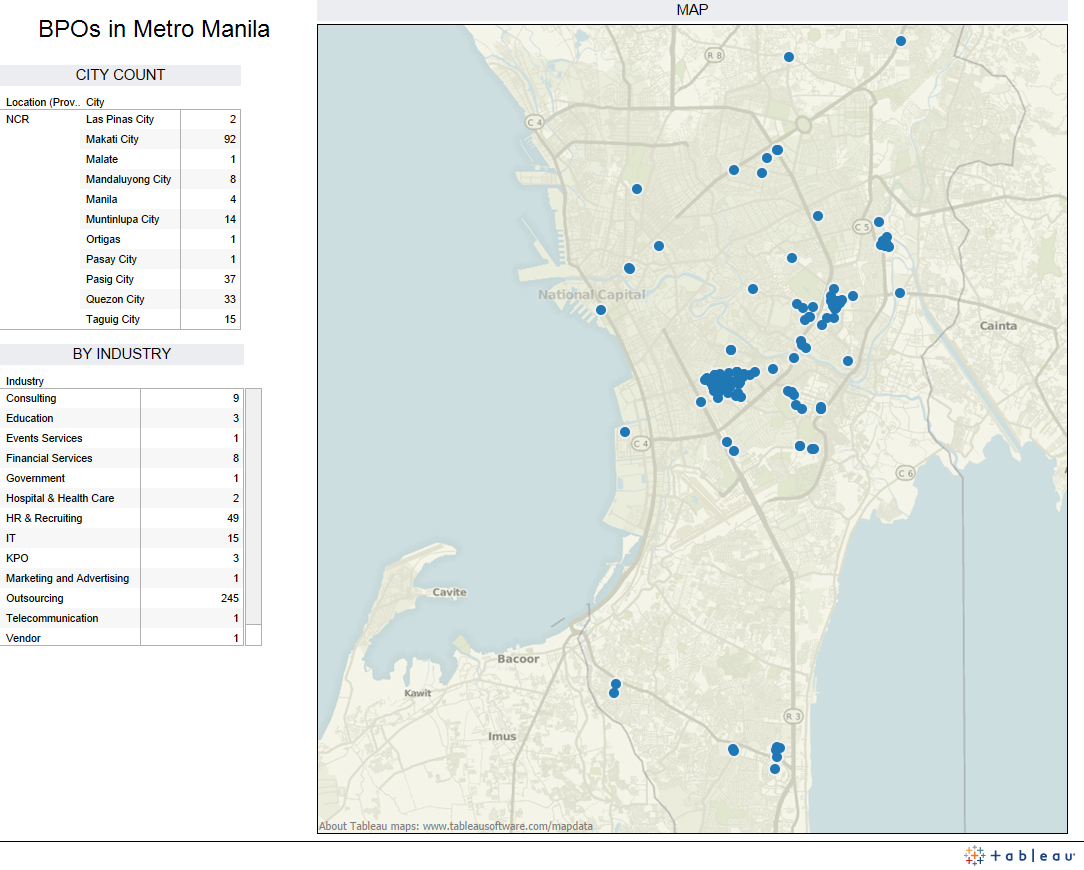
Is Analytics more an art or is it more a science? 1 of 3

PrintRecently, a friend of mine replied to a post asking me for more details about how I would analyze and mitigate risk in a business…. “the details are a little thin. As a former professor of business decision science, I would like to read more about the model building tools and techniques of how you do it.”

My reply was “That’s a great question Chris. As a blogger I try to not go into too much detail in these posts as most of my audience is relatively unfamiliar with concepts like Big Data, Business Intelligence Applications and Predictive Analytics. That said, I can think of a couple of ways to reply to your comment. I often say that Analytics is as much an art as it is a science. So, I will craft two blog response one for the artists and one for the scientists.” And then I will conclude with my own unique approach to analytics.

So let’s tackle the science angle first. In corporate and academic circles, analytics is looked at primarily as a science. You have millions of pieces of data, you take that data and you analyze it and then you use the analysis in your decision-making. There is a lot of science in this approach.

I often say that in the past two days we have created more data than we created in the entire history of human existence up to the past few years. This is big data… it’s mostly unstructured and its challenging to manage. It takes an understanding of how data is collected, stored, accessed and disseminated. This is why analytics usually starts with the IT team. They manage the databases that do all these things. SO as a scientist, you need to have a lab… in most cases this is a database or data warehouse. How easy is it to identify, inventory and integrate data in your business? Does you lab contain all the raw materials you need for your experiments?

Once you have your data, you need tools to analyze it, to look for patterns and discover new opportunities or to identify risks. There are many instruments you can use like a scientist uses a microscope. Excel is the most common, but there is an ever-growing number of analytics tools that you can use to glean more intelligence from your business. Some of the tools are very complicated and require a lot of training, other are free and can be learned in a matter of hours. SO as a scientist, you need to use the right tool at the right time to get just the analysis you need. What kind of tools are you using for analysis? What kind of tools are you using for reporting and sharing information? If you are using excel to design Powerpoint Decks to share via email, then I have news for you…. you are headed towards joining the dinosaurs. πŸ™‚

And the final part that to me is the most scientific… applying the tools. There many methodologies out there about decision-making. You are starting to see a lot more college and post-graduate course work in decision-making… this is what my friend Chris is talking about in his comment. Having the materials and the tools are no good if you don’t have tried and tested ways of using them so you can trust the results of your analysis. If you want to get into predictive analytics to try to guess right about sales trends or market direction, you need to have a lot of science on your side.

Most businesses struggle having the analytics in place to fully understand where they have been and where they are now. Getting into a science driven way to predict the future requires data, tools and methodologies that you traditionally only find in big companies that invest in well-trained and/or educated professionals. When you have that then you can really benefit from the science side of analytics.

However, are you just as well versed on the art side of the equation? And what if your business doesn’t have the capability of investing in the same things the big boys use? How can you maximize the art side of things? Let’s talk about that in our next blog!

Learnings from a friend’s “Elements of a Losing Culture”

http://fortune100coach.wordpress.com/2013/08/26/elements-of-a-losing-culture/#comment-202

I just read my good friend and mentor Bjorn’s blog post and it made me think about how closely tied a business culture is to the analytics used in that business. Bjorn posted, “Success leaves clues and so does its opposite. Reality checks are important so we can tell where we are and properly assess what needs to be done. When we can’t seem to find the clues indicating a successful culture it’s time to look for its opposite.”

Let’s look at that comment from an analyst’s prospective. One of the clues I look for in a successful organization is an understanding of how decisions are made. Are they top down? Are the inclusive? And most importantly to me, how much data is analyzed prior to making decisions. For the most part great companies make great decisions and this feeds a successful and healthy culture. When decisions are made off the cuff, with little input from the ranks and without the benefit of good data… you get a recipe for a losing culture.

Bjorn mentions several other indicators of a Losing Culture. I want to add some data driven perspectives to them as well.

1. Lack of clear target, vision, etc. Having good metrics to monitor progress. Setting goals and then reporting and communicating them. There are key ways you can measure if a business has a healthy focus.

2. Lack of alignment. People don’t know how to compare themselves or even worse improve themselves. There is no sense of the big picture and little effort to work across business lines or help other teams. You need a lot of visualization of data and analysis to show how it all fits together. Dashboards and internal web sites, using visualizations like info graphics and data visuals can help people feel aligned and give them a sense of where they fit in.

3. Lack of authenticity. Know if your customers care. Knowing if your employees care about your customers and each other. Knowing if you stack up well with the competition. Knowing what about your business causes others pain and what causes satisfaction. Using surveys, focus groups and other tools to gather feedback will help your business be authentic to your customers and your employees. You cant really have loyal and engaged customers if you don’t come across to them as authentic.

To learn more about Bjorn and his consulting business, you can follow him here: http://fortune100coach.wordpress.com/

An Analyst’s Take on Five Simple Steps to Digital Marketing

555293_579974032048154_626723703_nMy good friend and trusted business partner, Boom san Agustin recently shared an info graphic on Facebook about the five key steps to marketing a business online. As you can see it a simple, yet powerful plan to get your business in front of not only a bigger audience, but a more engaged audience.

Besides actually following this recipe step by step, I thought it also important to add what kind of analytics you should have behind each of the steps.

1. Design and launch a website to establish your brand. I see two-way to do some solid analysis here before taking step one.

Frist, do an assessment of what you want to do with your site. There are hundreds of free or inexpensive tools to design and launch a web presence. It’s easy to through a site, but how much will it cost long-term, who will maintain it, do you plan on processing transactions thru the site? Your website should be at the center of your strategic plan and should be a living part of your business.

Second, unless you use a hosting service that provides analytics internally, look into google analytics. Its is one of the most powerful analytics tools out there. Make sure your hosting service is compatible as the free web site analytics tools Google offers are quite powerful. You need to pay a lot of attention to the metrics behind your site. What pages aren’t getting the traffic you suspected? Where do browser spend the most time? Which pages do they leave your site from?

2. Create a blog.

Ideally you can combine the two so your website and your blog are either the same or are easily connected so you don’t have to double your workload in sharing content. Again, I strongly suggest you look for hosting sites and/or blog sites that have built-in analytics. WordPress has some very strong analytics tools built into the free blog hosting site. You want to quickly and easily know what posts are the ones that generate the most engagement.

3. Get followers.

Having easy ways to get followers is important. Most web site and blog site platform have widgets that allow you to get followers via Twitter, Facebook, etc. Maximize these. And then set up a strategy. Try and post your blog on certain sites at certain times. For example if you target market for your business is students.. .then posting your blog during the middle of the school day is not a good plan. Instead set up your posts (either manually or with an auto post feature) to make sure the content is delivered when they are most often online… late afternoon or early evening.

4. Select Media.

You need to really think again about who your market is and what media they use the most. There are again very powerful analytics tools built-in to Facebook, YouTube, etc that will tell you the demographics of who is following you and who is viewing and most importantly sharing your posts. Your social media sites should complement each other and you can use social media management tools like Hootsuite to make sure your message is consistent.

5. Engage your community.

This is where you need to really pay attention to the data. You can easily see which types of content attract the most attention. And you want to encourage feedback and sharing. Make sure you enable your followers to become your unofficial sales force or brand ambassadors by allowing them to talk about your business more than you do. And make sure you set goals to drive traffic and then offer incentives. You can really start getting a sense of your ROI (return on investment) when you have solid analytics take come from your core business users.

As you can see, having a good digital marketing strategy is one thing, but having one that is data-driven and that takes full advantage of analytics tools is 10x better!

Please follow my friend Boom and his company Our Knowledge Asia!

https://www.facebook.com/ourknowledgeasia

Analysts Can Be Leaders Too!

MSP24321b65h584fd76h9i00006996g957h01de5g6Borrowing some of this from the Blog Post “Are you an Analyst? Here is something that could impress your boss.”
August 18, 2013 4:21 pm Published by Cory Bray

“Business Intelligence tools increase the value of analyst contributions while making work more interesting.
A common strategy these days for growing companies is to hire financial, sales, or operations Analysts to help find ways to better accomplish corporate goals. The job description for these types of roles often includes some type of report design and development, analysis of these reports, and planning around the decisions to be made as opportunities are uncovered as a result of the analysis. I know numerous people who hold these rules, and most of them have one thing in common: They spend a tremendous amount of time on tasks that are not necessary given the technology available today.”

This is so very true in the Philippines. So few people with the word analyst in their title or analysis in their job description are truly empowered to be critical thinkers. They are not generally enabled to let their curiosity lose and discover things that can be significant business opportunities. Most analysts are simply left with running reports and passing these reports off to management or doing basic encoding or fixing things when they break.

Bray continues, “Many people who supervise Analysts were once analysts themselves. However, these supervisors likely worked in a different technological era, and they may not be aware of some of the ways that those long nights of building Excel models and PowerPoint presentations can be made more efficient with modern tools.
Any Analyst who spends 20+ hours a week in front of Excel, relies on IT to gather data to be analyzed, or works with tools that require any type of programming to generate simple reports should be briefed on the new wave of Business Intelligence.”

In a lot of organizations in the Philippines you still see analytics in the realm of IT and not embedded in various business lines like Marketing, HR & Recruitment, Business Development or Strategy. The end users of analytics are not the ones dreaming about what they need, creating the analysis and zeroing in on exactly what they need. Modern Business Intelligence tools like Tableau, Qlikview or Yellowfin among others, allow analysts to:
β€’ Spend less time gathering and structuring information, which allows for more time to conduct analysis and make decisions. This crucial to enable quicker decision-making so that its timely and relevant.
β€’ Conduct analysis that physically cannot be done in tools like Excel, which leads to more valuable insights. Excel is still the primary tool of 95% of analysis and so many insights are being missed.
β€’ Eliminate roadblocks and minimize the need to wait for others to take action.

DMAI is leading the charge to empower analysts to be proactive. Take the initiative and get out on the cutting edge by using free tools and resources like Tableau Public or Piktochart to visual data, provide deeper analysis and lead business towards more data-driven decisions!

Follow our various social media sites and be part of the analytics revolution that will soon sweep the Philippines!

> Facebook >>> https://www.facebook.com/dmaiph
> YouTube >>> http://youtu.be/blx8IuHsmCA
> LinkedIn >>> http://ph.linkedin.com/pub/dan-meyer/4/771/675
> WordPress >>> https://dmaiph.wordpress.com/
>Twitter >>> https://twitter.com/BPOElite1

Sharing Some of My Favorite LinkedIn Groups about the Philippines

Here are some of my favorite LinkedIn Groups that relate to living in and running a business in the Philippines. I try to follow the discussions and actively post comments and new discussion several times a week. LinkedIn is an amazing tool to stay current on things important to you and your business.

Philippines Call Center Professionals – lots of good info about current trends and issues
http://www.linkedin.com/groups?home=&gid=2130497&trk=anet_ug_hm

EXPAT PHILIPPINES – a great place to network and learn how to deal with common challenges
http://www.linkedin.HR Philippines com/groups?home=&gid=1483687&trk=anet_ug_hm

HR Philippines – an excellent source for recruitment and HR trends and hot button topics
http://www.linkedin.com/groups?home=&gid=992347&trk=anet_ug_hm

Filipino Professionals for 1stWorldPhilippines.com Movement – The name Says it all!
http://www.linkedin.com/groups?home=&gid=21601&trk=anet_ug_hm

The Philippines Sourcing Council – A good combination of contributors
http://www.linkedin.com/groups?home=&gid=96615&trk=anet_ug_hm

Philippine Society for Learning and Performance – A great group of professional opinions
http://www.linkedin.com/groups?home=&gid=3897230&trk=anet_ug_hm

Why the Philippines? Q+A

539735_206746759470775_461235919_nRecently I received a LinkedIn message regarding my blog series about my 13 months living and setting up a business in the Philippines. The message contained some pretty good questions so I thought the best way to answer it would be to share the conversation with you.

Q: I’m always curious to hear why people have chosen the Philippines over other countries to start a business in?

A: From my perspective, the Philippines is a truly phenomenal place to be right now. I ask everyone is there any country today in a better position to make such significant and long lasting positive changes in the very fabric of the country? Being the home of some many overseas workers and their remittances, being the call center capital of the world, be positioned close to some of the biggest markets in the world and blessed with a unique connection to the United States are just some of the reasons. Its on the verge of something truly special. You can feel it where you are there. So for professional reasons that’s why I decided to move there and set up a business. There are even more personal reasons why I love the Philippines, but that’s a different question.

Q: Even given some of the press around about the difficulties with traffic, weather, corruption?

A: They are all significant challenges that can indeed hinder growth. However, I think the Philippines is being forced to evolve as a nation by some key demographics that make its growth unavoidable. The average being 23, the level of English taught and used, the culture of embracing work either coming from or going to the rest of the world. The traffic is a nightmare in Manila, but you are seeing a lot of growth in the provinces as a result. The weather is a problem, but the county is big enough and the important economic drivers are diverse enough to weather major calamities. Corruption is a huge problem, but its getting better. It is being addressed at all level of society and progress is being made. I survived getting stuck in traffic on EDSA, caught in flood waters up to my waste and forced to pay a fixer to get some things done faster and none these things lesson my confidence in the Philippines.

Q: From a business perspective, I see a growing trend in being able to provide customized types of products and services. Are niche businesses offering customized products and services viable?

A: When I compare the challenges of setting up a small business and taking your product/service to the market, its 10x easier than it is in the U.S. There challenges are very different. In the Philippines your success will depend on who you know and how your business identity is perceived. You have to but a lot more effort into making connections and making sure everyone is happy and engaged. There is a lot of bureaucracy that goes with setting up a business there so it’s key to have the right connections to smooth things out.

Q: I am looking to recruit some people to do some web design work. Is it better to look for established workers or go with college age students.

A: I tend to go with younger, less proven talent in most cases. This goes against conventional wisdom in the Philippines. I have noticed that in general Filipinos place a higher value on certifications and accomplishments than most. And the school systems push out a lot of graduates with similar training and skills sets. Conformity and coloring within the lines is expected for most white collar jobs. The more time spent in this rigid system the harder it is to find someone who thinks outside the box. So going with the whole I prefer to train a blank slate versus having to untrain someone who is already programmed. However, the flipside is they will probably need more supervision and direction then someone with experience.

Q: I would love to hear more about which things you would do differently second time around.

A: To quote one of the most quoted saying of all time… β€œI shall return!” And when I do I will make these three significant changes in my approach. (1) I will be more hands on with the people I hire. I will not micromanage like many do, but I will be more active in empowering and teaching successful work habits to the people on my team. (2) I will be more frugal in my expenses. I overspent a lot on things because I was charged foreigner prices. Having a Filipino negotiate things for you is key. (3) I will live more like a Filipino and less like a foreigner. By the time I left I took Jeepneys and Buses more often than taxis. I was eating more Filipino food from small vendors and avoiding high priced meals at chains in the mall. Things like that go a long way in both making you fit in a little more and saving you a lot of money.

I am always happy to share my insights and experiences. I hope that helps!

3 Great Tips for Blog Writing!

Sharing this really useful article from a blog I follow…

http://www.joeseeber.com/how-to-write-articles-for-blogs/

How To Write Articles For Blogs

A big mistake that most bloggers make when writing articles is having big blocks of text, Aka, massive paragraphs.

Having big blocks of text, aka massive paragraphs, makes it hard for the reader to read and it discourages people from reading your content.

Because here’s the deal…

When viewers see massive paragraphs, they tend to feel overwhelmed with the amount of information they will have to consume… and most of the time people will choose to not read it all or just skim through the article…

…rather than investing the time to actually read it.

And on top of that, with massive blocks of text, people will make the decision right then and there whether to read your article, just by looking at the structure of the post.

Just take a look with how my article is set up… is this starting to make sense?

Have you ever looked at someone else’s blog post and just by the way it looked… it made you make a conscious decision not to read it?

Think about it.

Size 14 Font Is The New 12.

see link to continue: How To Write Articles For Blogs

http://www.joeseeber.com/how-to-write-articles-for-blogs/

13 Months in the Philippines – Lesson 13 – May 2013 – Exit Plans

Lipa City, Batangas, Philippines

At the end of April, I set a line in the sand. If we couldn’t line up enough co-marketed trainings and consulting gigs by the middle of the month, I would pull up stakes and head back to the US for a while. As the days went on we had several set backs as a key marketing partner decided to cancel the four training dates we had set up in May and a couple of potential consulting clients decided to wait on our training. In looking at expenses as well as several pressing personal issues it became pretty clear by the middle of the month that it was time for another change.

In looking at the amount of money we would need to keep things going versus the short-term revenue options the analytics suggested taking a pause and trying again once we have more capital. A lot of companies use data and analysis to look at where they’ve been, but not as many use analytics to help predict behavior. I think any solid predictive analytics exercise would suggest that there is a lot of money to still be made doing what we started. The market is there. The need is there. The raw talent is there. It’s just a matter of a better plan with more dedicated partners.

At about the same time, my partners also decided to officially disband BPO Elite. It has kind of just hung our there as an empty shell since October. I occasionally used the name and identity for people who new me as the man behind BPO Elite before I launched DMAI. It was a pretty sobering day to say the least when two years of work came to an end. However, it severed its purpose. It opened up doors, it allowed me to have the time of my life and it helped a lot of trainees achieve their dreams of finding jobs.

So after 13 months, I got on a plane and headed back to the United States a man who will never have to say he didn’t go all in for the sake of chasing his dream.

Little did I know, the labor and hard work of these past 13 months laid a foundation that would soon led to some amazing opportunities to come back and try it all again.

Analytics Tool > Business Intelligence Applications > http://www.gatner.com

Analytics Concept > Predictive Analytics > http://en.wikipedia.org/wiki/Predictive_analytics

YouTube Resource > http://www.youtube.com/watch?v=BjznLJcgSFI&feature=share&list=PL8D46F50D27222FD4

My Analytics Story – My passion is solving problems by bringing together the best talent, cutting edge technology and tried and true methodologies. DMAIPH is all about empowering people towards better Decision-Making through the use Analytics and business Intelligence. This is what I do best. Contact DMAIPH now at analytics@dmaiph.com or connect with me directly for a free consultation about getting more analytics into your career and your business.

13 Months in the Philippines – Lesson 12 – April 2013 – The Wheels Come Off

Picture1Quezon City, Metro Manila, Philippines

April 2012, was a tough month. The challenge with filling training classes continued. We had three staff members depart for other opportunities. I ended a six-month engagement with my top client. It was time to switch gears again. We needed to pivot towards doing more outsourcing and consulting and less training.

One good things to come out of April, was the Social Media Analytics Workshop we held for a group of trainees for one of our clients. We discovered some pretty good talent and were able to put together a good team of analysts with a large range of analytics skills and social media savvy. There are a plethora of social media analytics tools built-in to just about every significant social media site. We also learned that the Philippines is the most social media driven country in the world. There is a higher percentage of Filipinos are online and actively using social media that with any other country.

I also continued to blog almost daily as I had learned from a good friend, is the key to monetizing your online business. You need fresh content that is relevant and engaging. You have that and you feed it to your audience on a regular basis, you can then start making a profit off it. Blogging about analytics is a key tool for analysts that’s often overlooked. Most analysts stay embedded in their silo. They focus on the data at hand and they master how to identify, inventory and integrate it. They accumulate a wealth of experience and knowledge and many are blogging about it.

However, in this case it was too little too late. Due to a series of personal and professional challenges it was time to think about what to do if revenue didn’t pick up quickly.

Analytics Tool > Analytics Blog > http://www.wordpress.com

Analytics Concept > Social Media Analytics > http://en.wikipedia.org/wiki/Social_analytics

YouTube Video > http://www.youtube.com/watch?v=JQYOmQRhzhM&feature=share&list=PL8D46F50D27222FD4

My Analytics Story – My passion is solving problems by bringing together the best talent, cutting edge technology and tried and true methodologies. DMAIPH is all about empowering people towards better Decision-Making through the use Analytics and business Intelligence. This is what I do best. Contact DMAIPH now at analytics@dmaiph.com or connect with me directly for a free consultation about getting more analytics into your career and your business.