I Always Say… Data Science Is Just As Much Art As It Is Science!

“A data scientist is that unique blend of skills that can both unlock the insights of data and tell a fantastic story via the data.” … that’s a quote by DJ Patil, who is generally considered one of the world’s top data scientists.

The term data scientist has really taken off in the analytics world the past few years and the number of job postings, college courses and certifying bodies continues to rocket upwards. Here in the Philippines I am starting to see a number of analytics gurus using that title and have even started seeing some of the bigger BPOs look for skills sets inline with this type of title,

However, even the most veteran data geeks, have a hard time really determining what role data scientist can play in the BPO industry and to what level you can set up outsourcing team to do data science… aka analytics… aka data-driven decision-making. Its really, quite a wide open topic without a lot of clear guidance trickling down into the industry here.

That will change. And it will change quickly. The number of analytics trainings and data-centric conferences and college course geared towards data science careers is exploding. In fact i will be speaking at two of events of this kind later this month. One geared to college students looking into analytics careers and one for a cross section of practitioners looking for deeper understanding of the analytics environment.

To that end, I wanted to share a few visuals that I will be using in my presentations… both with a slant towards guiding students towards the right analytics career for them.

The first is a great visual showing the diverse skills a true data scientist needs to be awesome. Source: http://www.datasciencecentral.com/profiles/blogs/the-22-skills-of-a-data-scientist

ByugG_cIEAAL6wM

The second is a a great way to show what data geeks really need to become data rock stars. Source: http://www.datasciencecentral.com/profiles/blogs/are-you-a-data-scientist

MDL_P1_DS_1

Teamwork Is Not Easy… And Here Is Why

I came across a couple of visual yesterday on LinkedIn that made me think a lot about how complex it can be to have a group of people really working as a team.

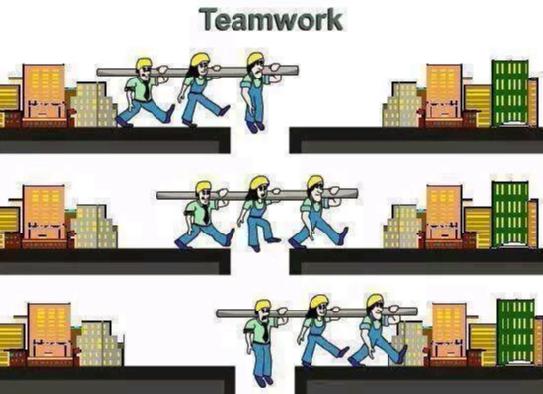
The first image is a pretty straightforward visual of how a people going in the same direction can help each other out in the common interest to complete a task.

69c586b0-e263-47e2-b2ca-aa9160e236ed-medium

Being able to count on your team mates to carry you though a rough patch, to help you avoid dangerous mistakes, to conquer a problem bigger then one person… so many concepts of teamwork can be drawn from a simple image.

But if the benefits of working a team and not a collection of individuals is so important, why do so many team fail?

This second image provides an illustration of all the character traits a person needs to be truly successful. Look how many of them have to do with how you interact with people on your team.

9e6004f6-2df2-11e4-a117-12313d239d6c-large

For a team to really work efficiently, its members have to be able to share both risk and reward, they have to be both comfortable and confident in who they are and they have to be willing to trust and take leaps of faith.

When you have a team full of people who like being on a team, you will be successful. On the other hand, when you have a team full of people who don’t really like being on a team, you will be a lot less successful.

Data Analytics and Its Application in the Academic Institution

Something I will be presenting at a conference coming up in October…

Over the past few years we have seen a dynamic shift in the way data analytics as a discipline is being matriculated by colleges and universities in the Philippines. Great leaps forward in the field of data analytics is under way through a combination of government, private industry and academic partnerships.

1234816_373956069428862_87094977201992094_n

Participants will be provided a comprehensive overview of the current and future state of data analytics in both the education system and the Philippines as a whole. Highlights will be shared using Tableau, one of the leading business intelligence software applications available. Focus will be given to how schools, companies and training programs are empowering graduates to hit the ground running as analysts.

The facilitator for this session is Daniel Meyer, President & Founder of DMAI, an analytics training, consulting and outsourcing company based in Ortigas. Mr. Meyer spent 15 years as a senior analytics consultant with Wells Fargo Bank in the U.S. and has a Master’s Degree in Education from Indiana University of Pennsylvania. For the past three years Mr. Meyer has conducted various data analytics trainings for hundreds of businesses, university students and young professionals here in the Philippines.

Check out the website to learn more: http://www.parssu.org/

Is Better Possible? This Question Drives Great Minds, Great Ideas and Great Companies!

http://sethgodin.typepad.com/seths_blog/2014/07/is-better-possible.html

Wanted to share another of my blogger hero Seth Godin’s recent blog posts as it relates to a couple of things I talk about a lot in my training and with my staff. Don’t settle for good, demand great!

“Is better possible? The answer to this is so obvious to me that it took me a while to realize that many people are far more comfortable with ‘no’.

The easiest and safest thing to do is accept what you’ve been ‘given’, to assume that you are unchangeable, and the cards you’ve been dealt are all that are available. When you assume this, all the responsibility for outcomes disappears, and you can relax.”

You see this all the time, people just don’t want to cause a scene. When faced with a policy that makes no sense they just abide instead of question. When asked if anyone has any questions, and they do, but they chose not to ask it out of fear of being embarrassed they keep in to themselves.

“Mostly, though, I’m surprised because there’s just so much evidence to the contrary. Fear, once again fear, is the driving force here. If you accept the results you’ve gotten before, if you hold on to them tightly, then you never have to face the fear of the void, of losing what you’ve got, of trading in your success for your failure.

And if you want to do this to yourself, well, I guess this is your choice.

But don’t do it to others. Don’t do it to your kids, or your students, or your co-workers. Don’t do it to the people in underprivileged neighborhoods or entire countries. Better might be difficult, better might involve overcoming unfair barriers, but better is definitely possible. And the belief that it’s possible is a gift.”

And this is at the core of why my training is so impact full and so many of my employees feel high levels of job satisfaction… because empowering people to believe better is possible goes hand in hand with empowering them to use data to make decisions. To be a great analyst you need to always ask yourself is there better data available, can I find a better way to analyze it and can I find a better way to communicate the findings.

10406025_10152524531307425_1404103117_n

Teaching A Person To Fish – The BPO Way

“Give a man a fish and you feed him for a day; teach a man to fish and you feed him for a lifetime.” This in one of the most famous quotes used when it comes to empowering others to become independent and self-sufficient.

The primary reason why I left my career at Wells Fargo and moved to the Philippines to set up a business was the opportunity I saw to be a once in a lifetime kind of thing. My goal to empower Filipinos with basic analytics and decision-making skills that they could use in careers in the BPO Industry plays to both my strengths and my passions.

I see the BPO Industry as the biggest pool to fish in for fresh graduates. They are young and healthy enough to survive the working at night lifestyle, they are fresh out of very structured work environments which most BPOs are and in general they have a least a basic level of English.

420

I see analytics and decision-making methodology as the pole they use to fish. By learning some basic terms, getting their hands dirty with some entry-level BI tools and by having an introduction to things like process improvement, they have head start over many other fresh grads and undergrads.

They can improve their fishing pole by mastering certain software and programming languages, but improving their English and by being mentored to look at a BPO job as the first step in a career not just a job they do for a while.

As time goes by, I hope more of my brethren in the BPO Industry took more time to think about how to teach their employees to fish and not just throw them on the phones and hope they sink or swim. Our recruitment and retention would be so much better if we were seen as a place to learn how to fish for a lifetime and not just feed their family for the day.

The Most Over Looked Metric In Recruiting

Which recruiting metric is most important to you?

This is something I am asked all the time and I generally go back to something I came across awhile ago. I have yet to find a better one…

“I am convinced that the most important metric and the only one I care to follow is; how long did the person I place stay with my client company? Are they still there, or did they leave? Were they promoted? Or were they Fired?”

Source: http://www.recruitingblogs.com/

10421381_626225777522869_8061177028338978985_n

So, the metric we should be interested in improving is that of the success and tenure of our placements. How long do they stay? How well liked are they? How well do they fit in with the rest of the team? Do they get promoted? This is the true test of “Added Value” which is why companies hire recruiters.

I have hired over 150 people over the past few years and many of the best ones are still going strong, so we must be doing something right. 🙂

If you need help in your recruiting process, DMAIPH can help! My expertise with recruitment analytics makes me uniquely qualified to help you measure your most important requirement metrics.

HR & Recruitment Analytics – The recruitment and retention of top talent is the biggest challenge facing just about every organization. DMAIPH is a leading expert in empowering HR & Recruitment teams with analytics techniques to optimize their talent acquisition and management processes. Contact DMAIPH now at analytics@dmaiph.com or connect with me directly to learn how to get more analytics in your HR & Recruitment process so you can rise to the top in the ever quickening demand for top talent.

All I Need To Know About Someone Is What Was The Last Book They Read

I’m not sure where I picked that concept up from, it’s probably a variation of a famous quote whose author escapes me. But for me there is a lot of truth to the statement. When you find out the last book someone read you can tell a lot about them. When you get them talking about it you can gain incredible insight into who they are and what motivates them.

In my case I picked up a book at the airport for my flight and to help me get into trainer mode. The book I picked up was Decisive, a business management and leadership book by the Heath brothers. It was on the top of a lot of 2013 lists and I had heard of it before. Once I started reading it, I quickly saw some key points I could roll into my next analytics training class.

Picture1

Here are some of the key points:

> Most decision are made in an instant and are often just a choice between two options.
> Although helpful, Pro and Con lists are limited in their effectiveness.
> Most business decisions, when looked at a few years later, were failures.

In the book the Decisive, the authors list four tips to help make better decisions:

1. Widen Your Options by eliminating factors that put artificial limits on our choices.

2. Reality-Test Your Assumptions by taking them out of our head and into the real world.

3. Attain Distance Before Deciding, which means don’t rush and gain other perspective.

4. Prepare to be wrong, the willingness to take risks is a challenge for all of us.

Its a great read, pick it up.

HR & Recruitment Analytics – The recruitment and retention of top talent is the biggest challenge facing just about every organization. DMAIPH is a leading expert in empowering HR & Recruitment teams with analytics techniques to optimize their talent acquisition and management processes. Contact DMAIPH now at analytics@dmaiph.com or connect with me directly to learn how to get more analytics in your HR & Recruitment process so you can rise to the top in the ever quickening demand for top talent.

Reflection Time > The Journey Of A Lifetime

As I sit here in the lounge awaiting my fight back to the US… for the 10th time in the past two plus year, I am enjoying the time to reflect on this journey.

1960033_10152334044802022_1470432615_n chili

In the past two years I have gone form working for one of the most stable companies in the world to seeing one start-up crash and burn in a very expensive thud and a second go from riches to rags to riches again. The lessons I have learned about how to set up a business are countless. The sleepless nights trying to figure out what to do tomorrow to inch towards success are countless. But I would not have traded this for anything. Its been the chance to really live my life to the fullest.

From training analysts to work in outsourcing to consulting with outsourcing companies to being an outsourcing company ourselves, DMAI’s journey and mine are closely entwined. I started with 1 employee who shared my passion and vision as we trained close to 200 people in the use of analytics. And that soon grew to a half dozen analysts on staff and from there to 16 and from there to 30+ and by the end of April we should be over 40. Add to that the hundreds of students I have spoken to about analyst careers and I have directly be involved in empowering and inspiring close to 1000 people in the past two years. That’s living the dream.

As with just about any start up story, our successes have come with great cost. Not everyone who started with us is here to enjoy the current success. Lots of money was spent. Lots of opportunities were missed. Lots of dreams did not catch fire as we had hoped. But now, as I reflect on our success and my own personal growth on this journey… I can honestly say… it was all worth it in the end.

No Matter How Much Training We Do, Will It Ever Be Enough?

http://blogs.wsj.com/searealtime/2014/03/13/poverty-is-stubborn-foe-in-philippines/

I came across this recent blog post from the Wall Street Journal and it matches a lot of my own observations about the economic realities of the Philippines. Having spent most of the past 2+ years here in the Philippines I have seen my own perceptions of the country’s amazing economic growth evolve from one of unbridled enthusiasm to one of more moderate expectations.

Just to go back a few years, I was at Wells Fargo and heavily involved in both remittances to the Philippines and outsourcing to the Philippines. I saw a lot of data about all time high remittance inflows at the same time we saw a huge shift as the Philippines passed India to become the call center capital of the world. Coupled with my visits to the Philippines, it seemed to be a perfect time to come here and set up a business.

So I came here, set up the business, started doing training and have been able to help quite a few Filipinos find there way towards analytics focused jobs. I’ve also been able to employ many as well. However, as time has gone by, I have also seen that my efforts (as well as so many well-meaning others) come up short in really making a difference. If you add up all the OFWs and all the BPO Employees that are driving more spending and more growth, its still not enough to move the Philippines out of the grasp of massive and disabling poverty.

1969361_436875143110396_1289407291_n

As the article points out, training is a key missing effort that despite many best efforts is still falling short. The talent gap between the job requirements and the available workers keeps growing faster then all the training and shifts in education can keep pace with.

When I read articles like this, I find myself wishing I could do more and I will keep doing as much as I can, but to be honest I have started to feel that people like me are just too few and far between to really make a difference. Don’t get me wrong, I still love what I do and am passionate to keep doing it… but I am a little less spirited and a little more cautious now then I was at the start of this journey.

I guess that’s my new found wisdom talking…

Five Trends I Shared With A Class Of Future Analysts

Just wanted to share my perspective on what I see as being five trends that future analysts here in the Philippines can jump on to help them get ahead of the competition as they look for their first job.

1966784_10152250706706628_1752784040_n

1. Finding Unstructured Data on the Internet
Most Data is Unstructured, meaning it’s not easily accessible and stored in an internal database. This goes against the conventional approach to analytics where you write a query to pull data from a big data warehouse and dump it into an analytics tool. For most analysts, trying to find unstructured data and then capture it and use it in decision-making is not easy.

2. Self Service Business Intelligence Tools
Business intelligence (BI) refers to computer-based techniques used in identifying, extracting, and analyzing business data, such as sales revenue, market opportunity or product performance. Self-service ones are easy to learn, sit on a desktop and have more power to do great analytics then a team of 10 IT Engineers did 5 years ago. My favorite BI tool is Tableau. Check it our at http://www.tableausoftware.com

3. Competitor Intelligence
Per Wikipedia, competitive intelligence is the action of defining, gathering, analyzing, and distributing intelligence about products, customers, competitors and any aspect of the environment needed to support executives and managers in making strategic decisions for an organization.Every successful business conducts competitor intelligence and uses this process in various ways. Some examples for a fast food chain might include:
> Pricing
> Product and Service Offerings
> Targeted Demographic Marketing
> Marketing Promotions
> Location Renovations and Expansions

4. Data Visualization
The main goal of data visualization is to communicate information clearly and effectively through graphical means. They say a picture is worth a thousand words. A good pie chart is worth 10,000 rows of data stored in a database. I often say what separates a good analyst form a great analysts, is the ability to easily communicate their findings in a way that makes it easy to exercise good decision-making.

5. Business Dashboards
Wikipedia’s definition of a business dashboard: “An easy to read, often single page, real-time user interface, showing a graphical presentation of the current status (snapshot) and historical trends of an organization’s Key Performance Indicators (KPIs) to enable instantaneous and informed decisions to be made at a glance.” That’s a mouthful, but if you are able to deliver all of these items in a single view, you are worth your weight in gold to an analytics savvy organization.

To learn more about analytics, DMAI and careers as an analyst in the Philippines, follow this blog and you will keep yourself on the cutting edge of all things analytics!