IBM’s SMART Approach to Analytics

Came across this 5 point methodology for applying analytics in a business… very similar to the 3 I’s that I use in my training. I’ll start using both going forward.

S=Start with Strategy
What problems do you need big data to help you solve? If you’re running a business you might think it’s as simple as “How do I increase my profits?” But a question like that is inevitably going to lead you to more questions.
How do you generate more sales? How do you increase visitors to your site or store? How do you make your customers happier?

In this first step you need to be clear about your strategic objectives as well as the key strategic questions you want to have an answer to. You need to have this nailed down before you worry about collecting your first kilobyte of data.

M = Measure metrics and data
Once you know what data you need to answer your most strategic business questions, you can work out how you are going to capture it. Everything we do, online and, increasingly, in the real world, is capable of being recorded and stored. If we visit a website, records are kept of how long we browse for and where we head off to next. GPS systems in our phones as well as CCTV surveillance keep track of our physical movements.

Of course much of it is (hopefully) anonymized. Big data collection isn’t about tracking individuals, it’s about tracking the masses, so patterns can be spotted giving clues to overall trends. This part of the process involves designing the actual systems that will collect what your strategy tells you is needed.

A = Apply analytics
Increasingly, we are finding that the sort of data which contains really valuable insights is very messy. The slightly more technical term we use for this is that it is unstructured data. The sort of neat and tidy data you get when, for example, you ask someone to fill in a form giving you their age, height, weight and data of birth, is structured. The sort of messy, disjoined data you get when you analyze the contents of an email exchange or CCTV recording is unstructured.

The hidden value in this unstructured data is where most big data divers are finding the real sunken treasures. If you’re a business, being able to spot trends affecting your industry before your competitors is what will give you your edge. In order to implement this part of the process you will need to get to grips with the ever-growing range of tools and methods becoming available for making sense of messy, complex data sets.

R = Report results
The most insightful insight ever is useless if you can’t explain what it means to the key decision-makers in your business. Presenting the information necessary to drive change in a clear and digestible format is as vital as any other step of the operation. This part of the process has analogies to storytelling. There will be a beginning, a middle and an end, detailing why you need the insights, what you did to find them, and how they will result in everyone living happily ever after.

If you use data visualization and narratives to tell that story in a focused and interesting way, it’s far more likely people will understand what you are trying to do, and be as motivated as you are yourself about implementing data-driven change.

T = Transform your business
Change—specifically positive change—is the ultimate aim. Transformations you make to your products, service, marketing strategies or internal processes, guided by insights from your Smart Big Data analysis, is the catalyst which will drive that change.

cropped-dmai-fb-cover-photo1.jpg

The Secrets of Money Ball Recruiting

http://youtu.be/6MStL5QIyCw

“There are rich call centers, with big budgets and huge recruitment teams. There are poor call centers with small budgets and just a few people. Then there is 50 feet of crap. And there is us.”

I conducted a Recruitment Analytics Training yesterday and shared one of my methodologies. Based on the movie (and book) Moneyball, I talked about how to be successful you need to find undervalued candidates who other call centers have passed on.

“If we try and play like Convergys in here (with our recruitment efforts), we will lose to Convergys out there (on the streets looking for talent)”.

10421381_626225777522869_8061177028338978985_n

So we need to boil down the recruitment process to the one thing most important for our business in every single employee.

Some of my points:

  1. We spend too much time looking for trainable skills like Good English, Good Communicators and Good Interview Takers.
  2. We need to stop hiring job hoppers and people looking to move up without having paid their dues.
  3. The one skill set we cannot teach, that we need to start making our top priority… is dependability.
  4. Will they show up on time every day for work is the single biggest need we have.

So that’s the one personality trait we are placing at the top of our recruitment process. We need to probe and dig and research, to find out will they be someone who will show up for their shift everyday.

That’s our “get’s on base” metric like in MoneyBall.  We can’t help the customer if we are not at work ready to help the customer.

HR & Recruitment Analytics – The recruitment and retention of top talent is the biggest challenge facing just about every organization. DMAIPH is a leading expert in empowering HR & Recruitment teams with analytics techniques to optimize their talent acquisition and management processes. Contact DMAIPH now at analytics@dmaiph.com or connect with me directly to learn how to get more analytics in your HR & Recruitment process so you can rise to the top in the ever quickening demand for top talent.

Five LinkedIn Tips To Grab Attention From A LinkedIn All-Star

By now its clear that LinkedIn is the best way to network for job openings, new clients and professional partnerships. There really is nothing else like it when it comes to linking you to new opportunities.

As I’ll be speaking to a half dozen audiences in the next few weeks on a range of analytics topics, the one point of advice I will give every attendee is to get the maximum out of LinkedIn.

Here are 5 tips that guide me in being a LinkedIn All-Star:

  1. Have a professional AND engaging profile picture. You can go a little casual here with dress, but you definitely need to maintain a professional appeal to people. Make sure you smile and look engaging. It’s a biased and unfair world, but looks really do matter. I’ll be honest, my blue eyes are a selling point so I make sure they standout. We all have our own eye catching features… don’t waste them.
  2. You need a catchy headline. Use the space at the top of your profile wisely. I use my tagline, making data-driven decisions. It needs to stick. Think of catchy logos, mottos and taglines and use something that is personal to you and shows your passion.
  3. Use the summary wisely. This is like your cover letter or professional objective. What you write here greatly impacts how much further a recruiter will read. Like the headline it has to speak to your passions and show a real person not just another job seeker. Keep it short and simple. 2-3 sentences that engage and enchant. I talk about training and analytics the merger of my passion and my top skill set.
  4. Get some great recommendations. Focus on finding advocates who will sell you based on solutions you have provided, problems you fixed or business that you generated. These recommendations are the only thing that’s proof you are good at what you say you are good at. Maximize their effectiveness like I did by asking people who can talk about what I did to make their lives better.
  5. Join lots of relevant groups. Groups are the best way to expand your network and connect with people who are doing the same things you want to do and/or can influence hiring decisions. LinkedIn is all about networking and posting and sharing on groups is the key to being noticed. Get and stay active.

1075177_10151826941667425_1417094118_n

Here is the original article I based my five tips on. They are pretty universal, but you can always take the extra 10 seconds to share your source and give credit: http://www.ion-search.com/news/5-ways-to-ensure-that-your-linkedin-profile-grabs-a-recruiters-attention-social-hire/

Seven Tips For Marketing Graduates

Next week I will be speaking at a couple of different schools about marketing careers. As always I will focus on marketing analytics and how the most successful marketing efforts are data-driven.

With that in mind , here are my Seven Tips:

  1. Align Your Passions – Find ways to do what you love and all the hard or boring stuff will be much easier to deal with. Build on your passion and everything else will follow.
  2. Show Up Every Day – Can’t see it enough. The business needs you, the customers need you and your team mates need you.
  3. Build Your Network – Always be in a networking mindset. Think how this next person can help you achieve something.
  4. Offer Solutions – Come to meeting with some ideas. Take time to write things down. Do your homework.
  5. Tell Stories – Being able to engage a group of people to take action is the single most important skill that no one really teachers marketers.
  6. Always Have Data – Never, ever, ever base your plan on gut. The data is out there, and if its not then you need to create it.
  7. It’s All About Making Money – In the end, marketing is all about increasing revenue. You need to make the company more money with you and your plan then without it. Its really that simple.

1075177_10151826941667425_1417094118_n

So obviously, there is a whole lot more to it. But each of these tips are things that marketing professionals need to be thinking about every day.

And one more thing… if you don’t already have a network started on LinkedIn, you are already falling behind the pack.

Building Business Dashboards > One Of My Favorite Things To Do

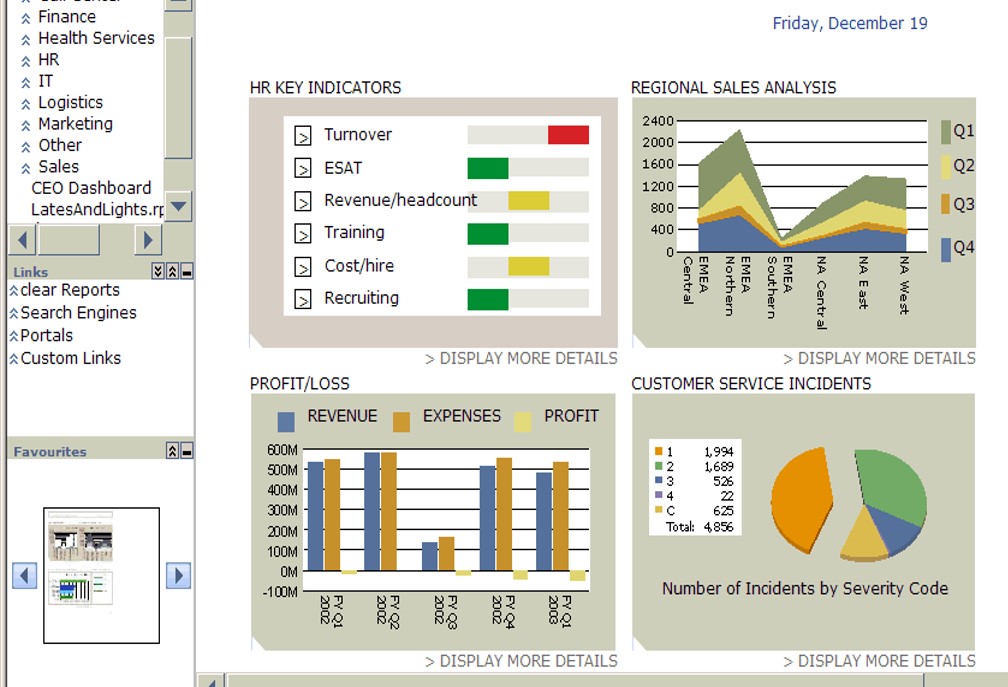
Per Wikipedia, a business dashboard is “an easy to read, often single page, real-time user interface, showing a graphical presentation of the current status (snapshot) and historical trends of an organization’s Key Performance Indicators (KPIs) to enable instantaneous and informed decisions to be made at a glance.”

kpi-03

Whenever I talk to an audience about business dashboards, I always start out with this mouth full of an explanation. Because thats what dashboards do… they take a lot of complicated data and break it down into a few powerful visuals that provide insightful and actionable intelligence. Actionable being the key term.

My favorite dashboard builder is Tableau, and I instruct all my trainees to use Tableau Public (it’s free) to get some hands on experience in building dashboards. Qlikview is also pretty cool at building user friendly boards. There are several others that have free or trial versions. Gartner does and annual review of BI tools with a special focus on the ones who best provide an easy to use dashboard builder. Below is a sample dashboard.

db1

“Numbers have an important story to tell. They rely on you to give them a clear and convincing voice. ” – Stephen Few, the grandfather of Business Dashboards.

Understanding Business Analytics Outline

I’m scheduled to speak to do a workshop on Understanding Business Analytics in mid February. I will be followed by a 1 hour Analytics Overview with a couple hundred students. Pretty excited about this!!

And to make it even more awesome… its in Cebu!

Scope:

(1) Provide a 6 hour presentation on Understanding Business Analytics to 15-20 faculty members (Core Group).  (2) Provide a 1 hour presentation on an Overview of Business Analytics to a student group. Both presentation will include exercise and discussion in addition to the lecture.

Timeline:

  1. The presentation with the Core Group will be from 9:00AM- 3:00PM.
  2. The student overview about Business Analytics from 3:00PM- 4:00PM.

Core Group Content:

  1. An orientation about the concept of Business Analytics (60 minutes)
  2. Current Trends in Analytics for the Philippines (60 minutes)
  3. Analytics Group Exercise: Let’s Find Some Data (60 minutes) – will need internet access via smartphones, tablets and/or laptops.
  4. Lunch
  5. Discussion about Descriptive Analytics, Predictive Analytics and Big Data (60 minutes) – will need internet access
  6. Demonstration on how to use Tableau (30 minutes)
  7. Questions and Answers (30 minutes)

Student 420Group Content:

  1. An quick orientation Business Analytics (15 minutes)
  2. Analytics Group Exercise: (15 minutes)
  3. Demonstration on how to use Tableau (15 minutes)
  4. Questions and Answers (15 minutes)

My absolute favorite thing to do in the world is to get college students excited about analytics careers!!!!

Sharing My Analytics Solution

Seasons Greetings To All My Connections,

With the global analytics talent shortage causing many of us nightmares when it comes to recruiting, training and retaining talent, I can offer a solution.

My company, DMAI, specializes in setting up analytics centric teams in the Philippines to add additional resources for clients in the U.S.

If you are interested in learning more about our high quality and cost effective solutions, please check out my blog: http://www.dmaiph.wordpress.com

Thanks for your time and may you have a Happy Holiday season.

Dan Meyer
President & Founder of DMAI
danmeyer@dmaiph.com
925-595-4079

10592750_728053387243786_8229253185490727991_n

Achieving Better Results Through Analytics: What’s Your Analytics Strategy?

Just put together a pitch deck for a potential in-house corporate training.

Here’s some of the highlights…

You need an analytics strategy.

Making data-driven decisions is key to success in any business.

Having the right data at the right time makes all the difference.

Data-driven decision-making, as well as improved productivity and better overall outcomes begins with analytics.

Some of the benefits from a good analytics solution include:

  • Provide timely and targeted coaching/training to agents.
  • Ensures that the right materials are assigned.
  • Optimizes process of following agent improvements, leading to skill development and job mastery.
  • Eliminates the need for e-mailing countless excel spreadsheets
  • Schedules coaching/ training at an appropriate time.
  • Optimizes the follow up process to review impact of training and identifies when agent performance requires management attentions.
  • Give’s Management a High Level Overview of important KPIs.

IMG_6912

Business Strategy with Analytics – Aligning a business strategy to drive an organization forward requires a robust analytics solution. Businesses who have good analytics tend to be much more profitable and efficient then ones that do not. DMAIPH has helped dozens of companies in both the U.S. and the Philippines with adding more data analysis in their business strategy.

That’s why we have joined up with our key business partner PMCM Events Management to showcase our solutions at #TechToniPH in July 2017. Contact DMAIPH now at analytics@dmaiph.com or connect with me directly to find out what we can do to help you align your business strategy with analytics.


5 Strategies For Recruiting Analytics Talent

http://data-informed.com/5-strategies-recruiting-training-decision-science-talent

Came across the above mentioned article. It starts, “A career in decision sciences/analytics continues to be one of the sexiest jobs of the 21st century, but the supply of analytics talent threatens to limit the promise of decision sciences.

MDL_P1_DS_1

A report by McKinsey and Company estimates a shortfall of 140,000 to 190,000 data scientists and 1.5 million managers who have the skills needed to use the insights to drive decisions. And Gartner predicts that by 2015, big data will create 4.4 million jobs globally.

Data scientists are in short supply, but the dearth of decision scientists – the rare breed that combines the interdisciplinary prowess of math, business, technology, behavioral sciences, and design thinking – is even more alarming. For this reason, there needs to be an increased emphasis on recruiting and training as opposed to relying on acquisition.” The writer then listed his 5 strategies for recruiting analytics talent.

I have a few variations on his top 5, here they are:
1. Destroy the Top Talent Only Comes From Top Schools Myth
2. Test For Curiosity and a Learning Mind Set
3. Appreciate an Inter-Disciplinary Perspective
4. Teach the Art of Asking Questions
5. Be Both Big Picture and Tiny Detail Kinds of Analysts

So basically what it boils down too, is that business don’t just need high-end, well-educated data scientists, they need lots of people who think like analysts.

That’s what I specialize in, I take people who are curious, regardless of their background and I train them to unleash their curiosity and empower then to use data to make decisions.

Hiring a data scientist is not really an option for most companies I work with, but hiring one of my trainees to work in their office or online for their business is a very good option.

Five Current Trends in Analytics

Earlier this week, I conducted a Business Analytics Training in our new office in Ortigas. One of the things I talked about was some of the current trends in analytics. Here are my top 5:

1. Everyone Has To Be A Data Scientist
2. Finding Unstructured Data on the Internet
3. Company Specific Analytics Solutions
4. Data Visualization
5. Business Dashboards for Management

When it comes to data science, I take the approach that anyone working with data and analysis has to start thinking of themselves as a data scientist. Its the biggest buzz word in the industry right now.

Finding unstructured data on the internet to compliment structured internal business data is still one of the key skills sets that separates good analytics from great analytics.

Company specific solutions are becoming a requirement and really pose a threat to analytics solutions that too general and too high level.

The number of people who can take data and turn it into art is growing rapidly, but the need for skilled data artists is growing even faster.

And finally, something that has been true for while now… one of the biggest needs out there is someone who can take lots of reports and simplify the data into a single visual.

As they say, the more things change (and analytics gets more complicated) the more they stay the same (what a great analyst needs is being able to add the art to the science).

10256713_275221292688289_6652823653462957603_o