Q15: What is a business dashboard and how is it used in a business?

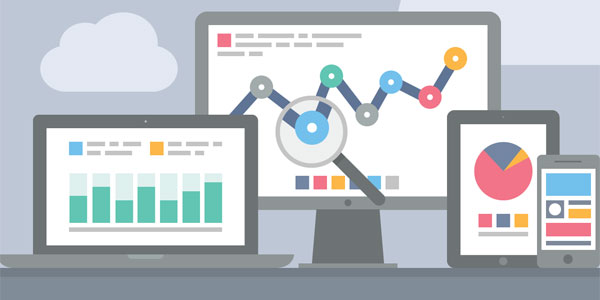
Much like a driver uses a car’s dashboard to make lots of decisions before and during a trip, a business dashboard helps a business decision-maker to plan for his business.

Wikipedia’s definition of a business dashboard is quite long. A business dashboard is  “An easy to read, often single page, real-time user interface, showing a graphical presentation of the current status (snapshot) and historical trends of an organization’s Key Performance Indicators (KPIs) to enable instantaneous and informed decisions to be made at a glance.”

That is a mouthful. But lets break it down to help us understand how a business can use dashboards to make better decisions.

  • Single Page – You need to be able to see everything you need to know at a glance. If you need to scroll or click to get data it really lessens that power of the dashboard.
  • Real Time – If the data isn’t current, then you really are limited to being able to take action. With technology today, not having a way to feed real time data in your dashboard is pretty old school. Plus this can help you set up some useful predictive models that feed into the dashboard.
  • Graphical Presentation – People pick up data much quicker from visual queues like charts and graphs then they do a table full of numbers. There are a lot of great visualization tools out there to add a lot of both style and substance to analyzing business data.
  • Current Status – Besides being furnished with real time data, you should be able to look at where things stand right now. Like how a speedometer keeps you within the speed limit, real time status can help you know where to focus your energy most.
  • Historical Trends – The priority is real time, current status all in one view. That said, having the ability to switch to historical trends is also something to look for in an awesome dashboard.
  • KPIs – One of the keys to getting the most bang for your buck with a dashboard is to make sure you are feeding the right KPIs into it. The audience will gravitate to what is most important to them and if its not available at first glance they wont use the dashboard. So knowing the business well enough to know the key KPIs for the power users is super important.
  • Make Decisions – The bottom line is that if a dashboard improves the speed and the accuracy in which decisions are made then its working. Companies with really good analytics cultures use dashboards at staff meetings and conference calls and have pretty much killed the use of power point for most discussions.

When you walk into a company and you see business dashboards on the wall monitor and/or on desktops you are in the kind of place we should all be. The technology is there, its more a matter of culture to make it useful.
3.8.2

Hope that helps shed some light on how business dashboards can help a business. They just give you much more relevant and useful data summarized and offered in easy to use and understand bites.

My team is very adept at setting up business dashboards using Tableau Public. Let me know if you’d like to know more.


Hybrid Staffing Solutions – It’s Not Just Outsourcing

One of the challenges of my business is that it is not simple to explain to someone.

We are not a straightforward outsourcing company.

I don’t work with clients who are just looking to save money by sending jobs overseas.

Instead I offer a hybrid staffing solution. And what is that exactly?

First off I specialize in basic analytics. The types of clients we take on have a need for someone to analyze something in order to answer questions and provide solutions. We don’t do traditional customer service, we are not tech support and we don’t take on many advanced analytics projects.

If someone comes to me asking about predictive analytics models, the blending of big data sources or data science, I am happy to consult with them long enough to find a good match with a company who deals in these things. But it’s not what we focus on.

We are good at things like analyzing social media content, public data mining, building and maintaining business dashboards, conducting demographic research and gather competitor data. We use Tableau and Excel. We help people who have systems in place, they just need assistance with maximizing their value. This is what I teach my team.

We are a niche business partnering with companies who have a specific need.

3.6

Our clients are small to medium sized businesses in growth mode. I’ve worked with both small mom and pop businesses and big corporations. They both have limitations to our business model. Our clients all have an analytics centric culture, they just don’t have the resources to optimize and grow the business completely in house.

Another difference between what we do and what traditional outsourcing companies offer is that most of our team is home based. As a general rule, I don’t like the office based model when working with talent from the Philippines. Running an office team in the Philippines is very complicated due to the labor laws and competitive market. It’s us much easier to attract top talent at an affordable price by setting up virtual teams.

In the end, my success has primarily been because we find ways to merge the culture of the client with the team in the Philippines. We don’t look and feel like most outsourced teams, because we integrate the new team into the client’s culture.

So now you have a better idea of why I say it is somewhat of a challenge to explain our model. We offer hybrid staffing solutions… a Philippines based, virtual team set up to mirror the client culture who offer a variety of analytics and back office business services.

Maybe it is not as hard to explain after all.

nalytics Outsourcing – DMAIPH has successful set up Filipino analytics teams for over a dozen U.S. based businesses. Offering both virtual and office based teams that specialize in problem solving using data, new technology and analytics techniques is our strength. Finding and empowering analytics talent is increasingly challenging, but we have it down to a science. Contact DMAIPH now at analytics@dmaiph.com or connect with me directly to learn more about how to set up an analytics-centric team in the Philippines.

Q14: What is data visualization and how does it help drive better decision-making?

Most of us are well aware that people generally learn best visually. A simple pie chat can turn a 1,000 row excel spreadsheet from a headache inducing overload of data into something one is able to make decisions on in a few seconds.

Of all the things that have made me a successful analyst, one of my greatest skills is knowing which visual to use in my presentations and reporting.

To demonstrate how data visualization can drive better decision-making, I will borrow from analytics guru Bernard Marr’s 7 Key Ingredients for Knock-out Data Visualizations.

Even the best analytics will amount to nothing if you don’t report the results properly to the right people in the right way. Make sure you report the results effectively by following these 7 steps:

  1. Identify your target audience. What do they need to know and want to know? And what will they do with the information?
  2. Customize the data visualization. Be prepared to customize your data visualization to meet the specific requirements of each decision maker.
  3. Use Clear Titles and Labels. Don’t be cryptic or clever. Just explain what the graphic does. This helps to immediately put the visualization into context.
  4. Link the data visualization to your strategy. As a result, they are much more likely to engage and use the information wisely.
  5. Choose your graphics carefully. Use whatever type of graphic best conveys the story as simply and succinctly as possible.
  6. Use headings to make the important points stand out. This allows the reader to scan the document and get the crux of the story very quickly.
  7. Add a short narrative where appropriate. Narrative helps to explain the data in words and adds depth to the story while contextualizing the graphics.

So there you have it. Data Visualizations allow the analyst to inform and empower the audience of the report/presentation to use the data to make good decisions.

10406025_10152524531307425_1404103117_n

It sounds easy, but a lot of people really struggle with this concept. Most presentations I see are either too wordy or include visuals the audience can’t see easily. Most reports are formatted in a way that may look good, but have little functionality.

Nothing prohibits good analysis like an excel spreadsheet full of data but not formatted in a way that allows a pivot table to be built.

Likewise a lot of reports are just summaries, with the original data hidden or absent. When you take away the power of an end user to do their own analysis, you really diminish the value of what you are doing.

So besides everything that Bernard said above, I would add make sure you provide the ability for your audience to use and analyze your data.

If you are having challenges with coming up with engaging and actionable data visualizations, let me know. I can definitely help.

Q13: A lot of us want to know what is business intelligence and how does it add value to analytics?

Per Wikipedia, Business Intelligence (BI) is an umbrella term that refers to a variety of software applications used to analyze an organization’s raw data.

BI as a discipline is made up of several related activities, including data mining, online analytical processing, querying and reporting. BI can be used to support a wide range of business decisions ranging from operational to strategic as well as both basic operating decisions include product positioning or pricing and strategic business decisions include priorities, goals and directions at the broadest level.

The CHED memo breaks business intelligence into four phases:

  1. Data Gathering. Business analysts need to identify the appropriate data-gathering technique by conducting research. Once you have identified the right data, it needs to be captured. This process is the same as the identify process.
  2. Data Storing. A general term for archiving data in electromagnetic or other forms for use by a computer or device. There is a common distinction between forms of physical data storage is between random access memory (RAM) and associated formats, and secondary data storage on external drives. This process is akin to the first part of the inventory process.
  3. Data Analysis. The process of systematically applying statistical and/or logical techniques to describe and illustrate, condense and recap, and evaluate data is the analysis phase. Data analysis has multiple facets and approaches, encompassing diverse techniques under a variety of names. We need to have a data analysis to improve the company’s performance. This process is the 2nd half of the inventory process.
  4. Data Access. Data Access refers to software and activities related to storing, retrieving, or acting on data housed in a database or other repository. Two fundamental types of data access exist: sequential access (as in magnetic tape, for example) Data access crucially involves authorization to access different data repositories. Data access can help distinguish the abilities of administrators and users.

That is a good starting point to understanding the concept. The memo breaks down the data analysis process into 4 parts to show how important the structure or data lake your data is stored is as important as the data itself.

Business Intelligence tools all work based on the premise that you have structured data neatly stored in tables with header rows and columns of data. More advanced BI tools can handle unstructured data, but for the most part they are all built to pull data from structured environments. BI Tools are like a fish or depth finder to help you access your data from the data lake quicker and with more efficiency.

Another important point to note is that business intelligence and business analytics are sometimes used interchangeably, but there are different.

From my perspective, the term business intelligence refers to collecting business data to find information primarily through asking questions, reporting, and online analytical processes.

Business analytics, on the other hand, uses statistical and quantitative tools for explanatory and predictive modeling. In this definition, business analytics can be seen as the subset of an enterprise wide BI strategy focusing on statistics, prediction, and optimization. The CHED memo is more closely aligned to that division as well as the primary focus is on the storage of data and the use of modeling.

As for myself, I worked with business intelligence software and methodologies with Wells Fargo long before I had even heard of the term BI.

3.6.1

I want to leave you with on tip. If you are fairly new to the concept of business intelligence tools I suggest you download Tableau Public. It is very easy to learn, there is a very active user community to learn from and best of all it’s free.

So check it out.

Q12: Next please explain when and how we can use prescriptive analytics?

Prescriptive analytics goes one step further and finds the best course of action for a given situation. Its primary goal is to enhance decision-making by giving multiple outcomes based on multiple variables.   The analogy of how doctors prescribe medicine to patients based on a wide range of variables in a patient’s health, using an equally wide range of treatment options.

“Prescriptive tells you the best way to get to where you want to be,” says Anne Robinson, director of supply chain analytics at Verizon Wireless and a past president of INFORMS, a society for analytics and operations research professionals.  “If you want to differentiate yourself, the next step is the prescriptive tool box.

20140322-093659.jpg

Predictive analytics answers the question what will happen. Prescriptive analytics not only anticipates what will happen and when it will happen, but also why it will happen. Further, prescriptive analytics suggests decision options on how to take advantage of a future opportunity or mitigate a future risk and shows the implication of each decision option.

Prescriptive analytics can continually take in new data to re-predict and re-prescribe, thus automatically improving prediction accuracy and prescribing better decision options. Prescriptive analytics allows us to handle blended data, a combination of structured (numbers, categories) and unstructured data (videos, images, sounds, texts), and business rules to predict what lies ahead. It also allows to take advantage of this predicted future without compromising other priorities.

In addition, most prescriptive analytics efforts require a predictive model with two additional components: actionable data and a feedback system that tracks the outcome produced by the action taken. It is simply too much data and too many outcomes to track if you haven’t invested in the right people and the right technology.

To really be impactful, this type of analytics also requires more data integration then the other types. “Data scientists typically spend about three-quarters of their time preparing data sets and only a quarter running analysis”, says Forrester Research analyst Mike Gualtieri. The need to not only blend and integrate data, but to constantly be looking at ways to keep the good and toss out the bad.

There is also a lot of discussion ongoing about the role prescriptive analytics actually replacing human decision-making. Advances in machine learning have gotten to a point where many routine business decisions can be made automatically.

We are currently seeing a lot of buzz in the industry about how far can an automated predictive analytics solution take us in freeing up time and resources. Currently we are finding ways to spend less time data blending and integrating and more analyzing and taking action. But soon it may be the whole analytics process that is managed by artificial intelligence.

Prescriptive analytics is the way of the future for those with the resources to apply it. However, for those who do not have those resources, prescriptive analytics is out of reach. This to me is a huge challenge for the analytics industry to solve.

The 3 Parts of Me: BPO Elite, DMAIPH and Sonic Analytics

A little about me. I oversee three small companies that specialize in analytics. I am not actively trying to sell you my services, but do hope that if you ever have a need for tailor made analytics solutions, you remember me.

BPO Elite is a consulting business that matches up companies in the U.S. with talent in the Philippines to do a variety of basic analytics and back office work. We DO NOT deal with companies looking just to send jobs overseas, focusing only on partners who need to add flexibility and depth to the talent pool. We have helped over a dozen companies find the right solution for their business to date.

DMAIPH is a company designed to deliver analytics training and support to colleges and universities looking to add more analytics centric courses and materials to their curriculum. To date, I have consulted with over a dozen of the top schools in the Philippines as well as working with student interns from UC Berkley, San Diego State and Diablo Valley College. My interns have helped a number of small business with basic analytics projects. I also blog about my love for analytics and how I teach it.

Sonic Analytics is a training business that focuses on corporate trainings in analytics related topics. Based on my experience as a senior analytics consultant with Wells Fargo Bank and in teaching analytics to college students in both the U.S. and the Philippines, I have come up with a very effective way to help professionals get a better handle on the analytics culture in their business. I have delivered trainings to thousands of people over the past few years, helping them learn how to make more data-driven decisions.

IMG_1224

Each company represents one of the key components of my dream to bring better analytics to as many businesses as possible.


Q11: Can you next describe how to best use predictive analytics?

A look at how predictive analytics is used to help drive decision-making starts with a basic need to improve things. Someone once told me that despite all the advanced technology in our phones, cars, homes, workplaces… the world is a remarkably inefficient, wasteful place.

Two blogs ago, I defined predictive analytics as a process that takes data and extrapolates patterns to predict likely outcomes. Past, Present, Past Present, Future… the goal being too provided educated guesses on what is most likely to happen next. The primary use of predictive analytics is to predict outcomes using models that will mitigate risk and eliminate choices based on unlikely outcomes.

For anyone who is familiar with Lean or Six Sigma, there is a lot in common with predictive analytics and process improvement methodologies.  We take historical performance data and combine it with rules, algorithms, and occasionally external data to determine the probable future outcome of an event or the likelihood of a situation occurring. Once we see where we think things might go wrong, we make changes to prevent or at least mitigate the future.

Predictive analytics is used most extensively in places where you want to know the future like sales, marketing, and finance. To do this you need to build models. Models are not always simple and often take someone with both business experience and professional training in certain coding or programming languages.

In the hands of a good analyst, predictive analytics helps a business continually reinvent itself based not just on what happen, but what is likely to happen.

This allows a wide range of organizational activities to be improved by predicting the behaviors and outcomes of people, the futures of individual customers, debtors, patients, criminal suspects, employees, and voters. It’s that generality that makes this technology so awesome.

10592750_728053387243786_8229253185490727991_n

Business that have good predictive analytics are much more likely to be successful over the long term. When you look at businesses that fail, its generally because they didn’t have an eye of the future.

If you are wondering how to take your descriptive analytics to the next level and start getting more into predictive analytics, let me know. I can help you figure out to starting using something besides the magic 8 ball to predict what lies ahead.

Q10: Please talk about how, when and why we use should descriptive analytics?

Going back to our previous definition of descriptive analytics, it is used to answer questions about what has happened in a business. It is primary use is to look at the current business situation with an eye towards looking for cause and effect. It helps one to understand how to manage in the present based on what happened in the past.

The vast majority that have attended my trainings on analytics, are looking for help with descriptive analytics challenges. Using unstructured big data for predictive analytics modeling is not really something they are concerned with.

I have found that people who are really engaged with analytics are very driven to self-educate. They are driven by curiosity to make use of cutting edge stuff to tackle bigger and bigger challenges. For data scientists and really good analysts, descriptive analytics is easy and kinda boring.

But that is a small percentage of people who use analytics every day.  To most of my attendees, its more about how to cut down on the time it takes for them to prepare the reports they have to make and how to make them more useful to their bosses. That’s where most of my descriptive analytics training has an impact.

How to make a better report? How to build and maintain a simple business dashboard? How to have more impactful power point slides. How to streamline the reporting process? This is one way to look at descriptive analytics… its not just taking historical data and using it for reports, but also how to make the reports better.

ANALYTICS CAN

So how can we use descriptive analytics? Well, we probably already are. Inventory control, payroll, performance management, quality assurance, sales reports, marketing results… all use forms of descriptive analytics. They take what happen, they look at it and then they make decisions.

For the most part this can and is done in Excel. If you want to supercharge what you do in Excel, then you can use a business intelligence tool to build dashboards and publish dynamic reports. This is where most people doing reports need help. How to better visualize the data so it has more power and how to use BI tools to do things faster than can be done in Excel.

In many, many companies a lot of time and energy has been devoted to building reporting tools in house. And this is generally the problem. The reports are static and hard to change. If you are in a company like this, then descriptive analytics can be a bear.

To make the most of it, I suggest using free tools like Tableau Public, which is free, to demonstrate new ways to analyze and report data, to get the boss interested in updating the way you company reports.

Another big challenge facing analysts doing mostly descriptive analytics in the form of reporting, is blending data. Taking data from different data sources and combining them. This can often be very manual and general done in excel if you company hasn’t invested in a way to centrally store enterprise wide data and make it easily accessible. There are some applications out there that can help you with this, Alteryx and Qlikview being ones I have used and they both have a free demo.

If you are already doing predictive analytics, then you probably have your descriptive analytics figured out.

So, if you need help super charging your reporting, are looking to get started using business intelligence and data blending tools, and/or need to build a business case to invest more into analytics, let me know. I’m happy to help you come up with a much better way to build reports that have real impact and don’t take up all your time.


Prelude to Q10: Understanding the 3 different types of analytics.

The analytics efforts in a business are generally divided into 3 types; descriptive, predictive and prescriptive analytics.

A simple definition of descriptive analytics is that it is used to answer questions about what has happened in a business. It is primary use is to look at the current business situation with an eye towards looking for cause and effect. It helps one to understand how to manage in the present based on what happened in the past.

Per the Commission on Higher Education (CHED), descriptive analytics make use of current transactions to enable managers to visualize how the company is performing. When teaching the concept, it is generally focused on analysis and reporting to guide decision-making.

Most businesses use mostly descriptive analytics in their analysis, reporting and decision-making.

Three_Phases_of_Analytics

Have to apologize to whoever made this image,  I dont know the source, but you have my thanks for making it. 

As you can see in the image, predictive analytics takes data and extrapolates patterns to predict likely outcomes. Past, Present, Past Present, Future… the goal being too provided educated guesses on what is most likely to happen next. The primary use of predictive analytics is to predict outcomes using models that will mitigate risk and eliminate choices based on unlikely outcomes.

Per CHED, Predictive analytics allows voluminous data to be used for prediction, classification and association making it very useful tool for projections, forecasts, and correlations. Most lessons around predictive analytics involve data modeling and require a much higher degree of skill then descriptive analytics.

In general, predictive analytics is used by large companies in data-rich industries. Up until recently there were very few tools available to smaller businesses to add this type of analytics to their decision-making.

Prescriptive analytics goes one step further and finds the best course of action for a given situation. Its primary goal is to enhance decision-making by giving multiple outcomes based on multiple variables.   The analogy of how doctors prescribe medicine to patients based on a wide range of variables in a patient’s health, using an equally wide range of treatment options.

Per CHED, Prescriptive Analytics help organizations develop insights to make decisions from the current data that maximizes the organization goals.  Prescriptive analytics not only anticipates what will happen and when it will happen, but also why it will happen. Largely, instruction take the model building found in predictive analytics and supercharges it with more data, more choices and more outcomes.

Prescriptive analytics is fairly new and just now gaining widespread use in the corporate world. There are not many tools available that are cheap or easy to use. Generally, you find data scientists assigned to prescriptive analytics projects. It also take us closer to some decision-making in a business being completely automated. With enough data on hand, using machine learning to analyze the data, we are starting to see artificial intelligence at play with prescriptive analytics. It is a pretty exciting time.

Its important to keep in mind that to really be good at predictive and prescriptive analytics you need both the high tech tools and the training/experience to use them effectively.


Q9: Can you please describe the concepts of storing data in a data ware house?

Twenty years ago data was mostly stored in databases. These databases housed all the data a business would need to do analytics. Transaction data, sales data, customer data, demographic data was all neatly collected, stored and analyzed in databases.

A surprising number of companies still store most of their data in databases. It works well for business that just need to look at historical data to conduct basic descriptive analytics.

About ten years ago the amount of data captured in a business and the growing diversity in date sources and data storage brought about the mainstream use of data warehouses in the business world.

Data warehouse are often a collection of databases interconnected so that data can be brought together into one place for reporting and analysis.

Whether you are working with a data base or a data warehouse, you should have a basic understanding of how data is stored. It should be in table format, with header columns and data rows.

A good way to quickly assess the analytics culture of a business is to look at how data is shared among management. Does it look table like? Or is it obvious that most of the time spent by the author was put into decorating? If you can’t easy sort something, then you are not dealing with a good data culture.

The best way to have a good data culture is to have well documented data structures. Any dB admin worth a grain of salt has the data hierarchy mapped out and has a knowledge base to help users know what data is in each field.

Like with finding data, being good at storing data starts with knowing the environment. Any good analyst should have a basic understanding of how to use SQL to pull a query for a data table. Even if you cant do hard core coding, know how data is generally stored in a structure is key.

1075177_10151826941667425_1417094118_n

Another important concept about data warehouses if you have to know how to join or blend data from different sources. When you have multiple data tables in a warehouse you often need to join the data on a common field. Data blending goes on step further as you are often trying to take data that doesn’t have a natural point on common that is easy to join on. Advanced data warehouses and data management tools can blend things easily, but its still important to understand the core concepts of how to join and blend data.

As I mentioned in earlier posts, there is now a new concept taking root that one up data warehouses. Data lakes are being used to address the fact that we have more unstructured data then we have structured data. Data bases and data warehouses were designed only to handle structured data the easily fits into a data able.

Now we have to collect data from images, videos, blogs, comments and other places that are not easily converted to a value. Data blending across both traditional structured data warehouses and new types of data is not easily done in most data warehouses so tools are being developed to bridge this gap.

The lake is no longer a place just to fish, but also to do all the other things a lake can be used for.

So, when it comes to understanding data warehouses, learn who built and/or maintains it and buy them a cup of coffee. Get your hands on the data dictionary, knowledge base, FAQ, metadata.. whatever you can to map out the data environment. If you do that then you can find use the big data stored in a data warehouse to find the right data at the right time.