Big Data Analytics: Interpretation and Assessing Results > 2/21/17

I will be speaking on  February 21, 2017 at Discovery Suites, Ortigas Center, Pasig City on Data Analytics.

With that in mind, I wanted to share a little more detail about each section, next up…

Enabling Your Business to Make Smarter Decisions Section 3:  Interpretation—Assessing Results

Participants will be able to Articulate the Importance of Accurately Interpreting Data. Having the right data at your fingertips is essential to being successful with analytics.

We will also be able to Determine and Analyze Risk, Uncertainty, and Probability. With so much data, you need to know what data to analyze when to stay ahead of the game.

I will also talk about how to Spot Patterns, Trends, and Fluctuations Through Correlation, Regression, and Descriptive Statistics. Analytics techniques like these will keep you on the cutting edge.

Attendees will be able to Understand when to employ Descriptive, Predictive or Prescriptive Analytics. Each type has a specific use, make sure you know when to use each one.

And finally we will discuss how to Build Data Models. You don’t need to have high priced, complicated software to do some basic data modeling. I’ll show you some examples.

That’s section three… I’ll go over the last section in the next few days.

DMAIPH offers a wide range of analytics centric training solutions for professionals and students via public, in-house, on-site, and academic settings.

We tailor each training event to meet the unique needs of the audience.

If you need empowerment and skills enhancement to optimize the use of analytics in your organization, we are here to help.

Contact DMAIPH now at analytics@dmaiph.com or connect with me directly to set up a free consultation on which of our DMAIPH analytics training solutions is best for you.

jobspicture2


My Blog Post on the Analytics of Measurement and Evaluation

I recently had the honor of writing a blog post for American University’s Measurement & Evaluation program.

The post is about using a business analytics approach to “effectively evaluate projects, programs and processes.” This is in a response to the fact that it is becoming increasingly essential to use big data and analytics to ensure organizational success.

Here is the link: http://programs.online.american.edu/msme/resource/measurement-and-evaluation-analytics

It is my hope that I can inspire readers to look for ways to bring new data into their projects, programs and processes, blend it with current data, provide more dynamic analysis and share more impactful results.

I will also be doing a webinar early next year entitled Its Not Longer Just Enough To Know. Where I will highlight some techniques and technologies that I use to empower more data-driven decision-making.

Facilitating a mastery of the fundamentals of analytics is what I do best.

All across the world, companies are scrambling to hire analytics talent to optimize the big data they have in their businesses. Though my company DMAIPH, I can equip students and their instructors with the knowledge they need to prepare for careers in analytics. Contact DMAIPH now at analytics@dmaiph.com or connect with me directly so we can set a guest lecturer date, internship, on-the-job training experience or other analytics education solution specifically tailored to your needs.

14045878_10154480087262425_4779154686875783746_n

The 3 Pillars of Small Business Analytics

When I consult with small business owners, there are 3 areas where my guidance generally has the most impact. I call these areas the 3 Pillars of Small Business Analytics.

The first pillar is a Competitive Landscape. I have found that very few small business owners really have a handle on the competition.

A competitive landscape analysis will reveal threats and opportunities that generally are not obvious to a business owner who focuses most of his/her energy on running the business itself.

Some of the data points you can capture and analyze include pricing, location, business size, quality, scope of business, diversity of product offering and of course revenue.  You would be surprised to find how easy it is to gather all this info.

Knowing where your products and services stack up against your competition is a key to prosperity. To achieve this understanding you need to use analytics.

The second pillar is a Demographic Profile. I have also found that very few small business owners really understand the demographics around their business.

A demographic profile analysis will illustrate how closely your customer base mirrors the actual population around your business. In many cases small businesses are not positioning their services correctly based on the opportunity in their market.

11709268_10153506561077425_1608720566061502683_n

Data to include would be traditional demographic markers like age, race, sex, family status, financial status, economic state, etc. There is a ridiculous amount of data on the internet that can be mined free and easy.

Making sure your business is properly positioned to take advantage of your arket will ensure more long term success. The data is out there; you just need to know how to bring it into your analytics process.

The third pillar is Customer Insights. With the boom in social media, most small businesses have not figured out how to capture and analyze all the information being published and shared about their business.

Customer Insight analysis allows a business owner to stay on top of problems and identify how customers feel about their business quickly.

We all know how quickly things can go viral and having a good tool to capture customer sentiment in social media is generally the most overlooked aspect of running a small business.

Positive and negative reviews, trending items, number of likes, follows and shares, are all items that can be rolled into customer insights. You can combine this with surveys, focus groups and loyalty programs among other things to get a full picture of your business.

If you are a small business owner, decision-maker or analyst then focusing on these analytics pillars will make all the difference in the world.

And the best part, is they are all free and easy to bring into your business.

Small Business Analytics – The field of small business analytics is just starting to blossom as companies are looking for more data-driven decision-making to prosper in the age of Big Data. DMAIPH is at the fore front of providing analytics training, consulting and outsourcing options to small businesses. Contact DMAIPH now at analytics@dmaiph.com or connect with me directly to set up a free consultation on how to get more analytics in your small business.


Being A Great Analyst > Key Attribute #4 > Be Enchanting

If you are a good analyst or a decision-maker that uses analytics, being enchanting makes your job much, much easier.

One key to using data and analysis effectively is understanding how to enchant people by being likable, trustworthy and using data and analysis to further a great cause.

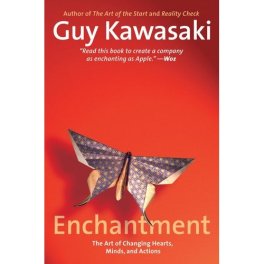
A few years back, I came across a book by Guy Kawasaki called Enchantment. It is my all-time favorite business book.

5.5

Guy Kawasaki is a marketing expert and used to be Apple’s Chief Evangelist (aka Chief Marketing Officer). At Apple their goal is to convert customers to being loyal to Apple products for life.

In Enchantment, Guy talks about how Apple and other successful companies are able to create enchantment in their customer base that fuels passionate and long lasting relationships.

As an analyst there are many lessons that you can draw from Enchantment to being an incredibly impactful member of your organization.

One of the pillars of Enchantment is being Trustworthy. As an analyst, you have to be trustworthy for people to want to follow the direction your data and analysis point.

Your data has to be clean, valid, and accurate.

Your analysis has to be easy to understand, easy to replicate and easy to boil down into a few bullet points.

When you accomplish these things you are creating trust. Getting decision-makers to listen to what the data is telling them comes when the analysts have their trust.

That’s just one part of Enchantment. I use many examples of how to apply Guy’s concept to data and analysis in my training classes and in my company.

If you are looking for a way to add value to your company, which in turn can make the business more successful then this book is a must read.

Analytics Culture – The key to using analytics in a business is like a secret sauce. It is a unique combination of analytics talent, technology and technique that are brought together to enrich and empower an organization. A successful analytics culture is not easy to create, but DMAIPH can show you how. Contact DMAIPH now at analytics@dmaiph.com or connect with me directly so we can build a strategic plan to turn your company into analytics driven success story.

Being A Great Analyst > Key Attribute #3 > Be Decisive

If you are a good analyst or a decision-maker that uses analytics, being decisive is much, much easier.

One key to using data and analysis effectively is understanding how people make decisions and what impacts the ability to make unbiased decisions.

A few years back I came across a book by Dan and Chip Heath called Decisive. It was a fantastic read.

The Heath Brothers are marketing and management experts who do a lot of research into what works and what doesn’t in the business world.

Decisive looks at what influences effective decision-makers overcome.

As an analyst, there are many valuable lessons that can be applied to both selecting data and presenting the analysis of the data.

One example of being Decisive that I use a lot related to trying to avoid a narrow frame. Too often we limit our choices.

When it comes to what data to use to answer business questions, we have to always ask ourselves is this the right data? Is there other data I can use to validate my findings? What data can be blended with this data to tell a more compelling story?

Being aware of your own biases will help you ensure you get the right data, that it’s what is really need to answer business questions at hand.

Being of aware of the biases of the consumer of your analysis (generally your boss and their peers) can help you position your data in ways that can mitigate those biases and let them see what you see.

There are dozens of examples from Decisive that I use in training people to be analysts and in using analytics effectively.

It is a book, well worth your time.

Analytics Culture – The key to using analytics in a business is like a secret sauce. It is a unique combination of analytics talent, technology and technique that are brought together to enrich and empower an organization. A successful analytics culture is not easy to create, but DMAIPH can show you how. Contact DMAIPH now at analytics@dmaiph.com or connect with me directly so we can build a strategic plan to turn your company into analytics driven success story.

Analytics for the Small Business

Analytics is about looking for patterns in data to help answer questions. Most businesses use analytics to help ensure more data-driven decision-making.

No matter the size, scale or scope, every business generates a wealth of business data. Every business has an opportunity to uses that data to drive more intelligent decisions.

The primary people responsible for conducting analytics on the massive amounts of data we have today are analysts. Analysts are skilled in using various technologies and methodologies to identify, inventory and integrate large amounts of data quickly.

The term analytics can often be used interchangeably with statistics and data science. What separates analytics from disciplines like statistics and data science is generally the speed of the analysis and the focus on solving business problems.

The most common form of analytics is business analytics that are generally used by owners, senior leaders and decision-makers to investigate problems, validate assumptions and to guide strategic planning. As a generalist, business analysts can help in a number of areas of the business.

Business analysts are therefore the most common type of analyst, especially in a small business. If you do a job search on the title analyst, as many as half the posting will likely be business analysts. However, analytics can be used in an almost limitless number of business functions in specific areas like HR, recruitment, marketing, finance, and so on. Each one can have its very own analyst.

Analysts have been around a long time, but recent technological advances have both allowed us to produce and capture more data as well as give us the ability to analyze immense data sets quickly. Thus we are amidst a huge boom in the applications of analytics and the need for analytics talent across the globe. Analytics is something just about every business leader is trying to figure out how to use more effectively in their business. To add to our challenge, the demand for good analysts is booming just as fast as the explosion in big data.

As a result, there is a huge shortage of people who are skilled in working with data to answer questions and solve problems. This is why you have seen the number of analyst job postings increasing at an amazing rate. In the first few chapters of the book we will discuss the quickening demand for analytics talent and why it is so hard to find good analysts, especially at the small business level.

If you are a business leader, manager, owner, and/or executive are not actively trying to surround yourself with analysts and if you are not infusing an analytics centric culture in your business, you will most likely soon see your business fail.

1075177_10151826941667425_1417094118_n

A small business needs analysts to make sense of big data, manage the storage of the data, and know when to use which of the 3 types of analytics (descriptive, predictive, and prescriptive). To be effective, analysts need to have business intelligence tools to create data visualizations and build business dashboards.

If you need an analyst or want to be trained in analytics, connect with me and I can show you how to get started.

Small Business Analytics – The field of small business analytics is just starting to blossom as companies are looking for more data-driven decision-making to prosper in the age of Big Data. DMAIPH is at the fore front of providing analytics training, consulting and outsourcing options to small businesses. Contact DMAIPH now at analytics@dmaiph.com or connect with me directly to set up a free consultation on how to get more analytics in your small business.

Big Data Analytics: Using Business Intelligence Tools – 7/11/17 in Ortigas

A good analyst uses Business Intelligence Tools like Batman uses devices stored in his utility belt.

Per Wikipedia, business intelligence (BI) tools are “a type of application software designed to retrieve, analyze, transform and report data for business intelligence. The applications generally read data that have been previously stored, often, though not necessarily, in a data warehouse or data mart.”

Knowing what business intelligence tool to employ to what data set in order to conduct analysis and present your findings requires a thorough understanding of what tools are available and what they can do.

The key general categories of business intelligence applications include:

  • Spreadsheets
  • Reporting and querying software: applications that extract, sort, summarize, and present selected data
  • Online analytical processing (OLAP)
  • Digital dashboards
  • Data mining
  • Process visualization
  • Data warehousing

By far the most common business intelligence tool used is MS Excel. Having at least a intermediate masterly of Excel is a good start in understanding how business intelligence tools work.

Learning to run formulas, insert pivot tables and produce simple visualizations using charts and graphs give a foundation in how to take data and do something with it to inspire analysis.

Using Excel also teaches you how data needs to be structured, formatted and managed. You can’t run even basic analysis activities if your data is not encoded in a way that your tools can make sense of.

Once you have mastered the use of Excel then the logical next step is using BI tools that pull data from Excel. For example, Tableau is a BI tool that can extract data from Excel to build more powerful data analysis and visualizations.

BI tools can also be used to mine data from large data storage systems like data warehouses, data lakes and data marts. Again, understanding how data is structured in important. Knowing how queries are written (for example in SQL) to extract data is important.

If you are looking to get a better understanding of what tools you should be using to analysis the data in your business, you can join my next training seminar (July 11, 2017) in Ortigas.

jobspicture2

Analytics Training – DMAIPH offers a wide range of analytics centric training solutions for professionals and students via public, in-house, on-site, and academic settings. We tailor each training event to meet the unique needs of the audience. If you need empowerment and skills enhancement to optimize the use of analytics in your organization, we are here to help. Contact DMAIPH now at analytics@dmaiph.com or connect with me directly to set up a free consultation on which of our DMAIPH analytics training solutions is best for you.