
Outsourcing Tip > BPO Contract Negotiations: Learn About Both “the Big Picture” and “the Fine Print”

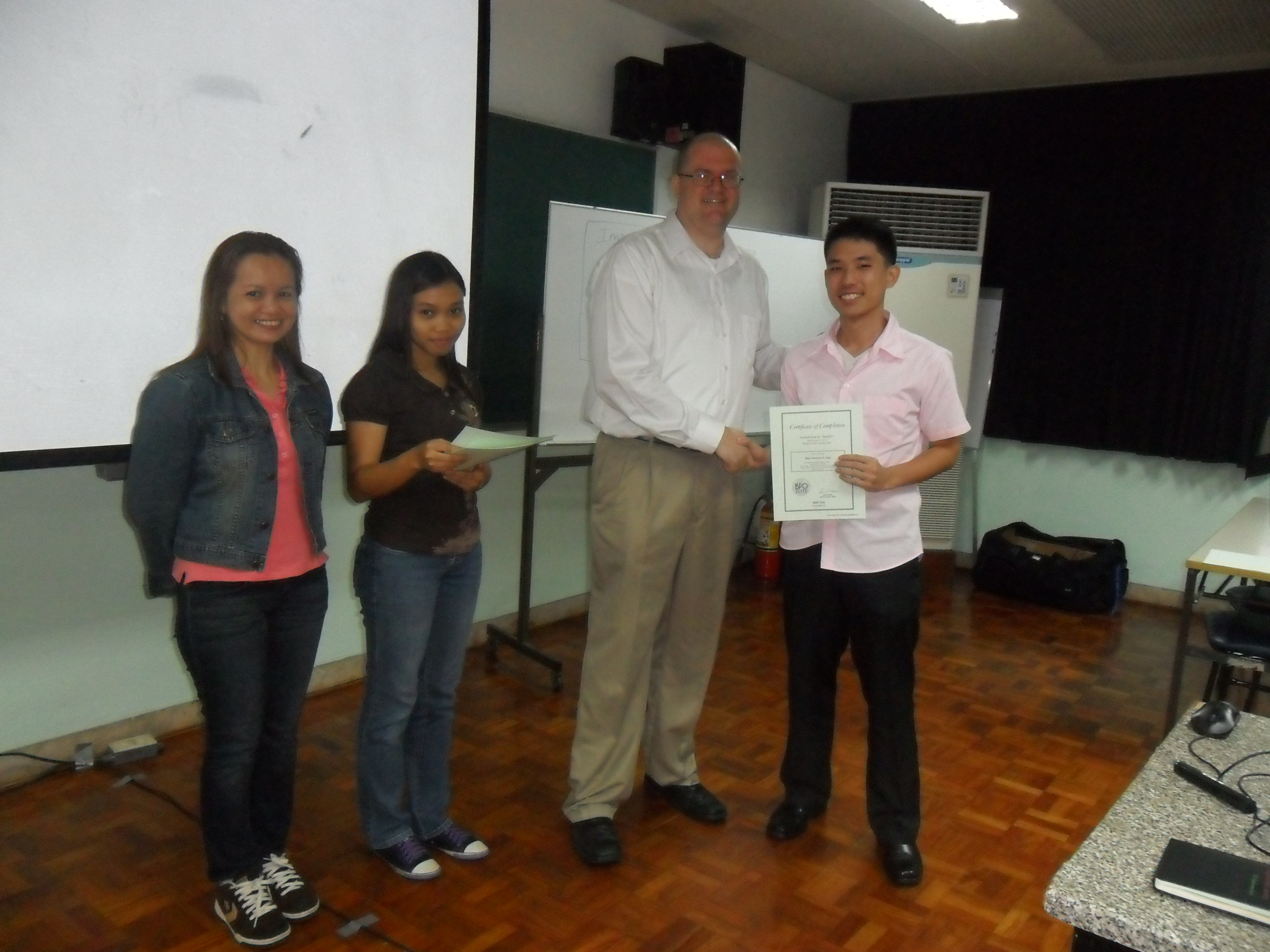
This is the title of a seminar I put together awhile back for small and medium-sized BPO owners, executives and managers. The objective was to address the latest business challenges in the BPO Sector as related to contract negotiations.

We engaged several practitioners to come up with an approach to empower the audience with new and innovative ways to optimize their contract negotiation process.

Here are some of the highlights:
• The biggest challenge that comes with contract negotiations is generally around money. A well thought out and detailed business proposal is key in mitigating misunderstandings and conflict around the cost of outsourcing work.
• The smoothest transitions are generally ones managed by a seasoned project manager, but if you don’t have one, we outlined what needs to be done.
• We also talked about how process mapping can lead to process improvement and how to account for that in the contract.
• Using models to show base, best and worse case scenarios is key to making sure the contract will not become a negative business hindrance to either party.
• We will discuss the importance of clearly and consistently engaging and communicating with key players both internally and with overseas partners.
• Many time negotiations begin informally and just involve the principles as they have a handshake agreement.
• Service Level Agreements and Production Quotas should either be included in the contract or in an addendum that clearly outline expected results.
• If pricing is depending on meeting certain metrics, its imperative that both the goals and how the goals will be measured and reported are included in the contract.

522

At the end of the workshop, attendees should have walked away with the following items of knowledge:
1. An appreciation for all the work that needs to happen before the actual contract is signed between the business and the overseas partner.
2. Several tips on how to make sure the contract is an ironclad as possible in terms of anticipating challenges.
3. Several tools and resources to help them in preparing the BPO contract.
4. A checklist of things to not forget to account for in the actual contract language itself.

So, when it comes to setting up an outsourcing partnership, don’t fall victim to charging ahead without a clear idea of what you need to happen in the contract negotiations process to ensure success!

Analytics Outsourcing – DMAIPH has successful set up Filipino analytics teams for over a dozen U.S. based businesses. Offering both virtual and office based teams that specialize in problem solving using data, new technology and analytics techniques is our strength. Finding and empowering analytics talent is increasingly challenging, but we have it down to a science. Contact DMAIPH now at analytics@dmaiph.com or connect with me directly to learn more about how to set up an analytics-centric team in the Philippines.

Outsourcing Tip > Size the Opportunity! Not to be confused with Seizing the Opportunity.

When you have an opportunity to get involved with outsourcing, it always sounds like a good way to make some fast money.

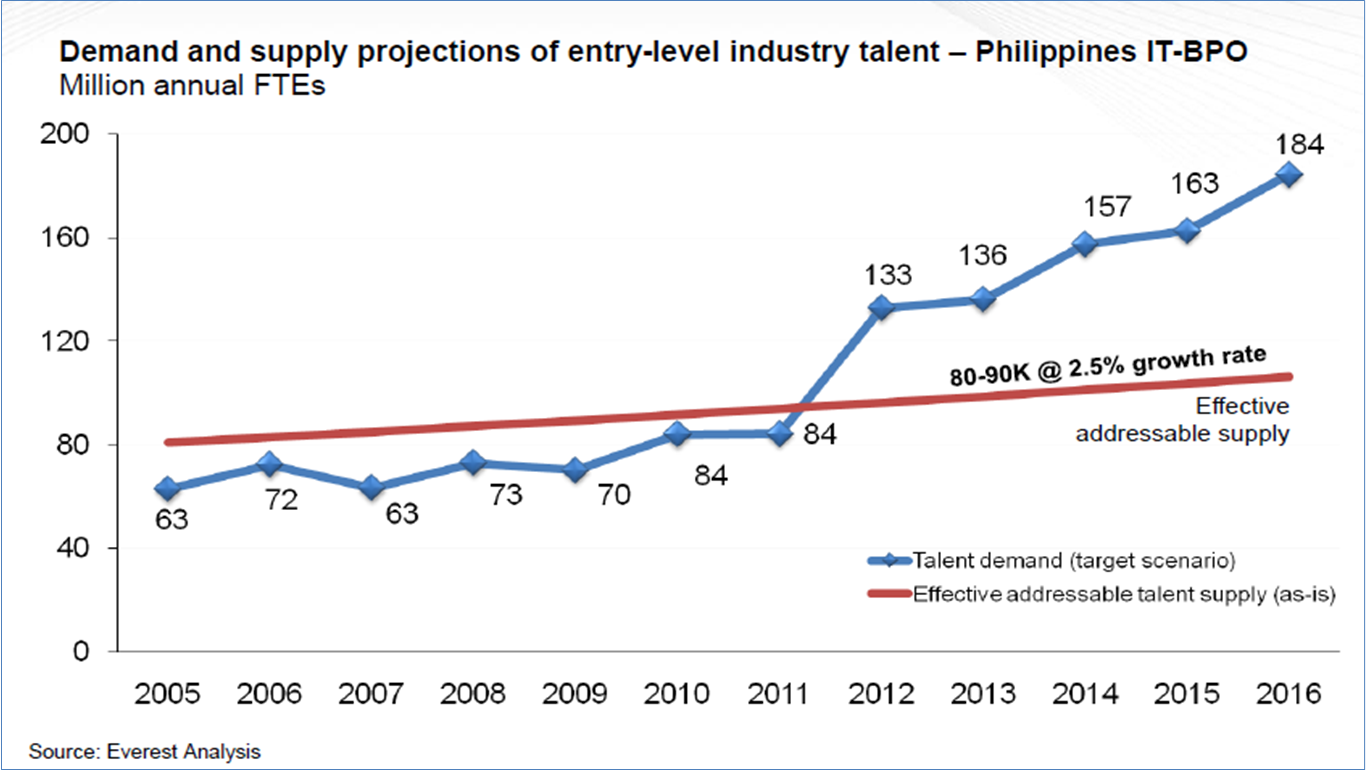
The news has been abuzz for a while now with mounds of data and statistics about the high-speed growth in the outsourcing industry, especially here in the Philippines. Just yesterday I saw a projection that BPOs in the Philippines are expecting to see a 15% growth in revenues in 2014.

Picture1

You couple that with the fact that everyone here knows someone who is making good money as a call center agent or investing in real estate that will be used by call centers, or have a friend in the US who knows someone who wants to save money by outsourcing. It’s one of those everyone is doing it, so why can’t I kinds of things.

This is all good, but there are just as many failures as there are success stories when it comes to small and medium-sized BPOs. Ones where someone had a client, or a building, or an idea but didn’t size it right and misjudged on cost, or talent or market and had to close their doors and lost money.

So when you have an outsourcing opportunity in front of you, whether it be as provider or a client, make sure you size it right. Here are a few things to think about:

  1. Does the client already have an existing business that they want to outsource? If so, fully understand all the requirements of that job as it is currently performed.
  2. Can you find the talent in the Philippines to provide just as good if not a little better service as currently is being provided? A common mistake is thinking that cutting both cost and the level of service will be a win-win.
  3. How scalable is this project? How can both ends be managed in a way that allows for uninterrupted growth? Often things start easy when it’s a pilot, but once you get into production a host of issues can pop up to derail growth and ultimately the partnership.
  4. How stable is the client? Are they a startup that has a great idea and is underfunded? Those are plentiful. Or are they an established business with a strategic plan that includes the fortitude to successfully outsource a key piece of its business? These are hard to find.

That is just a few things that come to mind when I think about sizing the opportunity. Having set up 5 teams in the past year to provide outsourcing services, I have learned a lot about making sure I get the sizing done right. Keeping a client happy is all about under promising and then over delivering when it comes to time, talent and cost.

Analytics Outsourcing – DMAIPH has successful set up Filipino analytics teams for over a dozen U.S. based businesses. Offering both virtual and office based teams that specialize in problem solving using data, new technology and analytics techniques is our strength. Finding and empowering analytics talent is increasingly challenging, but we have it down to a science. Contact DMAIPH now at analytics@dmaiph.com or connect with me directly to learn more about how to set up an analytics-centric team in the Philippines.

13 Months in the Philippines – Lesson One – Finding the Right People

Lesson 1 – May 2012 – Finding the Right People

Makati, Metro Manila, Philippines

I took a couple of trips to the Philippines in early 2012 to lay the ground work before committing 100% to moving there lock, stock and barrel. When I was there, one of the things I did was set up some interviews for my first BPO Elite employee.

elite-strategy-hi-res-21.jpg

Now don’t get me wrong, I ended up with an amazing employee who would become one of my best friends. But the process itself had some serious flaws. Let me break them down. And even though I have extensive experience in recruitment and hiring, I made many of the same mistakes in the process that most managers make. They put it on themselves to do it all, they are the only ones in on the decision-making, and they don’t really look at the available data to help them.

When recruiting. I found out the true power of LinkedIn. I networked with a couple dozen candidates, and narrowed it down to six to interview based on e-mail conversations before I left the US. When I arrived, I set up phone screenings with the six and ended up then conducting two final interviews. Pretty standard stuff and thanks to LinkedIn, all the candidates where qualified to be my very first employee, a recruitment specialist. However, I did all this myself. And even though I have partners and an assistant back in the US, I took it on myself. That’s lesson #1, you cant always do everything yourself. It takes up a lot of time and it makes others think you don’t need or want your help. Next time I do this, I need to delegate and be more inclusive.

The next thing I did wrong was that I didn’t have one of my partners interview with me. I based my decisions on my gut. Now as an analyst, I am kicking myself about this, but as a first time business owner… its a very common mistake. There is tons of data that shows that candidates hired after interviews with more then one person as much as a 100% chance to stick around longer than those interviewed solely by one person.

540

The final lesson that comes to mind is that I didn’t do a very good job of understanding the data available when it comes up to the recruitment industry in the Philippines. After being there a while and gathering data and insights, I over paid, I over promised and I over recruited. I hired two, at way more than the market price and I gave them pretty favorable terms. All things that more research would have uncovered.

So In the end it worked out, I got a great candidate who stuck with me thru thick and thin. I just wish I would have hired me the analysts to do the prep work for me the business owner. Hehe!

Analytics Tool > LinkedIn > http://www.linkedin.com

Analytics Concept > Marketing Analytics > http://en.wikipedia.org/wiki/Marketing_analytics#Data_and_analytics

YouTube Resource > http://www.youtube.com/watch?v=6jDjeNJrN14&feature=share&list=PL7EC252B253873D5D

My Analytics Story – My passion is solving problems by bringing together the best talent, cutting edge technology and tried and true methodologies. DMAIPH is all about empowering people towards better Decision-Making through the use Analytics and business Intelligence. This is what I do best. Contact DMAIPH now at analytics@dmaiph.com or connect with me directly for a free consultation about getting more analytics into your career and your business. 


Data-Driven Decision-Making

DMAIPH Analytics Consulting  was founded in the United States as a consulting firm with the goal of empowering small business to make intelligent, data driven decisions as business owners try to survive in the challenging economic times of today.

DMAI Philippines is our Philippines based business partner. DMAIPH is an analytics training, consulting and outsourcing service provider for clients based in both the Philippines and the United States.

cropped-10338970_10152472367242425_796859773_n.jpg