Conversation About the Reporting Mess

The other day I was hanging out with some friends who work for a company I used to work for and they were talking about challenges they were having with some reports. As I listened, images started filling my mind of the challenges so many companies face. Not having a good data strategy within a business is a killer to both productivity and morale, opens up a company to extra risk and blinds people to opportunities.

The first problem I suggested they tackle is validating their current Key Performance Indicators (KPIs). They need to analyze what is currently being reported to find out what is not useful to the business in making educated decisions.

The second problem is that the people who “own” the data don’t like sharing.  The place where I’d start with this challenges is mapping out the data flow. It would be really powerful to illustrate the different touch points within the flow and most importantly where things get stuck. Then it’s a matter of explaining the big picture to those who might be causing slowdowns.

The third problem is that everyone is too busy to sit down and figure out how to fix things. To solve this challenge, we will need to get everyone on the same page and agree to a common data strategy. This will not be a one and done meeting, but a series of conversations.

So to solve this, my friends need to start with asking questions about what do people really need. In many cases I would expect the answer is no. This is where knowing the architecture comes in handy, so you know where the data lives that is currently missing. After this it’s a matter of storytelling and influencing the “owners” of the data to understand how access to key data would generate more powerful KPIs which would allow everyone to get on the same page.

10592010_10152674958362425_1982237172_n

It sounds pretty easy and it should be. The ultimate challenge is really getting people to all agree on how to use the data. In some cases, it might take senior management support to get everyone to play nice. And my friends will need data to support their argument on how thing can be better and put some numbers behind their vision of a stronger data-driven culture.

This is where I come in. When inside politics and no one has time to lead the charge, an outside consultant might be the best solution. An expert in not just identifying the challenges and sharing findings, but someone who can actually help facilitate cultural change. People who are equally skilled in both the technical world of analytics and the social world of team building are pretty rare birds.

If you are in a situation like my friends, then I’m ready to help you like I helped them.

Analytics Consulting – DMAIPH specializes in a variety of analytics consulting solutions designed to empower analysts, managers and leaders with the tools needed for more data-driven decision-making. We have helped dozens of companies get more analytics in their business. Contact DMAIPH now at analytics@dmaiph.com or connect with me directly so we can tailor an analytics solution made just for your unique requirements.

Q20: So in conclusion can you explain a little more about your own method for using data to drive better decision making?

I have always been into data. When I was a kid I used to memorize baseball statistics on the backs of baseball cards. It was not uncommon for me to spend a whole weekend constructing fantasy teams and playing what if games between great teams of the past using my favorite players.

Besides sports statistics, another love of mine as a kid was history. Understanding concepts that caused things to happen. Wanting to know what caused wars and lead to significant changes in behavior. And history is chalk full of statistics. Loads of data to help understand what happened and most importantly shed some light on why it happened.

So those two experiences really taught me about how much fun data can be. When I started my first real job out of college, I started using MS Excel. I quickly became the expert in the office and things just kinda spun out from there.

I took a few Excel classes early on, but most of what I have learned has been either side by side with an expert of self-taught. When I started at Wells Fargo, the data guy thing followed me.

One of my first projects was building a sales tracking sheet for each team. Flash forward 15 years and I was doing the same thing, but with much more awesome tools and a lake full of data.

SO what does that tell you about my philosophy about analytics? Its comes from passion and curiosity and my expertise is mostly self-taught. To teach people to be a good analyst you have to first build confidence and generate empowerment. That with the right tools, the right data and the right state of mind, you can solve any data problem.

At this point in my career, besides the passion and the drive, I’ve got 25 years of data gathering, analyzing and sharing under my belt. I can find data on just about anything, knowing where to start looking.

I have a 1,000 bookmarks saved and organized and Im always adding to it. I also as much as possible notate my sources to keep breadcrumbs close at hand to trace back how I got to where I am at. I read a ridiculous amount. Books, blogs, articles, whatever I can that helps me add to my body of knowledge and most importantly gives me access to new places to find data.

4.8

To me the single biggest key to success in analytics is just that… knowing where to look for it. The quicker you identify the data, the less time you have to spend inventorying it and the most time you can spend integrating it.

A lot of people might expect me to say use this application with this model of this method to get these results. That’s to specific. I can list out some awesome tools, but if they aren’t going to be employed in every company then what’s the point.

If you are surrounded by people who know where to find data, you are in a good place. If you are the only one who is going out and finding it, then you are in a lonely place. Making data-driven decision is only really possible if your business culture is at a point where it values these types of decisions.

In conclusion, you have to have curious people, who are empowered to find data, that management will use to make decisions. Focusing on data organization for speed and diversity helps. Spending a lot of time on visualizing your data so it tells a story that drives decision making helps. This is how I do it.

I find data, I use cool tools to analyze it faster and I add awesome visualizations to make it more powerful.

That’s how I empower people to be analysts, how I teach companies to have better analytics and finally and most importantly, how I do analytics.

Q19: How would you describe your approach to teaching analytics?


That’s a great question. I have both a simple answer and a more complex one.

The simple answer is my approach to teaching analytics is all about empowerment.

The keys to being a good analyst are most likely already in you. You just need to find ways to unlock, upgrade and unleash your curiosity and focus it towards making more data-driven decisions.

Learning how to use data across a business to improve things is something everyone can benefit from. So that is where I start.

A more complex answer is that I develop each training to fit the needs of a particular audience. Every organization approaches analytics differently so its nearly impossible to use a single way to talk about analytics. In addition, each person in an organization has different backgrounds and different needs, so a one solution fits all approach doesn’t work.

This open-minded and flexible approach to the subject matter is the same way I approach any challenge. Assess the need, develop a relevant solution, apply the solution and refine and adapt as need be.

Honestly, my approach is fairly unique because I take my formal education as a teacher, mix it with my 15 years of practical experience and offer a training solution that is both engaging and enchanting.

11756770_934770113231654_1677809504_o

So what does that all mean when it comes to actually being on the stage or in front of a classroom?

I have found the following things to be true when it come to talking about analytics:

  • Knowing the audience. What do they need to get from where they are to where they want to be.
  • Asking participants questions directly. Breaking into small group exercises to see the interactions. Having lots of questions in my slides.
  • Real World Exercises. I change the exercise we do based on the make-up of the group. It is much more impactful to solve problems that they can relate too.
  • Too Much Content. Going against conventional wisdom, I pack a lot in. I am not trying to make sure everyone can memorize my slides. I am trying to bring out their curiosity and let them take way what they need to bring the curiosity back to the office with them.
  • Lots of Visuals. Even when I pack a slide with text, I tie it to an image that sticks. People remember the image, then the content will come back to them.
  • Speak with Passion. Another change from conventional wisdom. I talk fast. I jump from topic to topic a lot. I move around the room. Its all because Im speaking with passion. Its contagious and keeps things moving at a fast pace.
  • New Content. I am always tweaking things. My presentations are never exactly the same, because every day there is something new to talk about.

So there you go. Some of why and how I have developed my approach to teaching analytics. I’m always looking for disciples if you want to learn from a man crazy about analytics.

Q18: Can you please talk about recent developments in higher education on how to train more analysts?

The past couple of years have seen some remarkable developments in higher education in regards to analytics. Just a few years ago there were only a handful of colleges and universities in the U.S. that offered any kind of degree in something akin to data science. However, now you can find dozens of schools offering graduate degrees in analytics and/or data science. These changes in higher ed were preceded by several vocational schools and certificate programs. All in, if you do a google search on data science or analytics degree program you will get 100’s of schools in your results.

Besides the U.S., I have seen a few program in the UK and several in India getting more into analytics education. In the Philippines several schools have already started implementing the CHED (Commission on Higher Education) memo requiring schools to offer a business analytics elective series of classes. We have come a long way in a short time, but what is best for you?

If you are thinking about getting some formal education you will need to determine where you are currently with your analytics skills and where you want to be long term. Because of the crazy growth in the field, it can be pretty hard to tell what is the best bang for your buck.

Without pointing to any specific institution or program, I can give you some broad difference to consider. In a latter blog I will actually review some of the best programs and talk about them in on my blog site.

So here are the differences as I see them:

  1. Accidental Analysts. People who are doing a lot of analytics and have for some time, but have no formal training in analytics. These are accidental analysts who still make up a huge % of people doing analytics every day. For people at this level, going back to school full time to get a formal degree is not generally an option. For people in this bracket short term training programs and certifications in specific tools are the best bet to stay on the cutting edge.
  2. Legitimate Data Scientists. Few and far between, people with both the academic credentials and the business experience to do significant data science generally look upwards to getting a masters or even doctorate in a specialized field from a top school. There are a lot of programs out there to do that, but they tend to be pretty expensive and difficult to get into.
  3. Aspiring Data Scientists. If you are still young in your career and/or not finished with college you can consider getting your undergraduate degree in a related field and then progressing on to post graduate work. This is a recent development that poses an opportunity to those just starting out. In the near future these kinds of analysts will replace the accidental analysts for the most part. That is if there are ever enough.
  4. Part Time Analysts. People who do analytics or are part of a data science team, but have already established a career path in a different discipline. For those like you, training programs and certifications abound. It is pretty easy to find one that fits your unique situation and give you the added data muscle you need in your job.
  5. Managers of Analysts. If you are not really the one doing the heavy data lifting, but have team members that do. You need to be able to understand them, but not all the things they do, then you might be looking for a more generalist overview of analytics. Trying to optimize your analytics business culture and lead big data projects are skills you might want to improve on. There are training programs popping up for this need as well.

10406025_10152524531307425_1404103117_n

So where does this take higher education? Some schools and programs are very broad based and offer generalist solutions. Others are quite specific and are geared to producing specialists. Knowing which education option is best for you is the challenge.

Higher Education across the globe is evolving to incorporate more analytics and data science into its curriculums. The need is there and is growing at a break neck pace. Where we are now is lights years from where we were two years ago, but where we need to be is far down the road.

More on that next blog post. In the meantime, if you are trying to figure out how to up your analytics game, drop me a note and I’d be happy to help you figure out what path you should take.

Follow Up to Q17: HR Analytics Trends

As a follow up to my last blog, I wanted to share a few more points about HR and Recruitment analytics then time allowed for. So here’s what I left out.

First we are seeing a massive replacement of licensed, traditional HRMS systems taking place. Many large companies either have, our or are looking into replacing the core HR applications. Most where built internally, just store structured data, are difficult to pull data from unless you can write code and are not integrated with other data structures.

The replacements are often vendor managed, cloud based, data storage solutions with end user interfaces that simply finding and analyzing data and often automate much of the reporting. And they can be updated in hours versus minutes, versus the old platforms that could take weeks if not months to update.

540

These new platforms are able to provide almost limitless data points, have built in business dashboards and are starting to offer powerful predictive analytics models. The days of many of the old school CRMs and ATSs we are using to manage people data are truly numbered.

Another trend worth mentioning is the efforts cutting edge teams are putting into both candidate and employee engagement. Attempts to “gamify” various part of the employee lifecycle to make data gathering, analysis and sharing more eventful is increasingly common. Its common knowledge that ways to attract and keep the attention of millennials is significantly different then it is for baby boomers or Gen Xers.

Dr. Sullivan mentioned that “we are seeing the traditional annual engagement survey is going the way of the dinosaur (slowly however) and a new breed of pulse tools, feedback apps, and anonymous social networking tools has arrived.” It has never been more important to look at not just the enterprise wide health of a company, but that of small communities within the enterprise.

Metrics that measure how engaged an employee once a year is are no longer enough. We can use things like sentiment analysis, text analytics and social media data scrapping to uncover things we would never see in a survey where everyone is pressured to give top scores.

And we really have to get beyond historical data and descriptive analytics to look at current and predictive metrics. We need to quickly know when and why metrics are headed in the wrong direction and measure the impact of our solutions. And this goes for not just current employees, but future ones as well. Candidate satisfaction with the hiring process is often an over looked metric.

We also now have the data and the tools to run predictive models on how, when and why someone may be looking to leave the company. This creates another whole area of HR analytics to look at.

Dr. Sullivan added that “we are seeing tools to predict flight risk, assess high potential job candidates, even find toxic employee behavior – are all in the market today.  While many are not highly proven yet, they all work to a degree, providing great value to any company.”

Now we have, three more trends to consider when it comes to analytics in HR & Recruitment:

  1. Replacement of old internal HR systems with new vendor managed tools
  2. The evolution of employee engagement tools
  3. Predictive analytics modeling

If you are curious about how to get more than just the most basic descriptive analytics out of your business data, then let us sit down and talk about. Finding solutions to replace your old HR systems with more employee engagement options and predictive analytics is not as hard or as expensive as it was a few years ago. Let me show you how getting back on the cutting edge  with your data can be done.

HR & Recruitment Analytics – The recruitment and retention of top talent is the biggest challenge facing just about every organization. DMAIPH is a leading expert in empowering HR & Recruitment teams with analytics techniques to optimize their talent acquisition and management processes. Contact DMAIPH now at analytics@dmaiph.com or connect with me directly to learn how to get more analytics in your HR & Recruitment process so you can rise to the top in the ever quickening demand for top talent.

Q17: What are some best practices and technologies used in HR & Recruitment Analytics?

HR and Recruiting Professionals have embraced analytics. It took a while, but the increased need for data and analytics tools –The ability to collect, process and analyze “big data” has become paramount to the people side of the business. In order to gain a competitive edge in the increasingly chaotic global workplace, those who use analytics to gain data-driven insights into recruitment, compensation and other performance centric trends are the ones on the cutting edge.

“In my opinion, 95% of all the work that is done on recruiting metrics ends up being a waste of time, because the work focuses on creating historical tactical metrics never actually used to improve recruiting performance,” says Dr. John Sullivan, an ERE blogger and recruiting metrics expert. He says there are 3 reasons why there are failures and wasted time when it comes to metrics:

  1. Recruiting metrics omit any “big-picture” business impacts
  2. Current recruiting metrics are 100% descriptive and only offer guesses on what is and what will happen.
  3. Once collected, the metrics are reported to “barley interested eyes” who then assign things to a committee whose time spent results in very little measurable impact.

If you are still focused on time to fill and cost per hire, you really are quickly becoming a dinosaur. In addition, the idea of trying bringing in new people while working towards retaining top talent are generally not assigned to the same people. The disconnect between recruiting good people and retaining the good people who have been recruited is a killer to many companies. Both the material and cultural cost of replacing a bad hire isn’t generally looked at.

There are lots of blind spots to what is happening not just internally, but also externally.  Knowing who you are competing against for the same talent and what makes your offer to sign or stay stand out from the crows. None of these points can be analyzed with old school metrics terms and methods.

Dr. Sullivan also recommends six strategic categories of metrics that will help your in not just recruitment but in many other HR initiatives like retention and employee engagement:

  • The positive performance increase added by more productive hires
  • The failure rate of new hires and the damage done by weak hires
  • The losses created by a weak hiring process
  • The opportunity costs of “missed” landable top talent
  • The cost of using excessive hiring manager hours

img_7526

If you are looking at metrics like these, and sharing your findings not just with the recruitment team, but the boarder HR team, you can come up with big picture strategies to deal challenges much more effectively. In my own experience, a few other noteworthy trends in HR and Recruitment Analytics to consider include:

  • Disruptive Technology. Giving tools and information to managers and employees directly allows action to happen much quicker and be much more localized in impact. Success means giving the power to the end users so that HR can do more to oversee and manage big picture metrics.
  • Once A Year Is Not Enough. Annual reviews and employee surveys are too old school. Using analytics to gain insights can now be done 24/7. This can really have positive changes on employee engagement without the drawn out and too formal process made uniform to all.
  • Outsource Stuff. In successful companies, many tasks are outsourced to vendors who can do a lot more specialized things then in house generalist staff can do. Its just to much to ask a few people to stay on top of all the things important to the people you rely on. You have to pick and choose what you can keep and what you can outsource.
  • Mobile Apps. Designing apps for mobile first use is the way to go. We too often rely on old school thinking and take web-only or web-first tools and repurpose them for mobile. Times have changed. Mobile first is the way to connect with todays candidates and employees.
  • Look For It On YouTube. Video based learning, recorded by localized subject matter experts is on the cutting edge. The bonuses of learning from someone who is doing it versus traditional corporate trainers and enterprise world eLearning modules is another key to success.
  • Out Of The Box Analytics Tools. Behind the fire wall HR applications are being replaced or augmented by vendor based analytics tools that are more dynamic and expandable. Many can set on top of or replace current tools that are being used to gather, store, analyze and report data. The days when everything has to be designed, developed and maintained by an internal IT team is also going the way of the dodo bird.

So there you have it… becoming an HR and Recruitment Analytics ninja is going to take a lot of new thinking and a lot of letting go of how it worked in the past. Everyone agrees recruiting has never been harder, retention is getting more challenging and the future of finding and retaining talent is looking like a nightmare on the horizon.

If you need some guidance with how to being your HR and/or Recruitment team into the information age, I’m happy to help. One of my favorite things to do is get in a room with HR and Recruitment staff and talk about how to bring the team form the past to the future when it comes to analytics.  Just ask me how.

HR & Recruitment Analytics – The recruitment and retention of top talent is the biggest challenge facing just about every organization. DMAIPH is a leading expert in empowering HR & Recruitment teams with analytics techniques to optimize their talent acquisition and management processes. Contact DMAIPH now at analytics@dmaiph.com or connect with me directly to learn how to get more analytics in your HR & Recruitment process so you can rise to the top in the ever quickening demand for top talent.

Q16: Can you tell us more about current trends and hot new tools in social media analytics?

This question can lead to its own 20 part FAQ itself. As we all have witnessed, the daily growth in both social media channels and social media users can be an analytics nightmare.

Trying to capture the right data you need and not get side-tracked by useless data, while at the same time looking for new data to add value, in conjunction with storing your data in secure and accessible places, and constantly having to provide new data and analysis to decision-makers… it can make your head spin.

And then you add the complexity of social media, not knowing which platform has legs and will become the new thing, which ones are losing their edge and which ones are already dinosaurs. We all have way more apps on our phone then we every use and we probably have signed up for more social media services and have forgotten about them then ones we are currently using.

SO with all that in front of us, how do we look for current trends and tools in to use in our social media analytics. My answer to that, do what I do. Every few months I block off a day to review blog posts and articles I’ve bookmarked commenting on social media analytics.

Based on my latest research below is a couple of lists of what the experts predict will be the top social media analytics trends in 2016 and what are the best analytics tools to manage your data with. But this post comes with a Use By date… what’s hot today may be gone tomorrow… Friendster, FourSquare, My Space, we love you once, not we barely remember you.

Top Social Media Analytics Trends for 2016:

  1. Omni-Channel Analysis. The new buzzword for cross-channel. How do you get your Facebook Insights to match up to your YouTube Hits and your Instagram Likes and fee them to your LinkedIn connections? You need to have an omni-channel strategy and there are several tools you can use to do this.
  2. Real-Time Customer Engagement Analytics. Knowing when potential customers are in front of you and engaging them in a conversation. We have the data to know when they are likely to be shopping and what they are probably looking for… which will allow marketers to do more pulling and less pushing.
  3. Mobile Specific Data. Companies that use social media effectively can tell you what % of users, candidates, clients, etc can to you via mobile. And they will all tell you the same thing, the % of mobile versus web has shifted dramatically and is not slowing down. If you don’t have a mobile solution for whatever it is you do, then your business is on the verge of going extinct.
  4. Machine-Learning. If you are a point where you have invested into automation in your social media posting, monitoring and reporting you are a step ahead. If you are actually using AI to drive social media engagements, then you are on the cutting edge. If you don’t understand these concepts, then you need to start learning about them and how to bring them into your business now. It’s not the future any more.
  5. Data Visualization. This one is constant year after year, because we keep creating better and better tools to allow us to make engaging visuals with our data. If you are going to spend anywhere in your social media budget, make sure data visualization doesn’t get undervalued.
  6. Data-Driven Decision-Making. More and more people are figuring out the just being on social media isn’t enough. Nor is hiring people to just do social-media. You have to have decision-makers who look at social media strategically to use it do broaden your message, share your brand and offer your services. You have to have a culture in place that knows what to do with the data you gather and turn analysis into action.

There are many other trends, but these are the ones I see being the most important to my current and future clients.

So now for a few tools that I have used that can help you capitalize on these trends:

  1. Hootsuite – The market leader. Manage up to 3 social profiles, Basic Analytics Reports, Basic Scheduling, Add up to 2 RSS connections and basic integration.
  2. Keyhole – Measure your overall impact on Twitter, Facebook and Instagram. Giving you access to an intuitive and shareable dashboard, it tracks hashtag, keyword and campaign metrics in real-time. These include reach, impressions, periods of high activity and more.
  3. Buffer – See the engagement numbers for your Facebook, Twitter, Google+ and LinkedIn posts. Based on these metrics, it also identifies your top post of the day.
  4. Cyfe – All-in-one business dashboard app which helps to easily monitor all the business data from one place.
  5. quintly – Track, benchmark and optimize social media performance against competitors’ and derive an optimal social media strategy.
  6. Klout – Quantify your influence on each major social platform. Giving you a mark out of 100, it grades you based on your ability to engage and drive action.
  7. Google Analytics – Top choice for analyzing website traffic that can be uses to measure the value of traffic coming from social sites, determining how visitors behave and if they convert.

social media1

I have also heard good things about Datasift and Social Harvest, but they require coding to really get the best value from.

So there you go, an 8-hour discussion wrapped up in a few pages. Connect with me if you want to learn more about how to get handle on all the data you are creating using social media. If it’s not giving you the strategic edge you expected, then I can help you change that.

Q15: What is a business dashboard and how is it used in a business?

Much like a driver uses a car’s dashboard to make lots of decisions before and during a trip, a business dashboard helps a business decision-maker to plan for his business.

Wikipedia’s definition of a business dashboard is quite long. A business dashboard is  “An easy to read, often single page, real-time user interface, showing a graphical presentation of the current status (snapshot) and historical trends of an organization’s Key Performance Indicators (KPIs) to enable instantaneous and informed decisions to be made at a glance.”

That is a mouthful. But lets break it down to help us understand how a business can use dashboards to make better decisions.

  • Single Page – You need to be able to see everything you need to know at a glance. If you need to scroll or click to get data it really lessens that power of the dashboard.
  • Real Time – If the data isn’t current, then you really are limited to being able to take action. With technology today, not having a way to feed real time data in your dashboard is pretty old school. Plus this can help you set up some useful predictive models that feed into the dashboard.
  • Graphical Presentation – People pick up data much quicker from visual queues like charts and graphs then they do a table full of numbers. There are a lot of great visualization tools out there to add a lot of both style and substance to analyzing business data.
  • Current Status – Besides being furnished with real time data, you should be able to look at where things stand right now. Like how a speedometer keeps you within the speed limit, real time status can help you know where to focus your energy most.
  • Historical Trends – The priority is real time, current status all in one view. That said, having the ability to switch to historical trends is also something to look for in an awesome dashboard.
  • KPIs – One of the keys to getting the most bang for your buck with a dashboard is to make sure you are feeding the right KPIs into it. The audience will gravitate to what is most important to them and if its not available at first glance they wont use the dashboard. So knowing the business well enough to know the key KPIs for the power users is super important.
  • Make Decisions – The bottom line is that if a dashboard improves the speed and the accuracy in which decisions are made then its working. Companies with really good analytics cultures use dashboards at staff meetings and conference calls and have pretty much killed the use of power point for most discussions.

When you walk into a company and you see business dashboards on the wall monitor and/or on desktops you are in the kind of place we should all be. The technology is there, its more a matter of culture to make it useful.

3.8.2

Hope that helps shed some light on how business dashboards can help a business. They just give you much more relevant and useful data summarized and offered in easy to use and understand bites.

My team is very adept at setting up business dashboards using Tableau Public. Let me know if you’d like to know more.

Q14: What is data visualization and how does it help drive better decision-making?

Most of us are well aware that people generally learn best visually. A simple pie chat can turn a 1,000 row excel spreadsheet from a headache inducing overload of data into something one is able to make decisions on in a few seconds.

Of all the things that have made me a successful analyst, one of my greatest skills is knowing which visual to use in my presentations and reporting.

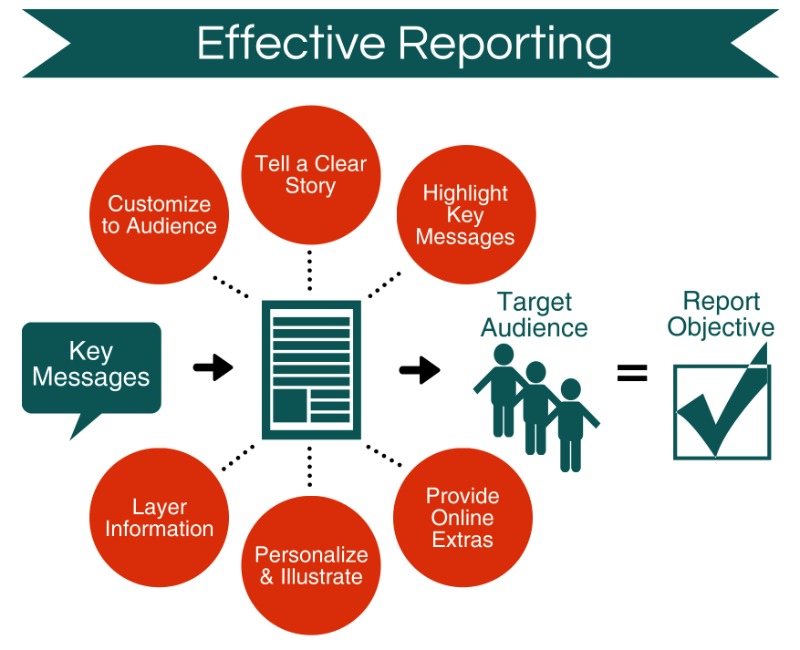
To demonstrate how data visualization can drive better decision-making, I will borrow from analytics guru Bernard Marr’s 7 Key Ingredients for Knock-out Data Visualizations.

Even the best analytics will amount to nothing if you don’t report the results properly to the right people in the right way. Make sure you report the results effectively by following these 7 steps:

  1. Identify your target audience. What do they need to know and want to know? And what will they do with the information?
  2. Customize the data visualization. Be prepared to customize your data visualization to meet the specific requirements of each decision maker.
  3. Use Clear Titles and Labels. Don’t be cryptic or clever. Just explain what the graphic does. This helps to immediately put the visualization into context.
  4. Link the data visualization to your strategy. As a result, they are much more likely to engage and use the information wisely.
  5. Choose your graphics carefully. Use whatever type of graphic best conveys the story as simply and succinctly as possible.
  6. Use headings to make the important points stand out. This allows the reader to scan the document and get the crux of the story very quickly.
  7. Add a short narrative where appropriate. Narrative helps to explain the data in words and adds depth to the story while contextualizing the graphics.

So there you have it. Data Visualizations allow the analyst to inform and empower the audience of the report/presentation to use the data to make good decisions.

10406025_10152524531307425_1404103117_n

It sounds easy, but a lot of people really struggle with this concept. Most presentations I see are either too wordy or include visuals the audience can’t see easily. Most reports are formatted in a way that may look good, but have little functionality.

Nothing prohibits good analysis like an excel spreadsheet full of data but not formatted in a way that allows a pivot table to be built.

Likewise a lot of reports are just summaries, with the original data hidden or absent. When you take away the power of an end user to do their own analysis, you really diminish the value of what you are doing.

So besides everything that Bernard said above, I would add make sure you provide the ability for your audience to use and analyze your data.

If you are having challenges with coming up with engaging and actionable data visualizations, let me know. I can definitely help.

Q13: A lot of us want to know what is business intelligence and how does it add value to analytics?

Per Wikipedia, Business Intelligence (BI) is an umbrella term that refers to a variety of software applications used to analyze an organization’s raw data.

BI as a discipline is made up of several related activities, including data mining, online analytical processing, querying and reporting. BI can be used to support a wide range of business decisions ranging from operational to strategic as well as both basic operating decisions include product positioning or pricing and strategic business decisions include priorities, goals and directions at the broadest level.

The CHED memo breaks business intelligence into four phases:

  1. Data Gathering. Business analysts need to identify the appropriate data-gathering technique by conducting research. Once you have identified the right data, it needs to be captured. This process is the same as the identify process.
  2. Data Storing. A general term for archiving data in electromagnetic or other forms for use by a computer or device. There is a common distinction between forms of physical data storage is between random access memory (RAM) and associated formats, and secondary data storage on external drives. This process is akin to the first part of the inventory process.
  3. Data Analysis. The process of systematically applying statistical and/or logical techniques to describe and illustrate, condense and recap, and evaluate data is the analysis phase. Data analysis has multiple facets and approaches, encompassing diverse techniques under a variety of names. We need to have a data analysis to improve the company’s performance. This process is the 2nd half of the inventory process.
  4. Data Access. Data Access refers to software and activities related to storing, retrieving, or acting on data housed in a database or other repository. Two fundamental types of data access exist: sequential access (as in magnetic tape, for example) Data access crucially involves authorization to access different data repositories. Data access can help distinguish the abilities of administrators and users.

That is a good starting point to understanding the concept. The memo breaks down the data analysis process into 4 parts to show how important the structure or data lake your data is stored is as important as the data itself.

Business Intelligence tools all work based on the premise that you have structured data neatly stored in tables with header rows and columns of data. More advanced BI tools can handle unstructured data, but for the most part they are all built to pull data from structured environments. BI Tools are like a fish or depth finder to help you access your data from the data lake quicker and with more efficiency.

Another important point to note is that business intelligence and business analytics are sometimes used interchangeably, but there are different.

From my perspective, the term business intelligence refers to collecting business data to find information primarily through asking questions, reporting, and online analytical processes.

Business analytics, on the other hand, uses statistical and quantitative tools for explanatory and predictive modeling. In this definition, business analytics can be seen as the subset of an enterprise wide BI strategy focusing on statistics, prediction, and optimization. The CHED memo is more closely aligned to that division as well as the primary focus is on the storage of data and the use of modeling.

As for myself, I worked with business intelligence software and methodologies with Wells Fargo long before I had even heard of the term BI.

3.6.1

I want to leave you with on tip. If you are fairly new to the concept of business intelligence tools I suggest you download Tableau Public. It is very easy to learn, there is a very active user community to learn from and best of all it’s free.

So check it out.