My Take Aways for the Big Data Conference 2016

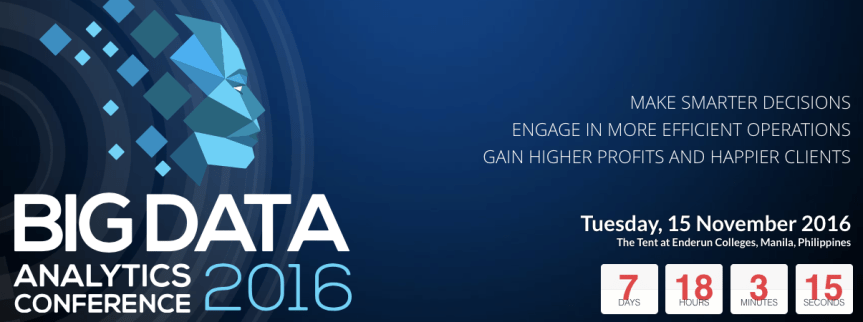
Had a blast at the Big Data Conference at Enderun College yesterday. Lots of things to discuss in upcoming blogs, but here are a few takeaways that I notated.

There is a strong hunger for a national umbrella organization for analytics, big data and data science.

Engagement at the C-Level of Filipino companies outside the IT-BPO sector to eliminate the biggest adoption roadblock.

Restart of the Government, Industry and Academia collaboration on analytics needs to happen.

More hands on experiential learning for both students and faculty involving the industry.

Both traditional training and certification models as well as mentoring and self-guided training opportunities.

The speed and consistency of the internet is a huge threat.

img_0121

Advocacy for fixing culture before spending on costly technology and high priced talent.

Conversion of up to 70% of Customer Facing BPO Workers to doing analytics and data science as a hedge against automation and political decisions.

Im convinced that a lot of good can come out of the conference as the analytics and data  science industry is at about the same point the call center industry was 10 years ago.

However, given the global demand for data savvy talent and the exponential proliferation  of data, we need todo in 3-5 years what the BPO industry did in 10.

More to come!

News & Events- DMAIPH is a highly engaged leader, sponsor and participant in analytics events across the U.S. and the Philippines. As an Analytics Champion I write, blog, speak and lecture about analytics in a wide variety of forums. I authored several publications on analytics including my latest book, Putting Your Data to Work. Contact DMAIPH now at analytics@dmaiph.com or connect with me directly to learn more about where I will be talking about analytics next.

It’s No Longer Just Enough To Know

In a recent conversation about using more analytics in the measurement and evaluation of public policies and programs, one of my colleagues said that in today’s world, “It’s no longer just enough to know.”

The point being if you aren’t using data and analysis to enhance your efforts and empower decision-makers with actionable insights, then you are not serving the public to the best of your ability.

A lot of government programs, non-profits and philanthropic organizations are what he called, “Information Rich, but Data Poor.”

Check out my upcoming webinar on Feb 15, 2017! https://dmaiph.com/2017/01/14/analytics-and-data-driven-decision-making-webinar-on-feb-15/

Just because you gather massive amounts of information in the form of data points, does not mean the data is adding value. In fact one of the biggest challenges the corporate world has been dealing with the past few years is how to optimize Big Data.

We live in a world where so much data is produced and captured, then analyzed and published in reports and article, yet the data and analysis alone is often not having the impact our policies and projects were intended to have.

In effect, we might know things, but we aren’t able to influence decisions because our data is not compelling enough.

To this end, I have advocated importing some analytics themed best practices from the corporate world to educate more on what to do with the data and how to put the data to use. To in short, be Information Rich, Data Rich to move towards more Data-Driven Decision-Making.

Starting backwards, I will first focus my training on the How. How do we make more data-driven decisions?

The I will focus on the Why. Why do we need to make more data-driven decisions?

From there we will go into several business analytics concepts like Data Visualizations, Public Data Mining, Data Lakes, Demographic Profiling using Big Data, and Data Blending.

amupicture1

A final topic of interest that I will bring to the discussion is the Plus Minus Implications for Unstructured and Qualitative Data. Things that at first can be hard to assign a number too, but are just important as any piece of traditional data used in decision-making.

At the conclusion of my work, public policy and project reporting will be much more data rich, influence will improve and decision-making enhanced.

Now we won’t just know, we will be able to champion what we know in ways that will make a difference.

Analytics Education – Facilitating a mastery of the fundamentals of analytics is what DMAIPH does best. All across the world, companies are scrambling to hire analytics talent to optimize the big data they have in their businesses. We can empower students and their instructors with the knowledge they need to prepare for careers in analytics. Contact DMAIPH now at analytics@dmaiph.com or connect with me directly so we can set a guest lecturer date, On-the-Job Training experience or other analytics education solution specifically tailored to your needs.

My Blog Post on the Analytics of Measurement and Evaluation

I recently had the honor of writing a blog post for American University’s Measurement & Evaluation program.

The post is about using a business analytics approach to “effectively evaluate projects, programs and processes.” This is in a response to the fact that it is becoming increasingly essential to use big data and analytics to ensure organizational success.

Here is the link: http://programs.online.american.edu/msme/resource/measurement-and-evaluation-analytics

It is my hope that I can inspire readers to look for ways to bring new data into their projects, programs and processes, blend it with current data, provide more dynamic analysis and share more impactful results.

I will also be doing a webinar early next year entitled Its Not Longer Just Enough To Know. Where I will highlight some techniques and technologies that I use to empower more data-driven decision-making.

Facilitating a mastery of the fundamentals of analytics is what I do best.

All across the world, companies are scrambling to hire analytics talent to optimize the big data they have in their businesses. Though my company DMAIPH, I can equip students and their instructors with the knowledge they need to prepare for careers in analytics. Contact DMAIPH now at analytics@dmaiph.com or connect with me directly so we can set a guest lecturer date, internship, on-the-job training experience or other analytics education solution specifically tailored to your needs.

14045878_10154480087262425_4779154686875783746_n

Being A Great Analyst > Key Attribute #4 > Be Enchanting

If you are a good analyst or a decision-maker that uses analytics, being enchanting makes your job much, much easier.

One key to using data and analysis effectively is understanding how to enchant people by being likable, trustworthy and using data and analysis to further a great cause.

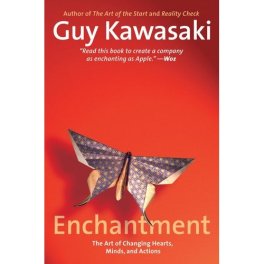
A few years back, I came across a book by Guy Kawasaki called Enchantment. It is my all-time favorite business book.

5.5

Guy Kawasaki is a marketing expert and used to be Apple’s Chief Evangelist (aka Chief Marketing Officer). At Apple their goal is to convert customers to being loyal to Apple products for life.

In Enchantment, Guy talks about how Apple and other successful companies are able to create enchantment in their customer base that fuels passionate and long lasting relationships.

As an analyst there are many lessons that you can draw from Enchantment to being an incredibly impactful member of your organization.

One of the pillars of Enchantment is being Trustworthy. As an analyst, you have to be trustworthy for people to want to follow the direction your data and analysis point.

Your data has to be clean, valid, and accurate.

Your analysis has to be easy to understand, easy to replicate and easy to boil down into a few bullet points.

When you accomplish these things you are creating trust. Getting decision-makers to listen to what the data is telling them comes when the analysts have their trust.

That’s just one part of Enchantment. I use many examples of how to apply Guy’s concept to data and analysis in my training classes and in my company.

If you are looking for a way to add value to your company, which in turn can make the business more successful then this book is a must read.

Analytics Culture – The key to using analytics in a business is like a secret sauce. It is a unique combination of analytics talent, technology and technique that are brought together to enrich and empower an organization. A successful analytics culture is not easy to create, but DMAIPH can show you how. Contact DMAIPH now at analytics@dmaiph.com or connect with me directly so we can build a strategic plan to turn your company into analytics driven success story.

Being A Great Analyst > Key Attribute #3 > Be Decisive

If you are a good analyst or a decision-maker that uses analytics, being decisive is much, much easier.

One key to using data and analysis effectively is understanding how people make decisions and what impacts the ability to make unbiased decisions.

A few years back I came across a book by Dan and Chip Heath called Decisive. It was a fantastic read.

The Heath Brothers are marketing and management experts who do a lot of research into what works and what doesn’t in the business world.

Decisive looks at what influences effective decision-makers overcome.

As an analyst, there are many valuable lessons that can be applied to both selecting data and presenting the analysis of the data.

One example of being Decisive that I use a lot related to trying to avoid a narrow frame. Too often we limit our choices.

When it comes to what data to use to answer business questions, we have to always ask ourselves is this the right data? Is there other data I can use to validate my findings? What data can be blended with this data to tell a more compelling story?

Being aware of your own biases will help you ensure you get the right data, that it’s what is really need to answer business questions at hand.

Being of aware of the biases of the consumer of your analysis (generally your boss and their peers) can help you position your data in ways that can mitigate those biases and let them see what you see.

There are dozens of examples from Decisive that I use in training people to be analysts and in using analytics effectively.

It is a book, well worth your time.

Analytics Culture – The key to using analytics in a business is like a secret sauce. It is a unique combination of analytics talent, technology and technique that are brought together to enrich and empower an organization. A successful analytics culture is not easy to create, but DMAIPH can show you how. Contact DMAIPH now at analytics@dmaiph.com or connect with me directly so we can build a strategic plan to turn your company into analytics driven success story.

Survey Results: Devote More Time For Data Analysis

Most Analysts Spend 50% of Their Time Finding Data

% Finding Analyzing Reporting
10 12% 6% 33%
20 14% 10% 39%
30 20% 31% 24%
40 6% 14% 2%
50 31% 16% 2%
60 14% 18% 0
70 0% 0% 0
80 0% 2% 0
90 0% 0 0
100 0% 0 0
       

Most analysts spend most of their time finding data.

Among other thing this can mean they are setting up data mining or data gathering process to look for the data or it can mean they reviewing their data for relevancy.

My experience is that when you spending this much time on the finding the right data phase it reflects a poorly structured data environment or a unfamiliarity with the data needed.

Dirty data is also a big time waste.

Experience is the best solution for challenges with finding data. The fact the finding phase % is so high speaks to both the explosion in the 3 V’s of Big Data (Velocity, Volume and Variety)  as well as the number of analytics newbies.

To me this should be no more than 20% of your time.

I expected finding data would be the biggest chunk, but was surprised that over 50% of my analyst connections using at least 40% of their time finding data.

If you have one day to answer a key business question, this means you are using your entire morning just finding the data.

When you get back from lunch you haven’t even started the actual analysis yet and the clock is ticking.

Data is based on a survey I sent to 3,000 of my LinkedIn connections who are either analysts or work closely with data and analysis.

Analytics Survey – DMAIPH conducts quarterly analytics surveys to collect data on current trends in analytics. We specialize in surveys that assess analytics culture and measuring how aligned an organization is to using data and analytics  in its decision-making. Contact DMAIPH now at analytics@dmaiph.com or connect with me directly to find out more about how DMAIPH can conduct surveys to help you assess the analytics culture in your business.

Quick Analytics Career Question

Greetings to You My Valued LinkedIn Connection,

I was talking with a young professional just getting started in his analytics career. During our conversation we discussed what is most important to being a great analyst. With that in mind, I’d ask you to share your thoughts.

In your opinion, of the following ways to learn about analytics, which one has been the most important in your career path?

  • Formal Education – A degree or certificate in an analytics related field.
  • Self-Learning – Using trial and error and online resources.
  • Subject Matter Experts – Being trained/mentored by an expert.
  • Seminars/Workshops – Attending events to acquire new knowledge.
  • Technical Training – Attend training on specific technical areas.

Thanks for sharing. As always I will roll up all the replies I get and blog about it.

Dan Meyer, Analytics Champion, http://www.dmaiph.com

img_7526

Analytics Survey – DMAIPH conducts quarterly analytics surveys to collect data on current trends in analytics. We specialize in surveys that assess analytics culture and measuring how aligned an organization is to using data and analytics  in its decision-making. Contact DMAIPH now at analytics@dmaiph.com or connect with me directly to find out more about how DMAIPH can conduct surveys to help you assess the analytics culture in your business.

How Does a Foreigner Become a Successful Speaker in the Philippines?

“As a foreigner, how do you market and sell yourself as a speaker in the Philippines.”

A good friend of mine asked me that a little while ago.

After letting it rattle around in my head a bit, I came up with this reply.

As cliché as it sounds you have to be yourself. Although high powered, dynamic speakers can come to the Philippines to speak and make money, the ones who keep coming back are the ones who are authentic.

I also understand the heart of the Filipino. I am just one of a network of maybe several dozen Philippines based, non-Filipino speakers who routinely are asked to speak at conferences and seminars.  The fact that we have expertise in our fields of specialty is important, but I think what’s more important is that we all have chosen to live in the Philippines. That makes a significant difference.

To a person not familiar with the Philippines, who is just visiting to be a speaker, it will be much harder to really understand the heart of the Filipino. And therefore you would have to work much harder to be an impactful speaker. There will always be a lot of value in sharing knowledge and being a subject matter expert, but if you can’t put that in context of what it means to live and work in the Philippines, you will likely not succeed long term.

That said, I can point out a few things that I think would help a visitor who really wants to learn what it takes to know be successful in the Philippines.

Get outside the comfort zones. Most foreigners stay in relatively rich, safe and easy to get around areas in Metro Manila. To really get to know the Philippines you need to go to the palengke (market place), ride a Jeepney (local transit) and eat some street food (I love BBQ pork on a stick). Now, I recommend you go with a local your first time, but if you can talk about these experiences, you audience will be able to relate to you and have much more respect for you.

Traffic congestion is horrible in Metro Manila. Its an easy target for a shared experience. Saying you were worried you might be late because “Traffic sa Edsa” (traffic was bad on EDSA, the major north-south traffic artery in Manila) will also help. Actually just learning and using a few Tagalog phrases will make a huge difference.

Another suggestion I would make is don’t use up most of your time talking. Breaking into small groups discussions and having interactive learning activities will take the burden off of the audience having to always listen to having a fast-talking and intelligent, foreigner. It can be very intimidating for the audience when that happens. They end up getting, what Filipinos humorously refer to as “nosebleed”. Too much English, too fast and with too much information being the cause. So building in breaks from you speaking is another key to success.

The final suggestion I’d offer my friend, would be to be social. Mix with the audience before the event starts. Be ready to say Maghanda Umaga (Good Morning) when they come in. After the first session and you are on AM break while everyone is having snacks, be ready to mingle some more. And at the end, build in time to take a group photo and group pics. The Philippines is proud to be the most Social Media driven country in the world. Selfies reign. Embrace that fact and you will win a lot of support.

As for marketing, social media and mobile are of paramount importance. You have to push a lot of mobile friendly content through social media to really draw attention to you and your training. And the more that you do to show your interest in empowering Filipinos the more success you will have.

Hope that helps!

My Analytics Story – My passion is solving problems by bringing together the best talent, cutting edge technology and tried and true methodologies. DMAIPH is all about empowering people towards better Decision-Making through the use Analytics and business Intelligence. This is what I do best. Contact DMAIPH now at analytics@dmaiph.com or connect with me directly for a free consultation about getting more analytics into your career and your business.

Big Data Analytics:Big Data—It’s Not Just Size > 2/21/17

I will be speaking on February 21, 2017 at Discovery Suites, Ortigas Center, Pasig City  on Big Data Analytics and Business Intelligence.

With that in mind, I wanted to go into a little more detail about each section, starting with…

Enabling Your Business to Make Smarter Decisions Section 1 : Big Data—It’s Not Just Size

Participants will learn to Describe the Importance of Effectively Analyzing Big Data in Business Today
. Being able to explain analytics to non-technical people is very important for any analytics solution to work.

We will also come up with a Data Map to Analyze the Big Data in your business. A data map allows you to see how data comes into the business, where it is stored and how it is accessed. Knowing you data environment is key to having clean and valid data in your analysis.

Another goal will be Establish Clear Objectives When Analyzing Big Data. Knowing exactly what your end user needs, how they want your reports and what will happen to the fruits of your analysis will allow you to be much more value to the business.

I will show attendees how to Recognize and Apply Various Data Collection Methods
. Way to often we get stuck by not having documented are process clearly. Having an easily traceable and repeatable process will make your analytics life much easier.

In addition, we will talk about how to Identify and Resolve Problems Associated with Data Collection
. Not all data is good data. In fact cleaning data can eat up a lot of time, but it’s a better alternative to reporting based on bad data.

We will discuss the difference between Data Warehouses and Data Lakes. Knowing how data is used in your organization, who has access to it and what they do with it goes a long way in making sure your entire organization becomes more data-driven.

Finally, we will determine when to use Data Blending in your analysis. How to take all of the Big Data you have both inside and around your business and bring them together to give you a 360 degree view of things is also very important to success.

Thats section one… i’ll over the next 3 sections over the next few days.

If you are interested in attending this training, I can connect you with my good friends at Ariva Events Management who will be facilitating the program.

Analytics Training – DMAIPH offers a wide range of analytics centric training solutions for professionals and students via public, in-house, on-site, and academic settings. We tailor each training event to meet the unique needs of the audience. If you need empowerment and skills enhancement to optimize the use of analytics in your organization, we are here to help. Contact DMAIPH now at analytics@dmaiph.com or connect with me directly to set up a free consultation on which of our DMAIPH analytics training solutions is best for you.


DMAIPH Quick Data Survey

A few months back I sent a quick survey to 3,000 of my LinkedIn connections who are either analysts or work closely with data and analysis.

Here is the question I asked.

Greetings!  I’m hoping you can help me gather some data for a book I’m working on. If you had to breakdown the work you do into 3 buckets; finding data, analyzing data and reporting data, what would the % of each be? A quick reply with your breakdown would be hugely helpful in my research. Thanks!   Dan Meyer, Analytics Champion, www.dmaiph.com

I got back over 400 replies.

Here is how they broke down.


% Finding Analyzing Reporting
10 12% 6% 33%
20 14% 10% 39%
30 20% 31% 24%
40 6% 14% 2%
50 31% 16% 2%
60 14% 18% 0
70 0% 0% 0
80 0% 2% 0
90 0% 0 0
100 0% 0 0
       

The higher the %, the more each analyst spent time doing that particular phase of analytics.

Here are some of my takeaways from this simple (and very nonscientific survey)

  • I was surprised to see 45% spend half their time or more on finding data. To me this is one of the telling signs that Big Data has led to a shortage of top analytics talent.
  • Only 1 out of 4 analysts are spending 20% of less of their time finding data. These are generally senior analysts, well established in their company.
  • Only half of my analyst connections are spending 40% of more of their time on conducting analysis. With significant time spent on finding and/or reporting data you can imagine a lot of important discoveries are being missed and opportunities lost.
  • Only 1 out of 3 analysts are getting spend my recommended 50% or more of their time actually doing analysis work.
  • Based on my survey, reporting gets shortchanged a lot. All in, 96% of respondents spend 30% of their time of less on reporting.
  • My recommendation is that you spend about 30-40% of your time on the reporting aspect, and sadly only 4% of my analytics connections are able to do that.

In an ideal world, I would expect an analyst to spend no more the 30% of their time on finding data, and at least 30% on reporting their findings, leaving more or less 40% to do the actual analysis.

IMG_1310

This breakdown is based on my own experience as an analyst as well as seeing how analyst working for data-driven companies work.

Only about 30% of my 400+ analytics focused LinkedIn connections come close to meeting my recommended breakdowns.

Which means I have a lot of work to do.

Analytics Survey – DMAIPH conducts quarterly analytics surveys to collect data on current trends in analytics. We specialize in surveys that assess analytics culture and measuring how aligned an organization is to using data and analytics  in its decision-making. Contact DMAIPH now at analytics@dmaiph.com or connect with me directly to find out more about how DMAIPH can conduct surveys to help you assess the analytics culture in your business.