Time Consuming Tasks, Your Small Business Should Outsource

Many entrepreneurs and small business owners reject outsourcing because of the perceived extra cost.

However, they fail to calculate the value of opportunities lost because they sank too much time into energy-sapping tasks best left to others.

DMAIPH has a team of top talent that can take on several of the things you are doing that eat up way to much of your precious time.
10948138_918236694853511_81426736_o

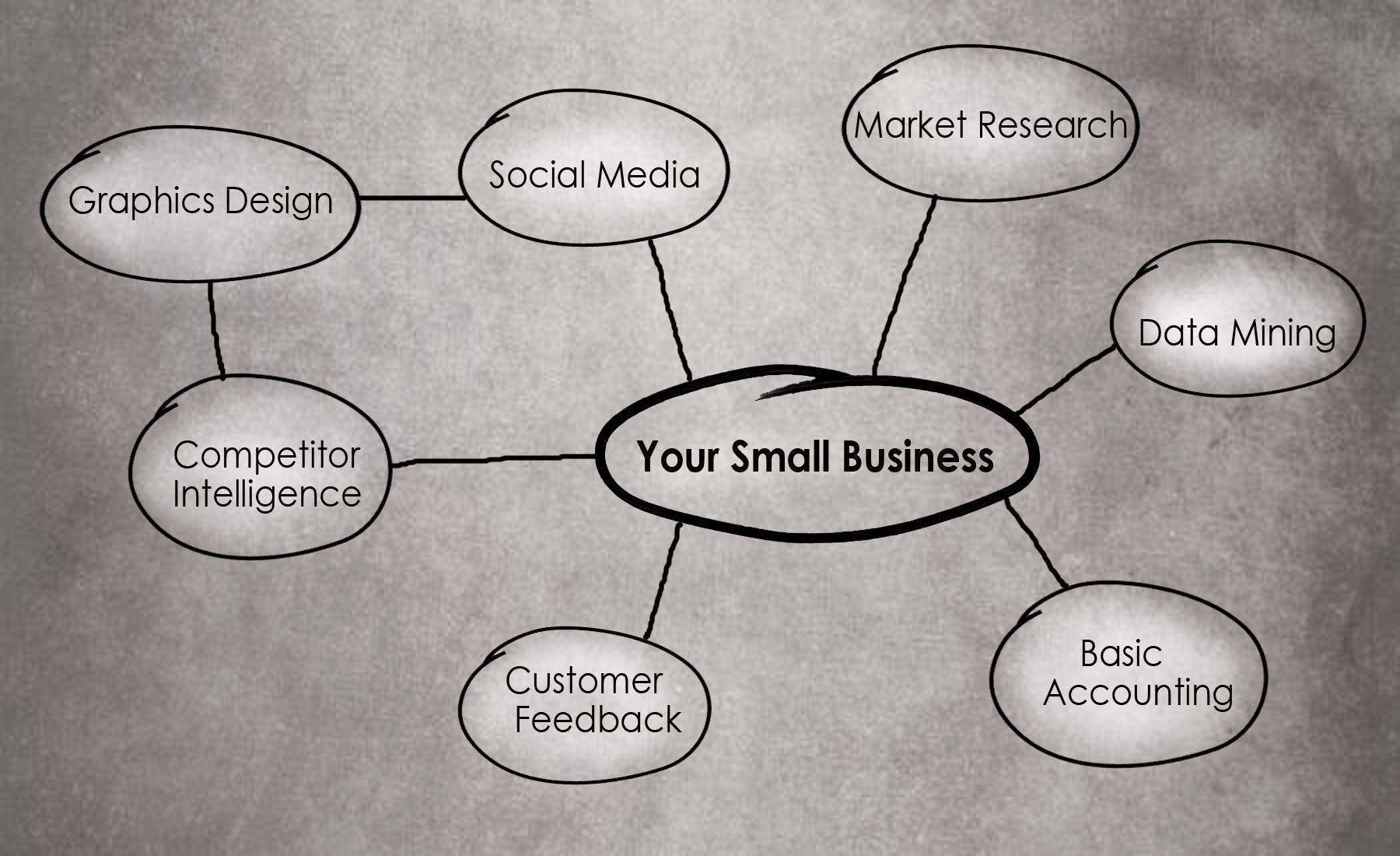
We specialize in:

  • Graphics Design
  • Social Media
  • Market Research
  • Competitor Intelligence
  • Customer Feedback
  • Data Mining
  • Basic Analytics
  • Administrative Support

We can also build you a business dashboard using the free and easy to use Tableau Public (www.tableaupublic.com) business intelligence tool. Our team of analysts will also show you how to use Tableau Public to make more data-driven decisions in your business.

Contact us today for a free consultation. DMAIPH has been providing outsourcing solutions to U.S. based small and medium sized business for over 5 years.  Our offices in the Philippines are set up with state of the art technology and staffed with top local talent.

Analytics Outsourcing – DMAIPH has successful set up Filipino analytics teams for over a dozen U.S. based businesses. Offering both virtual and office based teams that specialize in problem solving using data, new technology and analytics techniques is our strength. Finding and empowering analytics talent is increasingly challenging, but we have it down to a science. Contact DMAIPH now at analytics@dmaiph.com or connect with me directly to learn more about how to set up an analytics-centric team in the Philippines.

Don’t Be A Recruitment Dinosaur, You Need To Be Thinking Mobile First

Per monster.com… As more consumers set aside laptops in favor of smartphones, iPads and other tablet computers, job seekers expect to be engaged with videos, job notifications and quick follow-up. Many experts say that recruiters must learn to adapt their recruitment strategy to these platforms.

Today’s mobile job seekers have different expectations and look for:

  • Instant updates about new jobs via their mobile devices
  • Immediate feedback to their job application
  • Recruiting videos to watch on their mobile devices
  • Engaging, interactive content from employers

Recent Facebook data for here in the Philippines shows that as much as 90% of job applicants will apply via mobile for the same job they would pass up if looking at the post via a laptop or desktop.

IMG_1310

And according to CareerBuilder’s 2013 Candidate Behavior Study, 65 percent of workers who search for jobs via mobile devices will leave a website if it isn’t mobile-friendly, and – possibly worse – 40 percent walk away with a more negative opinion of the company.

You have to think Mobile first if you want to attract 18-24 year old Filipinos for jobs in the BPO Industry.

HR & Recruitment Analytics – The recruitment and retention of top talent is the biggest challenge facing just about every organization. DMAIPH is a leading expert in empowering HR & Recruitment teams with analytics techniques to optimize their talent acquisition and management processes. Contact DMAIPH now at analytics@dmaiph.com or connect with me directly to learn how to get more analytics in your HR & Recruitment process so you can rise to the top in the ever quickening demand for top talent.

Recruitment Analytics: A Simple Classification System

How do you classify the applicants in your pipe line? There are hundreds of ways to separate resumes at the first point of contact by potential job fit. Most Applicant Tracking Tools have this built in and really smart ones will auto separate and classify based on keyword searches.

If you can afford an ATS or have veteran recruiters and/or an optimized process you are probably already doing this. But you would also be shocked to know how many companies are not doing this.

To get started just create 3-4 piles to put resumes in. Its as simple as this:

  • Pool A is for candidates who have most if not all of the qualifications you are looking for.
  • Pool B is for applicants who have some of the qualities.
  • Pool C is for applicants who really don’t have any of the things you are looking for and/or have some fatal flaws that you believe are incompatible with the job.
  • Pool D can be for resumes who currently don fit, but might in the future.

If you are just using Excel to track your applicant pipe line, it is easy to add a column for general classification. Through in some weighted scoring to rank within each category and you are actually doing better than a lot of small and medium sized companies.

tracking-analytics

Just as an example, In each pool, you can add a rank of High, Medium and Low. High being they should be ready to start day one, medium meaning the will need some training time if they are hired and low meaning they will need some extensive training.

It is really that simple. Starting adding structure to your recruiting so you can focus your time and energy on those who have the most potential to help you right now, but also keep track of those who might be able to help you down the road.

IMG_1310

If you don’t have a good ATS, then doing something like this will make a huge difference. You will soon be able to start making more strategic choices on who you spend your time, focus and money on.

HR & Recruitment Analytics – The recruitment and retention of top talent is the biggest challenge facing just about every organization. DMAIPH is a leading expert in empowering HR & Recruitment teams with analytics techniques to optimize their talent acquisition and management processes. Contact DMAIPH now at analytics@dmaiph.com or connect with me directly to learn how to get more analytics in your HR & Recruitment process so you can rise to the top in the ever quickening demand for top talent.

Five Things That I Ask My Leadership Team To Do

As our team continues to grow and the type of work continues to diversify, I have been reflecting a lot on the way we approach things. The way we influence those we work with, the words we choose to motivate each other and the commitment we demonstrate to ourselves, each other and our clients all have a huge impact on our success.

Leaders do more than manage. They inspire and empower. They also hold people accountable. Having worked with and for some great leaders over my career, these are the top five things I ask my leadership team to do.

  1. Do The Work. Nothing inspires others more than seeing a person in a position of authority work hard. Putting in the extra effort, making sacrifices and going above on beyond to bet things done. Excelling at what you do is the best way to get others to do the same.
  2. Sharing The Vision. I use the term sound like a broken record a lot… meaning you should share and share and share stories and ideas and dreams that give people a vision of where things are going. In this fractured world, so full of distractions, it’s really not possible overshare your vision.
  3. Carrot And Stick. I use this metaphor a lot to remind my team that we have to be equally well versed in both discipline and praise. That we need to balance being a good cop and a bad cop. Being fair and just, is in the end what all employees want from their leaders.
  4. Don’t just give directions. Explain why things are important. Looks for root causes and not just the symptoms. Take the extra time to write a more comprehensive email, or sit down and explain something a second time, or use visuals to re-enforce why we do what we do.
  5. No excuses. True leaders accept responsibility, hold themselves accountable for failures and offer up solutions to problems. Unsuccessful leaders offer explanations and excuses.

So as we kick into high gear with expansion plans, these are the things I will be doing, sharing, reminding, and educating my team about.

Analytics Leadership – DMAIPH specializes in arming the Data-Driven Leader with the tools and techniques they need to build and empower an analytics centric organization. Analytics leadership requires a mastery of not just analytics skill, but also of nurturing an analytics culture. We have guided thousands of Filipino professionals to become better analytics leaders. Contact DMAIPH now at analytics@dmaiph.com or connect with me directly to discuss a uniquely tailored strategy to ensure you are the top of your game when it comes to Analytics Leadership.

How DMAIPH Uses Analytics > Doctor’s in Houston

I love public data mining projects like this…

Here is what we need:
A list of primary care, internal medicine, general medicine, and geriatric physicians in the Houston area who have written prescriptions for the atypical antipsychotic class of medications.

Specifically:

  • These physician specialties (primary care, internal medicine, general medicine, and geriatric physicians)
  • In these cities in the Houston MSA (Houston, Texas City, Pearland, Friendswood, Clear Lake, Missouri City, Sugarland, Katy, Cypress, Spring, The Woodlands, Tomball, Conroe, Cleveland, Kingwood, Porter, Humble, Baytown, Pasadena, Beaumont)
  • Can we get this mapped into an Excel spreadsheet with the following columns of data:
    • Separate columns for last name, first name
    • Specialty
    • Address
    • Overall volume of Medicare claims for all of the antipsychotic medications (quetiapine fumarate, Seroquel, Seroquel XR, risperidone, Risperdal, Abilify, olanzapin, and Zyprexa).

If you find research projects like this interesting, then DMAIPH is the place for you! 🙂

20141203193138-5-tech-tool-help-compete-with-big-guys

Analytics Outsourcing – DMAIPH has successful set up Filipino analytics teams for over a dozen U.S. based businesses. Offering both virtual and office based teams that specialize in problem solving using data, new technology and analytics techniques is our strength. Finding and empowering analytics talent is increasingly challenging, but we have it down to a science. Contact DMAIPH now at analytics@dmaiph.com or connect with me directly to learn more about how to set up an analytics-centric team in the Philippines.

Achieving Better Results Through Analytics: What’s Your Analytics Strategy?

Just put together a pitch deck for a potential in-house corporate training.

Here’s some of the highlights…

You need an analytics strategy.

Making data-driven decisions is key to success in any business.

Having the right data at the right time makes all the difference.

Data-driven decision-making, as well as improved productivity and better overall outcomes begins with analytics.

Some of the benefits from a good analytics solution include:

  • Provide timely and targeted coaching/training to agents.
  • Ensures that the right materials are assigned.
  • Optimizes process of following agent improvements, leading to skill development and job mastery.
  • Eliminates the need for e-mailing countless excel spreadsheets
  • Schedules coaching/ training at an appropriate time.
  • Optimizes the follow up process to review impact of training and identifies when agent performance requires management attentions.
  • Give’s Management a High Level Overview of important KPIs.

IMG_6912

Business Strategy with Analytics – Aligning a business strategy to drive an organization forward requires a robust analytics solution. Businesses who have good analytics tend to be much more profitable and efficient then ones that do not. DMAIPH has helped dozens of companies in both the U.S. and the Philippines with adding more data analysis in their business strategy.

That’s why we have joined up with our key business partner PMCM Events Management to showcase our solutions at #TechToniPH in July 2017. Contact DMAIPH now at analytics@dmaiph.com or connect with me directly to find out what we can do to help you align your business strategy with analytics.


Communicating Strategy From the Bottom

http://blogs.hbr.org/2014/06/strategy-isnt-what-you-say-its-what-you-do/

Came across the log post about strategy implementation and I think it’s a good one for consultants working with senior management teams. It goes along the lines of walking the talk.

“Strategic choice-making cascades down the entire organization, from top to bottom. This means that every person in the company has a key role to play in making strategy. Performing that role well means thinking hard about four things:

1) What is the strategic intent of the leaders of the level above mine?
2) What are the key choices that I make in my jurisdiction?
3) With what strategic logic can I align those choices with those above me?
4) How can I communicate the logic of my strategy choices to those who report to me?

If you as a manager can do the first three of these four, then you will own your choices and own your strategy. If you do the fourth, you will set up your subordinates to repeat these four things and thereby own their choices and their strategy, and pass on the task to the next layer of the company. If each successive layer assumes this level of ownership, the organization can make its bosses’ statement a real strategy rather than an empty slogan.”

I can personally say that these points are all very important to infuse into the culture of your company. Both from my Wells Fargo experience where these are deeply ingrained in the corporate culture to the smaller scale of my own company, clearly communicated strategy is the key.
When not only your direct reports, but your two downs are spreading the gospel, you will be successful.

If you need help getting your team to walk the talk, I’m happy to help.

Business Strategy with Analytics – Aligning a business strategy to drive an organization forward requires a robust analytics solution. Businesses who have good analytics tend to be much more profitable and efficient then ones that do not. DMAIPH has helped dozens of companies in both the U.S. and the Philippines with adding more data analysis in their business strategy. Contact DMAIPH now at analytics@dmaiph.com or connect with me directly to find out what we can do to help you align your business strategy with analytics.


What Exactly Are Recruitment Metrics?

A general definition of recruitment metrics is something like this, “standards of measurement that HR and Recruitment professionals use to identify, analyze and present important information regarding the hiring process.” Recruitment metrics are extremely important in both assessing the effectiveness of the recruitment process and in looking at the ROI (return on investment).

Traditionally recruitment metrics focus on two areas; cost per hire and time to hire. They are both looking primarily at only the impact to hire someone.

However, those metrics generally do not include a multitude of important data points that decision-makers need to know. For example things like candidate satisfaction and hiring manager satisfaction can help determine wholes in a process.

You can also use recruitment metrics to optimize the hiring process looking at things like distance to work, difficult of commute, and demographic data on what schools and courses provide the best employees.

Another are you can draw psychometric data from for your metrics would be on things like work ethic, career decision-making and employee loyalty to see who is successful in your company so you can find more like them.

The types of metrics you can use in your recruitment process are practically limitless.

Based on a recent survey I saw on LinkedIn, If we use metrics correctly, they achieve the following additional benefits:

  • Advance the relationship between recruitment and the hiring managers — align the RIGHT objectives
  • Provide credibility to the recruitment department by displaying that they understand the overall business goals and objectives
  • Define what is important and expected of each recruiter
  • Drive consistency in delivery of recruitment services to the organization
  • Provide a platform to measure recruiter accountability and performance.

Does your recruitment process have actionable metrics that can drive data-driven decision-making?

If you are having trouble with your recruitment metric, connect with me and I’ll help you make sure you are measuring the recruitment metrics that are key to your business.

HR & Recruitment Analytics – The recruitment and retention of top talent is the biggest challenge facing just about every organization. DMAIPH is a leading expert in empowering HR & Recruitment teams with analytics techniques to optimize their talent acquisition and management processes. Contact DMAIPH now at analytics@dmaiph.com or connect with me directly to learn how to get more analytics in your HR & Recruitment process so you can rise to the top in the ever quickening demand for top talent.

All I Need To Know About Someone Is What Was The Last Book They Read

I’m not sure where I picked that concept up from, it’s probably a variation of a famous quote whose author escapes me. But for me there is a lot of truth to the statement. When you find out the last book someone read you can tell a lot about them. When you get them talking about it you can gain incredible insight into who they are and what motivates them.

In my case I picked up a book at the airport for my flight and to help me get into trainer mode. The book I picked up was Decisive, a business management and leadership book by the Heath brothers. It was on the top of a lot of 2013 lists and I had heard of it before. Once I started reading it, I quickly saw some key points I could roll into my next analytics training class.

Picture1

Here are some of the key points:

> Most decision are made in an instant and are often just a choice between two options.
> Although helpful, Pro and Con lists are limited in their effectiveness.
> Most business decisions, when looked at a few years later, were failures.

In the book the Decisive, the authors list four tips to help make better decisions:

1. Widen Your Options by eliminating factors that put artificial limits on our choices.

2. Reality-Test Your Assumptions by taking them out of our head and into the real world.

3. Attain Distance Before Deciding, which means don’t rush and gain other perspective.

4. Prepare to be wrong, the willingness to take risks is a challenge for all of us.

Its a great read, pick it up.

HR & Recruitment Analytics – The recruitment and retention of top talent is the biggest challenge facing just about every organization. DMAIPH is a leading expert in empowering HR & Recruitment teams with analytics techniques to optimize their talent acquisition and management processes. Contact DMAIPH now at analytics@dmaiph.com or connect with me directly to learn how to get more analytics in your HR & Recruitment process so you can rise to the top in the ever quickening demand for top talent.

What To Do When Employees Don’t Succeed?

http://www.recruiter.com/i/4-positive-alternatives-to-firing-staff/?utm_content=buffer888a9&utm_medium=social&utm_source=linkedin.com&utm_campaign=buffer

Came across this interesting article on LinkedIn, about what to do instead of firing an employee. It caught my attention as the BPO Industry in the Philippines continues to grapple with attrition rates that are way to high.

In short, the problem is that with a perceived deep talent pool to tap, BPOs have put little effort into retention policies instead being quick on the trigger thinking they can easily find a better employee. This mindset is not only self-destructive but also badly out of line with available data. As it gets harder and harder to recruit quality employees, many times the answer is pour more money into recruiting or more money into incentives, but almost no one is putting more money into training and coaching.

When you can step out of the industry for a minute and look at the patterns its pretty mind-boggling that such a booming and vibrant industry is so short-sighted.

So, with that back drop in mind, I found this article a good one to help me and my management team put some pauses in place and do a little more due diligence before coming to the decision to give up on someone.

The 4 bullet points listed are all very good ones to chew on:
1. Employ Self-Assessments to go hand in hand with KPI data points
2. Setting clear and achievable goals to mark success
3. Targeted coaching and training
4. And redeployment to positions with a better chance for success

I’ve added these discussion topics to my next management meeting agenda and will build in additional check points within our assessment process. All in all a good read indeed!

HR & Recruitment Analytics – The recruitment and retention of top talent is the biggest challenge facing just about every organization. DMAIPH is a leading expert in empowering HR & Recruitment teams with analytics techniques to optimize their talent acquisition and management processes. Contact DMAIPH now at analytics@dmaiph.com or connect with me directly to learn how to get more analytics in your HR & Recruitment process so you can rise to the top in the ever quickening demand for top talent.