Follow Up to Q17: HR Analytics Trends

As a follow up to my last blog, I wanted to share a few more points about HR and Recruitment analytics then time allowed for. So here’s what I left out.

First we are seeing a massive replacement of licensed, traditional HRMS systems taking place. Many large companies either have, our or are looking into replacing the core HR applications. Most where built internally, just store structured data, are difficult to pull data from unless you can write code and are not integrated with other data structures.

The replacements are often vendor managed, cloud based, data storage solutions with end user interfaces that simply finding and analyzing data and often automate much of the reporting. And they can be updated in hours versus minutes, versus the old platforms that could take weeks if not months to update.

540

These new platforms are able to provide almost limitless data points, have built in business dashboards and are starting to offer powerful predictive analytics models. The days of many of the old school CRMs and ATSs we are using to manage people data are truly numbered.

Another trend worth mentioning is the efforts cutting edge teams are putting into both candidate and employee engagement. Attempts to “gamify” various part of the employee lifecycle to make data gathering, analysis and sharing more eventful is increasingly common. Its common knowledge that ways to attract and keep the attention of millennials is significantly different then it is for baby boomers or Gen Xers.

Dr. Sullivan mentioned that “we are seeing the traditional annual engagement survey is going the way of the dinosaur (slowly however) and a new breed of pulse tools, feedback apps, and anonymous social networking tools has arrived.” It has never been more important to look at not just the enterprise wide health of a company, but that of small communities within the enterprise.

Metrics that measure how engaged an employee once a year is are no longer enough. We can use things like sentiment analysis, text analytics and social media data scrapping to uncover things we would never see in a survey where everyone is pressured to give top scores.

And we really have to get beyond historical data and descriptive analytics to look at current and predictive metrics. We need to quickly know when and why metrics are headed in the wrong direction and measure the impact of our solutions. And this goes for not just current employees, but future ones as well. Candidate satisfaction with the hiring process is often an over looked metric.

We also now have the data and the tools to run predictive models on how, when and why someone may be looking to leave the company. This creates another whole area of HR analytics to look at.

Dr. Sullivan added that “we are seeing tools to predict flight risk, assess high potential job candidates, even find toxic employee behavior – are all in the market today.  While many are not highly proven yet, they all work to a degree, providing great value to any company.”

Now we have, three more trends to consider when it comes to analytics in HR & Recruitment:

  1. Replacement of old internal HR systems with new vendor managed tools
  2. The evolution of employee engagement tools
  3. Predictive analytics modeling

If you are curious about how to get more than just the most basic descriptive analytics out of your business data, then let us sit down and talk about. Finding solutions to replace your old HR systems with more employee engagement options and predictive analytics is not as hard or as expensive as it was a few years ago. Let me show you how getting back on the cutting edge  with your data can be done.

HR & Recruitment Analytics – The recruitment and retention of top talent is the biggest challenge facing just about every organization. DMAIPH is a leading expert in empowering HR & Recruitment teams with analytics techniques to optimize their talent acquisition and management processes. Contact DMAIPH now at analytics@dmaiph.com or connect with me directly to learn how to get more analytics in your HR & Recruitment process so you can rise to the top in the ever quickening demand for top talent.


Q17: What are some best practices and technologies used in HR & Recruitment Analytics?

HR and Recruiting Professionals have embraced analytics. It took a while, but the increased need for data and analytics tools –The ability to collect, process and analyze “big data” has become paramount to the people side of the business. In order to gain a competitive edge in the increasingly chaotic global workplace, those who use analytics to gain data-driven insights into recruitment, compensation and other performance centric trends are the ones on the cutting edge.

“In my opinion, 95% of all the work that is done on recruiting metrics ends up being a waste of time, because the work focuses on creating historical tactical metrics never actually used to improve recruiting performance,” says Dr. John Sullivan, an ERE blogger and recruiting metrics expert. He says there are 3 reasons why there are failures and wasted time when it comes to metrics:

  1. Recruiting metrics omit any “big-picture” business impacts
  2. Current recruiting metrics are 100% descriptive and only offer guesses on what is and what will happen.
  3. Once collected, the metrics are reported to “barley interested eyes” who then assign things to a committee whose time spent results in very little measurable impact.

If you are still focused on time to fill and cost per hire, you really are quickly becoming a dinosaur. In addition, the idea of trying bringing in new people while working towards retaining top talent are generally not assigned to the same people. The disconnect between recruiting good people and retaining the good people who have been recruited is a killer to many companies. Both the material and cultural cost of replacing a bad hire isn’t generally looked at.

There are lots of blind spots to what is happening not just internally, but also externally.  Knowing who you are competing against for the same talent and what makes your offer to sign or stay stand out from the crows. None of these points can be analyzed with old school metrics terms and methods.

Dr. Sullivan also recommends six strategic categories of metrics that will help your in not just recruitment but in many other HR initiatives like retention and employee engagement:

  • The positive performance increase added by more productive hires
  • The failure rate of new hires and the damage done by weak hires
  • The losses created by a weak hiring process
  • The opportunity costs of “missed” landable top talent
  • The cost of using excessive hiring manager hours

img_7526

If you are looking at metrics like these, and sharing your findings not just with the recruitment team, but the boarder HR team, you can come up with big picture strategies to deal challenges much more effectively. In my own experience, a few other noteworthy trends in HR and Recruitment Analytics to consider include:

  • Disruptive Technology. Giving tools and information to managers and employees directly allows action to happen much quicker and be much more localized in impact. Success means giving the power to the end users so that HR can do more to oversee and manage big picture metrics.
  • Once A Year Is Not Enough. Annual reviews and employee surveys are too old school. Using analytics to gain insights can now be done 24/7. This can really have positive changes on employee engagement without the drawn out and too formal process made uniform to all.
  • Outsource Stuff. In successful companies, many tasks are outsourced to vendors who can do a lot more specialized things then in house generalist staff can do. Its just to much to ask a few people to stay on top of all the things important to the people you rely on. You have to pick and choose what you can keep and what you can outsource.
  • Mobile Apps. Designing apps for mobile first use is the way to go. We too often rely on old school thinking and take web-only or web-first tools and repurpose them for mobile. Times have changed. Mobile first is the way to connect with todays candidates and employees.
  • Look For It On YouTube. Video based learning, recorded by localized subject matter experts is on the cutting edge. The bonuses of learning from someone who is doing it versus traditional corporate trainers and enterprise world eLearning modules is another key to success.
  • Out Of The Box Analytics Tools. Behind the fire wall HR applications are being replaced or augmented by vendor based analytics tools that are more dynamic and expandable. Many can set on top of or replace current tools that are being used to gather, store, analyze and report data. The days when everything has to be designed, developed and maintained by an internal IT team is also going the way of the dodo bird.

So there you have it… becoming an HR and Recruitment Analytics ninja is going to take a lot of new thinking and a lot of letting go of how it worked in the past. Everyone agrees recruiting has never been harder, retention is getting more challenging and the future of finding and retaining talent is looking like a nightmare on the horizon.

If you need some guidance with how to being your HR and/or Recruitment team into the information age, I’m happy to help. One of my favorite things to do is get in a room with HR and Recruitment staff and talk about how to bring the team form the past to the future when it comes to analytics.  Just ask me how.

HR & Recruitment Analytics – The recruitment and retention of top talent is the biggest challenge facing just about every organization. DMAIPH is a leading expert in empowering HR & Recruitment teams with analytics techniques to optimize their talent acquisition and management processes. Contact DMAIPH now at analytics@dmaiph.com or connect with me directly to learn how to get more analytics in your HR & Recruitment process so you can rise to the top in the ever quickening demand for top talent.

How to Build Your Business Strategy

Business strategy is something that comes naturally to me. I’m good at anticipating challenges, at doing research to assess the risk and reward to multiple options and I love to use data to validate or refute initial findings.

Though easy for me, I have found that being successful with business strategy is not as natural for most business owners, senior managers and decision-makers.

IMG_1849

When I set up my first company, it was based on a year of research and lots of networking. When I launched my second business it was based not just on research and networking, but learning from the mistakes made the first time with financial planning and partner relationships. Now on my third business, having taken the best of everything that worked before and finding ways to mitigate the things that went wrong before.

Now, for most business leaders you can’t just hit the rest button every few years, but you should hit the reset button on your initial strategy. Adapt to changes in the market. Glean new insights on cutting edge technology. Stay on top of industry trends.

That’s the first key to business strategy. Understanding that it is a continual process that evolves. Many businesses fail because they don’t change with the times or because leaders just stick with what has always worked. That’s dinosaur thinking.

Any good business strategy has to adopt a continuous process improvement policy, using something Six Sigma or Lean to keep things form getting stale.

A good business strategy also seeks out new technologies that can disrupt both their business and their business marketplace. What was cutting edge and trendy six months ago most likely be as effective six months from now. Good Business intelligence tools that can do cool data visualizations and build business dashboards help us stay ahead of the game. I show a lot of people how to do this using Tableau Public, which is free and easy to learn.

The next key to business strategy is integrating customer insights into everything you do. If you don’t listen to your customers, if you can’t predict what they need, and if you have a strategy that puts profit before customer experience you will probably fail.

It amazes me when I see bad customer service, products that no longer meet customer needs being produced and unimaginative marketing campaigns. In this day and age, with access to our customers at unprecedented levels, there is no excuse for failing to get it right the first time.  We do a lot of surveying and engage using social media to stay connected.

The third key I include in my business strategy planning and consulting is understanding the competitive landscape. Knowing where we stack up in the marketplace, what are our strengths and weaknesses, what is hot and what is not… you need to put as much focus on what is happening outside the business as you need to know what’s happening inside.

Almost everyone I talk with about their competitors share with me one common feeling… I don’t really know what my competitors are doing. In fact a high percentage even struggle to identify who their key competitors are. We are active in industry organizations, online social media groups and attend competitors events to stay up to date.

Business strategy is a lot more than just business intelligence, customer insights, and competitive landscapes, but it is a good start. If you are able to add these to financial models and demographic data, you will have a well-rounded business strategy. And then its just a matter of keeping it fresh, resetting it every so often to make sure you don’t become a dinosaur.

Let me know if I can help. In the past few years I have helped companies of all shapes and sizes refine their business strategy using my keys to success.

Business Strategy with Analytics – Aligning a business strategy to drive an organization forward requires a robust analytics solution. Businesses who have good analytics tend to be much more profitable and efficient then ones that do not. DMAIPH has helped dozens of companies in both the U.S. and the Philippines with adding more data analysis in their business strategy. Contact DMAIPH now at analytics@dmaiph.com or connect with me directly to find out what we can do to help you align your business strategy with analytics.

Probing For Curiosity

Finding a good assessment to measure curiosity is something I am always looking for. Lots of ways to try and find it, but a true penchent towards curiosity can still be elusive during the hiring process.

Lot’s of probing questions like, asking candidates to explain how they solve problems and what they do when they come across something unexpected is a good start.

Taking personality tests like the MBTI and its ilk is another way.

Giving them a quick research assignment with fairly vague directions and open ended results can also help too.

Reading for fun is also another good indicator.

IMG_1310

Whatever it is you do, make sure its something you are probing for.

Of all the data points in HR & Recruitment Analytics, that is the one I care most about.

HR & Recruitment Analytics – The recruitment and retention of top talent is the biggest challenge facing just about every organization. DMAIPH is a leading expert in empowering HR & Recruitment teams with analytics techniques to optimize their talent acquisition and management processes. Contact DMAIPH now at analytics@dmaiph.com or connect with me directly to learn how to get more analytics in your HR & Recruitment process so you can rise to the top in the ever quickening demand for top talent.

The Average Keeps Getting Lower And I Refuse To Tolerate This – Updated

Updated on 10/27/16

http://sethgodin.typepad.com/seths_blog/2015/08/the-average.html

The average

 Everything you do is either going to raise your average or lower it.

 The next hire.

 The quality of the chickpeas you serve.

 The service experience on register 4.

 Each interaction is a choice. A choice to raise your average or lower it.

 Progress is almost always a series of choices, an inexorable move toward mediocrity, or its opposite.

I can totally relate to this. We are a society more and more inclined to settling for the average, and are even ok with it when the average trends lower.

One place I see it happening more than most is in talent management. The demand so far outweighs the supply of good talent; we keep lowering the bar.

Frist it was 4 year degree required. Then it was some college. Now its high school grad.

In just a few years we have gone from a high bar to also most no bar.

Same day hiring. No interview required. No test or assessment. Just how up and get a job.

I hate this.

This new reality taking hold across the Philippines  is deeply concerning to me.

It is unacceptable to me to be involved with anything that is just average, and I just get crazy when I see people doing things to lower the average on purpose.

There is another way.

If you have good analytics, you can be better at setting a realistic bar and not just going lower to meet requirements.

No more mediocrity. No more playing to the average and definitely purposely lowering the average.

I just refuse to tolerate it anymore!

Let me show you how to use the data in your business to turn things around.

Stop the insanity of fueling high turnover and low employee engagement that is lowering the quality of service to a dangerous place.

Who is with me?

If you are, the you will might enjoy reading my new book, Putting Your Data to Work. I can help you use your data.

HR & Recruitment Analytics – The recruitment and retention of top talent is the biggest challenge facing just about every organization. DMAIPH is a leading expert in empowering HR & Recruitment teams with analytics techniques to optimize their talent acquisition and management processes. Contact DMAIPH now at analytics@dmaiph.com or connect with me directly to learn how to get more analytics in your HR & Recruitment process so you can rise to the top in the ever quickening demand for top talent.

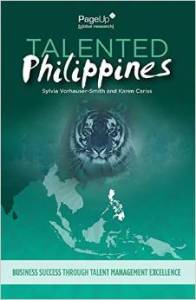
Talented Philippines! A Really Helpful Resource For BPO Professionals

http://www.talentedphilippines.com/

Came across this new book and just ordered it. Im pretty excited about it.

In a nutshell… Talented Philippines answers critical questions for multinational corporations currently operating in, expanding or establishing operations in the Philippines.

Some of the key questions tackled in the book:

What are the critical business issues for multinationals in the Philippines?

What are the key talent management implications?

How have the Philippine’s best organizations addressed those challenges?

talented philippines

Talented Philippines was created to address the critical business and HR issues impacting the Philippines today as the country continues to transform. Based on the responses of more than 650 business and HR practitioners at the forefront of HR innovation, thought leadership and implementation in the country, the book explores the people management priorities across small, medium and large enterprises operating in the Philippines. Combined with numerous case studies that highlight the experiences of leading organizations and insight from a wide cross-section of public and private sector enterprises, Talented Philippines offers global best practices for multinational companies looking to leverage the great promise of this flourishing nation and its talented workforce.

This is well timed as the last year has seen a quickening of the talent war in the Philippines as the issue of a skills mismatch between job seekers and employers has really come to a head. It is a must read for anyone involved in the BPO industry in the Philippines.

However, there is one thing that based on what I see so far, is missing form this book. The fact that no matter how awesome a company’s HR practitioners are… they are still trying to find talent when it is truly lacking in a natural state. As a companion piece to this book, would be solid advice on how, when, where and why to invest more in training… especially pre-hire training and training geared towards internal advancement.

No matter how great an HR team is, they still have to get the right people in the door to apply and that seems to be the issue… because even in country of 90 million there is just not enough Filipinos with the skill sets and/or aptitude for a BPO career right now. The demand will only be met if the supply is given more training, more preparation and more data to make good career decisions.

Dr. Data_Analytics in the Philippines
If you like this book, you will probably enjoy my new book as well. Putting Your Data to Work is a guidebook designed to help Filipinos get started with building a good analytics culture in their business. Connect with me if you are interested in purchasing a copy for only 600 PHP.

HR & Recruitment Analytics – The recruitment and retention of top talent is the biggest challenge facing just about every organization. DMAIPH is a leading expert in empowering HR & Recruitment teams with analytics techniques to optimize their talent acquisition and management processes. Contact DMAIPH now at analytics@dmaiph.com or connect with me directly to learn how to get more analytics in your HR & Recruitment process so you can rise to the top in the ever quickening demand for top talent.

The Secrets of Money Ball Recruiting

http://youtu.be/6MStL5QIyCw

“There are rich call centers, with big budgets and huge recruitment teams. There are poor call centers with small budgets and just a few people. Then there is 50 feet of crap. And there is us.”

I conducted a Recruitment Analytics Training yesterday and shared one of my methodologies. Based on the movie (and book) Moneyball, I talked about how to be successful you need to find undervalued candidates who other call centers have passed on.

“If we try and play like Convergys in here (with our recruitment efforts), we will lose to Convergys out there (on the streets looking for talent)”.

10421381_626225777522869_8061177028338978985_n

So we need to boil down the recruitment process to the one thing most important for our business in every single employee.

Some of my points:

  1. We spend too much time looking for trainable skills like Good English, Good Communicators and Good Interview Takers.
  2. We need to stop hiring job hoppers and people looking to move up without having paid their dues.
  3. The one skill set we cannot teach, that we need to start making our top priority… is dependability.
  4. Will they show up on time every day for work is the single biggest need we have.

So that’s the one personality trait we are placing at the top of our recruitment process. We need to probe and dig and research, to find out will they be someone who will show up for their shift everyday.

That’s our “get’s on base” metric like in MoneyBall.  We can’t help the customer if we are not at work ready to help the customer.

HR & Recruitment Analytics – The recruitment and retention of top talent is the biggest challenge facing just about every organization. DMAIPH is a leading expert in empowering HR & Recruitment teams with analytics techniques to optimize their talent acquisition and management processes. Contact DMAIPH now at analytics@dmaiph.com or connect with me directly to learn how to get more analytics in your HR & Recruitment process so you can rise to the top in the ever quickening demand for top talent.
Don’t Be A Recruitment Dinosaur, You Need To Be Thinking Mobile First

Per monster.com… As more consumers set aside laptops in favor of smartphones, iPads and other tablet computers, job seekers expect to be engaged with videos, job notifications and quick follow-up. Many experts say that recruiters must learn to adapt their recruitment strategy to these platforms.

Today’s mobile job seekers have different expectations and look for:

  • Instant updates about new jobs via their mobile devices
  • Immediate feedback to their job application
  • Recruiting videos to watch on their mobile devices
  • Engaging, interactive content from employers

Recent Facebook data for here in the Philippines shows that as much as 90% of job applicants will apply via mobile for the same job they would pass up if looking at the post via a laptop or desktop.

IMG_1310

And according to CareerBuilder’s 2013 Candidate Behavior Study, 65 percent of workers who search for jobs via mobile devices will leave a website if it isn’t mobile-friendly, and – possibly worse – 40 percent walk away with a more negative opinion of the company.

You have to think Mobile first if you want to attract 18-24 year old Filipinos for jobs in the BPO Industry.

HR & Recruitment Analytics – The recruitment and retention of top talent is the biggest challenge facing just about every organization. DMAIPH is a leading expert in empowering HR & Recruitment teams with analytics techniques to optimize their talent acquisition and management processes. Contact DMAIPH now at analytics@dmaiph.com or connect with me directly to learn how to get more analytics in your HR & Recruitment process so you can rise to the top in the ever quickening demand for top talent.

Recruitment Analytics: A Simple Classification System

How do you classify the applicants in your pipe line? There are hundreds of ways to separate resumes at the first point of contact by potential job fit. Most Applicant Tracking Tools have this built in and really smart ones will auto separate and classify based on keyword searches.

If you can afford an ATS or have veteran recruiters and/or an optimized process you are probably already doing this. But you would also be shocked to know how many companies are not doing this.

To get started just create 3-4 piles to put resumes in. Its as simple as this:

  • Pool A is for candidates who have most if not all of the qualifications you are looking for.
  • Pool B is for applicants who have some of the qualities.
  • Pool C is for applicants who really don’t have any of the things you are looking for and/or have some fatal flaws that you believe are incompatible with the job.
  • Pool D can be for resumes who currently don fit, but might in the future.

If you are just using Excel to track your applicant pipe line, it is easy to add a column for general classification. Through in some weighted scoring to rank within each category and you are actually doing better than a lot of small and medium sized companies.

tracking-analytics

Just as an example, In each pool, you can add a rank of High, Medium and Low. High being they should be ready to start day one, medium meaning the will need some training time if they are hired and low meaning they will need some extensive training.

It is really that simple. Starting adding structure to your recruiting so you can focus your time and energy on those who have the most potential to help you right now, but also keep track of those who might be able to help you down the road.

IMG_1310

If you don’t have a good ATS, then doing something like this will make a huge difference. You will soon be able to start making more strategic choices on who you spend your time, focus and money on.

HR & Recruitment Analytics – The recruitment and retention of top talent is the biggest challenge facing just about every organization. DMAIPH is a leading expert in empowering HR & Recruitment teams with analytics techniques to optimize their talent acquisition and management processes. Contact DMAIPH now at analytics@dmaiph.com or connect with me directly to learn how to get more analytics in your HR & Recruitment process so you can rise to the top in the ever quickening demand for top talent.

Communicating Strategy From the Bottom

http://blogs.hbr.org/2014/06/strategy-isnt-what-you-say-its-what-you-do/

Came across the log post about strategy implementation and I think it’s a good one for consultants working with senior management teams. It goes along the lines of walking the talk.

“Strategic choice-making cascades down the entire organization, from top to bottom. This means that every person in the company has a key role to play in making strategy. Performing that role well means thinking hard about four things:

1) What is the strategic intent of the leaders of the level above mine?
2) What are the key choices that I make in my jurisdiction?
3) With what strategic logic can I align those choices with those above me?
4) How can I communicate the logic of my strategy choices to those who report to me?

If you as a manager can do the first three of these four, then you will own your choices and own your strategy. If you do the fourth, you will set up your subordinates to repeat these four things and thereby own their choices and their strategy, and pass on the task to the next layer of the company. If each successive layer assumes this level of ownership, the organization can make its bosses’ statement a real strategy rather than an empty slogan.”

I can personally say that these points are all very important to infuse into the culture of your company. Both from my Wells Fargo experience where these are deeply ingrained in the corporate culture to the smaller scale of my own company, clearly communicated strategy is the key.
When not only your direct reports, but your two downs are spreading the gospel, you will be successful.

If you need help getting your team to walk the talk, I’m happy to help.

Business Strategy with Analytics – Aligning a business strategy to drive an organization forward requires a robust analytics solution. Businesses who have good analytics tend to be much more profitable and efficient then ones that do not. DMAIPH has helped dozens of companies in both the U.S. and the Philippines with adding more data analysis in their business strategy. Contact DMAIPH now at analytics@dmaiph.com or connect with me directly to find out what we can do to help you align your business strategy with analytics.