The Rising Tide of Analytics & AI in the Philippines

The Analytics & Artificial Intelligence sector in the Philippines is poised for explosive growth, catching up with its ASEAN neighbors in terms of adoption. While it is still a relatively young industry, the potential for growth and development is immense. The Philippines is home to a large, skilled workforce and the government has been actively promoting the country as a destination for business process outsourcing (BPO) services. This provides a solid foundation for the growth of the Analytics & AI sector in the country.

  1. Increasing demand for Analytics & AI services

The demand for Analytics & AI services in the Philippines is on the rise. Companies are increasingly looking for ways to leverage the vast amounts of data they collect to gain insights and make better decisions. With a large pool of talented data scientists and analysts, the Philippines is well-positioned to meet this demand.

  1. Supportive government policies

The Philippine government has been actively promoting the country as a destination for BPO services, including Analytics & AI services. The government has also implemented policies to support the growth of the sector, such as tax incentives and infrastructure development.

  1. Growth of startups and innovation hubs

There has been a surge in the number of startups and innovation hubs in the Philippines in recent years, with many of them focused on Analytics & AI. These startups and hubs provide a platform for innovation and collaboration, and are helping to drive the growth of the sector.

  1. Strong partnership with the private sector

The Analytics Association of the Philippines has been working closely with the private sector to promote the growth of the Analytics & AI sector in the country. This partnership is crucial in driving investment and innovation in the sector.

  1. Potential for job creation

The growth of the Analytics & AI sector in the Philippines has the potential to create a large number of high-paying jobs. This is particularly important in a country where unemployment and underemployment rates are high.

In conclusion, the Analytics & AI sector in the Philippines is on the cusp of explosive growth. With a supportive government, a skilled workforce, a growing startup ecosystem, and a strong partnership with the private sector, the Philippines is well-positioned to become a leader in the Analytics & AI space. The potential for job creation and economic growth is immense, making it an exciting time for the sector and the country as a whole.

Visit Dan’s website sonicanalytics.com to learn more about how his big data analytics solutions can help improve your business. Contact us today to schedule a speaking engagement in your company.

Daniel Meyer is the head of Sonic Analytics, an analytics firm that has been in the Big Data industry for over 20 years and has offices in Manila, the San Francisco Bay Area, and Ocala, Florida. He is an accomplished author, public speaker, and business expert specializing in virtual staffing and process automation.

Dan is known for providing big data analytics solutions, including business intelligence and data storytelling, to small businesses seeking to improve their use of data, virtual staffing, and technology. He strongly believes in using analytics for civic responsibility, and offers training, consulting, and education to promote this advocacy.

With his experience in training over 10,000 Filipinos, Dan is passionate about empowering the youth with valuable skills, such as graphic design, video editing, and data analytics. His objective is to equip them with the necessary abilities to harness the dynamic employment opportunities that lay ahead for millions of Filipinos.

Data Analytics in the Philippines: Unlocking Unlimited Potential

In recent years, the Philippines has seen a growing interest in data analytics, with organizations and companies investing in this field to improve their decision-making processes and gain a competitive edge. This trend is especially clear in the finance, healthcare, and e-commerce industries, where data analytics has become an essential tool for success.

The Philippine government has also recognized the importance of data analytics and has taken steps to promote its use. The Department of Science and Technology (DOST) and the Technical Education and Skills Development Authority (TESDA) have started to offer free online training courses for data analysts to fix the skills mismatch and shortage that has been seen in this field. This training is intended to cater to unemployed individuals, including high school graduates, and equip them with the necessary skills to enter the job market.

The Analytics Association of the Philippines estimates that by 2028, the country will need 500,000 analytics professionals. This need is not just in the IT field; data analysts are also needed in many other business fields. The entry-level salary for data analysts in the Philippines can go as high as P25,000 per month, making it an attractive career option for many.

To meet the demand for skilled professionals in this field, universities in the Philippines are starting to offer courses and degree programs in data analytics. The University of the Philippines Diliman has a Master of Science in Data Science program, while Ateneo de Manila University has a Bachelor of Science in Data Science program. This move by universities is important for making sure that the Philippines has enough skilled workers to meet the growing demand for data analysts.

It is also important for companies and organizations to talk to people in the industry to find out what skills are needed for jobs. As Sherwin Pelayo, executive director of the Analytics Association of the Philippines, said, “We talked to our industry members, and they said that if these skills were taught in senior high school, we would hire those who possess them.” The executive director of Philippine Business for Education, Justine Raagas, agreed with this point of view and stressed the need to talk to these sectors because they know what is needed in the workplace.

The Department of Trade and Industry has also emphasized the importance of knowing the skill sets needed by companies and training people based on these needs to ensure their employability after graduation. This approach ensures that individuals are equipped with the necessary skills that are in demand in the job market.

In conclusion, the Philippines is slowly but steadily embracing data analytics, and we can expect more changes and improvements in this field in the coming years. The government, universities, and private sector must continue to work together to make sure that the workforce has the skills it needs to meet the growing demand for data analysts. By doing so, the Philippines can position itself as a hub for data analytics in the region, and its workforce can contribute to the country’s economic growth and development.

Don’t miss out on more of Dan’s expert content. Follow his social media channels for exclusive tips, insights, and valuable information on data science and analytics.

Daniel Meyer is the head of Sonic Analytics, an analytics firm that has been in the Big Data industry for over 20 years and has offices in Manila, the San Francisco Bay Area, and Ocala, Florida. He is an accomplished author, public speaker, and business expert specializing in virtual staffing and process automation.

Dan is known for providing big data analytics solutions, including business intelligence and data storytelling, to small businesses seeking to improve their use of data, virtual staffing, and technology. He strongly believes in using analytics for civic responsibility, and offers training, consulting, and education to promote this advocacy.

With his experience in training over 10,000 Filipinos, Dan is passionate about empowering the youth with valuable skills, such as graphic design, video editing, and data analytics. His objective is to equip them with the necessary abilities to harness the dynamic employment opportunities that lay ahead for millions of Filipinos.
Unveiling the Hottest Tech Career of the Year: 5 Key Facts About Data Scientists

The world today is all about technology and data. This has created an explosion in career opportunities in the tech industry. According to Forbes, the most rapidly growing jobs in the tech industry are data scientists. They estimated the growth rate of data scientists from 2021 to 2031 is expected to be 36%, and the median pay for this career is $100,910 per year.

Here are five key things you should know about data scientists:

1️⃣ Data scientists use a variety of tools and techniques to extract insights from data, including statistical analysis, machine learning, and data visualization.

2️⃣ Data scientists work with large and complex data sets, which may require them to clean and classify raw data before analyzing it.

3️⃣ Effective communication is an essential skill for data scientists. They must be able to present their findings to both technical and non-technical audiences in a way that is easily understood.

4️⃣ Data scientists can work in a variety of industries, including healthcare, finance, retail, and technology. They can help organizations identify patterns and trends that can inform business decisions and drive growth.

5️⃣ As more and more data is generated every day, the demand for data scientists is expected to continue growing. The field of data science offers excellent career opportunities and a chance to work with cutting-edge technology.

In conclusion, data scientists play a crucial role in today’s data-driven world. They help organizations make informed decisions by analyzing complex data sets, and their skills are in high demand. If you’re interested in a career in data science, there has never been a better time to get started.

Ready to take the first step in upskilling your employees? Schedule a speaking engagement with Dan today and discover the benefits of data analytics for your business!

Daniel Meyer is the head of Sonic Analytics, an analytics firm that has been in the Big Data industry for over 20 years and has offices in Manila, the San Francisco Bay Area, and Ocala, Florida. He is an accomplished author, public speaker, and business expert specializing in virtual staffing and process automation.

Dan is known for providing big data analytics solutions, including business intelligence and data storytelling, to small businesses seeking to improve their use of data, virtual staffing, and technology. He strongly believes in using analytics for civic responsibility, and offers training, consulting, and education to promote this advocacy.

With his experience in training over 10,000 Filipinos, Dan is passionate about empowering the youth with valuable skills, such as graphic design, video editing, and data analytics. His objective is to equip them with the necessary abilities to harness the dynamic employment opportunities that lay ahead for millions of Filipinos.
The Day I Got My Cape

About halfway through my time at Wells Fargo, I had become one of the top analysts at the bank. My ability to take on any data project and deliver results on time and on budget established my reputation and gave me credibility to speak frankly with senior executives

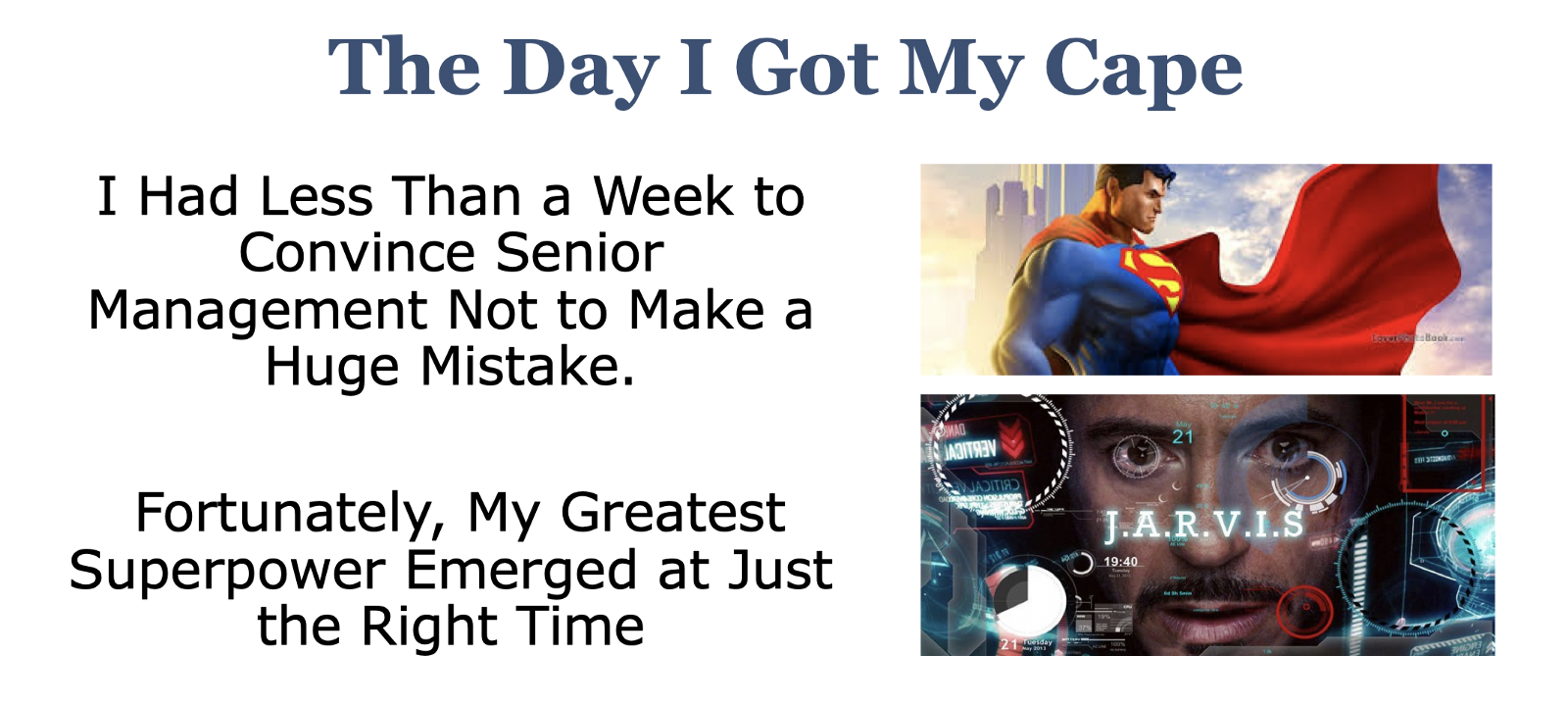
Now what I mean by “the day I got my cape”. That was the day I realized that my skills as an analyst, as somebody who works with data, had become somewhat superhuman.

I had previously shared the lead up to the unveiling oh my superhero story. After acquiring Wachovia, Wells Fargo was poised to launch the Express Send remittance service in Miami. I had shared my concerns and even though the data was clear, I was outvoted.

At the end of the meeting, my boss came to me, and my boss; who I had been working for quite a while, and when I raised my hand in a staff meeting to talk about something to do with data, I was usually right. However he pointed out to me, I had talked about a problem but I didn’t offer a solution and he says you know what Daniel, “If we’re going to not launch in Miami you got to follow up with an answer of where we going to launch and why. As well as why should we move it based on solid financials”.

My reply was, “you’re right, I know I need to go back and do some more research”. He told me that I had a couple days go do some research, to figure this out. He said if we have a good business case to move it, we would run it up the flagpole and see what happens. So, I went back to my cubicle, I started crunching numbers, pulling data, basically what I found was indeed the truth. I was right that if we were to launch in Miami. We would not have a very big population of ready to send users. People that are used to us and, our brand that trust has to send money overseas.

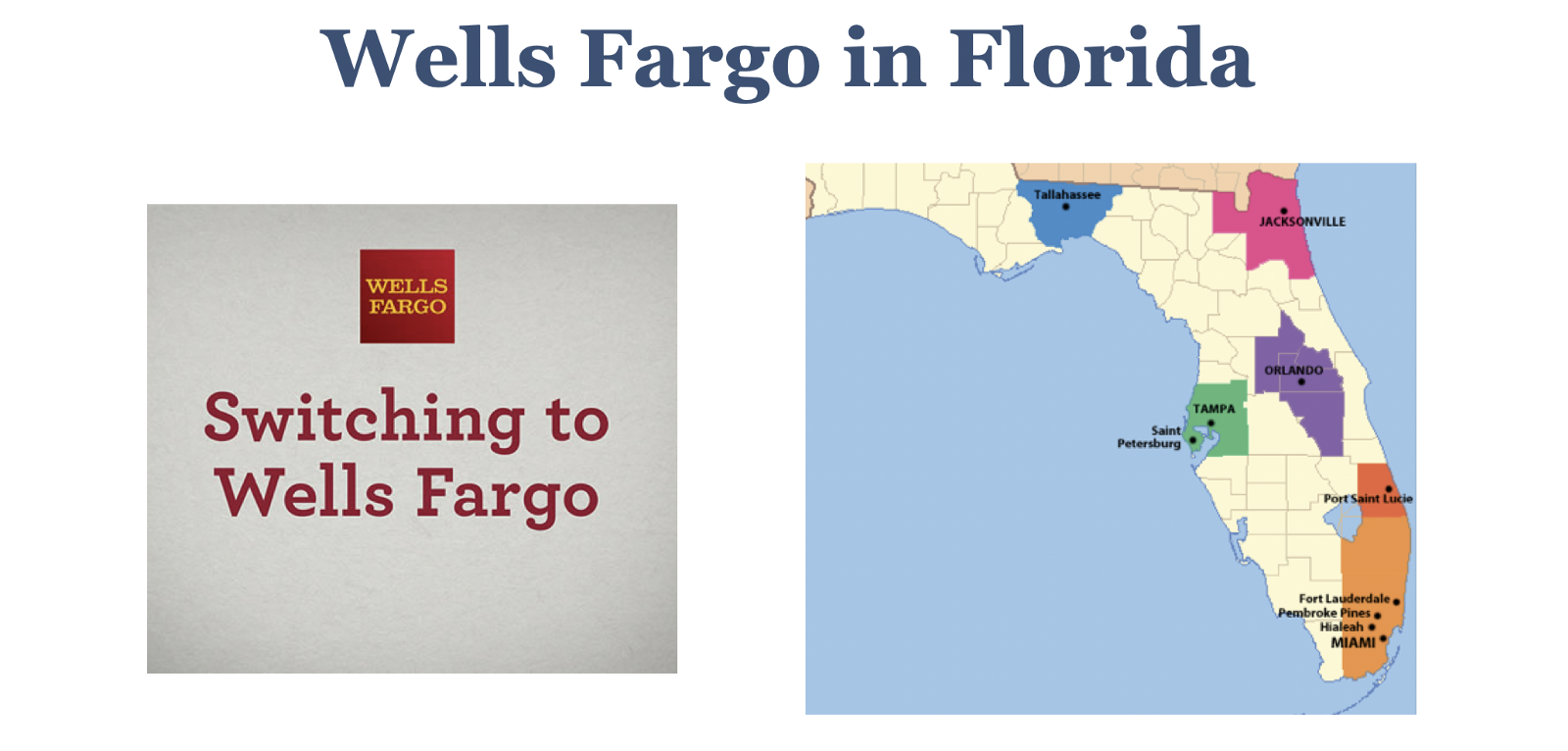
It would be something that it would have to take a while for people to adopt to our brand. I started looking for areas where there were other populations, that were more representative of what we had to do traditionally. I came across a couple, if you look at the demographics of Florida in the Orlando and Tampa areas in the middle of the state, there’s a lot more people that have migrated from Central America and Mexico. A lot of them migrated there to work in agriculture, to work in more labor-intensive industries.

I took data form the U.S. Census and I blended that with projections on adoption rates based on the traditional Wells Fargo footprint. I used IBM-Cognos and SQL queries from the banks central data bases to extract the data I needed to build a financial model. The model illustrated that we would make 3x as much over the first three years in remittance transfers in Florida if we started in Central Florida as opposed to South Florida. To bring it all together I used a new software, Tableau, to build a map and supporting visuals. I was ready for round two and this time I had my powers.

So, I took that information and I put together a presentation, and I walked to my boss. He said, “great OK let’s go ahead and talk to the boss about this”, so when my boss said to THE boss that means we are talking to top executives at the bank, including the CEO.

The next day I presented this data and I did it in a new way for me. I built a narrative around the whole challenge we had and used the data told us what we should do. I illustrated with the Tableau map, what the expected benefits of West Orlando instead of Miami. When we did that, we would see a much greater adoption rate, we would see much greater financial benefit much sooner than if we were to launch in the Miami area.

My slides and the data and visuals on them where very convincing. But that was the appeal to the head. I also shared the impact that my suggestion would have not only on the bank bottom line, but the difference it would make to our customers and their families. When I did all that, I put this whole overarching narrative together and what was able to do what we now call data storytelling.

That is a superpower in even more demand today that it was 10 years ago. Being able to write code, to build data models and to work with millions of data points are all very powerful tools in the hands of a good analyst. But data storytelling in my hands, that is a superpower.

Oh, and one more point, mostly because of my work on the merger, I got a really huge bonus that year.

Daniel Meyer heads Sonic Analytics, an analytics firm with offices in Manila, the San Francisco Bay Area and Ocala, FL. With over 20 years in Big Data, Dan is one of the most sought-after public speakers in Asia and offers big data coaching and analytics training seminars on both sides of the Pacific. Dan has also recently joined the Powerteam International family as a small business analytics resource speaker.

Sonic Analytics(www.sonicanalytics.com) brings big data analytics solutions like business intelligence, business dashboards and data storytelling to small and medium sized organizations looking to enhance their data-driven decision-making capabilities. We also advocate the use of analytics for civic responsibility through training, consulting and education.

As citizens of this great democracy, we need to look at the data (analytics), plan a course of action (strategy) and share our data-driven viewpoints (presentation). This approach to a data savvy work force starts in school. So, we started an internship program to empower our youth to use Analytics, plan Strategy and Present their insights… ASP!

When not training current and future analysts, you can find Dan championing the use of analytics to empower data-driven citizenship by volunteering his expertise with schools and non-profits dedicated to evidence-based social progress like Saint Leo University’s Women in STEAM 2020 Conference.

So What Is #DataRockPinas?

It is a movement.

It is an advocacy.

It is a great cause.

#DataRockPinas is all about taking analytics training out of Manila and bringing it to the provinces.

#DataRockPinas is all about taking what has traditionally been an expensive, corporate only training and delivering it to hundreds of thousands of Filipinos.

#DataRockPinas is an initiative of several member companies of the Analytics Association of the Philippines. http://www.aap.ph

Screen Shot 2017-11-06 at 9.45.43 AM

  • Data Night UM (University of Mindanao)
  • Big Data 101 Davao
  • Davao Analytics Executive Roundtable
  • Mindanao Analytics Freelancers Meet Up

Screen Shot 2017-11-06 at 9.45.53 AM

  • Big Data Analytics & Data Value Chain
  • Train the Analytics Trainer
  • Data Night Bacolod

Screen Shot 2017-11-06 at 9.46.02 AM

  • Big Data 101 – Iloilo
  • Visayas Analytics Freelancers
  • Data Night Iloilo

Screen Shot 2017-11-06 at 9.46.12 AM

  • Big Data Analytics & Data Value Chain
  • Data Night Cebu 2018

philippines_640

Analytics in the Philippines – The Philippines is at the center of the action when it comes to solutions to the global need for analytics. Blessed with a solid foundation of young, educated and English speaking workforce, companies around the world are look for Filipino analytics talent to fill analytics positions.

Analytics Leadership – DMAIPH is a founding member of the Analytics Association of the Philippines (AAP.PH) and specializes in arming the Data-Driven Leader with the tools and techniques they need to build and empower an analytics centric organization. Analytics leadership requires a mastery of not just analytics skill, but also of nurturing an analytics culture. We have guided thousands of Filipino professionals to become better analytics leaders.

Contact DMAIPH now at analytics@dmaiph.com or connect with me directly to discuss a uniquely tailored strategy to ensure you are the top of your game when it comes to Analytics Leadership.

Moonshot: Unifying the Analytics Ecosystem Across the Philippines

(above image from zazzle.com)

For most of the past five years my efforts to upskill train Filipinos in analytics have been focused on Metro Manila.

A few times a year I’d get a chance to conduct a training, speak at an event or attend a conference outside the National Capitol Region, but for the most part analytics adoption has been slower in the provinces.

That has significantly changed in 2017 and the analytics focus around the provinces is primed to explode is 2018.

As I sit here today in Batangas for the mid week holidays, I can’t help but feel proud for the recent string of partnerships we have been able to build outside the nation’s capitol.

We were just in Cebu twice for a Data Night, a Big Data 101 training and an Analytics Freelancers Meet Up. We followed that up with a Data Night and several speaking engagements and media appliances in General Santos (Gensan to the locals).

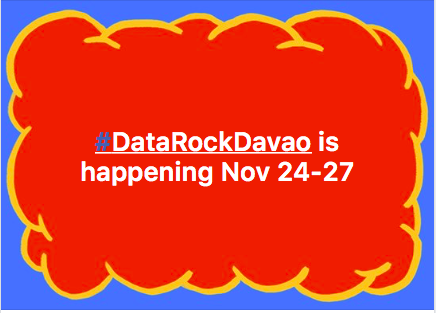
Next month we will replicate these events in Davao with the contacts we made in Gensan. In December we will do the same and even add a Train the Analytics Trainer event with a key business partner in Bacolod.

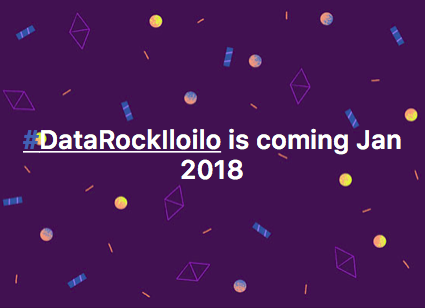
And just yesterday we started laying the ground work for a Data Night and a Big Data 101 training in Iloilo for January.

Our plan for 2018 is to spend one week a month in a different province promoting our analytics advocacy, signing up members for the Analytics Association of the Philippines, conducting trainings with companies like DMAIPH, Cirrolytix, BagoSphere, and Spectres Solutions, using co-working spaces like A Space, the Mabuhay I.T. Park and Dream Space, and working with schools like the University of Mindanao and ACLC Davao.

At the same time we are building upskill training relationships back in Manila with companies like Wells Fargo, Accenture and Emerson, teaching analytics at schools like College of St. Benilde, University of Asia & Pacific, Enderun College and the University of the Philippines just to name a few.

We are also orchestrating the OJT experiences for students from schools like UST, De La Salle, Ateneo, Informatics, and URS in Rizal. Again, that is just the tip of the iceberg.

Simultaneously, we are building relationships with influential organizations like IBPAP, CCAP, PSIA, Young Engineers and HIMS to give talks on analytics followed up with upskill training for their members.

And last but not least we are having conversations with provincial LGUs, with central government entities like CHED, DeptEd and TESDA as well as with key members of the Senate to promote the large scale adoption of analytics across the Philippines to keep our workforce competitive in the increasingly data driven world.

I could go on and list more. The names above are just a sample.

When you set out to facilitate the upskill training of half a million people, you have to think big. And thing big is what we do.

That’s our moonshot.

Putting a man on the moon took a national effort from all parts of society to build a space age ecosystem capable of the previously unthinkable.

rocket-moonshot-shutterstock_406207303-resized

Analytics Leadership – DMAIPH is a founding member of the Analytics Association of the Philippines (AAP.PH) and specializes in arming the Data-Driven Leader with the tools and techniques they need to build and empower an analytics centric organization. Analytics leadership requires a mastery of not just analytics skill, but also of nurturing an analytics culture.

We have guided thousands of Filipino professionals to become better analytics leaders. Contact DMAIPH now at analytics@dmaiph.com or connect with me directly to discuss a uniquely tailored strategy to ensure you are the top of your game when it comes to Analytics Leadership.

DMAI - Logo_ver2-02-01


Meet the Founders of the AAP at the Big Data Conference on Nov 15 @ SM Aura

AAP Logo Option Vertical 5

Meet the Founders…
Daniel Meyer
Executive DirectorPresident and Founder of DMAIPH (Decision-Making, Analytics & Intelligence Philippines), an Analytics, consulting, training and outsourcing company with offices in Manila and the San Francisco Bay Area.He worked as a Senior Analytics Consultant for Wells Fargo Bank for 15 years. He provided executive management analytics for the bank’s remittance service including developing business dashboards, overseeing competitive intelligence gathering, managing data analytics outsourcing projects and facilitating audit and risk management.Catch him on:

  • Oct 18 – Gensan ICT Summit 2017 (SM Gensan)
  • Oct 18 – Data Night Gensan (Mabuhay I.T. Park, Gensan)
  • Oct 24
  • Oct 26-27 – HR Big Data & Predictive Recruitment Analytics
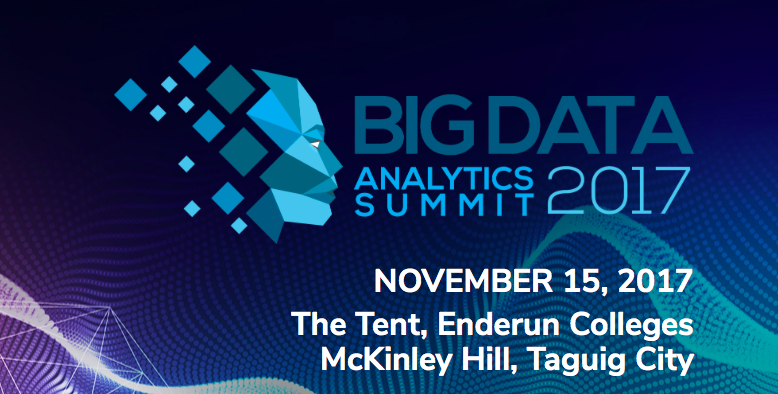
  • Nov. 15 – Big Data Analytics Summit ( SMX Aura )
  • Nov 18 – For Generation Digital by Blogapalooza (City of Dreams)
  • Nov 21-22 – Big Data Analytics and Data Value Chain
  • Nov 23 – Philippines HR Group Summit 2017 (Sequoia Hotel, Quezon City)
  • Nov 24 – Digital Marketing Analytics
  • Nov 28-29 – Analytics for HR Managers (2nd Run)
  • Dec 4-5 – Big Data for 2018
Colin Christie
Governance & Membership ChairA serial entrepreneur, connector and collaborator. He currently serves as the Executive Director of Global Chamber® Manila, and is Dean & Director of Digital Transformation at Enderun Colleges. Colin serves as a President of the Board of Trustees of the Analytics Association of the Philippines (AAP.ph). Colin has practiced a life-long passion for embracing transformative technologies, spanning many industries, from manufacturing, to software, to healthcare and education. Colin is a graduate in Chemical Engineering from the University of California at Berkeley.Catch him on:

  • Nov. 15 – Big Data Analytics Summit ( SMX Aura )
Karlo Panti
External Relations & Marketing ChairA Director of Global Production at QuintilesIMS responsible for mature markets and developed countries in the Asia Pacific and the Country Head of IMS Health Operations Center Philippines, Inc. serving as the President and Chairman. In addition, he is one of the founding members of the Analytics Association of the Philippines, serving in the Board of Trustees as the Head for External Relations.He has more than 16 years of experience in operations and service delivery, having managed large teams in different industries and geographies and migrated new business processes to the Philippines from different Fortune 500 companies.Karlo led teams servicing different verticals mainly in life sciences data analytics, insurance and healthcare, F&A, travel, transportation and logistics, high-tech, consumer and telecommunications.Throughout his career, he has improved the operational processes of different companies as a COPC Practitioner and a Six-Sigma Champion helping them grow their business with his involvement in sales, due diligence, transitions and migrations as well as automations and transformation projects.As a speaker and a facilitator, Karlo has shared his insights on leadership development, operational excellence, team building, business analytics and life sciences.Catch him on:

  • Oct 13 – 15th Philippine Institute of Industrial Engineers (PIIE) National Congress
  • Oct 25 – HIMSCON 2017
Dominic “Doc” Ligot
Research and Development ChairAn entrepreneur, software developer, trainer, and data consultant. Doc’s passions include advanced analytics, disruptive innovation, organizational change, and obtaining business value from data. He is the Founder and Managing Director of Cirrolytix Research Services which provides data and analytics support to small and medium enterprises and analytics freelancers in the Philippines.Doc teaches digital marketing analytics for the Certified Digital Marketer (CDM) program and financial analysis and management science for the American Academy of Financial Management (AAFM). Prior to becoming a tech entrepreneur, he was Asia Pacific Practice Partner for Advanced Analytics for big data analytics firm Teradata and previously held executive leadership positions at global banks HSBC and ANZ.Catch him on:

  • Oct 26-27 – Global CEM Summit Financial Services Singapore
  • Oct 21 – Bookkeepers Summit 2017
  • Nov. 15 – Big Data Analytics Summit ( SMX Aura )

Brenda A. Quismorio

Education (Academe) Chair and Data Science and Analytics Framework Co-Chair

Dr. Brenda A. Quismorio has a combined fifteen years of experience in consulting, training, project management, process reengineering, application development and maintenance, quality management, and data services work for global firms such as Andersen Consulting (now Accenture) and Watson Wyatt Worldwide (now Willis Towers Watson) and local firms such as First Philippine Holdings and Aboitiz Transport Systems (now 2GO Group Inc.).Brenda joined the academe in 2010 as an Assistant Professor at the University of Asia and the Pacific. She spearheads the undergraduate specialization program in Business Analytics.

She is a founding member of the Analytics Association of the Philippines (AAP) and the Business Analytics Society of Educators (BASE). She forms part of the Advisory Group of the APEC Project DARE (Data Analytics Raising Employment). She is currently the Board Member and Chair of the Education-Academe Committee of the Analytics Association of the Philippines. She is a resource person of a number of professional organizations and training institutes on Business Analytics.   Brenda holds degrees from the University of the Philippines (Diliman) in BS Statistics, MBA, MS in Management and Phd in Business Administration with a dissertation on modeling financial extreme risks.

Catch her on:

  • Oct. 17-18 – 2017 BSP-UP Professorial Chair Lectures (Executive Business Center, BSP Complex)
  • Nov. 15 – Big Data Analytics Summit ( SMX Aura )
Sherwin Pelayo
Data Science and Analytics Framework Chairhas been involved in strategic capability development initiatives at Accenture, IBM, and now at Pointwest Technologies Corporation. In this role, Sherwin has been responsible for defining strategies to initiate and expand key transforming digital services including identifying focus areas, defining competencies, building curricula, enabling practitioners, developing leads and opportunities, architecting solutions, and ensuring project delivery.His current focus is in Analytics and Experience Design. It is in the intersection of these two where Sherwin finds his passion–connecting the science of Analytics and the art of Human-Centered Design not only to bring data-inspired, user-driven solutions for business partners but also deliver greater, more impactful social innovation for the Philippines.Catch him on:

  • Nov. 15 – Big Data Analytics Summit ( SMX Aura )
Dr. Eugene Rex L. Jalao
Education (Academe) and Research and Development Co-ChairAn Associate Professor of Analytics and Industrial Engineering in the University of the Philippines Diliman, Department of Industrial Engineering and Operations Research. He specializes in Decision Support Systems, Business Analytics Solutions, Data Mining, Optimization and Systems Simulation. He obtained his Ph.D. in Industrial Engineering from Arizona State University (ASU) in May 2013. Additionally, he obtained his Masters of Science in Industrial Engineering degree as well as his Bachelor of Science in Industrial Engineering from the University of the Philippines Diliman in 2009 and 2007 respectively. He was inducted into the Alpha Phi Mu, Industrial Engineering Honor Society in 2012.His ten years of work and research experience are in the fields of business analytics both here in the Philippines and in the United States of America, specifically in the Banking, FMCG, Manufacturing, Real Estate, Healthcare, Telecommunications and Information Technology industries. Also, he is the current director of the Business Analytics Certification Program of UP National Engineering Center. Furthermore, he was part of 50-person APEC team that drafted the Recommended Data Science and Analytics Competencies last May 2017 in Singapore. He is also a certified SAP ERP Materials Management consultant, a Matlab computing associate and an advocate of the R Programming language.Catch him on:

  • UP NEC Analytics Certification Training Modules
  • Oct 18 – 20 – Module C – Descriptive Analytics
  • Nov 22 – 24 – Module B – Data Warehousing
  • Dec 6 – 8 – Module D – Predictive Analytics
  • Nov. 15 – Big Data Analytics Summit ( SMX Aura )

Michelle Alarcon

Education (Professional) Chair

With more than 20 years of IT consulting experience in the Philippines, US and Europe, she started her own consulting firm 4 years ago that specializes in analytics, her passion ever since she graduated with a degree in Statistics from the University of the Philippines. She trained on and practiced data mining in Spain for two years, and later on pioneered the Analytics Department of the largest local private bank in 2005.

In 2011, she was the Consulting Director for a top software company where she led a team of 150 consultants in implementing enterprise solutions for companies worldwide. Now as President and Managing Director of Z-Lift Solutions, she brings all these experiences to her clients as she defines their roadmap towards a smarter business with analytics, and enables them to make it part of their new culture as a data-driven organization. She is also the organizer of the R Users Group of the Philippines, a 4-year-old community that aims to promote the use of open source R for statistical programming in the country.

Catch her on:

  • Oct 18 – R Users Group (RUG-PH) Meetup (TIP Manila)
  • Oct 17 – Big Data and Analytics (Colegio de San Agustin)
  • Nov. 15 – Big Data Analytics Summit ( SMX Aura )
  • Nov 16 – RUG-PH Meetup (Manulife UP-Ayala Technopark)

Screen Shot 2017-10-02 at 4.25.28 PM

The Past Week Reminds Me Why I Love Analytics in the Philippines

When I left the U.S. five years ago, it was to chase a dream.

The dream although simple to me was one that many people thought impossible at the time… to see analytics becoming a topic of everyday conversations.

In business, in education, in the government and in the media over the past week, I have been part of conversations about how to empower 100,000s of Filipinos to get more analytics in what they do.

There is still so much to be done to turn this dream into a reality, but as I have talked with journalists, professors, political figures and business leaders, I keep getting the same result… the dream is now one that many share.

Some examples of the new reality…

The Analytics Association of the Philippines (AAP.PH) will be the umbrella on which so many analytics initiatives incubate, grow and prosper.

Schools like De La Salle – College of St. Benilde, the University of Asia & Pacific, and UP will continue to offer new and innovative courses built around regional standards for the enablement of data science and analytics.

New batches of students like CSB’s SMIT students taking Business Analytics subjects will enter the workforce armed with more skills then any batch before them.  They kids are learning Tableau while still in school. How cool is that?

Advocacies like Augment BPO will rise up to address clear and present threats like the one that AI presents to the BPO industry.

And that’s just the tip of the proverbial ice berg.

It’s been a really good week.  No, check that… its been a great week.

And it all reminds me of why I love this adopted country of mine so much.

jobspicture2

The Augment BPO Data Science and Analytics Advocacy Project (Augment BPO) is empowering BPO Companies, Executives, and Workers in the Philippines to prepare for and address the clear and present danger posed by Artificial Intelligence Chatbots (AI Chatbots) to BPO revenue growth and jobs through Data Science and Analytics strategy planning, awareness building and upskill training.

DMAIPH is a founding member of the Analytics Association of the Philippines and specializes in arming the Data-Driven Leader with the tools and techniques they need to build and empower an analytics centric organization. Analytics leadership requires a mastery of not just analytics skill, but also of nurturing an analytics culture. We have guided thousands of Filipino professionals to become better analytics leaders. Contact DMAIPH now at analytics@dmaiph.com or connect with me directly to discuss a uniquely tailored strategy to ensure you are the top of your game when it comes to Analytics Leadership.

Data Science and Big Data Analytics For Finance

Was recently asked to do a one hour talk on data science and big data analytics for Finance… so I created A Step By Step Process To Get More Value Out Of Your Finance and Accounting Data.

To get started, we will discuss at a high level what is analytics, big data and data science and how it can be used in Finance and Accounting to get more value out of all the numbers you have in your business.

Per Deloitte, “In today’s highly competitive business environment, companies need more from Finance than accurate financial statements and reports. They need forward-looking, predictive insights that can help shape tomorrow’s business strategy and improve day-to-day decision-making in real time. “

New IT applications and infrastructure such as big data technologies, predictive analytics, as well as modern mathematical methods are opening up new possibilities for gathering and processing large amounts of data and opportunities for generating value.

They keys to a sound data science and analytics approach to Finance include the following:

  • A Process for Using Big Data to Answer Business Questions
  • A Well Mapped Data Lake of all the Data Finance Needs
  • The Right Mix of Analytics Talent, Technique and Technology
  • A Top Down Embrace of an Analytics Centric Culture

By translating data into insights around financial statements and operations, the finance team can unlock and create new value. Being able to identify unrealized and often unexpected potential as well as quickly and decisively mitigating risk, data science and analytics can take your team to a new level of insight and performance.

This in turn supports the finance function to make better decisions by being able to understand what has happened and why, and then predict what may happen next. The end result is a strategy built on data and one with a much higher rate of success then ones based on intuition or gut feel.

jobspicture2

The Fundamental of Business Analytics – Business Analytics is the application of talent, technology and technique on business data for the purpose of extracting insights and discovering opportunities. DMAIPH specializes in empowering organizations, schools, and businesses with a mastery of the fundamentals of business analytics. Contact DMAIPH now at analytics@dmaiph.com or connect with me directly to find out how you can strengthen your business analytics fundamentals.

APEC Data Science & Analytics Key Competency #4: Domain Knowledge and Application

According to the APEC (Asia Pacific Economic Cooperation) Advisory Group, Domain Knowledge and Application is one of the key competencies of a Data Science & Analytics professional working in the region.

By definition, a DSA professional can apply domain-related knowledge and insights to effectively contextualize data, achieved by practical experience (e.g. apprenticeships) and exposure to emerging innovations.

In my own experience, I knew Wells Fargo data like the back of my hand, but my domain knowledge would have easily allowed me to the same great things with other big banks. When I toyed with the idea of moving into the health services industry, it was obvious my skills would be useful but I had a lot ot learn about the domain knowledge of healthcare data.

Since, domain knowledge represents knowledge and insight that is unique to the organization or industry and that analysts need to consider when conducting any data project. Without this knowledge, analytics solutions may not entirely address the real business problem.

In my experience, domain knowledge about the data being analyzed can sometimes be acquired through exploration of the raw data.  Often, good analysts become subject experts just by playing with the data and asking questions to domain experts about the data.

Given the dearth of analytics talent in many areas, reality will dictate that a lot of data projects will have to be done without sufficient domain knowledge. However, most experts would agree the best results come when the ones using the data, know the data.

So, it behooves companies to invest more in educating and enabling internal resources then looking outside for DSA talent. My solution to this is to introduce apprenticeship programs where subject matter experts train current staff with high DSA affinity who are currently working in other roles.

As an example, there are likely thousands of current call center agents who have the aptitude to be analysts an data scientists, but never had the opportunity to of into DSA. Given they are already employees with proven track records of success, they would be much more likely to have the domain knowledge needed.

IMG_9107

Analytics Training – DMAIPH offers a wide range of analytics centric training solutions for professionals and students via public, in-house, on-site, and academic settings. We tailor each training event to meet the unique needs of the audience.

If you need empowerment and skills enhancement to optimize the use of analytics in your organization, we are here to help. Contact DMAIPH now at analytics@dmaiph.com or connect with me directly to set up a free consultation to learn which of our DMAIPH analytics training solutions is best for you.