
Communicating Strategy From the Bottom

http://blogs.hbr.org/2014/06/strategy-isnt-what-you-say-its-what-you-do/

Came across the log post about strategy implementation and I think it’s a good one for consultants working with senior management teams. It goes along the lines of walking the talk.

“Strategic choice-making cascades down the entire organization, from top to bottom. This means that every person in the company has a key role to play in making strategy. Performing that role well means thinking hard about four things:

1) What is the strategic intent of the leaders of the level above mine?
2) What are the key choices that I make in my jurisdiction?
3) With what strategic logic can I align those choices with those above me?
4) How can I communicate the logic of my strategy choices to those who report to me?

If you as a manager can do the first three of these four, then you will own your choices and own your strategy. If you do the fourth, you will set up your subordinates to repeat these four things and thereby own their choices and their strategy, and pass on the task to the next layer of the company. If each successive layer assumes this level of ownership, the organization can make its bosses’ statement a real strategy rather than an empty slogan.”

I can personally say that these points are all very important to infuse into the culture of your company. Both from my Wells Fargo experience where these are deeply ingrained in the corporate culture to the smaller scale of my own company, clearly communicated strategy is the key.
When not only your direct reports, but your two downs are spreading the gospel, you will be successful.

If you need help getting your team to walk the talk, I’m happy to help.

Business Strategy with Analytics – Aligning a business strategy to drive an organization forward requires a robust analytics solution. Businesses who have good analytics tend to be much more profitable and efficient then ones that do not. DMAIPH has helped dozens of companies in both the U.S. and the Philippines with adding more data analysis in their business strategy. Contact DMAIPH now at analytics@dmaiph.com or connect with me directly to find out what we can do to help you align your business strategy with analytics.


What Exactly Are Recruitment Metrics?

A general definition of recruitment metrics is something like this, “standards of measurement that HR and Recruitment professionals use to identify, analyze and present important information regarding the hiring process.” Recruitment metrics are extremely important in both assessing the effectiveness of the recruitment process and in looking at the ROI (return on investment).

Traditionally recruitment metrics focus on two areas; cost per hire and time to hire. They are both looking primarily at only the impact to hire someone.

However, those metrics generally do not include a multitude of important data points that decision-makers need to know. For example things like candidate satisfaction and hiring manager satisfaction can help determine wholes in a process.

You can also use recruitment metrics to optimize the hiring process looking at things like distance to work, difficult of commute, and demographic data on what schools and courses provide the best employees.

Another are you can draw psychometric data from for your metrics would be on things like work ethic, career decision-making and employee loyalty to see who is successful in your company so you can find more like them.

The types of metrics you can use in your recruitment process are practically limitless.

Based on a recent survey I saw on LinkedIn, If we use metrics correctly, they achieve the following additional benefits:

  • Advance the relationship between recruitment and the hiring managers — align the RIGHT objectives
  • Provide credibility to the recruitment department by displaying that they understand the overall business goals and objectives
  • Define what is important and expected of each recruiter
  • Drive consistency in delivery of recruitment services to the organization
  • Provide a platform to measure recruiter accountability and performance.

Does your recruitment process have actionable metrics that can drive data-driven decision-making?

If you are having trouble with your recruitment metric, connect with me and I’ll help you make sure you are measuring the recruitment metrics that are key to your business.

HR & Recruitment Analytics – The recruitment and retention of top talent is the biggest challenge facing just about every organization. DMAIPH is a leading expert in empowering HR & Recruitment teams with analytics techniques to optimize their talent acquisition and management processes. Contact DMAIPH now at analytics@dmaiph.com or connect with me directly to learn how to get more analytics in your HR & Recruitment process so you can rise to the top in the ever quickening demand for top talent.

All I Need To Know About Someone Is What Was The Last Book They Read

I’m not sure where I picked that concept up from, it’s probably a variation of a famous quote whose author escapes me. But for me there is a lot of truth to the statement. When you find out the last book someone read you can tell a lot about them. When you get them talking about it you can gain incredible insight into who they are and what motivates them.

In my case I picked up a book at the airport for my flight and to help me get into trainer mode. The book I picked up was Decisive, a business management and leadership book by the Heath brothers. It was on the top of a lot of 2013 lists and I had heard of it before. Once I started reading it, I quickly saw some key points I could roll into my next analytics training class.

Picture1

Here are some of the key points:

> Most decision are made in an instant and are often just a choice between two options.
> Although helpful, Pro and Con lists are limited in their effectiveness.
> Most business decisions, when looked at a few years later, were failures.

In the book the Decisive, the authors list four tips to help make better decisions:

1. Widen Your Options by eliminating factors that put artificial limits on our choices.

2. Reality-Test Your Assumptions by taking them out of our head and into the real world.

3. Attain Distance Before Deciding, which means don’t rush and gain other perspective.

4. Prepare to be wrong, the willingness to take risks is a challenge for all of us.

Its a great read, pick it up.

HR & Recruitment Analytics – The recruitment and retention of top talent is the biggest challenge facing just about every organization. DMAIPH is a leading expert in empowering HR & Recruitment teams with analytics techniques to optimize their talent acquisition and management processes. Contact DMAIPH now at analytics@dmaiph.com or connect with me directly to learn how to get more analytics in your HR & Recruitment process so you can rise to the top in the ever quickening demand for top talent.

What To Do When Employees Don’t Succeed?

http://www.recruiter.com/i/4-positive-alternatives-to-firing-staff/?utm_content=buffer888a9&utm_medium=social&utm_source=linkedin.com&utm_campaign=buffer

Came across this interesting article on LinkedIn, about what to do instead of firing an employee. It caught my attention as the BPO Industry in the Philippines continues to grapple with attrition rates that are way to high.

In short, the problem is that with a perceived deep talent pool to tap, BPOs have put little effort into retention policies instead being quick on the trigger thinking they can easily find a better employee. This mindset is not only self-destructive but also badly out of line with available data. As it gets harder and harder to recruit quality employees, many times the answer is pour more money into recruiting or more money into incentives, but almost no one is putting more money into training and coaching.

When you can step out of the industry for a minute and look at the patterns its pretty mind-boggling that such a booming and vibrant industry is so short-sighted.

So, with that back drop in mind, I found this article a good one to help me and my management team put some pauses in place and do a little more due diligence before coming to the decision to give up on someone.

The 4 bullet points listed are all very good ones to chew on:
1. Employ Self-Assessments to go hand in hand with KPI data points
2. Setting clear and achievable goals to mark success
3. Targeted coaching and training
4. And redeployment to positions with a better chance for success

I’ve added these discussion topics to my next management meeting agenda and will build in additional check points within our assessment process. All in all a good read indeed!

HR & Recruitment Analytics – The recruitment and retention of top talent is the biggest challenge facing just about every organization. DMAIPH is a leading expert in empowering HR & Recruitment teams with analytics techniques to optimize their talent acquisition and management processes. Contact DMAIPH now at analytics@dmaiph.com or connect with me directly to learn how to get more analytics in your HR & Recruitment process so you can rise to the top in the ever quickening demand for top talent.

Analytics In Action: How DMAIPH Uses Data to Drive Decision-Making

Awhile back, I was a guest speaker for a business analytics class at the College of St. Benilde. I had been asked to talk about how DMAIPH uses analytics in our business.

When it comes to sizing up an analytics project, I tend to use a methodology I learned from a couple Stanford professors several years ago. It is pretty simple concept that is applicable across all kinds of projects; (1) identify the data you will need, (2) bring it in to your analysis tools, aka inventory it, (3) and then integrate it into a larger story or context.

I tend to use MS Excel for the majority of my analysis, but when I need to build a map, or prototype a business dashboard or need some high-powered visuals to present my data, I use Tableau Public. In the past I have used a wide range of analytics tools, but they are always specific to a certain type of data I needed to access.

One of my favorite infographics

I am going to show three examples of how we use analytics:

  •  How we built and maintain a competitive landscape looking at the current trends in analytics here in the Philippines. Who is using what, what they are doing and where the talent is coming from.
  • How we built and update a demographic profile based on resume and LinkedIn data for the various types of analyst jobs we are currently employing.
  • And, how we built a business dashboard using Google Drive for the management team to use when looking at who on the team to coach and what to coach them on. It’s a simple way to share KPIs.

In all three cases I will explain how we identified the data we needed, how we inventory it so we can look at historical trends as well as a current snapshot and how we integrate these analytics solutions into our business strategy. It should be a pretty good presentation followed by some great Q+A! 

jobspicture2

Analytics Training – DMAIPH offers a wide range of analytics centric training solutions for professionals and students via public, in-house, on-site, and academic settings. We tailor each training event to meet the unique needs of the audience. If you need empowerment and skills enhancement to optimize the use of analytics in your organization, we are here to help. Contact DMAIPH now at analytics@dmaiph.com or connect with me directly to set up a free consultation to learn which of our DMAIPH analytics training solutions is best for you.

Outsourcing Tip > Make NASA Jealous! Ensure You Have A Smooth Launch Of Your Outsourcing Efforts

The final area that I have seen countless outsourcing efforts fall short is in having a smooth launch. You have put so much time into sizing the opportunity, negotiating the contract, finding the right people, acquiring the technology you need and building a technique playbook, but you aren’t done yet. You still need to roll it out.

When it comes to outsourcing, there is one thing I have never, ever seen. And that is a full delivery of services, exactly as required on target and without any glitches.

Here are a few keys to ensuring that you go live and avert as many potential disasters as possible.
• First of all, have a risk minded person involved. Someone who is great at looking at something and then coming up with a laundry list of things that can go wrong. And then most importantly, have them in charge of eliminating or mitigating the risks.
• Second, have your processes, the workflow, escalation procedures, and other important documents in writing for the team. No battle plan survives first contact unscathed, but the battle will go much better with one.
• Third, brief everyone. Have a pre-kick off meeting, do a walk through, run lots of tests. Do whatever you can to mimic production so that people get used to having to make decisions just like they will when things are live.
• And finally, hapollo11ave a plan to celebrate. Let everyone know what awaits them if they pull everything off. Give them an extra reason to go an extra step. Everyone wants to be part of a winning team enjoying the celebration of a new start.
That is just a few ideas of what you can do to ensure your launch go as smooth a NASA’s putting a man on the moon!

Analytics Outsourcing – DMAIPH has successful set up Filipino analytics teams for over a dozen U.S. based businesses. Offering both virtual and office based teams that specialize in problem solving using data, new technology and analytics techniques is our strength. Finding and empowering analytics talent is increasingly challenging, but we have it down to a science. Contact DMAIPH now at analytics@dmaiph.com or connect with me directly to learn more about how to set up an analytics-centric team in the Philippines.


Outsourcing Tip > The Three T’s: Talent, Technology and Technique

I’ve been part of dozens of BPO team set ups and have directly implemented five this past year or so. In ALL five cases, we have had challenges because we didn’t have the right talent at launch, we didn’t have our technology lined up correctly and we didn’t have techniques in place to ensure a smooth transition of work and an optimal business flow.

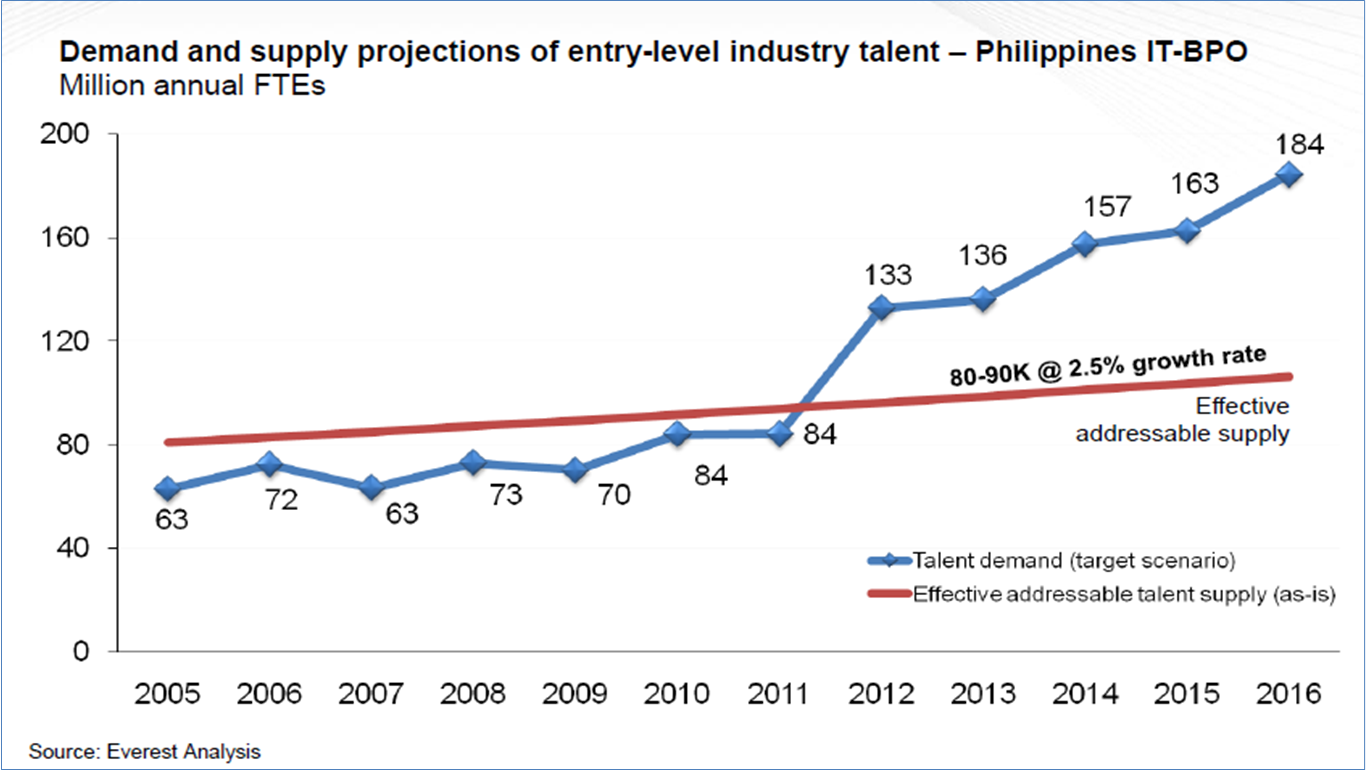
Finding good talent here in the Philippines can be a difficult. I’ve blogged about this quite often, the skills gap is a major concern for the long-term success of outsourcing to the Philippines. There are so many good people with the right work ethic and the desire to learn, but so few of them are trained in a way that makes them day one ready to go in a call center environment. Making sure you have correctly identified the skills you need, allocating the appropriate recruiting resources, and building a pipeline to replenish loses and fuel expansion, is so much harder than it sounds.

In regards to technology, there are so many ways to connect clients, customers and operations here in the Philippines. The Cloud allows all sorts of processes to be easily shifted to remote staff and the culture in the Philippines is very tech driven, it’s a great match.

The challenge is sometimes the technology needed is not as easy to introduce as expected and telecommunications and online access very greatly across the country and the workforce. Having a tried and test technological solution and being prepared to deal with the connectivity issues will help assure a much smoother transition of work from abroad.

275

Most call center operations I have worked with don’t have a clear concept of what they want the day-to-day to look like. The lift and shift approach where you just take a process from overseas and apply it here never works without adjustments. Many times you can find more optimal ways of doing things when you set up because you are able to look at the process end to end. Taking advantage of fully understandings the process being outsourced, documenting it and training on it with a clear plan are all keys to success.

So in conclusion, often what people assume would be the easy parts turn out to be the hardest when it comes to the talent, technology and technique needed to se up a successful outsourcing operation. DMAIPH specializes in helping call centers bring more data to their decision-making and ensure a more optimal approach.

Analytics Outsourcing – DMAIPH has successful set up Filipino analytics teams for over a dozen U.S. based businesses. Offering both virtual and office based teams that specialize in problem solving using data, new technology and analytics techniques is our strength. Finding and empowering analytics talent is increasingly challenging, but we have it down to a science. Contact DMAIPH now at analytics@dmaiph.com or connect with me directly to learn more about how to set up an analytics-centric team in the Philippines.

Outsourcing Tip > BPO Contract Negotiations: Learn About Both “the Big Picture” and “the Fine Print”

This is the title of a seminar I put together awhile back for small and medium-sized BPO owners, executives and managers. The objective was to address the latest business challenges in the BPO Sector as related to contract negotiations.

We engaged several practitioners to come up with an approach to empower the audience with new and innovative ways to optimize their contract negotiation process.

Here are some of the highlights:
• The biggest challenge that comes with contract negotiations is generally around money. A well thought out and detailed business proposal is key in mitigating misunderstandings and conflict around the cost of outsourcing work.
• The smoothest transitions are generally ones managed by a seasoned project manager, but if you don’t have one, we outlined what needs to be done.
• We also talked about how process mapping can lead to process improvement and how to account for that in the contract.
• Using models to show base, best and worse case scenarios is key to making sure the contract will not become a negative business hindrance to either party.
• We will discuss the importance of clearly and consistently engaging and communicating with key players both internally and with overseas partners.
• Many time negotiations begin informally and just involve the principles as they have a handshake agreement.
• Service Level Agreements and Production Quotas should either be included in the contract or in an addendum that clearly outline expected results.
• If pricing is depending on meeting certain metrics, its imperative that both the goals and how the goals will be measured and reported are included in the contract.

522

At the end of the workshop, attendees should have walked away with the following items of knowledge:
1. An appreciation for all the work that needs to happen before the actual contract is signed between the business and the overseas partner.
2. Several tips on how to make sure the contract is an ironclad as possible in terms of anticipating challenges.
3. Several tools and resources to help them in preparing the BPO contract.
4. A checklist of things to not forget to account for in the actual contract language itself.

So, when it comes to setting up an outsourcing partnership, don’t fall victim to charging ahead without a clear idea of what you need to happen in the contract negotiations process to ensure success!

Analytics Outsourcing – DMAIPH has successful set up Filipino analytics teams for over a dozen U.S. based businesses. Offering both virtual and office based teams that specialize in problem solving using data, new technology and analytics techniques is our strength. Finding and empowering analytics talent is increasingly challenging, but we have it down to a science. Contact DMAIPH now at analytics@dmaiph.com or connect with me directly to learn more about how to set up an analytics-centric team in the Philippines.

Outsourcing Tip > Size the Opportunity! Not to be confused with Seizing the Opportunity.

When you have an opportunity to get involved with outsourcing, it always sounds like a good way to make some fast money.

The news has been abuzz for a while now with mounds of data and statistics about the high-speed growth in the outsourcing industry, especially here in the Philippines. Just yesterday I saw a projection that BPOs in the Philippines are expecting to see a 15% growth in revenues in 2014.

Picture1

You couple that with the fact that everyone here knows someone who is making good money as a call center agent or investing in real estate that will be used by call centers, or have a friend in the US who knows someone who wants to save money by outsourcing. It’s one of those everyone is doing it, so why can’t I kinds of things.

This is all good, but there are just as many failures as there are success stories when it comes to small and medium-sized BPOs. Ones where someone had a client, or a building, or an idea but didn’t size it right and misjudged on cost, or talent or market and had to close their doors and lost money.

So when you have an outsourcing opportunity in front of you, whether it be as provider or a client, make sure you size it right. Here are a few things to think about:

  1. Does the client already have an existing business that they want to outsource? If so, fully understand all the requirements of that job as it is currently performed.
  2. Can you find the talent in the Philippines to provide just as good if not a little better service as currently is being provided? A common mistake is thinking that cutting both cost and the level of service will be a win-win.
  3. How scalable is this project? How can both ends be managed in a way that allows for uninterrupted growth? Often things start easy when it’s a pilot, but once you get into production a host of issues can pop up to derail growth and ultimately the partnership.
  4. How stable is the client? Are they a startup that has a great idea and is underfunded? Those are plentiful. Or are they an established business with a strategic plan that includes the fortitude to successfully outsource a key piece of its business? These are hard to find.

That is just a few things that come to mind when I think about sizing the opportunity. Having set up 5 teams in the past year to provide outsourcing services, I have learned a lot about making sure I get the sizing done right. Keeping a client happy is all about under promising and then over delivering when it comes to time, talent and cost.

Analytics Outsourcing – DMAIPH has successful set up Filipino analytics teams for over a dozen U.S. based businesses. Offering both virtual and office based teams that specialize in problem solving using data, new technology and analytics techniques is our strength. Finding and empowering analytics talent is increasingly challenging, but we have it down to a science. Contact DMAIPH now at analytics@dmaiph.com or connect with me directly to learn more about how to set up an analytics-centric team in the Philippines.

Being A Great Analyst > Attribute #2: Visualize Your Data

Most people learn by seeing something… that’s definitely true when it comes to using data. They not only learn more, but data visualization also a quicker sharing of information and also enhances communication.

Here’s an example. My management team was discussing how to enhance our coaching efforts with the team and since each of my direct reports has a different area of responsibility; production, quality and schedule adherence, they were having trouble agreeing on which analysts needed the most coaching. They each produced reports that were stand alone documents that would be shared via email or dropbox.

So I suggested we build a simple business dashboard. A business dashboard looks something like this:

It’s a simple collection of visuals built on top of a data file.

I created a simple Google docs spreadsheet and shared it. Each of the key performance indicators used to evaluate employee success was given a column and I put each employee a row. I then had each of my directs input the relevant data points and quickly we had a rudimentary business dashboard and I now I have a much more in synch management team.

img_7526

Simple analytics solutions like this are at the fingertips of any business. You just need to know when, where, and how best to implement them. Something so simple as a place to share data is so often overlooked by even the most successful businesses.

Analytics Culture – The key to using analytics in a business is like a secret sauce. It is a unique combination of analytics talent, technology and technique that are brought together to enrich and empower an organization. A successful analytics culture is not easy to create, but DMAIPH can show you how. Contact DMAIPH now at analytics@dmaiph.com or connect with me directly so we can build a strategic plan to turn your company into analytics driven success story.