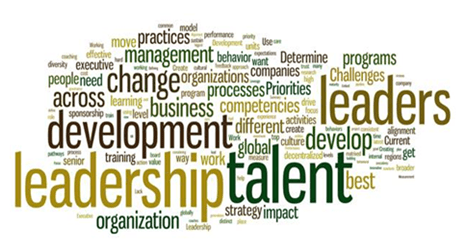
What Is Strategy?

http://bakerstreetpublishing.com/decisioncoaching/2015/02/12/what-are-the-strategic-decisions-we-face/

I came across this perfectly timed blog post on LinkedIn. Tomorrow we will be having our first real leadership planning session in a while and we have a lot of topics on the agenda.

However, before we get into the nitty gritty, I will spend the first part of the meeting talking about strategy. And these concepts will form the core of that conversation.

jobspicture2

“Every business must have three things to be successful: good leadership, good strategic decision making, and the ability to execute. “

  • Good Leadership: To me this means inspiring and empowering team members to take the initiative, to be bold in problem solving and being able to balance client, customer, business and team member needs.
  • Strategic Decision-Making: Taking a logical and data-driven approach to decision-making is the best way to map out your business plan.
  • The Ability to Execute: Good leaders know how to implement decisions quickly and efficiently because they work in a sound framework of empowerment and intelligence.

Looking at closely at the data is key part of this. Good leaders do much more than just manage, and it’s important to constantly remind ourselves of this.

Analytics Leadership – DMAIPH specializes in arming the Data-Driven Leader with the tools and techniques they need to build and empower an analytics centric organization. Analytics leadership requires a mastery of not just analytics skill, but also of nurturing an analytics culture. We have guided thousands of Filipino professionals to become better analytics leaders. Contact DMAIPH now at analytics@dmaiph.com or connect with me directly to discuss a uniquely tailored strategy to ensure you are the top of your game when it comes to Analytics Leadership.

Limiting You Core Values To Just 3

https://www.linkedin.com/pulse/you-have-more-than-3-core-values-think-again-dave-kerpen?trk=tod-home-art-list-small_2

For DMAIPH, I have infused 3 core values into everything we do. They come from having seen companies succeed and seeing companies fail. The ones who succeed have the in common. Here they are:

Partnership

Integrity

Teamwork

For my the core valued of any business starts with the partnerships is has with its industry. For public trainings its all about having a robust network. Being able to get new business, mine existing business, and bringing back old business all comes out of strong partnerships.

Integrity is also super important. Being honest and doing the right thing. Have an identity that makes one thing of likability and trustworthiness. When you have that you take care of your customers, your employees are satisfied and engaged, and you ability to partner gets much easier.

And the third value is teamwork. Teamwork is based on trust. And trust comes from integrity amount partners. Work partnerships, between employer and employee and between each employee with their peers all lead to a more vibrant teamwork.

DMAIPH stands for strong partnerships among analytics providers and consumers, for being know for our rock solid integrity, and for engaged and empowered team we have.

What are your 3 Core Values?

If you cant recite them of the top of your head, then you probably have too many.

DMAI - Logo_ver2-02-01

Analytics Leadership – DMAIPH specializes in arming the Data-Driven Leader with the tools and techniques they need to build and empower an analytics centric organization. Analytics leadership requires a mastery of not just analytics skill, but also of nurturing an analytics culture. We have guided thousands of Filipino professionals to become better analytics leaders. Contact DMAIPH now at analytics@dmaiph.com or connect with me directly to discuss a uniquely tailored strategy to ensure you are the top of your game when it comes to Analytics Leadership.


Recruitment Analytics: A Simple Classification System

How do you classify the applicants in your pipe line? There are hundreds of ways to separate resumes at the first point of contact by potential job fit. Most Applicant Tracking Tools have this built in and really smart ones will auto separate and classify based on keyword searches.

If you can afford an ATS or have veteran recruiters and/or an optimized process you are probably already doing this. But you would also be shocked to know how many companies are not doing this.

To get started just create 3-4 piles to put resumes in. Its as simple as this:

  • Pool A is for candidates who have most if not all of the qualifications you are looking for.
  • Pool B is for applicants who have some of the qualities.
  • Pool C is for applicants who really don’t have any of the things you are looking for and/or have some fatal flaws that you believe are incompatible with the job.
  • Pool D can be for resumes who currently don fit, but might in the future.

If you are just using Excel to track your applicant pipe line, it is easy to add a column for general classification. Through in some weighted scoring to rank within each category and you are actually doing better than a lot of small and medium sized companies.

tracking-analytics

Just as an example, In each pool, you can add a rank of High, Medium and Low. High being they should be ready to start day one, medium meaning the will need some training time if they are hired and low meaning they will need some extensive training.

It is really that simple. Starting adding structure to your recruiting so you can focus your time and energy on those who have the most potential to help you right now, but also keep track of those who might be able to help you down the road.

IMG_1310

If you don’t have a good ATS, then doing something like this will make a huge difference. You will soon be able to start making more strategic choices on who you spend your time, focus and money on.

HR & Recruitment Analytics – The recruitment and retention of top talent is the biggest challenge facing just about every organization. DMAIPH is a leading expert in empowering HR & Recruitment teams with analytics techniques to optimize their talent acquisition and management processes. Contact DMAIPH now at analytics@dmaiph.com or connect with me directly to learn how to get more analytics in your HR & Recruitment process so you can rise to the top in the ever quickening demand for top talent.

Five Things That I Ask My Leadership Team To Do

As our team continues to grow and the type of work continues to diversify, I have been reflecting a lot on the way we approach things. The way we influence those we work with, the words we choose to motivate each other and the commitment we demonstrate to ourselves, each other and our clients all have a huge impact on our success.

Leaders do more than manage. They inspire and empower. They also hold people accountable. Having worked with and for some great leaders over my career, these are the top five things I ask my leadership team to do.

  1. Do The Work. Nothing inspires others more than seeing a person in a position of authority work hard. Putting in the extra effort, making sacrifices and going above on beyond to bet things done. Excelling at what you do is the best way to get others to do the same.
  2. Sharing The Vision. I use the term sound like a broken record a lot… meaning you should share and share and share stories and ideas and dreams that give people a vision of where things are going. In this fractured world, so full of distractions, it’s really not possible overshare your vision.
  3. Carrot And Stick. I use this metaphor a lot to remind my team that we have to be equally well versed in both discipline and praise. That we need to balance being a good cop and a bad cop. Being fair and just, is in the end what all employees want from their leaders.
  4. Don’t just give directions. Explain why things are important. Looks for root causes and not just the symptoms. Take the extra time to write a more comprehensive email, or sit down and explain something a second time, or use visuals to re-enforce why we do what we do.
  5. No excuses. True leaders accept responsibility, hold themselves accountable for failures and offer up solutions to problems. Unsuccessful leaders offer explanations and excuses.

So as we kick into high gear with expansion plans, these are the things I will be doing, sharing, reminding, and educating my team about.

Analytics Leadership – DMAIPH specializes in arming the Data-Driven Leader with the tools and techniques they need to build and empower an analytics centric organization. Analytics leadership requires a mastery of not just analytics skill, but also of nurturing an analytics culture. We have guided thousands of Filipino professionals to become better analytics leaders. Contact DMAIPH now at analytics@dmaiph.com or connect with me directly to discuss a uniquely tailored strategy to ensure you are the top of your game when it comes to Analytics Leadership.

Every Conflict Is An Opportunity

There is a truth in the workplace that many of us spend a lot of time and energy trying to overlook. That truth is Conflict and while you can try to avoid conflict for a while, you cannot escape it.

This is especially true if you are in a leadership position in the workplace. Conflict — and, more specifically, conflict resolution — is your job. The more you are able to recognize it, understand it, and ultimately resolve it, the more successful you will be. Being a good communicator is a key way to be successful in managing conflict.

LinkedIn Blogger, Bernard Marr, recently posted, “The first step you can take is to prevent conflicts that are preventable — not all of them are, but by actually seeking out a potential conflict and taking steps to mitigate it, you’ll make your job ultimately much easier. For example, if someone on your team sends out a vague email that could easily be misunderstood, asking for clarification upfront could head off future conflict.”

Marr points out that “as a leader, you also need to be proactive in defining what is and isn’t acceptable and helpful in a given situation.” A great example is when team members in leadership positions send vague emails or do not include all the relevant information. This can quickly lead to confusion and poor performance. Many time the root cause of poor performance, bad decision-making and low morale can stem directly from lack of proactive communication.

540

Back when I was a teacher, we would often talk about “teachable moments,” and every conflict is a strong teachable moment. When there are two sides, two opposing viewpoints, there is a remarkable opportunity for learning, innovation, and even team building. Getting the two sides to communicate and acknowledge room to grow on both sides is paramount.

According to Marr, “Great leaders don’t shy away from conflict or avoid it, but rather see it as a tool for bringing a team closer together. When there is a desire to resolve a conflict, it can be resolved — every time — and usually to the benefit of both parties.”

True leaders know how to use conflict to bring about positive and necessary change. They recognize that conflict is essential for an organization to evolve. With ever conflict we either have a crisis or an opportunity… I try hard to be proactive, to communicate and to always turn a conflict into an opportunity.

Analytics Leadership – DMAIPH specializes in arming the Data-Driven Leader with the tools and techniques they need to build and empower an analytics centric organization. Analytics leadership requires a mastery of not just analytics skill, but also of nurturing an analytics culture. We have guided thousands of Filipino professionals to become better analytics leaders. Contact DMAIPH now at analytics@dmaiph.com or connect with me directly to discuss a uniquely tailored strategy to ensure you are the top of your game when it comes to Analytics Leadership. 

Word Of The Day: Cohesive

From Jim Collins, Good to Great, “Organizational Health is about making your business function more effectively by building a cohesive leadership team, establishing real clarity among those leaders, communicating that clarity to everyone within the organisation and then putting in place structures to reinforce that clarity on an on-going basis”

===============================================================================

Full Definition of COHESIVE from Webster’s:  exhibiting or producing cohesion or coherence <a cohesive social unit> <cohesive soils>

Examples of COHESIVE

 Their tribe is a small but cohesive group.

Religion can be used as a cohesive social force.

===============================================================================

Being more cohesive. That is my goal for January 2015.

Let’s take this team of experienced and well intentioned individuals and mold them into a more effective force for the development of the business.

Lack of structure is can be the death knell of even the best companies.

Our structure needs to be more defined and transparent.

Let us commit to getting on the same page and demonstrating that from top to bottom.  After all, Homies help homies, always!

img_7737

The key challenge is coming up with metrics to measure the cohesiveness of your organization.  I have figured that out, so if you need help, connect with me and I will show you how.

Analytics Leadership – DMAIPH specializes in arming the Data-Driven Leader with the tools and techniques they need to build and empower an analytics centric organization. Analytics leadership requires a mastery of not just analytics skill, but also of nurturing an analytics culture. We have guided thousands of Filipino professionals to become better analytics leaders. Contact DMAIPH now at analytics@dmaiph.com or connect with me directly to discuss a uniquely tailored strategy to ensure you are the top of your game when it comes to Analytics Leadership. 

I Love Jumping In The Deep End First, But Wading Can Be Smarter!

http://sethgodin.typepad.com/seths_blog/2014/10/taking-the-plunge.html

I was reading my blogging hero, Seth Godin’s blog this morning and it made me think about what comes next.

After spending close to a year setting up a 60+ person team for a client from scratch, setting up a call center office and launching a new business to manage it, I am now ready to look for my next challenge.

Like Seth talks about in his blog, wading is a far smarter way to get your foundation set then jumping into the unknown. Starting with a six person work from home team and methodically growing it to a 60+ person team with 2/3 work from home and the rest office based, we went from wading, to swimming, to taking daily plunges off the high dive.

So now I need a new pool to play in and based on what I have learned I can wade into it at first, but before too much time passes I will be doing what I love best… jumping in the deep end.

15220172_10154796376872425_148074038239599249_n

Analytics Leadership – DMAIPH specializes in arming the Data-Driven Leader with the tools and techniques they need to build and empower an analytics centric organization. Analytics leadership requires a mastery of not just analytics skill, but also of nurturing an analytics culture. We have guided thousands of Filipino professionals to become better analytics leaders. Contact DMAIPH now at analytics@dmaiph.com or connect with me directly to discuss a uniquely tailored strategy to ensure you are the top of your game when it comes to Analytics Leadership.

Communicating Strategy From the Bottom

http://blogs.hbr.org/2014/06/strategy-isnt-what-you-say-its-what-you-do/

Came across the log post about strategy implementation and I think it’s a good one for consultants working with senior management teams. It goes along the lines of walking the talk.

“Strategic choice-making cascades down the entire organization, from top to bottom. This means that every person in the company has a key role to play in making strategy. Performing that role well means thinking hard about four things:

1) What is the strategic intent of the leaders of the level above mine?
2) What are the key choices that I make in my jurisdiction?
3) With what strategic logic can I align those choices with those above me?
4) How can I communicate the logic of my strategy choices to those who report to me?

If you as a manager can do the first three of these four, then you will own your choices and own your strategy. If you do the fourth, you will set up your subordinates to repeat these four things and thereby own their choices and their strategy, and pass on the task to the next layer of the company. If each successive layer assumes this level of ownership, the organization can make its bosses’ statement a real strategy rather than an empty slogan.”

I can personally say that these points are all very important to infuse into the culture of your company. Both from my Wells Fargo experience where these are deeply ingrained in the corporate culture to the smaller scale of my own company, clearly communicated strategy is the key.
When not only your direct reports, but your two downs are spreading the gospel, you will be successful.

If you need help getting your team to walk the talk, I’m happy to help.

Business Strategy with Analytics – Aligning a business strategy to drive an organization forward requires a robust analytics solution. Businesses who have good analytics tend to be much more profitable and efficient then ones that do not. DMAIPH has helped dozens of companies in both the U.S. and the Philippines with adding more data analysis in their business strategy. Contact DMAIPH now at analytics@dmaiph.com or connect with me directly to find out what we can do to help you align your business strategy with analytics.


What To Do When Employees Don’t Succeed?

http://www.recruiter.com/i/4-positive-alternatives-to-firing-staff/?utm_content=buffer888a9&utm_medium=social&utm_source=linkedin.com&utm_campaign=buffer

Came across this interesting article on LinkedIn, about what to do instead of firing an employee. It caught my attention as the BPO Industry in the Philippines continues to grapple with attrition rates that are way to high.

In short, the problem is that with a perceived deep talent pool to tap, BPOs have put little effort into retention policies instead being quick on the trigger thinking they can easily find a better employee. This mindset is not only self-destructive but also badly out of line with available data. As it gets harder and harder to recruit quality employees, many times the answer is pour more money into recruiting or more money into incentives, but almost no one is putting more money into training and coaching.

When you can step out of the industry for a minute and look at the patterns its pretty mind-boggling that such a booming and vibrant industry is so short-sighted.

So, with that back drop in mind, I found this article a good one to help me and my management team put some pauses in place and do a little more due diligence before coming to the decision to give up on someone.

The 4 bullet points listed are all very good ones to chew on:
1. Employ Self-Assessments to go hand in hand with KPI data points
2. Setting clear and achievable goals to mark success
3. Targeted coaching and training
4. And redeployment to positions with a better chance for success

I’ve added these discussion topics to my next management meeting agenda and will build in additional check points within our assessment process. All in all a good read indeed!

HR & Recruitment Analytics – The recruitment and retention of top talent is the biggest challenge facing just about every organization. DMAIPH is a leading expert in empowering HR & Recruitment teams with analytics techniques to optimize their talent acquisition and management processes. Contact DMAIPH now at analytics@dmaiph.com or connect with me directly to learn how to get more analytics in your HR & Recruitment process so you can rise to the top in the ever quickening demand for top talent.