Guidelines For BS in Business Adminstration Track In Business Analytics.

file:///C:/Users/Dan/Desktop/CHED%20CMO-No.-11-s2013.pdf

This is pretty school stuff! To the best of my knowledge, no other government body anywhere in the world is taking such an active approach to updating college curriculums to implement analytics training.

Recent innovations “have developed new tools and techniques enabling business management and public institutions to adopt business analytics into their organizational processes and information ecosystems. Necessarily, from such innovations emerged corresponding demand for human resources with skills and competencies defined by users of business analytics and translated by CHED into industry led curriculum.”

DMAI has been actively taking part in both awareness building around the demand for analysts and in training on business analytics for over 2 years now. The time is NOW to take things to the next level!

MSP24321b65h584fd76h9i00006996g957h01de5g6

The Concept of Analytics

I start just about all my Power Point presentation trying to get a sense of where the audience is with their comprehension of analytics.

Per Wikipedia, the definition of analytics is simply the discovery and communication of meaningful patterns in data.

1508982_603376689807778_4892012849582809050_n

While most people have an idea of what analytics is: data, analysis, metrics, and business intelligence are just the start… it is an abstract concept that is difficult to summarize in a sentence or two.

Most business leaders know that they need more analytics based decision making in their operations, however few have figured out how to obtain it as analytics software or engaging high priced consultants doesn’t suffice.

This approach is more about empowering analytical thinking then it is teaching a technological skill. I have found that being able to harness the power of analytics is as much an art as it is a science. In the end, analytics is about three things; finding data, analyzing it and communicating the results.

Over the next several blog posts, I will take the core slides of my standard Introduction to Analytics Power Point and share the content here.

When I think of analytics and what it can do to empower people, companies and ideas, I always think of this quote:

“Far better is it to dare mighty things, to win glorious triumphs, even though checkered by failure… than to rank with those poor spirits who neither enjoy nor suffer much, because they live in a gray twilight that knows not victory nor defeat.”  – Theodore Roosevelt

Training, Training, Training, There Is No Other Solution

The the longer I am here in the Philippines, working in the BPO industry, the clearer this concept becomes.

As of today, there are over 2,000 analyst jobs available on jobstreet.com.ph

If you take all the students enrolled in all the recently analytics centric courses imagine that wouldnt even fill up 1/4 of the open slots.

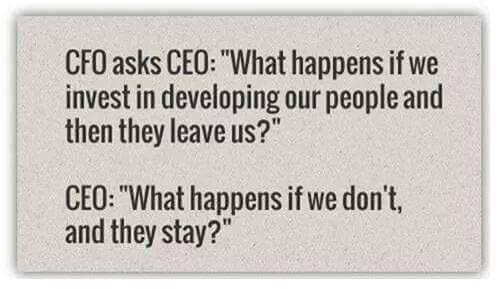
So when I saw this image…

707022c7-f35e-4427-91c0-653a382a3689-medium

I’m immediately thinking this is where so many decision-makers continue to get it wrong… you HAVE to invest in training your own people and/or training near hires. If you keep trying to pirate someone, you are just making the problem worse.

You end up with a mix of undertrained (and undermotivated) lifers and job-hoppers ready to take off as soon as something that pays more comes along.

Preparing For Your Interview… Here Are Some Things To Consider

https://www.linkedin.com/pulse/recruitment-interview-skills-awareness-survey-results-preater

Came across this interesting article that seems to tie into something we have found to be true. Most candidates fail the interview because they are classified as either unprepared and/or nervous.

“There are many things that can let a candidate down on the day and the most common cause, as stated many, many times, is lack of preparation. Listening skills, asking interesting questions and being negative about a former or current employer were also popular subjects raised over and over.”

Preparation can cover quite a range of activities:

  • Personal Appearance
  • Punctuality
  • Company Knowledge
  • Relating ones skills to the job
  • Knowledge of the job

Personal Appearance has become so downplayed in recent years, especially in the call center industry where candidates rarely even get to a level of business casual. When someone does dress up, it really stands out. It’s a real competitive advantage that few take advantage of. Plus its simple psychology… when you dress up you act up and when you dress down you play down.

practice

Punctuality is another old school interview skill that seems to have gone by the wayside and has a devastating impact on candidates. So often little merit is placed on being on time, which means the candidate is rushing once they realize they will not make the appointed time. Then they are frazzled and not in a calm state when they interview. Plus the interviewer is perturbed. Never a good way to get the ball rolling in your favor.

This is a no brainer, but still in this day and age of easy to access knowledge, more than half the candidates who come across my desk have not studied up on the company. It shows such total lack of respect it’s a 100% guarantee of interview failure. And for the candidates it usually means the first of many empty answers.

Relating ones skills is something you think most candidates would be doing when they read the job posting. But often I find they just read what they wanted to read and not what was actually there. So there is a big mismatch between candidate and employer expectations. Never a good way to show you are prepared for the interview, lets alone worthy of being trusted with a job.

Knowledge of the job is often another issue and here in BPO land, the biggest one I see if people who want to work in a call center, but really don’t enjoy speaking English. See my previous blog for my thoughts on this one.

So, one of the things we are doing in our training classes is coaching candidates on how to be successful interviewees. If nothing else, at least they are given insights into how to pass the interview, something that 90% of our initial applicants are failing to do.

Conversational English > That Elusive Skill Stopping So Many Call Center Careers From Getting Started

Learning a foreign language is tough for most of us. I took two years of Spanish in high school and didnt try very hard. I got average grades and really didnt pick up a lot. Then I spent six months in Japan, immersed in Japanese culture and picked up it very fast… didn’t learn how to write much, but my conversational Japanese became passable.

Three years into living in the Philippines and my Tagalog is ok, I can follow along most conversations but still struggle with pronunciation because most of my day is spent speaking English.

English-Only-Please-499x728

Conversational expertise in a language is really hard if you don’t have the chance to speak the language everyday. And that brings us to the topic at hand. Conversational English as a requirement for call center employment.

There is such irony in the fact that so many Filipinos want to work in a call center because it means good, stable pay and benefits. But proportionally so few Filipinos really want to push themselves to learn how to master Conversational English. In a land deeply connected to the U.S. and awash in American culture… many Filipinos only speak English when forced too.

When they get into the application process for call center jobs, they fail because even though they understand English and have had years of English language study, they just havent spoken it enough to pass the interview.

So to all those who try and fail, to all those trainees who keep trying and to all the future applicants… the only way to secure that well paying job with good benefits is to practice. Force yourself to speak as much English as possible.   Always love Tagalog and keep speaking it, but practice, practice, practice…  English Only Please!

SWOT > Great Tool For Analysts To Know

One of the reasons I love working with students is often something that is old to me and to many analysts, is actually new to them. SO getting to explain SWOT to students, or in this case having a student share with me their understanding of SWOT is pretty cool.

SWOT can be very helpful in general consulting and also in process optimization projects that many analysts find themselves assigned to.

How the SWOT ANALYSIS helps the business

One of the best way of evaluating a business unit opportunities is conducting the SWOT Analysis. Using a SWOT Analysis in your business, you can provide a necessary tools and information to establish your goals and objectives. And it will measure the progress of the business. The Strengths’ and the Weakness and the Weaknesses will be the inside Factors; the Opportunities and Threats will serve as the exterior factors.

Evaluating the Strengths

Evaluating what does the company do well, does the company has strong sense of purpose and the culture to support that purpose and is the company strong in its market. It could be your marketing expertise, or your excellent customer service. It’s important to try to evaluate your strengths in terms of how they compare to those of your competitors.

Recognize the Weaknesses

Recognizing the weaknesses will aid the decision-making process designed to improve you’re company. Don’t just make a list of mistakes that have been made but instead learned from what happened. Be prepared to hear things you may not like, but which, ultimately, may be extremely helpful. Business weaknesses can include accessibility of product, higher prices than other competitors and poor quality of products and services. By this you can minimize your weaknesses.

Look for the Opportunities

In this section you can identify what are the new opportunities for your business and interesting trends which you can take advantage of.  Example of opportunities includes potential new uses of products or services, social factors and the use of marketing or promotional techniques to market the business.

Be ready for the Threats

Threats to your business can be also as weaknesses and can be adversely affect your business but it can be a short- term circumstances that can be resolved immediately. For external Threat it could be new legislation or a new competitor in your market and for internal threats could include the company’s skill or staff shortage.

analytics_robo_people

You Don’t Build A Business… You Build People

f2049885-9cdd-4f3d-8370-9ac9600695e0-original

It’s funny to me that I shared this on LinkedIn and someone had the thought to spin it into a negative thing. Someone sarcastically replied that this is false and that big bosses just use people to make money. I’m guessing he sees this as a way to get people to work harder, but it the end only the top people benefit. Or something like that.

When I saw this, I immediately thought about a training program we have just kicked off to address a significant challenge we have in both my business and in my industry. The call center industry in the Philippines is probably one of the most hyper competitive labor markets anywhere in the world today.

To be able to be successful you need to find people who are stick around. So looking at the best way to do that is to build them up. To train them, to empower them, to enchant them.

Being equal parts educator, analyst, entrepreneur… this concept is something I firmly believe in, I have the data to back it up and the success to prove it is working. So take that mister sarcasm… DMAIPH is a great example of this philosophy actually working.

Analytics Leadership – DMAIPH specializes in arming the Data-Driven Leader with the tools and techniques they need to build and empower an analytics centric organization. Analytics leadership requires a mastery of not just analytics skill, but also of nurturing an analytics culture. We have guided thousands of Filipino professionals to become better analytics leaders. Contact DMAIPH now at analytics@dmaiph.com or connect with me directly to discuss a uniquely tailored strategy to ensure you are the top of your game when it comes to Analytics Leadership.

The 3 V’s of Big Data: Volume, Velocity, & Variety

The value of big data isn’t in the amount of data it can process, but in the insight that big data analytics can yield. Big data has value because it can assimilate vast amounts of different types of data. The three V’s – volume, velocity, variety – are wbrainhat give big data its value, and what powers these three V’s is more and better data.

Source: im-techsolutions.com

Analytics is all about looking for patterns in data that give you actionable insights.

IBM’s SMART Approach to Analytics

Came across this 5 point methodology for applying analytics in a business… very similar to the 3 I’s that I use in my training. I’ll start using both going forward.

S=Start with Strategy
What problems do you need big data to help you solve? If you’re running a business you might think it’s as simple as “How do I increase my profits?” But a question like that is inevitably going to lead you to more questions.
How do you generate more sales? How do you increase visitors to your site or store? How do you make your customers happier?

In this first step you need to be clear about your strategic objectives as well as the key strategic questions you want to have an answer to. You need to have this nailed down before you worry about collecting your first kilobyte of data.

M = Measure metrics and data
Once you know what data you need to answer your most strategic business questions, you can work out how you are going to capture it. Everything we do, online and, increasingly, in the real world, is capable of being recorded and stored. If we visit a website, records are kept of how long we browse for and where we head off to next. GPS systems in our phones as well as CCTV surveillance keep track of our physical movements.

Of course much of it is (hopefully) anonymized. Big data collection isn’t about tracking individuals, it’s about tracking the masses, so patterns can be spotted giving clues to overall trends. This part of the process involves designing the actual systems that will collect what your strategy tells you is needed.

A = Apply analytics
Increasingly, we are finding that the sort of data which contains really valuable insights is very messy. The slightly more technical term we use for this is that it is unstructured data. The sort of neat and tidy data you get when, for example, you ask someone to fill in a form giving you their age, height, weight and data of birth, is structured. The sort of messy, disjoined data you get when you analyze the contents of an email exchange or CCTV recording is unstructured.

The hidden value in this unstructured data is where most big data divers are finding the real sunken treasures. If you’re a business, being able to spot trends affecting your industry before your competitors is what will give you your edge. In order to implement this part of the process you will need to get to grips with the ever-growing range of tools and methods becoming available for making sense of messy, complex data sets.

R = Report results
The most insightful insight ever is useless if you can’t explain what it means to the key decision-makers in your business. Presenting the information necessary to drive change in a clear and digestible format is as vital as any other step of the operation. This part of the process has analogies to storytelling. There will be a beginning, a middle and an end, detailing why you need the insights, what you did to find them, and how they will result in everyone living happily ever after.

If you use data visualization and narratives to tell that story in a focused and interesting way, it’s far more likely people will understand what you are trying to do, and be as motivated as you are yourself about implementing data-driven change.

T = Transform your business
Change—specifically positive change—is the ultimate aim. Transformations you make to your products, service, marketing strategies or internal processes, guided by insights from your Smart Big Data analysis, is the catalyst which will drive that change.
cropped-dmai-fb-cover-photo1.jpg

Act Like a Recruiter, Think Like a Candidate!

I just saw this blog post title on LinkedIn and was really intrigued because one of the central points I made in a Recruitment Analytics training class recently and it was just that. It is a candidate driven job market right now in the BPO/Call Center industry here in the Philippines.

SO, I was hoping to glean some additional insights that I could blog about. However, it was just a link to a whitepaper. Which of course to get the white paper you have to sign up. And once you do that you get 2 pages and you have to then pay a fee to get the full whitepaper. I absolutely HATE this!

1075177_10151826941667425_1417094118_n

Im all for finding creative ways to monetize social media and digital marketing. I’m of with paying for something if it seems to be of legitimate value, but when the call to action hides the whole story it is one of the biggest marketing turn offs ever.

I’d love to see some data to back up the lost opportunity here. How many people don’t subscribe because they are turned off as well. And then is that loss made up for in the ones who do hit purchase? For a recruiting white paper? I seriously doubt it.

Call me crazy, but the best way to make money off of people online is to be transparent and upfront with costs.  Because that builds trust, which builds relationships. Going after money right away just builds a transactional relationship that easily slips away.

Back to my original point… we have entered an era of candidate driven recruiting, meaning we have to go to them not wait for them to come to us. We have to make things personal and have to meet them on their turf if we want to be successful.

So find ways to attract candidates that attract candidates to other things. What’s trending? What’s selling? What’s the big item everyone wants for Christmas? Use that to attract attention.

Once you have their attention then think like they think. They have many choices on where to work. What makes your place special? Why should they pick you? Use that to convert their interest into action.

That’s how I do it in my companies. We are always look for the best and the brightest across our consulting, training and outsourcing lines of business.

HR & Recruitment Analytics – The recruitment and retention of top talent is the biggest challenge facing just about every organization. DMAIPH is a leading expert in empowering HR & Recruitment teams with analytics techniques to optimize their talent acquisition and management processes. Contact DMAIPH now at analytics@dmaiph.com or connect with me directly to learn how to get more analytics in your HR & Recruitment process so you can rise to the top in the ever quickening demand for top talent.