A Few More Thoughts On Leadership

Most of my blog posts the past few weeks have been focused on leadership.

As my company grew from 6 to almost 100 in just 18 months we were forced to make a lot of quick decisions that have not always turned out to be the best long term solutions. So now I reflect on those lessons. How to move away from making snap judgments based and move more into data-driven decision making. That’s always been the goal.

Here are so of my favorite quotes on leadership and how I plan to wrap them into my leadership meeting next week.

Jack Welch said that, “Before you are a leader, success is all about growing yourself. When you become a leader, success is all about growing others.” I firmly believe this and have tried hard to instill this sense of purpose in my leaders. However, we have a lot more work to do before we have an organization full of people looking out for the success of others before looking out for their own success first.

A big part of this is to constantly be pushing the organization to evolve and to never rest. Peter Drucker said that “Leadership is lifting a person’s vision to high sights, the raising of a person’s performance to a higher standard, the building of a personality beyond its normal limitations.” That’s my point exactly. We look at the data, analyze our performance and determine what to improve next.

From our recent survey, we know our team members crave feeling valued and being appreciated more than they depend on being paid well. We need to focus on this and build a recognition program that show value and share appreciation. Sam Walton once said, “Outstanding leaders go out of their way to boost the self-esteem of their personnel. If people believe in themselves, it’s amazing what they can accomplish.” For us to reach the next level of success as a company this sense of empowerment needs to permeate through the ranks.

I hate when I have to manage people because things aren’t being done they way I expect them to get done. Part of that comes from my own failures in instilling this lesson in others. “Leadership is the art of getting someone else to do something you want done because he wants to do it.”  from General Dwight Eisenhower. We do too much bossing and not enough uplifting others to dream the same dream we do.

And finally, from John Quincy Adams, “If your actions inspire others to dream more, learn more, do more and become more, you are a leader.” To me that is the most important measurement for us to look at. Everything else comes next.
8d16381e-298f-4646-a7e2-c8929ffb08cf-medium

Analytics Leadership – DMAIPH specializes in arming the Data-Driven Leader with the tools and techniques they need to build and empower an analytics centric organization. Analytics leadership requires a mastery of not just analytics skill, but also of nurturing an analytics culture. We have guided thousands of Filipino professionals to become better analytics leaders. Contact DMAIPH now at analytics@dmaiph.com or connect with me directly to discuss a uniquely tailored strategy to ensure you are the top of your game when it comes to Analytics Leadership.

Leading vs. Managing vs. Bossing

The definition of Leading is exercising leadership by providing direction or guidance.

The definition of Managing is to direct or supervise employees or other staff by exerting control.

The definition of Bossing is to give orders to, especially in an arrogant or domineering manner.

Leaders generally try and empower, educate and uplift people working under them in an organization. At times they many need to manage employees who have gone off track, but generally only use this to optimize short term results. Although sometimes managing and bossing can feel the same to the employee, good leaders never have to result to bossing.

Managers generally try to motivate employees to meet business needs. At times the pressure for results will force managers to exert control over their employees to get results. This can generally fee like bossing. Employees that feel like they are constant being directed to do things that are unclear to them how and/or why they are doing it never feel like they are being lead.

People who are in positions of authority who are always bossing are not well liked by their employees. Employees do not feel valued or appreciated when they are constantly being bossed. Bosses use fear and intimidation to drive results, which generally fall short of business goals.

The ironic thing about these definitions is Bosses don’t generally realize they are Bosses. They think they are good managers and even good leaders. Managers generally know they are not Bosses, which is good, but they generally are not in a situation where they can be good leaders.

On the other hand, Good Leaders are always cautious of trying not to fall into the traps of managing people or being the boss.  They constantly appreciate feedback to help themselves improve and see their own style of running a business as always evolving.

For a business to be successful you need leaders who can occasionally manage and once in a while be a boss, but most of their time is spent trying take the business to a higher level. That’s my dream for DMAIPH.

10322847_10202261942091034_7017264038085105214_n

Analytics Leadership – DMAIPH is a founding member of the Analytics Council of the Philippines and specializes in arming the Data-Driven Leader with the tools and techniques they need to build and empower an analytics centric organization.

Analytics leadership requires a mastery of not just analytics skill, but also of nurturing an analytics culture. We have guided thousands of Filipino professionals to become better analytics leaders. Contact DMAIPH now at analytics@dmaiph.com or connect with me directly to discuss a uniquely tailored strategy to ensure you are the top of your game when it comes to Analytics Leadership.
Adding Value

One of the keys to my success is that I make sure to add value to what ever it is I am doing.

As an analyst, putting in a little extra time to make sure I had the right data to answer questions. In addition, I’d not just answer the question, I’d get into the head of the person who wanted my analysis and think about what new questions they might have and answer them too. I’d always be one step ahead and that added a lot of value to the business.

As a manager, I always look at each team member in terms of how much and what kind of value can they add to the business both now and long term. In each of my interactions, even the “negatives” can be used to add value long term to that persons career development as well as to the business.

As a businessman, I look at what we can do to add value to the life and well beings of our customers. What kind of training or analysis work can we provide to help them be more successful and add value in what ever it is they do.

Adding value is something that is not just a catch phrase or a motto… its something deeply ingrained in who I am as a person and what my company DMAIPH stands for.

Adding value is not just about customer service, integrity, professionalism or things like that… to me its about doing the making the world a better place one interaction at a time.

img_7737

So ask yourself… what adds value to your work, to your life and what do you do that adds value to someone else’s work or life. It the answer is not immediately obvious, then you are doing something wrong.

General Analytics – Analytics is the application of using data and analysis to discover patterns in data. DMAIPH specializes in empowering and enabling leaders, managers, professionals and students with a mastery of analytics fundamentals.

Analytics Leadership – DMAIPH is a founding member of the Analytics Council of the Philippines and specializes in arming the Data-Driven Leader with the tools and techniques they need to build and empower an analytics centric organization.

Analytics leadership requires a mastery of not just analytics skill, but also of nurturing an analytics culture. We have guided thousands of Filipino professionals to become better analytics leaders. Contact DMAIPH now at analytics@dmaiph.com or connect with me directly to discuss a uniquely tailored strategy to ensure you are the top of your game when it comes to Analytics Leadership.

IBM’s Six Ways To Use Analytics To Manage A Workforce

http://www.forbes.com/sites/ibm/2015/04/06/6-ways-to-use-analytics-to-better-manage-a-workforce/

Interesting article about how to use more analytics in areas that are traditionally data rich, but not a focus of most enterprise analytics solutions.

Right now in the BPO industry in the Philippines, two of the bullet points really got me thinking.

Using analytics in HR to predict if and when employees might leave is a pretty cool concept. Their is plenty of historical data to look at resignation and termination patterns and segment the data in various buckets to see if any meaningful patterns jump out.

This goes hand in hand with higher employee expectations for work life balance and having a strong sense of community within the work place.

Both are things that might require a lot of unstructured analytics as well… although it blurs employee privacy issues, Facebook and Twitter can be an excellent place to glean insights into employee mood and their intentions.

I am curious to see how deep analytics can go into looking at data and trying to predict employee loyalty and stickiness.

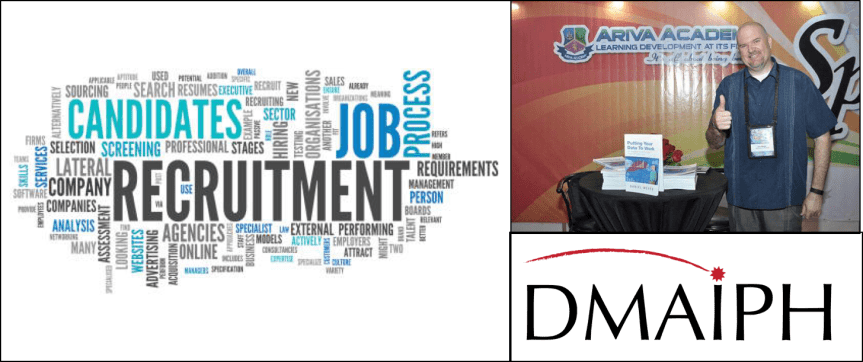
The recruitment and retention of top talent is the biggest challenge facing just about every organization. DMAIPH is a leading expert in empowering HR & Recruitment teams with analytics techniques to optimize their talent acquisition and management processes.

jobspicture2

DMAIPH also specializes in arming the Data-Driven Leader with the tools and techniques they need to build and empower an analytics centric organization. Analytics leadership requires a mastery of not just analytics skill, but also of nurturing an analytics culture. We have guided thousands of Filipino professionals to become better analytics leaders. Contact DMAIPH now at analytics@dmaiph.com or connect with me directly to discuss a uniquely tailored strategy to ensure you are the top of your game when it comes to Analytics Leadership.
You Don’t Build A Business… You Build People

f2049885-9cdd-4f3d-8370-9ac9600695e0-original

It’s funny to me that I shared this on LinkedIn and someone had the thought to spin it into a negative thing. Someone sarcastically replied that this is false and that big bosses just use people to make money. I’m guessing he sees this as a way to get people to work harder, but it the end only the top people benefit. Or something like that.

When I saw this, I immediately thought about a training program we have just kicked off to address a significant challenge we have in both my business and in my industry. The call center industry in the Philippines is probably one of the most hyper competitive labor markets anywhere in the world today.

To be able to be successful you need to find people who are stick around. So looking at the best way to do that is to build them up. To train them, to empower them, to enchant them.

Being equal parts educator, analyst, entrepreneur… this concept is something I firmly believe in, I have the data to back it up and the success to prove it is working. So take that mister sarcasm… DMAIPH is a great example of this philosophy actually working.

Analytics Leadership – DMAIPH specializes in arming the Data-Driven Leader with the tools and techniques they need to build and empower an analytics centric organization. Analytics leadership requires a mastery of not just analytics skill, but also of nurturing an analytics culture. We have guided thousands of Filipino professionals to become better analytics leaders. Contact DMAIPH now at analytics@dmaiph.com or connect with me directly to discuss a uniquely tailored strategy to ensure you are the top of your game when it comes to Analytics Leadership.

What Is Strategy?

http://bakerstreetpublishing.com/decisioncoaching/2015/02/12/what-are-the-strategic-decisions-we-face/

I came across this perfectly timed blog post on LinkedIn. Tomorrow we will be having our first real leadership planning session in a while and we have a lot of topics on the agenda.

However, before we get into the nitty gritty, I will spend the first part of the meeting talking about strategy. And these concepts will form the core of that conversation.

jobspicture2

“Every business must have three things to be successful: good leadership, good strategic decision making, and the ability to execute. “

  • Good Leadership: To me this means inspiring and empowering team members to take the initiative, to be bold in problem solving and being able to balance client, customer, business and team member needs.
  • Strategic Decision-Making: Taking a logical and data-driven approach to decision-making is the best way to map out your business plan.
  • The Ability to Execute: Good leaders know how to implement decisions quickly and efficiently because they work in a sound framework of empowerment and intelligence.

Looking at closely at the data is key part of this. Good leaders do much more than just manage, and it’s important to constantly remind ourselves of this.

Analytics Leadership – DMAIPH specializes in arming the Data-Driven Leader with the tools and techniques they need to build and empower an analytics centric organization. Analytics leadership requires a mastery of not just analytics skill, but also of nurturing an analytics culture. We have guided thousands of Filipino professionals to become better analytics leaders. Contact DMAIPH now at analytics@dmaiph.com or connect with me directly to discuss a uniquely tailored strategy to ensure you are the top of your game when it comes to Analytics Leadership.

Five Things That I Ask My Leadership Team To Do

As our team continues to grow and the type of work continues to diversify, I have been reflecting a lot on the way we approach things. The way we influence those we work with, the words we choose to motivate each other and the commitment we demonstrate to ourselves, each other and our clients all have a huge impact on our success.

Leaders do more than manage. They inspire and empower. They also hold people accountable. Having worked with and for some great leaders over my career, these are the top five things I ask my leadership team to do.

  1. Do The Work. Nothing inspires others more than seeing a person in a position of authority work hard. Putting in the extra effort, making sacrifices and going above on beyond to bet things done. Excelling at what you do is the best way to get others to do the same.
  2. Sharing The Vision. I use the term sound like a broken record a lot… meaning you should share and share and share stories and ideas and dreams that give people a vision of where things are going. In this fractured world, so full of distractions, it’s really not possible overshare your vision.
  3. Carrot And Stick. I use this metaphor a lot to remind my team that we have to be equally well versed in both discipline and praise. That we need to balance being a good cop and a bad cop. Being fair and just, is in the end what all employees want from their leaders.
  4. Don’t just give directions. Explain why things are important. Looks for root causes and not just the symptoms. Take the extra time to write a more comprehensive email, or sit down and explain something a second time, or use visuals to re-enforce why we do what we do.
  5. No excuses. True leaders accept responsibility, hold themselves accountable for failures and offer up solutions to problems. Unsuccessful leaders offer explanations and excuses.

So as we kick into high gear with expansion plans, these are the things I will be doing, sharing, reminding, and educating my team about.

Analytics Leadership – DMAIPH specializes in arming the Data-Driven Leader with the tools and techniques they need to build and empower an analytics centric organization. Analytics leadership requires a mastery of not just analytics skill, but also of nurturing an analytics culture. We have guided thousands of Filipino professionals to become better analytics leaders. Contact DMAIPH now at analytics@dmaiph.com or connect with me directly to discuss a uniquely tailored strategy to ensure you are the top of your game when it comes to Analytics Leadership.
Every Conflict Is An Opportunity

There is a truth in the workplace that many of us spend a lot of time and energy trying to overlook. That truth is Conflict and while you can try to avoid conflict for a while, you cannot escape it.

This is especially true if you are in a leadership position in the workplace. Conflict — and, more specifically, conflict resolution — is your job. The more you are able to recognize it, understand it, and ultimately resolve it, the more successful you will be. Being a good communicator is a key way to be successful in managing conflict.

LinkedIn Blogger, Bernard Marr, recently posted, “The first step you can take is to prevent conflicts that are preventable — not all of them are, but by actually seeking out a potential conflict and taking steps to mitigate it, you’ll make your job ultimately much easier. For example, if someone on your team sends out a vague email that could easily be misunderstood, asking for clarification upfront could head off future conflict.”

Marr points out that “as a leader, you also need to be proactive in defining what is and isn’t acceptable and helpful in a given situation.” A great example is when team members in leadership positions send vague emails or do not include all the relevant information. This can quickly lead to confusion and poor performance. Many time the root cause of poor performance, bad decision-making and low morale can stem directly from lack of proactive communication.

540

Back when I was a teacher, we would often talk about “teachable moments,” and every conflict is a strong teachable moment. When there are two sides, two opposing viewpoints, there is a remarkable opportunity for learning, innovation, and even team building. Getting the two sides to communicate and acknowledge room to grow on both sides is paramount.

According to Marr, “Great leaders don’t shy away from conflict or avoid it, but rather see it as a tool for bringing a team closer together. When there is a desire to resolve a conflict, it can be resolved — every time — and usually to the benefit of both parties.”

True leaders know how to use conflict to bring about positive and necessary change. They recognize that conflict is essential for an organization to evolve. With ever conflict we either have a crisis or an opportunity… I try hard to be proactive, to communicate and to always turn a conflict into an opportunity.

Analytics Leadership – DMAIPH specializes in arming the Data-Driven Leader with the tools and techniques they need to build and empower an analytics centric organization. Analytics leadership requires a mastery of not just analytics skill, but also of nurturing an analytics culture. We have guided thousands of Filipino professionals to become better analytics leaders. Contact DMAIPH now at analytics@dmaiph.com or connect with me directly to discuss a uniquely tailored strategy to ensure you are the top of your game when it comes to Analytics Leadership. 

Word Of The Day: Cohesive

From Jim Collins, Good to Great, “Organizational Health is about making your business function more effectively by building a cohesive leadership team, establishing real clarity among those leaders, communicating that clarity to everyone within the organisation and then putting in place structures to reinforce that clarity on an on-going basis”

===============================================================================

Full Definition of COHESIVE from Webster’s:  exhibiting or producing cohesion or coherence <a cohesive social unit> <cohesive soils>

Examples of COHESIVE

 Their tribe is a small but cohesive group.

Religion can be used as a cohesive social force.

===============================================================================

Being more cohesive. That is my goal for January 2015.

Let’s take this team of experienced and well intentioned individuals and mold them into a more effective force for the development of the business.

Lack of structure is can be the death knell of even the best companies.

Our structure needs to be more defined and transparent.

Let us commit to getting on the same page and demonstrating that from top to bottom.  After all, Homies help homies, always!

img_7737

The key challenge is coming up with metrics to measure the cohesiveness of your organization.  I have figured that out, so if you need help, connect with me and I will show you how.

Analytics Leadership – DMAIPH specializes in arming the Data-Driven Leader with the tools and techniques they need to build and empower an analytics centric organization. Analytics leadership requires a mastery of not just analytics skill, but also of nurturing an analytics culture. We have guided thousands of Filipino professionals to become better analytics leaders. Contact DMAIPH now at analytics@dmaiph.com or connect with me directly to discuss a uniquely tailored strategy to ensure you are the top of your game when it comes to Analytics Leadership. 

Achieving Better Results Through Analytics: What’s Your Analytics Strategy?

Just put together a pitch deck for a potential in-house corporate training.

Here’s some of the highlights…

You need an analytics strategy.

Making data-driven decisions is key to success in any business.

Having the right data at the right time makes all the difference.

Data-driven decision-making, as well as improved productivity and better overall outcomes begins with analytics.

Some of the benefits from a good analytics solution include:

  • Provide timely and targeted coaching/training to agents.
  • Ensures that the right materials are assigned.
  • Optimizes process of following agent improvements, leading to skill development and job mastery.
  • Eliminates the need for e-mailing countless excel spreadsheets
  • Schedules coaching/ training at an appropriate time.
  • Optimizes the follow up process to review impact of training and identifies when agent performance requires management attentions.
  • Give’s Management a High Level Overview of important KPIs.

IMG_6912

Business Strategy with Analytics – Aligning a business strategy to drive an organization forward requires a robust analytics solution. Businesses who have good analytics tend to be much more profitable and efficient then ones that do not. DMAIPH has helped dozens of companies in both the U.S. and the Philippines with adding more data analysis in their business strategy.

That’s why we have joined up with our key business partner PMCM Events Management to showcase our solutions at #TechToniPH in July 2017. Contact DMAIPH now at analytics@dmaiph.com or connect with me directly to find out what we can do to help you align your business strategy with analytics.