Why The Philippines? The Shift In Services Across The Globe Leads to My Adopted Country

“The world is currently witnessing a fundamental reorganization in the way services are delivered to customers. This is what is behind the movement to outsource. It’s a lot more than just saving money by shipping jobs overseas.” – Harvard Professor Robert E. Kennedy

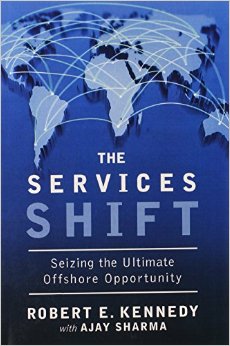
In his book the Services Shift, Kennedy outlines 5 primary reasons for this shift in services. All 5 have a great deal of influence on why the Philippines has become the call center capital of the world.

The globalization of services, in which different tasks are being carried out by different individuals in different locations, is about gaining access to the best combination of talent, resources and markets.

  • Technological Innovations like easy access to the internet and stored data.
  • Emerging Market Growth in traditionally closed markets
  • Global Macroeconomic Liberalization of government polices toward trade
  • The Corporate Imperative to both reduce costs and improve quality
  • The Convergence of a Global Business Culture based on the English language and American business models.

RA_Mar28_2


There are so many forces for this move to outsource and analytics has moved to the top of everyone’s wish list of things to look globally for.

If you have been thinking about getting your feet wet in setting up a team in the Philippines, I can help. I have set up a dozen different teams of all shapes and sizes for various U.S. companies.

Adding a team in the Philippines will add a lot of value to your business, so connect with men and we can discuss a specific solution for you.

HR & Recruitment Analytics – The recruitment and retention of top talent is the biggest challenge facing just about every organization. You really have to Think Through The Box to come up with winning solutions to effectively attract, retain and manage talent in the Philippines today.

DMAIPH is a leading expert in empowering HR & Recruitment teams with analytics techniques to optimize their talent acquisition and management processes. Contact DMAIPH now at analytics@dmaiph.com or connect with me directly to learn how to get more analytics in your HR & Recruitment process so you can rise to the top in the ever quickening demand for top talent.

The Mission of the DMAI Family of Companies: Creating More Analysts

I just wanted to share this blog post from the World Bank as it addresses exactly what we at DMAIPH have been saying and are trying to address; the need for more high end skills training in the Philippines.

12072012489

8 of 12 from this training batch found jobs with BPO companies within a couple weeks of completing the two day Introduction to Analytics training!

http://blogs.worldbank.org/eastasiapacific/node/3096
======================================

The Philippines faces an enormous jobs challenge. Good jobs—meaning jobs that raise real wages or bring people out of poverty—needed to be provided to 3 million unemployed and 7 million underemployed Filipinos—that is those who do not get enough pay and are looking for more work—as of 2012.

In addition, good jobs need to be provided to around 1.15 million Filipinos who will enter the labor force every year from 2013 to 2016. That is a total of 14.6 million jobs that need to be created through 2016.

Did you know that every year in the last decade, only 1 out of every 4 new jobseeker gets a good job? Of the 500,000 college graduates every year, roughly half or only 240,000 are absorbed in the formal sector such as business process outsourcing (BPO) industry (52,000), manufacturing (20,000), and other industries such as finance and real estate.

Around 200,000 new job seekers find work abroad, and around 60,000 will join the ranks of the unemployed, go back to school, or rely on financial support from family for the time being.

This still leaves 600,000 new jobseekers who have no choice but to work in the low-skill and low-pay informal sector in rural and urban areas.

Higher growth can provide more Filipino workers with good jobs. With sustained GDP growth of 7 percent per year and the removal of constraints in fast growing sectors (e.g., addressing skills shortages so that the BPO industry can accelerate its annual growth from 20 to 30 percent), the formal sector will be able to provide good jobs to around 2 million people in the next 4 years – that is double the current figure.

Even so, the majority of Filipino workers will still be left out. By 2016, around 12.4 million Filipinos would still be unemployed, underemployed, or would have to work or create work for themselves in the low pay informal sector such as selling goods in sari-sari stores (small retail stores) and peddling on the streets, and driving tricycles and pedicabs.

Addressing this jobs challenge requires meeting a dual challenge: expanding formal sector employment even faster, while rapidly raising the incomes of those informally employed.

To create good jobs for the 12.4 million, a comprehensive package of reform is needed to create a business environment that is conducive for the private sector to create jobs and increase human capital. Reforms that will secure property rights, open the economy to more competition, simplify business regulations, and increase investments in health, education, and infrastructure are needed.

But will the private sector have the incentive to invest and create jobs for the 12.4 million Filipinos who are left out of the fast growing formal sector?

What do you think is key to creating more and better jobs in the country? Creating jobs for millions is a daunting task, but perhaps we can agree to start somewhere.

call_center

Analytics Training – DMAIPH offers a wide range of analytics centric training solutions for professionals and students via public, in-house, on-site, and academic settings. We tailor each training event to meet the unique needs of the audience.

If you need empowerment and skills enhancement to optimize the use of analytics in your organization, we are here to help. Contact DMAIPH now at analytics@dmaiph.com or connect with me directly to set up a free consultation to learn which of our DMAIPH analytics training solutions is best for you. 

13 Month in the Philippines – Lesson 5 – September 2012 – Cracks in the Pavement

IMG_0994 Clark, Pampanga, Philippines

In September we stated working for a client that at first seemed to be a wonderful opportunity. They asked us to help them set up a manpower staffing business in Clark, Pampanga. It was a very interesting proposition. We would go out and sell the business and get a 50% commission on any business we brought in the door. We were given an office space, internet access, business cards, a business proposal and we found a list of potential clients to market too. We started doing a multi channel sales campaign with an e-mail blitz, phone call and in-person meetings. We also did some deep dive competitor research including mystery shopping. And we networked with the government agency in charge of the Clark Freeport Trade Zone. But we made a lot of assumptions and mistakes and after about three weeks of travelling from Makati to Clark (about 2 hours each way), things hadn’t worked out the way we had hoped for. Let’s look at a couple of the issues and analyze them.

1. We decided to set up shop in an area we were not at all familiar with. To mitigate this we hired a local with manpower experience.
2. We had to spend a lot of time travelling, so we had a small window for meetings. So we made sure all appointments where confirmed the day before.
3. We wanted to get to know the way things worked. So I networked with several key people via LinkedIn and in person appointments.
4. We didn’t have any upfront revenue. We got our client to pay most of the upfront costs for marketing and promotions.
5. We need to get our name out there. We sponsored a job fair and I got a speaking engagement at the event.
6. We had to assess the market opportunity. I had a couple of trainees build a prospective client database and map out locations.

So all things looked good. We had a great opportunity, I had applied a lot of analysis and we were ready to go.

But there were crack in the foundation and they had nothing to do with my analysis or our strategy. They had to do with people.

Even the best laid plans don’t work our if you cant count on the people to execute the plans. Partners got distracted, staff had to deal with personal challenges and personal life started to suffer from professional stresses. By the end of September there were more cracks in the pavement then I had cement to fill them with.

But it was still so much fun, so much adventure, so much excitement I just rolled with the blows and kept pushing forward!

Analytics Tool > Tableau Public > http://www.tableausoftware.com/public/

Analytics Concept > Competitor Landscape > http://en.wikipedia.org/wiki/Competitive_intelligence

YouTube Resource > http://www.youtube.com/watch?v=bj1q4zunuN0&feature=share&list=PL8D46F50D27222FD4

My Analytics Story – My passion is solving problems by bringing together the best talent, cutting edge technology and tried and true methodologies. DMAIPH is all about empowering people towards better Decision-Making through the use Analytics and business Intelligence. This is what I do best. Contact DMAIPH now at analytics@dmaiph.com or connect with me directly for a free consultation about getting more analytics into your career and your business.