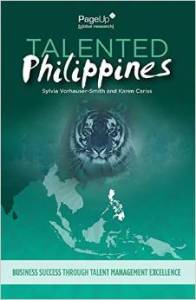
Talented Philippines! A Really Helpful Resource For BPO Professionals

http://www.talentedphilippines.com/

Came across this new book and just ordered it. Im pretty excited about it.

In a nutshell… Talented Philippines answers critical questions for multinational corporations currently operating in, expanding or establishing operations in the Philippines.

Some of the key questions tackled in the book:

What are the critical business issues for multinationals in the Philippines?

What are the key talent management implications?

How have the Philippine’s best organizations addressed those challenges?
talented philippines

Talented Philippines was created to address the critical business and HR issues impacting the Philippines today as the country continues to transform. Based on the responses of more than 650 business and HR practitioners at the forefront of HR innovation, thought leadership and implementation in the country, the book explores the people management priorities across small, medium and large enterprises operating in the Philippines. Combined with numerous case studies that highlight the experiences of leading organizations and insight from a wide cross-section of public and private sector enterprises, Talented Philippines offers global best practices for multinational companies looking to leverage the great promise of this flourishing nation and its talented workforce.

This is well timed as the last year has seen a quickening of the talent war in the Philippines as the issue of a skills mismatch between job seekers and employers has really come to a head. It is a must read for anyone involved in the BPO industry in the Philippines.

However, there is one thing that based on what I see so far, is missing form this book. The fact that no matter how awesome a company’s HR practitioners are… they are still trying to find talent when it is truly lacking in a natural state. As a companion piece to this book, would be solid advice on how, when, where and why to invest more in training… especially pre-hire training and training geared towards internal advancement.

No matter how great an HR team is, they still have to get the right people in the door to apply and that seems to be the issue… because even in country of 90 million there is just not enough Filipinos with the skill sets and/or aptitude for a BPO career right now. The demand will only be met if the supply is given more training, more preparation and more data to make good career decisions.

Dr. Data_Analytics in the Philippines
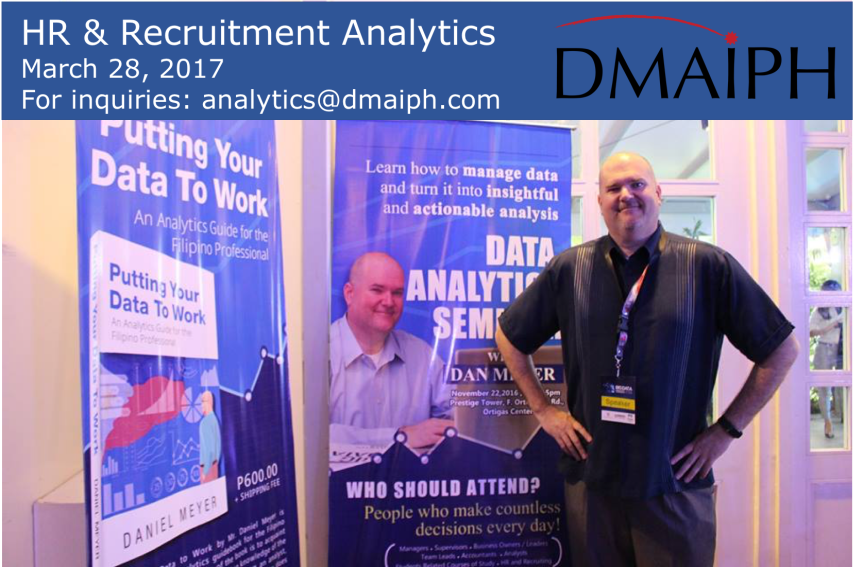
If you like this book, you will probably enjoy my new book as well. Putting Your Data to Work is a guidebook designed to help Filipinos get started with building a good analytics culture in their business. Connect with me if you are interested in purchasing a copy for only 600 PHP.

HR & Recruitment Analytics – The recruitment and retention of top talent is the biggest challenge facing just about every organization. DMAIPH is a leading expert in empowering HR & Recruitment teams with analytics techniques to optimize their talent acquisition and management processes. Contact DMAIPH now at analytics@dmaiph.com or connect with me directly to learn how to get more analytics in your HR & Recruitment process so you can rise to the top in the ever quickening demand for top talent.
Why The Philippines? The Shift In Services Across The Globe Leads to My Adopted Country

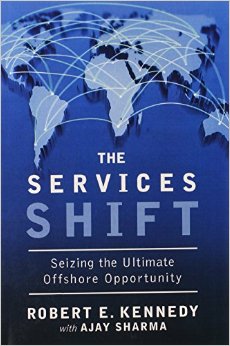
“The world is currently witnessing a fundamental reorganization in the way services are delivered to customers. This is what is behind the movement to outsource. It’s a lot more than just saving money by shipping jobs overseas.” – Harvard Professor Robert E. Kennedy

In his book the Services Shift, Kennedy outlines 5 primary reasons for this shift in services. All 5 have a great deal of influence on why the Philippines has become the call center capital of the world.

The globalization of services, in which different tasks are being carried out by different individuals in different locations, is about gaining access to the best combination of talent, resources and markets.

  • Technological Innovations like easy access to the internet and stored data.
  • Emerging Market Growth in traditionally closed markets
  • Global Macroeconomic Liberalization of government polices toward trade
  • The Corporate Imperative to both reduce costs and improve quality
  • The Convergence of a Global Business Culture based on the English language and American business models.

RA_Mar28_2


There are so many forces for this move to outsource and analytics has moved to the top of everyone’s wish list of things to look globally for.

If you have been thinking about getting your feet wet in setting up a team in the Philippines, I can help. I have set up a dozen different teams of all shapes and sizes for various U.S. companies.

Adding a team in the Philippines will add a lot of value to your business, so connect with men and we can discuss a specific solution for you.

HR & Recruitment Analytics – The recruitment and retention of top talent is the biggest challenge facing just about every organization. You really have to Think Through The Box to come up with winning solutions to effectively attract, retain and manage talent in the Philippines today.

DMAIPH is a leading expert in empowering HR & Recruitment teams with analytics techniques to optimize their talent acquisition and management processes. Contact DMAIPH now at analytics@dmaiph.com or connect with me directly to learn how to get more analytics in your HR & Recruitment process so you can rise to the top in the ever quickening demand for top talent.

Conversational English > That Elusive Skill Stopping So Many Call Center Careers From Getting Started

Learning a foreign language is tough for most of us. I took two years of Spanish in high school and didnt try very hard. I got average grades and really didnt pick up a lot. Then I spent six months in Japan, immersed in Japanese culture and picked up it very fast… didn’t learn how to write much, but my conversational Japanese became passable.

Three years into living in the Philippines and my Tagalog is ok, I can follow along most conversations but still struggle with pronunciation because most of my day is spent speaking English.

English-Only-Please-499x728

Conversational expertise in a language is really hard if you don’t have the chance to speak the language everyday. And that brings us to the topic at hand. Conversational English as a requirement for call center employment.

There is such irony in the fact that so many Filipinos want to work in a call center because it means good, stable pay and benefits. But proportionally so few Filipinos really want to push themselves to learn how to master Conversational English. In a land deeply connected to the U.S. and awash in American culture… many Filipinos only speak English when forced too.

When they get into the application process for call center jobs, they fail because even though they understand English and have had years of English language study, they just havent spoken it enough to pass the interview.

So to all those who try and fail, to all those trainees who keep trying and to all the future applicants… the only way to secure that well paying job with good benefits is to practice. Force yourself to speak as much English as possible.   Always love Tagalog and keep speaking it, but practice, practice, practice…  English Only Please!

What Makes DMAIPH a Successful Outsourcing Partner?

Updated on 10/31/16

Our top focus is keeping your customers happy! If an outsourcing company like DMAIPH is doing things right, its seamless. Your customers will get the exact same level of service if they talk to someone in your corporate office as they would if they talk with our team in the Philippines.

We are not just some vendor providing service… WE ARE YOUR COMPANY.

We have already proven this with an online auction site based in Boston, a pharmaceutical sales consulting business in Houston and a social media networking service from New Jersey among a half dozen others.

Here are some reasons to adopt an outsourcing partnership with DMAIPH:

  1. Lower costs: With no overhead, our partners save as much as 50% by outsourcing!
  2. Time savings in hiring and training staff: Hiring the wrong person can and will cost your company money in the long run. Let us take that risk away from you.
  3. Well trained workforce to handle customer needs and concerns. We train based on your requirements.
  4. No need to invest in and maintain high end infrastructure and technology. We got that covered.
  5. Feedback: You will get information from your outsourced contact center about where your programs have troubles. What’s working, what’s not? By being 6,000 miles away we have a different perspective then those in your own office.

dmaiphout

Contact us today for a free consultation. DMAIPH has been providing outsourcing solutions to U.S. based small and medium sized business for over 3 years.  Our offices in the Philippines are set up with state of the art technology and staffed with top local talent.

Analytics Outsourcing – DMAIPH has successful set up Filipino analytics teams for over a dozen U.S. based businesses. Offering both virtual and office based teams that specialize in problem solving using data, new technology and analytics techniques is our strength. Finding and empowering analytics talent is increasingly challenging, but we have it down to a science. Contact DMAIPH now at analytics@dmaiph.com or connect with me directly to learn more about how to set up an analytics-centric team in the Philippines.

Analytics Outsourcing To The Philippines

There has been a lot discussion lately about the relative pros and cons of outsourcing analytics. The biggest perceived con are that an outsourced analyst might not have the necessary business knowledge to pose the right questions or to clearly identify threats and opportunities.

However, the reality is that with the global analytics talent gap expanding at a rapid pace, many business have no choice but to explore outsourcing options for some if not most of their analytics.

Having worked with several businesses who have successfully outsourced analytics projects and even whole teams to the Philippines, I can say that the pros far outweigh the cons. Here are a few of the pros that I can testify to:

1. Speed and Focus. Once optimized, detached team can often get more done and get it done faster as they are able to mono task.

2. Fresh Set of Eyes. Given enough time to get up to speed on things, an “outsider” to the business often can see the forest through the trees.

3. Scalability. The savings based on things like having a team that can be quickly grown or shrunk based on business need and access to labor pools with a lower cost ratio can often make a big difference when it comes to covering all the bases.

10406025_10152524531307425_1404103117_n

There are countless other reasons why business in the U.S. are increasing looking across the Pacific for analytics talent. The number of academic course and corporate training programs offering business analytics is growing rapidly here in the Philippines.

As key players in the BPO industry here in the Philippines look to meet many of the analytics needs of companies abroad, the pros will continue to outweigh the cons.

And that is exactly why I founded DMAI.

Call Center Jobs… Go Big or Go Small? Which Is Best For You?

https://ph.news.yahoo.com/call-center-boom-lures-filipino-expatriates-home-175229277.html

Interesting Article! I actually meet Butch at few times at BPAP meetings. The circle of SME Call Center owners is a fairly small one. When most people think of call centers, they think of the big multinational ones that employ thousands. However, a very significant % of call center jobs in the Philippines are with much smaller ones, like DMAI.

There are a number of pros and cons about working for big or small call centers. As my staff can certainly attest, it’s a big trade off when you leave behind the big call centers and take a job with a much smaller one. There can also a big difference in terms of Filipino centric culture that varies between the two and is based on the mix of the management team.

Based on consistent feedback, industry research and my own experience, I started with Wells Fargo as a call center agent and helped set up call center teams here in the Philippines, here are some of the pros and cons of each type of call center.

1. Huge, Multinational, Multisite BPOs.

PROS: Large structure allows for a variety of job experiences, pay is generally higher, company tends to follow labor laws closely. Very consistent daily experience with clearly understood expectations.

CONS: Easy to get lost in the shuffle and just be a number, very production orientated, not many accommodations made for work-life balance, strict attendance policy. Can quickly devolve into a monotonous routine that is very unhealthy and draining.

2. Small and Medium Sized, Generally Filipino Owned/Managed, Single Site BPOs.

PROS: Smaller structure allows for more diverse training and experience, scheduling is generally more flexible with much better work-life balance accommodations. Smaller teams tend to become much closer and are more relationship driven teams. With the exception of outbound sales, you generally don’t feel that things are as metrics driven.

CONS: Pay is often times less, with many smaller BPOs not as consistent with labor laws.
I have seen many people thrive in the big environments with all the structure and high developed policies and procedures and I have also seen many Filipinos crushed by the often cold and numbers driven management.

I have also witnessed many Filipinos taking the opportunities presented by a smaller company and parlay them into significant career advancements and even ownership. On the flip side I have sadly watched people fail to survive the myriad challenges of a small business and find themselves wishing to once again go big.

So every Filipino who thinks about a call center career, needs to weigh the Pros and Cons to going big or going small.

data1

Sharing A Friend’s Post > My headset was my weapon once upon a time in my life

Sharing a post from a longtime friend and business partner… because I feel the EXACT same way!!!

I started in customer service myself and 20 years later here I am, the owner of my own call center.

Tonichi Achurra, Vice President Philippine Operations at Teleperformance Philippines

My headset was my weapon once upon a time in my life.

When I was asked to wear a headset for a shoot, so many memories of my life on the phones started to trickle in. I still wear my headset when I listen to calls side by side with an agent BUT wearing it and remembering how I was once a call center agent – it was surreal.

The POINT IS, I wanted to post a pic of me with my headset because when I was a call center agent, I didn’t have an opportunity to post a picture of it with pride. WHY? There was no FB yet. LOL

10520774_10152402813212914_4910996229977135243_n

Anyway, to all the Call Center Agents of the Philippines a lot has been said but what is important is that:

We BELIEVE in your ability to provide excellent service to our customers all over the world

We TRUST you to uphold the work ethics that we value and live by

We ADMIRE your resilience, flexibility and willingness to work extremely challenging hours in order to have a decent living to provide for your loved ones

We SALUTE your perseverance to pursue a dream – of a better life and a successful career

YOU are the New Age Heroes of the Philippines! Love your job and it will love you back!

Proud that I was once upon a time, a call center agent. Cheers to my friends, who were beside me during that time .. BOY did we have so much fun!

DMAI – The Intelligent Philippines Outsourcing Solution

Over the past couple of years I have successfully consulted and partnered with a number of small call centers based in the Philippines. Most of my assistance has come in the form of analytics training and consulting, with a focus on making more data-driven decisions and optimizing reporting processes.

I’ve drawn a lot on my experience working with outsourcing projects while with Wells Fargo as well as the glorious failure or my own outsourcing company BPO Elite. And now to add to those, the amazing success we have having with DMAI in managing the rapid growth of a 50+ person outsourcing team of consisting of both home and office based staff.

Armed with these experiences and guided by a gifted management team, DMAI is now on the active look for more small business clients. We specialize in providing talent with above average analytical skills, who have been trained to make data-driven decision and are passionate about their work. The caliber of DMAI team members is not what you typically find in a call center employee.

We want to partner with just 2-3 more small or medium sized business who are looking to add staff overseas to complement their domestic operations. If you know someone looking to get started or is unhappy with their current outsourcing arrangement, maybe we are the partner they need.

The Philippines presents a very unique opportunity for American business to hire staff who speak and American style of English, are well versed in American culture and offer just about the best level of customer service in the world.

Please Like us on Facebook at http://www.facebook.com/dmaiph to see what our team members and customers say about DMAI.
You can also follow my blog at http://www.dmaph.wordpress.com to learn more about our mission and purpose… to empower better decision-making through analytics.

For a free consultation, please connect with us via the above channels or send an email to analytics@dmaiph.com

Convergys eyes 6,000 new hires this year… But From Where?

A recent ABS-CBN headline touts how one of the biggest BPOs in the Philippines is planning to increase their staff by about 15%. And they are not alone, in the past few months I have seen a lot of the bigger players (including IBM and Google) make public announcements about staffing up here in the Philippines. But a lot of people are asking where will they come from?

Based on research being produced and/or complied by IBPAP, we are seeing a widening of the talent gap between the number of seats available and the number of quality candidates to fulfill them. The Philippines is about to graduate hundreds of thousands of college students, yet so few of them will be ready to step right into a call center job. The government has made huge strides in partnering with the industry leader and higher education to create courses that will help fuel the demand, but its not nearly enough.

And to make things even more interesting, we are seeing a lot of mergers between bigger players (Convergys just acquired Stream) as they try to consolidate to offer more services to bigger clients abroad. So the big fish are eating well. However, the same cannot be said for a lot of the smaller BPOs.. most set up by Filipinos with the idea of capitalizing on the call center boom. But they are for the most part struggling as they either can’t find accounts or enough staff to fill the client requirements. The competition has never been more fierce when it comes to finding good people.

So where does that leave the industry? Is the pool big enough to supply the big fish like Convergys with 6K more employees? 2014, will be an important year in the evolution of the BPO industry in the Philippines.

539735_206746759470775_461235919_n

As for DMAI? We continue to grow quickly as we have a mostly work from home team that is almost completely made up of former call center agents who have walked away from higher pay for better work life balance. Is this the wave of the future? I think so!

The Philippines is Going Beast Mode! 3 of 3

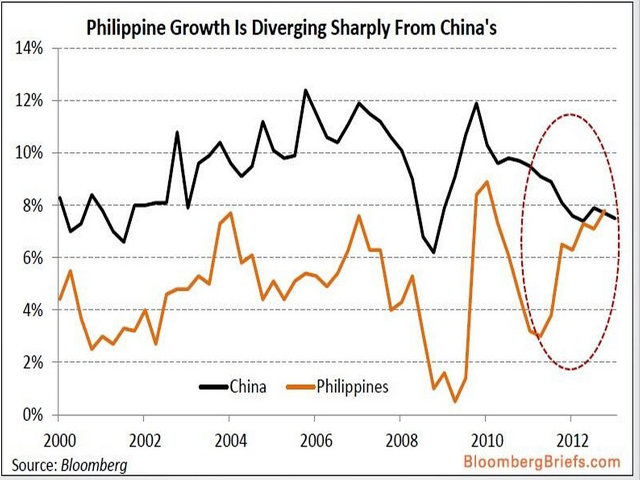
Philippines and ChinaSharing my thoughts on some great Bloomberg visuals my good friend Justin Calderon used in a recent story he put together.

http://investvine.com/charts-outlining-the-philippines-economic-trajectory/

Beast Mode is an American Football term for a player who singlehandedly dominates a game. This is the third of three visuals I will breakdown and comment on.

This slide is quite interesting both because of the data behind it and the significance that can be distilled from it. The data shows a truly remarkable moment in for the Philippines, if you asked 100 people (Filipinos, Chinese Americans, anyone) if they thought it was possible for the growth of the Philippines economy to match the growth rate of the Chinese economy, you’d be lucky to find 1-2 people who would believe it.

Of course you have to keep the size of the economies in mind as the Chinese economy is many times larger in total GDP than the Philippines economy. But still, it’s a remarkable achievement for an economy that has not such a lot of positive trends in many, many years.

Now for the significance of it… the fact that it surprises is where the real power is. Its and OMG moment for Filipinos to take pride in the country and to try to go even further. To push accountability within the government, to reinvest in and reinvent education, and to help their fellow countrymen to rise up and push this trend of being a new economy of significance onward and upward.

So take the three slides we have reviewed; (1) the economy of the Philippines is growing significantly faster than its ASEAN neighbors, (2) demographics favor almost unlimited potential and (3) the story of the economic growth is something that will make people stop and take notice. And that is the power of data visualization.