The Challenge Ahead

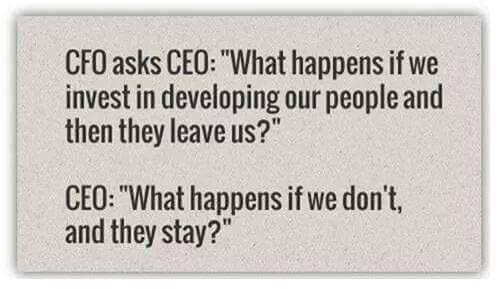
How do we get better? That’s what is on my mind every day. Most people get up every day and go to work. They have family obligations to meet so they take a job that helps them meet these obligations. However, most people don’t find job that add much more value to their lives then a pay check.

Sometimes we get lucky and find a good place to work. Where we are valued as not just a worker, but a person. Where we are allowed to have more work/life balance then we might have in other places of employment. This is a special place to be. Its not what 90% of the global workforce face every day.

  • So what happens when we find that awesome company to be a part of? In some cases we are empowered to be innovative and to help be part of the success of the company as keep it moving forward. For people who feel this sense of positive energy, work is actually pretty fun most days.
  • However, in some cases we find that even though the company is good to us and we like working there, we find things start to feel routine. We have challenges every day that are either not fun to fix or when we fix it, no one seems to notice. This eats away at our positive feelings about our company.
  • And then we have a third group of people who for whatever reason are in the wrong place at the wrong time. They have challenges in their lives that prevent them from being at work every day. And often when they are at work they don’t feel very engaged. They have a low sense of satisfaction that makes each day on the job more work than its seems worth.
707022c7-f35e-4427-91c0-653a382a3689-medium

So as DMAIPH grows from a company of a half dozen to one of several dozen, how do we keep people trained? How do we make sure we keep as many team members as possible in the first category of engaged and empowered workers?

These is no simple answer. For some more money, for others more responsibility and for others more job variety.  There is no magic solution. It takes a lot of effort from not just the leaders but also from the employees who want to keep enjoying their work and like to work every day for the same company.

The answer of course is analytics. We need to know exactly what they need to stay engaged and to stay with us.

That is what I think about every day. That is THE big challenge ahead. And so should you.

Join us on Feb 21, 2017 in Ortigas to find out what metrics you need to interpret and access the data you have in your business that will tell you exactly what to do to keep attrition low and satisfaction high.

Analytics Leadership – DMAIPH specializes in arming the Data-Driven Leader with the tools and techniques they need to build and empower an analytics centric organization. Analytics leadership requires a mastery of not just analytics skill, but also of nurturing an analytics culture. We have guided thousands of Filipino professionals to become better analytics leaders. Contact DMAIPH now at analytics@dmaiph.com or connect with me directly to discuss a uniquely tailored strategy to ensure you are the top of your game when it comes to Analytics Leadership.

Under Promise And Over Deliver And You Will Build Trust

The business principle “under promise and over deliver” is one that I learned to use to great advantage over the years. I really liked the concept from the first time I heard it.  It made total sense to me:  follow through on your commitments and exceed what you said you’d do.

For example, your boss asks when you can get a project finished by, you give a date and manage to turn it in 2 days early, perhaps with enough time for some feedback and to create another version.

This extra time you create can be very valuable as you can tweak things based on that feedback. It will give your boss the feeling that two helped shape the final outcome and increases their satisfaction with you and your work.

When I reflect back to what made me such a successful analyst at Wells Fargo, this is the thing that comes to mind first and foremost. My boss would often comment on how I had a knack for estimating how much time it would take to deliver something and would almost always meet or even exceed that deadline.

Some advice I got from a mentor early on in my career was to never make a promise unless it came of out of a genuine desire to follow through, not because of an obligation to do so. I came across this blog recently that outlines some tips on how to Under Promise and Over Deliver:

  • Consider what you are trying to achieve by making a promise and whether or not it can be obtained by making a smaller, more manageable promise.
  • Instead of promising to complete the entire project in an unreasonable amount of time, break the project up into sections.
  • Promise to have portions of the project completed by a certain date. This allows you to manage expectations and keep up with the workload.
  • Estimate how long you think it will take you to fulfill the promise and then double or triple that time.
  • If you are not able to answer how long it will take you to complete a task, don’t give an answer. Tell the other person or group that you will get back to them.
  • Sometimes we can’t help but break a promise. Be up-front and immediately offer an apology. It makes a difference and will go a long way towards repairing your relationship.

10406025_10152524531307425_1404103117_nThe lesson of under promising does more than just surprising people and making them happy. It gives you the space to do your absolute best and that will make you feel good too. Each time you make good on a promise you will feel that much more confident in your abilities.

Every promise fulfilled will help you to associate your name with positivity and trust. This is very, very valuable to your career. Making promises you can keep is instrumental to helping you build and maintain any relationship in life, but especially with your boss and people with influence over your career.

Source: http://blog.pickcrew.com/why-you-should-always-under-promise-and-over-deliver/


Adding Value

One of the keys to my success is that I make sure to add value to what ever it is I am doing.

As an analyst, putting in a little extra time to make sure I had the right data to answer questions. In addition, I’d not just answer the question, I’d get into the head of the person who wanted my analysis and think about what new questions they might have and answer them too. I’d always be one step ahead and that added a lot of value to the business.

As a manager, I always look at each team member in terms of how much and what kind of value can they add to the business both now and long term. In each of my interactions, even the “negatives” can be used to add value long term to that persons career development as well as to the business.

As a businessman, I look at what we can do to add value to the life and well beings of our customers. What kind of training or analysis work can we provide to help them be more successful and add value in what ever it is they do.

Adding value is something that is not just a catch phrase or a motto… its something deeply ingrained in who I am as a person and what my company DMAIPH stands for.

Adding value is not just about customer service, integrity, professionalism or things like that… to me its about doing the making the world a better place one interaction at a time.

img_7737

So ask yourself… what adds value to your work, to your life and what do you do that adds value to someone else’s work or life. It the answer is not immediately obvious, then you are doing something wrong.

General Analytics – Analytics is the application of using data and analysis to discover patterns in data. DMAIPH specializes in empowering and enabling leaders, managers, professionals and students with a mastery of analytics fundamentals.

Analytics Leadership – DMAIPH is a founding member of the Analytics Council of the Philippines and specializes in arming the Data-Driven Leader with the tools and techniques they need to build and empower an analytics centric organization.

Analytics leadership requires a mastery of not just analytics skill, but also of nurturing an analytics culture. We have guided thousands of Filipino professionals to become better analytics leaders. Contact DMAIPH now at analytics@dmaiph.com or connect with me directly to discuss a uniquely tailored strategy to ensure you are the top of your game when it comes to Analytics Leadership.

The Analytics Driven Leader: Demystifying Strategy

As I prepare for spending the bulk of the upcoming year in Philippines I have several goals in mind; publish my next book, launch a new side business and spend quality time with as many of my team members as possible. And when I think of the conversations I want to have with the team, demystifying strategy and empowering more data-driven decision making are top of mind.

img_7737

Business Strategy can be a complicated thing for many reasons. First and foremost because although you can have big goals that everyone can see, the fluid nature of pushing a business forward makes it hard for many to conceptualize.

In our case we have gone from a company of 6 with one business line to a company of over 100 with six business lines in just 18 months. On top of that we have diversified from one legal entity with one purpose to three legal entities with complimentary purposes. It’s a lot to take in.

Data-Driven Decision Making can be challenging for mean reasons as well. First of all, few people on the team have a solid foundation in business analytics. Most come from companies where they either didn’t have a direct role in developing the analytics or where in companies that really didn’t value analytics. So it takes some time for people to get on board with the idea of using both data and wisdom to make decisions.

There are so many things that we can do to improve performance, enhance communication and enable more proactive thinking. Refining process flows, building better reports and having more forums for information sharing are all places to start.

My goal is by the end of the 1st quarter of 2017 we have accomplished a lot of these things. By then we will have taken some of the mystery out of our business strategy and empowered more people to look at the data as they make decisions.

Analytics Leadership – DMAIPH specializes in arming the Data-Driven Leader with the tools and techniques they need to build and empower an analytics centric organization. Analytics leadership requires a mastery of not just analytics skill, but also of nurturing an analytics culture. We have guided thousands of Filipino professionals to become better analytics leaders. Contact DMAIPH now at analytics@dmaiph.com or connect with me directly to discuss a uniquely tailored strategy to ensure you are the top of your game when it comes to Analytics Leadership.

Demand Higher Standards! Thanks Seth I Needed That

http://sethgodin.typepad.com/seths_blog/2015/04/demand-higher-standards.html

Sharing another one of Seth Godin’s well timed blog posts.

It really is quite amazing that on those days when I need a little extra inspiration and/or affirmation, I tend to find it in my inbox from Seth. It’s like he knows he is writing for me. Haha! 🙂

“And the sooner you find a boss who pushes you right to the edge of your ability to be excellent, the better. Even if the boss is you”

Bottom line, don’t settle for mediocrity. Dont settle for it form below, from above and most importantly from yourself.

We grow bigger, we make more money, we work harder, we grow bigger, we make more money… and on it goes. Now at some point we can take a rest and smell the roses and just do what needs to be done versus trying to do more, but that time is not now.

GROW

Mastering The Art Of Account Management

I have been thinking a lot lately about what its take manage the relationship we have with our clients.

A long time ago, I learned that to be a good account manager you need a rare combination of professional and personal characteristics, some of which can’t be taught. To me account management is the art of representing my business to clients and vice versa.

The job requires skill, advocacy, diplomacy, leadership, expectation setting, intelligence, method, heart, patience, experience, and wisdom. It is not easy and it is something I am constantly trying to improve at.

With this concept top of mind, I thought I’d share some of my tips for being an effective account manager.

  1. Under Promise and Over Deliver. I have always strived to under promise and over deliver. Most people get it wrong. They promise to something they cannot deliver and things go downhill quickly from there. Losing your client’s trust is a surefire way to doom your company.
  2. Do What They Want, Not What You Want. We often get so busy we think we have to do it the way we are doing it. Even when it’s clearly not what the client wants. This is another way to doom yourself and your business. They are paying you to do what they want, so don’t expect them to keep paying you to do what you want.
  3. Communicate Bad News Early. It is far, far better to tell you client you will be late on a deadline, or you can meet the requirement or you have to modify what you promised then it is to go silent. Not communication bad news early, or worse to communicating the bad news at all is another strike against you and your hard work, not matter what you intentions.
  4. Be the Expert. When it comes to dealing with a client, they are expecting you to know every answer, sometimes even before they ask it. They are paying you for your expertise. So you need to be the one to find problems before they are problems, fix things before they break and always have a solution at hand. If you are not an expert on what you are being paid for, they will find someone else.
  5. Always Have the Most Data. When your client tells you there is something wrong because they saw it in a report, then you know you have pretty poor analytics. You are doing the job, so you should be the one churning out the reports, championing the sharing of information and setting the agenda for the next meeting.

10592010_10152674958362425_1982237172_n

That’s just a few of the things that come to mind when it comes to being a good account manager.

And just in case I need to remind anyone, and not trying to brag… but I am pretty awesome at this.

Being good at account management is without a doubt one of the key reasons I have thrived throughout my career is keeping the clients happy.

DMAIPH has successfully set up Filipino analytics teams for over a dozen U.S. based businesses. Offering both virtual and office based teams that specialize in problem solving using data, new technology and analytics techniques is our strength. Finding and empowering analytics talent is increasingly challenging, but we have it down to a science.

DMAIPH specializes in arming the Data-Driven Leader with the tools and techniques they need to build and empower an analytics centric organization. Analytics leadership requires a mastery of not just analytics skill, but also of nurturing an analytics culture. We have guided thousands of Filipino professionals to become better analytics leaders. Contact DMAIPH now at analytics@dmaiph.com or connect with me directly to discuss a uniquely tailored strategy to ensure you are the top of your game when it comes to Analytics Leadership.

One Step Ahead In The Talent War Across Call Centers In Manila

https://www.recruiter.com/i/5-tips-on-cultivating-your-talent-pipeline/

Came across this interesting article on LinkedIn. I’m always curious about that people are saying about how to have success with recruiting, because its perhaps the top challenges in my industry.

Recruiting good call center agents in Manila has got to be one of the hardest requirements to fill anywhere on the globe right now. Awhile back I came up with a formula for what makes up a good call center agent, and not the just the surface skills, but he core competencies. Here is what I see:

  • Conversational English (20%) – Conversations follow rules of etiquette because conversations are social interactions, and therefore depend on social convention.
  • Customer Service (20%) – Customer service is a series of activities designed to enhance the level of customer satisfaction – that is, the feeling that a product or service has met the customer expectation.
  • Technical Training (20%) – Instruction to help agents use the systems and personal computers on which they are dependent to get their daily work done.
  • Product Knowledge (20%) – An understanding of a good or service that might include having acquired information about its application, function, features, use and support requirements.
  • Work Ethics (20%) – A strong work ethic is vital to a company achieving its goals. An example of someone with work ethic is a person who gets to work on time every day and always works long days to get the job done.

Of these, the hardest to teach is the fifth one, work ethic. So to me 5 ways to look for strong work ethic in a candidate are similar to the ones listed in the LinkedIn article. They are:

  1. Recruiting at events is more the just showing our brand, but our story out there. It’s a crowded field and we are just one, small voice. But it’s a enchanting story that get people excited about working with us.
  2. We too lean on Referrals for a high % of our new hires. There is nothing better than an endorsement for the job from someone doing the job.
  3. Internships/OJT/Trainees let us see how they work and letting them see what its like to work with my team. Great way to make sure it’s a good fit from both ends.
  4. Looking locally at schools and outside the industry places like retail and service jobs to attract new talent to the industry. The industry is full of job hoppers and money chasers, so going for them is not a good option.
  5. Staying in touch by sending newsletters, inviting to trainings, text blasts is important to us. Staying top of mind and keep telling our story.

So there you, go that’s how we are helping companies stay ahead of the game when it comes to the talent war going on in the call center industry in the Philippines right now.

RA_Mar28_8

I am currently working on a book dedicated to helping HR & Recruitment professionals in the Philippines. The book should be ready by early 2017. In the meantime, you can check out my latest work, Putting Your Data to Work, for an overview of how to get started with analytics in your business. Connect with me and I will show you how to get a copy of my fast selling analytics guidebook.

HR & Recruitment Analytics – The recruitment and retention of top talent is the biggest challenge facing just about every organization. DMAIPH is a leading expert in empowering HR & Recruitment teams with analytics techniques to optimize their talent acquisition and management processes. Contact DMAIPH now at analytics@dmaiph.com or connect with me directly to learn how to get more analytics in your HR & Recruitment process so you can rise to the top in the ever quickening demand for top talent.

IBM’s Six Ways To Use Analytics To Manage A Workforce

http://www.forbes.com/sites/ibm/2015/04/06/6-ways-to-use-analytics-to-better-manage-a-workforce/

Interesting article about how to use more analytics in areas that are traditionally data rich, but not a focus of most enterprise analytics solutions.

Right now in the BPO industry in the Philippines, two of the bullet points really got me thinking.

Using analytics in HR to predict if and when employees might leave is a pretty cool concept. Their is plenty of historical data to look at resignation and termination patterns and segment the data in various buckets to see if any meaningful patterns jump out.

This goes hand in hand with higher employee expectations for work life balance and having a strong sense of community within the work place.

Both are things that might require a lot of unstructured analytics as well… although it blurs employee privacy issues, Facebook and Twitter can be an excellent place to glean insights into employee mood and their intentions.

I am curious to see how deep analytics can go into looking at data and trying to predict employee loyalty and stickiness.

The recruitment and retention of top talent is the biggest challenge facing just about every organization. DMAIPH is a leading expert in empowering HR & Recruitment teams with analytics techniques to optimize their talent acquisition and management processes.

jobspicture2

DMAIPH also specializes in arming the Data-Driven Leader with the tools and techniques they need to build and empower an analytics centric organization. Analytics leadership requires a mastery of not just analytics skill, but also of nurturing an analytics culture. We have guided thousands of Filipino professionals to become better analytics leaders. Contact DMAIPH now at analytics@dmaiph.com or connect with me directly to discuss a uniquely tailored strategy to ensure you are the top of your game when it comes to Analytics Leadership.

Analytics Tip > Keep Your Data Clean

http://bicorner.com/2015/03/22/5-nuggets-from-the-big-data-driven-business/

Came across this interesting post on LinkedIn…

Database quality now has an unprecedented impact on the success of Big Data initiatives. To ensure that these databases are as productive as possible, Marketers must maintain good data hygiene.

Five steps for cleaner data:

1) Make sure your data entry team is keying in data accurately in the first place.  Make the data entry team a priority.

2) Incentivize your sales team, call-center squad and other customer facing employees to regularly request updated contact information and other data from the customers they encounter.

3) Use available software, such as Trillium, to streamline the process of cleansing, correcting and updating email and postal addresses.

4) Allow customers access to their records so they can help keep them accurate.  Consider offering discounts as an incentive for customers to participate.

5) Regularly contact customers, either via phone or email, to update records.  This approach is critical with the most important accounts.

Having clean data is very, very important.

img_7731

I have my admin team refresh my connection data on LinkedIn on a regular basis so our mailings lists stay up to date.

We also have audits of our client pipeline to make sure all relevant applicant data is captured for analysis.

Make sure you put some thought into how to keep your data clean!

Analytics is the application of using data and analysis to discover patterns in data. DMAIPH specializes in empowering and enabling leaders, managers, professionals and students with a mastery of analytics fundamentals.

DMAIPH is also a founding member of the Analytics Council of the Philippines and specializes in arming the Data-Driven Leader with the tools and techniques they need to build and empower an analytics centric organization. Analytics leadership requires a mastery of not just analytics skill, but also of nurturing an analytics culture. We have guided thousands of Filipino professionals to become better analytics leaders. Contact DMAIPH now at analytics@dmaiph.com or connect with me directly to discuss a uniquely tailored strategy to ensure you are the top of your game when it comes to Analytics Leadership.

You Don’t Build A Business… You Build People

f2049885-9cdd-4f3d-8370-9ac9600695e0-original

It’s funny to me that I shared this on LinkedIn and someone had the thought to spin it into a negative thing. Someone sarcastically replied that this is false and that big bosses just use people to make money. I’m guessing he sees this as a way to get people to work harder, but it the end only the top people benefit. Or something like that.

When I saw this, I immediately thought about a training program we have just kicked off to address a significant challenge we have in both my business and in my industry. The call center industry in the Philippines is probably one of the most hyper competitive labor markets anywhere in the world today.

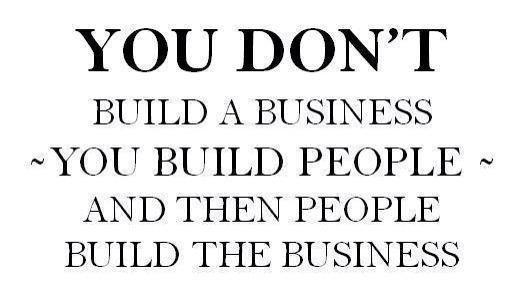
To be able to be successful you need to find people who are stick around. So looking at the best way to do that is to build them up. To train them, to empower them, to enchant them.

Being equal parts educator, analyst, entrepreneur… this concept is something I firmly believe in, I have the data to back it up and the success to prove it is working. So take that mister sarcasm… DMAIPH is a great example of this philosophy actually working.

Analytics Leadership – DMAIPH specializes in arming the Data-Driven Leader with the tools and techniques they need to build and empower an analytics centric organization. Analytics leadership requires a mastery of not just analytics skill, but also of nurturing an analytics culture. We have guided thousands of Filipino professionals to become better analytics leaders. Contact DMAIPH now at analytics@dmaiph.com or connect with me directly to discuss a uniquely tailored strategy to ensure you are the top of your game when it comes to Analytics Leadership.