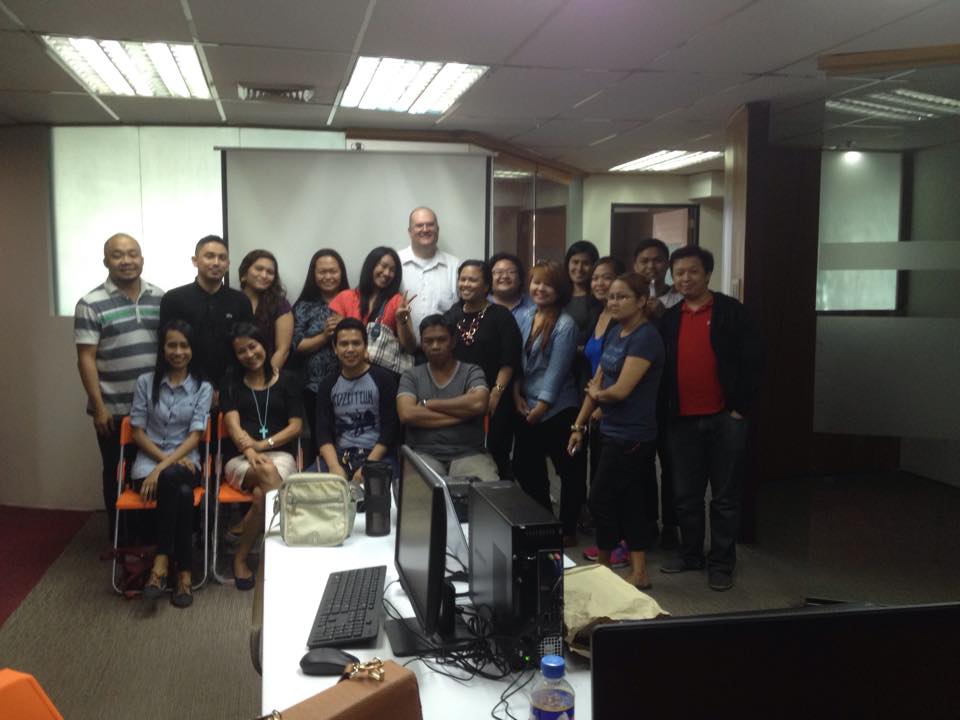
Choose Not To Get Involved? Then You Really Have No Right To Complain

A good friend and key business partner, Penny Bongato, recently authored the cover story for the AmCham Journal’s September 2014 issue.

I wanted to share some highlights form one of the foremost thought leaders of industry-academe collaboration here in the Philippines.

“Industry. The Academe. When have they ever been in harmony? Some academics say “Leave the teaching to us. We will produce the graduates you need.” Industry however claims that the academe is not producing the quality graduates they need.

Meanwhile, the academe complains that Industry has not been very forthright in articulating what it is exactly that they require of the graduate I believe our expectation is that Academe is supposed to produce employable graduates.

With the challenges businesses face today (i.e., changing technology, fierce competition, and especially globalization) there is not much room or time to train the new employee, similar to the kind of new employee training we had decades ago. If industry continues to harbor this expectation, the often cited phenomenon called the Jobs versus Skills mismatch will keep getting wider.

We have complained about this for decades. In this scenario, what would Industry’s role be? In the four years that I have been with the IT & Business Process Association of the Philippines (IBPAP), I have personally witnessed instances of true collaboration between the ITBPM industry, where I belong, and the academe.”

This area of industry-academe collaboration is one of my passions, long ago seeing a greater need to prepare Filipino students for BPO careers. One of the first people I made a point of befriending when I moved to the Philippines to set up my business was Penny. Since we first met over three years ago we have been able to work on several projects together, including me being sent by BPAP to speak in front of students about careers in the BPO industry. Besides speaking to students, I have made a point to recruit students and fresh grads as trainees, OJT and even as employees because I recognize the need to help move this collaboration along.

As Benedict Hernandez, IBPAP’s Chairman of the Executive Committee, CCAP President and the Head of Accenture BPO said, “If you [as a member of the IT BPM industry] choose not get involved, you really have no right to complain.”

I also believe this to be so true! So as both a regular guest lecturer in academe and an owner of a BPO company, I call on my brothers and sister in both arenas to stop complaining and start acting. In the end, the ultimate beneficiary of this is our students… aka our future!

Thanks so much Penny, for sharing these incredible insights and challenging us all to up our game in a time of great national need.
Teamwork Is Not Easy… And Here Is Why

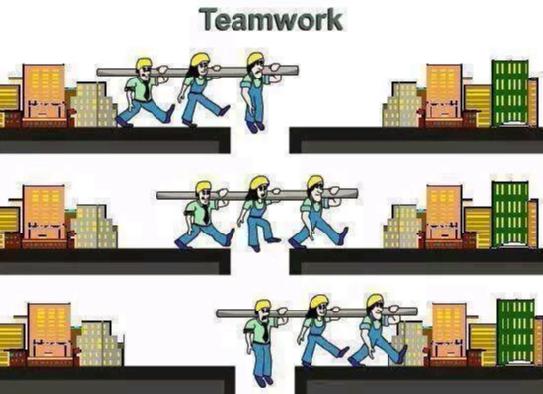
I came across a couple of visual yesterday on LinkedIn that made me think a lot about how complex it can be to have a group of people really working as a team.

The first image is a pretty straightforward visual of how a people going in the same direction can help each other out in the common interest to complete a task.

69c586b0-e263-47e2-b2ca-aa9160e236ed-medium

Being able to count on your team mates to carry you though a rough patch, to help you avoid dangerous mistakes, to conquer a problem bigger then one person… so many concepts of teamwork can be drawn from a simple image.

But if the benefits of working a team and not a collection of individuals is so important, why do so many team fail?

This second image provides an illustration of all the character traits a person needs to be truly successful. Look how many of them have to do with how you interact with people on your team.

9e6004f6-2df2-11e4-a117-12313d239d6c-large

For a team to really work efficiently, its members have to be able to share both risk and reward, they have to be both comfortable and confident in who they are and they have to be willing to trust and take leaps of faith.

When you have a team full of people who like being on a team, you will be successful. On the other hand, when you have a team full of people who don’t really like being on a team, you will be a lot less successful.

A Few More Internet Research Tips

Just wanted to share a few more tips from my presentation on Mastering Internet Research:

Additional considerations to make before you start your search:

1. Where should you search? Google is not the only answer. There are over a trillion web sites out there and its growing every day. The IMDB is a much better place to get movie info then a google search.

2. How will you plan your search? Setting parameters is a big key to being a master internet researcher. Besides setting aside a certain amount of time, you can also give yourself boundaries on the number of sources you need and the type of content you want to find.

3. How will you evaluate the sources? Making sure the data you find is accurate is so key. Looking at reliable sources, validating data with a second reference and comparing your findings to published works are good ways to avoid bad data.

Some final tips to be a master internet researcher:

4. Use Find or Ctrl-F to Help Navigate Search Results– Often it is difficult to understand why a site is retrieved in a search. The Find or Ctrl-F feature will quickly allow you to search the text of a site and locate specific keywords.

5. When Using Wikipedia – View a Page’s History
All Wikipedia pages’ edits are saved, and the site makes it easy to view changes.

If you’re interested in seeing a page’s history, simply click the “View history” tab on the top right of any page. As well as seeing recent edits, you can click “Compare selected revisions” to see then-and-now versions of the content.

10414627_538667176278730_5771499670520946828_n

Internet Research Tips

About to do a training for some of my team on how to master internet research. Here are some of the excellent tips on how to optimize Google searches that I will be sharing:

1. Use unique, specific terms – It is simply amazing how many Web pages are returned when performing a search. You might guess that the terms blue dolphin are relatively specialized. A Google search of those terms returned 2,440,000 results! To reduce the number of pages returned, use unique terms that are specific to the subject you are researching.

2. Use browser history – Many times, I will be researching an item and scanning through dozens of pages when I suddenly remember something I had originally dismissed as being irrelevant. If you can remember the general date and time of the search you can look through the browser history to find the Web page.

3. Don’t use common words and punctuation – Common terms like a and the are called stop words and are usually ignored. There are cases when common words like the are significant. For instance, Raven and The Raven return entirely different results.

4. Set a time limit — then change tactics
Sometimes, you never can find what you are looking for. Start an internal clock, and when a certain amount of time has elapsed without results, stop beating your head against the wall. It’s time to try something else:
> Use a different search engine, like Yahoo! Bing, Startpage, or Lycos.
> Ask a peer.
> Call support.
> Ask a question in the appropriate forum.
> Use search experts who can find the answer for you.

540

The Internet is the great equalizer for those who know how to use it efficiently. Anyone can now easily find facts using a search engine — assuming they know a few basic tricks.

Never underestimate the power of a skilled search expert.

Sharing A Friend’s Post > My headset was my weapon once upon a time in my life

Sharing a post from a longtime friend and business partner… because I feel the EXACT same way!!!

I started in customer service myself and 20 years later here I am, the owner of my own call center.

Tonichi Achurra, Vice President Philippine Operations at Teleperformance Philippines

My headset was my weapon once upon a time in my life.

When I was asked to wear a headset for a shoot, so many memories of my life on the phones started to trickle in. I still wear my headset when I listen to calls side by side with an agent BUT wearing it and remembering how I was once a call center agent – it was surreal.

The POINT IS, I wanted to post a pic of me with my headset because when I was a call center agent, I didn’t have an opportunity to post a picture of it with pride. WHY? There was no FB yet. LOL

10520774_10152402813212914_4910996229977135243_n

Anyway, to all the Call Center Agents of the Philippines a lot has been said but what is important is that:

We BELIEVE in your ability to provide excellent service to our customers all over the world

We TRUST you to uphold the work ethics that we value and live by

We ADMIRE your resilience, flexibility and willingness to work extremely challenging hours in order to have a decent living to provide for your loved ones

We SALUTE your perseverance to pursue a dream – of a better life and a successful career

YOU are the New Age Heroes of the Philippines! Love your job and it will love you back!

Proud that I was once upon a time, a call center agent. Cheers to my friends, who were beside me during that time .. BOY did we have so much fun!

Three Keys To A Successful Virtual Team

I’m borrowing this idea from an article called “Going Virtual: Hiring the Right Team for Remote Work”
Going Virtual: Hiring the Right Team for Remote Work

Among other things DMAIPH has a side business focusing solely on building and managing virtual analytics teams, based in the Philippines, for small and medium US based companies. In the past year we have set up three teams and the lessons we have learned about how to be successful validate the three points in the above article.

Key #1: Hire only people with significant work experience. I love working with fresh grads as they are mostly blank slates who you can empower and educate to fit your own vision. However, our experience here is that the best virtual employees are ones with significant office based experience.

One of the great benefits to setting up a virtual team in the Philippines is the large pool of former call center agents who have significant industry experience but have left due to family commitments. Tapping into that talent pool has been a huge boon for DMAI.

Key #2: Make every hire a trial hire until you determine fit. Attrition with virtual teams is by default pretty high as employees can have a lot less loyalty to a person they never meet. In addition, coaching and mentoring are challenging to do effectively online so its really important to find the right fit before entering into a long term partnership.

Another plus of doing business in the Philippines is that its standard to bring staff in on a six month temporary contract. After the six months they are evaluated and either released or picked up. We offer a standard pay increase at six months when a contract employee is normalized. Its really helped us build a core team of people who will be with us a long time while at the same time not forcing us to keep people around who really don’t want to be here.

jobspicture2

Key #3: Put barriers in the process of hiring new people. As we have evolved the virtual business we have become better and better about building screens that really do optimize the talent pipeline process. Like most companies we have a number of minimum requirements that help target the right applicants and we also mix in assessments that require the applicant to show some of the analytics skills we need.

The combination of experience, having them walk a mile in our shoes and making it kinda hard to get hired has really lead us to providing top end talent for a reasonable price.

Analytics Jobs – DMAIPH hires, refers and connects Filipino analytics talent. The Philippines is at the center of the action when it comes to solutions to the global need for analytics. Working with DMAIPH to find work, hire analytics talent or set up analytics teams will ensure you are tapped into the best of the best when it comes to analytics in the Philippines. Contact DMAIPH now at analytics@dmaiph.com or connect with me directly to find out how to take advantage of this booming opportunity.

Data Analytics and Its Application in the Academic Institution

Something I will be presenting at a conference coming up in October…

Over the past few years we have seen a dynamic shift in the way data analytics as a discipline is being matriculated by colleges and universities in the Philippines. Great leaps forward in the field of data analytics is under way through a combination of government, private industry and academic partnerships.

1234816_373956069428862_87094977201992094_n

Participants will be provided a comprehensive overview of the current and future state of data analytics in both the education system and the Philippines as a whole. Highlights will be shared using Tableau, one of the leading business intelligence software applications available. Focus will be given to how schools, companies and training programs are empowering graduates to hit the ground running as analysts.

The facilitator for this session is Daniel Meyer, President & Founder of DMAI, an analytics training, consulting and outsourcing company based in Ortigas. Mr. Meyer spent 15 years as a senior analytics consultant with Wells Fargo Bank in the U.S. and has a Master’s Degree in Education from Indiana University of Pennsylvania. For the past three years Mr. Meyer has conducted various data analytics trainings for hundreds of businesses, university students and young professionals here in the Philippines.

Check out the website to learn more: http://www.parssu.org/

Haven’t Come Across This Way Of Presenting Analytics Before

Just saw this post for a two day business analytics seminar in Makati being put on by one of the more well known training companies.

One of the things about analytics is it means a lot of different things to different people, but this approach seems pretty limited and kinda boring. Anyone see anything on here that excites them?

Seriously interested in feedback on this.

10406025_10152524531307425_1404103117_n
Course Description

This 2- day course covers the different skills and competencies that Business Analyst should have based on BABOK v2 (IIBA Business Analysis Book of Knowledge). This course will provide an overview of the different Business Analysis Knowledge Areas and their respective task, tools and techniques .

Course Objectives

Upon completion of this program, participants will be able to:
•Understand the different roles of a Business Analyst
•Understand the different basic skills of a BA
•Explain the range of tasks that a business analyst might perform;
•Explain the importance of requirements definition.
•Understand the different techniques and tools in application analysis
•Understand the different knowledge areas based on BABOK
•Understand the relationships of the different knowledge areas of business analysis based on BABOK
•Learn the steps in requirements management processes
•Differentiate between the Planning, Analyze and Design phases.

Optimize Your Business and Competitive Intelligence With More Data-Driven Decision-Making

Here is a Training Proposal I just submitted. I hope it gets approved as it will be a fun class to teach.

Title: Optimize Your Business and Competitive Intelligence With More Data-Driven Decision-Making

Length: 8 hours in a 1 day session

Facilitator: Daniel Meyer, President of DMAI and Inspire Analytics Expert with over 15 years of experience with Business and Competitive Intelligence experience. Served as top BI and CI Analyst for Remittances at Wells Fargo Bank for seven years.

Main Focus: Customized program on Business and Competitive Intelligence (i.e. identifying BD opportunities which includes effective market monitoring, and competitive analysis).

Through a variety of lecture, discussion and group exercise, participants will be empowered to maximize the data around them to deliver industry leading research and analysis.

Topic Areas Include:
• Overview of Business and Competitive Intelligence Concepts
• Brining More Analytics Into Your BI and CI Process
• Finding The Right Data At The Right Time
• Building and Understanding Your Competitor Landscape
• How To Conduct More Data-Driven Competitive Analysis
• Measure the Effectiveness of Your Market Monitoring
• Using Data-Visualization To Enhance Your Reporting
• Capitalizing On Business Development Opportunities

Participants: In-house Research team who are involved in the following services: Competitive Research Reports, Industry and Environment Scanning Reports, Market Research and Strategic Reports

522

Business Intelligence Buzzwords = Nosebleed

http://www.analyticbridge.com/profiles/blogs/kill-the-buzzwords-the-real-meaning-behind-popular-bi-terms

In the Philippines, “Nosebleed” is the common response for having to deal with a challenging problem, whether it be speaking a lot of English or trying to understand a complicated business problem.

When I read the attached article, it made me think of the number of times I get the Nosebleed response when I talk about analytics terminology.

In any talk I give on analytics, I make sure to always start with a definition and then build up a glossary of terms and definitions to make sure everyone is on the same page. I also like to show the audience that things aren’t usually as difficult as they seem, they just need to get past the nosebleed inducing buzzwords.

brain

Big Data is kinda scary because it sounds complicated and expensive.

Data Visualization is very broad and difficult to visualize if you aren’t familiar with the concept.

Data Scientist sounds like someone who doesn’t even exist in the Philippines yet.

But when you take a minute to step back and see that big data just means the data universe in your business that you are already using every day, that data visualization is charts and maps and graphs, and that a data scientist is really just the data guy you already have, then its not so nosebleed inducing.

Once you have the baseline to start from then you can go back and show the complexity of each buzzword without losing the audience.

If you or your business is suffering from nosebleed because the buzzwords in your analytics solutions sound too expensive and too complicated, then give me a shout out. I can help simplify it for you.