More Reasons To Stay Then Reasons To Go

One of the downs in the up and down cycle of running a business is when people leave.

Employee retention is something all companies have to worry about. But few really try and do something about it.

I read a lot about why employees stick and why they leave.

I know that to stick they need to have basic needs met like a good salary, feeling valued, being appreciated and having a safe and comfortable place to work.

Work-life balance, a supportive leadership team and feeling productive are all important as well.

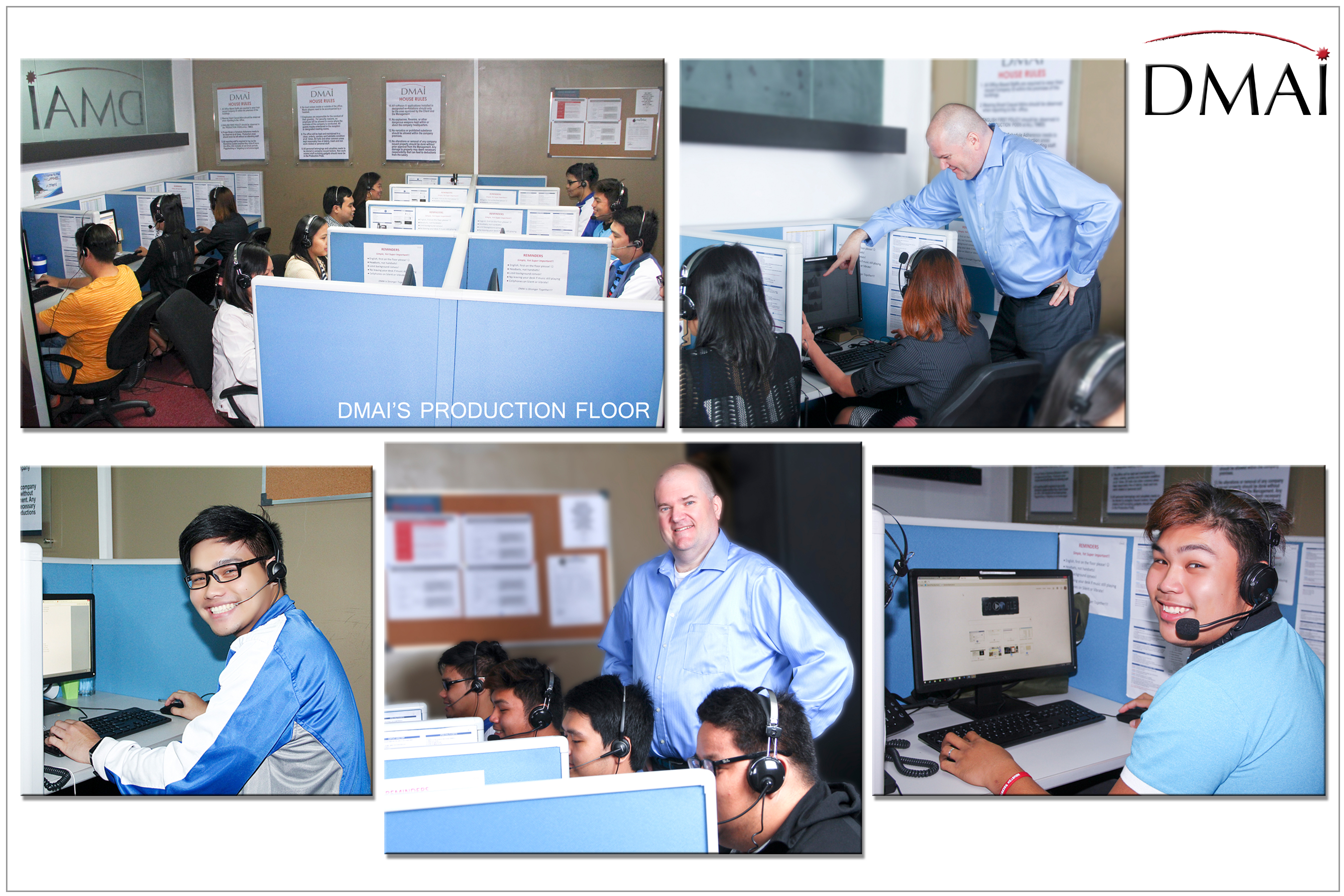
Here are my  Top Reasons To Stick with DMAI

  1. Work Life Balance
  2. Opportunity For Growth
  3. A Stable Client
  4. 80% E-mail – 20% Phones
  5. Exposure to Analytics
  6. Open-Minded and Supportive Leadership
  7. Competitive Compensation
  8. Working With Good People
  9. Being Valued by the Company
  10. Being Appreciated for the Work You Do

I am sure each of my team has their own top ten reasons for themselves.

It is almost always easier to fix whatever you don’t like about your current job then it is to leave and hope you can find something better.

Sticking with a job long term is not easy and its becoming less and less the norm, which makes it all the more special when you find the right spot for you.

4_shemac101_072015 copy

Reinforcing Positive Behavior By Influencing Team Members

When you work with DMAIPH, you will be working with people who care because they constantly study, learn and evolve. No one wants to be stuck in a place where every day is the same and you never get a sense of what you are part of.

jobspicture2

Here’s one reason why Going DMAIPH is different!

https://en.wikipedia.org/?title=B._F._Skinner#Behaviorism

Been thinking a lot about how to motivate people. Sometimes I think we might have it all wrong.

We get so busy doing things that we forget to say thanks and we avoid saying you can do better.

Per Wikipedia, “Reinforcement, a key concept of behaviorism, is the primary process that shapes and controls behavior, and occurs in two ways, “positive” and “negative”.

Both types of reinforcement strengthen behavior, or increase the probability of a behavior reoccurring; the difference is in whether the reinforcing event is something applied (positive reinforcement) or something removed or avoided (negative reinforcement). Punishment is the application of an aversive stimulus/event (positive punishment or punishment by contingent stimulation) or the removal of a desirable stimulus (negative punishment or punishment by contingent withdrawal).

So I know that is nosebleed inducing for some of you, so let’s break it down.

Say we have a challenge in our business with attendance. So we can try to find ways to reinforce good behavior using positives like perfect attendance rewards or offering additional incentives to come to work like food and allowances. But we also have to find ways to limit the negative behavior through coaching, warnings and potentially termination.

If you dont have a clearly defined model of rewarding both positive and negative behavior then team members will get lost and generally gravitate towards negative behavior. Having a clear and consistent attendance policy that is upheld from top to the bottom in an organization will give you that balance of behavior.

DMAIPH specializes in helping businesses in both the U.S. and the Philippines optimize processes and procedures including how to positively influence team member behavior.

IMG_1224

Analytics Leadership – DMAIPH specializes in arming the Data-Driven Leader with the tools and techniques they need to build and empower an analytics centric organization. Analytics leadership requires a mastery of not just analytics skill, but also of nurturing an analytics culture. We have guided thousands of Filipino professionals to become better analytics leaders. Contact DMAIPH now at analytics@dmaiph.com or connect with me directly to discuss a uniquely tailored strategy to ensure you are the top of your game when it comes to Analytics Leadership.

One Step Ahead In The Talent War Across Call Centers In Manila

https://www.recruiter.com/i/5-tips-on-cultivating-your-talent-pipeline/

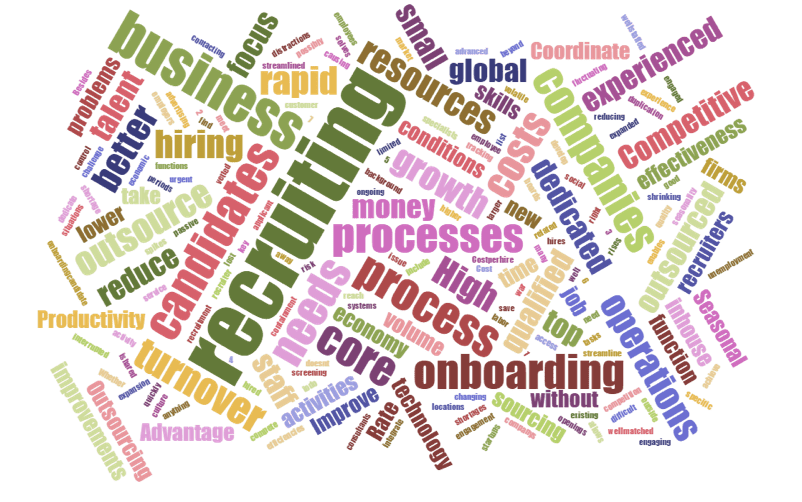
Came across this interesting article on LinkedIn. I’m always curious about that people are saying about how to have success with recruiting, because its perhaps the top challenges in my industry.

Recruiting good call center agents in Manila has got to be one of the hardest requirements to fill anywhere on the globe right now. Awhile back I came up with a formula for what makes up a good call center agent, and not the just the surface skills, but he core competencies. Here is what I see:

  • Conversational English (20%) – Conversations follow rules of etiquette because conversations are social interactions, and therefore depend on social convention.
  • Customer Service (20%) – Customer service is a series of activities designed to enhance the level of customer satisfaction – that is, the feeling that a product or service has met the customer expectation.
  • Technical Training (20%) – Instruction to help agents use the systems and personal computers on which they are dependent to get their daily work done.
  • Product Knowledge (20%) – An understanding of a good or service that might include having acquired information about its application, function, features, use and support requirements.
  • Work Ethics (20%) – A strong work ethic is vital to a company achieving its goals. An example of someone with work ethic is a person who gets to work on time every day and always works long days to get the job done.

Of these, the hardest to teach is the fifth one, work ethic. So to me 5 ways to look for strong work ethic in a candidate are similar to the ones listed in the LinkedIn article. They are:

  1. Recruiting at events is more the just showing our brand, but our story out there. It’s a crowded field and we are just one, small voice. But it’s a enchanting story that get people excited about working with us.
  2. We too lean on Referrals for a high % of our new hires. There is nothing better than an endorsement for the job from someone doing the job.
  3. Internships/OJT/Trainees let us see how they work and letting them see what its like to work with my team. Great way to make sure it’s a good fit from both ends.
  4. Looking locally at schools and outside the industry places like retail and service jobs to attract new talent to the industry. The industry is full of job hoppers and money chasers, so going for them is not a good option.
  5. Staying in touch by sending newsletters, inviting to trainings, text blasts is important to us. Staying top of mind and keep telling our story.

So there you, go that’s how we are helping companies stay ahead of the game when it comes to the talent war going on in the call center industry in the Philippines right now.

RA_Mar28_8

I am currently working on a book dedicated to helping HR & Recruitment professionals in the Philippines. The book should be ready by early 2017. In the meantime, you can check out my latest work, Putting Your Data to Work, for an overview of how to get started with analytics in your business. Connect with me and I will show you how to get a copy of my fast selling analytics guidebook.

HR & Recruitment Analytics – The recruitment and retention of top talent is the biggest challenge facing just about every organization. DMAIPH is a leading expert in empowering HR & Recruitment teams with analytics techniques to optimize their talent acquisition and management processes. Contact DMAIPH now at analytics@dmaiph.com or connect with me directly to learn how to get more analytics in your HR & Recruitment process so you can rise to the top in the ever quickening demand for top talent.

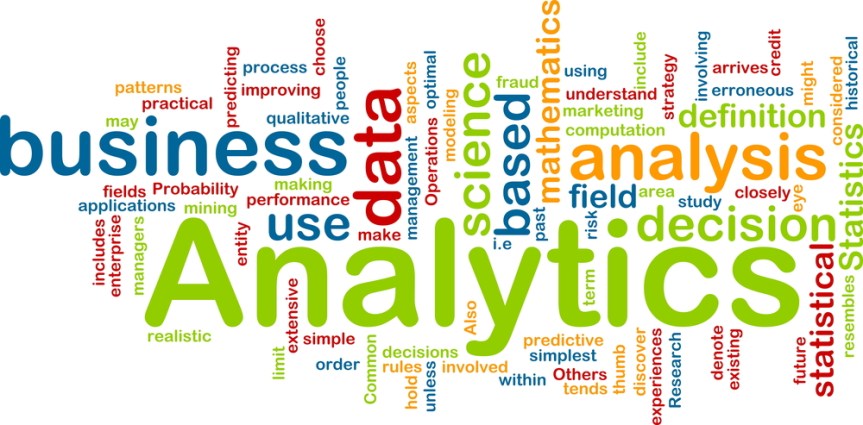
What Does A Business Analyst Actually Do?

For the sake of the CHED course on business analytics, lets look a little more closely at business analysts.

The International Institute of Business Analysis (IIBA) describes the role as “a liaison among stakeholders in order to understand the structure, policies, and operations of an organization, and to recommend solutions that enable the organization to achieve its goals.”

With that in mind, the next question often asked is, “What does a business analyst do?”

This is a reasonable question, because the fact is a business analyst is not limited to doing one thing. He or she wears multiple hats. He or she will be skilled in communication, negotiation, listening, and will also need to be a good team leader. They have to be good at solving problems. This means he or she will have the skills necessary to look at data and other relevant information in order to determine where the losses are within a company. They also have to understand the technology used to capture, store and analyze the data used in their company. It takes a lot to be a good business analyst.

This is where things like deep thinking and curiosity really separate good analysts from great analysts. Of the many  essential skills a business analyst will utilize here are my top 3:

(1) – Know the data. They will compare the past facts and figures to the current numbers, this will give the analyst the information to deduce or predict failure within the company.

(2) – Know the business – A business analyst is always an objective listener. They will determine the needs that management want by speaking to shareholders. This requires the analyst to ask questions, to find out what is needed, which will more than likely lead to new discoveries that may have been overlooked previously.

(3) – Know the players – Within a business there are usually different departments. A Business analyst will seek to associate and involve them-self with the various departments. This will help them identify conflicts within the various departments, which can be used to bring departments together.

As you can see it takes a lot to be a business analyst. BAs are truly a rare breed of technology loving people, who can solve problems and work well with others.

FBA0001

What Kind Of Analyst Do You Want To Be?

“The main part of intellectual education is not the acquisition of facts but learning how to make facts live.” – Oliver Wendell Holmes

An ANALYST is a person who analyzes and is skilled in analysis. Business Analysts (BA) are required to find, analyze and report business data to support business optimization.

The job functions of an analyst very greatly from business to business and even within each business job functions can vary from analyst to analyst. However at their core, you will find that just about anyone with analyst in the title has several things in common.

Based on the book, the Accidental Analyst, four character traits that most analysts have are:

  • PASSION for helping people solve real problems
  • KNOWLEDGE of the business being analyzed
  • EXPOSURE to thinking analytically and problem solving tools
  • EXPERIENCE using data to solve problems

In addition most analysts have certain personality types:

  • reflective
  • intuitive
  • deep-thinkers
  • and able to make quick judgments

These findings show a consistency across analysts no matter if their focus in on reporting, analysis and/or research, if they are working with small structured data sets or volumes of unstructured big data or if they are actively working to optimize the business or just providing information.

IMG_7737.JPG

Per CHED some of the analytics jobs graduates of the program should be ready for:

  • Jr. Business Analyst
  • Operations Assistant
  • (Web) Site Analyst
  • Marketing Officer
  • Jr. Operations Analyst
  • Financial Analyst
  • Supply Chain Analyst
  • Human Resources Associate
  • Training Associate
  • Administrative Associate
  • Accounting Analyst
  • Quality Assurance Analyst
  • Facilities Associate
  • Planning/Budget Analyst
  • Insurance Analyst
  • Social Media Analyst
  • Virtual Assistant
  • Customer Service Rep
  • Finance Analyst
  • Accounts Payable Analyst
  • Travel Analyst
  • Expense Analyst
  • General Accounting Analyst

This list is hardly exhaustive. On a typical day on jobstreet.com you will see hundreds of job titles that includes analyst in the title.

So I guess the next question to ask is, “What kind of analytics and analyst jobs interest you the most? ”

The Fundamental of Business Analytics – Business Analytics is the application of talent, technology and technique on business data for the purpose of extracting insights and discovering opportunities. DMAIPH specializes in empowering organizations, schools, and businesses with a mastery of the fundamentals of business analytics. Contact DMAIPH now at analytics@dmaiph.com or connect with me directly to find out how you can strengthen your business analytics fundamentals.

Why We Need Business Analysts! > The Philippines Is Quickly Becoming A Hub For Analytics

Most business leaders know that they need more analytics based decision making in their operations, however few have figured out how to obtain it as analytics software or engaging high priced consultants doesn’t suffice.

Businesses are challenged with endless streams of data of immense volume, variety and velocity coming from global marketplaces and from a multitude of social media platforms that didn’t exist until recently.

Per CHED, Business analytics is essentially about:

  • providing better insights;
  • particularly from extensive use of operational data stored in transactional systems;
  • statistical and quantitative analyses;
  • explanatory and predictive modeling;
  • facts-based management;
  • to drive decision-making for optimal results

Dictionary.com defines insight as “an instance of apprehending the true nature of a thing, especially through intuitive understanding.” Business Analytics allows a business to get the cause of something, to find an explanation or a reason that something has happened.

BA is also very useful to understand who, where, why, how and in what way customers interact with the business. BA lets us know who the customers are based on demographic breakdowns like age, sex, education level, etc. BA tells us how much of what product is bought, where the product is bought from, how often it is bought. And BA brings us insights into why the product was bought.
MSP24321b65h584fd76h9i00006996g957h01de5g6

Business analytics has long been used to understand things like which sales person is the most successful or which market is the most profitable by looking at the operational data stored in the transactional systems of that business.

Just about every business has at least some basic way of calculating profit, validating inventory and measuring success. These transactional data points are generally housed in a data storage system that can be accessed to view reports. This is the core of business analytics.

BA gets a lot more insightful when business decision-makers have the ability to look at statistical and quantitative analysis of that data. Often this is not only done by the decision-makers, but by analysts who can dedicate more time to discovering, investigating and analyzing the data.

Businesses that are able to employ even more advanced analytics by using data models. In the hands of a good analyst, models allow one to quickly and easily adjust the analysis based on using different variables. Building models is especially important when working with large data sets or what’s called Big Data. Models also let analysts not only look backwards at what has happened, but allows analysts to look into the future.

When you look at any successful business, odds are that they have solid business analytics in place. The leadership team is generally provided with reports that allow a fact-based management of the business. As opposed to businesses that are run based on intuition or gut feel, businesses that invest in analytics generally make better decisions.

In the hypercompetitive global market of today, even the smallest and most simple businesses need some level of business analytics to be able to make smart choices to optimize results and be successful.


The Secrets of Money Ball Recruiting

http://youtu.be/6MStL5QIyCw

“There are rich call centers, with big budgets and huge recruitment teams. There are poor call centers with small budgets and just a few people. Then there is 50 feet of crap. And there is us.”

I conducted a Recruitment Analytics Training yesterday and shared one of my methodologies. Based on the movie (and book) Moneyball, I talked about how to be successful you need to find undervalued candidates who other call centers have passed on.

“If we try and play like Convergys in here (with our recruitment efforts), we will lose to Convergys out there (on the streets looking for talent)”.

10421381_626225777522869_8061177028338978985_n

So we need to boil down the recruitment process to the one thing most important for our business in every single employee.

Some of my points:

  1. We spend too much time looking for trainable skills like Good English, Good Communicators and Good Interview Takers.
  2. We need to stop hiring job hoppers and people looking to move up without having paid their dues.
  3. The one skill set we cannot teach, that we need to start making our top priority… is dependability.
  4. Will they show up on time every day for work is the single biggest need we have.

So that’s the one personality trait we are placing at the top of our recruitment process. We need to probe and dig and research, to find out will they be someone who will show up for their shift everyday.

That’s our “get’s on base” metric like in MoneyBall.  We can’t help the customer if we are not at work ready to help the customer.

HR & Recruitment Analytics – The recruitment and retention of top talent is the biggest challenge facing just about every organization. DMAIPH is a leading expert in empowering HR & Recruitment teams with analytics techniques to optimize their talent acquisition and management processes. Contact DMAIPH now at analytics@dmaiph.com or connect with me directly to learn how to get more analytics in your HR & Recruitment process so you can rise to the top in the ever quickening demand for top talent.

Don’t Be A Recruitment Dinosaur, You Need To Be Thinking Mobile First

Per monster.com… As more consumers set aside laptops in favor of smartphones, iPads and other tablet computers, job seekers expect to be engaged with videos, job notifications and quick follow-up. Many experts say that recruiters must learn to adapt their recruitment strategy to these platforms.

Today’s mobile job seekers have different expectations and look for:

  • Instant updates about new jobs via their mobile devices
  • Immediate feedback to their job application
  • Recruiting videos to watch on their mobile devices
  • Engaging, interactive content from employers

Recent Facebook data for here in the Philippines shows that as much as 90% of job applicants will apply via mobile for the same job they would pass up if looking at the post via a laptop or desktop.

IMG_1310

And according to CareerBuilder’s 2013 Candidate Behavior Study, 65 percent of workers who search for jobs via mobile devices will leave a website if it isn’t mobile-friendly, and – possibly worse – 40 percent walk away with a more negative opinion of the company.

You have to think Mobile first if you want to attract 18-24 year old Filipinos for jobs in the BPO Industry.

HR & Recruitment Analytics – The recruitment and retention of top talent is the biggest challenge facing just about every organization. DMAIPH is a leading expert in empowering HR & Recruitment teams with analytics techniques to optimize their talent acquisition and management processes. Contact DMAIPH now at analytics@dmaiph.com or connect with me directly to learn how to get more analytics in your HR & Recruitment process so you can rise to the top in the ever quickening demand for top talent.

Three Keys To A Successful Virtual Team

I’m borrowing this idea from an article called “Going Virtual: Hiring the Right Team for Remote Work”
Going Virtual: Hiring the Right Team for Remote Work

Among other things DMAIPH has a side business focusing solely on building and managing virtual analytics teams, based in the Philippines, for small and medium US based companies. In the past year we have set up three teams and the lessons we have learned about how to be successful validate the three points in the above article.

Key #1: Hire only people with significant work experience. I love working with fresh grads as they are mostly blank slates who you can empower and educate to fit your own vision. However, our experience here is that the best virtual employees are ones with significant office based experience.

One of the great benefits to setting up a virtual team in the Philippines is the large pool of former call center agents who have significant industry experience but have left due to family commitments. Tapping into that talent pool has been a huge boon for DMAI.

Key #2: Make every hire a trial hire until you determine fit. Attrition with virtual teams is by default pretty high as employees can have a lot less loyalty to a person they never meet. In addition, coaching and mentoring are challenging to do effectively online so its really important to find the right fit before entering into a long term partnership.

Another plus of doing business in the Philippines is that its standard to bring staff in on a six month temporary contract. After the six months they are evaluated and either released or picked up. We offer a standard pay increase at six months when a contract employee is normalized. Its really helped us build a core team of people who will be with us a long time while at the same time not forcing us to keep people around who really don’t want to be here.

jobspicture2

Key #3: Put barriers in the process of hiring new people. As we have evolved the virtual business we have become better and better about building screens that really do optimize the talent pipeline process. Like most companies we have a number of minimum requirements that help target the right applicants and we also mix in assessments that require the applicant to show some of the analytics skills we need.

The combination of experience, having them walk a mile in our shoes and making it kinda hard to get hired has really lead us to providing top end talent for a reasonable price.

Analytics Jobs – DMAIPH hires, refers and connects Filipino analytics talent. The Philippines is at the center of the action when it comes to solutions to the global need for analytics. Working with DMAIPH to find work, hire analytics talent or set up analytics teams will ensure you are tapped into the best of the best when it comes to analytics in the Philippines. Contact DMAIPH now at analytics@dmaiph.com or connect with me directly to find out how to take advantage of this booming opportunity.

Looking For A Job? Treat Your Job Search Like A Job And You Will Find One

On a daily basis, I get approached by people asking if I can either give them a job or help them find a job.

My response is usually do you have a resume? How many jobs have you submitted your resume to today?

When I get back negative remarks to those questions, I do my best to create an educational moment.
Going back a few posts I talked about teaching a man to fish and my last post was hard work and persistence allow you to create your own luck.

In my almost 30 years of working, I applied for more jobs then I can even imagine. But in that 30 years, I think the longest I have ever gone without working is about three months.

I am a firm believer, that even in extreme situations, the best way to find a job is to treat your job search like a job. To be focused and have a plan to help you create opportunities so you don’t just sit around waiting to get lucky and have a job fall in your lap.

With that in mind, I did a quick Google search on some tips to bring focus and discipline to a job search. Here are some of the high points:

1. Set Goals. Provide yourself with targets and track your progress towards meeting them.
2. Network. Make a list of people who have jobs like the one you want. Interact with them.
3. Be Polished. Spend the extra time to make your resume flawless. Dress up. Be Early.
4. Practice. Volunteer your time. Look for free training. Do practice interviews.
5. Be Selective. Resist the temptation to apply for everything. Focus on what you are good at.
6. Positive Surroundings. Look for people who can inspire, empower and motivate you to keep on the hunt.
7. Use Technology. If you are reading this, then you most likely on LinkedIn or Facebook. You have a natural network right there and the most powerful communication tool around. Don’t waste them.

CCA1

Finding a job is one of the hardest and most challenging jobs around. If you treat it as such, you are much more likely to find a good job quickly then someone who doesn’t.