Why Analytics Projects Fail – #13: Over Reliance on External Help

The final reason I will articulate in this series of why analytics projects fail is an over reliance on external help. Historically the over reliance would happen when a team is “too busy” to learn the ins and outs of the analytics software they using.

An example would no one internally has the training to maintain or update the software themselves. Any fixes, patches or enhancements have to be done with the help of someone not on the company payroll. This has obvious limitations like not being top priority or made to wait longer the necessary, as well the potential slowdown caused be internal review and QA processes. Not having someone on the insides trained to handle external products is a major risk to an analytics project.

Another examples is when internal analyst don’t have the initiative to own the software. Meaning they just do the minimums, never really learn all the things the software can do and do not offer any new idea of solutions. Being totally dependent on a vendor to keep you up to date on all the new possibilities for use of the software is extremely short sighted. This often causes going the long way on a project instead of knowing about short cuts.

20141203193138-5-tech-tool-help-compete-with-big-guys

A third example is that your team is not empowered to work independently and their schedule is dictated by the availability of the vendor. Important deadlines might be missed or extended because the vendor resource is not available when you need them.

Regardless of the impact, relying too heavily on your analytics software vendor leaves open the risk of what if the external expert leaves. I have seen this happen a number of times, where analytics projects were halted or even cancelled because the expert was outside the company and left the project. The most common outcome of losing your expert is that things stop working and you have to either use workarounds or start over.

The key lesson here, if you are an analyst working with externally supported software, it behooves you to become the expert on it. This will mitigate any the risk of being over reliant on the vendor. It will also assure you of having more control of maintaining, fixing and upgrading your own analytics process yourself, which makes you more valuable to the organization you work for.

Analysts who know why things fail, are proactive, find solutions and become analytics champions are the ones you want to measured by. In the end, the best way to make sure your analytics projects don’t fail is to be awesome at what you do.

Analytics Culture – The key to using analytics in a business is like a secret sauce. It is a unique combination of analytics talent, technology and technique that are brought together to enrich and empower an organization. A successful analytics culture is not easy to create, but DMAIPH can show you how. Contact DMAIPH now at analytics@dmaiph.com or connect with me directly so we can build a strategic plan to turn your company into analytics driven success story.

Why Analytics Projects Fail – #10: Key People Leave

One of the toughest analytics challenges to fix is when key people leave. This reason is another people problem, but with a technology bent. Depending on the importance of the person(s) who leaves, you can experience anything from a minor hiccup to a total meltdown of your project.

One example of this is when the one who built the database leaves. Often they take their unique knowledge of the data structure with them.  Another example is when the systems architect who knows the ins and outs of where the data flows departs. This can make it difficult to track down errors and bugs. Lastly,  the database admin who wrote the code might be the one who quits, taking with them all their coding work. I can even be worse if they leave on bad terms and take a key piece of your development work with them or even destroy it.

In general, the best outcome you can hope for is to is build workarounds that allow you to keep the project going, however sometimes you are better off just starting over or worst case you just live with what you have. So step one is seeing where you are in the process and then determining what it would take to replace that person.

If you are able to continue, then you need to start doing a better job of documenting and making sure information is shared so this won’t happen again. I learned this lesson early in my career. Learn all you can about all aspects of the data environment and document them. A lot of times a clear understanding and documentation will be required by management to assure funding and resources.

4.6

If you have to stop the project until you can find a replacement, then you should also learn, document and share everything so that the new person can pick things up as soon as possible.

In this case, the new person will likely be dependent on you to learn the ropes so use that opportunity to change your culture to be more open.

A final point to add, make sure you understand why the person left.

If there are things you can do to make sure the same thing does not happen again then it is on you to do just that. If it is a cultural thing, then you can be a catalyst for change. If its a compensation thing, then you can help define the expected scope of work and help in the compensation planning. If they left because of a personality conflict, then you can help find someone who will fit in better. Analysts have so much power to shape conversations. Use it.

Analytics Culture – The key to using analytics in a business is like a secret sauce that fuels Data-Driven Decison-Making. It is a unique combination of analytics talent, technology and technique that are brought together to enrich and empower an organization.

A successful analytics culture is not easy to create, but DMAIPH can show you how. Contact DMAIPH now at analytics@dmaiph.com or connect with me directly so we can build a strategic plan to turn your company into analytics driven success story.

Why Analytics Projects Fail – #6: Lack of Funding

Of all the reasons an analytics project can fail, one of the hardest to fix is lack of funding.

There are numerous causes for funding issues with an analytics project, 3 of the most common being unexpected budget cuts, shift in strategy, and lack of understanding.

When you are faced by unexpected budget cuts, which has happened to me several times, the best thing you can do is try and reconfigure your project so that as least pieces of it can still be completed. The idea here is to do what you can until more money is made available.

Having a well thought out plan that is scalable will help you tremendously. One time when I had a million-dollar dashboard project cut because of budget cuts, I peeled back some features and redesigned others to come up with a new plan for 10% of the original cost. That was approved. And over the next year I had pretty much added everything cut back piece by piece. Bottom line, if the company needs a new analytics tool, its up to the analyst to make sure they get it by being flexible and smart.

AAEAAQAAAAAAAAKAAAAAJDY4MWQ2MDA3LTk5OWEtNDlhNi1hODEyLWE1Y2Q2MzlmZTQwYg

A shift in strategy happens a lot in business. So many internal and external forces are at play, a lot of times what once seemed a priority, can quickly become an afterthought. With analytics this can happen a lot when people fall back the we can just get by with what we have for now mentality. In today’s business world where success is driven by data, this can be crazy but it still happens everyday.

The best way to react to strategy shifts are for you to adapt your project to the new strategy and keep it both relevant and necessary. A good analyst can always find a way to offer analytics solutions for any part of the business. Use this adaptability to show your project can evolve with the needs of the business and you will likely still get funding, albeit for a new set of users.

The third reason lack of funding can happen, is actually a lack of understanding. Often finance decisions are made based on assumptions and predictive modeling… highly susceptible to being wrong if some important variables are missed. This has happened to me a number of times. But after conversations and educational moments with the finance team, the true value and ultimate savings of my analytics projects led to the lack of funding being mitigated.

Some things you can try when your project is impacted by a lack of understanding will take us back to the concept of enchantment. Make sure they like you and understand what value you and your analysis adds to the team. Often this can be a hard thing to quantify in a budget. Make sure you are showing how this project benefits others and helps the business as a whole… build trust. Third, make sure the project you are championing will make a difference, show that difference and educate on the need for that difference, in short show them you are doing this for a great cause.

There are countless reasons for lack of funding to become a roadblock for your analytics project, and countless ways to remedy this. If you are faced with one and need some help getting things back on track, connect with me and we can come up with a way to get your project funded again.

Analytics Culture – The key to using analytics in a business is like a secret sauce that fuels Data-Driven Decison-Making. It is a unique combination of analytics talent, technology and technique that are brought together to enrich and empower an organization.

A successful analytics culture is not easy to create, but DMAIPH can show you how. Contact DMAIPH now at analytics@dmaiph.com or connect with me directly so we can build a strategic plan to turn your company into analytics driven success story.

Why Analytics Projects Fail – #5: Organizational Politics

One of the biggest hindrances to the success of analytics projects is something most of us have experienced, organizational politics.

Organizational politics are informal, unofficial, and sometimes behind-the-scenes efforts to sell ideas, influence an organization, increase power, or achieve other targeted objectives. This is what happens when you find yourself being thrown under the bus… taken a fall for someone else’s mistake.

If you are lucky to have escaped organization politics for the most part and wondering just how they can lead to the downfall of an analytics project, let me share with you an idea what that looks like.

Data is horded. People don’t like sharing because its not encouraged or rewarded. In some cases people can be outright mean about it. Keeping data that they know can have a positive impact for others just to hold power over someone. It’s nasty.

This generally comes because senior leaders don’t really see the big picture and don’t share much themselves. This trickles down to the ones with the data and they build castle walls around their information and act as gatekeepers.

Print

Projects can also be hindered, stalled or killed for no reason other than your boss lost to another boss. I once had a million dollar analytics project shelved because my boss got in trouble with the big boss. Nothing to do with me or my project or its cost or its benefits, it was completely because of something out my control.

When asking around you might hear of an experience like this as well. People hoard, manipulate and/or alter data not because it is being rewarded or encouraged, but because they are afraid being caught red-handed. A good analyst has to be willing to  report the good with the bad.

One area of organizational politics you can control though is your likability. I make the comment a lot, that you have to be likeable to be an effective analyst. If people like you they share data with you, they advocate for analytics, they support you in a multitude of ways.

If they don’t like you, then its gonna be hard to be seen as an asset to the organization. An analysts job is to educate, illuminate, and inspire… you can’t do that with a bad reputation. This is a lesson many of us have to learn the hard way, but once we learn it we can see opportunities to increase our likability factor and actively use them to push our projects forward.

So the outcome of an analytics project you are working with is in jeopardy if you are in an organization rife with office politics. SO short of updating your resume, what can you do to turn the boat around?

Here are 3 things I suggest:

  1. Get buy in from the top. Make sure what you do feeds its way up the food chain. Make sure the top dog’s analytics needs are being met and if they are not show how they can be.
  2. Use your data to show win-wins. Find examples of where if we combined data from one source with data from another source you would have the makings of something even greater.
  3. Buy lunch for the ones hording the data. Extend the olive brand, multiple times if need be. If you don’t stating being the catalyst for data sharing, who will?

If you can start impacting some of the negative consequences of your organization’s internal politics then your analytics projects will start seeding positive change. And that will eventually make all the difference in your success or failure.

If you need help combating some of the office politics in your organization that are hindering you analytics projects, connect with me and we will figure it out.

img_7737

Analytics Culture – The key to using analytics in a business is like a secret sauce that fuels Data-Driven Decison-Making. It is a unique combination of analytics talent, technology and technique that are brought together to enrich and empower an organization.

A successful analytics culture is not easy to create, but DMAIPH can show you how. Contact DMAIPH now at analytics@dmaiph.com or connect with me directly so we can build a strategic plan to turn your company into analytics driven success story.
Data-Driven Cultures

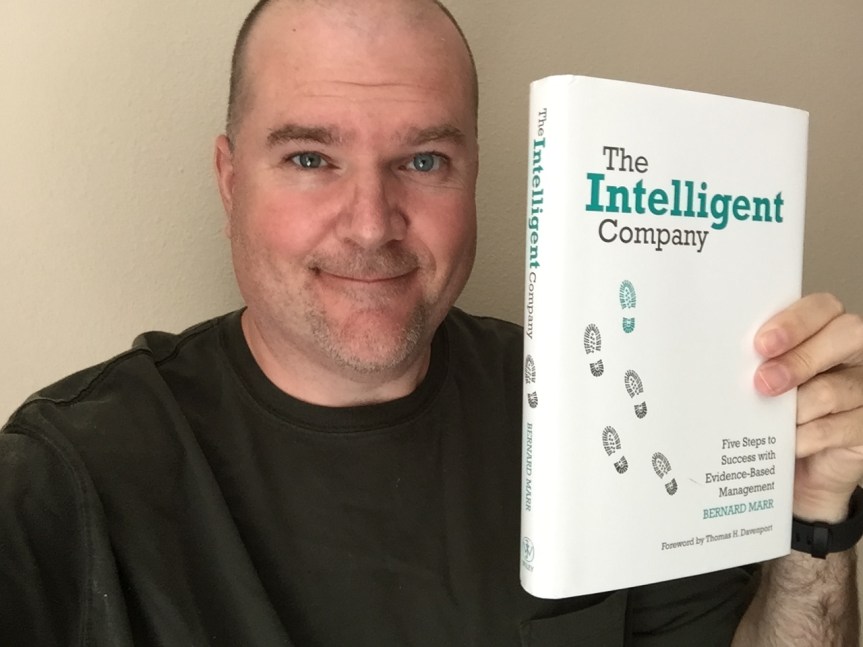
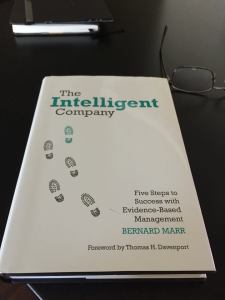
Inspired in part by Bernard Marr’s 2010 book, The Intelligent Company, my goal these past several years has been to build and/or be part of data-driven business cultures.

In his book, Bernard advocates for using Evidence-Based Management, that is using the best available data to inform decision-makers. In parallel to this, I have been empowering companies and professionals to empower decision-makers to use more data as well. I call it data-driven decision-making, but at their cores, they are very similar approaches to managing success.

Over the next several blog posts I will share my thoughts on the steps Bernard published. I will be giving my own spin towards more analytics and data-science, two things that I think have accelerated in importance since the book went to print six years ago.

The cornerstone of the book is the five steps to more intelligent decision-making, which are:

  • Step 1. More intelligent strategies – by identifying strategic priorities and agreeing your real information needs
  • Step 2. More intelligent data – by creating relevant and meaningful performance indicators and qualitative management information linked back to your strategic information needs
  • Step 3. More intelligent insights – by using good evidence to test and prove ideas and by analyzing the data to gain robust and reliable insights
  • Step 4. More intelligent communication – by creating informative and engaging management information packs and dashboards that provide the essential information, packaged in an easy-to-read way
  • Step 5. More intelligent decision-making – by fostering an evidence-based culture of turning information into actionable knowledge and real decisions.

13177172_10154260751837425_2167903280431899505_n

As information and data volumes grow at explosive rates, the challenges of managing this information is turning into a losing battle for most companies. In the end they find themselves drowning in data while thirsting for insights. Combine this with an increasingly severe shortage of talent with analytics, data visualization and good communication skills, things look bleak for companies not adhering to lessons like those suggested in the Intelligent Company.

I get this stuff. In response to a quickening demand for knowledge and know how, I have developed training materials to address these decision-making challenges. The reason I founded DMAI in the first place was to empower more data-driven Decision-Making through the use of Analytics and business Intelligence. I’m happy to help you enable better decision-making in your business and turn it into an Intelligent Company.

Analytics Culture – The key to using analytics in a business is like a secret sauce. It is a unique combination of analytics talent, technology and technique that are brought together to enrich and empower an organization. A successful analytics culture is not easy to create, but DMAIPH can show you how. Contact DMAIPH now at analytics@dmaiph.com or connect with me directly so we can build a strategic plan to turn your company into analytics driven success story.
Why Analytics Projects Fail: #2 – Lack of Vision

Lack of vision often accompanies lack of focus when good analytics projects come up short or even fail.

The end product produced by the hard work being put into the analytics project has to be championed from top down. If the top dog is not talking about your project and pushing the merits of its implementation, they people will fight getting on board. Their focus will go astray.

Lack of vision is most often caused by a rush to implement a new analytics tool or a need to quickly upgrade reporting. A good analytics solution needs clearly thought out goals and buy in from all stakeholders.

Vision comes from being on the same page. A good project manager can control the vision message and repeat it like a broken record at every project message. An analyst gifted with good communication skills can keep sharing the vision to remind everyone of the benefits at the end of the project. It takes people dedicated to the project to keep it moving.

Vision can be handled like a marketing campaign. A catchy project name, an engaging tagline, a central theme accompanying communications and updates can all keep people focused on the end goal.

If your project is floundering because of lack of vision, then you need to channel your inner cheerleader. It often takes an analytics champion to produce the a positive outcome. And if you are reading this blog, that champion is probably you.

Nothing helps get a vision across better than good visuals… what does the end state look like for everyone involved. Find ways to motivate them with posters, with slogans, with dashboards, with free food. Just keep reminding them where we are going and how awesome it will be when we get there.


Lack of vision can also be an issue when an analytics projects are not well planned out. Maybe the scope was too narrow or too broad or perhaps the technology we are using is obsolete.

Vision is a glimpse of what the future may look like. If I can’t conceptualize why we are doing what we are doing for this project, then we can’t very well share the vision we are supposed to be seeing.

img_7736

My final thought on dealing with lack of vision, is that no one will be better at fixing this then you. As a data person, you have to be bold in your use of data to push the vision and you have to be brave in taking the lead on sharing the vision as much as possible.

Analytics should be accessible across your organization.  If you are in a situation where your analytics efforts are being stymied by lack of vision, connect with me and I’ll help you get things straightened out.

Analytics Culture – The key to using analytics in a business is like a secret sauce that fuels Data-Driven Decison-Making. It is a unique combination of analytics talent, technology and technique that are brought together to enrich and empower an organization. A successful analytics culture is not easy to create, but DMAIPH can show you how. Contact DMAIPH now at analytics@dmaiph.com or connect with me directly so we can build a strategic plan to turn your company into analytics driven success story.

DMAIPH Fuels New Businesses Ready For Launch (3 of 3)

The third type of company we can add value too is one ready to launch. You have a great idea, you have the funding, you have an awesome product or service, but you aren’t 100% sure if you have everything you need to get out there and make money. . We can offer our business intelligence package of demographic profiling, competitive landscaping, social media strategy and market assessment. We can also offer virtual staffing support to assist with marketing and operations. Our hybrid staffing solutions will give you access to a very talented work force that is flexible and affordable.

We have shown marked achievement in helping a couple of new businesses get out of the gate successfully.  One client we helped was a mobile app designer who had a great idea, enough capital tyo get started, but little idea on how to really understand the opportunity to make money. In addition, the client was hesitant to take on all the HR work in hiring a team when he had no idea how many people he would need in the short term. We helped them with both.

Using the same methodology, we used with the chiropractor, we conducted a business intelligence assessment to help figure out how to identify customers and where to find them. We also used our home based, hybrid staffing model to hire six people to help the client have get off the ground. Charged with editing pictures for the mobile app site based on set criteria, 24/7, with as close to real time response as possible, the team quickly became a key part of the business strategy.

Another new business we helped get off the ground was someone who wanted to open a call center business in Manila. She was well funded and motivated, but didn’t really know where to start. The client really needed help knowing how to settle on a location and to set up the business. She also need help designing her marketing and social media strategy. So that is where we started.

We developed a social media strategy for the business for both client marketing and employee recruitment. You would be surprised by the number of businesses who still have not figured out an online branding strategy to sell their business.

apollo11

In parallel with the social media, we also conducted a business intelligence assessment to help her pin down the location for her to set up the business. Worried about being in a place that was both convenient and not overly saturated by competitor, our data and analysis pointed her to the right place. She has been there for 4 years now, expanded her site twice to accommodate growth, and added several new customers all while having little challenge in recruitment.

If you are thinking of starting a new business, we can help. Let us show you how to use the data around you to make good strategic decisions.

Analytics Consulting – DMAIPH specializes in a variety of analytics consulting solutions designed to empower analysts, managers and leaders with the tools needed for more data-driven decision-making. We have helped dozens of companies get more analytics in their business. Contact DMAIPH now at analytics@dmaiph.com or connect with me directly so we can tailor an analytics solution made just for your unique requirements.

DMAIPH Helps Companies Revitalize Their Business (2 of 3)

The second type of company we have helped successfully is  one looking to revitalize. Profits are down, customer flow has shrunk, product and services aren’t selling like they used too. We can offer our business intelligence package of customer insights, demographic profiling, competitive landscaping and market assessment. We can also offer virtual staffing support to assist with marketing, scheduling and follow-up.

I’d like to share a story about one of our clients who came to us at a crossroads with his business. This client is a chiropractor who was trying to figure out what to do with his business. Having lost 40% of his patient base and seen his revenue drop by 60%. He was at a cross road. He had tried a couple of consultants, spent lots of money and was still heading the wrong direction.

In talking with him, it was clear he had lost touch with his market and was not able to offer a very compelling solution to bring new clients in. We suggested we do a series of business intelligence exercises to help understand more about his business, the opportunity around him and come up with some potential solutions.

3.6.1

Because he didn’t have a lot of money to waste, we suggested using a team of interns to help keep costs down. It would be a great analytics exercise for the doctor’s practice and for the eager young minds we had been working with.

We dove into the project and came up with the following resources; we built a competitive landscape, constructed a demographic profile and put together a customer insights report. Each one using public data, analysis done by the interns with my guidance and direction, and used Tableau to roll all the data and findings into a dashboard to show the doctor how he’d gotten to the point he was currently at.

After identifying some action items based on our assessment, we then helped the doctor but some into practice and helped him turn his business around successfully.

By employing very curious minds, giving them direction on where to find data and how to analyze it and sharing the data with an open-minded end user, we successfully validated my approach to using analytics to help a small business.  We have done the same for a half dozen other small businesses and can do the same for yours.

big_data_analytics

Analytics Consulting – As a founding member of Gloabl Chamber Manila, DMAIPH specializes in a variety of analytics consulting solutions designed to empower analysts, managers and leaders with the tools needed for more data-driven decision-making.

We have helped dozens of companies get more analytics in their business. Contact DMAIPH now at analytics@dmaiph.com or connect with me directly so we can tailor an analytics solution made just for your unique requirements.

DMAIPH is Good at Helping Companies Looking to Expand (1 of 3)

The first type of company we generally get involved with is companies looking to expand. Huge growth is just around the corner and there is a need to staff up quickly,    but given some uncertainty as to how much growth will be needed how soon, you want a little more flexibility in staffing. Our virtual, hybrid staffing solutions will give you access to a very talented work force that is flexible and affordable. We can also assist with developing the expansion strategy with our business intelligence package of demographic profiling, competitive landscaping and market assessment.

10948138_918236694853511_81426736_o

Let me tell you about one of our clients who came to us in expansion mode. We started with six work from home staff who were tasked with adding key words to online auction items. Starting with a small team who would just do a small percentage of the key wording for our client. We quickly found our talent pool was very large and very deep. So we quickly built the team up to a dozen and then 25 and ultimately 50 people. We worked closely with the client at first but over the first six months also built up our own expertise to the point, the client became very hands off.

Work from home positions make a lot of sense for this work as its very independent and easy to assign, track and review. We also got past a lot of challenges with work from home team, but really building the team using social media to connect them and make them feel like part of the larger organization.  This hybrid approach where the employees feel both independent and connected has led to extremely low attrition.

We also found that in the Philippines, there are literally a million former call center employees, with college degrees, good English and the drive to do a good job who left the call center industry to spend more time with family. So our work from home jobs are right in line with their needs.

Things have worked so well, the client has had us add a graphic design team, an email-marketing team, a desktop support team and a customer care team in addition to the key word team. The key word team has added a QA team and a 2nd level support team as well.

From a financial standpoint we helped the client save a lot of money by staffing in multiple locations, added the ability to do 24/7 customer care and never miss a beat with meeting our SLA.

This is the kind of thing we can do for any company looking to expand both rapidly and strategically using our home based, virtual team solution. Just connect with me and I will explain how.

gcmpicture1

Analytics Consulting – As a founding member of Gloabl Chamber Manila, DMAIPH specializes in a variety of analytics consulting solutions designed to empower analysts, managers and leaders with the tools needed for more data-driven decision-making.

We have helped dozens of companies get more analytics in their business. Contact DMAIPH now at analytics@dmaiph.com or connect with me directly so we can tailor an analytics solution made just for your unique requirements.

Q17: What are some best practices and technologies used in HR & Recruitment Analytics?

HR and Recruiting Professionals have embraced analytics. It took a while, but the increased need for data and analytics tools –The ability to collect, process and analyze “big data” has become paramount to the people side of the business. In order to gain a competitive edge in the increasingly chaotic global workplace, those who use analytics to gain data-driven insights into recruitment, compensation and other performance centric trends are the ones on the cutting edge.

“In my opinion, 95% of all the work that is done on recruiting metrics ends up being a waste of time, because the work focuses on creating historical tactical metrics never actually used to improve recruiting performance,” says Dr. John Sullivan, an ERE blogger and recruiting metrics expert. He says there are 3 reasons why there are failures and wasted time when it comes to metrics:

  1. Recruiting metrics omit any “big-picture” business impacts
  2. Current recruiting metrics are 100% descriptive and only offer guesses on what is and what will happen.
  3. Once collected, the metrics are reported to “barley interested eyes” who then assign things to a committee whose time spent results in very little measurable impact.

If you are still focused on time to fill and cost per hire, you really are quickly becoming a dinosaur. In addition, the idea of trying bringing in new people while working towards retaining top talent are generally not assigned to the same people. The disconnect between recruiting good people and retaining the good people who have been recruited is a killer to many companies. Both the material and cultural cost of replacing a bad hire isn’t generally looked at.

There are lots of blind spots to what is happening not just internally, but also externally.  Knowing who you are competing against for the same talent and what makes your offer to sign or stay stand out from the crows. None of these points can be analyzed with old school metrics terms and methods.

Dr. Sullivan also recommends six strategic categories of metrics that will help your in not just recruitment but in many other HR initiatives like retention and employee engagement:

  • The positive performance increase added by more productive hires
  • The failure rate of new hires and the damage done by weak hires
  • The losses created by a weak hiring process
  • The opportunity costs of “missed” landable top talent
  • The cost of using excessive hiring manager hours

img_7526

If you are looking at metrics like these, and sharing your findings not just with the recruitment team, but the boarder HR team, you can come up with big picture strategies to deal challenges much more effectively. In my own experience, a few other noteworthy trends in HR and Recruitment Analytics to consider include:

  • Disruptive Technology. Giving tools and information to managers and employees directly allows action to happen much quicker and be much more localized in impact. Success means giving the power to the end users so that HR can do more to oversee and manage big picture metrics.
  • Once A Year Is Not Enough. Annual reviews and employee surveys are too old school. Using analytics to gain insights can now be done 24/7. This can really have positive changes on employee engagement without the drawn out and too formal process made uniform to all.
  • Outsource Stuff. In successful companies, many tasks are outsourced to vendors who can do a lot more specialized things then in house generalist staff can do. Its just to much to ask a few people to stay on top of all the things important to the people you rely on. You have to pick and choose what you can keep and what you can outsource.
  • Mobile Apps. Designing apps for mobile first use is the way to go. We too often rely on old school thinking and take web-only or web-first tools and repurpose them for mobile. Times have changed. Mobile first is the way to connect with todays candidates and employees.
  • Look For It On YouTube. Video based learning, recorded by localized subject matter experts is on the cutting edge. The bonuses of learning from someone who is doing it versus traditional corporate trainers and enterprise world eLearning modules is another key to success.
  • Out Of The Box Analytics Tools. Behind the fire wall HR applications are being replaced or augmented by vendor based analytics tools that are more dynamic and expandable. Many can set on top of or replace current tools that are being used to gather, store, analyze and report data. The days when everything has to be designed, developed and maintained by an internal IT team is also going the way of the dodo bird.

So there you have it… becoming an HR and Recruitment Analytics ninja is going to take a lot of new thinking and a lot of letting go of how it worked in the past. Everyone agrees recruiting has never been harder, retention is getting more challenging and the future of finding and retaining talent is looking like a nightmare on the horizon.

If you need some guidance with how to being your HR and/or Recruitment team into the information age, I’m happy to help. One of my favorite things to do is get in a room with HR and Recruitment staff and talk about how to bring the team form the past to the future when it comes to analytics.  Just ask me how.

HR & Recruitment Analytics – The recruitment and retention of top talent is the biggest challenge facing just about every organization. DMAIPH is a leading expert in empowering HR & Recruitment teams with analytics techniques to optimize their talent acquisition and management processes. Contact DMAIPH now at analytics@dmaiph.com or connect with me directly to learn how to get more analytics in your HR & Recruitment process so you can rise to the top in the ever quickening demand for top talent.