I Would Add Good Data & Analytics …

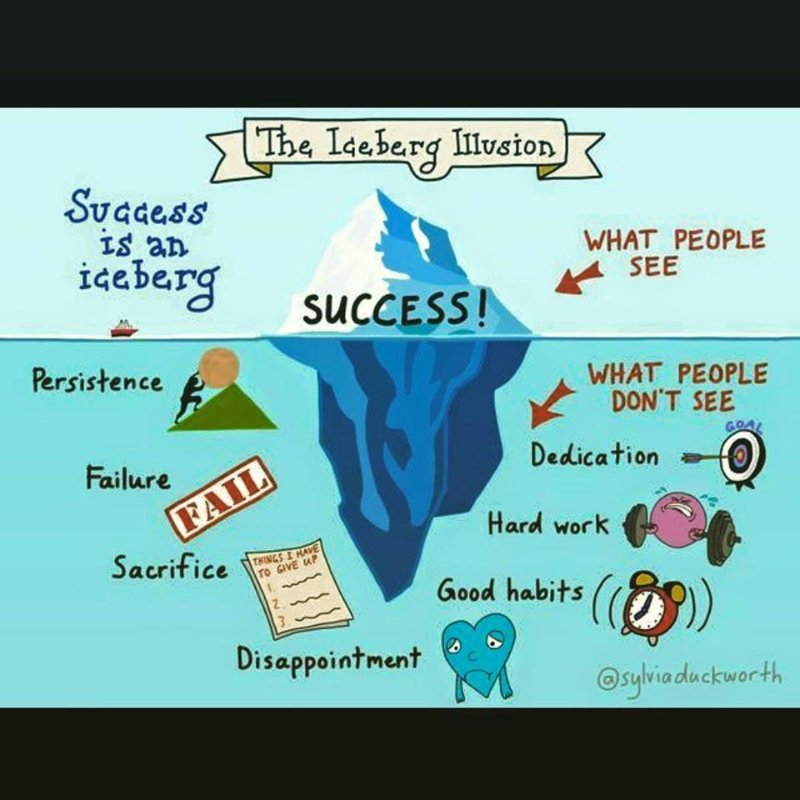
I came across this picture awhile back … For anyone who consistently challenges themselves, they can relate to most of these points.
AAEAAQAAAAAAAAR8AAAAJDlhMjA1Mzc1LTAzOWYtNDA2YS04YTk0LWY1NDRjOTNmZWM2Nw

  • Persistence
  • Failure
  • Sacrifice
  • Disappointment
  • Dedication
  • Hard Work
  • Good Habits

And to this list I will add two more:

  • Good Data
  • Analytics

One thing I think we do not do enough of in both personal and business decision-making is to find ways to track the effectiveness of being persistent. Knowing when to stay the course, go in reverse or take a quick turn to the left can guided by tracking the success behind being persistent.

Likewise, having a measurement for failure vs. success can be important too. In sports we look at failure rates all the time.. .a .200 hitter or a 25% shooter is a failure. So its much easier to know if you are good at hitting a ball or making a basket when you have measurements.

Sacrifice and disappointment are a bit trickier to quantify, but we can still come up with ways to measure these too through tools like a self-assessment or survey.

Dedication, hard work and good habits can also be challenging to tie a metric too a first. But if you come up with formulas that take production, quality and consistent data and combine them you can come up with something workable.

Infusing some data and analytics into how you judge your success will go a long way in helping you maintain that level of success.

Good data is pieces of information or knowledge that can be used in measuring success. How do you know if you are successful unless you have something to compare your data too.

Analytics allows you to use the data for analysis to understand how you got to be a success and what factors might cause you to lose that success.

Curious about how to put some more data and analytics into your business. so you can have a better idea of what success is supposed to look like? I’m here to help.


The “DMAI” in Risk & Compliance

When it comes to risk and compliance, the most successful teams are the ones who empower data-driven decision-making through the use of analytics and business intelligence. By bringing together the best talent, cutting edge technology and tried and true methodologies risk can be optimally mitigated and compliance best achieved.

The three primary skill sets I bring to the table are data-driven decision-making, analytics and business intelligence have served me well in both my risk and compliance work with Wells Fargo and in running my own business. Finding the right data at the right time is key to seeing potential issues before they arise, quickly solving them once they do, and putting the monitoring in place to make sure they don’t happen again.

Some of the risk and compliance successes I have achieved during my career include:

  • Managed project teams on a variety of analytics and compliance initiatives while providing guidance to less experienced consultants. This includes extensive anti-money laundering research and investigation data projects for bank remittances.
  • Identified compliance training opportunities and designed compliance training materials while with Wells Fargo Commercial Mortgage on various investment products.
  • Delivered extensive training on using big data and analytics to mitigate risk and follow compliance requirements across various financial services companies in the Philippines.
  • Have worked with a variety of internal and external resources during my 15 years with Wells Fargo to provide my expertise in analytics, risk management and compliance adherence.
  • Applied my process improvement knowledge (Lean Six Sigma) and data analysis expertise to develop corrective action plans and facilitate change with several departments of Wells Fargo and with dozens on clients in the Philippines.
  • Developed comprehensive reports and business dashboards using MS Excel, Tableau and Qlikview to deliver analysis to senior business leaders to influence the establishment of risk detection and mitigation controls. Relevant reporting topics from my time in Wells Fargo Card Services include anti-money laundering, remittance limit hits, high risk customer behavior, card services usage, competitor intelligence, household cross sell, and market penetration.
  • Worked closely with IT teams at various points in my career to develop security controls, risk monitoring tools, and QA reports to determine effectiveness of payment solutions with both Wells Fargo and within my own outsourcing business. I know how to code, I know how data is structured, and I know how data should be reported when it comes to risk & compliance.

10406025_10152524531307425_1404103117_nOverall, I have 20 plus years working in positions where managing risk and meeting compliance standards are part of the daily routine.

This has gifted me with an extensive knowledge and understanding of payment products like credit cards and remittances, fraud detection and prevention, and practical experience with risk monitoring and controls.

So from my perspective, Risk Management & Compliance needs to be neck deep in data-driven Decision-Making, Analytics and business Intelligence to be able to stay ahead of the game.

Analytics Consulting – DMAIPH specializes in a variety of analytics consulting solutions designed to empower analysts, managers and leaders with the tools needed for more data-driven decision-making. We have helped dozens of companies get more analytics in their business. Contact DMAIPH now at analytics@dmaiph.com or connect with me directly so we can tailor an analytics solution made just for your unique requirements.

Why Analytics Projects Fail: #4 – Lack of a Champion

A lot of time analytics project fail because there is no designated champion for the project.

I see a lot of money wasted on analytics technology because there is no one in the business who masters the technology. Who knows how to use it better than anyone else and knows what more can be done if other people become experts.

Good analysts are curious above all else. In the right place, they can do amazing things to drive innovation, increase profit, optimize processes and build market share. When you don’t have a a champion the outcome of any analytics project will be in doubt.

The most curious person in the organization should be the analytics champion because they love to go out and find the data to answer any business question that comes up.

If your analytics project doesn’t have a champion, then you most likely see a general lack of focus, an unclear vision and an uninterested leadership. Can you be that champion? If you think you can then do the Moneyball and Enchantment things from my last blog. They will help you gain your champion’s belt.

When you read Enchantment, you will start to understand that an analytics champion does as much influencing with their analysis as they do reporting.

Another way t5.5o be seen as the champion, is to make friends with people. Dropping off a box of donuts with the IT developers or sending thank you notes to project team members who went above and beyond is just as important as mastering the coding language used by your new analytics tools.

I keep a lot of analytics books on my desk. I make it obvious that I am always thinking about data and how to use it to improve what we do. I share a lot of content about analytics on social media. People know me as the data guy. You want to be like that if you want to be crowned Analytics Champion.

Analytics Culture – The key to using analytics in a business is like a secret sauce that fuels Data-Driven Decison-Making. It is a unique combination of analytics talent, technology and technique that are brought together to enrich and empower an organization. A successful analytics culture is not easy to create, but DMAIPH can show you how. Contact DMAIPH now at analytics@dmaiph.com or connect with me directly so we can build a strategic plan to turn your company into analytics driven success story.

Continued Growth in Data Analytics Outsourcing Market

http://www.datasciencecentral.com/profiles/blogs/analysts-forecast-continued-growth-in-data-analytics-outsourcing

Came across this interesting article and thought I’d share it…

The Trend of Outsourcing Data Analytics Activities

Over the past few years, businesses from all realms have come to accept the benefits of effective data analytics in understanding consumer choices properly and maximizing revenue potential. This has significantly boosted the demand for effective data analytics services in the global market.

However, not all organizations have the in-house knowledge, resources, and experience that it takes to analyze data effectively. What’s more, the resource pool of data analytics professionals has grown tight in the recent years, leading to a dearth of analysts who can develop competitively advantageous data insights. This has significantly boosted the global demand for effective data analytics services in the past few years.

The report on data analytics outsourcing market presents detailed insights about the major elements of the market and gives an overview of some of the factors that are impacting the market’s developmental prospects.

The data included in the report comes from a number of sources, including face-to-face and telephonic interviews, industry databases, and field observation data. Data pertaining to factors such as the primary concerns faced by the global data analytics market in the present scenario, the major growth drivers that are leveraging the market’s growth prospects, and the major trends that are defining consumer priorities in the market has been collected. The validity of the findings has been confirmed by cross-checking with multiple sources of information. The entire process of the research and development of the report also draws on the prior experience of researchers and inputs from industry experts.

I’ve sent up a couple of analytics team in the Philippines for clients in the U.S. and India. If you find yourself short on talent, resources and/or funding, I can help you get a team up in running in no time.

31a061c

Why Analytics Projects Fail: #3 – Lack of Management Support

Nothing sucks more for an analyst than taking on an analytics project without support from above. Great analysts are generally only great if they have bosses who advocate for more analytics.

If no one at the top really understands the benefits of implementing your project, if the leadership will continue to use their gut in decision-making regardless of what your project achieves, then start updating your resume. This outcome happens often when the company does not have a business culture supportive of data-driven decision-making.

In this day and age, good analysts are hard to come by…. You can make more money and be happier somewhere else. Trust me. The chances of you being able to turn analytics naysayers into big data believers is highly unlikely.

That said, if you chose to give it a try… here are a few thoughts on how to get management to become more supportive of your analytics project.

Watch the Brad Pitt movie Moneyball. It will inspire you. Read the book Enchantment by Guy Kawaskai. It will empower you. Im not joking. You cant do this on your own.

After that, then you need to do a few things.

First find the person in upper management most likely to get on board. Ask them to help you. Show them data that will outline the better new world after your project is complete. Tell them about analytics success stories (like Moneyball). Let them see your passion for data-driven decision-making. You need  Brad Pitt.

5.1

Next, using the concept of Enchantment, determine what is it about you and your project that will build trust. Will it create more transparency? Will it mitigate risk? Something that demonstrates how this project will increase the level of trust between everyone.

You also need to be likeable. Your project needs to be likeable too. What is it about the project that will make people happy? Who gets a better report, faster and with more useful data? Who gets to start using a business dashboard to make quicker and better decisions? What will each of the stakeholders like about this project.

And then you roll out the great cause. The monetary value generated from implantation. The level of risk mitigated. The better intelligence on competitors or about your market. What will be that great cause?

So now you are in a better position to be Jonah Hiil and go start changing minds and swinging opinions about your analytics project.

Analytics Culture – The key to using analytics in a business is like a secret sauce. It is a unique combination of analytics talent, technology and technique that are brought together to enrich and empower an organization. A successful analytics culture is not easy to create, but DMAIPH can show you how. Contact DMAIPH now at analytics@dmaiph.com or connect with me directly so we can build a strategic plan to turn your company into analytics driven success story.

Why Analytics Projects Fail: #2 – Lack of Vision

Lack of vision often accompanies lack of focus when good analytics projects come up short or even fail.

The end product produced by the hard work being put into the analytics project has to be championed from top down. If the top dog is not talking about your project and pushing the merits of its implementation, they people will fight getting on board. Their focus will go astray.

Lack of vision is most often caused by a rush to implement a new analytics tool or a need to quickly upgrade reporting. A good analytics solution needs clearly thought out goals and buy in from all stakeholders.

Vision comes from being on the same page. A good project manager can control the vision message and repeat it like a broken record at every project message. An analyst gifted with good communication skills can keep sharing the vision to remind everyone of the benefits at the end of the project. It takes people dedicated to the project to keep it moving.

Vision can be handled like a marketing campaign. A catchy project name, an engaging tagline, a central theme accompanying communications and updates can all keep people focused on the end goal.

If your project is floundering because of lack of vision, then you need to channel your inner cheerleader. It often takes an analytics champion to produce the a positive outcome. And if you are reading this blog, that champion is probably you.

Nothing helps get a vision across better than good visuals… what does the end state look like for everyone involved. Find ways to motivate them with posters, with slogans, with dashboards, with free food. Just keep reminding them where we are going and how awesome it will be when we get there.


Lack of vision can also be an issue when an analytics projects are not well planned out. Maybe the scope was too narrow or too broad or perhaps the technology we are using is obsolete.

Vision is a glimpse of what the future may look like. If I can’t conceptualize why we are doing what we are doing for this project, then we can’t very well share the vision we are supposed to be seeing.

img_7736

My final thought on dealing with lack of vision, is that no one will be better at fixing this then you. As a data person, you have to be bold in your use of data to push the vision and you have to be brave in taking the lead on sharing the vision as much as possible.

Analytics should be accessible across your organization.  If you are in a situation where your analytics efforts are being stymied by lack of vision, connect with me and I’ll help you get things straightened out.

Analytics Culture – The key to using analytics in a business is like a secret sauce that fuels Data-Driven Decison-Making. It is a unique combination of analytics talent, technology and technique that are brought together to enrich and empower an organization. A successful analytics culture is not easy to create, but DMAIPH can show you how. Contact DMAIPH now at analytics@dmaiph.com or connect with me directly so we can build a strategic plan to turn your company into analytics driven success story.

Why Analytics Projects Fail: #1 – Lack of Focus

Lack of focus is common reason analytics projects fail. Keeping a focus on any project can be a challenge for companies that are not well organized. If you are an analyst or trying to champion analytics in your organization and are up against a lack of focus, I have some ideas for you.

First off, size really isn’t a factor when it comes to the organizational culture towards being organized. In some cases size makes the problem more apparent, but size can also mean more resources, so in most cases its really not a serious issue.

There is generally a strong correlation be the way data is handled in a business and how organized the company is in other ways. Lots of paper, manual processes and clearly define process flows may look organized, but it’s highly unlikely they deliver the type of data leadership really needs.

Lack of focus often happens when leaders seem overwhelmed and say they don’t have time to dedicate to things like analytics. The first thing you need to figure out is are people resources really stretched too thin or is it more a cultural issue where being too busy is more of a badge of honor.

The best way to deal with overworked teams is to start putting data around what they do every day and come up with solutions to improve time management and delegation.  Few people can truly say they have extra time, but everyone can say they need to figure out how to manage time better. A good analytics solution does just that.

Few people can rationally explain why their job would be harder if they had more analytics.  So it’s not too hard to get people to buy into the concept of analytics, but to get them to buy into the actual practice you need to be part salesman and part storyteller.

You need to show them the value putting a greater focus on your analytics project will bring to both the business as a whole and to each individual involved in the project. Besides showing data to champion the use of more data, you need to tell stories about how its helped in other places. You need to get them to envision how much better life will be once your project is complete.

Lack of focus can also come when the project is not well thought out of you get scope creep… when additions are made to a project that start distracting people form the original goal of the project. It is hard to stay focused when you don’t see focus in the project itself.

The final point I’ll make is that you also need visible and consistent buy in from the person(s) in charge. If they are not advocating for analytics, then your project will never get the focus from stakeholders and project team members you need then you will fail.

11756770_934770113231654_1677809504_o

Analytics Culture – The key to using analytics in a business is like a secret sauce that fuels Data-Driven Decison-Making. It is a unique combination of analytics talent, technology and technique that are brought together to enrich and empower an organization. A successful analytics culture is not easy to create, but DMAIPH can show you how. Contact DMAIPH now at analytics@dmaiph.com or connect with me directly so we can build a strategic plan to turn your company into analytics driven success story.

Why I Go Left At The Crossroads

What do you do when you are feeling lost and at a cross roads?

Do you turn left? Its the unknown road less traveled.

Do you turn right? Its the way most people will chose when they chose to change.

Do you go back? Its safer being where you know where you are then when you don’t.

Do you go straight? Its easy to keep going ahead and hoping things work out for the best.

83762577
When faced with this, what do you do?

Do you look at your data?

Do you find new data?

Do you just ask a friend for advice?

Do you go with your gut?

I’m not one to just ask for advice because that usually I get play it safe and go back.

If I were to just trust my gut it would steer me to the right.

In my current situation the data says, stay the course.

But when adding some new, recent data it says turn left.

So to the left we go.

The Five Stages of HR & Recruitment Analytics

I’ve seen a couple of articles recently espousing a set number of stages  in HR and/or Recruitment Analytics. Based on my knowledge, the 5 stages of analytics a people-centric department can experience are the following:

Stage 1 – The Data Dark Age – No analytics at all. Pipelines are either in MS Excel, a very old proprietary data based or maybe even on paper. Nothing is really analyzed, data quality is bad, and reports are pretty useless. Not collaboration exists between HR, Recruitment and other business lines.

Stage 2 – Living in Data Castles – Only a few people use analytics and most key management decisions are not made based on data, but on experience. Every department has data stored within its own data base. Its nearly impossible to share data due to poor data architecture. HR data is incomplete and the recruitment process does not have any dynamic reporting.

Stage 3 – The Flat Data Organization – Some people use some analytics to make some decisions, but its generally inconsistent across the organization. Data is generally historical and used tactically to understand simple patterns and effects. Some of the data castles have evolved to data explorers, venturing out to find and use new data sources, but many castles still remain in the organization. Generally HR and Recrutiment are using a people management and/or recruitment management software. Reports are useful and drive some decisions by management, but there is major room for improvement. Some data leads to buried treasure, but some leads you off the map… data quality is inconsistent.

Stage 4 – Civilized Data Flow – Most decision makers have access and generally use analytics. Several key team members have strong analyst backgrounds. Data is easily shared between teams. Most managers look at data before making a decision, and analysts have a say in business strategy based on their analysis. People are empowered to do their own discovery and analysis. The organization has answers  to questions about recruitment efforts and HR trends. Waste is controlled with effective people and recruitment management software.  Business dashboards are being used to convey a lot of information.

Stage 5 – Data Nirvana – Every team member from top down knows analytics, has access to the data they need and are empowered to take action on it. There are minimal hindrances to sharing data. It is hard to find a place like this but, when you do recruitment works like a well-oiled machine,  HR analytics are predictive and driving recruitment efforts. There is never a question management asks, that there is not a data driven explanation to answer with. Business dashboards are interactive and real time. Surprises are minimal and solutions come quick and founded on business data and insight. Open posts are filled quickly and people stick around because there needs are proactively being addressed.

So what phase is your organization in? Where do you want it to be? I can help you assess where you are and we can design steps to get your where you want to go.

11756770_934770113231654_1677809504_o


HR & Recruitment Analytics – The recruitment and retention of top talent is the biggest challenge facing just about every organization. DMAIPH is a leading expert in empowering HR & Recruitment teams with analytics techniques to optimize their talent acquisition and management processes.

Contact DMAIPH now at analytics@dmaiph.com or connect with me directly to learn how to get more analytics in your HR & Recruitment process so you can rise to the top in the ever quickening demand for top talent.

Mixing Technique With Empowered Curiousity

Last year I spent some time helping a couple of schools build more analytics centric training into their psychology curriculums. The goal being to help prepare future HR managers and analysts to be ready to deal with real world analytics challenges.

Over the next few blogs, I will share several of the topics I listed in these curriculums that are equally balanced in both the technical and intellectual aspects of HR analytics.

It is a common misconception that HR analytics is all about using tools and techniques to generate reports and share information to management in a way that makes the business more successful. This concept will not generally work because the analysts are not empowered to question, explore and discover new opportunities or to understand hidden risks. All they are expected to do is report things faster and with more flash.

Some of the topics typically taught in your basic HR and/or Recruitment Analytics class include:

  • Stages of HR Analytics
  • HR Metrics – Calibration and Measurement
  • Statistical Analysis Tools like DCOVA (define, collect, organize, visualize and analyze)
  • Enhancing HRIS (Human Resources Information Systems)
  • Optimizing MS Excel for HR Analytics
  • Business Intelligence Tools for HR Teams
  • Predictive Analytics Methods and Models
  • Big Data Analytics for HR Teams

Each topic can be its own training module if you have the time to sit in a class and approach the use of HR analytics academically. The problem is few of us can spare the time.

522

My solution is a mixture of self-education, internal team building dynamics and an empowerment based model of analytics training that will not just make your team better at building reports, but will unlock their minds and free their curiosity allowing them to get outside the box and discover things you can’t even imagine.

No one wants a team of drones who just follow steps in a technique or use a technology to do just exactly what it was designed to do. To really have an HR Analytics team that make a difference, you need a team that thinks differently. If you are serious about building this kind of culture in your business, then I can show you how.

Analytics Culture – The key to using analytics in a business is like a secret sauce. It is a unique combination of analytics talent, technology and technique that are brought together to enrich and empower an organization. A successful analytics culture is not easy to create, but DMAIPH can show you how. Contact DMAIPH now at analytics@dmaiph.com or connect with me directly so we can build a strategic plan to turn your company into analytics driven success story.