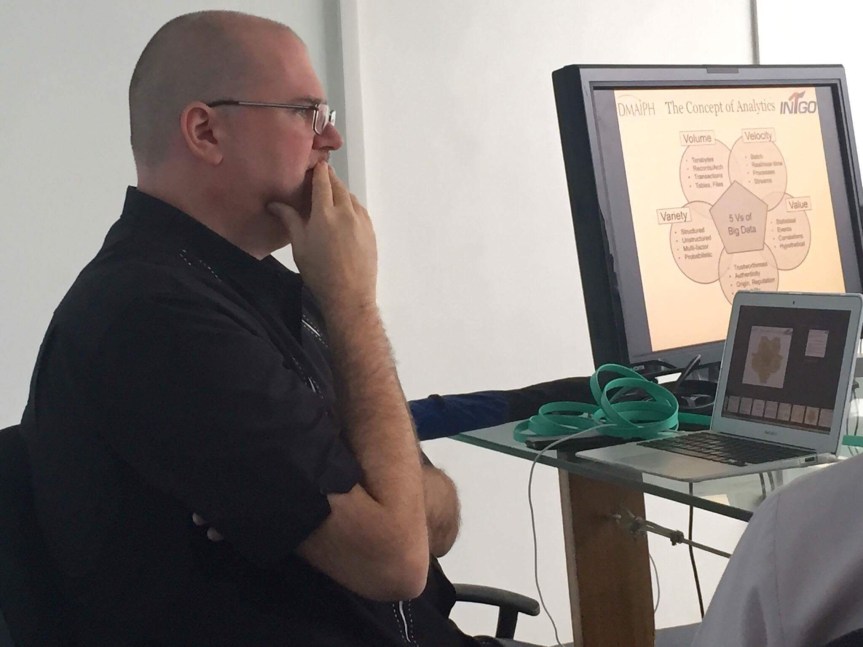
Q5: What are some basic strategies an analyst can use to find the right data at the right time? – Part 1

Several years ago I came across a book called the Accidental Analyst. After reading the book I was inspired to come up with a way to teach analytics to college students and fresh graduates.

The core of both the book and my program hinges on the ability of an analyst to find the right data at the right time.  The authors suggested that identifying your data is where it all starts. Identifying exactly what you need to address whatever it is that you need to report.

When I am training newbies, I generally brake finding data into two parts… the process of getting the data and the process of making sure the data is valid.

Back at Wells Fargo, the single greatest attribute that I had that made me successful was my ability to size up how long it would take me to deliver something. Knowing what data I would need, where I would find it and how long it would take me to analyze it to come up with something useful made me somewhat of a wizard in the minds of the team.

Finding the right data at the right time requires one to first off know their data. You have to know how the data is captured, where it is stored and how it makes it way to you. Knowing the data architecture in your business is the key.

So you have to get to know the people who know where you data comes from and how it gets there. Learn from them. Partner with them. Buy them doughnuts.

A few months ago I came across an analogy being used to describe data in a business. That of a data lake. A data lake is the living, breathing, evolving pool of all the data in a business. If you have a good data architecture, and you can navigate it fairly easily, then you have a data lake.  Ideally, your business has data structured in such a way you can live off it. Data to a business is like water to living things… it sustains life

07_data-lake-walter-fishing

So once you have the lake mapped out, then you have to learn how to fish it. Knowing where the fish are biting is another key. Once you know what data you need, you have to know how to get to it quickly.

Business Intelligence tools help us here. As does coding languages to extract data from a database. These are your fishing tools. You have to practice using them to be good at getting the right data at the right time.

Another way to optimize your data search is to save your work. Of as I call it leave yourself breadcrumbs. Save the query. Cut and paste the code into a document and save it. Write down the steps. Whatever you need to do to replicate what you just did so you can do it again in the future without starting over from scratch.

So to recap, how to you find the right data at the right time? You know its structure, you understand how its stored and you leave yourself clues to do things faster next time.

Now the other part of the equation is knowing if the data you are using is the right data. Finding data quickly doesn’t do you any good if you bring back the wrong data. We’ll talk about data validation and data quality in a future post.

The Fundamental of Business Analytics – Business Analytics is the application of talent, technology and technique on business data for the purpose of extracting insights and discovering opportunities. DMAIPH specializes in empowering organizations, schools, and businesses with a mastery of the fundamentals of business analytics. Contact DMAIPH now at analytics@dmaiph.com or connect with me directly to find out how you can strengthen your business analytics fundamentals.
Q4: Can you please describe the current state of analytics in the Philippines? – Part 2

So the last blog post gave us the history. Now let’s cast an eye on the future.

Over the past year or so I have started to see a significant effort from data science and analytics professionals come together to address some of the challenges outlined in my last blog post.

In short, the way higher education and the government has approached the need for analytics talent is simply to little to late to meet the needs of many businesses.

Everything they are doing helps, but in the end the world is desperately looking at the Philippines to do with analytics what it did with customer service. To become a center of capable, long-term and affordable talent.

With taking customer service calls, it was a natural fit given that most Filipino college graduates have a foundation in English. With analytics and data science it has not been so easy. While many Filipino have the underlying course work in coding, database management, computer science, etc… they are not getting enough exposure to data-driven decision making, business intelligence tools,  and more advanced things like machine learning, prescriptive analytics and blending big data from diverse data sources.

I don’t want to sound too pessimistic, things are moving quickly but it is generally the multinationals driving things forward. They have the clients, they have the need and so they go out and find people and train them. That’s why 3 years ago hardly anyone in the private sector was offering analytics training, now you see more and more options all the time. They are generally expensive and narrow in focus, but they are opening up huge opportunities for data loving Filipinos to get into upwardly mobile and financially rewarding careers.

I belong to a couple of newly founded organizations of data scientists and analysts who meet on a regular basis to share knowledge, support each other’s ideas and build a community with the goal of using data to helping both the Filipino to fill these open jobs and for the Philippines to begin to use more data in decision-making so we can solve the big issue problems important to all of us.

It’s a pretty exciting time.

10256713_275221292688289_6652823653462957603_o

So where next?

Given that the Philippines is one of the youngest countries in terms of average age on the plant and the youth are incredibly communal and very tech savvy, I have found great success in training batch of Filipino fresh graduates in basic analytics. Of the 200 or so trainees I have personally trained, most of them now have jobs with analyst in their title.

I have also seen a lot of talent quickly go from novice to expert using applications and doing coding in relatively short periods of training. In many respects the approach to analytics is more vocational then academic allowing for quicker training.

Beyond these strength, you can expect more partnerships between the government, higher education and big business to offer training and career pathing.  The success of the BPO industry is really the driving force to add employees who can do the tasks of an analyst. The huge surge in job postings demonstrates this quickening trend.

Finally, the reason I see a bright future for analysts and data scientists in the Philippines is the simple fact that Filipinos gravitate to under filled career paths, they push themselves to get the skills to fill those jobs.  You see it in the Middle East oil fields, in sailors and seamen in just about every ship at sea, you see it with overseas workers across the planet, and you saw it happen with call centers.

And that is exactly why I set up my business in the Philippines. Here are some of the analytics solutions we offer:

The Fundamental of Business Analytics – Business Analytics is the application of talent, technology and technique on business data for the purpose of extracting insights and discovering opportunities. DMAIPH specializes in empowering organizations, schools, and businesses with a mastery of the fundamentals of business analytics.

HR & Recruitment Analytics – The recruitment and retention of top talent is the biggest challenge facing just about every organization. You really have to Think Through The Box to come up with winning solutions to effectively attract, retain and manage talent in the Philippines today. DMAIPH is a leading expert in empowering HR & Recruitment teams with analytics techniques to optimize their talent acquisition and management processes.

Contact DMAIPH now at analytics@dmaiph.com or connect with me directly to learn how to get more analytics in your Business or your HR & Recruitment process so you can rise to the top in the ever quickening demand for top talent.

Infusing HR Analytics into Organizational Behavior and Human Resource Management Classes

One of the things I have been working on is helping a top school here in the Philippines develop a strategy to infuse more HR Analytics into their Organizational Behavior and Human Resource Management Classes.

This effort is a precursor to a class specifically on HR Analytics, which is to the best of my knowledge, the first ever here in the Philippines.

So as I put more thought into the syllabus of each class, it occurred to me that a good way to approach analytics is to introduce it slowly over the length of the 3 classes, which follow in a natural progression.

Starting with the OB class, we can focus on how to identify data in an organization that will be useful to a HR team to measure things over time. To help really get at causality of human behavior on a wide scale, you need to have the data to understand context.

In the HR Management class, we will spend more time working on the inventory part of analytics, which is to bring the data into an analysis and reporting structure that helps us discover patterns and trends based on that data.

Then the HR Analytics class, we will then proceed on how to integrate the data and the analysis into tool like a business dashboard.

At a high level, the students will gain an appreciation for the wealth of data HR can access in an organization and how the analysis and reporting of this data can lead to more data-driven decision making.

Its great to have an understanding of why people leave a job, and to have good reporting on attrition patterns, but you also need to have the ability to enable strategic action based on data and not just observation or simple metrics.

That is what our students will be able to do that will separate them from other Psychology grads entering the workforce. They will be ready day one to be HR Analysts who can bring a much needed data centric skills set to a very people driven discipline.

If you are a school administrator or professor and need to get more analytics in your course work so your students are better prepared for the analytics centric jobs, connect with me. I can show you how. I even have a textbook you can use. My new book Putting Your Data to Work is ideal for the nascent analytics learner.

9b9b0d_9e1b0bda82a944ed9d8845fb26bc2b7b-png_256


Analytics Education – Facilitating a mastery of the fundamentals of analytics is what DMAIPH does best.

All across the world, companies are scrambling to hire analytics talent to optimize the big data they have in their businesses. We can empower students and their instructors with the knowledge they need to prepare for careers in analytics.

Contact DMAIPH now at analytics@dmaiph.com or connect with me directly so we can set a guest lecturer date, On-the-Job Training experience or other analytics education solution specifically tailored to your needs.


The Challenge Ahead

How do we get better? That’s what is on my mind every day. Most people get up every day and go to work. They have family obligations to meet so they take a job that helps them meet these obligations. However, most people don’t find job that add much more value to their lives then a pay check.

Sometimes we get lucky and find a good place to work. Where we are valued as not just a worker, but a person. Where we are allowed to have more work/life balance then we might have in other places of employment. This is a special place to be. Its not what 90% of the global workforce face every day.

  • So what happens when we find that awesome company to be a part of? In some cases we are empowered to be innovative and to help be part of the success of the company as keep it moving forward. For people who feel this sense of positive energy, work is actually pretty fun most days.
  • However, in some cases we find that even though the company is good to us and we like working there, we find things start to feel routine. We have challenges every day that are either not fun to fix or when we fix it, no one seems to notice. This eats away at our positive feelings about our company.
  • And then we have a third group of people who for whatever reason are in the wrong place at the wrong time. They have challenges in their lives that prevent them from being at work every day. And often when they are at work they don’t feel very engaged. They have a low sense of satisfaction that makes each day on the job more work than its seems worth.

707022c7-f35e-4427-91c0-653a382a3689-medium

So as DMAIPH grows from a company of a half dozen to one of several dozen, how do we keep people trained? How do we make sure we keep as many team members as possible in the first category of engaged and empowered workers?

These is no simple answer. For some more money, for others more responsibility and for others more job variety.  There is no magic solution. It takes a lot of effort from not just the leaders but also from the employees who want to keep enjoying their work and like to work every day for the same company.

The answer of course is analytics. We need to know exactly what they need to stay engaged and to stay with us.

That is what I think about every day. That is THE big challenge ahead. And so should you.

Join us on Feb 21, 2017 in Ortigas to find out what metrics you need to interpret and access the data you have in your business that will tell you exactly what to do to keep attrition low and satisfaction high.

Analytics Leadership – DMAIPH specializes in arming the Data-Driven Leader with the tools and techniques they need to build and empower an analytics centric organization. Analytics leadership requires a mastery of not just analytics skill, but also of nurturing an analytics culture. We have guided thousands of Filipino professionals to become better analytics leaders. Contact DMAIPH now at analytics@dmaiph.com or connect with me directly to discuss a uniquely tailored strategy to ensure you are the top of your game when it comes to Analytics Leadership.

What Kind Of Analyst Do You Want To Be?

“The main part of intellectual education is not the acquisition of facts but learning how to make facts live.” – Oliver Wendell Holmes

An ANALYST is a person who analyzes and is skilled in analysis. Business Analysts (BA) are required to find, analyze and report business data to support business optimization.

The job functions of an analyst very greatly from business to business and even within each business job functions can vary from analyst to analyst. However at their core, you will find that just about anyone with analyst in the title has several things in common.

Based on the book, the Accidental Analyst, four character traits that most analysts have are:

  • PASSION for helping people solve real problems
  • KNOWLEDGE of the business being analyzed
  • EXPOSURE to thinking analytically and problem solving tools
  • EXPERIENCE using data to solve problems

In addition most analysts have certain personality types:

  • reflective
  • intuitive
  • deep-thinkers
  • and able to make quick judgments

These findings show a consistency across analysts no matter if their focus in on reporting, analysis and/or research, if they are working with small structured data sets or volumes of unstructured big data or if they are actively working to optimize the business or just providing information.

IMG_7737.JPG

Per CHED some of the analytics jobs graduates of the program should be ready for:

  • Jr. Business Analyst
  • Operations Assistant
  • (Web) Site Analyst
  • Marketing Officer
  • Jr. Operations Analyst
  • Financial Analyst
  • Supply Chain Analyst
  • Human Resources Associate
  • Training Associate
  • Administrative Associate
  • Accounting Analyst
  • Quality Assurance Analyst
  • Facilities Associate
  • Planning/Budget Analyst
  • Insurance Analyst
  • Social Media Analyst
  • Virtual Assistant
  • Customer Service Rep
  • Finance Analyst
  • Accounts Payable Analyst
  • Travel Analyst
  • Expense Analyst
  • General Accounting Analyst

This list is hardly exhaustive. On a typical day on jobstreet.com you will see hundreds of job titles that includes analyst in the title.

So I guess the next question to ask is, “What kind of analytics and analyst jobs interest you the most? ”

The Fundamental of Business Analytics – Business Analytics is the application of talent, technology and technique on business data for the purpose of extracting insights and discovering opportunities. DMAIPH specializes in empowering organizations, schools, and businesses with a mastery of the fundamentals of business analytics. Contact DMAIPH now at analytics@dmaiph.com or connect with me directly to find out how you can strengthen your business analytics fundamentals.

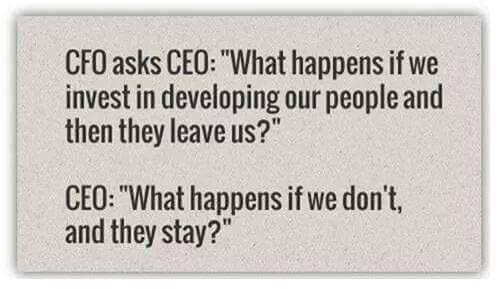
You Don’t Build A Business… You Build People

f2049885-9cdd-4f3d-8370-9ac9600695e0-original

It’s funny to me that I shared this on LinkedIn and someone had the thought to spin it into a negative thing. Someone sarcastically replied that this is false and that big bosses just use people to make money. I’m guessing he sees this as a way to get people to work harder, but it the end only the top people benefit. Or something like that.

When I saw this, I immediately thought about a training program we have just kicked off to address a significant challenge we have in both my business and in my industry. The call center industry in the Philippines is probably one of the most hyper competitive labor markets anywhere in the world today.

To be able to be successful you need to find people who are stick around. So looking at the best way to do that is to build them up. To train them, to empower them, to enchant them.

Being equal parts educator, analyst, entrepreneur… this concept is something I firmly believe in, I have the data to back it up and the success to prove it is working. So take that mister sarcasm… DMAIPH is a great example of this philosophy actually working.

Analytics Leadership – DMAIPH specializes in arming the Data-Driven Leader with the tools and techniques they need to build and empower an analytics centric organization. Analytics leadership requires a mastery of not just analytics skill, but also of nurturing an analytics culture. We have guided thousands of Filipino professionals to become better analytics leaders. Contact DMAIPH now at analytics@dmaiph.com or connect with me directly to discuss a uniquely tailored strategy to ensure you are the top of your game when it comes to Analytics Leadership.

13 Months in the Philippines – Lesson 11 – March 2013 – Missed Opportunities

420Pasig City, Metro Manila, Philippines

March was lined up to be a very big month. We had 4 different training on the calendar as we continued to diversify our offering to get access to different types of clients and trainees. I continued to do media events and speaking engagements to push the brand. On paper the month should have led us to a very prosperous outcome and we would be well on our way to a healthy business model.

However, I underestimated a couple of things and overestimated our capabilities. This is exactly where so many small business efforts fail. Trying to do too much to soon. We did four different types of training; recruitment analytics, English for call center jobs, sales and marketing analytics and analytics for business leaders. If everything would have filled up I would have made over 100,000 PHP. But in the end I lost money on all four after costs of staff and venue were factored in. It’s the last time I did trainings without the help of a dedicated marketing partner.

I also overestimated my staff. One of my biggest weaknesses as a leader is that I tend to over trust and over challenge. I tend to treat employees as I wanted to be treated myself, but I forget they do not have the same level of experience and depth of passion I have. It sets them up for failure. And we failed miserably in our marketing, our recruiting, the quality of our product and our execution of strategy. I just got too excited and lost my discipline.

I also continued to do media events, but wasn’t capitalizing on them. Promoting myself is not easy. I can talk all day, but I forget the little things. Trinkets for the host, Shout outs to key business partners, mixing in a little Tagalog, staying on script. All valuable things that I can see now in hindsight I should have done better.

I really had uncovered a niche for training that I want to focus more on in the future. Recruitment Analytics training is something I am good at and something there is a dire need for in the Philippines.

Analytics Tool > Bullhorn > http://www.bullhorn.com

Analytics Concept > Recruitment Analytics > http://www.recruiter.com/recruitment-metrics.html

YouTube Resource > http://youtu.be/blx8IuHsmCA

Analytics in the Philippines – The Philippines is at the center of the action when it comes to solutions to the global need for analytics. Blessed with a solid foundation of young, educated and English speaking workforce, companies around the world are look for Filipino analytics talent to fill analytics positions. DMAIPH was set up to facilitate these solutions and bring the talent and the business together. Contact DMAIPH now at analytics@dmaiph.com or connect with me directly so we can help you take advantage of this unique global opportunity.

Lesson 10 – February 2013 – The Future is Bright

What Analytics Can Do!

Mandaluyong City, Metro Manila, Philippines
In February, for the first time in ten months I made a profit. You hear that the typical new business takes a year or more to make a profit. I had been a very flexible and nimble business leader and let my business evolve as opportunities came up. It seemed like all the hard work, sacrifice and money spent has been worth it. To take a quote from my all time favorite book, The Tale of Two Cities, “It was the best of times, it was the worst of time.” It was all a matter of perspective.

I was encouraged by several things. We had our most successful training event in February making a nice profit on my first public training geared towards young professionals and entrepreneurs. We also turned a profit with my first training focused on recruitment analytics, which was my first attempt to do something besides the basic analytics intro class. We had a couple of lucrative consulting gigs in the works. I was set for several media appearances and there was a lot of buzz building on our social media sites. I had a couple of speaking engagements lined up as schools to help set up more trainings down the road. The people I had hired earlier started to get into the swing of things and for the first time I thought we had enough people to fine tune our story and tell it to the world. Basically I was executing every aspect of the business plan I had set forth back in November.

As an analyst I felt pretty good about the ROI on our trainings, we had young and hungry staff willing to work for cheap to get the experience, my revenue was diversified and we were meeting our training head count expectations. I took on another trainee to work with a client’s marketing efforts and I was doing all this without the overhead of an office. We started getting into infographics. A fairly new trend in analytics and data visualization. I found a free info graphics tool and went crazy! A picture is worth a thousand words and a good infogrpahic is worth a thousand rows of data! Hehe!

Analytics Tool > Info Graphics > http://www.infographicsarchive.com/create-infographics-and-data-visualization/

Analytics Concept > Data Visualization > http://en.wikipedia.org/wiki/Data_visualization

YouTube Resource > http://www.youtube.com/user/Piktochart

My Analytics Story – My passion is solving problems by bringing together the best talent, cutting edge technology and tried and true methodologies. DMAIPH is all about empowering people towards better Decision-Making through the use Analytics and business Intelligence. This is what I do best. Contact DMAIPH now at analytics@dmaiph.com or connect with me directly for a free consultation about getting more analytics into your career and your business.

13 Months in the Philippines- Lesson 4 – August 2012 – Mother Nature Strikes

IMG_1011Manila, Metro Manila, Philippines

In late July, 2012, the Philippines was pounded by several typhoons and monsoon rains. There was one period where it rained hard for four days straight non-stop. Before the storms, I was in full swing… setting up speaking engagements, attending job fairs, conducting trainings, and shopping for clients, but then the storms came and everything ground to a halt. At the time, after three months of non-stop working, it seemed like a nice respite.

For those of you who have never been in Manila during a flood, its pretty hard to describe with out it sounding dramatic. In short, the city floods almost every year for a number of reasons. The people are just used to it. Walking in water up to your waste and dealing with school and business closures… its now big thing to most residents of Manila. But for me it was a pretty overwhelming experience. After coming back from a field trip on the 3rd day of the heavy rains, my son was stranded at his school. And I was powerless to do much. We walked a couple of miles from Makati to Manila in heavy downpours to get to his school. There were no taxis or public transit, so we had quite an adventure getting back from Manila to Makati.

Anyway, because of the floods, I did have to cancel once training class. It was a full class of 15 and had a lot of people with call center experience. It would have been a very fun class.

After the floods, things changed pretty significantly and pretty rapidly. More on that in the next blog post. But August was kind of a lost month. I didn’t conduct any other trainings that month due to scheduling issues and for the first time I started to wonder if my plans were going to work.

As an analyst, this is where I had to do a better job looking at and listening to the data. We weren’t making a lot of money on the public trainings and we had only placed 3 of our initial 30+ trainees directly. The business model was not working as it was intended to. Our ROI was not good for job fairs, we were not getting clients to sign up with us directly and I hadn’t quite figured out the marketing yet. So based on all the info, a change in course had to be made. So by the end of August BPO Elite moved in an entirely new direction.

Analytics Tool > SuveryMonkey > http://www.surveymonkey.com

Analytics Concept > Customer Insights > http://en.wikipedia.org/wiki/Customer_insight

YouTube Video > http://www.youtube.com/watch?v=SS_IkObdTc0&feature=share&list=PL7EC252B253873D5D

My Analytics Story – My passion is solving problems by bringing together the best talent, cutting edge technology and tried and true methodologies. DMAIPH is all about empowering people towards better Decision-Making through the use Analytics and business Intelligence. This is what I do best. Contact DMAIPH now at analytics@dmaiph.com or connect with me directly for a free consultation about getting more analytics into your career and your business. 

13 Months in the Philippines – Lesson 2 – June 2012 – Training is My Passion

522Pasay City, Metro Manila, Philippines

I did a trial run of the Introduction to Analytics training back in December 2011 with some interns and business partners, which helped me prepare a two-day training class. I launched the two-day class with the target of fresh grads in late May 2012, and I conducted several of the classes over the course of the next six months. It was in June however that I really figured out that I was an amazing trainer and that I could enchant an audience by talking about analytics.

I have always liked being in front of an audience and being empowered to talk about things I am passionate about it. I get a huge rush of adrenaline that can last for several hours. This calling originally led me to traditional classroom teaching but after several misadventures post graduate school, I took the job with Wells Fargo to pay the bills. Fifteen years later I left Wells to do training full time. In the interim I did a lot of ad-hoc and informal training in various way at Wells although I never had trainer in the title.

Per Wikipedia, a Trainer is a person who educates employees of companies on specific topics of workplace importance. While a teacher is simply who provide schooling for pupils and students. I have found that I am exactly in the middle. And there are very, very few people who can train like a teacher. People who can provide hands on, useful content in a short time frame, but deliver it in way that has the empowering effect of taking an actual academic style class are worth their weight in gold. These are the great trainers or favorite instructors who end up becoming speaker and lectures. They have both the ability to train on skill and teach on knowledge. This is what I learned about myself last June.

From an analytics standpoint, I learned a lot about how to construct a training program. Budget, Recruitment, Venue Management, Staffing, Marketing, etc. I learned a lifetime worth of lessons in a few months. I was able to look at each of these topics and find data to compare what I was doing to other benchmarks. Am I efficient, am I cost-effective, am I marketable. Lots and lots of data to bring into my analysis of how to grow my business.

Analytics Tool > Microsoft Excel > http://office.microsoft.com/en-us/excel/

Analytics Concept > Big Data > http://en.wikipedia.org/wiki/Big_data

YouTube Resource > http://www.youtube.com/watch?v=jhjuyH4RTrM&feature=share&list=PL7EC252B253873D5D

My Analytics Story – My passion is solving problems by bringing together the best talent, cutting edge technology and tried and true methodologies. DMAIPH is all about empowering people towards better Decision-Making through the use Analytics and business Intelligence. This is what I do best. Contact DMAIPH now at analytics@dmaiph.com or connect with me directly for a free consultation about getting more analytics into your career and your business.