To Strive For Operational Excellence

Analytics is key for any organization to be able to strive for operational excellence and succeed.

https://www.linkedin.com/pulse/operational-excellence-manifesto-joseph-paris

Came across this blog post on LinkedIn talking about operational excellence. The author provided 5 pieces in the flow of a continual cycle of operational excellence:

  1. Strategic Clarity – Clarify the business model and sources of competitive advantage for each business line
  2. Culture of Excellence – Instill a philosophy of relentless passion for operational improvement
  3. Advantaged Architecture & Process – Design operational architecture, processes and production system to create competitive advantage
  4. Well-Orchestrated Journey – Disaggregate journey into a sequence of digestible pieces driven by real change leaders
  5. Superior Alignment & Execution – Align organization with objectives and reinforce with superior execution

Looking at how we put these ideas into action, here is what I hope the DMAI team can do.

We can continue to look at each business line to make sure its running optimally. Often we focus our energy just on what’s broken, and rarely focus on what’s working. We lost track of the fact that just because its working, doesn’t mean it’s optimal.

We can demand more from people. Allowing mediocrity to become the norm is a sure sign we have lost our passion to improve ourselves and our business.

We can document more. We can share the documentation more. We can use the documentation as a living, evolving part of the business that will keep things innovative and forward looking.

We can set tactical goals. We can reward ourselves to celebrate these successes. And we can use these successes to springboard us to the next tactical goal as we string together success after success towards out ultimate strategic goal. Be the name brand in analytics here in the Philippines.
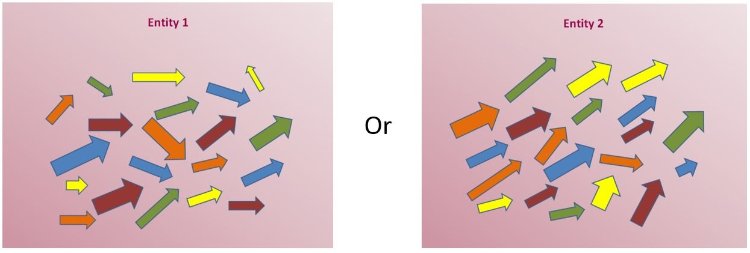
operational excellence

We can constantly promote, motivate and empower each other to strive towards operational excellence and never accept operational mediocrity.

We can all get behind the core values of the company, behind our strategic vision and more in unison in our never ending pursuit of operational excellence.

Analytics is the application of using data and analysis to discover patterns in data. DMAIPH specializes in empowering and enabling leaders, managers, professionals and students with a mastery of analytics fundamentals. Contact DMAIPH now at analytics@dmaiph.com or connect with me directly to find out what we can do to help you acquire the analytics mastery you and your organization need to be successful in today’s data-driven global marketplace.
The Challenge Ahead

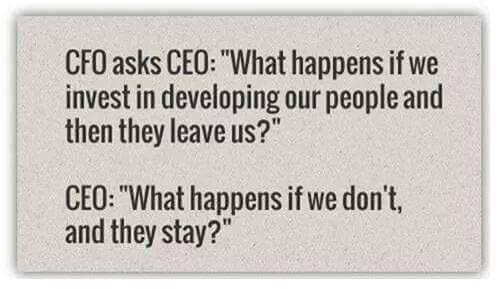
How do we get better? That’s what is on my mind every day. Most people get up every day and go to work. They have family obligations to meet so they take a job that helps them meet these obligations. However, most people don’t find job that add much more value to their lives then a pay check.

Sometimes we get lucky and find a good place to work. Where we are valued as not just a worker, but a person. Where we are allowed to have more work/life balance then we might have in other places of employment. This is a special place to be. Its not what 90% of the global workforce face every day.

  • So what happens when we find that awesome company to be a part of? In some cases we are empowered to be innovative and to help be part of the success of the company as keep it moving forward. For people who feel this sense of positive energy, work is actually pretty fun most days.
  • However, in some cases we find that even though the company is good to us and we like working there, we find things start to feel routine. We have challenges every day that are either not fun to fix or when we fix it, no one seems to notice. This eats away at our positive feelings about our company.
  • And then we have a third group of people who for whatever reason are in the wrong place at the wrong time. They have challenges in their lives that prevent them from being at work every day. And often when they are at work they don’t feel very engaged. They have a low sense of satisfaction that makes each day on the job more work than its seems worth.

707022c7-f35e-4427-91c0-653a382a3689-medium

So as DMAIPH grows from a company of a half dozen to one of several dozen, how do we keep people trained? How do we make sure we keep as many team members as possible in the first category of engaged and empowered workers?

These is no simple answer. For some more money, for others more responsibility and for others more job variety.  There is no magic solution. It takes a lot of effort from not just the leaders but also from the employees who want to keep enjoying their work and like to work every day for the same company.

The answer of course is analytics. We need to know exactly what they need to stay engaged and to stay with us.

That is what I think about every day. That is THE big challenge ahead. And so should you.

Join us on Feb 21, 2017 in Ortigas to find out what metrics you need to interpret and access the data you have in your business that will tell you exactly what to do to keep attrition low and satisfaction high.

Analytics Leadership – DMAIPH specializes in arming the Data-Driven Leader with the tools and techniques they need to build and empower an analytics centric organization. Analytics leadership requires a mastery of not just analytics skill, but also of nurturing an analytics culture. We have guided thousands of Filipino professionals to become better analytics leaders. Contact DMAIPH now at analytics@dmaiph.com or connect with me directly to discuss a uniquely tailored strategy to ensure you are the top of your game when it comes to Analytics Leadership.

Under Promise And Over Deliver And You Will Build Trust

The business principle “under promise and over deliver” is one that I learned to use to great advantage over the years. I really liked the concept from the first time I heard it.  It made total sense to me:  follow through on your commitments and exceed what you said you’d do.

For example, your boss asks when you can get a project finished by, you give a date and manage to turn it in 2 days early, perhaps with enough time for some feedback and to create another version.

This extra time you create can be very valuable as you can tweak things based on that feedback. It will give your boss the feeling that two helped shape the final outcome and increases their satisfaction with you and your work.

When I reflect back to what made me such a successful analyst at Wells Fargo, this is the thing that comes to mind first and foremost. My boss would often comment on how I had a knack for estimating how much time it would take to deliver something and would almost always meet or even exceed that deadline.

Some advice I got from a mentor early on in my career was to never make a promise unless it came of out of a genuine desire to follow through, not because of an obligation to do so. I came across this blog recently that outlines some tips on how to Under Promise and Over Deliver:

  • Consider what you are trying to achieve by making a promise and whether or not it can be obtained by making a smaller, more manageable promise.
  • Instead of promising to complete the entire project in an unreasonable amount of time, break the project up into sections.
  • Promise to have portions of the project completed by a certain date. This allows you to manage expectations and keep up with the workload.
  • Estimate how long you think it will take you to fulfill the promise and then double or triple that time.
  • If you are not able to answer how long it will take you to complete a task, don’t give an answer. Tell the other person or group that you will get back to them.
  • Sometimes we can’t help but break a promise. Be up-front and immediately offer an apology. It makes a difference and will go a long way towards repairing your relationship.

10406025_10152524531307425_1404103117_nThe lesson of under promising does more than just surprising people and making them happy. It gives you the space to do your absolute best and that will make you feel good too. Each time you make good on a promise you will feel that much more confident in your abilities.

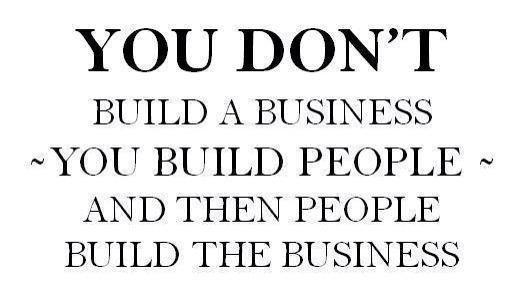

Every promise fulfilled will help you to associate your name with positivity and trust. This is very, very valuable to your career. Making promises you can keep is instrumental to helping you build and maintain any relationship in life, but especially with your boss and people with influence over your career.

Source: http://blog.pickcrew.com/why-you-should-always-under-promise-and-over-deliver/


What is Business Intelligence?

Here is a excerpt from the upcoming textbook, Fundamentals of Business Analytics….

What is Business Intelligence?

Per Wikipedia, Business Intelligence (BI) is an umbrella term that refers to a variety of software applications used to analyze an organization’s raw data.

BI as a discipline is made up of several related activities, including data mining, online analytical processing, querying and reporting. BI can be used to support a wide range of business decisions ranging from operational to strategic as well as both basic operating decisions include product positioning or pricing and strategic business decisions include priorities, goals and directions at the broadest level.

The CHED memo breaks business intelligence into four phases:

  1. Data Gathering. Business analysts need to identify the appropriate data-gathering technique by conducting research. Once you have identified the right data, it needs to be captured. This process is the same as the identify process.
  2. Data Storing. A general term for archiving data in electromagnetic or other forms for use by a computer or device. There is a common distinction between forms of physical data storage is between random access memory (RAM) and associated formats, and secondary data storage on external drives. This process is akin to the first part of the inventory process.
  3. Data Analysis. The process of systematically applying statistical and/or logical techniques to describe and illustrate, condense and recap, and evaluate data is the analysis phase. Data analysis has multiple facets and approaches, encompassing diverse techniques under a variety of names. We need to have a data analysis to improve the company’s performance. This process is the 2nd half of the inventory process.
  4. Data Access. Data Access refers to software and activities related to storing, retrieving, or acting on data housed in a database or other repository. Two fundamental types of data access exist: sequential access (as in magnetic tape, for example) Data access crucially involves authorization to access different data repositories. Data access can help distinguish the abilities of administrators and users     For example, administrators may have the ability to remove, edit and add data, while general users may not even have “read” rights if they lack access to particular information. This phase is the equivalent of the integrate process.

It is important to note that business intelligence and business analytics are sometimes used interchangeably, but there are different.

From my perspective, the term business intelligence refers to collecting business data to find information primarily through asking questions, reporting, and online analytical processes.

Business analytics, on the other hand, uses statistical and quantitative tools for explanatory and predictive modeling. In this definition, business analytics can be seen as the subset of an enterprise wide BI strategy focusing on statistics, prediction, and optimization. The CHED memo is more closely aligned to that division as well as the primary focus is on the storage of data and the use of modeling.

As for myself, I worked with business intelligence software and methodologies with Wells Fargo long before I had even heard of the term BI. But for most of you reading this, that is ancient history. 🙂

2.0.5

Adding Value

One of the keys to my success is that I make sure to add value to what ever it is I am doing.

As an analyst, putting in a little extra time to make sure I had the right data to answer questions. In addition, I’d not just answer the question, I’d get into the head of the person who wanted my analysis and think about what new questions they might have and answer them too. I’d always be one step ahead and that added a lot of value to the business.

As a manager, I always look at each team member in terms of how much and what kind of value can they add to the business both now and long term. In each of my interactions, even the “negatives” can be used to add value long term to that persons career development as well as to the business.

As a businessman, I look at what we can do to add value to the life and well beings of our customers. What kind of training or analysis work can we provide to help them be more successful and add value in what ever it is they do.

Adding value is something that is not just a catch phrase or a motto… its something deeply ingrained in who I am as a person and what my company DMAIPH stands for.

Adding value is not just about customer service, integrity, professionalism or things like that… to me its about doing the making the world a better place one interaction at a time.

img_7737

So ask yourself… what adds value to your work, to your life and what do you do that adds value to someone else’s work or life. It the answer is not immediately obvious, then you are doing something wrong.

General Analytics – Analytics is the application of using data and analysis to discover patterns in data. DMAIPH specializes in empowering and enabling leaders, managers, professionals and students with a mastery of analytics fundamentals.

Analytics Leadership – DMAIPH is a founding member of the Analytics Council of the Philippines and specializes in arming the Data-Driven Leader with the tools and techniques they need to build and empower an analytics centric organization.

Analytics leadership requires a mastery of not just analytics skill, but also of nurturing an analytics culture. We have guided thousands of Filipino professionals to become better analytics leaders. Contact DMAIPH now at analytics@dmaiph.com or connect with me directly to discuss a uniquely tailored strategy to ensure you are the top of your game when it comes to Analytics Leadership.

The Analytics Driven Leader: Demystifying Strategy

As I prepare for spending the bulk of the upcoming year in Philippines I have several goals in mind; publish my next book, launch a new side business and spend quality time with as many of my team members as possible. And when I think of the conversations I want to have with the team, demystifying strategy and empowering more data-driven decision making are top of mind.

img_7737

Business Strategy can be a complicated thing for many reasons. First and foremost because although you can have big goals that everyone can see, the fluid nature of pushing a business forward makes it hard for many to conceptualize.

In our case we have gone from a company of 6 with one business line to a company of over 100 with six business lines in just 18 months. On top of that we have diversified from one legal entity with one purpose to three legal entities with complimentary purposes. It’s a lot to take in.

Data-Driven Decision Making can be challenging for mean reasons as well. First of all, few people on the team have a solid foundation in business analytics. Most come from companies where they either didn’t have a direct role in developing the analytics or where in companies that really didn’t value analytics. So it takes some time for people to get on board with the idea of using both data and wisdom to make decisions.

There are so many things that we can do to improve performance, enhance communication and enable more proactive thinking. Refining process flows, building better reports and having more forums for information sharing are all places to start.

My goal is by the end of the 1st quarter of 2017 we have accomplished a lot of these things. By then we will have taken some of the mystery out of our business strategy and empowered more people to look at the data as they make decisions.

Analytics Leadership – DMAIPH specializes in arming the Data-Driven Leader with the tools and techniques they need to build and empower an analytics centric organization. Analytics leadership requires a mastery of not just analytics skill, but also of nurturing an analytics culture. We have guided thousands of Filipino professionals to become better analytics leaders. Contact DMAIPH now at analytics@dmaiph.com or connect with me directly to discuss a uniquely tailored strategy to ensure you are the top of your game when it comes to Analytics Leadership.

Demand Higher Standards! Thanks Seth I Needed That

http://sethgodin.typepad.com/seths_blog/2015/04/demand-higher-standards.html

Sharing another one of Seth Godin’s well timed blog posts.

It really is quite amazing that on those days when I need a little extra inspiration and/or affirmation, I tend to find it in my inbox from Seth. It’s like he knows he is writing for me. Haha! 🙂

“And the sooner you find a boss who pushes you right to the edge of your ability to be excellent, the better. Even if the boss is you”

Bottom line, don’t settle for mediocrity. Dont settle for it form below, from above and most importantly from yourself.

We grow bigger, we make more money, we work harder, we grow bigger, we make more money… and on it goes. Now at some point we can take a rest and smell the roses and just do what needs to be done versus trying to do more, but that time is not now.

GROW

Why The Philippines?

I am often asked why leave a great job for the biggest bank in the U.S. to set up my own small call center business in the Philippines?

3.0.1

To the average person that might seem like going against conventional wisdom. However to a person who is knowledge about world affairs and has some insight into the global economy, betting on a B2B solution in the Philippines, is absolutely the right thing to do.

The Philippines has been gifted with three things that will continue to propel its B2B forward economically; a youthful population, a fairly well-developed system of higher education, and its wide scale use of an American style of English.

Across the globe, many industries are coming up short when it comes to finding talent to fill jobs. This global demand for talent puts the 18-30 year old, college educated, American style English speaking Filipino in the sweet spot for future opportunities.

Business who can hire and train this population for work with businesses abroad are in the middle of a huge boom with no signs of slowing down.  That’s why I did what I did. B2B opportunities in not just the Philippines, but across Asia makes that side of the Pacific the place to be.

Mastering The Art Of Account Management

I have been thinking a lot lately about what its take manage the relationship we have with our clients.

A long time ago, I learned that to be a good account manager you need a rare combination of professional and personal characteristics, some of which can’t be taught. To me account management is the art of representing my business to clients and vice versa.

The job requires skill, advocacy, diplomacy, leadership, expectation setting, intelligence, method, heart, patience, experience, and wisdom. It is not easy and it is something I am constantly trying to improve at.

With this concept top of mind, I thought I’d share some of my tips for being an effective account manager.

  1. Under Promise and Over Deliver. I have always strived to under promise and over deliver. Most people get it wrong. They promise to something they cannot deliver and things go downhill quickly from there. Losing your client’s trust is a surefire way to doom your company.
  2. Do What They Want, Not What You Want. We often get so busy we think we have to do it the way we are doing it. Even when it’s clearly not what the client wants. This is another way to doom yourself and your business. They are paying you to do what they want, so don’t expect them to keep paying you to do what you want.
  3. Communicate Bad News Early. It is far, far better to tell you client you will be late on a deadline, or you can meet the requirement or you have to modify what you promised then it is to go silent. Not communication bad news early, or worse to communicating the bad news at all is another strike against you and your hard work, not matter what you intentions.
  4. Be the Expert. When it comes to dealing with a client, they are expecting you to know every answer, sometimes even before they ask it. They are paying you for your expertise. So you need to be the one to find problems before they are problems, fix things before they break and always have a solution at hand. If you are not an expert on what you are being paid for, they will find someone else.
  5. Always Have the Most Data. When your client tells you there is something wrong because they saw it in a report, then you know you have pretty poor analytics. You are doing the job, so you should be the one churning out the reports, championing the sharing of information and setting the agenda for the next meeting.

10592010_10152674958362425_1982237172_n

That’s just a few of the things that come to mind when it comes to being a good account manager.

And just in case I need to remind anyone, and not trying to brag… but I am pretty awesome at this.

Being good at account management is without a doubt one of the key reasons I have thrived throughout my career is keeping the clients happy.

DMAIPH has successfully set up Filipino analytics teams for over a dozen U.S. based businesses. Offering both virtual and office based teams that specialize in problem solving using data, new technology and analytics techniques is our strength. Finding and empowering analytics talent is increasingly challenging, but we have it down to a science.

DMAIPH specializes in arming the Data-Driven Leader with the tools and techniques they need to build and empower an analytics centric organization. Analytics leadership requires a mastery of not just analytics skill, but also of nurturing an analytics culture. We have guided thousands of Filipino professionals to become better analytics leaders. Contact DMAIPH now at analytics@dmaiph.com or connect with me directly to discuss a uniquely tailored strategy to ensure you are the top of your game when it comes to Analytics Leadership.