Five Tips For Motivating Your Team In 2015

As the New Year approaches, I’ve been thinking a lot about how to keep the team motivated. We’ve come so far so quickly, there are bound to be some instances where things start to normalize and perhaps even get a bit stale.

So here are some things the management will be making a focus in 2015 to keep engagement high:

1. Say Thank You – A timely, specific and public thank you often generates a sense of engagement even greater then a small monetary reward. Simply put, we can strive to do a lot more thank yous in the coming year.

2. Looking Ahead – Ambition and career progression are two of the key staff motivators, no matter what level an employee is working at. In 2014, we promoted over dozen team members from entry level to leadership positions. We will constantly look to optimize skills and interest as we continue to grow.

3. Showing Up Matters – We have been talking about an attendance based incentive, perhaps something along the lines of offering employees who have 100 percent attendance with some kind of recognition gift? This is one I think can really let the team know it matters a lot to the business when they are present and on-time.

4. Follow The Leader – A sense of competition can be a great way to motivate and pitching teams against each other in terms of productivity or quality often has many positive side effects. We’ve had some success with this in 2014, but I think with some fine tuning and polish, we can make it a staple of 2015.

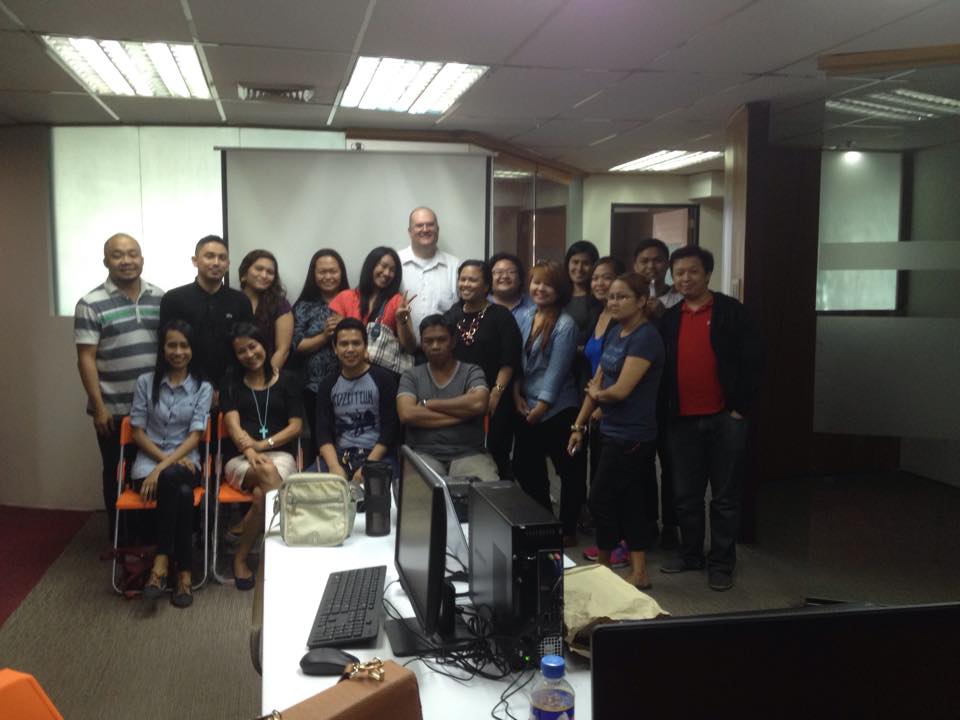
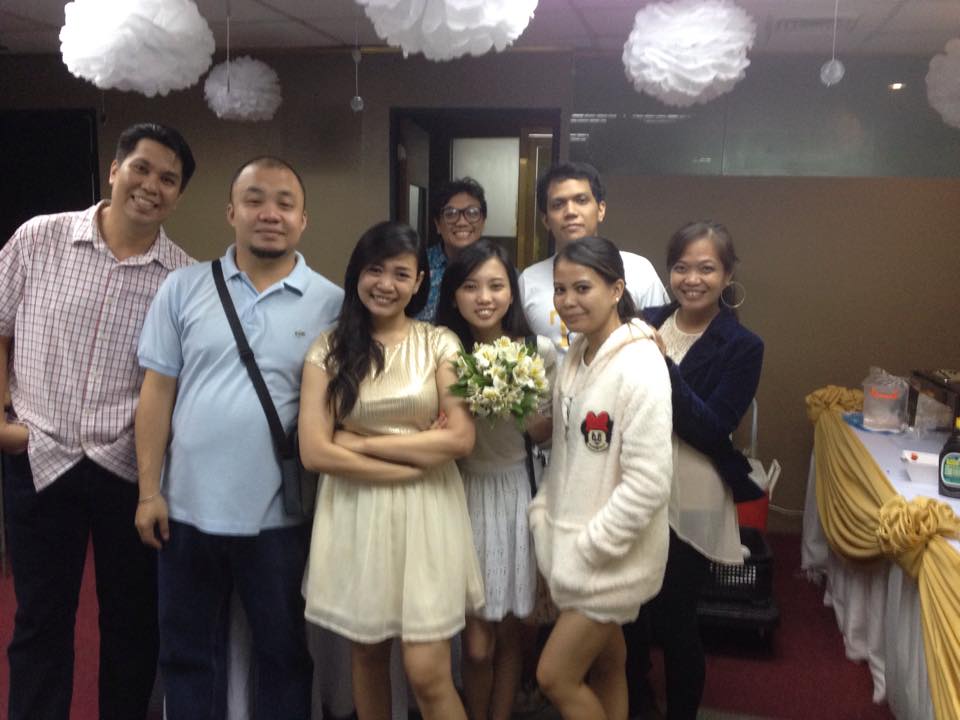
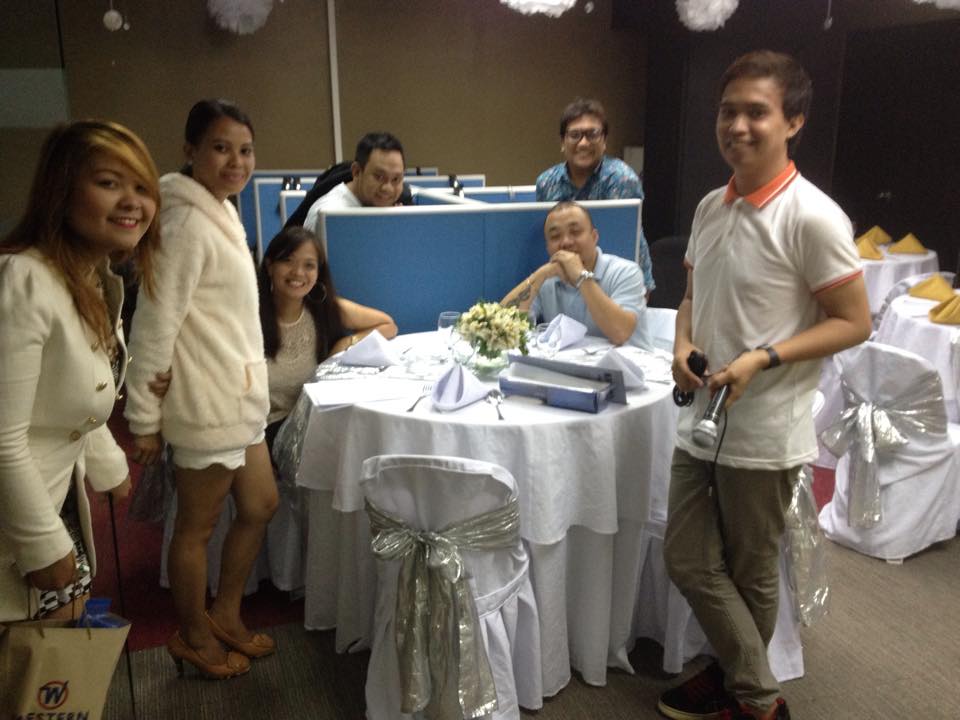
5. Share The Love – Sharing pictures of the team on social media is one way to show your team how much they truly are valued. It’s more then just work. It’s a family.

These ideas are just the tip of the ice berg. When we have the next leadership meeting in January, we will figure out how better to empower, engage and motivate the team for the coming year.
10846081_819697278072272_3527554761562160264_n

10850174_819697678072232_6701856626559991468_n

Right Now I’m Thinking About Engagement

http://blog.sfgate.com/storystudio/sponsoredarticles/adv/?prx_t=x6ABAAfoBApB8LA

This article is full of interesting viewpoints and could easily lead to a half dozen blog posts.

However, right now I am really thinking about employee engagement.

Engagement is a tricky emotion. When someone is truly engaged in their work its special. Most of the time most of us are mostly engaged, but not really feeling it all the time. And sometimes our engagement is on a mostly negative level.

So how does a company keep the majority (if not all) of its employees engaged most of (if not all of) the time? Well, based on my own experience, nothing makes me feel more engaged then more work than I can handle, but not so much that it’s impossible. The sense of always having something to do, coupled with a consistent sense of accomplishment is what drives me towards engagement.

During my 15 years with Wells Fargo, I had some years where I was fully engaged and a few where I was not.
By far, my most accomplished years where there ones where I felt vital to the success of the business. So how to replicate that with everyone around me today?

I’ve got a team of over 60 people, most working independently from home. Only a handful have been with me for just over a year, the rest all less than a year. Our jobs are very much an ebb and flow kind of work, where we seem to have periods of too much and periods of not enough work to do to keep everyone engaged. So that’s what I think about a lot.

Starting in January, we are going to kick off a few new side projects to give team members more opportunities to feel productive during the slow times and we are going to institute a more structured incentive plan to reward hard work in the fast times.

Let’s see how that goes towards upping the engagement level. Given I’m one who rarely feels completely satisfied and is always looking for ways to adapt, enhance and improve… I optimistically wonder where this will take us.

2014 was all about building the foundation. 2015 will be all about putting up the house so that it comfortably fits us all.

Image

The Jobs Only You Can Do

http://sethgodin.typepad.com/seths_blog/2014/11/the-jobs-only-you-can-do.html

Sharing this awesome blog post…. “One of the milestones every entrepreneur passes is when she stops thinking of people she hires as expensive (“I could do that job for free”) and starts thinking of them as cheap (“This frees me up to do something more profitable.”)

When you get rid of every job you do that could be done by someone else, something needs to fill your time. And what you discover is that you’re imagining growth, building partnerships, rethinking the enterprise (working on your business instead of in it, as the emyth guys would say). Right now, you don’t even see those jobs, because you’re busy doing things that feel efficient instead.”

This concept really resonates with me as DMAI passes the milestone of one full year working on the invaluable.com account. One of my goals early on with this client was to find people to train and empower employees to take on more things as we grew. This freed me up to spend my time on other things and its worked like magic so far.

From my perspective one of the keys to being a successful entrepreneur is doing just what Seth’s talks about… focus your time on doing what no one else can do and delegate things that you don’t have to be the one doing. Managing Payroll. Recruiting. Operations Management. Business Development. All things I have passed off to my team so I can focus on other things.

10414627_538667176278730_5771499670520946828_n

And the coolest thing we are seeing now, one year in… is the ones who I’ve delegated too… my leadership team, are now doing the same. Passing off tasks to new employees so they can focus on what they do best.

Its a pretty exciting story to talk about! A true case of empowerment!

At The Mid-Point Of My First Five Year Plan

http://smallbusiness.chron.com/write-five-year-business-plan-1391.html

Came across this how to write a 5 year business plan article. I think its pretty good. Back when I was just starting BPO Elite, I spent a lot of time crafting a pretty thorough strategic plan that helped me really get a grasp on what I hoped to accomplish.

Whenever I consult with a small business owner or a senior manager at a larger company, it’s pretty easy to imagine the ones who wrote business plans… people who think strategically generally like to put thnings on paper and use that document like a blueprint.

Those who go more off gut feel and intuition… its a lot harder for me to help.

Anyway, I guess I am in the middle of a five year plan right now, so here is how I would articulate the DMAI 5 year plan.

Year One was all about laying the foundation. Not much money is made, but the connections you make will be difference makers. Finding fans and advocates are the big goals of year one.

Year Two was all about trial and error. Figure out what makes money and what doesn’t. Finding a mix of products and services that you enjoy and you can pay the bills with is key.

Year Three has been all about expansion. Adding more of what works, finding key people to delegate things to who also believe in your vision, adding roles that allow employees to see career growth. Its all about adding value.

Year Four will be all about duplicating thing to a scale to optimize the business and really start turning a significant profit. This is where you should expect to start getting paid some nice returns on investment.

Year Five will be all about spending more time doing what you love and less managing the things you don’t. By now you should have surrounded yourself with a core team who can run the business without you so you can actually really take some time off to smell the roses.

Teamwork Is Not Easy… And Here Is Why

I came across a couple of visual yesterday on LinkedIn that made me think a lot about how complex it can be to have a group of people really working as a team.

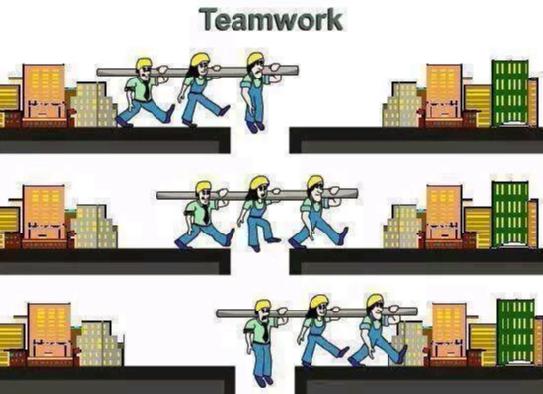
The first image is a pretty straightforward visual of how a people going in the same direction can help each other out in the common interest to complete a task.

69c586b0-e263-47e2-b2ca-aa9160e236ed-medium

Being able to count on your team mates to carry you though a rough patch, to help you avoid dangerous mistakes, to conquer a problem bigger then one person… so many concepts of teamwork can be drawn from a simple image.

But if the benefits of working a team and not a collection of individuals is so important, why do so many team fail?

This second image provides an illustration of all the character traits a person needs to be truly successful. Look how many of them have to do with how you interact with people on your team.

9e6004f6-2df2-11e4-a117-12313d239d6c-large

For a team to really work efficiently, its members have to be able to share both risk and reward, they have to be both comfortable and confident in who they are and they have to be willing to trust and take leaps of faith.

When you have a team full of people who like being on a team, you will be successful. On the other hand, when you have a team full of people who don’t really like being on a team, you will be a lot less successful.

Communicating Strategy From the Bottom

http://blogs.hbr.org/2014/06/strategy-isnt-what-you-say-its-what-you-do/

Came across the log post about strategy implementation and I think it’s a good one for consultants working with senior management teams. It goes along the lines of walking the talk.

“Strategic choice-making cascades down the entire organization, from top to bottom. This means that every person in the company has a key role to play in making strategy. Performing that role well means thinking hard about four things:

1) What is the strategic intent of the leaders of the level above mine?
2) What are the key choices that I make in my jurisdiction?
3) With what strategic logic can I align those choices with those above me?
4) How can I communicate the logic of my strategy choices to those who report to me?

If you as a manager can do the first three of these four, then you will own your choices and own your strategy. If you do the fourth, you will set up your subordinates to repeat these four things and thereby own their choices and their strategy, and pass on the task to the next layer of the company. If each successive layer assumes this level of ownership, the organization can make its bosses’ statement a real strategy rather than an empty slogan.”

I can personally say that these points are all very important to infuse into the culture of your company. Both from my Wells Fargo experience where these are deeply ingrained in the corporate culture to the smaller scale of my own company, clearly communicated strategy is the key.
When not only your direct reports, but your two downs are spreading the gospel, you will be successful.

If you need help getting your team to walk the talk, I’m happy to help.

Business Strategy with Analytics – Aligning a business strategy to drive an organization forward requires a robust analytics solution. Businesses who have good analytics tend to be much more profitable and efficient then ones that do not. DMAIPH has helped dozens of companies in both the U.S. and the Philippines with adding more data analysis in their business strategy. Contact DMAIPH now at analytics@dmaiph.com or connect with me directly to find out what we can do to help you align your business strategy with analytics.


Using Social Media To Cascade Content Upwards and Sideways, Not Just Downward

I came across this on LinkedIn and thought it worth sharing:
http://good2bsocial.com/2013/05/13/middle-management-social-business/

In 2012, IBM conducted a study, “The Business of Social Business: What Works and How It’s Done,” that showed that while companies are increasing their social technology investments, middle management leaders are struggling to embrace these capabilities as part of their day-to-day work. The problem, as the IBM study revealed is that “the key to accelerating widespread adoption lies in an organization’s ability to build social business expertise among employees, while encouraging behavioral changes that may influence a wider cultural shift. However, only one-quarter of companies believe they are fully prepared to address the cultural changes that are associated with this transformation.”

Therefore, companies needs to spend a significant amount of time and effort in encouraging their middle managers to change their existing behavior and provide their teams with a platform for engagement such as social networks and collaborative spaces. Middle managers need to embrace their new roles and upper management must set up a system to reward them for this. Without this basic fundamental change in culture, middle managers will resist change and a company’s social business initiative will be doomed before it starts. Middle managers in turn need to teach their teams the value of collaborating with one another and sharing knowledge and expertise. This may seem simple but from my experience it is not. Middle managers can encourage this collaboration by transforming existing business processes into new more effective processes that are enhanced by social technologies.

Image

My take on this is that middle managers often feel more comfortable in being doers then thinkers. They thrive on routines and predictable processes and without guidance they struggle with ambiguity and vague direction. When it comes to social media they still see it as top down way of information dissemination and only use collaborative spaces with their direct reports to facilitate process changes and trainings. Rarely do you see middle managers use collaborative spaces as peers.

For my part, I will continue to encourage my senior managers to walk the talk so to speak and really optimize their social media presence in ways that inspire and empower their direct reports to do the same. We use the term cascade information a lot, but we don’t always cascade is upwards or sideways. We can do more of that.

Analytics and Process Improvement

Had an interesting text conversation yesterday that I thought worth sharing as it brings up a good question… can you have process improvement without analytics?

I got a text randomly yesterday from a friend who is considering a new job as an analyst for a hospital.

flow

Friend: Hi Dan, I got a question on analytics. If I wanted to increase the utilization of rooms in a hospital, what kind of data should I be looking at?

Me: Do you want a well thought out plan or a quick and dirty answer?

Friend: I suppose quick and dirty.

Me: Length of patient stay. % of special needs patients. Physical dimensions of space to see if space is optimized. Understanding of patient process flow to see where wasted time is. Then put it all together to come up with some current metrics and then track against optimal case metrics.

Friend: What exactly do I need to be looking for if I go look at length of stay? What are optimal case metrics?

Me: To optimize usage, you need to gather data for key metrics as they currently are. And then project the same metrics is everything was working at its most efficient state. Length of stay is a key metric as you need to determine what is causing longer than expected patient stays. This will help you minimalism things causing wasted time. Analytics will identify waste and then you use metrics reporting to manage the waste. Make sense? This sounds like as much a process improvement project as it does analyst work doing some new metrics reporting. It could be a very interesting project with both short-term consulting on the process improvement and long-term need for an analyst to monitor the data via metrics reporting.

Friend: Yeah, you are making lots of sense. So, if I were trying to shorten length of stay, I would look at current length of stay per case. Then look for all the factors impacting length of stay, and then improve the process flow for the ones where its taking too long.

Dan: Something like this is how I would start.

Based on my experience, when you are presented with a business problem and asked to help solve it. It’s almost always an issue of a process that is inefficient or wasteful that is the root cause, but you need plenty of data to identify that. A good analyst is just as much a process improvement guru as they are a reporting expert.

IMG_6912

Analytics Consulting – As a founding member of Gloabl Chamber Manila, DMAIPH specializes in a variety of analytics consulting solutions designed to empower analysts, managers and leaders with the tools needed for more data-driven decision-making.

We have helped dozens of companies in both the U.S. and the Philippines, get more analytics in their business.

Contact DMAIPH now at analytics@dmaiph.com or connect with me directly so we can tailor an analytics solution made just for your unique requirements.

13 Months in the Philippines – Lesson 8 – December 2012 – Holidays in the Philippines

IMG_1114 Kalookan, Metro Manila, Philippines

As 2012 came to a close, things really started to slow down. I took full advantage of this to prepare of a big launch of DMAI in January. We didn’t go home for the holidays, and ended up just staying in Makati to enjoy Christmas and New Years. And boy was it memorable.

The Winter Holidays in the US start with Thanksgiving. That’s when the malls have huge sales and you start seeing Christmas lights and hearing Christmas music in the malls. However in the Philippines that starts in September. So, but December I was pretty fatigued from hearing and seeing the Christmas cheer and looking forward to finally seeing the day come and pass.

There were a couple of additional interesting lessons I learned. From the period between Christmas and just after New Years, all movies show in Manila are Filipino made films. No Hollywood blockbusters or international films. It’s both good and bad, it allows Filipinos to relish in their own productions and guarantees viewing for films that might otherwise be missed. However, they are of course all in Tagalog. I went to one and got some of it, its was a romantic comedy so most of the jokes don’t need translation, but boy wouldn’t it be nice if they had subtitles.

The other one that really stands out is the fireworks. In the US we do fireworks in a big way on July 4th. There are also some on New Years or Veterans Day or Memorial in places, but fireworks really cant be enjoyed when its cold so for the most is just Independence Day. In the Philippines in Christmas Eve, Christmas, New Year’s Eve and New Years Day. Staying on the 10th floor of a corner condo in Makati I could see fireworks all around from Pasay to Manila to Makati. Big and Small. It was amazing. And after the smoke was so thick it was like fog. It was truly amazing.

From an analytics standpoint I took away a couple of things. Know your holidays. For example, if you are an American company doing business in the Philippines know the holidays so you can keep your people happy. The second is that someone needs to do some analysis on the lost revenue of just showing Filipino films. They still make good money, but it has to be tough on the cinemas to sacrifice profit for art over a two-week period where everyone is at the malls.

Analytics Tool > Enchantment > http://www.guykawasaki.com/enchantment/

Analytics Concept > Business Partnership > http://en.wikipedia.org/wiki/Business_partnership

YouTube Resource > http://youtu.be/f66naHGTsFU

My Analytics Story – My passion is solving problems by bringing together the best talent, cutting edge technology and tried and true methodologies. DMAIPH is all about empowering people towards better Decision-Making through the use Analytics and business Intelligence. This is what I do best. Contact DMAIPH now at analytics@dmaiph.com or connect with me directly for a free consultation about getting more analytics into your career and your business.