So Just What is Analytics Anyway?


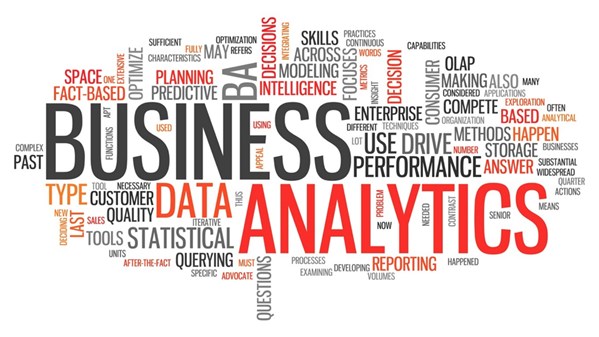
In less than 200 words… Analytics is simply the discover of patterns in data.

Analytics is used by organizations to answer business questions, predict business trends, mitigate risk and provide actionable insights.

Businesses who use analytics are at least 33% more profitable and up to 10x more efficient then ones who don’t.

To be successful with analytics you must have the 3 T’s; talent, technology and technique.

When you have a team of curious people who like to use data in their decision-making, you have the talent. It is not just a matter of training them to be great analysts.

Using tools like business intelligence applications, data visualizations and business dashboards, allows technology super charge your teams ability to analyze data.

Knowing what analytic technique to apply for any specific business need is the third component you need to be awesome with analytics.

Investing in analytics will give you an edge over your competition and optimize your team’s potential.

Make one of your 2017 goals to get more analytics in your business to empower more data-driven decisions!

IMG_6912Follow my blog @ www.dmaiph.com to learn how!

Daniel Meyer

President & Founder of DMAIPH

Decision-Making, Analytics & Intelligence Philippines

News & Events- DMAIPH is a highly engaged leader, sponsor and participant in analytics events across the U.S. and the Philippines. As an Analytics Champion I write, blog, speak and lecture about analytics in a wide variety of forums. I authored several publications on analytics including my latest book, Putting Your Data to Work. Contact DMAIPH now at analytics@dmaiph.com or connect with me directly to learn more about where I will be talking about analytics next.

DMAIPH will be at the Techtonic2017 event being put on by PMCM Events Management this coming July!

15391039_1792694417671378_4894498634389650859_n

Fast Data is the New Big Data

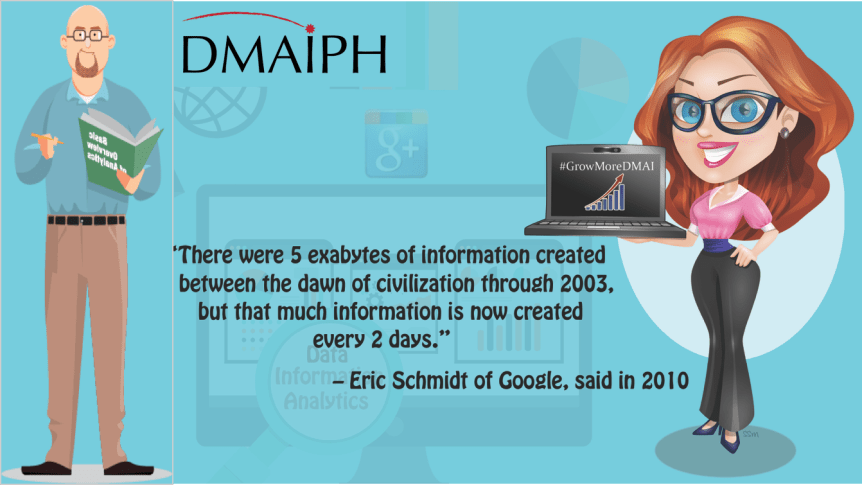
Starting to hear a new buzzword for analytics… Fast Data. Everyone knows about Big Data that is growing almost exponentially.

It is coming to us in mind boggling sizes, from all across the Internet of Things and quicker then ever before.  The traditional 3 V’s of data (volume, variety and velocity) don’t seem to be enough anymore to describe the challenges we have before us.

SO now we are looking for Fast Data solutions, which means getting the right data you need at the right time with minimal delay.

The concept of waiting for reports to be pushed to you so you can analyze them is so 20th Century.

Now its all about being fast.

I can show you a thing or two (or a dozen) about how to supercharge your analytics by moving past management repots and even past business dashboard to start looking for solutions that get data to the decision-makers without any middle man.

Big Data is now Fast Data. Don’t get left behind.

data-analytics-feb21-001

Join me this coming Feb 21 2017 for a Data Analytics Seminar in Ortigas where we talk about how to take your Big Data and make it your Fast Data.

DMAIPH specializes in arming the Data-Driven Leader with the tools and techniques they need to build and empower an analytics centric organization. Analytics leadership requires a mastery of not just analytics skill, but also of nurturing an analytics culture. We have guided thousands of Filipino professionals to become better analytics leaders.

To that end, DMAIPH offers a wide range of analytics centric training solutions for professionals and students via public, in-house, on-site, and academic settings. We tailor each training event to meet the unique needs of the audience. If you need empowerment and skills enhancement to optimize the use of analytics in your organization, we are here to help.

Contact DMAIPH now at analytics@dmaiph.com or connect with me directly to set up a free consultation on which of our DMAIPH analytics training solutions is best for you.

When Your KPIs Aren’t Really KPIs

One question I get asked a lot is what should someone do when they know the data they are reporting and/or using in their analysis is not the best data to available?

No matter what part of the business you work in, the first thing to do is to define the current Key Performance Indicators (KPIs) being used in decision-making.  Often right off the bat, some of the KPIs being reported aren’t even being used.

You can do a simple survey, asking end users to rank in order of importance the KPIs they get. Also ask if the ones at the bottom are even useful or should they be eliminated if no one is using them.

Growthink_Dashboard_Hero_w_Background_PSD_0

At the same time you should be working on understanding what computations go into each KPI. Often we just do simple counts, total and averages that mask more important data. On the flip side, we tend to over complicate things with extravagant weighing and scoring. Either way, we need to make sure we know exactly what is being reported and how does the final data point come to its end state.

The next step is to look at the data architecture to make sure there is nothing happening upstream that might impact the data we are using in the KPIs. Before making changes to the KPIs we want to have the full view of what happens before the data gets to the end user.

Now we are at the point where we can start experimenting. What happens when we swap out data points? Or if we change a variable in a calculation? Or we pull the data from a different source? The questions are endless. Pick a few, make some changes in a test environment and start sharing the updated KPI data. See if it has more value with the end users.

Again, this shouldn’t be hard. But of course in many organizations a lot of consequences can result from a simple change to just one KPI. Spreadsheets may have to be reformatted, review processes may have to be updated, dashboards may have to be redesigned. But in the end, what is more important… making decisions with crappy data or setting a standard to let the reporting process evolve as the business evolves?

This come back to my point earlier, changing KPIs is as much sales as it is analysis… that you have to be ready to share a story, back it up with data, and really influence the minds of senior management that updating the KPIs makes good business sense.

If you are at a point where you are trying to figure out what KPIs aren’t working anymore or you need help is building a business case to change some KPIs, let me know. I’m here to help.

jobspicture2

General Analytics – Analytics is the application of using data and analysis to discover patterns in data. DMAIPH specializes in empowering and enabling leaders, managers, professionals and students with a mastery of analytics fundamentals. To this end we have parterned with Ariva Events Management/Ariva Academy to offer a wide range of analytics themed trainings across the Philippines. Contact DMAIPH now at analytics@dmaiph.com or connect with me directly to find out what we can do to help you acquire the analytics mastery you and your organization need to be successful in today’s data-driven global marketplace.

Q7: What exactly is data science and why the rapid rise of data scientists?

A year ago I might have found it challenging to really answer this question. The first time I had heard of the term data science and a data scientist wasn’t that long ago. And I have been doing some pretty advanced analytics for close to 20 years now.  I know the term has been around in academic and research circles awhile longer, but 2014 is the first time I ever saw a job posting for data scientist in big business.

So what is data science? Besides simply being the study of data, it generally refers to using complex models, machine learning, predictive and prescriptive analytics and powerful technology to analyze business data in much greater volume, velocity and variety then possible a few years ago.

And of course the ones charged with doing the data science are data scientists. They understand math, statistics, and theories that can be applied to business data using new technologies and methodologies.

The biggest challenge to being a true data scientist is that you have to be adapt at both technology and working with people. Being a business data expert, knowing how to code and doing higher math are only half the job. You have to also share your data, communicate it in ways that drive action, share and engage with non-data centric people. It’s hard to find people who are good at both.

ByugG_cIEAAL6wM

Image from Forbes Magazine. 

In addition, whole some data scientists are educated to be data scientists, very, very few actually have any kind of degree in data science. That kind of degree really didn’t exist until very recently. Instead most data scientists have advanced degrees is related subjects and have migrated into the business world do to market demand.

That demand has been growing at a staggering rate the past few years as every day we generate more and more data across the planet. President Obama first employed a data scientist for his campaign in 2012. The White House now has a chief data scientist position.

If you were to compare results from job board searches form 2012, you’d see maybe 100 data scientist job postings. Now its easily in the 1000’s.  So that’s why the job market for data scientist is one of the hottest around.  Lack of training programs, having both tech and people skills, and the booming demand due to unending new data to being analyzed.

Some people ask me if I’m a data scientist I am careful with my answer. True data science is not something I am academically prepared for nor I have never published anything in a scholarly journal. But my real world experience working with data has made me an expert on many aspects of data science.

I guess I feel more like an analyst, but a freakin awesome analyst who can do a lot of things using data that are super important to a business.

img_8168

Analytics Education – Facilitating a mastery of the fundamentals of analytics is what DMAIPH does best. As a key parnter of the Data Science Philippines Meetup Group, DMAIPH champions the use of using data. All across the world, companies are scrambling to hire analytics talent to optimize the big data they have in their businesses.

We can empower students and their instructors with the knowledge they need to prepare for careers in analytics. Contact DMAIPH now at analytics@dmaiph.com or connect with me directly so we can set a guest lecturer date, On-the-Job Training experience or other analytics education solution specifically tailored to your needs.