Small Business, Big Data

“Without big data, you are blind and deaf and in the middle of a freeway.” Geoffrey Moore – Author of Crossing the Chasm & Inside the Tornado.

Without analytics, your company is vulnerable. However, just owning analytics tools isn’t enough. Extracting value from your analytics investment requires sufficient staff, well-defined processes, a clear business strategy, and leadership support.

All the Data We Create Each Day

Think about some of the things you do in your daily life. You get up, you eat, go to work/school, shop, do something for entertainment, bank, go online and do things on social media. Everything you do generates data. That data is captured in countless ways. And then it’s stored in countless places. And analyzed by countless numbers of people. And then used in countless ways by businesses to market, design, advertise, build, sell, and so on.

Every time you check your phone to see if there are any updates on Facebook you generate a lot of data for your phone manufacturer, your service provider and Facebook itself. Everything you like or comment on can be turned into a data point. The time, place and length of your connection all provide useful data. Get the point? It’s endless.

That’s big data.

In general, big data is thought of as all the data businesses capture and store in a database that they can use for business decision-making.

When you think of data collections that have millions and millions of rows of data like big bank transaction data, or traffic data for major cities, or all the statistics captured everyday across professional sports. Way too much for man to analyze without help from technology. That’s all big data.

Every business defines its big data a little differently. There is no one way to look at how best to manage big data because big data is such a living, evolving, never ending flow of information. It’s like lakes of water that are too big to swim across and too deep to dive to the bottom of without help. And no two lakes are alike.

jobspicture2

Small Business Analytics – The field of small business analytics is just starting to blossom as companies are looking for more data-driven decision-making to prosper in the age of Big Data. DMAIPH is at the fore front of providing analytics training, consulting and outsourcing options to small businesses. Contact DMAIPH now at analytics@dmaiph.com or connect with me directly to set up a free consultation on how to get more analytics in your small business.


Most Impactful Ways To Becoming a Great Analyst

As a follow up to a survey I sent to several hundred of my LinkedIn connections a few months back. I sent the survey to connections working with data analytics on a regular basis.

I told them I was talking with a young professional just getting started in his analytics career. During our conversation we discussed what is most important to being a great analyst. I asked for their opinion, of the following ways to learn about analytics, which one has been the most important in your career path?

  1. Formal Education – A degree or certificate in an analytics related field.
  2. Self-Learning – Using trial and error and online resources.
  3. Subject Matter Experts – Being trained/mentored by an expert.
  4. Seminars/Workshops – Attending events to acquire new knowledge.
  5. Technical Training – Attend training on specific technical areas.
  6. Other – Please provide a brief description


Here are some pearls of wisdom from some of the replies I got… keep in mind these are all from well established analytics professionals:

“the most important in my career path is self-learning as most of the things we’re doing like journal reading and implementing algorithms needs less dependency with the people you are working with but requires collaboration with them and this requires you to solve problems by yourself and implement things by yourself but communicate them properly to the people you’re working with.”

If you don’t have the drive to do this, you will be an analyst in name only.

“Self-Learning – Using trial and error and online resources. World changes too fast for any of those others to matter.”

In the 15 years I have been doing analytics without any formal education in data-related fields I can say that this is 100% true. To be a great analyst you have to always been learning.

“your ability to tell the story behind all the numbers will make you an indispensable asset and an outlier in the increasingly growing population of analysts. Management almost always don’t have the time to read all the numbers in tables, spreadsheets, and reports, but they will surely appreciate instantly seeing the big picture presented in a “one-pager” report prepared by analysts. That almost always makes an analyst “great” in the eyes of the report consumers.”

Yes! If what you spend your blood, sweat and tears on does influence decisions, then you are working on the wrong place.

#2 and #3 have been important. Having a mentor to coach you side by side gives you accountability to progress in your work and learning curve. Naturally, this will push you to self-learn: trying out what you’ve learned and testing.”

Having a mentor is so important to help you get access to the actual learning experiences you need to evolve and excel as an analyst.

“spending time with the consumers of the analytics is especially important. Learning how they look at the data, and/or want to look at the data. What is important to them. What really matters. Too much non-essential information and you’ll loose them. Targeting their needs with relevance and precision will win them.”

Another big point that is often overlooked, if you are spending time producing repots and they don’t take customer insights into account, you have a big blindside.

“The most important thing to being a great analyst is to have a great sense of awareness. For me, self-learning has been the most important.”

I cannot imagine anyone being a great analyst if you didn’t have at least a bit of an ego mixed in with a Superman complex. Great analysts live to fix things.

It’s interesting to note that only 2 of the 50+ replies I got form surveying my LinkedIn connections said formal education is the most important.

jobspicture2

Analytics Survey – DMAIPH conducts quarterly analytics surveys to collect data on current trends in analytics. We specialize in surveys that assess analytics culture and measuring how aligned an organization is to using data and analytics  in its decision-making. Contact DMAIPH now at analytics@dmaiph.com or connect with me directly to find out more about how DMAIPH can conduct surveys to help you assess the analytics culture in your business.


So Just What is Analytics Anyway?


In less than 200 words… Analytics is simply the discover of patterns in data.

Analytics is used by organizations to answer business questions, predict business trends, mitigate risk and provide actionable insights.

Businesses who use analytics are at least 33% more profitable and up to 10x more efficient then ones who don’t.

To be successful with analytics you must have the 3 T’s; talent, technology and technique.

When you have a team of curious people who like to use data in their decision-making, you have the talent. It is not just a matter of training them to be great analysts.

Using tools like business intelligence applications, data visualizations and business dashboards, allows technology super charge your teams ability to analyze data.

Knowing what analytic technique to apply for any specific business need is the third component you need to be awesome with analytics.

Investing in analytics will give you an edge over your competition and optimize your team’s potential.

Make one of your 2017 goals to get more analytics in your business to empower more data-driven decisions!

IMG_6912Follow my blog @ www.dmaiph.com to learn how!

Daniel Meyer

President & Founder of DMAIPH

Decision-Making, Analytics & Intelligence Philippines

News & Events- DMAIPH is a highly engaged leader, sponsor and participant in analytics events across the U.S. and the Philippines. As an Analytics Champion I write, blog, speak and lecture about analytics in a wide variety of forums. I authored several publications on analytics including my latest book, Putting Your Data to Work. Contact DMAIPH now at analytics@dmaiph.com or connect with me directly to learn more about where I will be talking about analytics next.

DMAIPH will be at the Techtonic2017 event being put on by PMCM Events Management this coming July!

15391039_1792694417671378_4894498634389650859_n

Dan Meyer – Speaker Bio

My updated speaker bio… I have several speaking and training events lined up in 2017. There is nothing I love more then being in front of a room full of people hungry to learn more about analytics!

Daniel Meyer is President & Founder of DMAIPH (Decision-Making, Analytics & Intelligence Philippines), an analytics, consulting, training and outsourcing company with offices in Manila and the San Francisco Bay Area.

IMG_6912Mr. Meyer is one of the top analytics experts in the Philippines. With a team of over 40 analysts, DMAIPH provides a variety of analytics solutions to companies in the U.S. and Asia. Mr. Meyer is also one of the most sought after public speakers in the country and has personally trained thousands of Filipinos in various analytics functions.

Before setting up his own company, Mr. Meyer worked as a Senior Analytics Consultant for Wells Fargo Bank for 15 years. Mr. Meyer provided executive management analytics for the bank’s Remittance Service including developing business dashboards, overseeing competitive intelligence gathering, managing data analytics outsourcing projects and facilitating audit and risk management.

Mr. Meyer recently published Putting Your Data to Work, an analytics guidebook designed to provide organizations with a solid foundation in using analytics to empower more data-driven decisions.

Mr. Meyer earned a B.A. in History with a minor in International Studies from Sonoma State University and a M.A. in Education with a focus on Student Affairs in Higher Education from the Indiana University of Pennsylvania.

Analytics Training – DMAIPH offers a wide range of analytics centric training solutions for professionals and students via public, in-house, on-site, and academic settings. We tailor each training event to meet the unique needs of the audience. If you need empowerment and skills enhancement to optimize the use of analytics in your organization, we are here to help. Contact DMAIPH now at analytics@dmaiph.com or connect with me directly to set up a free consultation on which of our DMAIPH analytics training solutions is best for you.

Data-Driven Leaders

Came across this blog post recently

https://analyticsweek.com/content/the-10-commandments-for-data-driven-leaders/

I love the points made here. For the sake of brevity, data-driven leaders do these 10 things:

  1. Don’t try to do it all alone.
  2. Do what you say, actions need to follow words.
  3. Analytics leadership has to come from the top. The boss has to be a user of data.
  4. Data-Driven Leaders use analytics to make sure they have a feel for the culture of their business. They have the pulse of it at their fingertips.
  5. You need to surround yourself with people who speak data. It has to be ingrained in your leaders for your leadership to work.
  6. When your data brings business problems to light, then tackle them swiftly.
  7. Always look for new data geek recruits. Find apostles.
  8. Tell your story. If you are doing it right with analytics, then you need to let the world know about it. IMG_6912
  9. Constantly refresh your strategy with new data and new analysis. Dont make decisions on stale information.
  10. Always keep an eye on the long term. Balance your time and focus between tactical and strategic needs.

When you strive to do these things, you make those around you better. You will empower them to start doing the same thing and you will be well on your way to not just being a Data-Driven Leader, But running a Data-Driven Organization.

Analytics Leadership – DMAIPH specializes in arming the Data-Driven Leader with the tools and techniques they need to build and empower an analytics centric organization. Analytics leadership requires a mastery of not just analytics skill, but also of nurturing an analytics culture. We have guided thousands of Filipino professionals to become better analytics leaders. Contact DMAIPH now at analytics@dmaiph.com or connect with me directly to discuss a uniquely tailored strategy to ensure you are the top of your game when it comes to Analytics Leadership.

Key Analytics Tip – Build A Data Map

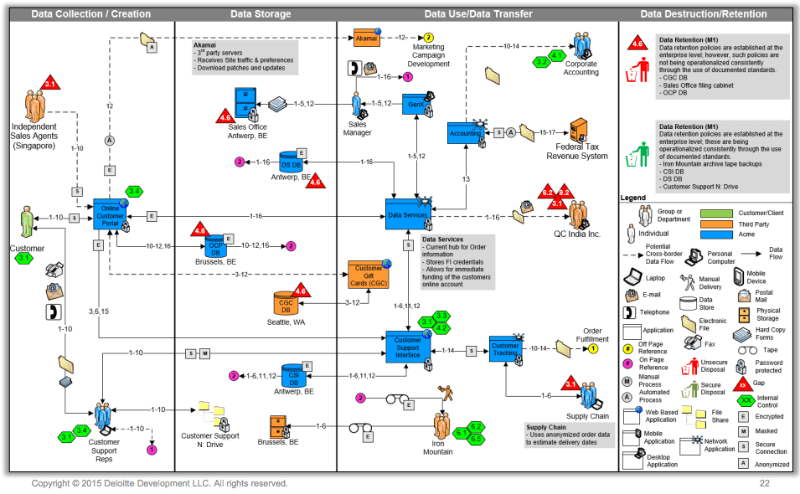
One of the keys to being successful with analytics is having a clear view of how all the data flows into and through your business.

Building a data map to show all the entry points, all the places where data is stored, who and how it is  accessed  and what filters might change your data is one of the things I can help you do.

This is step one towards data integration and is a great exercise for a half day in-house training/seminar for any business or organization that is struggling to get valued out of it’s big data.

Per Wikipedia… Data integration involves combining data residing in different sources and providing users with a unified view of these data. Data integration appears with increasing frequency as the volume and the need to share existing data explodes.

If you can imagine a map of your business in your mind you are half way there. The next step is to build a flow chart like the one below

datamap

If you have something like this then you are on ahead of the game.

If you don’t, let us set up some time to discuss how to get started.

Analytics Culture – The key to using analytics in a business is like a secret sauce. It is a unique combination of analytics talent, technology and technique that are brought together to enrich and empower an organization. A successful analytics culture is not easy to create, but DMAIPH can show you how. Contact DMAIPH now at analytics@dmaiph.com or connect with me directly so we can build a strategic plan to turn your company into analytics driven success story. 


The Four P’s (Principles) of Marketing

I was recently asked how I apply the Four Principles of Marketing to my business.

The 4 P’s being Product, Place, Price and Promotion.

When I was with Wells Fargo, I spent a significant portion of my time working with marketing teams to help analyze market opportunity, assess market penetration, and to measure marketing campaign success.

I learned quite a bit about how to attach metrics to each of the 4 P’s to determine our strategy.

When it comes to product, the most common metric is sales. How many products have been sold and how much revenue that translate too is a cornerstone of any business plan.

It can be just important though to blend in analysis that is not reflected by internal data alone. Knowing how your product stacks up to the competition and what your customers are saying about your product are much more challenging data points to capture.

As for place, the general data point most business decision-makers start with is how much sales activity comes out of a location or geographic area.

IMG_6912

Place can also be reflected in marketing channel; in-store, direct, online, etc. Decision-makers tie this concept to market place and always look within that place to determine marketing plans.

I also like to add demographic data to place to help understand overall opportunity and trends in how the market place is evolving.

Price is much more than just what it costs to produce and sell a product. Marketing expense must also be counted in the amount ultimately charged for a product. Price usually contain several components that can be analyzed to make sure price covers expense and allows for profit.

Again, I look to competitor data to help assess if the price we are charging is optimal. As a rule, you don’t want to be too expensive or too cheap when your customers have a choice.

Finally, when looking at promotion, its more than just where you sell your product and what marketing materials your use. Using the right delivery channel and leveraging your company brand also factor into the equation and should have metrics attached to them.

So, as you can see, marketing is more than just counting products sold, finding a place to sell the product, setting a price and beginning a promotion. For a good marketing analytics strategy, that is just the beginning.

An effective marketing analytics approach should have at least 10-20 data points to more accurately capture the things you need to know like how big is your market, how competitive is your product, how deeply have you penetrated your market, and what delivery options are the most effective ways to promote your product.

The 4 P’s of Marketing can easily be built into a marketing analytics dashboard where you see your key performance indicators and make swift, decisive business decisions.

Since setting up my business about 5 years ago, I have helped dozens of businesses get a better handle on their 4 P’s using marketing analytics.

Let me show you how we can do the same for your business.

Business Strategy with Analytics – Aligning a business strategy to drive an organization forward requires a robust analytics solution. Businesses who have good analytics tend to be much more profitable and efficient then ones that do not. DMAIPH has helped dozens of companies in both the U.S. and the Philippines with adding more data analysis in their business strategy. Contact DMAIPH now at analytics@dmaiph.com or connect with me directly to find out what we can do to help you align your business strategy with analytics.

Adding Three More Metrics to the Next 5-Year Plan

So, as year five winds down and I have reflected on the key metrics I established back in 2012, it seems the right time to add a few more data points to the mix.

For me, having metrics that you can measure against progress and use to make educated course corrections is the most important part of any business plan.

My first five-year plan was all about establishing myself as one of the top Analytics experts in the Philippines. Based on the number of Filipinos I have trained, the number of Filipino colleges and universities I have worked with and having established a profitable business, it is now time to think about how to expand my horizons.

Going forward the goal is not to just have one of the top analytics brands in the Philippines, but to expand that brand name outward. We will expand in terms of both geography and in terms of content offerings.

I love new things, so the sky is the limit, but I have these 3 things in mind.

The first new metric I will add will be number of trainings with partner speakers. I want to take analytics out of just being for analyst and find ways to use my gifts to empower and educate non analytics people as well.

To do this, we will partner with other innovative and progressive minded trainers and speakers here in the Philippines.

The second metric will be based on geography. I have given talks and trainings mostly in Metro Manila. On the average I have visited about one province a year to deliver a presentation or conduct a training.

Over the next 5 years we will plan activities outside not only Manila, but outside the Philippines as well. I already have one webinar lined up for a U.S. audience in February and will be looking for more places to talk about analytics. Sharing my passion with the world!

The third metric will involve revenue. I can’t imagine any business being successful and not having good analytics when it comes to increasing revenue and growing profits.

Originally the primary financial metric I cared about was net profit. Could I build a business based on analytics that could generate enough money for me to comfortably live on?

Now that we can positively answer that question with a resounding yes, the next question is can we sustain it?

When I started, I had one source of income, analytics training.

As of now we have revenue coming in from 4 sources of income; analytics training, management consulting, outsourcing and book sales.

I need to add at least 3 more streams of income over the next five years to reach my personal goal of having 7 streams of income.

The most likely source will be investing in side business that can generate income without my day to day involvement.

So, I have just doubled the key metrics I am tracking to measure the success of my efforts.

Over the next few years I will monitor the results to see if I need to make more course corrections to get me to the end goal of successfully having executed my second 5-year plan.

Stay tuned! It’s going to be even more of an adventure then the last five years!

Business Strategy with Analytics – Aligning a business strategy to drive an organization forward requires a robust analytics solution. Businesses who have good analytics tend to be much more profitable and efficient then ones that do not. DMAIPH has helped dozens of companies in both the U.S. and the Philippines with adding more data analysis in their business strategy. Contact DMAIPH now at analytics@dmaiph.com or connect with me directly to find out what we can do to help you align your business strategy with analytics.

Can Analytics Help a Sari Sari Store?

I had this interesting conversation earlier about analytics.

I started explaining to the person I was sitting next to what I do and he asked can analytics really help any business?

Of course I said yes.

He asked even a Sari Sari store?

For those of you who don’t know much about Sari Sari stores, let me tell you a bit about them.

By far the most common form of self-employment in the Philippines are small, family operated convenience stores. Called Sari-Sari stores, there are an estimated 1 million Sari Sari stores across the Philippines. Per wikipedia, this counts for an estimated 30% of all retail sales in the Philippines.

Sari-Sari, which is Tagalog for variety, are an important economic and social pieces of just about every Filipino community. Most are privately run, family owned and are operated from the front of the owners house.

Commodities are displayed behind a large mesh screen to both allow customers to see what is available and to prevent shoplifting. The most common goods sold are candy, snacks and other non-perishable food items. Cigarettes and mobile phone cards are also popular items for sale. Household needs like soap, detergent and cleaning supplies are also common. Some stores have small refrigerators to offer cold drinks like soda and beer.

Sari-sari stores generally have higher prices when compared to supermarkets which is a tradeoff for proximity to their customers. It is also common to buy single units of a product versus an entire package as paying more to meet a quick need is valued over planning and budgeting bulk purchase over the long term.

Some Sari Sari stores also offer credit to neighbors. Micro lending of this scale is wide spread and generally done under the rule that if the credit is not repaid, the store owner will report this to the local government officials.

Some Sari Sari stores barter goods and services with farmer, fishermen and other businesses.

Most Sari Sari store proprietors buy their goods at supermarkets then mark up the prices for resale (on the average 20%). In some areas, businessmen make act a middle man offering bulk products to the Sari Sari store.

It is my belief that most Sari Sari stores can benefit from a simple strategic business plan and some very basic analytics.

My understanding is that Sari Sari stores operate on a very tactical level with little long term planning and operate with little market awareness.

If I ever to consult with the owner of a Sari Sari store, my initial approach would be to develop a business strategy plan and build a basic analytics process to gather data and provide a proof of concept.

This approach would be broken into the following steps:

  1. Business Strategy Assessment – How do they conduct business?
  2. Competitive Landscape – Who do they compete with?
  3. Demographic Profile – Who are their customers?
  4. Market Assessment – How much upside is in their market?
  5. Inventory Analysis – How to they optimize inventory?
  6. Facilities Assessment – Are they getting the most of their location?
  7. Risk & Security Assessment – What risks do they face?

I will flesh out each of these steps in upcoming blog posts.

Once I have complied data from these 7 steps, I can develop a business strategy plan unique to the individual Sari Sari store.

After my presentation of the business plan, I can make a determination if they Sari Sari store will enter Phase Two of the plan.

I would work with the proprietor store for a set period of time in a consulting role to determine viability of operations and if they meet our program standards (detailed later in this document).

In addition to offering a consulting solution, through my company, I can also offer additional services including cash management, accounting, marketing, inventory and fulfillment assistance, and other solutions as they arise.

Its my experience that the busiest Sari Sari stores offer something unique. Some might have an ice cream maker, or a special dish they prepare, or some have home baked goods. Regardless, they generally have something that sets them apart from a store that just offers traditional goods.

So, the final piece of my involvement would be cross selling our unique products to Sari Sari stores in need of a unique product to build their business around.

After that consultation, I would expect that three things would happen:

  1. the Sari Sari store proprietor would have a better grasp of a strategic business strategy.
  2. the Sari Sari store would increase profits and
  3. the Sari Sari store would expand its customer base and build up loyalty with existing customers.

So, to get back to the question… how can analytics help a Sari Sari store?

By applying some lessons from the corporate world.

Dr. Data_Analytics in the Philippines

Analytics in the Philippines – The Philippines is at the center of the action when it comes to solutions to the global need for analytics. Blessed with a solid foundation of young, educated and English speaking workforce, companies around the world are look for Filipino analytics talent to fill analytics positions. DMAIPH was set up to facilitate these solutions and bring the talent and the business together. Contact DMAIPH now at analytics@dmaiph.com or connect with me directly so we can help you take advantage of this unique global opportunity.

 

My Blog Post on the Analytics of Measurement and Evaluation

I recently had the honor of writing a blog post for American University’s Measurement & Evaluation program.

The post is about using a business analytics approach to “effectively evaluate projects, programs and processes.” This is in a response to the fact that it is becoming increasingly essential to use big data and analytics to ensure organizational success.

Here is the link: http://programs.online.american.edu/msme/resource/measurement-and-evaluation-analytics

It is my hope that I can inspire readers to look for ways to bring new data into their projects, programs and processes, blend it with current data, provide more dynamic analysis and share more impactful results.

I will also be doing a webinar early next year entitled Its Not Longer Just Enough To Know. Where I will highlight some techniques and technologies that I use to empower more data-driven decision-making.

Facilitating a mastery of the fundamentals of analytics is what I do best.

All across the world, companies are scrambling to hire analytics talent to optimize the big data they have in their businesses. Though my company DMAIPH, I can equip students and their instructors with the knowledge they need to prepare for careers in analytics. Contact DMAIPH now at analytics@dmaiph.com or connect with me directly so we can set a guest lecturer date, internship, on-the-job training experience or other analytics education solution specifically tailored to your needs.

14045878_10154480087262425_4779154686875783746_n