The Analytics of Project Evaluation

When looking at how to use more analytics in program evaluation, let’s start by getting a standard definition.

Per Wikipedia, Program evaluation is a systematic method for collecting, analyzing, and using information to answer questions about projects, policies and programs,[1] particularly about their effectiveness and efficiency”.

This is very much like business analytics in how business leaders look at the analysis of business data to answer questions, identify opportunities and mitigate risks.

Program effectiveness can be measured many ways. Like how a cost-benefit analysis or market penetration report could be used by a company to assess the success of a new product or service.

Program efficiency can be measured using elements of Six Sigma or Lean. Looking for waste or defects in the end results of a project can lead to discoveries of poor implementation or biased data collection.

Another primary goal of project evaluation in both the public and private sectors, is providing stakeholders with information on “whether the programs they are funding, implementing, voting for, receiving or objecting to are producing the intended effect.”

To achieve this goal, you need a system to gather, analyze and report data. Like in any analytics project, the key is finding the right data and using it to answer questions, educate your audience and provide meaningful insight.

Answering questions like, “how much the program costs per participant, how the program could be improved, whether the program is worthwhile, whether there are better alternatives, if there are unintended outcomes, and whether the program goals are appropriate and useful.[2] will indicate the level of success the program achieved.

There are many analytics techniques like data blending to bring in supporting data form outside the program. Predictive models can show where the project would go if it continues to get funding. Data visualization can also be used to help illustrate findings that can be useful in program evaluation.

Just off the top of my head, I can see a lot of opportunity for the use of a business analytics approach to Project Evaluation. There is a lot of common ground in methodology and reporting, but I think bringing in some cutting edge business analytics to the mix would allow even more insightful and actionable project evaluation.

Let’s find out.

1, 2  https://en.wikipedia.org/wiki/Program_evaluation

Evaluators can learn from the ways that the corporate sector uses business analytics to understand, interpret, and display Big Data. Key aspects from the corporate sector that are useful for monitoring and evaluation include identifying what data is important, and finding ways to visualize it for consumption. In my upcoming webinar with American University on analytics solutions, I will be talking about how analytics is relevant to measurement and evaluation.

Webinar details:

February 15, 2017

1pm Eastern

Webpage with webinar registration links: http://programs.online.american.edu/msme/webinars

Analytics Education – Facilitating a mastery of the fundamentals of analytics is what DMAIPH does best. All across the world, companies are scrambling to hire analytics talent to optimize the big data they have in their businesses. We can empower students and their instructors with the knowledge they need to prepare for careers in analytics. Contact DMAIPH now at analytics@dmaiph.com or connect with me directly so we can set a guest lecturer date, On-the-Job Training experience or other analytics education solution specifically tailored to your needs.
Unlock the Power in Your Data Using Analytics – All Attendees Get A Copy of My Book!

E-mail us at analytics@dmaiph.com to register for the training or to request more information! 

By now just about everyone knows that there is almost limitless opportunity buried in their business data. The big question facing business analysts, leaders, managers, and owners is how do I unlock that potential.

For a lot of us, we just aren’t sure where to start.

Do we go out and hire an expert analyst or data scientist and hope they can make it all work out?

Do we buy a new business intelligence or data modeling software and hope our current team can figure it out?

Do we send our people to training so they can learn new ways to identify, inventory and integrate business data into our decision-making processes?

Well, successful companies do all three. They line up the talent, technology and technique to empower the business with solid analytics.

Hiring a new employee or brining in a consultant will help you address the lack of talent you have working with your business data. Curious people, adept at working with technology and being able to translate your business questions in to valuable insights is generally step one.

As you bring that new person into the fold though, it is just as important to make sure your team is ready to start using more data in their business processes. You can’t expect one person to fix it all, you need to open up your business culture to embrace more data-driven decision-making.

Once you have the talent in place then I suggest you focus on technique.

Invest in some training to get everyone on the same page. If you have a technological solution in mind, then have them trained on that too. So much time is lost because people tasked with analytics are under trained.

Then, when you have everything lined up. That’s when you spend on a software solution. New tools for data acquisition, storage, analysis and reporting generally fail if you don’t have the talent and technique in place first.

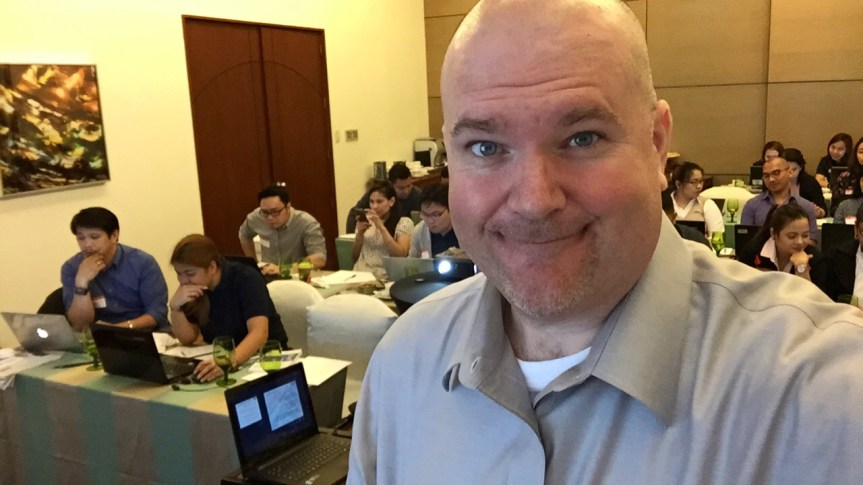
If you still aren’t sure how to get started, I will be facilitating a training class on February 21, 2017 at Discovery Suites in Ortigas.

I will help you come up with a analytics action plan to help you start taking advantage of the business data you have in order to increase efficiency and grow profits.

img_7737

Analytics Training – DMAIPH offers a wide range of analytics centric training solutions for professionals and students via public, in-house, on-site, and academic settings. We tailor each training event to meet the unique needs of the audience. If you need empowerment and skills enhancement to optimize the use of analytics in your organization, we are here to help. Contact DMAIPH now at analytics@dmaiph.com or connect with me directly to set up a free consultation on which of our DMAIPH analytics training solutions is best for you.

Measurement and Evaluation: Analytics and Data Driven Decision Making

Recently Worked on a paper for a school… interesting topic…Measurement and Evaluation Analytics and Data Driven Decision Making.

I will also be doing a related webinar this coming Feb 15 entitled Analytics & Data-Driven Decision-Making.

Webinar details:

February 15, 2017

1pm Eastern

Webpage with webinar registration links: http://programs.online.american.edu/msme/webinars

The ability to effectively evaluate projects, programs and processes requires a thorough understanding of analytics.

Analytics is generally defined as the discovery of patterns in data that provides insight and identifies opportunities.

Organizations that invest in analytics generally make much better business decisions then one’s that don’t.

In fact, IBM found that organizations who use analytics are up to 10x more efficient and 33% more profitable the ones who don’t.

A good analytics solution constructs a universal framework for collecting, analyzing and using data to determine project effectiveness and efficiency.

IMG_6912

As the amount of data available increases daily, the use of analytics is becoming essential to all levels of an organizational today.

This Big Data allows both deeper analysis but also requires more skill in getting to the right data.

By taking inspiration from the way corporations use business analytics to optimize their Big Data, our program measurement and evaluation processes can be greatly enhanced.

Bringing data together from a variety of sources and integrating the data into the decision-making processes, allows the empowerment of decision-makers to make much more intelligent choices.

When analytics driven leaders possess the practical assessment skills needed to evaluate projects bridging various sectors and industries, they are much more effective then ones that don’t.

In today’s information age, the quick and efficient measurement and evaluation of projects using analytics ensures success with corporate, non-profit and governmental organizations across various sectors and industries.

Analytics Education – Facilitating a mastery of the fundamentals of analytics is what DMAIPH does best. All across the world, companies are scrambling to hire analytics talent to optimize the big data they have in their businesses. We can empower students and their instructors with the knowledge they need to prepare for careers in analytics. Contact DMAIPH now at analytics@dmaiph.com or connect with me directly so we can set a guest lecturer date, On-the-Job Training experience or other analytics education solution specifically tailored to your needs.

Data Analytics Training on Feb 21

Did you know that most successful businesses have solid data analytics in place across their entire organization?

Organizations that invest in data analytics generally make much better business decisions then one’s that don’t.

In fact, IBM found a few years back that companies who use data analytics are up to 10x more efficient and 33% more profitable the ones who don’t.

By bringing data together data from across the business, companies can get real-time insights into finance, sales, marketing, product development and much more.

Data analytics enables each team within the business to collaborate, achieve better results and outsell the competition.

Join us on February 21, 2017 in Ortigas, and learn how to turn your business data into insightful and actionable analysis.

img_7737

Analytics Training – DMAIPH offers a wide range of analytics centric training solutions for professionals and students via public, in-house, on-site, and academic settings. We tailor each training event to meet the unique needs of the audience. If you need empowerment and skills enhancement to optimize the use of analytics in your organization, we are here to help. Contact DMAIPH now at analytics@dmaiph.com or connect with me directly to set up a free consultation on which of our DMAIPH analytics training solutions is best for you.

Why I Believe in the Philippines

About 5 years ago I decided to leave behind my analytics career with Wells Fargo, move 6,000 miles away and set up a new business in the Philippines.

My belief in the Philippines was fueled by two key factors.

One based on observation and one based on data. I imagine that when a person looks at life changing decisions like the one I made back in 2011, they tend to be heavy on what they see (and therefore feel) and not so much on what is not so easy to see (what the data suggests).

I knew I would like it in the Philippines. I don’t like being cold. I love being near water. I grew up around a lot of Filipinos so I am very comfortable being immersed in the culture. Filipinos by and large are nice, hospitable and easy to get along with. The basic needs in life would be meet for me if I lived in the Philippines.

However, I was not looking to retire in comfort like so many Americans who end up in the Philippines are motivated by. I was looking to set up a business. And not just any business but one I am passionate about.

My passion is analytics. Using data to drive more intelligent decision-making is something I know well. And I am good at talking about it. My deepest satisfaction comes from helping students and young professionals unlock the analyst inside of them.

The big question that I needed to answer with data though, was could I set up a business and make a living in the Philippines talking about analytics. Training, consulting, public speaking… would there be enough of it for me to pay the bills.

Based on the expected economic growth of the Philippines. Based on the young, tech savvy and English speaking work force. Based on the boom on the BPO industry. Based on the strategic importance of the Philippines. Based on the quickening demand for analytics talent against a shallow supply.

Every box checked off yes. The data pointed to one direction. Setting up an analytics business in the Philippines would be not only financially positive but would allow me to do what I do best. Be an analytics champion.

So that is why I believe so deeply in the Philippines. The emotional connection that comes from being in the Philippines combined with the opportunity so finely illustrated by the data and analysis.

With every step forward this belief is edified.

With every step backward, this belief is only strengthened.

Persevere. Keep going. Enjoy the success and live past the failures. Never give up and never surrender.

This is something that is special about the both my story and the story of the Filipino people.

I am blessed with being able to do what I love in a place where I am needed and can make a difference. It feels like destiny.

That is why I believe in the Philippines.


I was at the Big Data Analytics Conference 2016 – Ready for the Next One!

Had the honor of being a panel speaker this past November 15, @ the Big Data Analytics Conference 2016 @ Enderun Colleges in Manila.

It was THE analytics event of 2016!

I was part of a panel discussing the topic of “The Future of Big Data Analytics in the Philippines”.

Other topics included Making Big Data Work for You, Powering Effective Marketing through Analytics, Building and Managing Your Data Science Team and a whole lot more.

On 15th of November 2016, Enderun Colleges, together with Global Chamber® Manila organized its 1st Data Science Conference entitled “Big Data Analytics Conference 2016” with a theme of “Making Big Data Analytics Work for You.”

Stay turned for details on the next one, coming in June 2017.

IMG_6912

Joined by over 400 attendees, we dove into the deep world of Big Data Analytics.  Attendees came from the business, government and public sector, technical, and academic communities to discuss the trends, tools and opportunities big data analytics delivers in your respective fields. Industry experts from all over the Philippines openly shared their best practices and insights to show attendees who to become future leaders in a data-driven environment.

The conference tackled topics ranging from leveraging big data analytics, new business models and opportunities, empowering marketing through data, to understanding what the future holds for big data in the country.

Visit the website set up for the conference to learn more.

>> http://www.bigdataconferenceph.com

DMAIPH offers a wide range of analytics centric training solutions for professionals and students via public, in-house, on-site, and academic settings. We tailor each training event to meet the unique needs of the audience. If you need empowerment and skills enhancement to optimize the use of analytics in your organization, we are here to help. Contact DMAIPH now at analytics@dmaiph.com or connect with me directly to set up a free consultation on which of our DMAIPH analytics training solutions is best for you.

Using Data Analytics to Assess Work Ethic

When you oversee the growth of a team from 6 to 100 employees in just over a year like I have, one of the biggest challenges you face is keeping up with recruitment requirements. When in rapid expansion mode, it is easy to lower standards and fall into a “just fill the seat” mentality. When this happens, high attrition generally follows.

One way to try and curb high attrition rates is to get better at measuring candidate work ethic. For most people assessing the work ethic of candidates is something that seems very subjective and not something that is east to apply metrics too. And in with that assumption, you are missing some very easy data points to capture and use in being more analytical in your recruitment process.  Let me highlight three data points to capture in the recruitment process that have a strong correlation to work ethic.

  • Timeliness
  • Resume Quality
  • Preparation for Interview

We all make note of these items during the process, and often include them in the overall evaluation of the candidate. But rarely is anyone capturing these items as data and using it to help measure work ethic and use it to predict work ethic once employed.

Timeliness is simple. Where they early, on-time, late, really late or a no show for any of the interviews in the process. If people are early or on-time it’s a positive and can show a general behavior once employed. On the other hand if a pattern of being late or not showing up is already evident before being hired, why would you expect that to change once they are part of your team?

IMG_6912

One thing that is common here in the Philippines is dramatic excuses for being late or missing interviews. If you are or ever have done recruiting here, I am sure you can rattle of a long list of excuses; family emergency, death of a loved one, getting sick, and stuck in traffic being the ones I hear the most. Its easy to dismiss the excuse as a valid reason to be late or not show, but time and time again when we hire people who started like this, they don’t stick around. Putting a weight behind timeliness is extremely important. Over time you can track the attendance patterns of people you hired with low timeliness scores and I guarantee you that you will see a strong correlation between the two.

Resume Quality is also something that generally has a direct reflection on the candidate’s level of professionalism. If you are expecting someone to treat your business with respect and hard work, yet their resume is out of date, incomplete and/or full of typos, once again you are fooling yourself. Im sure we all think at some point the resume is just a resume and bad candidates can have good resumes and vice versa. Well if you do think that, then don’t you owe it to yourself to start tracking data to validate that. When you find you are mistaken, and bad resumes general equal bad employees, you can thank me. Come up with simple scoring system. Like an English teacher would grade a paper. Grade the resume and add the data to both your decision-making and your data analysis.

One of the deal breakers for me when I interview is how prepared is the candidate. When I ask them how did the hear about the job, and they say a friend told me to apply I get concerned. My follow up being did you research the company before coming here. When they say I didn’t. Its pretty close to an automatic fail. If a friend told them about the job, but they didn’t do anything to learn about the company it’s a clear sign they are not taking this serious. So why would I expect them to take their job serious once they start. Again come up with a simple scoring system to indicate how did they hear about the job, what kind of research did they do about the company and how much knowledge do they come in with about the job they are applying for.

So there, you go. That’s how you can add some powerful analytics to your recruitment process. Come up with you own measurements for timeliness, resume quality and interview preparation. Use them along side the tests and assessments and interviews, to build a more complete candidate profile. All track these data points over time to compare to data once they are an employee like schedule adherence, productivity and quality of work. I promise you, you will see strong correlations between the pre hire and post hire data.

HR & Recruitment Analytics – The recruitment and retention of top talent is the biggest challenge facing just about every organization. DMAIPH is a leading expert in empowering HR & Recruitment teams with analytics techniques to optimize their talent acquisition and management processes. Contact DMAIPH now at analytics@dmaiph.com or connect with me directly to learn how to get more analytics in your HR & Recruitment process so you can rise to the top in the ever quickening demand for top talent.


Why Analytics Projects Fail – #8: Lack of Resources

To start with a lack of resources should probably be called lack of time. Lack of time to design an effective strategy. Lack of time to find the right talent. Lack of time to get everyone on the same page.  We are all just too busy and have too much to do. We say lack of resources, but mostly we mean our team doesn’t have time.

A lot of times you hear about failures with analytics projects is because of lack of resources. When I hear about this, I always ask for a better definition of what is meant by lack of resources. Is it lack of leadership support, lack of funding, lack of strategy, lack of focus and vision, lack of talent? They are all often disguised as lack of resources.

In each of the previous seven blogs in this series I talked about a reason why analytics projects fail and since they can all fall under the boarder lack of resources, let’s do a quick recap.

  1. Lack of Focus – People are not on the same page
  2. Lack of Vision – People don’t know where this is going
  3. Lack of Management Support – People don’t know who to follow
  4. Lack of a Champion – People have no one to cheer lead
  5. Lack of Organizational Support – People don’t really care
  6. Lack of Funding – People don’t want to waste money on this
  7. Lack of Talent – People can’t do the job

There are all people driven reasons for why your project may be in danger of failing. They are all fixable using people skills. This is why I often argue a good analyst who can communicate is worth more than a great analyst who cannot. The reasons why analytics projects most often fail is human, not technological.

65732ad3-ba3f-47c3-af82-fa2a6c65bdd7-large

In the end, for whatever of the reasons above, your project is in jeopardy, it will be up to you to show people why they should invest the time needed to get things back on track.

You have to push for focus, share the vision, educated your managers, become a champion, gain organizational support, secure funding and align the right talent to make things work.

I have been in this situation numerous times. In every situation the one constant variable that changed possible failure into a success was me. Bring a truly great analyst means showing people how your project will be a solution to their problems and is well worth their investment of time.

When you do this, they you won’t be in a place where lack of resources dooms your analytics project.

#IamDMAI

Analytics Culture – The key to using analytics in a business is like a secret sauce that fuels Data-Driven Decison-Making. It is a unique combination of analytics talent, technology and technique that are brought together to enrich and empower an organization.

A successful analytics culture is not easy to create, but DMAIPH can show you how. Contact DMAIPH now at analytics@dmaiph.com or connect with me directly so we can build a strategic plan to turn your company into analytics driven success story.

Why Analytics Projects Fail – #6: Lack of Funding

Of all the reasons an analytics project can fail, one of the hardest to fix is lack of funding.

There are numerous causes for funding issues with an analytics project, 3 of the most common being unexpected budget cuts, shift in strategy, and lack of understanding.

When you are faced by unexpected budget cuts, which has happened to me several times, the best thing you can do is try and reconfigure your project so that as least pieces of it can still be completed. The idea here is to do what you can until more money is made available.

Having a well thought out plan that is scalable will help you tremendously. One time when I had a million-dollar dashboard project cut because of budget cuts, I peeled back some features and redesigned others to come up with a new plan for 10% of the original cost. That was approved. And over the next year I had pretty much added everything cut back piece by piece. Bottom line, if the company needs a new analytics tool, its up to the analyst to make sure they get it by being flexible and smart.

AAEAAQAAAAAAAAKAAAAAJDY4MWQ2MDA3LTk5OWEtNDlhNi1hODEyLWE1Y2Q2MzlmZTQwYg

A shift in strategy happens a lot in business. So many internal and external forces are at play, a lot of times what once seemed a priority, can quickly become an afterthought. With analytics this can happen a lot when people fall back the we can just get by with what we have for now mentality. In today’s business world where success is driven by data, this can be crazy but it still happens everyday.

The best way to react to strategy shifts are for you to adapt your project to the new strategy and keep it both relevant and necessary. A good analyst can always find a way to offer analytics solutions for any part of the business. Use this adaptability to show your project can evolve with the needs of the business and you will likely still get funding, albeit for a new set of users.

The third reason lack of funding can happen, is actually a lack of understanding. Often finance decisions are made based on assumptions and predictive modeling… highly susceptible to being wrong if some important variables are missed. This has happened to me a number of times. But after conversations and educational moments with the finance team, the true value and ultimate savings of my analytics projects led to the lack of funding being mitigated.

Some things you can try when your project is impacted by a lack of understanding will take us back to the concept of enchantment. Make sure they like you and understand what value you and your analysis adds to the team. Often this can be a hard thing to quantify in a budget. Make sure you are showing how this project benefits others and helps the business as a whole… build trust. Third, make sure the project you are championing will make a difference, show that difference and educate on the need for that difference, in short show them you are doing this for a great cause.

There are countless reasons for lack of funding to become a roadblock for your analytics project, and countless ways to remedy this. If you are faced with one and need some help getting things back on track, connect with me and we can come up with a way to get your project funded again.

Analytics Culture – The key to using analytics in a business is like a secret sauce that fuels Data-Driven Decison-Making. It is a unique combination of analytics talent, technology and technique that are brought together to enrich and empower an organization.

A successful analytics culture is not easy to create, but DMAIPH can show you how. Contact DMAIPH now at analytics@dmaiph.com or connect with me directly so we can build a strategic plan to turn your company into analytics driven success story.

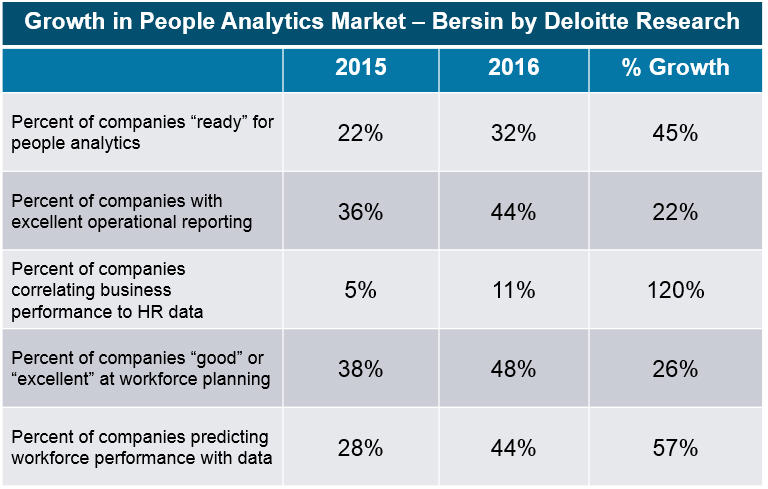
Explosive Growth In People Analytics

https://www.jibe.com/ddr/telling-the-story-of-a-data-driven-future-for-talent-acquisition/

Came across this really interesting table about the explosive growth in HR Analytics.

data-driven-human-resources

(Source:  Deloitte Human Capital Trends 2015 and 2016, 3,300 and 7,100 respondents, respectively) 

The blogger who shared this, Mike Roberts, stated “With advancements in technology, as well as more awareness of the power of data, this is starting to change. Since 2014, we’ve seen an incredible transformation in the way talent acquisition professionals view data. And research from leading analyst firms has been backing that up.”

This is exactly why I have been doing HR & Recruitment Analytics training classess. There is a growing number of options out there, so make sure you get the bang for you buck you are hoping for.

IMG_6912

Connect with me if you want to know more about my approach to using data to drive decision-making in HR and Recruitment. I have recently published a book, Putting Your Data to Work, that can be your guidebook to how to get more people analytics in your HR and Recruitment processes.

HR & Recruitment Analytics – The recruitment and retention of top talent is the biggest challenge facing just about every organization. You really have to Think Through The Box to come up with winning solutions to effectively attract, retain and manage talent in the Philippines today. DMAIPH is a leading expert in empowering HR & Recruitment teams with analytics techniques to optimize their talent acquisition and management processes. Contact DMAIPH now at analytics@dmaiph.com or connect with me directly to learn how to get more analytics in your HR & Recruitment process so you can rise to the top in the ever quickening demand for top talent.