Finding Data For A Case Study In Outsourcing

Taking a business projects I did a few years ago and turning it in to a case study exercise for a group of students.

Project Goal – To determine the viability of outsourcing 3-5 engineering jobs (Project Engineer and Draftsman) from the home office in Rotterdam to the rep office in the Philippines.

Current Situation – There is currently a rep office in Makati that has the space to add at least 3-5 engineering jobs. This study will determine if outsourcing these positions will result in cost savings as well as add value to the overall company operations.

This study will provide answers to three questions:

Is Makati an viable outsourcing solution?

What is the average salary for talent in Makati?

Is anyone else outsourcing along similar lines?

Recommendations – We recommend the following actions to ensure the overall success of an outsourcing transition.

  1. Conduct a thorough cost-benefit analysis comparing current and future salaries and benefits of staff in Rotterdam and Manila.
  2. Post a job listing to see what kind of candidates apply and screen them as future hires.
  3. Market to OFWs as they return from aboard as they are the most likely pool of experienced candidates.
  4. Contract a local Subject Matter Expert who can be hired as the Team Lead who can take the lead in filling out the staff.

Analytics Outsourcing – DMAIPH has successful set up Filipino analytics teams for over a dozen U.S. based businesses. Offering both virtual and office based teams that specialize in problem solving using data, new technology and analytics techniques is our strength. Finding and empowering analytics talent is increasingly challenging, but we have it down to a science. Contact DMAIPH now at analytics@dmaiph.com or connect with me directly to learn more about how to set up an analytics-centric team in the Philippines.

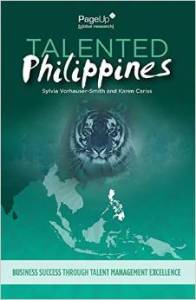
Talented Philippines! A Really Helpful Resource For BPO Professionals

http://www.talentedphilippines.com/

Came across this new book and just ordered it. Im pretty excited about it.

In a nutshell… Talented Philippines answers critical questions for multinational corporations currently operating in, expanding or establishing operations in the Philippines.

Some of the key questions tackled in the book:

What are the critical business issues for multinationals in the Philippines?

What are the key talent management implications?

How have the Philippine’s best organizations addressed those challenges?

talented philippines

Talented Philippines was created to address the critical business and HR issues impacting the Philippines today as the country continues to transform. Based on the responses of more than 650 business and HR practitioners at the forefront of HR innovation, thought leadership and implementation in the country, the book explores the people management priorities across small, medium and large enterprises operating in the Philippines. Combined with numerous case studies that highlight the experiences of leading organizations and insight from a wide cross-section of public and private sector enterprises, Talented Philippines offers global best practices for multinational companies looking to leverage the great promise of this flourishing nation and its talented workforce.

This is well timed as the last year has seen a quickening of the talent war in the Philippines as the issue of a skills mismatch between job seekers and employers has really come to a head. It is a must read for anyone involved in the BPO industry in the Philippines.

However, there is one thing that based on what I see so far, is missing form this book. The fact that no matter how awesome a company’s HR practitioners are… they are still trying to find talent when it is truly lacking in a natural state. As a companion piece to this book, would be solid advice on how, when, where and why to invest more in training… especially pre-hire training and training geared towards internal advancement.

No matter how great an HR team is, they still have to get the right people in the door to apply and that seems to be the issue… because even in country of 90 million there is just not enough Filipinos with the skill sets and/or aptitude for a BPO career right now. The demand will only be met if the supply is given more training, more preparation and more data to make good career decisions.

Dr. Data_Analytics in the Philippines
If you like this book, you will probably enjoy my new book as well. Putting Your Data to Work is a guidebook designed to help Filipinos get started with building a good analytics culture in their business. Connect with me if you are interested in purchasing a copy for only 600 PHP.

HR & Recruitment Analytics – The recruitment and retention of top talent is the biggest challenge facing just about every organization. DMAIPH is a leading expert in empowering HR & Recruitment teams with analytics techniques to optimize their talent acquisition and management processes. Contact DMAIPH now at analytics@dmaiph.com or connect with me directly to learn how to get more analytics in your HR & Recruitment process so you can rise to the top in the ever quickening demand for top talent.

Being A Great Analyst > Attribute #2: Visualize Your Data

Most people learn by seeing something… that’s definitely true when it comes to using data. They not only learn more, but data visualization also a quicker sharing of information and also enhances communication.

Here’s an example. My management team was discussing how to enhance our coaching efforts with the team and since each of my direct reports has a different area of responsibility; production, quality and schedule adherence, they were having trouble agreeing on which analysts needed the most coaching. They each produced reports that were stand alone documents that would be shared via email or dropbox.

So I suggested we build a simple business dashboard. A business dashboard looks something like this:

It’s a simple collection of visuals built on top of a data file.

I created a simple Google docs spreadsheet and shared it. Each of the key performance indicators used to evaluate employee success was given a column and I put each employee a row. I then had each of my directs input the relevant data points and quickly we had a rudimentary business dashboard and I now I have a much more in synch management team.

img_7526

Simple analytics solutions like this are at the fingertips of any business. You just need to know when, where, and how best to implement them. Something so simple as a place to share data is so often overlooked by even the most successful businesses.

Analytics Culture – The key to using analytics in a business is like a secret sauce. It is a unique combination of analytics talent, technology and technique that are brought together to enrich and empower an organization. A successful analytics culture is not easy to create, but DMAIPH can show you how. Contact DMAIPH now at analytics@dmaiph.com or connect with me directly so we can build a strategic plan to turn your company into analytics driven success story.

Being A Great Analyst > Key Attribute #1 > Know A Lot

Often you here people in business talk about how it’s more important to be either a master at one thing or a jack of all trades. When it comes to being a great analyst, you see many who are great because they have mastered their subject or a certain analytics tool. On the flip side you see many great analysts who seem to know a lot about a lot and are proficient across multiple subjects and/or can use many analytics tools. So which is better?

From both my experience and my personal perspective, analysts who know a lot about a lot are rarer and more valuable to a business. Based on both an accumulation of knowledge and the ability to work in various environments, analysts who are considered to jack of all trades kinds are in general great analysts.

IMG_6912 However, I have also found that most business actually find more value in master of certain type of analysis work or someone who is great at using a certain tool. Specialization is something that is on the surface very impressive as it shows discipline and competency in a certain subject. They know a lot about their area of expertise and are recognized as such.

Occasionally you can even come across analyst who are both knowledgeable about a lot and even more knowledgeable about a specific subject matter. Now that is a rare breed.

So, no matter what type of analyst you are or want to be, the bottom line is you need to constantly read and connect and expand your knowledge… you need to know a lot if you want to be great!

Analytics Culture – The key to using analytics in a business is like a secret sauce. It is a unique combination of analytics talent, technology and technique that are brought together to enrich and empower an organization. A successful analytics culture is not easy to create, but DMAIPH can show you how. Contact DMAIPH now at analytics@dmaiph.com or connect with me directly so we can build a strategic plan to turn your company into analytics driven success story.

The Mission of the DMAI Family of Companies: Creating More Analysts

I just wanted to share this blog post from the World Bank as it addresses exactly what we at DMAIPH have been saying and are trying to address; the need for more high end skills training in the Philippines.

12072012489

8 of 12 from this training batch found jobs with BPO companies within a couple weeks of completing the two day Introduction to Analytics training!

http://blogs.worldbank.org/eastasiapacific/node/3096
======================================

The Philippines faces an enormous jobs challenge. Good jobs—meaning jobs that raise real wages or bring people out of poverty—needed to be provided to 3 million unemployed and 7 million underemployed Filipinos—that is those who do not get enough pay and are looking for more work—as of 2012.

In addition, good jobs need to be provided to around 1.15 million Filipinos who will enter the labor force every year from 2013 to 2016. That is a total of 14.6 million jobs that need to be created through 2016.

Did you know that every year in the last decade, only 1 out of every 4 new jobseeker gets a good job? Of the 500,000 college graduates every year, roughly half or only 240,000 are absorbed in the formal sector such as business process outsourcing (BPO) industry (52,000), manufacturing (20,000), and other industries such as finance and real estate.

Around 200,000 new job seekers find work abroad, and around 60,000 will join the ranks of the unemployed, go back to school, or rely on financial support from family for the time being.

This still leaves 600,000 new jobseekers who have no choice but to work in the low-skill and low-pay informal sector in rural and urban areas.

Higher growth can provide more Filipino workers with good jobs. With sustained GDP growth of 7 percent per year and the removal of constraints in fast growing sectors (e.g., addressing skills shortages so that the BPO industry can accelerate its annual growth from 20 to 30 percent), the formal sector will be able to provide good jobs to around 2 million people in the next 4 years – that is double the current figure.

Even so, the majority of Filipino workers will still be left out. By 2016, around 12.4 million Filipinos would still be unemployed, underemployed, or would have to work or create work for themselves in the low pay informal sector such as selling goods in sari-sari stores (small retail stores) and peddling on the streets, and driving tricycles and pedicabs.

Addressing this jobs challenge requires meeting a dual challenge: expanding formal sector employment even faster, while rapidly raising the incomes of those informally employed.

To create good jobs for the 12.4 million, a comprehensive package of reform is needed to create a business environment that is conducive for the private sector to create jobs and increase human capital. Reforms that will secure property rights, open the economy to more competition, simplify business regulations, and increase investments in health, education, and infrastructure are needed.

But will the private sector have the incentive to invest and create jobs for the 12.4 million Filipinos who are left out of the fast growing formal sector?

What do you think is key to creating more and better jobs in the country? Creating jobs for millions is a daunting task, but perhaps we can agree to start somewhere.
call_center

Analytics Training – DMAIPH offers a wide range of analytics centric training solutions for professionals and students via public, in-house, on-site, and academic settings. We tailor each training event to meet the unique needs of the audience.

If you need empowerment and skills enhancement to optimize the use of analytics in your organization, we are here to help. Contact DMAIPH now at analytics@dmaiph.com or connect with me directly to set up a free consultation to learn which of our DMAIPH analytics training solutions is best for you. 

13 Months in the Philippines – Lesson 2 – June 2012 – Training is My Passion

522Pasay City, Metro Manila, Philippines

I did a trial run of the Introduction to Analytics training back in December 2011 with some interns and business partners, which helped me prepare a two-day training class. I launched the two-day class with the target of fresh grads in late May 2012, and I conducted several of the classes over the course of the next six months. It was in June however that I really figured out that I was an amazing trainer and that I could enchant an audience by talking about analytics.

I have always liked being in front of an audience and being empowered to talk about things I am passionate about it. I get a huge rush of adrenaline that can last for several hours. This calling originally led me to traditional classroom teaching but after several misadventures post graduate school, I took the job with Wells Fargo to pay the bills. Fifteen years later I left Wells to do training full time. In the interim I did a lot of ad-hoc and informal training in various way at Wells although I never had trainer in the title.

Per Wikipedia, a Trainer is a person who educates employees of companies on specific topics of workplace importance. While a teacher is simply who provide schooling for pupils and students. I have found that I am exactly in the middle. And there are very, very few people who can train like a teacher. People who can provide hands on, useful content in a short time frame, but deliver it in way that has the empowering effect of taking an actual academic style class are worth their weight in gold. These are the great trainers or favorite instructors who end up becoming speaker and lectures. They have both the ability to train on skill and teach on knowledge. This is what I learned about myself last June.

From an analytics standpoint, I learned a lot about how to construct a training program. Budget, Recruitment, Venue Management, Staffing, Marketing, etc. I learned a lifetime worth of lessons in a few months. I was able to look at each of these topics and find data to compare what I was doing to other benchmarks. Am I efficient, am I cost-effective, am I marketable. Lots and lots of data to bring into my analysis of how to grow my business.

Analytics Tool > Microsoft Excel > http://office.microsoft.com/en-us/excel/

Analytics Concept > Big Data > http://en.wikipedia.org/wiki/Big_data

YouTube Resource > http://www.youtube.com/watch?v=jhjuyH4RTrM&feature=share&list=PL7EC252B253873D5D

My Analytics Story – My passion is solving problems by bringing together the best talent, cutting edge technology and tried and true methodologies. DMAIPH is all about empowering people towards better Decision-Making through the use Analytics and business Intelligence. This is what I do best. Contact DMAIPH now at analytics@dmaiph.com or connect with me directly for a free consultation about getting more analytics into your career and your business.