Whatever Happened to Free Wifi for Everyone? – Analytics @ TriNoma

As I sit here enjoying a Big Mac, I have been thinking about WiFi access here in the Philippines.

15220172_10154796376872425_148074038239599249_n.jpg

Everyone knows its bad overall. Connectivity is a big challenge for the average Filipino. Although for me it seems better then it used to be.

I enjoy the benefit of a Globe postpaid plan now, but for a long time I used prepaid load like most Filipinos do. Its a definite frustration in life.

In the past few years malls across the Philippines, have been offering free WiFi but its a crap shoot at best, often down more the it seems to work. To balance load SM malls offer a free hour of WiFi and then you are cut off.

This all has me thinking about why it has been so hard to provide better wifi, at least in the malls. It would encourage more mobile payments and help the slow, slow migration away from cash.

It could also make the lines go faster.

Regardless though, it wouldn’t take a lot of effort to analyze the user data, optimize bandwidth and offer a better wifi experience, especially in the smaller lifestyle malls.

It could also be a boon to retailers who offer online promotions to cut back on the number of staff passing out promo flyers as well as the cost of the marketing materials itself.

As time passes, I fully expect that to enter mainstream but as of now WiFi in the malls here is not anywhere close to where it has the potential to be.

A simple cost/benefit exercise using available data  coupled with some usage and capacity analytics would most likely expedite that adoption.

At least thats is where I would start if I was consulting with a mall about how to both improve customer satisfaction and drive more retail profits to electronic models.

Thanks Bam for the topic idea.

Analytics in the Philippines – The Philippines is at the center of the action when it comes to solutions to the global need for analytics. Blessed with a solid foundation of young, educated and English speaking workforce, companies around the world are look for Filipino analytics talent to fill analytics positions. DMAIPH was set up to facilitate these solutions and bring the talent and the business together. Contact DMAIPH now at analytics@dmaiph.com or connect with me directly so we can help you take advantage of this unique global opportunity.

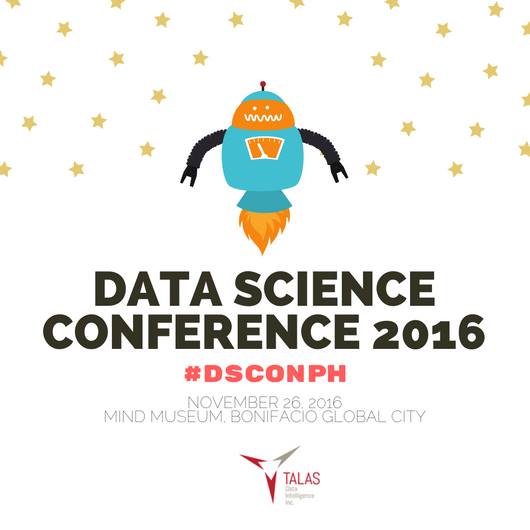
Data Science with Talas at the Mind Museum

Really looking forward to meeting some of the top minds in Data Science in the Philippines this Saturday, November 26th at the Mind Museum in Taguig.

talas

The speaker line up looks awesome and the networking opportunities will be plenty.

I understand the event is sold out, but I believe there is a waiting list. Contact my good friends at Talas to find out more.

This has been the best month yet for analytics and data science in the the Philippines. The sky truly is the limit!

Hope to see many of you there!  #DSCONPH and #DSCON2016

talas2

News & Events- DMAIPH is a highly engaged leader, sponsor and participant in analytics events across the U.S. and the Philippines. As an Analytics Champion I write, blog, speak and lecture about analytics in a wide variety of forums. I authored several publications on analytics including my latest book, Putting Your Data to Work. Contact DMAIPH now at analytics@dmaiph.com or connect with me directly to learn more about where I will be talking about analytics next.

Where’s the Analytics? The Analytics Challenges of Malls in Metro Manila

I spend a lot of time in malls when I’m in Metro Manila.

Business meetings at coffee shops.

Staff meetings at restaurants.

Getting exercise why walking to hit my FitBit goal.

I see a lot of movies.

And I am not alone.

Malls are where everyone goes. To beat the heat, to meet up with friends, to conduct business, and of course to shop and eat.

Given that I spend so much time in malls, I think a lot about the analytics that can take place behind the scenes.

Or in many cases, the apparent lack of analytics.

Now don’t get me wrong. I love the Philippines.

The heart and spirit of the Filipino people is the primary reason I set up a business here.

But I do sometimes wonder, how much better things could be in my adopted home if there was more widespread use of analytics in decision-making.

The malls are full of great examples of decisions that are pretty much done without much data analysis.

At least that is how it appears to me.

So in this series of blog posts I will discuss several topics that come to my mind when being in a mall in Metro Manila and how I would go about using analytics to investigate my observations.

Analytics in the Philippines – The Philippines is at the center of the action when it comes to solutions to the global need for analytics. Blessed with a solid foundation of young, educated and English speaking workforce, companies around the world are look for Filipino analytics talent to fill analytics positions. DMAIPH was set up to facilitate these solutions and bring the talent and the business together. Contact DMAIPH now at analytics@dmaiph.com or connect with me directly so we can help you take advantage of this unique global opportunity.

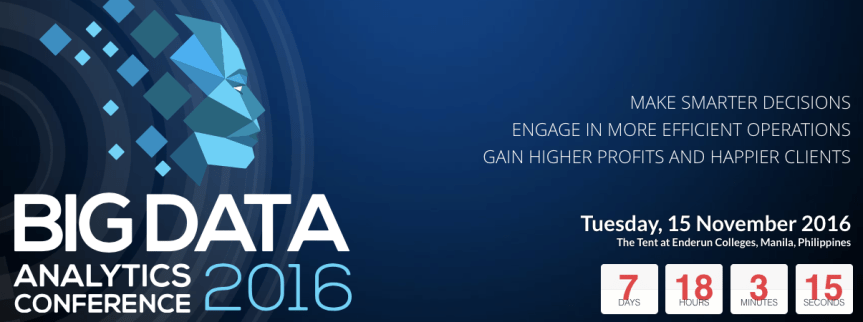
My Take Aways for the Big Data Conference 2016

Had a blast at the Big Data Conference at Enderun College yesterday. Lots of things to discuss in upcoming blogs, but here are a few takeaways that I notated.

There is a strong hunger for a national umbrella organization for analytics, big data and data science.

Engagement at the C-Level of Filipino companies outside the IT-BPO sector to eliminate the biggest adoption roadblock.

Restart of the Government, Industry and Academia collaboration on analytics needs to happen.

More hands on experiential learning for both students and faculty involving the industry.

Both traditional training and certification models as well as mentoring and self-guided training opportunities.

The speed and consistency of the internet is a huge threat.

img_0121

Advocacy for fixing culture before spending on costly technology and high priced talent.

Conversion of up to 70% of Customer Facing BPO Workers to doing analytics and data science as a hedge against automation and political decisions.

Im convinced that a lot of good can come out of the conference as the analytics and data  science industry is at about the same point the call center industry was 10 years ago.

However, given the global demand for data savvy talent and the exponential proliferation  of data, we need todo in 3-5 years what the BPO industry did in 10.

More to come!

News & Events- DMAIPH is a highly engaged leader, sponsor and participant in analytics events across the U.S. and the Philippines. As an Analytics Champion I write, blog, speak and lecture about analytics in a wide variety of forums. I authored several publications on analytics including my latest book, Putting Your Data to Work. Contact DMAIPH now at analytics@dmaiph.com or connect with me directly to learn more about where I will be talking about analytics next.

Philippines Analytics Review – 2016

There is no doubt that analytics is now a big deal in the Philippines.

Now that 2016 is in the books, I can proudly say I spent the better part of the past year helping Filipino get more analytics in their businesses.

My primary goal for the year has been meet, so let’s recap how that happened…

My involvement in empower Filipino companies, students and professionals to make data-driven decisions has renewed my passion for being a top name brand for analytics in the Philippines.

As I think back the Recruitment Analytics training that DMAIPH and Sonic Analytics put on early in the year, I think about how HR professionals are now actively looking to get more analytics in their business.

The simple fact is there are more white collar, professional staff jobs out there then there are qualified candidates. And its only getting worse. Recruitment Analytics is the only way to stay on the cutting edge.

This was even more evident when I spoke in front of close to 100 HR professionals at a workshop called HR & Recruitment Analytics Techniques put on by my good friends at Ariva Events Management.

We spent the day talking about how get IT when it comes to recruitment. The 3 I’s of analytics; identify, inventory and integrate data as well as the 3 T’s; talent, technology and technique needed to make sense to the data.

I once again joined Ariva for their annual Philippines HR Congress. One of the central themes of the conference attended by over 1000 HR professionals was Aligning HR Strategy with Analytics.

HR teams are sitting on a gold mine of insightful data, but in most cases have not been able to take advantage of it.

Big Data Analytics has come so fast and furious, that it takes a lot of effort to become analytics champions and try and move a company culture towards more data-driven decision-making. This was top of mind for all the attendees.

At the same time I have been doing speaking and public training, CHED has been training teachers on how to teach business analytics. Their efforts to explain the Fundamentals of Business Analytics to faculty and students will go a long way in making the Philippines a significant analytics hub.

I have been honored to have helped several schools in adding my two centavos to the discussion about analytics careers for fresh grads.

Another moment of great personal pride came when I published my newest book, Putting Your Data to Work. This guidebook is designed to help Filipino professionals who aren’t too familiar with analytics, get started.

In early November, I was part of a panel discussion at the Big Data Conference at Enduran college. I was and still am super excited about the topic, The Future of Big Data Analytics in the Philippines. This is my passion, turning students and young professionals interested in analytics on to the huge opportunity they have in front of them.

A week later I conducted a Data Analytics seminar with DMAIPH and Sonic Analytics. The primary goal here was to demonstrate how having a thorough understanding of the data environment in a business can lead to huge successes.

Next up was a job fair at Trinoma mall put on by Job Quest PH. My goal here was to recruiting a few young professionals looking to get started in analytics as DMAIPH is looking for some marketing analysts.

A few days later I attended a Data Science event being set up by my good friends at Talas. This free event saw a meeting of the minds of a lot of thought leaders in data science as well as industry leaders in employing analysts and data science. Pretty exciting stuff.

The final 2016 event on my schedule was another full day training organized by my key business partner Ariva. The topic, Big Data and Business Intelligence, which proved to be a great opportunity to help people gain a stronger handle on analytics and how they can be an analytics champion in their business.

IMG_6912

2016 turned out to be my most successful year yet. Analytics in now mainstream and I love it.

Analytics in the Philippines – The Philippines is at the center of the action when it comes to solutions to the global need for analytics. Blessed with a solid foundation of young, educated and English speaking workforce, companies around the world are look for Filipino analytics talent to fill analytics positions. DMAIPH was set up to facilitate these solutions and bring the talent and the business together. Contact DMAIPH now at analytics@dmaiph.com or connect with me directly so we can help you take advantage of this unique global opportunity.

 

Analytics for the Small Business

Analytics is about looking for patterns in data to help answer questions. Most businesses use analytics to help ensure more data-driven decision-making.

No matter the size, scale or scope, every business generates a wealth of business data. Every business has an opportunity to uses that data to drive more intelligent decisions.

The primary people responsible for conducting analytics on the massive amounts of data we have today are analysts. Analysts are skilled in using various technologies and methodologies to identify, inventory and integrate large amounts of data quickly.

The term analytics can often be used interchangeably with statistics and data science. What separates analytics from disciplines like statistics and data science is generally the speed of the analysis and the focus on solving business problems.

The most common form of analytics is business analytics that are generally used by owners, senior leaders and decision-makers to investigate problems, validate assumptions and to guide strategic planning. As a generalist, business analysts can help in a number of areas of the business.

Business analysts are therefore the most common type of analyst, especially in a small business. If you do a job search on the title analyst, as many as half the posting will likely be business analysts. However, analytics can be used in an almost limitless number of business functions in specific areas like HR, recruitment, marketing, finance, and so on. Each one can have its very own analyst.

Analysts have been around a long time, but recent technological advances have both allowed us to produce and capture more data as well as give us the ability to analyze immense data sets quickly. Thus we are amidst a huge boom in the applications of analytics and the need for analytics talent across the globe. Analytics is something just about every business leader is trying to figure out how to use more effectively in their business. To add to our challenge, the demand for good analysts is booming just as fast as the explosion in big data.

As a result, there is a huge shortage of people who are skilled in working with data to answer questions and solve problems. This is why you have seen the number of analyst job postings increasing at an amazing rate. In the first few chapters of the book we will discuss the quickening demand for analytics talent and why it is so hard to find good analysts, especially at the small business level.

If you are a business leader, manager, owner, and/or executive are not actively trying to surround yourself with analysts and if you are not infusing an analytics centric culture in your business, you will most likely soon see your business fail.

1075177_10151826941667425_1417094118_n

A small business needs analysts to make sense of big data, manage the storage of the data, and know when to use which of the 3 types of analytics (descriptive, predictive, and prescriptive). To be effective, analysts need to have business intelligence tools to create data visualizations and build business dashboards.

If you need an analyst or want to be trained in analytics, connect with me and I can show you how to get started.

Small Business Analytics – The field of small business analytics is just starting to blossom as companies are looking for more data-driven decision-making to prosper in the age of Big Data. DMAIPH is at the fore front of providing analytics training, consulting and outsourcing options to small businesses. Contact DMAIPH now at analytics@dmaiph.com or connect with me directly to set up a free consultation on how to get more analytics in your small business.

The Analytics of Project Measurement

Peter Drucker perfectly summed up why big corporations rely so heavily on analytics when he said “What gets measured, gets managed.”

A successful analyst is able to remove the noise when analyzing data and isolate what matters to his or her organization.

With most companies collecting large amounts of data, you need to be both talented and disciplined to pinpoint key insights that can yield value.

In the corporate world, business analytics is widely use to track, analyze and report Key Performance Indicators (KPIs).

KPIs are rolled up to senior leadership to drive business strategy, identify and mitigate risk and to optimize operational productivity.

This approach is very similar to the way projects in the Measurement and Evaluation are tracked, analyzed and reported.

I would define measurement simply as the act of measuring to ascertain the impact, size, level of success, etc. of a specific data set.

There are many components to measuring projects making sure the project is on schedule, stays in scope, is not over budget, the quality of work is up to par, the end goal of the project remains relevant, and finally if the project is ultimately deemed a success.

A foundation in analytics will contribute to a more optimal and efficient process of measurement. Like businesses do with KPIs, you should start will identifying that are the key measurements your project will be judged on.

Once you know those data points, then figure out how to collect them, analyze them, and report them.

IMG_6912

At each step you can look for new data, validate existing data and blend data from other sources to add value to your measurement efforts.

Once you get to the reporting phase you can look for cutting edge techniques in data visualization and interactive reporting like dashboards to help educate and empower your audience.

That is how it is done in the corporate world where business analysts boil down massive amounts of big, often unstructured data into a few bullet points that allow decision-makers to take action.

When it comes to the Measurement of Project Evaluation, understanding various analytics solutions can make all the difference.

Analytics Education – Facilitating a mastery of the fundamentals of analytics is what DMAIPH does best. All across the world, companies are scrambling to hire analytics talent to optimize the big data they have in their businesses. We can empower students and their instructors with the knowledge they need to prepare for careers in analytics. Contact DMAIPH now at analytics@dmaiph.com or connect with me directly so we can set a guest lecturer date, On-the-Job Training experience or other analytics education solution specifically tailored to your needs.

Survey Results: Devote More Time For Data Analysis

Most Analysts Spend 50% of Their Time Finding Data

% Finding Analyzing Reporting
10 12% 6% 33%
20 14% 10% 39%
30 20% 31% 24%
40 6% 14% 2%
50 31% 16% 2%
60 14% 18% 0
70 0% 0% 0
80 0% 2% 0
90 0% 0 0
100 0% 0 0
       

Most analysts spend most of their time finding data.

Among other thing this can mean they are setting up data mining or data gathering process to look for the data or it can mean they reviewing their data for relevancy.

My experience is that when you spending this much time on the finding the right data phase it reflects a poorly structured data environment or a unfamiliarity with the data needed.

Dirty data is also a big time waste.

Experience is the best solution for challenges with finding data. The fact the finding phase % is so high speaks to both the explosion in the 3 V’s of Big Data (Velocity, Volume and Variety)  as well as the number of analytics newbies.

To me this should be no more than 20% of your time.

I expected finding data would be the biggest chunk, but was surprised that over 50% of my analyst connections using at least 40% of their time finding data.

If you have one day to answer a key business question, this means you are using your entire morning just finding the data.

When you get back from lunch you haven’t even started the actual analysis yet and the clock is ticking.

Data is based on a survey I sent to 3,000 of my LinkedIn connections who are either analysts or work closely with data and analysis.

Analytics Survey – DMAIPH conducts quarterly analytics surveys to collect data on current trends in analytics. We specialize in surveys that assess analytics culture and measuring how aligned an organization is to using data and analytics  in its decision-making. Contact DMAIPH now at analytics@dmaiph.com or connect with me directly to find out more about how DMAIPH can conduct surveys to help you assess the analytics culture in your business.

Quick Analytics Career Question

Greetings to You My Valued LinkedIn Connection,

I was talking with a young professional just getting started in his analytics career. During our conversation we discussed what is most important to being a great analyst. With that in mind, I’d ask you to share your thoughts.

In your opinion, of the following ways to learn about analytics, which one has been the most important in your career path?

  • Formal Education – A degree or certificate in an analytics related field.
  • Self-Learning – Using trial and error and online resources.
  • Subject Matter Experts – Being trained/mentored by an expert.
  • Seminars/Workshops – Attending events to acquire new knowledge.
  • Technical Training – Attend training on specific technical areas.

Thanks for sharing. As always I will roll up all the replies I get and blog about it.

Dan Meyer, Analytics Champion, http://www.dmaiph.com

img_7526

Analytics Survey – DMAIPH conducts quarterly analytics surveys to collect data on current trends in analytics. We specialize in surveys that assess analytics culture and measuring how aligned an organization is to using data and analytics  in its decision-making. Contact DMAIPH now at analytics@dmaiph.com or connect with me directly to find out more about how DMAIPH can conduct surveys to help you assess the analytics culture in your business.

Most Analysts Spend 50% of Their Time Finding Data

Most analysts spend most of their time finding data.

% Finding Analyzing Reporting
10 12% 6% 33%
20 14% 10% 39%
30 20% 31% 24%
40 6% 14% 2%
50 31% 16% 2%
60 14% 18% 0
70 0% 0% 0
80 0% 2% 0
90 0% 0 0
100 0% 0 0
       

In fact, most analysts I know spend 50% of their time finding data.

Among other thing this can mean they are setting up data mining or data gathering process to look for the data or it can mean they reviewing their data for relevancy.

My experience is that when you spending this much time on the finding the right data phase it reflects a poorly structured data environment or a unfamiliarity with the data needed.

Dirty data is also a big time waste.

Experience is the best solution for challenges with finding data. The fact the finding phase % is so high speaks to both the explosion in the 3 V’s of Big Data (Velocity, Volume and Variety)  as well as the number of analytics newbies.

To me this should be no more than 20% of your time.

I expected finding data would be the biggest chunk, but was surprised that over 50% of my analyst connections using at least 40% of their time finding data.

If you have one day to answer a key business question, this means you are using your entire morning just finding the data.

When you get back from lunch you haven’t even started the actual analysis yet and the clock is ticking.

Data is based on a survey I sent to 3,000 of my LinkedIn connections who are either analysts or work closely with data and analysis.

Analytics Survey – DMAIPH conducts quarterly analytics surveys to collect data on current trends in analytics. We specialize in surveys that assess analytics culture and measuring how aligned an organization is to using data and analytics  in its decision-making. Contact DMAIPH now at analytics@dmaiph.com or connect with me directly to find out more about how DMAIPH can conduct surveys to help you assess the analytics culture in your business.