Why Analytics Projects Fail: #1 – Lack of Focus

Lack of focus is common reason analytics projects fail. Keeping a focus on any project can be a challenge for companies that are not well organized. If you are an analyst or trying to champion analytics in your organization and are up against a lack of focus, I have some ideas for you.

First off, size really isn’t a factor when it comes to the organizational culture towards being organized. In some cases size makes the problem more apparent, but size can also mean more resources, so in most cases its really not a serious issue.

There is generally a strong correlation be the way data is handled in a business and how organized the company is in other ways. Lots of paper, manual processes and clearly define process flows may look organized, but it’s highly unlikely they deliver the type of data leadership really needs.

Lack of focus often happens when leaders seem overwhelmed and say they don’t have time to dedicate to things like analytics. The first thing you need to figure out is are people resources really stretched too thin or is it more a cultural issue where being too busy is more of a badge of honor.

The best way to deal with overworked teams is to start putting data around what they do every day and come up with solutions to improve time management and delegation.  Few people can truly say they have extra time, but everyone can say they need to figure out how to manage time better. A good analytics solution does just that.

Few people can rationally explain why their job would be harder if they had more analytics.  So it’s not too hard to get people to buy into the concept of analytics, but to get them to buy into the actual practice you need to be part salesman and part storyteller.

You need to show them the value putting a greater focus on your analytics project will bring to both the business as a whole and to each individual involved in the project. Besides showing data to champion the use of more data, you need to tell stories about how its helped in other places. You need to get them to envision how much better life will be once your project is complete.

Lack of focus can also come when the project is not well thought out of you get scope creep… when additions are made to a project that start distracting people form the original goal of the project. It is hard to stay focused when you don’t see focus in the project itself.

The final point I’ll make is that you also need visible and consistent buy in from the person(s) in charge. If they are not advocating for analytics, then your project will never get the focus from stakeholders and project team members you need then you will fail.

11756770_934770113231654_1677809504_o

Analytics Culture – The key to using analytics in a business is like a secret sauce that fuels Data-Driven Decison-Making. It is a unique combination of analytics talent, technology and technique that are brought together to enrich and empower an organization. A successful analytics culture is not easy to create, but DMAIPH can show you how. Contact DMAIPH now at analytics@dmaiph.com or connect with me directly so we can build a strategic plan to turn your company into analytics driven success story.

Turning Data Owners Into Data Resources

One of the biggest challenges I hear about when I do public trainings is how to get people who are stingy with their data to share it.

My answer is always the same… buy them a doughnut.

Seriously, when I reflect back to what made me a great analyst when I was with Wells Fargo, one of the biggest reason was I made sure all the data guys liked me.

Just about every company has someone who likes to keep their data close. Sometimes it is a result of security risks. But most of the time it is because they just don’t like to share. It is also possible they just don’t like someone on your team. Whatever the reason, you have to get them to lower the gate and let you in to play with their data.

From my perspective, I generally see a few types of data gate keepers who have very different reasons to keeping you out of their data playground.

  1. They are afraid to share the data, because they know the data is not 100% trustworthy.
  2. They are afraid to share the data, because they worry you will use the data to do things they can’t.
  3. They are afraid to share the data, because they had a bad experience with you or someone like you.
  4. They are afraid to share the data, because you play for a different team.
  5. They are afraid to share the data, because you won’t need them anymore.
  6. They can’t share the data because it’s a security risk.

1075177_10151826941667425_1417094118_n

In every case, even the last, engagement is the key. Share with them why you need the data, demonstrate how much more awesome your analysis and reporting will be if you can include their data.

One of the advantages I have enjoyed in my career is that I really get along with people. I make an effort to be likeable and trustworthy. To be a great analyst, you will need to be likeable and trustworthy too.

And I kid you not, buying them a doughnut and dropping it off at their cube works more often than you might imagine.

The key to using analytics in a business is like a secret sauce. It is a unique combination of analytics talent, technology and technique that are brought together to enrich and empower an organization. A successful analytics culture is not easy to create, but DMAIPH can show you how. Contact DMAIPH now at analytics@dmaiph.com or connect with me directly so we can build a strategic plan to turn your company into analytics driven success story.
DMAIPH Helps Companies Revitalize Their Business (2 of 3)

The second type of company we have helped successfully is  one looking to revitalize. Profits are down, customer flow has shrunk, product and services aren’t selling like they used too. We can offer our business intelligence package of customer insights, demographic profiling, competitive landscaping and market assessment. We can also offer virtual staffing support to assist with marketing, scheduling and follow-up.

I’d like to share a story about one of our clients who came to us at a crossroads with his business. This client is a chiropractor who was trying to figure out what to do with his business. Having lost 40% of his patient base and seen his revenue drop by 60%. He was at a cross road. He had tried a couple of consultants, spent lots of money and was still heading the wrong direction.

In talking with him, it was clear he had lost touch with his market and was not able to offer a very compelling solution to bring new clients in. We suggested we do a series of business intelligence exercises to help understand more about his business, the opportunity around him and come up with some potential solutions.

3.6.1

Because he didn’t have a lot of money to waste, we suggested using a team of interns to help keep costs down. It would be a great analytics exercise for the doctor’s practice and for the eager young minds we had been working with.

We dove into the project and came up with the following resources; we built a competitive landscape, constructed a demographic profile and put together a customer insights report. Each one using public data, analysis done by the interns with my guidance and direction, and used Tableau to roll all the data and findings into a dashboard to show the doctor how he’d gotten to the point he was currently at.

After identifying some action items based on our assessment, we then helped the doctor but some into practice and helped him turn his business around successfully.

By employing very curious minds, giving them direction on where to find data and how to analyze it and sharing the data with an open-minded end user, we successfully validated my approach to using analytics to help a small business.  We have done the same for a half dozen other small businesses and can do the same for yours.

big_data_analytics

Analytics Consulting – As a founding member of Gloabl Chamber Manila, DMAIPH specializes in a variety of analytics consulting solutions designed to empower analysts, managers and leaders with the tools needed for more data-driven decision-making.

We have helped dozens of companies get more analytics in their business. Contact DMAIPH now at analytics@dmaiph.com or connect with me directly so we can tailor an analytics solution made just for your unique requirements.

Hybrid Staffing Solutions – It’s Not Just Outsourcing

One of the challenges of my business is that it is not simple to explain to someone.

We are not a straightforward outsourcing company.

I don’t work with clients who are just looking to save money by sending jobs overseas.

Instead I offer a hybrid staffing solution. And what is that exactly?

First off I specialize in basic analytics. The types of clients we take on have a need for someone to analyze something in order to answer questions and provide solutions. We don’t do traditional customer service, we are not tech support and we don’t take on many advanced analytics projects.

If someone comes to me asking about predictive analytics models, the blending of big data sources or data science, I am happy to consult with them long enough to find a good match with a company who deals in these things. But it’s not what we focus on.

We are good at things like analyzing social media content, public data mining, building and maintaining business dashboards, conducting demographic research and gather competitor data. We use Tableau and Excel. We help people who have systems in place, they just need assistance with maximizing their value. This is what I teach my team.

We are a niche business partnering with companies who have a specific need.

3.6

Our clients are small to medium sized businesses in growth mode. I’ve worked with both small mom and pop businesses and big corporations. They both have limitations to our business model. Our clients all have an analytics centric culture, they just don’t have the resources to optimize and grow the business completely in house.

Another difference between what we do and what traditional outsourcing companies offer is that most of our team is home based. As a general rule, I don’t like the office based model when working with talent from the Philippines. Running an office team in the Philippines is very complicated due to the labor laws and competitive market. It’s us much easier to attract top talent at an affordable price by setting up virtual teams.

In the end, my success has primarily been because we find ways to merge the culture of the client with the team in the Philippines. We don’t look and feel like most outsourced teams, because we integrate the new team into the client’s culture.

So now you have a better idea of why I say it is somewhat of a challenge to explain our model. We offer hybrid staffing solutions… a Philippines based, virtual team set up to mirror the client culture who offer a variety of analytics and back office business services.

Maybe it is not as hard to explain after all.

nalytics Outsourcing – DMAIPH has successful set up Filipino analytics teams for over a dozen U.S. based businesses. Offering both virtual and office based teams that specialize in problem solving using data, new technology and analytics techniques is our strength. Finding and empowering analytics talent is increasingly challenging, but we have it down to a science. Contact DMAIPH now at analytics@dmaiph.com or connect with me directly to learn more about how to set up an analytics-centric team in the Philippines.

Q4: Can you please describe the current state of analytics in the Philippines? – Part 2

So the last blog post gave us the history. Now let’s cast an eye on the future.

Over the past year or so I have started to see a significant effort from data science and analytics professionals come together to address some of the challenges outlined in my last blog post.

In short, the way higher education and the government has approached the need for analytics talent is simply to little to late to meet the needs of many businesses.

Everything they are doing helps, but in the end the world is desperately looking at the Philippines to do with analytics what it did with customer service. To become a center of capable, long-term and affordable talent.

With taking customer service calls, it was a natural fit given that most Filipino college graduates have a foundation in English. With analytics and data science it has not been so easy. While many Filipino have the underlying course work in coding, database management, computer science, etc… they are not getting enough exposure to data-driven decision making, business intelligence tools,  and more advanced things like machine learning, prescriptive analytics and blending big data from diverse data sources.

I don’t want to sound too pessimistic, things are moving quickly but it is generally the multinationals driving things forward. They have the clients, they have the need and so they go out and find people and train them. That’s why 3 years ago hardly anyone in the private sector was offering analytics training, now you see more and more options all the time. They are generally expensive and narrow in focus, but they are opening up huge opportunities for data loving Filipinos to get into upwardly mobile and financially rewarding careers.

I belong to a couple of newly founded organizations of data scientists and analysts who meet on a regular basis to share knowledge, support each other’s ideas and build a community with the goal of using data to helping both the Filipino to fill these open jobs and for the Philippines to begin to use more data in decision-making so we can solve the big issue problems important to all of us.

It’s a pretty exciting time.

10256713_275221292688289_6652823653462957603_o

So where next?

Given that the Philippines is one of the youngest countries in terms of average age on the plant and the youth are incredibly communal and very tech savvy, I have found great success in training batch of Filipino fresh graduates in basic analytics. Of the 200 or so trainees I have personally trained, most of them now have jobs with analyst in their title.

I have also seen a lot of talent quickly go from novice to expert using applications and doing coding in relatively short periods of training. In many respects the approach to analytics is more vocational then academic allowing for quicker training.

Beyond these strength, you can expect more partnerships between the government, higher education and big business to offer training and career pathing.  The success of the BPO industry is really the driving force to add employees who can do the tasks of an analyst. The huge surge in job postings demonstrates this quickening trend.

Finally, the reason I see a bright future for analysts and data scientists in the Philippines is the simple fact that Filipinos gravitate to under filled career paths, they push themselves to get the skills to fill those jobs.  You see it in the Middle East oil fields, in sailors and seamen in just about every ship at sea, you see it with overseas workers across the planet, and you saw it happen with call centers.

And that is exactly why I set up my business in the Philippines. Here are some of the analytics solutions we offer:

The Fundamental of Business Analytics – Business Analytics is the application of talent, technology and technique on business data for the purpose of extracting insights and discovering opportunities. DMAIPH specializes in empowering organizations, schools, and businesses with a mastery of the fundamentals of business analytics.

HR & Recruitment Analytics – The recruitment and retention of top talent is the biggest challenge facing just about every organization. You really have to Think Through The Box to come up with winning solutions to effectively attract, retain and manage talent in the Philippines today. DMAIPH is a leading expert in empowering HR & Recruitment teams with analytics techniques to optimize their talent acquisition and management processes.

Contact DMAIPH now at analytics@dmaiph.com or connect with me directly to learn how to get more analytics in your Business or your HR & Recruitment process so you can rise to the top in the ever quickening demand for top talent.

Q4: Can you please describe the current state of analytics in the Philippines? – Part 1

Let me tackle this question in two parts. The history major in me demands we look at how we got to where we are now before we talk too much about where we are going.

To start, both the appreciation for and the use of analytics has grown tremendously over the past few years. When I first started thinking about setting up a business in the Philippines back in 2011, hardly anyone knew much about analytics. Big banks, large call centers, multinational corporations and only the top schools were even talking the concept.

It was a challenge to fill my initial training classes due to lack of general awareness. Even at industry events and conferences it was rare to hear much about the idea of using data to drive business decisions.

Doing a search on the top job board in the Philippines back in 2012 for the jobs with analyst in the title netted about 1,000 job postings on any given day.  The average salary was some here around 30,000 PHP a month. It was a challenge to find good talent and those who could do analytics were all gainfully employed.

It wasn’t until 2013 that I stated seeing other analytics training options and those were just ones being done by IBM to meet the CHED (Commission on Higher Education) requiring the implementation of a six class elective tract in business analytics. The was accompanied by the launching of Analytica, and IBM backed effort to push the Philippines towards being more a viable option for analytics outsourcing.

At this time a job search for analyst would bring back about 1,500 jobs. Salaries were starting to rise for analysts as well with the market average getting closer to 50,000 PHP.  Still not a lot of public training or analytics centric organizations around then.

About the same time I started getting invited to schools on a regular basis to lecture about analytics to IT, CompSci and Management students. For the most part they had no idea of the career opportunities out there for those with analytics talent. I consulted with several schools on how to implement the CHED memo and how to prepare their students for analytics careers.

In 2014, an analyst job search was yielding closer 2,000 open jobs. The average salary climbed north of 50,000 Pesos for an experience analyst. I did a lot more trainings, being able to routinely fill a class of people hungry to learn more about analytics and how it could help them in their jobs.

The most in demand analytics skills up to this point where many centered on management reporting, production analysis and workforce management. Most analysts used some kind on proprietary database to store data and did just about all their analysis in Excel.

By 2015, analytics was finally in the mainstream.  Job posting now routinely called for specific skills sets in programming languages and business intelligence tools. Multiple organizations made up of analytics professionals started coming together. The number of jobs open hit 2,500 on any given day and salaries for really good analysts hit 70,000 PHP a year.  By this time, many outsourcing companies focused on setting up team of analysts to offer analytics as an outsourcing option.  Big data jobs and even data scientist positions started showing up in large numbers.


So here, we are now in early 2016. The sky is the limit when it comes to Filipinos with analytics talent being able to enjoy good career growth and make substantial salaries. The schools are now starting to churn out talent with analytics careers in mind. Things look great on the supply side of analytics talent and the market growth opportunity for businesses offering analytics is huge.

An additional complexity in the analytics world is the vast number of tools out there to gather, store, analyze and present data. Although IBM is by far the biggest player in training people, they are not the universal solution when it comes to the methodologies and technologies people use every day.

The biggest challenge today is that the demand for analytic talent dwarves the actual current and near term talent supply. The global need for not just analysts, but also data scientists has quickened to a point where catching up for the Philippines seems almost impossible.

hrcloudblog-967x380

HR & Recruitment Analytics is the application of talent, technology and technique on business data for the purpose of extracting insights and discovering opportunities. DMAIPH specializes in empowering organizations, schools, and businesses with a mastery of the fundamentals of business analytics.

The recruitment and retention of top talent is the biggest challenge facing just about every organization. You really have to Think Through The Box to come up with winning solutions to effectively attract, retain and manage talent in the Philippines today. DMAIPH is a leading expert in empowering HR & Recruitment teams with analytics techniques to optimize their talent acquisition and management processes.

Contact DMAIPH now at analytics@dmaiph.com or connect with me directly to learn how to get more analytics in your HR & Recruitment process so you can rise to the top in the ever quickening demand for top talent.

20 Questions with Dan Meyer about the Fundamentals of Analytics.

Recently I was asked to put together an FAQ about analytics. Based on my experiences from training people how to better use analytics, these 20 questions are the ones I most commonly get asked.

  1. To start can you provide us with a basic overview of what is analytics?
  2. Can you tell us what makes you an analytics guru?
  3. What are some of the current trends in analytics?
  4. Can you please describe the current state of analytics in the Philippines?
  5. What are some basic strategies an analyst can use to find the right data at the right time?
  6. Can you provide some tips on how to manage data?
  7. What exactly is data science and why the rapid rise of data scientists?
  8. Here something a lot of us are wondering, what exactly is big data and how can we use it?
  9. Can you please describe the concepts of storing data in a data ware house?
  10. Please talk about how, when and why we use should descriptive analytics?
  11. Can you next describe how to best use predictive analytics?
  12. Next please explain when and how we can use prescriptive analytics?
  13. A lot of us want to know what is business intelligence and how does it add value to analytics?
  14. What is data visualization and how does it help drive better decision-making?
  15. What is a business dashboard and how is it used in a business?
  16. Can you tell us more about current trends and hot new tools in social media analytics?
  17. Many of us work in recruitment or HR. What are some best practices and technologies used in HR and recruiting?
  18. Can you please talk about recent developments in higher education on how to train more analysts?
  19. How would you describe your approach to teaching analytics?
  20. So in conclusion can you explain a little more about your own method for using data to drive better decision making?

Each day for the next several days, I will take each question and elaborate and share with you my own personal FAQ on the Fundamentals of Analytics.

coverpicture1

The Fundamentals of Business Analytics – Business Analytics is the application of talent, technology and technique on business data for the purpose of extrating inights and discovering opportuniites. DMAIPH specializes in empowering organizations, schools,  and busiensses with a mastery of the fundamentals of business analytics.  Contact DMAIPH now at analytics@dmaiph.com or connect with me directly to find out how you can strengthen your business analytics fundamentals.


Add Staff in The Philippines With DMAIPH

Our team has a proven track record in meeting the outsourcing objectives of the small and medium sized businesses. We offer a full suite of enterprise solutions, industry leading technology, and talented team of managers and support staff to ensure our clients a smooth, secure and dependable outsourcing experience.

Whether your outsourcing goal is to retain customers, increase revenue, reduce service costs, or break into new markets, we have a solution suitable for your business. We have the capabilities to take on a wide range of outsourcing services, but specialize in the following:

  • Data Entry – Encoding large volumes both hard copy and electronic data sources
  • Competitor Intelligence – Market Research including pricing and competitive date
  • Customer Insights – Using surveys via email, online survey tool or Facebook
  • Demographic and Sales Data – Public Data Mining of government and public record web sites
  • Building Reports and Dashboards using Tableau Public

DMAIPH employs both virtual and office based staff, all of which have call center or BPO experience and are well educated professionals. We offer flexible pricing and competitive rates that no matter who we slice it, will save your business money and give you more bang for your buck.

IMG_1849

Analytics Outsourcing – DMAIPH has successful set up Filipino analytics teams for over a dozen U.S. based businesses. Offering both virtual and office based teams that specialize in problem solving using data, new technology and analytics techniques is our strength. Finding and empowering analytics talent is increasingly challenging, but we have it down to a science. Contact DMAIPH now at analytics@dmaiph.com or connect with me directly to learn more about how to set up an analytics-centric team in the Philippines.

Dan… Stick To The Plan

Having one of those days we all have once in awhile… where you invested so much time and energy into a plan, but you feel a need to change the plan.

For some it is comes with not playing well by rules. The more rules the less freedom and the less sense of  having control.

For others it may be the plan not longer fits where their life has evolved.

And then there are some who just like changing things. Mixing them up so they don’t stagnate and get bored.

Me, I’m all three.

I often hear the term serial entrepreneur… people who start things up and when the business reaches a certain point of maturity, they move on.

Never thought that one fit me too well. Im not really the cut bait and move on, I just like adding new things to what I am already doing.

I also think a lot about my super high expectations… since it is so hard to keep up with me, just about everyone tires and slows down eventually. Its impossible to expect the average person to stick to my plan, which makes it hard for me to stick to it.

workhard

However, at this point I have built something special. The company still needs a lot of work. The business plan needs to evolve faster than it has. We need to patch some holes in the boat. But overall, DMAIPH is in a pretty good spot.

So this is one of those “Stick To The Plan, Dan” days.

Look at the data, fight off the wanderlust (at least for now) and carry on.

Change is coming soon, I crave that change and Hope is just around the corner… but not today.

Work on payroll, add something to the book, blog…

Business Strategy with Analytics – Aligning a business strategy to drive an organization forward requires a robust analytics solution. Businesses who have good analytics tend to be much more profitable and efficient then ones that do not. DMAIPH has helped dozens of companies in both the U.S. and the Philippines with adding more data analysis in their business strategy. Contact DMAIPH now at analytics@dmaiph.com or connect with me directly to find out what we can do to help you align your business strategy with analytics.

Outsourcing For Expertise Is The Way To Go

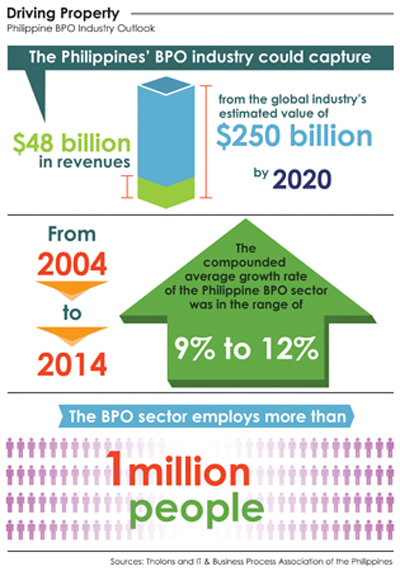
Increasingly, both large and small companies are engaging with specialized service providers as partners to their business goals. As we see in the visual below, the Philippines is still amidst a boom in this phenomena.

The continued rise in outsourcing is due to a companies’ decisions to focus more on their core strengths. In general, service providers concentrate on one or more specialized activities that the sponsor company doesn’t wish to do or doesn’t have as broad in-house capabilities to perform. We see a lot of this with our current client line-up here in DMAI.

However, in additional to taking on tasks that the sponsor companies view duties for specialty providers, it is also now becoming more of the overall business strategy to integrate both businesses rather than you the service provider as a patch.

It’s actually a long-term business model to truly partner on delivery solutions, and as a result, sponsor companies have built strong relationships with providers upon whom they can rely to contribute to their business goals in a manner that complies with both their quality and vision—yet without the need for redundant supervision.Again, this is a model DMAI has been successful at implementing with U.S. based clients.

Providers like DMAI, must be able to engage in a hunt for  talent in order to guarantee expertise and quality. They need to be able to locate the very best talent in a given region and business function in order to provide their sponsor-clients with the best-in-class service those sponsors are paying for.

This line of thinking, outsourcing for expertise is the way to go for medium sized businesses in the U.S. looking for an outsourcing solution with smaller BPOs in the Philippines.

township03-052115

Big corporations can outsource entire business lines to big BPOs. Small businesses can outsource specific functions to virtual assistants. But for medium sized companies, looking to find like minded partners, they need to be paired up with service providers who are able to both integrate into the business and find the talent to grow the business.

Analytics Outsourcing – DMAIPH has successful set up Filipino analytics teams for over a dozen U.S. based businesses. Offering both virtual and office based teams that specialize in problem solving using data, new technology and analytics techniques is our strength. Finding and empowering analytics talent is increasingly challenging, but we have it down to a science. Contact DMAIPH now at analytics@dmaiph.com or connect with me directly to learn more about how to set up an analytics-centric team in the Philippines.