13 Months in the Philippines – Lesson One – Finding the Right People

Lesson 1 – May 2012 – Finding the Right People

Makati, Metro Manila, Philippines

I took a couple of trips to the Philippines in early 2012 to lay the ground work before committing 100% to moving there lock, stock and barrel. When I was there, one of the things I did was set up some interviews for my first BPO Elite employee.

elite-strategy-hi-res-21.jpg

Now don’t get me wrong, I ended up with an amazing employee who would become one of my best friends. But the process itself had some serious flaws. Let me break them down. And even though I have extensive experience in recruitment and hiring, I made many of the same mistakes in the process that most managers make. They put it on themselves to do it all, they are the only ones in on the decision-making, and they don’t really look at the available data to help them.

When recruiting. I found out the true power of LinkedIn. I networked with a couple dozen candidates, and narrowed it down to six to interview based on e-mail conversations before I left the US. When I arrived, I set up phone screenings with the six and ended up then conducting two final interviews. Pretty standard stuff and thanks to LinkedIn, all the candidates where qualified to be my very first employee, a recruitment specialist. However, I did all this myself. And even though I have partners and an assistant back in the US, I took it on myself. That’s lesson #1, you cant always do everything yourself. It takes up a lot of time and it makes others think you don’t need or want your help. Next time I do this, I need to delegate and be more inclusive.

The next thing I did wrong was that I didn’t have one of my partners interview with me. I based my decisions on my gut. Now as an analyst, I am kicking myself about this, but as a first time business owner… its a very common mistake. There is tons of data that shows that candidates hired after interviews with more then one person as much as a 100% chance to stick around longer than those interviewed solely by one person.

540

The final lesson that comes to mind is that I didn’t do a very good job of understanding the data available when it comes up to the recruitment industry in the Philippines. After being there a while and gathering data and insights, I over paid, I over promised and I over recruited. I hired two, at way more than the market price and I gave them pretty favorable terms. All things that more research would have uncovered.

So In the end it worked out, I got a great candidate who stuck with me thru thick and thin. I just wish I would have hired me the analysts to do the prep work for me the business owner. Hehe!

Analytics Tool > LinkedIn > http://www.linkedin.com

Analytics Concept > Marketing Analytics > http://en.wikipedia.org/wiki/Marketing_analytics#Data_and_analytics

YouTube Resource > http://www.youtube.com/watch?v=6jDjeNJrN14&feature=share&list=PL7EC252B253873D5D

My Analytics Story – My passion is solving problems by bringing together the best talent, cutting edge technology and tried and true methodologies. DMAIPH is all about empowering people towards better Decision-Making through the use Analytics and business Intelligence. This is what I do best. Contact DMAIPH now at analytics@dmaiph.com or connect with me directly for a free consultation about getting more analytics into your career and your business. 


13 Months in the Philippines

Updated 12/10/16…

I wrote this 4.5 years ago. As my 5 year plan to become a name brand in analytics in the Philippines comes to a close, I thought it a good time to select on the lessons of my first year. So I will repost these lessons from what seems like a lifetime a goal to see what I have truly learned from my adventures. 

After having a month of vacation, I been able to do a lot of reflecting on my 13 Months in the Philippines. My plan is to share with you some of the life lessons I learned from the experience. I had an amazing time, getting to live my professional dream and impacting hundreds of people. I also learned as many important lessons in my personal life as well. And since its an analytics blog, I will also include some analytics insights as well.

Introduction
Lesson 1 – May 2012 – Finding the Right People
Lesson 2 – June 2012 – Training is My Passion
Lesson 3 – July 2012 – Growing the Business
Lesson 4 – August 2012 – Mother Nature Strikes
Lesson 5 – September 2012 – Cracks in the Pavement
Lesson 6 – October 2012 – You Cant Go Home Again
Lesson 7 – November 2012 – Flying Solo
Lesson 8 – December 2012 – Holidays in the Philippines
Lesson 9 – January 2013 – New Beginnings
Lesson 10 – February 2013 – The Future is Bright
Lesson 11 – March 2013 – Missed Opportunities
Lesson 12 – April 2013 – The Wheels Come Off
Lesson 13 – May 2012 – Exit Plans
Epilogue

At the bottom of each blog post you will see links to various analytics tools, concepts and YouTube videos to help add more color to my experiences.

Hope you like it enough to follow along!

My Analytics Story – My passion is solving problems by bringing together the best talent, cutting edge technology and tried and true methodologies. DMAIPH is all about empowering people towards better Decision-Making through the use Analytics and business Intelligence. This is what I do best. Contact DMAIPH now at analytics@dmaiph.com or connect with me directly for a free consultation about getting more analytics into your career and your business. 

The Current Analytics Talent Landscape in the Philippines – Updated

Updated on 10/26/16

Something I was working on for a potential client, that I thought interesting enough to share.

Here are some of the common characteristics of the three types of analytics talent you will find in the Philippines. Keep in mind that analytics is still a fairly very new concept in the Philippines, but I am convinced its primed for continued growth.

From my experience the analytics talent in the Philippines can be broken into three groups.

  1. Fresh Grads
  2. Entry Level Analysts
  3. Experienced Analysts

For the sake of comparison, I will speak mainly of analytics generalist positions like business analysts and operations analysts. More niche analytics jobs like financial analysts or quality analysts often come from different backgrounds then the bulk of the analytics talent I have worked with.

The first group of analysts are fresh grads. By and large they come from programs like IT, ComSci, Marketing, Business and other related courses. The ones with technical degrees all have some coding skills, know a few programming languages, are very comfortable with Excel and Access and have a general theoretical knowledge of databases, data warehouses and how big data is collected, stored and managed. Generally the business and marketing grads, have less technical skill, but are better prepared for the communication and data sharing side of analytics.

There are several thousand of these graduates entering the workforce every year, but a small % of them are really prepared for analyst careers. Several schools have launched Business Analytics elective tracts, but they are just getting started.

Most fresh grads with analytics talent find jobs in retail or in call centers, many as tech support or IT staff. The ones that do end up with the word analyst in the title are actually more like data encoders or just run reports.  They do very little actual analysis.

From this pool, the English and communications requirements of many analyst jobs screen out 75% of the applicants. Fresh grads who start in analyst roles make salaries of between 10-20,000 PHP a month.

The second group of analysts comes the way most people have become analysts… accidentally. They have very similar educational experiences to the fresh grad batch, but started as a CSR or IT or Tech Support and rose above their peers to take on more complex duties.

These analysts find ways to add value to their reports, or have a propensity to solve hard problems or have a tech skill that really stands out. They are promoted to entry level analyst jobs where they are generally used with business lines to do metrics and KPI reporting, assist with process improvement initiatives.

They start to become very skilled, but generally in only 1-2 applications. Their talent is very concentrated and they are not generally pushed to do more. Whether it be working with certain BI or analytics tools, CRMs or other applications, they become very proficient end users but rarely learn the concepts that allow them to move easily between companies. They generally make salaries of about 20-30,000 PHP a month.

However, that doesn’t stop them from hopping around quite a bit. The severe talent shortage for analysts in Metro Manila see a lot of analysts with 1-2 years under their belt get pirated and over a 5-6 year period you see they working for 3-4 companies, each time chasing more money. And rarely does this make them a better analysts as they have a lot of knowledge about a few things, but have not really mastered a competency in anything.

IMG_1310

The only training they receive is in-house training on new systems that is generally rolled out from abroad/above. This is one of the biggest difference between analysts in the US and India versus the Philippines. There is little investment in the analyst to grow. There is no encouragement to innovate they get bored pretty quickly which is why they are so susceptible to jump for a little more money.

Based on my observations, maybe 20% of this pool of thousands stick with the same company and rise up to be an experienced analyst in their original company. And you find the ones who stick are generally employed by US, Indian and European BPOs. They make about 25,000 and up PHP a month.

The final group, the more experience analysts are a rare breed. They have the skill similar to what you would expect from an Indian or US analysts with 5 years of experience. They have mastered a couple of disciplines (apps, systems, dbases, etc) and have carved out a good niche. They get paid at least 30-40,000 PHP a month and are firmly established with their employers.

They don’t hop for more money and they tend to be pretty loyal. The best way to pry them away is to offer them something new and different to play with. When you appeal to their curiosity, then they will consider hoping for more money. This is the play the HP, IBM, Google, Citibank, and others who have set up analytics teams are doing. They are trying to entice top talent with both money and new opportunity.

There is also a small, but growing number people in the Philippines who are at the level I was when I left Wells Fargo. Analytics Experts who can offer you a wide range of analytics solutions, understand how complex analytics works and are truly on the cutting edge. A lot of these analysts are now being classified as data scientists. The salaries for these positions can be 50,000 PHP or more a month.

Traditionally data scientist have advanced degrees in statistics, math or some other heavily technical field of study. They generally focus on building models and mining big data using advanced software. They have mastered several coding languages and use predictive and prescriptive modeling techniques. If I had to put a guess on this, there might be a couple thousand true data scientists in the Philippines right now. Hardly enough to go around.

In reality, many of the job postings across the Philippines for data scientists are actually looking for something different. The term is the current hot buzz word and many traditional analyst jobs are being mislabeled as data science jobs. It is very important when hiring someone who has data science in their background to make sure they really have the level of expertise you need.

Bottom line though, if you are looking for someone who is curious, adept at technology, loves solving problems and is data hungry, you can find them in the Philippines.

These thoughts are solely based on my observations and research; I would love to hear others either validate or counter any/all of my conclusions.

If you would like to know about the current state of analytics in the Philippines, please check out my new book, Putting Your Data to Work. The book serves as a guidebook for Filipino professionals to better understand how to get more data in their business. Connect with me and I’ll let you know how to get a copy.

Analytics in the Philippines – The Philippines is at the center of the action when it comes to solutions to the global need for analytics. Blessed with a solid foundation of young, educated and English speaking workforce, companies around the world are look for Filipino analytics talent to fill analytics positions. DMAIPH was set up to facilitate these solutions and bring the talent and the business together. Contact DMAIPH now at analytics@dmaiph.com or connect with me directly so we can help you take advantage of this unique global opportunity.

 

One Year Later, It’s time to Get Back to the Basics – Part 1

As most of you know, I moved here one year ago from the United States. I left behind a 15 year career as an analyst with Wells Fargo to set up a business here in the Philippines to train analysts. Over the past year, my path has diverged and expanded to encompass several different analytics solutions including social media outsourcing, recruitment analytics training for corporate HR professionals and speaking engagements at schools promoting analytics careers in the IT-BPO industry. I have trained close to 200 people from a large cross section of schools and companies.

This morning I started thinking though about why I came here in the first place. Are there more analyst jobs out there then their is talent available for them? When I first started looking at the demand side, I analyzed things like looking at postings in job street with the term analyst in them… I got back over 1000 postings. A year later I do the same thing, but am now getting back 1300 postings.

My analysis has always been that there are several factors which make a training program like I have developed not only necessary, but imperative.

First off there is not a lot of analytics related education being taught at the college level. You see it in some programs at some schools, but overall higher education is not producing analytics talent ready to fill the jobs.

Secondly, there is such a dichotomy of skills required for the job postings… soft or people skills like communication and cross-department project work combined with the technical skills in specific programming languages or experience with certain types of analytics tools. It is very hard to find people who can balance the art and science of analytics and no one here is training people on both… its all one or the other.

The third reason why a training program like mine is important is the job requirements are getting increasingly complex in both quantity and quality. Traditional methods of recruiting don’t work well for analyst positions because most recruiters are focused almost exclusively in the technical skills and not of the soft skills. It is very hard to assess someone for curiosity or the ability to conceptualize big data schemes in a way that can be explained both to techie developers and people skill focused managers. To make things more challenging, few companies are trying to retain and train up analytics talent within, they instead turn to recruiters to pirate or poach talent from somewhere else.

The need for training approaches that are innovative and effective is growing much, much faster than most people are able to grasp. The massively overwhelming amount of data we have to analyze in our businesses each and very day is mind numbing.

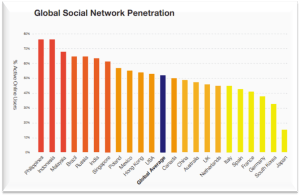
Social Media in the Philippines

Picture1

I use this in some of my training classes to demonstrate the opportunity social media presents for businesses here in the Philippines .

Some interesting bullet points about Social Media in the Philippines.

  • The Philippine is the leading country in the world that uses social media.
  • 95% of the Filipinos are using social media.
  • The average web user in the Philippines is just 23 years old, while almost 6 out of 10 social media users are below the age of 24.
  • Filipinos spent 21.5 hours per week.
  • 90% of them are using Facebook.

Source: http://www.techbullets.blogspot.com

Did you know that businesses that have solid analytics are 33% more profitible and 10x more efficient?

522Greetings!

Did you know that businesses that have solid analytics are 33% more profitible and 10x more efficient?

Per Wikipedia, the definition of analytics is simply the discovery and communication of meaningful patterns in data.

While most people have an idea of what Analytics is: data, analysis, metrics, and business intelligence are just the start… it is an abstract concept that is difficult to summarize in a sentence or two. Most business leaders know that they need more analytics based decision making in their operations, however few have figured out how to obtain it as analytics software or engaging high priced consultants doesn’t suffice.

This is where I come in. Having spent 15 years as an analyst with Wells Fargo Bank, I get analytics. I have combined that practical experience with my educational background; I have a Master’s Degree in Education, and developed an innovative approach to unlocking the power of analytics.

My company offers both analytics consulting and training packages. Our upcoming training batches:

• May 10th, 11th, Recruitment Analytics, Mandaluyong

• May 24th, 25th, Analytics for Analysts and IT, Mandaluyong

We also offer analytics solutions designed for small business owners and entrepreneurs as well conduct specialized corporate consulting and training packages.

I have found that being able to harness the power of analytics is as much an art as it is a science. In the end, analytics is about three things; finding data, analyzing it and communicating the results.

You can follow me on the following sites:

Facebook >>> https://www.facebook.com/dmaiph

YouTube >>> http://youtu.be/blx8IuHsmCA

LinkedIn >>> http://ph.linkedin.com/pub/dan-meyer/4/771/675

WordPress >>> https://dmaiph.wordpress.com/

Twitter >>> https://twitter.com/BPOElite1

Feel free to connect with me if you’d like more information.

Sincerely,

Dan Meyer

President & Founder

danmeyer@dmaiph.com

DMAI – Decision Making, Analytics & Intelligence (a subsidiary of BPO Elite)

Managing Big Data: The 3 V’s

InfoGraph_2.08I came across this infographic earlier today and loved on of the visuals illustrating the challenges marketing managers have with Big Data. Big Data is all the data you have in your business… customer, product, social media, marketing spend, etc.  Its considered big if you have more of it then you know what to do with.

According to the data gathered, the challenges are:

  1. Variety = The diverse sources of data, the different places is stored and the various applications needed to access it. 49% of the respondents cited this as the biggest challenge. For me variety challenges can be mitigated if you have a good data warehouse approach and have a data master to keep it all inventoried.
  2. Volume = The amount of data in your business that you have to analyze to be able to make decisions.  In the underlying survey, 29% of respondents indicated the sheer amount of data they had to work with is the biggest challenge. The best way to deal with this challenge is to have cutting edge, analytics tools that allow you to mine data quickly. Tableau is my favorite!
  3. Velocity = The speed in which you receive data. It can either be too fast to properly analyze or it can be to slow to be used in your decision-making process. 26% of the respondents indicated that the speed in which they are fed actionable data is their biggest challenge. If you have a way to control the variety and a tool to analyze volumes, then velocity shouldn’t be an issue.

Contact DMAI via this blog or you can e-mail me directly at danmeyer@dmaiph,com to set up an analytics assessment to help you figure out a strategy to control for the variety, volume and velocity in which you use your business data to drive decision-making.

Simple Recruitment Analytics Exercise: Recruit your own Super Hero Team

Here is an example of simple exercise I sometimes include in my recruitment analytics trainings. It’s a good icebreaker/team builder that starts the conversation about how to measure the effectives ness of different roles in a recruitment process.

Situation: There is an asteroid about to hit the Earth. An evil super villain has  created a ray that is attracting the asteroid here.

You need to recruit a team of heroes to complete the following tasks

1.Stop the asteroid from hitting the earth.
2.Find the super villain and stop his ray.
3.Evacuate people from the impact zone in case you can’t stop it

Rules: You must pick 3 heroes and you must stay under budget on their “salaries”.

You can only spend 200 salary points total.

Superman –  150  JLA vs Avengers

the Hulk – 100

Batman – 75

Thor – 100

Wonder Woman – 75

Iron Man – 100

The Flash – 50

Captain America – 75

Green Lantern -50

Hawkeye – 25

Aquaman -25

Black Widow – 25

Hawkgirl – 25

Darna – 50

The discussion is always interesting and most teams come up with a different combination of heroes. Besides the lead in to recruiting, I also talk a lot about how when we recruit, we have to think about what appeals to our target demographic. Which in the case of most recruiting for the BPOs here in the Philippines means 18-24 year olds who like technology, games, super hero movies and anime. Trying to find creative ways to engage them and keep their attention is as big a challenge as any other one facing recruiters.
And for the record, the most common solution is just to hire Superman and save the rest of the money since he can handle all three tasks in a matter of seconds. 🙂
If your organization is struggling with recruiting and retaining talent like so many others are, then you need the equivalent of an analytics superhero to help you save the day.
HR & Recruitment Analytics – The recruitment and retention of top talent is the biggest challenge facing just about every organization. DMAIPH is a leading expert in empowering HR & Recruitment teams with analytics techniques to optimize their talent acquisition and management processes. Contact DMAIPH now at analytics@dmaiph.com or connect with me directly to learn how to get more analytics in your HR & Recruitment process so you can rise to the top in the ever quickening demand for top talent.

Analytics is the answer for the Top Recruitment Trends for 2013

Based on some of the recruiting blogs I follow, here are the most common headlines:

1.Social Media will continue to transform the recruitment process

2.Global complexity in workforce planning

3.Strong Job Growth for Health Care

4.The Right Metrics are hard to find

5.Quality of Hire is the hardest to qualify

6.Never been more pressure to demonstrate ROI of recruitment efforts.

Analytics is a solution to helping HR and Recruitment professionals to address each of the challenges of presented by these headlines. Let’s look at each one.

1. Social media continues to be looked at as the silver bullet that everyone hopes will get them ahead. However, everyone else also has the same belief and in the end, your job postings can get lost at sea. Using analytics to help you determine what kind of posts, when and where to post them and with what message. A good ATS that feeds into social media is also important. The best ATS software packages post directly to social media sites. Also you can learn to take advantage of the built-in analytics that sites like Facebook and LinkedIn have for free. Also using an analytics approach to knowing your competition is a key way to stay ahead.

2. The complexity of recruiting here in the Philippines continues to be quickened by the diverse needs of various clients across industries and geographies. The global shift in services from massive to niche and from standard practice to personalized delivery is making it more and more challenging to find the right talent for the job. Analytics can be a powerful equalizer in knowing the demographics in your talent pool and of the clients.

3. The growth in healthcare outsourcing was something I talked about in depth a few blogs ago. Its an area that will continue to see hyper competiveness for top talent.

4. Knowing which metrics to use when and how to track and repot them is a big challenge. There is so much data and most of it is unstructured. Its incredibly hard to know how to keep a pulse on a your business. But an analytics driven business dashboard is one way to go about it.

5. Quality is hire is so often an afterthought. With so many open reqs and an increasingly thin talent pool, we often just worry about putting butts in the seats and letting the clients/business sort them out. This is so short sighted and counterproductive. Analytics can be used to measure quality of hire and should be something that everyone can easily tie their own personal successes to their efforts.

6. To truly measure return on investment you need good data, good analysis and good reporting to make sure pesos are well spent. Of all the headlines, this is on that analytics is used the most, but also used in ways that don’t really help all that much.

This is where I come in. Having spent 15 years as an analyst with Wells Fargo Bank, I get analytics. I have combined that practical experience with my educational background; I have a Master’s Degree in Education, and developed an innovative training approach to analytics.

Upcoming Training Batches:

• April 13th, Social Media Analytics, Mandaluyong

• April 19th-20th, Analytics for HR Professionals, Makati

• April 26th-27th, Recruitment Analytics, Mandaluyong

• April 29th-30th, An Introduction to Analytics for Fresh Grads, Pasay

• May 10th, Analytics for Analysts and IT, Makati

• May 18th, Recruitment Analytics, Makati

• May 20th-21st, An Introduction to Analytics for Fresh Grads, Pasay

• May 24th-25th, Analytics for Analysts and IT, Mandaluyong

This approach is more about empowering analytical thinking then it is teaching a technological skill. I have found that being able to harness the power of analytics is as much an art as it is a science. In the end, analytics is about three things; finding data, analyzing it and communicating the results.

To learn more about my approach to empowering data-driven decision making, feel free to contact me directly@ 09157759578 or danmeyer@dmaiph.com or you can view our YouTube video to see more >>> http://youtu.be/yEg9plU7pwA