I Need Team Member Engagement Metrics, But Which Ones?

I love this topic because it brings to of my favorite things together; analytics and learning development theory. Knowing something about why people behave the way they do and knowing the metrics to measure this is a central core of me.

However, getting a handle on employee engagement is a challenge.

A recent Harvard Business Review article pointed out, “Much has been studied about the impact of employee engagement on company performance, and there is general agreement that increased engagement drives results: Gallup, for example, suggests a 20% or better boost to productivity and profitability for companies with high engagement. Such companies, however, may be few and far between: Gallup also reports that only 30% of American workers, and 13% of global workers, are engaged in their jobs.”

That means that even on the best team, engagement is hard to keep at a high level.

I have seen many employee engagement surveys and assessments…  Gallup has their 12 questions about employee engagement, I’ve used Strengthfinders and the Pace Color Pallet just to name a few.

They all help.

In fact, in most cases anything you do to measure employee engagement can’t hurt.

But coming up with standard you can use in your organization takes time.

To help, here are some additional engagement metrics I am asking my leadership team to track to help us determine where we can put more effort to improve employee engagement.

  1. Putting In More than Required. By looking at time spent logged in and overtime hours we can get a sense of how much the team member like to maximize their ability to be part of the business.
  2. Showing Up. By reviewing use of vacation leave and sick days and matching that with schedule adherence, you can get a sense of if they really want to be at work.
  3. Who are your High Achievers? If you have team members who score high in both quality and quantity then they have found a way to balance the workload. Doing one well but sacrificing the other shows lack of engagement.
  4. Getting Time with the Boss. Looking at % of time spent 1 on 1 with senior leaders can also be a key indicator of engagement. Even if a lot of time is spent on coaching, the interaction with more senior people will impact engagement.
  5. Taking Time for Training. Looking at the % of time spent on training can also help you spot engaged employees. Internal, external, or refresher training all help in engagement.
  6. Team Member Referrals. Its unlikely people will refer friends to work for your company if they are not engaged. Some incentive programs can blur this line, but it is still useful to look at this data.
  7. Are They Getting Recognition? Generally those recognized by customers, superiors and/or peers tend to be more engaged then those who don’t.

There is no perfect employee engagement model and no perfect way to measure the success of your model.

The best any of us can do is try. Try new things and measure them. Look at historical data. Compare employee scores.

If you need help coming up with you own model of employee engagement and how to measure your success, DMAI can help you.

IMG_1750

Analytics Leadership – DMAIPH specializes in arming the Data-Driven Leader with the tools and techniques they need to build and empower an analytics centric organization. Analytics leadership requires a mastery of not just analytics skill, but also of nurturing an analytics culture. We have guided thousands of Filipino professionals to become better analytics leaders. Contact DMAIPH now at analytics@dmaiph.com or connect with me directly to discuss a uniquely tailored strategy to ensure you are the top of your game when it comes to Analytics Leadership.

Reinforcing Positive Behavior By Influencing Team Members

When you work with DMAIPH, you will be working with people who care because they constantly study, learn and evolve. No one wants to be stuck in a place where every day is the same and you never get a sense of what you are part of.

jobspicture2

Here’s one reason why Going DMAIPH is different!

https://en.wikipedia.org/?title=B._F._Skinner#Behaviorism

Been thinking a lot about how to motivate people. Sometimes I think we might have it all wrong.

We get so busy doing things that we forget to say thanks and we avoid saying you can do better.

Per Wikipedia, “Reinforcement, a key concept of behaviorism, is the primary process that shapes and controls behavior, and occurs in two ways, “positive” and “negative”.

Both types of reinforcement strengthen behavior, or increase the probability of a behavior reoccurring; the difference is in whether the reinforcing event is something applied (positive reinforcement) or something removed or avoided (negative reinforcement). Punishment is the application of an aversive stimulus/event (positive punishment or punishment by contingent stimulation) or the removal of a desirable stimulus (negative punishment or punishment by contingent withdrawal).

So I know that is nosebleed inducing for some of you, so let’s break it down.

Say we have a challenge in our business with attendance. So we can try to find ways to reinforce good behavior using positives like perfect attendance rewards or offering additional incentives to come to work like food and allowances. But we also have to find ways to limit the negative behavior through coaching, warnings and potentially termination.

If you dont have a clearly defined model of rewarding both positive and negative behavior then team members will get lost and generally gravitate towards negative behavior. Having a clear and consistent attendance policy that is upheld from top to the bottom in an organization will give you that balance of behavior.

DMAIPH specializes in helping businesses in both the U.S. and the Philippines optimize processes and procedures including how to positively influence team member behavior.

IMG_1224

Analytics Leadership – DMAIPH specializes in arming the Data-Driven Leader with the tools and techniques they need to build and empower an analytics centric organization. Analytics leadership requires a mastery of not just analytics skill, but also of nurturing an analytics culture. We have guided thousands of Filipino professionals to become better analytics leaders. Contact DMAIPH now at analytics@dmaiph.com or connect with me directly to discuss a uniquely tailored strategy to ensure you are the top of your game when it comes to Analytics Leadership.

Sustaining Excellence

Still super happy over the Golden State Warriors going the NBA Finals the past two years. Winning a title, setting the records for wins… The way they did it, was a marvel to watch.

They lead their division from the beginning and never looked back. That take a special group to be consistent day in and day out.

They won with a first year head coach. That’s saying something that things were set up so well, that a new leader was able to step in and excel.

They beat the team with the best player in the world. Role players stepped up and made a difference. They wore LeBron out in a way that he never saw coming.

Now can they be a dynasty? Can they repeat this success or was it just a one-time thing? We will find out this year with the much hoped for Warriors-Cavs Round 3.

When you look across the San Francisco Bay, you see a team that is a true dynasty. The San Francisco Giants have one 3 World Series titles in 5 years. They made the playoffs again last year and are always in the hunt.

11421572_751531328286130_17872014_n

Besides having many of the same characteristics of the Warriors, the Giants have been able to take things to the next level.

Like the Warriors, they have a lot of home grown talent. That’s a proven way to go in any medium.

The Giants also have true starts who are not as well-known as the stars on the team they have beaten. They are hard workers who give it their all time and again.

There are a lot of lesson business leaders can learn from watching the way these team succeed… perhaps a future blog post on that.

But for now, as a huge fan of both teams… as I celebrate once again… I can only hope that the Warriors can sustain excellence like the Giants have.

It’s a great time to be a sports fan in the Bay Area. Truly a home of excellence!

How do you measure excellence in your business?

Do you have a way to know what your “win-loss” record is?

Do you know where you stack up against the competition?

If you don’t, then you need analytics. The Warriors and the Giants have two of the biggest analytics teams in professional sports. They invest and it pays off.

How about you?

We can show you how to set up your analytics which will translate to a level of excellence you have never know before.

DMAIPH specializes in arming the Data-Driven Leader with the tools and techniques they need to build and empower an analytics centric organization. Analytics leadership requires a mastery of not just analytics skill, but also of nurturing an analytics culture. We have guided thousands of Filipino professionals to become better analytics leaders. Contact DMAIPH now at analytics@dmaiph.com or connect with me directly to discuss a uniquely tailored strategy to ensure you are the top of your game when it comes to Analytics Leadership.
PATIENCE AND FAITH ARE OUR BEST FRIENDS

I wish i could remember where i found this, but it definitely speaks to me so I wanted to share it again.

“No one can determine the final destination of our life’s journey. Therefore, the next best thing to do is to keep our cool and have faith in ourselves. Whenever I feel I am detouring from my destiny, I try to remind myself that my journey is my path. It’s a journey full of peaks and valleys, sunshine, and rain. This faith allows me to explore unchartered territory with confidence. I am at ease to fail forward. Because even when we fail, we do not lose it all—we can learn valuable lessons, and build the foundation for our next chapter.”

Keeping a can-do attitude helps us to never give up on ourselves. It allows us to recharge, reinvest, and reinvent ourselves by melting down our fear.

And that’s how I will start 2017!

jobspicture2Analytics Leadership – DMAIPH specializes in arming the Data-Driven Leader with the tools and techniques they need to build and empower an analytics centric organization. Analytics leadership requires a mastery of not just analytics skill, but also of nurturing an analytics culture. We have guided thousands of Filipino professionals to become better analytics leaders. Contact DMAIPH now at analytics@dmaiph.com or connect with me directly to discuss a uniquely tailored strategy to ensure you are the top of your game when it comes to Analytics Leadership.

 

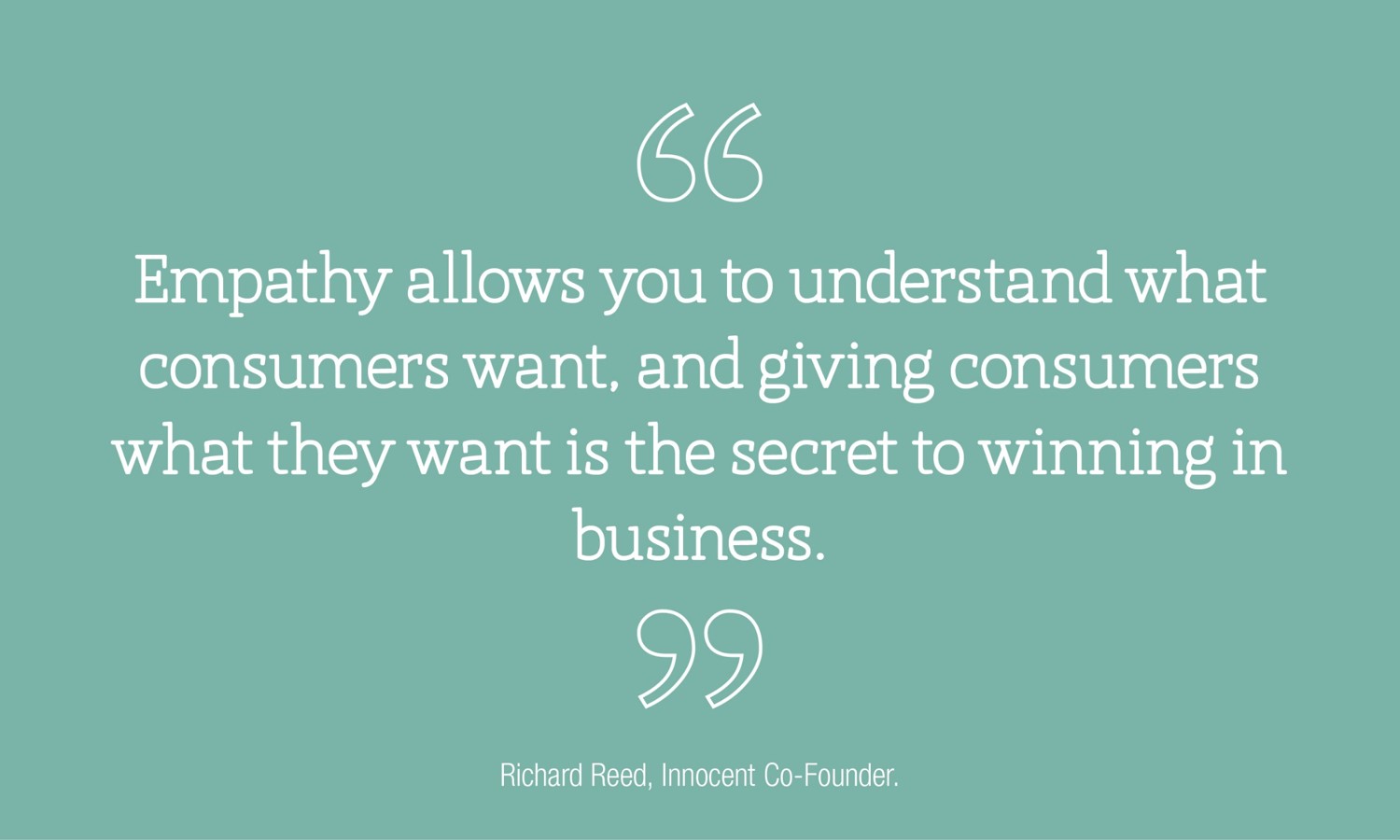
em·pa·thy > the ability to understand and share the feelings of another

From Our Recent Customer Care Empathy Training for the DMAIPH team

em·pa·thy > the ability to understand and share the feelings of another.

Per Webster’s… Empathy is

…the action of understanding, being aware of, being sensitive to, and vicariously experiencing the feelings, thoughts, and experience of another of either the past or present without having the feelings, thoughts, and experience fully communicated in an objectively explicit manner.

Per Wikpedia…

Empathy is the capacity to understand what another person is experiencing from within the other person’s frame of reference, i.e., the capacity to place oneself in another’s shoes.

So any way you slice it, empathy is about feeling the pain of another in a way that helps ease some of that pain.

Empathy training is sorely lacking across the call center industry as this kind of soft skills training is taught like a technical skill. You can’t just lecture of empathy. You have to role play and write open ended scripts and practice it until its second nature.

If DMAI is to succeed, we need to have better the average empathy training. If we want to be a great company then we need to have best in class empathy training to make sure we are there for our customers.

Picture1

Analytics Leadership – DMAIPH specializes in arming the Data-Driven Leader with the tools and techniques they need to build and empower an analytics centric organization. Analytics leadership requires a mastery of not just analytics skill, but also of nurturing an analytics culture. We have guided thousands of Filipino professionals to become better analytics leaders. Contact DMAIPH now at analytics@dmaiph.com or connect with me directly to discuss a uniquely tailored strategy to ensure you are the top of your game when it comes to Analytics Leadership.

The Tension of Now > Do More Now, Do More Later

http://sethgodin.typepad.com/seths_blog/2015/06/the-tension-of-now.html

Sharing Seth’s latest blog…

The tension of now

Later is the easiest way to relieve the tension that accompanies now.

But later rarely leads to the action we seek and the change we need.

When you encounter the tension of now, caused by the urgency of action, veer toward more tension, not less now.

This is one of those things we know logically, but people are generally illogical so they go against it.

Most people will delay dealing with problems, hoping the problems will iust go away… which rarely happens.

They then end up spending extra time on energy on the bigger problem and have no time for dealing with new problems.

The wise man deals with problems now and frees himself up to handle new problems tomorrow.

Common sense can he in such short supply because of the general fear of tension.

1075177_10151826941667425_1417094118_n

Outsourcing For Expertise Is The Way To Go

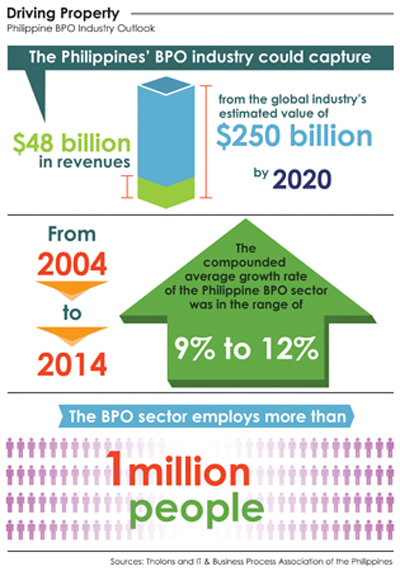
Increasingly, both large and small companies are engaging with specialized service providers as partners to their business goals. As we see in the visual below, the Philippines is still amidst a boom in this phenomena.

The continued rise in outsourcing is due to a companies’ decisions to focus more on their core strengths. In general, service providers concentrate on one or more specialized activities that the sponsor company doesn’t wish to do or doesn’t have as broad in-house capabilities to perform. We see a lot of this with our current client line-up here in DMAI.

However, in additional to taking on tasks that the sponsor companies view duties for specialty providers, it is also now becoming more of the overall business strategy to integrate both businesses rather than you the service provider as a patch.

It’s actually a long-term business model to truly partner on delivery solutions, and as a result, sponsor companies have built strong relationships with providers upon whom they can rely to contribute to their business goals in a manner that complies with both their quality and vision—yet without the need for redundant supervision.Again, this is a model DMAI has been successful at implementing with U.S. based clients.

Providers like DMAI, must be able to engage in a hunt for  talent in order to guarantee expertise and quality. They need to be able to locate the very best talent in a given region and business function in order to provide their sponsor-clients with the best-in-class service those sponsors are paying for.

This line of thinking, outsourcing for expertise is the way to go for medium sized businesses in the U.S. looking for an outsourcing solution with smaller BPOs in the Philippines.

township03-052115

Big corporations can outsource entire business lines to big BPOs. Small businesses can outsource specific functions to virtual assistants. But for medium sized companies, looking to find like minded partners, they need to be paired up with service providers who are able to both integrate into the business and find the talent to grow the business.

Analytics Outsourcing – DMAIPH has successful set up Filipino analytics teams for over a dozen U.S. based businesses. Offering both virtual and office based teams that specialize in problem solving using data, new technology and analytics techniques is our strength. Finding and empowering analytics talent is increasingly challenging, but we have it down to a science. Contact DMAIPH now at analytics@dmaiph.com or connect with me directly to learn more about how to set up an analytics-centric team in the Philippines.

A Few More Thoughts On Leadership

Most of my blog posts the past few weeks have been focused on leadership.

As my company grew from 6 to almost 100 in just 18 months we were forced to make a lot of quick decisions that have not always turned out to be the best long term solutions. So now I reflect on those lessons. How to move away from making snap judgments based and move more into data-driven decision making. That’s always been the goal.

Here are so of my favorite quotes on leadership and how I plan to wrap them into my leadership meeting next week.

Jack Welch said that, “Before you are a leader, success is all about growing yourself. When you become a leader, success is all about growing others.” I firmly believe this and have tried hard to instill this sense of purpose in my leaders. However, we have a lot more work to do before we have an organization full of people looking out for the success of others before looking out for their own success first.

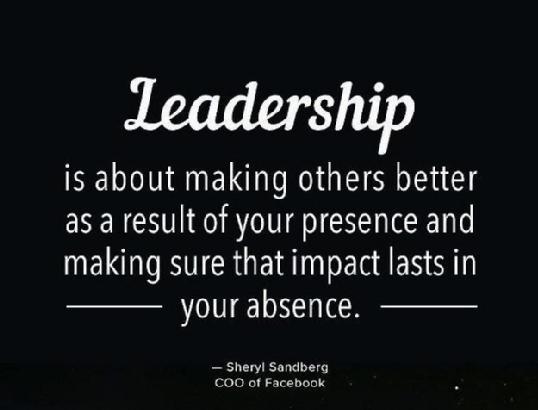
A big part of this is to constantly be pushing the organization to evolve and to never rest. Peter Drucker said that “Leadership is lifting a person’s vision to high sights, the raising of a person’s performance to a higher standard, the building of a personality beyond its normal limitations.” That’s my point exactly. We look at the data, analyze our performance and determine what to improve next.

From our recent survey, we know our team members crave feeling valued and being appreciated more than they depend on being paid well. We need to focus on this and build a recognition program that show value and share appreciation. Sam Walton once said, “Outstanding leaders go out of their way to boost the self-esteem of their personnel. If people believe in themselves, it’s amazing what they can accomplish.” For us to reach the next level of success as a company this sense of empowerment needs to permeate through the ranks.

I hate when I have to manage people because things aren’t being done they way I expect them to get done. Part of that comes from my own failures in instilling this lesson in others. “Leadership is the art of getting someone else to do something you want done because he wants to do it.”  from General Dwight Eisenhower. We do too much bossing and not enough uplifting others to dream the same dream we do.

And finally, from John Quincy Adams, “If your actions inspire others to dream more, learn more, do more and become more, you are a leader.” To me that is the most important measurement for us to look at. Everything else comes next.

8d16381e-298f-4646-a7e2-c8929ffb08cf-medium

Analytics Leadership – DMAIPH specializes in arming the Data-Driven Leader with the tools and techniques they need to build and empower an analytics centric organization. Analytics leadership requires a mastery of not just analytics skill, but also of nurturing an analytics culture. We have guided thousands of Filipino professionals to become better analytics leaders. Contact DMAIPH now at analytics@dmaiph.com or connect with me directly to discuss a uniquely tailored strategy to ensure you are the top of your game when it comes to Analytics Leadership.

Excellent Leaders Are Constantly Pursuing Excellence

https://www.linkedin.com/pulse/nature-authentic-leadership-ben-stewart

Here is an excellent conclusion to a blog post about the nature of authentic leadership…

‘Effective leadership can be an elusive goal with no clear path to direct success.  There are, however, many techniques and practices that are consistently utilized to reach this goal.  It begins with personal responsibility and leadership of oneself.  Before anyone has a chance at leading others,  he or she must take ownership of their thoughts, actions, and beliefs.

Possessing a keen insight into human behavior and thought is also critical.  This includes motivating, retaining, and resolving conflicts among the team.  It is unfortunate today that so many leaders become consumed with the ends that they forget the means.  While the bottom line is most often analyzed and how a leader is judged by superiors, it is the responsibility of the leader to ensure that the team respects its members and is passionate for pursuing excellence.  Neglecting this will bring discouragement and cause a serious threat to whatever goal is being pursued.

Leaders must always incorporate the human aspect into their decisions.  In its essence, leadership is about influence.  For a leader to maximize and improve whatever situation they encounter, requires going beyond spreadsheets and routines.  Taking a genuine interest for the team will include a common respect and appreciation for every individual.  Although this is a cumbersome and lengthy process, leadership will prove abundantly more effective.”

IMG_1849

The need for personal responsibility is most important when times are tough. If you are under pressure, its hard to lead others if your are not comfortable leading yourself.

Knowing how people think, and why they do what they do is a key point of success. Leaders who often try to spend time in their subordinates shoes are much more successful.

Pursing excellence needs to be a top motivator for any leader in DMAIPH. To be effective when it comes to working with me you need to understand the power of your influence and comprehend how it is perceived… so that you can get everyone else to follow along on that pursuit to excellence.

Analytics Leadership – DMAIPH specializes in arming the Data-Driven Leader with the tools and techniques they need to build and empower an analytics centric organization. Analytics leadership requires a mastery of not just analytics skill, but also of nurturing an analytics culture. We have guided thousands of Filipino professionals to become better analytics leaders.

Contact DMAIPH now at analytics@dmaiph.com or connect with me directly to discuss a uniquely tailored strategy to ensure you are the top of your game when it comes to Analytics Leadership.
Leading vs. Managing vs. Bossing

The definition of Leading is exercising leadership by providing direction or guidance.

The definition of Managing is to direct or supervise employees or other staff by exerting control.

The definition of Bossing is to give orders to, especially in an arrogant or domineering manner.

Leaders generally try and empower, educate and uplift people working under them in an organization. At times they many need to manage employees who have gone off track, but generally only use this to optimize short term results. Although sometimes managing and bossing can feel the same to the employee, good leaders never have to result to bossing.

Managers generally try to motivate employees to meet business needs. At times the pressure for results will force managers to exert control over their employees to get results. This can generally fee like bossing. Employees that feel like they are constant being directed to do things that are unclear to them how and/or why they are doing it never feel like they are being lead.

People who are in positions of authority who are always bossing are not well liked by their employees. Employees do not feel valued or appreciated when they are constantly being bossed. Bosses use fear and intimidation to drive results, which generally fall short of business goals.

The ironic thing about these definitions is Bosses don’t generally realize they are Bosses. They think they are good managers and even good leaders. Managers generally know they are not Bosses, which is good, but they generally are not in a situation where they can be good leaders.

On the other hand, Good Leaders are always cautious of trying not to fall into the traps of managing people or being the boss.  They constantly appreciate feedback to help themselves improve and see their own style of running a business as always evolving.

For a business to be successful you need leaders who can occasionally manage and once in a while be a boss, but most of their time is spent trying take the business to a higher level. That’s my dream for DMAIPH.

10322847_10202261942091034_7017264038085105214_n

Analytics Leadership – DMAIPH is a founding member of the Analytics Council of the Philippines and specializes in arming the Data-Driven Leader with the tools and techniques they need to build and empower an analytics centric organization.

Analytics leadership requires a mastery of not just analytics skill, but also of nurturing an analytics culture. We have guided thousands of Filipino professionals to become better analytics leaders. Contact DMAIPH now at analytics@dmaiph.com or connect with me directly to discuss a uniquely tailored strategy to ensure you are the top of your game when it comes to Analytics Leadership.