Why Analytics Projects Fail – #7: Lack of Talent

When analytics projects fail due to lack of talent, this is generally symptomatic of a bigger cause. Lack of talent is something that can be much harder to fix then just hiring someone.

One of the reasons behind the lack of talent may be a misunderstanding of the project by senior leadership or just an overall lack of management support. As I mentioned in a previous blog, the best thing you can do is work with a senior leader to help them understand what level of talent is needed. When you do this you can enhance your analytics solutions and have them advocate for you to get the right talent.

Lack of vision and/or focus by your organization can also result in not having the right talent available for the job. It might not even be the analyst, but the it might be something missing within the development team or the project implantation team. This generally ends up with analytics solutions being full of patchwork shortcuts that limit their impact.

Lack of funding can also be an issue, where your organization just can’t offer a competitive package to the available talent. This is becoming even more of an issue lately as good analytics talent is in high demand and the supply can’t come close to keeping up.

Having the right analyst, with the right skills sets, the right training and the right tools aligned to give your business a good analytics solution misfires a lot. There are hundreds of business intelligence tools, thousands of types of databases, all generating very unique reports. When one of these elements does not match up it can easily cause a failure due to lack of talent.

1960033_10152334044802022_1470432615_n chili

My suggestion if you think you have a lack of talent problem is draw some kind of process flow. Who are all the players in each part of the process? What applications are used to collect, store, analyze and report your data? What programming or language skills are required?  When you lay all this out then you have an idea of what skills and experience your analyst needs. Combine this with the people side of the job, what communication skills, what data visualization skills, what project skills does your analyst need? If you don’t have anyone in the organization with this list of skills, you need to either hire one or create one.

When you look at job postings right not for analysts, its easy to see that requirements vary greatly across positions.  No two companies have the exact same analytics needs not employee analysts the exact same way. So if you are going out to hire one, make sure you have a clear idea of what you need and not get caught up in looking for an analytics rock star.

It is often easier to actually look inside and find someone who can be trained to take on the role. Having internal business knowledge and knowing the organizational culture are huge plusses. A lot of time because that person doesn’t have the skills on their resume yet, they get excluded. However, I have always favored promoting from within and upskilling then going out and hiring an unknown variable.

So if you think lack of talent is killing you analytics project and are not sure what to do next. Connect with me. Let’s build a job description that tailor fits your needs and see where the best place is to find them. It’s probably someone sitting in a cube next to you.

Analytics Culture – The key to using analytics in a business is like a secret sauce that fuels Data-Driven Decison-Making. It is a unique combination of analytics talent, technology and technique that are brought together to enrich and empower an organization.

A successful analytics culture is not easy to create, but DMAIPH can show you how. Contact DMAIPH now at analytics@dmaiph.com or connect with me directly so we can build a strategic plan to turn your company into analytics driven success story.

Why Analytics Projects Fail – #6: Lack of Funding

Of all the reasons an analytics project can fail, one of the hardest to fix is lack of funding.

There are numerous causes for funding issues with an analytics project, 3 of the most common being unexpected budget cuts, shift in strategy, and lack of understanding.

When you are faced by unexpected budget cuts, which has happened to me several times, the best thing you can do is try and reconfigure your project so that as least pieces of it can still be completed. The idea here is to do what you can until more money is made available.

Having a well thought out plan that is scalable will help you tremendously. One time when I had a million-dollar dashboard project cut because of budget cuts, I peeled back some features and redesigned others to come up with a new plan for 10% of the original cost. That was approved. And over the next year I had pretty much added everything cut back piece by piece. Bottom line, if the company needs a new analytics tool, its up to the analyst to make sure they get it by being flexible and smart.

AAEAAQAAAAAAAAKAAAAAJDY4MWQ2MDA3LTk5OWEtNDlhNi1hODEyLWE1Y2Q2MzlmZTQwYg

A shift in strategy happens a lot in business. So many internal and external forces are at play, a lot of times what once seemed a priority, can quickly become an afterthought. With analytics this can happen a lot when people fall back the we can just get by with what we have for now mentality. In today’s business world where success is driven by data, this can be crazy but it still happens everyday.

The best way to react to strategy shifts are for you to adapt your project to the new strategy and keep it both relevant and necessary. A good analyst can always find a way to offer analytics solutions for any part of the business. Use this adaptability to show your project can evolve with the needs of the business and you will likely still get funding, albeit for a new set of users.

The third reason lack of funding can happen, is actually a lack of understanding. Often finance decisions are made based on assumptions and predictive modeling… highly susceptible to being wrong if some important variables are missed. This has happened to me a number of times. But after conversations and educational moments with the finance team, the true value and ultimate savings of my analytics projects led to the lack of funding being mitigated.

Some things you can try when your project is impacted by a lack of understanding will take us back to the concept of enchantment. Make sure they like you and understand what value you and your analysis adds to the team. Often this can be a hard thing to quantify in a budget. Make sure you are showing how this project benefits others and helps the business as a whole… build trust. Third, make sure the project you are championing will make a difference, show that difference and educate on the need for that difference, in short show them you are doing this for a great cause.

There are countless reasons for lack of funding to become a roadblock for your analytics project, and countless ways to remedy this. If you are faced with one and need some help getting things back on track, connect with me and we can come up with a way to get your project funded again.

Analytics Culture – The key to using analytics in a business is like a secret sauce that fuels Data-Driven Decison-Making. It is a unique combination of analytics talent, technology and technique that are brought together to enrich and empower an organization.

A successful analytics culture is not easy to create, but DMAIPH can show you how. Contact DMAIPH now at analytics@dmaiph.com or connect with me directly so we can build a strategic plan to turn your company into analytics driven success story.

Why Analytics Projects Fail – #5: Organizational Politics

One of the biggest hindrances to the success of analytics projects is something most of us have experienced, organizational politics.

Organizational politics are informal, unofficial, and sometimes behind-the-scenes efforts to sell ideas, influence an organization, increase power, or achieve other targeted objectives. This is what happens when you find yourself being thrown under the bus… taken a fall for someone else’s mistake.

If you are lucky to have escaped organization politics for the most part and wondering just how they can lead to the downfall of an analytics project, let me share with you an idea what that looks like.

Data is horded. People don’t like sharing because its not encouraged or rewarded. In some cases people can be outright mean about it. Keeping data that they know can have a positive impact for others just to hold power over someone. It’s nasty.

This generally comes because senior leaders don’t really see the big picture and don’t share much themselves. This trickles down to the ones with the data and they build castle walls around their information and act as gatekeepers.

Print

Projects can also be hindered, stalled or killed for no reason other than your boss lost to another boss. I once had a million dollar analytics project shelved because my boss got in trouble with the big boss. Nothing to do with me or my project or its cost or its benefits, it was completely because of something out my control.

When asking around you might hear of an experience like this as well. People hoard, manipulate and/or alter data not because it is being rewarded or encouraged, but because they are afraid being caught red-handed. A good analyst has to be willing to  report the good with the bad.

One area of organizational politics you can control though is your likability. I make the comment a lot, that you have to be likeable to be an effective analyst. If people like you they share data with you, they advocate for analytics, they support you in a multitude of ways.

If they don’t like you, then its gonna be hard to be seen as an asset to the organization. An analysts job is to educate, illuminate, and inspire… you can’t do that with a bad reputation. This is a lesson many of us have to learn the hard way, but once we learn it we can see opportunities to increase our likability factor and actively use them to push our projects forward.

So the outcome of an analytics project you are working with is in jeopardy if you are in an organization rife with office politics. SO short of updating your resume, what can you do to turn the boat around?

Here are 3 things I suggest:

  1. Get buy in from the top. Make sure what you do feeds its way up the food chain. Make sure the top dog’s analytics needs are being met and if they are not show how they can be.
  2. Use your data to show win-wins. Find examples of where if we combined data from one source with data from another source you would have the makings of something even greater.
  3. Buy lunch for the ones hording the data. Extend the olive brand, multiple times if need be. If you don’t stating being the catalyst for data sharing, who will?

If you can start impacting some of the negative consequences of your organization’s internal politics then your analytics projects will start seeding positive change. And that will eventually make all the difference in your success or failure.

If you need help combating some of the office politics in your organization that are hindering you analytics projects, connect with me and we will figure it out.

img_7737

Analytics Culture – The key to using analytics in a business is like a secret sauce that fuels Data-Driven Decison-Making. It is a unique combination of analytics talent, technology and technique that are brought together to enrich and empower an organization.

A successful analytics culture is not easy to create, but DMAIPH can show you how. Contact DMAIPH now at analytics@dmaiph.com or connect with me directly so we can build a strategic plan to turn your company into analytics driven success story.

Things Data-Driven Cultures Do

Data-Driven Cultures Do These Things:

  1. They embrace Big Data. They aren’t afraid of it. They relish the addition of new data sources and actively look for more.
  2. Managers use Evidence-Based Management techniques. Just about every choice comes based on data analysis.
  3. Challenges are addressed with Data. When something happens that was unexpected, the challenge is met with a data centric approach.
  4. The right data is being used. A lot of work goes into validating data and keeping it clean and fresh. The concept of having a data lake that supports multiple parts of the business is in place.
  5. The have the right analytics talent. Analysts are empowered to go out and discover not just current challenges, but look for potential ones as well.
  6. The know how to communicate. The sharing of information is done to benefit everyone. You won’t see lots of data trapped in silos. Data has no one true owner.
  7. They take action based on their data and analysis. You don’t see a lot of useless reports that kills a small forest or clog up an inbox with massive files. They keep it smart and simple.

Like most of the blog posts in this series, I took inspiration from Bernard Marr when I came up with this list, adding my own analytics spin.

Data-Driven cultures are a lot harder to find then they should be. In this day and age, every company should have a strategy on how to use data to drive more intelligent decisions, but they don’t .

Success eludes many companies because they don’t have the 7 qualities listed above in place. If you were to ask what they look like it would be something akin to this:

  • Top management is afraid of data. Senior leaders don’t even know how to use MS Excel. There is no analytics champion in the organization to spearhead data projects.
  • Decisions are made based on what worked in the past, relying on experience and gut feel. There is little evidence used to go in any certain direction.
  • When things don’t work out, data and analysts take the blame. You will hear a lot of “why didn’t you tell me” and “I didn’t see it coming” excuses.
  • What data is being used is old, dirty, incomplete, full of errors and doesn’t tell the whole story. Reports are basically useless and just produced to look at what people generally already know. They look for what’s there, oblivious to what’s not.
  • They don’t not share data. They hoard it. They don’t trust anyone else with access to it. The data is stored in unconnected storage places. There is no common understanding how to use data.
  • They fail a lot. Success generally happens by hard work as much as luck. It’s impossible to know for sure what caused what to happen.

It’s not easy to take a company that has little or no data-driven decision-making and turn it into an Intelligent Company, but it can be done. I have done it. I have guided transitions from the stone age to the information age. Let me show you how.

jobspicture2

The Philippines is at the center of the action when it comes to solutions to the global need for analytics. Blessed with a solid foundation of young, educated and English speaking workforce, companies around the world are look for Filipino analytics talent to fill analytics positions.

DMAIPH specializes in arming the Data-Driven Leader with the tools and techniques they need to build and empower an analytics centric organization. Analytics leadership requires a mastery of not just analytics skill, but also of nurturing an analytics culture. We have guided thousands of Filipino professionals to become better analytics leaders. Contact DMAIPH now at analytics@dmaiph.com or connect with me directly to discuss a uniquely tailored strategy to ensure you are the top of your game when it comes to Analytics Leadership.

Data-Driven Cultures

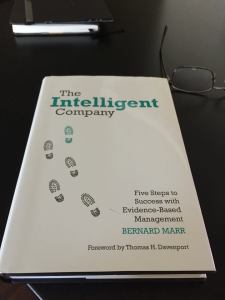
Inspired in part by Bernard Marr’s 2010 book, The Intelligent Company, my goal these past several years has been to build and/or be part of data-driven business cultures.

In his book, Bernard advocates for using Evidence-Based Management, that is using the best available data to inform decision-makers. In parallel to this, I have been empowering companies and professionals to empower decision-makers to use more data as well. I call it data-driven decision-making, but at their cores, they are very similar approaches to managing success.

Over the next several blog posts I will share my thoughts on the steps Bernard published. I will be giving my own spin towards more analytics and data-science, two things that I think have accelerated in importance since the book went to print six years ago.

The cornerstone of the book is the five steps to more intelligent decision-making, which are:

  • Step 1. More intelligent strategies – by identifying strategic priorities and agreeing your real information needs
  • Step 2. More intelligent data – by creating relevant and meaningful performance indicators and qualitative management information linked back to your strategic information needs
  • Step 3. More intelligent insights – by using good evidence to test and prove ideas and by analyzing the data to gain robust and reliable insights
  • Step 4. More intelligent communication – by creating informative and engaging management information packs and dashboards that provide the essential information, packaged in an easy-to-read way
  • Step 5. More intelligent decision-making – by fostering an evidence-based culture of turning information into actionable knowledge and real decisions.

13177172_10154260751837425_2167903280431899505_n

As information and data volumes grow at explosive rates, the challenges of managing this information is turning into a losing battle for most companies. In the end they find themselves drowning in data while thirsting for insights. Combine this with an increasingly severe shortage of talent with analytics, data visualization and good communication skills, things look bleak for companies not adhering to lessons like those suggested in the Intelligent Company.

I get this stuff. In response to a quickening demand for knowledge and know how, I have developed training materials to address these decision-making challenges. The reason I founded DMAI in the first place was to empower more data-driven Decision-Making through the use of Analytics and business Intelligence. I’m happy to help you enable better decision-making in your business and turn it into an Intelligent Company.

Analytics Culture – The key to using analytics in a business is like a secret sauce. It is a unique combination of analytics talent, technology and technique that are brought together to enrich and empower an organization. A successful analytics culture is not easy to create, but DMAIPH can show you how. Contact DMAIPH now at analytics@dmaiph.com or connect with me directly so we can build a strategic plan to turn your company into analytics driven success story.

Why Analytics Projects Fail: #4 – Lack of a Champion

A lot of time analytics project fail because there is no designated champion for the project.

I see a lot of money wasted on analytics technology because there is no one in the business who masters the technology. Who knows how to use it better than anyone else and knows what more can be done if other people become experts.

Good analysts are curious above all else. In the right place, they can do amazing things to drive innovation, increase profit, optimize processes and build market share. When you don’t have a a champion the outcome of any analytics project will be in doubt.

The most curious person in the organization should be the analytics champion because they love to go out and find the data to answer any business question that comes up.

If your analytics project doesn’t have a champion, then you most likely see a general lack of focus, an unclear vision and an uninterested leadership. Can you be that champion? If you think you can then do the Moneyball and Enchantment things from my last blog. They will help you gain your champion’s belt.

When you read Enchantment, you will start to understand that an analytics champion does as much influencing with their analysis as they do reporting.

Another way t5.5o be seen as the champion, is to make friends with people. Dropping off a box of donuts with the IT developers or sending thank you notes to project team members who went above and beyond is just as important as mastering the coding language used by your new analytics tools.

I keep a lot of analytics books on my desk. I make it obvious that I am always thinking about data and how to use it to improve what we do. I share a lot of content about analytics on social media. People know me as the data guy. You want to be like that if you want to be crowned Analytics Champion.

Analytics Culture – The key to using analytics in a business is like a secret sauce that fuels Data-Driven Decison-Making. It is a unique combination of analytics talent, technology and technique that are brought together to enrich and empower an organization. A successful analytics culture is not easy to create, but DMAIPH can show you how. Contact DMAIPH now at analytics@dmaiph.com or connect with me directly so we can build a strategic plan to turn your company into analytics driven success story.
Why Analytics Projects Fail: #3 – Lack of Management Support

Nothing sucks more for an analyst than taking on an analytics project without support from above. Great analysts are generally only great if they have bosses who advocate for more analytics.

If no one at the top really understands the benefits of implementing your project, if the leadership will continue to use their gut in decision-making regardless of what your project achieves, then start updating your resume. This outcome happens often when the company does not have a business culture supportive of data-driven decision-making.

In this day and age, good analysts are hard to come by…. You can make more money and be happier somewhere else. Trust me. The chances of you being able to turn analytics naysayers into big data believers is highly unlikely.

That said, if you chose to give it a try… here are a few thoughts on how to get management to become more supportive of your analytics project.

Watch the Brad Pitt movie Moneyball. It will inspire you. Read the book Enchantment by Guy Kawaskai. It will empower you. Im not joking. You cant do this on your own.

After that, then you need to do a few things.

First find the person in upper management most likely to get on board. Ask them to help you. Show them data that will outline the better new world after your project is complete. Tell them about analytics success stories (like Moneyball). Let them see your passion for data-driven decision-making. You need  Brad Pitt.

5.1

Next, using the concept of Enchantment, determine what is it about you and your project that will build trust. Will it create more transparency? Will it mitigate risk? Something that demonstrates how this project will increase the level of trust between everyone.

You also need to be likeable. Your project needs to be likeable too. What is it about the project that will make people happy? Who gets a better report, faster and with more useful data? Who gets to start using a business dashboard to make quicker and better decisions? What will each of the stakeholders like about this project.

And then you roll out the great cause. The monetary value generated from implantation. The level of risk mitigated. The better intelligence on competitors or about your market. What will be that great cause?

So now you are in a better position to be Jonah Hiil and go start changing minds and swinging opinions about your analytics project.

Analytics Culture – The key to using analytics in a business is like a secret sauce. It is a unique combination of analytics talent, technology and technique that are brought together to enrich and empower an organization. A successful analytics culture is not easy to create, but DMAIPH can show you how. Contact DMAIPH now at analytics@dmaiph.com or connect with me directly so we can build a strategic plan to turn your company into analytics driven success story.

Why Analytics Projects Fail: #2 – Lack of Vision

Lack of vision often accompanies lack of focus when good analytics projects come up short or even fail.

The end product produced by the hard work being put into the analytics project has to be championed from top down. If the top dog is not talking about your project and pushing the merits of its implementation, they people will fight getting on board. Their focus will go astray.

Lack of vision is most often caused by a rush to implement a new analytics tool or a need to quickly upgrade reporting. A good analytics solution needs clearly thought out goals and buy in from all stakeholders.

Vision comes from being on the same page. A good project manager can control the vision message and repeat it like a broken record at every project message. An analyst gifted with good communication skills can keep sharing the vision to remind everyone of the benefits at the end of the project. It takes people dedicated to the project to keep it moving.

Vision can be handled like a marketing campaign. A catchy project name, an engaging tagline, a central theme accompanying communications and updates can all keep people focused on the end goal.

If your project is floundering because of lack of vision, then you need to channel your inner cheerleader. It often takes an analytics champion to produce the a positive outcome. And if you are reading this blog, that champion is probably you.

Nothing helps get a vision across better than good visuals… what does the end state look like for everyone involved. Find ways to motivate them with posters, with slogans, with dashboards, with free food. Just keep reminding them where we are going and how awesome it will be when we get there.


Lack of vision can also be an issue when an analytics projects are not well planned out. Maybe the scope was too narrow or too broad or perhaps the technology we are using is obsolete.

Vision is a glimpse of what the future may look like. If I can’t conceptualize why we are doing what we are doing for this project, then we can’t very well share the vision we are supposed to be seeing.

img_7736

My final thought on dealing with lack of vision, is that no one will be better at fixing this then you. As a data person, you have to be bold in your use of data to push the vision and you have to be brave in taking the lead on sharing the vision as much as possible.

Analytics should be accessible across your organization.  If you are in a situation where your analytics efforts are being stymied by lack of vision, connect with me and I’ll help you get things straightened out.

Analytics Culture – The key to using analytics in a business is like a secret sauce that fuels Data-Driven Decison-Making. It is a unique combination of analytics talent, technology and technique that are brought together to enrich and empower an organization. A successful analytics culture is not easy to create, but DMAIPH can show you how. Contact DMAIPH now at analytics@dmaiph.com or connect with me directly so we can build a strategic plan to turn your company into analytics driven success story.

Why Analytics Projects Fail: #1 – Lack of Focus

Lack of focus is common reason analytics projects fail. Keeping a focus on any project can be a challenge for companies that are not well organized. If you are an analyst or trying to champion analytics in your organization and are up against a lack of focus, I have some ideas for you.

First off, size really isn’t a factor when it comes to the organizational culture towards being organized. In some cases size makes the problem more apparent, but size can also mean more resources, so in most cases its really not a serious issue.

There is generally a strong correlation be the way data is handled in a business and how organized the company is in other ways. Lots of paper, manual processes and clearly define process flows may look organized, but it’s highly unlikely they deliver the type of data leadership really needs.

Lack of focus often happens when leaders seem overwhelmed and say they don’t have time to dedicate to things like analytics. The first thing you need to figure out is are people resources really stretched too thin or is it more a cultural issue where being too busy is more of a badge of honor.

The best way to deal with overworked teams is to start putting data around what they do every day and come up with solutions to improve time management and delegation.  Few people can truly say they have extra time, but everyone can say they need to figure out how to manage time better. A good analytics solution does just that.

Few people can rationally explain why their job would be harder if they had more analytics.  So it’s not too hard to get people to buy into the concept of analytics, but to get them to buy into the actual practice you need to be part salesman and part storyteller.

You need to show them the value putting a greater focus on your analytics project will bring to both the business as a whole and to each individual involved in the project. Besides showing data to champion the use of more data, you need to tell stories about how its helped in other places. You need to get them to envision how much better life will be once your project is complete.

Lack of focus can also come when the project is not well thought out of you get scope creep… when additions are made to a project that start distracting people form the original goal of the project. It is hard to stay focused when you don’t see focus in the project itself.

The final point I’ll make is that you also need visible and consistent buy in from the person(s) in charge. If they are not advocating for analytics, then your project will never get the focus from stakeholders and project team members you need then you will fail.

11756770_934770113231654_1677809504_o

Analytics Culture – The key to using analytics in a business is like a secret sauce that fuels Data-Driven Decison-Making. It is a unique combination of analytics talent, technology and technique that are brought together to enrich and empower an organization. A successful analytics culture is not easy to create, but DMAIPH can show you how. Contact DMAIPH now at analytics@dmaiph.com or connect with me directly so we can build a strategic plan to turn your company into analytics driven success story.

Mixing Technique With Empowered Curiousity

Last year I spent some time helping a couple of schools build more analytics centric training into their psychology curriculums. The goal being to help prepare future HR managers and analysts to be ready to deal with real world analytics challenges.

Over the next few blogs, I will share several of the topics I listed in these curriculums that are equally balanced in both the technical and intellectual aspects of HR analytics.

It is a common misconception that HR analytics is all about using tools and techniques to generate reports and share information to management in a way that makes the business more successful. This concept will not generally work because the analysts are not empowered to question, explore and discover new opportunities or to understand hidden risks. All they are expected to do is report things faster and with more flash.

Some of the topics typically taught in your basic HR and/or Recruitment Analytics class include:

  • Stages of HR Analytics
  • HR Metrics – Calibration and Measurement
  • Statistical Analysis Tools like DCOVA (define, collect, organize, visualize and analyze)
  • Enhancing HRIS (Human Resources Information Systems)
  • Optimizing MS Excel for HR Analytics
  • Business Intelligence Tools for HR Teams
  • Predictive Analytics Methods and Models
  • Big Data Analytics for HR Teams

Each topic can be its own training module if you have the time to sit in a class and approach the use of HR analytics academically. The problem is few of us can spare the time.

522

My solution is a mixture of self-education, internal team building dynamics and an empowerment based model of analytics training that will not just make your team better at building reports, but will unlock their minds and free their curiosity allowing them to get outside the box and discover things you can’t even imagine.

No one wants a team of drones who just follow steps in a technique or use a technology to do just exactly what it was designed to do. To really have an HR Analytics team that make a difference, you need a team that thinks differently. If you are serious about building this kind of culture in your business, then I can show you how.

Analytics Culture – The key to using analytics in a business is like a secret sauce. It is a unique combination of analytics talent, technology and technique that are brought together to enrich and empower an organization. A successful analytics culture is not easy to create, but DMAIPH can show you how. Contact DMAIPH now at analytics@dmaiph.com or connect with me directly so we can build a strategic plan to turn your company into analytics driven success story.