Add Staff in The Philippines With DMAIPH

Our team has a proven track record in meeting the outsourcing objectives of the small and medium sized businesses. We offer a full suite of enterprise solutions, industry leading technology, and talented team of managers and support staff to ensure our clients a smooth, secure and dependable outsourcing experience.

Whether your outsourcing goal is to retain customers, increase revenue, reduce service costs, or break into new markets, we have a solution suitable for your business. We have the capabilities to take on a wide range of outsourcing services, but specialize in the following:

  • Data Entry – Encoding large volumes both hard copy and electronic data sources
  • Competitor Intelligence – Market Research including pricing and competitive date
  • Customer Insights – Using surveys via email, online survey tool or Facebook
  • Demographic and Sales Data – Public Data Mining of government and public record web sites
  • Building Reports and Dashboards using Tableau Public

DMAIPH employs both virtual and office based staff, all of which have call center or BPO experience and are well educated professionals. We offer flexible pricing and competitive rates that no matter who we slice it, will save your business money and give you more bang for your buck.

IMG_1849

Analytics Outsourcing – DMAIPH has successful set up Filipino analytics teams for over a dozen U.S. based businesses. Offering both virtual and office based teams that specialize in problem solving using data, new technology and analytics techniques is our strength. Finding and empowering analytics talent is increasingly challenging, but we have it down to a science. Contact DMAIPH now at analytics@dmaiph.com or connect with me directly to learn more about how to set up an analytics-centric team in the Philippines.

Leading vs. Managing vs. Bossing

The definition of Leading is exercising leadership by providing direction or guidance.

The definition of Managing is to direct or supervise employees or other staff by exerting control.

The definition of Bossing is to give orders to, especially in an arrogant or domineering manner.

Leaders generally try and empower, educate and uplift people working under them in an organization. At times they many need to manage employees who have gone off track, but generally only use this to optimize short term results. Although sometimes managing and bossing can feel the same to the employee, good leaders never have to result to bossing.

Managers generally try to motivate employees to meet business needs. At times the pressure for results will force managers to exert control over their employees to get results. This can generally fee like bossing. Employees that feel like they are constant being directed to do things that are unclear to them how and/or why they are doing it never feel like they are being lead.

People who are in positions of authority who are always bossing are not well liked by their employees. Employees do not feel valued or appreciated when they are constantly being bossed. Bosses use fear and intimidation to drive results, which generally fall short of business goals.

The ironic thing about these definitions is Bosses don’t generally realize they are Bosses. They think they are good managers and even good leaders. Managers generally know they are not Bosses, which is good, but they generally are not in a situation where they can be good leaders.

On the other hand, Good Leaders are always cautious of trying not to fall into the traps of managing people or being the boss.  They constantly appreciate feedback to help themselves improve and see their own style of running a business as always evolving.

For a business to be successful you need leaders who can occasionally manage and once in a while be a boss, but most of their time is spent trying take the business to a higher level. That’s my dream for DMAIPH.

10322847_10202261942091034_7017264038085105214_n

Analytics Leadership – DMAIPH is a founding member of the Analytics Council of the Philippines and specializes in arming the Data-Driven Leader with the tools and techniques they need to build and empower an analytics centric organization.

Analytics leadership requires a mastery of not just analytics skill, but also of nurturing an analytics culture. We have guided thousands of Filipino professionals to become better analytics leaders. Contact DMAIPH now at analytics@dmaiph.com or connect with me directly to discuss a uniquely tailored strategy to ensure you are the top of your game when it comes to Analytics Leadership.

To Strive For Operational Excellence

Analytics is key for any organization to be able to strive for operational excellence and succeed.

https://www.linkedin.com/pulse/operational-excellence-manifesto-joseph-paris

Came across this blog post on LinkedIn talking about operational excellence. The author provided 5 pieces in the flow of a continual cycle of operational excellence:

  1. Strategic Clarity – Clarify the business model and sources of competitive advantage for each business line
  2. Culture of Excellence – Instill a philosophy of relentless passion for operational improvement
  3. Advantaged Architecture & Process – Design operational architecture, processes and production system to create competitive advantage
  4. Well-Orchestrated Journey – Disaggregate journey into a sequence of digestible pieces driven by real change leaders
  5. Superior Alignment & Execution – Align organization with objectives and reinforce with superior execution

Looking at how we put these ideas into action, here is what I hope the DMAI team can do.

We can continue to look at each business line to make sure its running optimally. Often we focus our energy just on what’s broken, and rarely focus on what’s working. We lost track of the fact that just because its working, doesn’t mean it’s optimal.

We can demand more from people. Allowing mediocrity to become the norm is a sure sign we have lost our passion to improve ourselves and our business.

We can document more. We can share the documentation more. We can use the documentation as a living, evolving part of the business that will keep things innovative and forward looking.

We can set tactical goals. We can reward ourselves to celebrate these successes. And we can use these successes to springboard us to the next tactical goal as we string together success after success towards out ultimate strategic goal. Be the name brand in analytics here in the Philippines.

operational excellence

We can constantly promote, motivate and empower each other to strive towards operational excellence and never accept operational mediocrity.

We can all get behind the core values of the company, behind our strategic vision and more in unison in our never ending pursuit of operational excellence.

Analytics is the application of using data and analysis to discover patterns in data. DMAIPH specializes in empowering and enabling leaders, managers, professionals and students with a mastery of analytics fundamentals. Contact DMAIPH now at analytics@dmaiph.com or connect with me directly to find out what we can do to help you acquire the analytics mastery you and your organization need to be successful in today’s data-driven global marketplace.

Mastering The Art Of Account Management

I have been thinking a lot lately about what its take manage the relationship we have with our clients.

A long time ago, I learned that to be a good account manager you need a rare combination of professional and personal characteristics, some of which can’t be taught. To me account management is the art of representing my business to clients and vice versa.

The job requires skill, advocacy, diplomacy, leadership, expectation setting, intelligence, method, heart, patience, experience, and wisdom. It is not easy and it is something I am constantly trying to improve at.

With this concept top of mind, I thought I’d share some of my tips for being an effective account manager.

  1. Under Promise and Over Deliver. I have always strived to under promise and over deliver. Most people get it wrong. They promise to something they cannot deliver and things go downhill quickly from there. Losing your client’s trust is a surefire way to doom your company.
  2. Do What They Want, Not What You Want. We often get so busy we think we have to do it the way we are doing it. Even when it’s clearly not what the client wants. This is another way to doom yourself and your business. They are paying you to do what they want, so don’t expect them to keep paying you to do what you want.
  3. Communicate Bad News Early. It is far, far better to tell you client you will be late on a deadline, or you can meet the requirement or you have to modify what you promised then it is to go silent. Not communication bad news early, or worse to communicating the bad news at all is another strike against you and your hard work, not matter what you intentions.
  4. Be the Expert. When it comes to dealing with a client, they are expecting you to know every answer, sometimes even before they ask it. They are paying you for your expertise. So you need to be the one to find problems before they are problems, fix things before they break and always have a solution at hand. If you are not an expert on what you are being paid for, they will find someone else.
  5. Always Have the Most Data. When your client tells you there is something wrong because they saw it in a report, then you know you have pretty poor analytics. You are doing the job, so you should be the one churning out the reports, championing the sharing of information and setting the agenda for the next meeting.

10592010_10152674958362425_1982237172_n

That’s just a few of the things that come to mind when it comes to being a good account manager.

And just in case I need to remind anyone, and not trying to brag… but I am pretty awesome at this.

Being good at account management is without a doubt one of the key reasons I have thrived throughout my career is keeping the clients happy.

DMAIPH has successfully set up Filipino analytics teams for over a dozen U.S. based businesses. Offering both virtual and office based teams that specialize in problem solving using data, new technology and analytics techniques is our strength. Finding and empowering analytics talent is increasingly challenging, but we have it down to a science.

DMAIPH specializes in arming the Data-Driven Leader with the tools and techniques they need to build and empower an analytics centric organization. Analytics leadership requires a mastery of not just analytics skill, but also of nurturing an analytics culture. We have guided thousands of Filipino professionals to become better analytics leaders. Contact DMAIPH now at analytics@dmaiph.com or connect with me directly to discuss a uniquely tailored strategy to ensure you are the top of your game when it comes to Analytics Leadership.

The Not So Elusive Unstructured Data – Part 2

Historically people have been talking about data within the firewall, document management or collaboration information that is not structured, such as video, photos, documents and diagrams.

However now that we are at a tipping point: There is as much value in unstructured data in terms of what customers are thinking on the web and what businesses can derive from other organizations’ data

Good Analysts know how to identify, inventory and integrate unstructured data right along side the structure business data they have always had.

Structured-and-Unstructured-Data-02

Recently, BI and warehousing suppliers have been adding support for unstructured data management to their tool sets.

Many IT organizations have built their own platforms for converting unstructured data into structured records, for example, through knowledge management systems.

And new businesses are popping up to offer unstructured data collection, storage and analysis options that are integrated into the enterprise analytics solution.

Companies who get unstructured data will have a huge competitive advantage. DMAI can give you the training, consulting and analytics talent you need to stay ahead of the pack. #GrowMoreDMAI

Finding The Right Data To Help A Business Is The Key To Being A Great Analyst

Knowing where to go to find the data you need is one of the most important keys to being a successful analyst.

There are three basic areas where you can go to find data:

  1. Private Company Databases and sources
  2. Public Databases and sources
  3. The Internet

Each company treats its data a little different, but you can expect them to store their data in data bases that fall into the following couple of categories:

  1. Proprietary Databases. All of the data used for analysis is kept in databases that are built and maintained by an internal IT team. They may use heavily personalized commercial software.
  2. Off the Shelf Databases. Most data is housed in a commercial database solution like Oracle, Teradata, MS Access, etc. where IT team often work in partnership with the database manufacturer.
  3. External Databases. The company does not have its own IT team and receives its data from external resources. Usually analysis is conducted via a connection to the data through the vendor.

In addition to using internal data sources, you may also find yourself surfing the web to find data for your analysis.

A lot of time it takes a combination of internal business data and things from the web to give you an overall picture.

In my experience there are three places I generally go to in search of publicly available data on the internet. I generally find what I need from either:

  1. As a general starting point for just about anything you can begin with a Wikipedia search.
  2. Google Search. To pull together press releases, news articles, images, and other pieces of data that are not statistically driven, Google is your best bet.
  3. Government Databases. The are billions upon billions of datasets out there on just about every kind of public data in terms of demographics, government spending, monetary flows and many, many other type of data.

So when you look to provide a well-rounded and detailed analysis of any business problem, the first step is always knowing where to go to get your data.

10406025_10152524531307425_1404103117_n

Finding Data For A Case Study In Outsourcing

Taking a business projects I did a few years ago and turning it in to a case study exercise for a group of students.

Project Goal – To determine the viability of outsourcing 3-5 engineering jobs (Project Engineer and Draftsman) from the home office in Rotterdam to the rep office in the Philippines.

Current Situation – There is currently a rep office in Makati that has the space to add at least 3-5 engineering jobs. This study will determine if outsourcing these positions will result in cost savings as well as add value to the overall company operations.

This study will provide answers to three questions:

Is Makati an viable outsourcing solution?

What is the average salary for talent in Makati?

Is anyone else outsourcing along similar lines?

Recommendations – We recommend the following actions to ensure the overall success of an outsourcing transition.

  1. Conduct a thorough cost-benefit analysis comparing current and future salaries and benefits of staff in Rotterdam and Manila.
  2. Post a job listing to see what kind of candidates apply and screen them as future hires.
  3. Market to OFWs as they return from aboard as they are the most likely pool of experienced candidates.
  4. Contract a local Subject Matter Expert who can be hired as the Team Lead who can take the lead in filling out the staff.

Analytics Outsourcing – DMAIPH has successful set up Filipino analytics teams for over a dozen U.S. based businesses. Offering both virtual and office based teams that specialize in problem solving using data, new technology and analytics techniques is our strength. Finding and empowering analytics talent is increasingly challenging, but we have it down to a science. Contact DMAIPH now at analytics@dmaiph.com or connect with me directly to learn more about how to set up an analytics-centric team in the Philippines.

Building Our Brand

I had the privilege of working for the bank that is routinely ranked as one of, if not the top banking brands in the world. In my 15 years with Wells Fargo I learned some very valuable lessons about branding and how it can be used not just in marketing but across the organization to bring about a sense of enchantment to both customers and employees.

Having that experience, I continue to guide DMAI in a similar direction. We have a great logo, a clear mission to become the top name in analytics in the Philippines, a great tagline in Making Data-Driven Decisions and my name and face have come to stand as one of the more recognizable players in the BPO industry in the Philippines.

We have built a solid brand. Now as we grow, the challenge is to keep pushing the brand forward with equal amounts of consistency and innovation. We have a great story to tell when it comes to our origins, our evolution as a business and our role in the future of analytics in the Philippines.

With that in mind, I want to firmly establish some DMAI Brand Guidelines for all of our print, online and social media marketing efforts. We have a great team working on building the brand, so imagine how much more impactful we can be if we follow these simple points:

  1. Stick with red, white, blue and black. Look at the great brands of the world and you will notice the always have the same colors in use. McDo has Red and Gold. IBM has blue and white. Apple is silver.
  2. Size of fonts should always be readable (big enough to see without looking at it closely). You can never have a font size too big. If you can’t read something from 10-15 feet away, the message you are trying to convey is powerless. Verdana is the most easy to read font form either close up or far away.
  3. Company Name should always be DMAI (Decision- Making, Analytics and Intelligence). Ever since we started the company year 2013, we’ve been using the term DMAI in Social Media, Radio Guesting’s, Seminars and Speaking Engagements. There are 3 different companies under the DMAI umbrella already and soon we will be adding a 4th. BDO is BDO in public even though its legal name is Banco de Oro Unibank Inc.
  4. For job fair marketing materials (banners, standees, flyers, brochures) you can either use pictures of the employees with or without me, never with me alone. Always include the logo and avoid being wordy. Our message when it comes to hiring has to be about our team members.
  5. For all non-job related marketing materials, this is where we leverage my image. My name and face give us a lot of mileage within the academic and professional worlds. I really have successfully become the biggest name in analytics in the Philippines. Let’s keep maximizing that fact.
  6. For FB paid ad, layouts may not include images compromised of more than 20% text. Simple is best. Lots of open space, a catchy image and the bare minimum use of text. 90% of our FB messages are viewed on mobile devices.

I hope these points help guide us all in our marketing efforts. DMAI is well on its way to being a powerful and successful brand, and as Wells Fargo’s brand says… “Together, we will go far.”

cropped-cropped-cropped-dmai-fb-cover-photo.jpg

Measuring You Marketing Opportunity

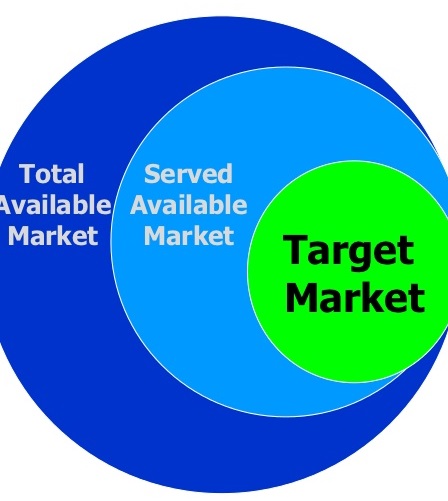
Came across this really cool, yet super simple visual illustrating how to frame your market opportunity for start-ups and entrepreneurs.

http://steveblank.com/2011/03/08/a-new-way-to-teach-entrepreneurship-the-lean-launchpad-at-stanford-class-1/

Start with the total available market.

market1

How many people would want/need your product or service?

How large would the market be in $ if every demand was met. What would that look like in terms of total number of product bought or services rendered?

.

Next determine your maximum market share.

market 2

How many customers can use the product or service?

How many have the money to buy it?

How much can I possible produce?

.

Now you can build a target market.

market 3

Who am I going to sell to first?

How will I let them know about me?

If I see everything possible to my target market how much would that be?

Sometimes it is the simplest visuals that mean the most.

Every Conflict Is An Opportunity

There is a truth in the workplace that many of us spend a lot of time and energy trying to overlook. That truth is Conflict and while you can try to avoid conflict for a while, you cannot escape it.

This is especially true if you are in a leadership position in the workplace. Conflict — and, more specifically, conflict resolution — is your job. The more you are able to recognize it, understand it, and ultimately resolve it, the more successful you will be. Being a good communicator is a key way to be successful in managing conflict.

LinkedIn Blogger, Bernard Marr, recently posted, “The first step you can take is to prevent conflicts that are preventable — not all of them are, but by actually seeking out a potential conflict and taking steps to mitigate it, you’ll make your job ultimately much easier. For example, if someone on your team sends out a vague email that could easily be misunderstood, asking for clarification upfront could head off future conflict.”

Marr points out that “as a leader, you also need to be proactive in defining what is and isn’t acceptable and helpful in a given situation.” A great example is when team members in leadership positions send vague emails or do not include all the relevant information. This can quickly lead to confusion and poor performance. Many time the root cause of poor performance, bad decision-making and low morale can stem directly from lack of proactive communication.

540

Back when I was a teacher, we would often talk about “teachable moments,” and every conflict is a strong teachable moment. When there are two sides, two opposing viewpoints, there is a remarkable opportunity for learning, innovation, and even team building. Getting the two sides to communicate and acknowledge room to grow on both sides is paramount.

According to Marr, “Great leaders don’t shy away from conflict or avoid it, but rather see it as a tool for bringing a team closer together. When there is a desire to resolve a conflict, it can be resolved — every time — and usually to the benefit of both parties.”

True leaders know how to use conflict to bring about positive and necessary change. They recognize that conflict is essential for an organization to evolve. With ever conflict we either have a crisis or an opportunity… I try hard to be proactive, to communicate and to always turn a conflict into an opportunity.

Analytics Leadership – DMAIPH specializes in arming the Data-Driven Leader with the tools and techniques they need to build and empower an analytics centric organization. Analytics leadership requires a mastery of not just analytics skill, but also of nurturing an analytics culture. We have guided thousands of Filipino professionals to become better analytics leaders. Contact DMAIPH now at analytics@dmaiph.com or connect with me directly to discuss a uniquely tailored strategy to ensure you are the top of your game when it comes to Analytics Leadership.