Mixing Technique With Empowered Curiousity

Last year I spent some time helping a couple of schools build more analytics centric training into their psychology curriculums. The goal being to help prepare future HR managers and analysts to be ready to deal with real world analytics challenges.

Over the next few blogs, I will share several of the topics I listed in these curriculums that are equally balanced in both the technical and intellectual aspects of HR analytics.

It is a common misconception that HR analytics is all about using tools and techniques to generate reports and share information to management in a way that makes the business more successful. This concept will not generally work because the analysts are not empowered to question, explore and discover new opportunities or to understand hidden risks. All they are expected to do is report things faster and with more flash.

Some of the topics typically taught in your basic HR and/or Recruitment Analytics class include:

  • Stages of HR Analytics
  • HR Metrics – Calibration and Measurement
  • Statistical Analysis Tools like DCOVA (define, collect, organize, visualize and analyze)
  • Enhancing HRIS (Human Resources Information Systems)
  • Optimizing MS Excel for HR Analytics
  • Business Intelligence Tools for HR Teams
  • Predictive Analytics Methods and Models
  • Big Data Analytics for HR Teams

Each topic can be its own training module if you have the time to sit in a class and approach the use of HR analytics academically. The problem is few of us can spare the time.
522

My solution is a mixture of self-education, internal team building dynamics and an empowerment based model of analytics training that will not just make your team better at building reports, but will unlock their minds and free their curiosity allowing them to get outside the box and discover things you can’t even imagine.

No one wants a team of drones who just follow steps in a technique or use a technology to do just exactly what it was designed to do. To really have an HR Analytics team that make a difference, you need a team that thinks differently. If you are serious about building this kind of culture in your business, then I can show you how.

Analytics Culture – The key to using analytics in a business is like a secret sauce. It is a unique combination of analytics talent, technology and technique that are brought together to enrich and empower an organization. A successful analytics culture is not easy to create, but DMAIPH can show you how. Contact DMAIPH now at analytics@dmaiph.com or connect with me directly so we can build a strategic plan to turn your company into analytics driven success story.

HR Recruitment Analytic Techniques

Every recruiting organization is looking for a way to better understand what’s working and what’s not working in their recruiting strategy. By using meaningful HR Recruitment Analytics techniques, your recruitment efforts can be greatly enhanced.

With real-time recruitment metrics & reporting, we can finally know what’s happening in our pipelines and what channels provide us with most qualified candidates.

New technologies like social networks, applicant tracking systems and business intelligence applications are fundamentally changing the entire recruitment process from sourcing to placement.

The pressure to deliver results has never been greater. HR and Recruitment managers are now more than ever required to demonstrate the return on investment their efforts are contributing to the bottom line.

Building analytics centric teams and using techniques taught in this training session will empower more data-driven decision making. This will result in both process efficiency and better return in investment in the recruitment process.

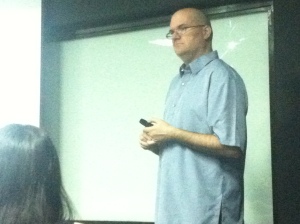
A few months ago, I facilitated a training class on HR Recruitment Analytic Techniques.

The Learning Session Objectives from the training were:

1. To learn analytics techniques that will allow quicker, deeper and more impactful analysis of HR Recruitment Big Data.
2. To be exposed to cutting edge technology being used in other companies to build HR Recruitment business dashboards and design more powerful reports.
3. To assess the current state of analytics in your HR Recruitment process and build a strategy to empower the greater use of analytics in your organization.

The Key Benefits from Attending this Learning Session were:

1.Develop analytic techniques that you can use to improve decision-making and improve the bottom line.
2. Explore analytics tools like business dashboards and data visualization to improve reporting.
3. Build a strategy to move your organization from current state to ideal state when it comes to the use of analytics.

Topics covered in the training included:

  • What is Recruitment Analytics?
  • Self-Assessment of your Recruitment Analytics
  • Analytic Techniques for Finding the Right Data at the Right Time
  • Applicant Tracking Systems & Social Media
  • Big Data and Recruiting Analytic Strategies
  • Business Intelligence, Data Visualization & Business Dashboards Technologies
  • Building Meaningful HR Recruitment Techniques

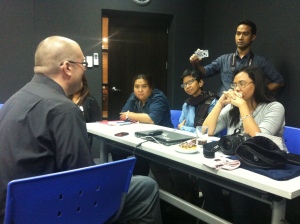
img_7502

Overall it was a great training class with lots of great discussion. Given that the recruitment and retention of top talent is the biggest challenge facing just about every organization. more conversations are needed.

DMAIPH is a leading expert in empowering HR & Recruitment teams with analytics techniques to optimize their talent acquisition and management processes. Contact DMAIPH now at analytics@dmaiph.com or connect with me directly to learn how to get more analytics in your HR & Recruitment process so you can rise to the top in the ever quickening demand for top talent.


Analytic Techniques to Make Data Driven HR Decisions

On June 22, 2016, in Ortigas, I will be partnering with my good friends at Ariva Events Management to facilitate a workshop on HR Recruitment Analytics.

We are expecting about 100 participants to come and learn more about how to use analytics to empower more data-driven decision-making in their organizations.

Analytics is now commonly being used across all industries, but being able to use the right analytic techniques to harness the power of big data is not so common.

Topics covered in the training include:

  • What is Recruitment Analytics?
  • Self-Assessment of your Recruitment Analytics
  • Analytic Techniques for Finding the Right Data at the Right Time
  • Applicant Tracking Systems & Social Media
  • Big Data and Recruiting Analytic Strategies
  • Business Intelligence, Data Visualization & Business   Dashboards Technologies
  • Building Meaningful HR Recruitment Techniques

New technologies like social networks, applicant tracking systems and business intelligence applications are fundamentally changing the entire recruitment process from sourcing to placement.

IMG_1224

A standard definition of HR Recruitment analytics is simply the metrics and analysis that relates to recruiting in a business.

However, we all know its actually a lot more challenging in practice.

The pressure to deliver results has never been greater.

HR and Recruitment managers are now more than ever required to demonstrate the return on investment their efforts are contributing to the bottom line.

So as the day progresses we will use hands of exercises based on real business cases to come up with solutions to the data challenges around us.

We will also look at several of the biggest trends in HR Recruitment Analytics. Sixmonths into 2016, there are the ones I have identified as the most common:

  1. Millennial Job-Hoppers
  2. Fresh Grad Skills Mismatch
  3. Selling Compelling Brands
  4. Focus Shift on Retention
  5. Social Media is not the magic solution
  6. Go Mobile or Go Dinosaur
  7. Big Data will make life better
  8. Analytics solutions that actually work

Don’t fall behind the competition. Recruiting for top talent in the Philippines is one of the hardest jobs on the planet right now. If your team is not armed with the best analytic techniques it will only get harder to stay a head in the game.

Let me know if you are interested in attending and I will connect you with my business partners at Ariva.


Turning Data Owners Into Data Resources

One of the biggest challenges I hear about when I do public trainings is how to get people who are stingy with their data to share it.

My answer is always the same… buy them a doughnut.

Seriously, when I reflect back to what made me a great analyst when I was with Wells Fargo, one of the biggest reason was I made sure all the data guys liked me.

Just about every company has someone who likes to keep their data close. Sometimes it is a result of security risks. But most of the time it is because they just don’t like to share. It is also possible they just don’t like someone on your team. Whatever the reason, you have to get them to lower the gate and let you in to play with their data.

From my perspective, I generally see a few types of data gate keepers who have very different reasons to keeping you out of their data playground.

  1. They are afraid to share the data, because they know the data is not 100% trustworthy.
  2. They are afraid to share the data, because they worry you will use the data to do things they can’t.
  3. They are afraid to share the data, because they had a bad experience with you or someone like you.
  4. They are afraid to share the data, because you play for a different team.
  5. They are afraid to share the data, because you won’t need them anymore.
  6. They can’t share the data because it’s a security risk.

1075177_10151826941667425_1417094118_n

In every case, even the last, engagement is the key. Share with them why you need the data, demonstrate how much more awesome your analysis and reporting will be if you can include their data.

One of the advantages I have enjoyed in my career is that I really get along with people. I make an effort to be likeable and trustworthy. To be a great analyst, you will need to be likeable and trustworthy too.

And I kid you not, buying them a doughnut and dropping it off at their cube works more often than you might imagine.

The key to using analytics in a business is like a secret sauce. It is a unique combination of analytics talent, technology and technique that are brought together to enrich and empower an organization. A successful analytics culture is not easy to create, but DMAIPH can show you how. Contact DMAIPH now at analytics@dmaiph.com or connect with me directly so we can build a strategic plan to turn your company into analytics driven success story.

Sharing My Analytics Story

Sometimes I get asked to share my analytics story. It’s pretty awesome when that happens.

I’ve have gotten so accustomed to talking about my analytics story that I do speaking engagements, public training seminars and write this blog. Talking about analytics and sharing how I have and do use data to facilitate data-driven decision-making is my favorite thing to do.

A lot of people would like to share their analytics story, but they never feel like they are in the right place to do so.

Some are not confident enough in what they are doing and afraid of looking like they don’t know what they are doing. Well, when it comes to analytics most of us don’t always know what they are doing… the whole point of analytics is discovery and looking outside the box.

IMG_1249

Other people chose not to share their analytics stories because they don’t have a complete understanding of analytics in general. They know their niche, whatever they are in charge of back at the office. But they are not part of the bigger data picture in their company.

I have also find that others don’t share their analytics stories because they think what they are doing is to simple or not relevant to a broader conversation. Well, hardly anyone does the same thing as someone else when it comes to working with data. How we use data in our jobs is a individual as how we dress in the morning.

SO, when I speak, or present or write, I do my best to get others to participate. I love to learn about what challenges people are having and help them come up with solutions. A lot of analytics trainings are follow this method or use this technology, but few actually solve any problems. They give you tools but no instructions on how to use them in context of your own data environment.

I have found that the best way to build better reports is to talk about them. The quickest way to build engagement for more analytics is to talk about how to use analytics.

It’s all about taking the data in your head and constructing engaging conversations. That’s why in every opportunity I have to talk about analytics, I finish talking about how to market your analysis and how to make it enchanting to your audience.

I’ll be doing a training in Ortigas this coming June 15 and a seminar on June 22. If you are interested in sharing your story and coming up with some solutions to your data challenges, I’d be happy to see you there.

Perhaps The Most Awesome Thanks For Saying Thanks Ever?

So I filled out (not up) a survey I got via e-mail from PAL.

My recent flight from Manila was pretty uneventful except that for breakfast by the time the flight attendant pushed the cart to my row, they were out of corned beef. I was already dreaming of the In-N-Out Double Double awaiting me, so it was no big deal.

I told the flight attendant that its ok, I’ll pass on the fish and just wait a few hours until landing. But she went and found me an extra corned beef anyway. Nothing special, but she didnt have to do that and she did. Pamela went above and beyond and it stuck in my mind well enough, that when I got the email survey from PAL. I made note of it.

And then I got back perhaps the nicest, warmest, most sincere thanks for filling out the survey I think I have ever seen. It might be a canned message, but is sure seems like it comes from a genuine need to keep the customer happy.

I wish more companies valued their customers the way PAL just made me feel valued.

10592010_10152674958362425_1982237172_n

“Dear Mr. Meyer,

Thank you for sharing your recent experience with us.

We would like to express our utmost gratitude for your appreciation of our service. Surely, you will agree that for us, it may just all be a part of the day’s work, but the good impression you have elicited from this experience will definitely last for more than just a day. Your kind words serve as an inspiration for us to consistently provide you, our guest, with excellent service.

Mr. Meyer, we wish to reiterate our heartfelt gratitude to you for your valued support and patronage of Philippine Airlines. We remain committed to provide only the best in passenger care and it is our fervent hope to be of service to you again, onboard our flights, soon.

Sincerely,

Customer Relations Office

Philippine Airlines”

It made my day.

Give Me A Young, Hungry And Curious Person And I Will Teach Them How To…

Businesses want analysts who can dig into a question and not only get to the root cause but also come up with multiple solutions.. this is not something that generally is taught in schools.

Unleashing a young, hungry and curious mind on complex business challenges is not generally considered, as most companies tend to assign newbies to remedial task and assign tire, narrow thinking, veterans to handle the big stuff.

Companies that see past these challenges and can select talent, empower them and turn them lose with cutting edge analytics technology are the ones succeeding.

DMAI_ERINSHELLMAN_shemac101_092015 copy

Dont give me an excuse, give me a solution. Don’t come with just a problem, also come with a suggestion on how to fix it.

How many people do you have in your business that can do that?

All The Tools And All of The Talent but none of the Technique… Where Good Analytics Intentions Go Bad

I have seen so many examples of this. A majority of companies throw money at analytics in the form of buying new technology, but don’t spend a fraction as much on the people who need to make the technology work.

A good analyst using Excel is much more powerful then a mediocre analyst using a cutting edge BI tool. Without the innate curiosity, knowledge of the business and ability to communicate discoveries that come with a good analyst, your analytics plans will fall short no matter what the sales reps from the analytics companies promise you.

Now we have the 2016 Presidential Election results to analyze. Most predictive models had Clinton winning. Most of the polls had Clinton winning.

So where did the analytics go wrong? Well, its definitely not the technology. And I don’t think it was the talent.

In the coming days, I am pretty sure we will find it was the technique.

It was not getting deep enough data.

It was looking at the data and seeing what you expected to see.

Curiosity was lost.

Finding new perspectives to make sure we have the right data next time.

Hillary Clinton’s campaign will be a case study in where good analytics where not good enough.

Analytics Culture – The key to using analytics in a business is like a secret sauce. It is a unique combination of analytics talent, technology and technique that are brought together to enrich and empower an organization. A successful analytics culture is not easy to create, but DMAIPH can show you how. Contact DMAIPH now at analytics@dmaiph.com or connect with me directly so we can build a strategic plan to turn your company into analytics driven success story.

 

When What Is New Is Actually Old

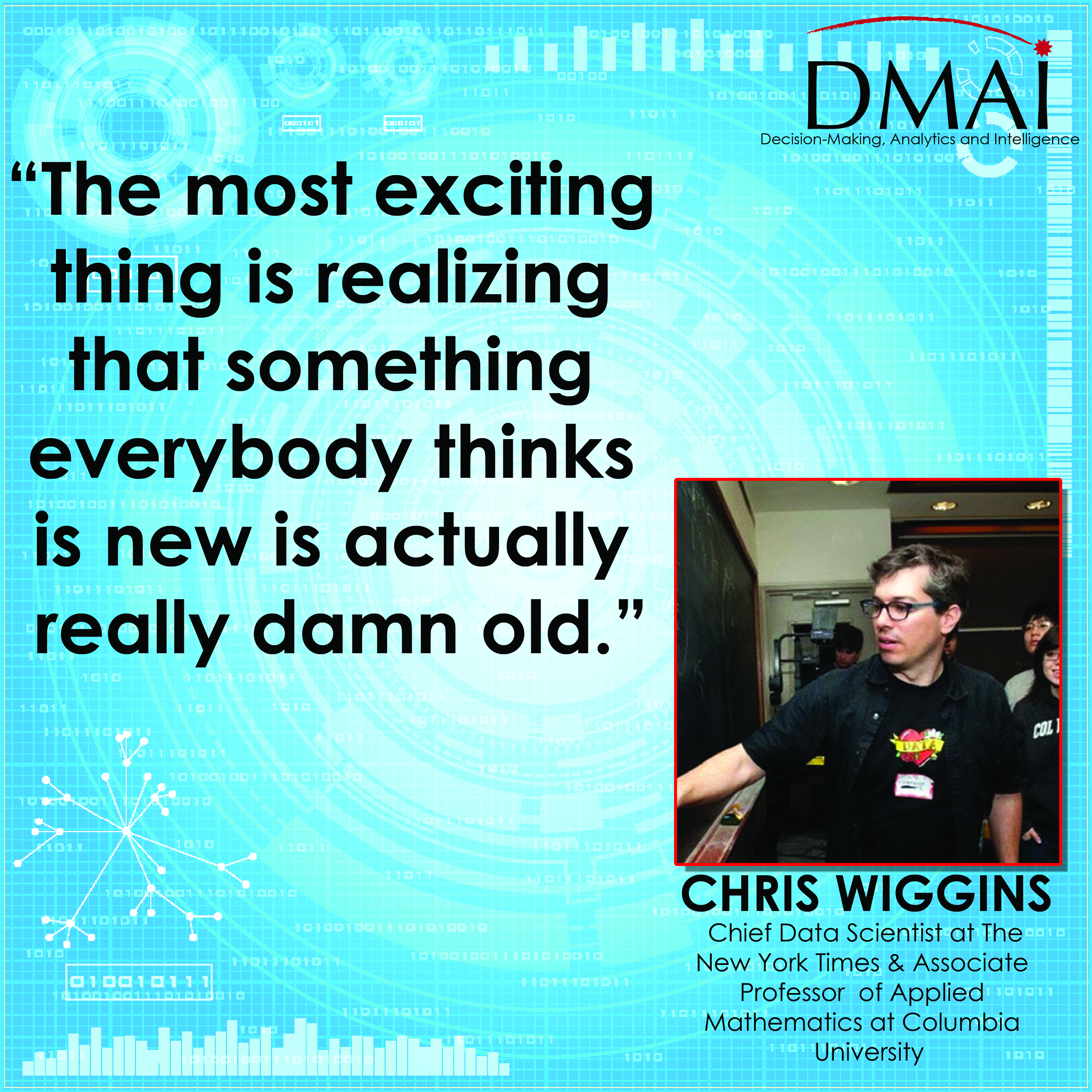
I saw this quote and thought it was worth sharing… often I remind people that most problems have already been solved by someone else. One of the keys to being a good analyst is having a network that you can go to when you are stuck and ask around to see if anyone else has already figured it out.

Print

DMAI has been blessed with a very successful year so far in 2015 and is starting to look towards 2016 planning. Let’s see if there is some more opportunities out there for us to teach some people to rediscover things again using analytics!