So Just How Many Filipino Data Scientists Are There Anyway?

One Question I have been asking myself for awhile is just how many Filipino Data Scientists are there anyway?

I ask this  question because based on my observations of job postings and job titles and industry buzz, there are way more data scientist jobs open here in the Philippines then there are actual data scientists to fill them.

And I’m not even trying to separate the “true” data scientists with the “quasi” data scientists that are doing data science but without all the pre-requisites required.

Lumping everyone together into one number, I wonder what it is. An educated guess would be a few hundred at best. Yet, there are literally 1000 job postings out there right now for data scientist.

This speaks to a fundamental lack of awareness across the country as to what truly a data scientist is and what they do. But that’s for another blogpost.

Right now Im simply going to do some research, survey my network and try and come up with a best guess on exactly how many data scientists there currently are here in the Philippines.

Please feel free to contribute to the conversation… its not going to be easy to get a universally acceptable answer without a lot of discourse first.

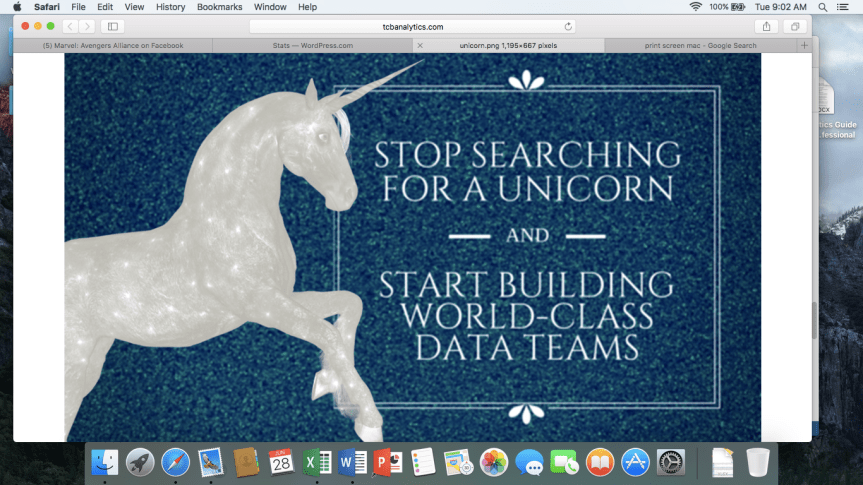
Let the hunt for a unicorn head count begin!

Screen Shot 2016-06-28 at 9.02.36 AM

Analytics in the Philippines – The Philippines is at the center of the action when it comes to solutions to the global need for analytics. Blessed with a solid foundation of young, educated and English speaking workforce, companies around the world are look for Filipino analytics talent to fill analytics positions. DMAIPH was set up to facilitate these solutions and bring the talent and the business together. Contact DMAIPH now at analytics@dmaiph.com or connect with me directly so we can help you take advantage of this unique global opportunity.

7 Reasons for Filipinos To Get into Analytics Right Now

Some people ask why did I come to the Philippines.

Why did I leave a great analytics career at Wells Fargo and move 6,000 miles away to set up a business?

Was it just for the money? What really motivated me?

Am I worried about the current political forces that can potentially divide my home country and my adopted country?

Am i really gonna stick it out with the Philippines?

Well the answer to all those questions is simple. For the past 5 years I have worked to help empower Filipinos with more analytics. I will keep doing it as long as I can because I have faith in this country, the Filipino people and my ability to make a difference.

Below are 7 reasons why I believe what I believe. And these have held true for the past 5 years and will most certainly hold true for at least the next 5 years.

7 Reasons for Filipinos To Get into Analytics Right Now

  1. Huge Growth Opportunity
  2. Awesome Salaries
  3. Global Demand
  4. Empowers Curiosity
  5. Technology Driven
  6. Unlock Your Potential
  7. The Sky is the Limit

I will write a series of blog posts with more detail on each of the 7 points, but the bottom line is that for someone like me who has a passion for teaching analytics, there is no where in the world better to be.

The Huge Growth Opportunity of Analytics in the Philippines. I see this an undeniable fact  that both global and domestic forces are pushing the Philippines forward to new types of jobs and new skills sets that will likely continue to boom.

The Awesome Salaries Filipino Analytics Professionals Can Earn. There is a lot of money to be made if you are a data geek and the amazing rise in salaries and the salaries being offered to fill new positions are very high. The need for analytics talent is driving a buyer’s market.

The Global Demand for Analytics Talent is Looking at the Philippines Right Now. There just aren’t enough people across the globe who can do analytics well. Like with call centers and with OFWs the Philippines is considered a top potential source of talent.

Filipino Companies Who Get Analytics Empower Curiosity. When you come across a domestic company that understand analytics you find truly engaged employees. They know they are valued because the see the data and it empowers them to be curious and to think outside the box.

Filipinos with an Affinity for Technology are Natural Born Analysts. Social Media, Programming, IT. Computer Science… there are a number of factors at play that imbue the millennial workforce with a penchant for working with data to solve problems.

Analytics Careers in the Philippines can Unlock Your Potential. The need to fill all levels of analytics jobs creates opportunities for quick advancement. It its generally merit based, so the harder you work the more opportunity you can create for yourself.

The Sky is the Limit for Analytics in the Philippines. There is no where to go but up. On both a country wide as well as an individual level, there is really no hard ceiling on what we can do. It really is completely up to us how high we go.

jobspicture2

General Analytics – Analytics is the application of using data and analysis to discover patterns in data. DMAIPH specializes in empowering and enabling leaders, managers, professionals and students with a mastery of analytics fundamentals. Contact DMAIPH now at analytics@dmaiph.com or connect with me directly to find out what we can do to help you acquire the analytics mastery you and your organization need to be successful in today’s data-driven global marketplace.

Dan Meyer – Speaker Bio

My updated speaker bio… I have several speaking and training events lined up in 2017. There is nothing I love more then being in front of a room full of people hungry to learn more about analytics!

Daniel Meyer is President & Founder of DMAIPH (Decision-Making, Analytics & Intelligence Philippines), an analytics, consulting, training and outsourcing company with offices in Manila and the San Francisco Bay Area.

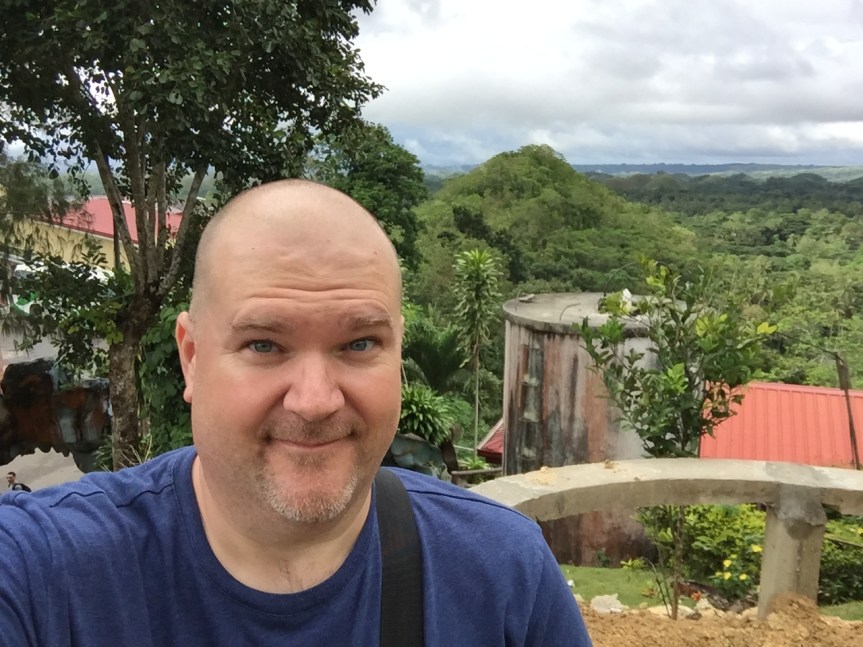
IMG_6912Mr. Meyer is one of the top analytics experts in the Philippines. With a team of over 40 analysts, DMAIPH provides a variety of analytics solutions to companies in the U.S. and Asia. Mr. Meyer is also one of the most sought after public speakers in the country and has personally trained thousands of Filipinos in various analytics functions.

Before setting up his own company, Mr. Meyer worked as a Senior Analytics Consultant for Wells Fargo Bank for 15 years. Mr. Meyer provided executive management analytics for the bank’s Remittance Service including developing business dashboards, overseeing competitive intelligence gathering, managing data analytics outsourcing projects and facilitating audit and risk management.

Mr. Meyer recently published Putting Your Data to Work, an analytics guidebook designed to provide organizations with a solid foundation in using analytics to empower more data-driven decisions.

Mr. Meyer earned a B.A. in History with a minor in International Studies from Sonoma State University and a M.A. in Education with a focus on Student Affairs in Higher Education from the Indiana University of Pennsylvania.

Analytics Training – DMAIPH offers a wide range of analytics centric training solutions for professionals and students via public, in-house, on-site, and academic settings. We tailor each training event to meet the unique needs of the audience. If you need empowerment and skills enhancement to optimize the use of analytics in your organization, we are here to help. Contact DMAIPH now at analytics@dmaiph.com or connect with me directly to set up a free consultation on which of our DMAIPH analytics training solutions is best for you.

Adding Three More Metrics to the Next 5-Year Plan

So, as year five winds down and I have reflected on the key metrics I established back in 2012, it seems the right time to add a few more data points to the mix.

For me, having metrics that you can measure against progress and use to make educated course corrections is the most important part of any business plan.

My first five-year plan was all about establishing myself as one of the top Analytics experts in the Philippines. Based on the number of Filipinos I have trained, the number of Filipino colleges and universities I have worked with and having established a profitable business, it is now time to think about how to expand my horizons.

Going forward the goal is not to just have one of the top analytics brands in the Philippines, but to expand that brand name outward. We will expand in terms of both geography and in terms of content offerings.

I love new things, so the sky is the limit, but I have these 3 things in mind.

The first new metric I will add will be number of trainings with partner speakers. I want to take analytics out of just being for analyst and find ways to use my gifts to empower and educate non analytics people as well.

To do this, we will partner with other innovative and progressive minded trainers and speakers here in the Philippines.

The second metric will be based on geography. I have given talks and trainings mostly in Metro Manila. On the average I have visited about one province a year to deliver a presentation or conduct a training.

Over the next 5 years we will plan activities outside not only Manila, but outside the Philippines as well. I already have one webinar lined up for a U.S. audience in February and will be looking for more places to talk about analytics. Sharing my passion with the world!

The third metric will involve revenue. I can’t imagine any business being successful and not having good analytics when it comes to increasing revenue and growing profits.

Originally the primary financial metric I cared about was net profit. Could I build a business based on analytics that could generate enough money for me to comfortably live on?

Now that we can positively answer that question with a resounding yes, the next question is can we sustain it?

When I started, I had one source of income, analytics training.

As of now we have revenue coming in from 4 sources of income; analytics training, management consulting, outsourcing and book sales.

I need to add at least 3 more streams of income over the next five years to reach my personal goal of having 7 streams of income.

The most likely source will be investing in side business that can generate income without my day to day involvement.

So, I have just doubled the key metrics I am tracking to measure the success of my efforts.

Over the next few years I will monitor the results to see if I need to make more course corrections to get me to the end goal of successfully having executed my second 5-year plan.

Stay tuned! It’s going to be even more of an adventure then the last five years!

Business Strategy with Analytics – Aligning a business strategy to drive an organization forward requires a robust analytics solution. Businesses who have good analytics tend to be much more profitable and efficient then ones that do not. DMAIPH has helped dozens of companies in both the U.S. and the Philippines with adding more data analysis in their business strategy. Contact DMAIPH now at analytics@dmaiph.com or connect with me directly to find out what we can do to help you align your business strategy with analytics.

Five Year Plans – What Analytics Do You Use?

As the 5th year of my original business plan comes to a close, it seems like a good time to reflect on how things have played out.

There are plenty of data points to look at to determine how sound my original plan was and if the course changes made along the way proved to be the right ones to take.

The single most important metrics in my 2012 business plan where # of Filipinos trained to be analysts, # of schools I have worked with and $ of revenue I have generated.

Looking first at the revenue, because if you cant make a profit after 5 years then you are doing something seriously wrong. I started making a profit I year 3, which is pretty typical of business startups.

I made my most money in year 4, but had a more diversified revenue stream in year 5. Revenues have been closer to my actual target as year 4 was one of almost too much growth.

Originally just making money from public trainings, over the years I have added paid speaking engagements, consulting, outsourcing and most recently publishing a book.

SO based on $, I have achieved my original plans and am able to comfortably move on to the financial goals of my next 5 year plan.

When it comes to working with schools, who represent the future of analytics in the Philippines, I have consistently given talks, been part of activities and mentored interns/OJT.

When I check off the list of schools I have worked with in the past 5 years I can definitely say I have met this metric.

The third data point I look at is number of Filipinos trained.

When talking about public trainings we are about 1000 persons over the past 5 years. When we add the number of attendees of public speaking engagements, the number gets closer to 5,000. And that’s paid events.

If I add the number of students and free events we are getting close to 10,000.

SO, I have fall surpassed my expectations from 5 years ago on that metric.

When assessing the success of a business plan you need to measure data over time to make sure you are making progress.

You also need to be able to make course corrections.

Before the training business started taking off, I did some consulting. To generate consistent revenue, I got into outsourcing.

Both course changes allowed me to continue pursuing my original goal of training Filipinos to use more data in their decision making and to empower analytics centric cultures.

So what are the key metric of your business plan? How do you measure them and make sure you are making progress. Do you have a threshold that you set to make course changes if you are not meeting that threshold?

To effectively execute a business plan, you need good analytics in place.

Dr. Data_Analytics in the Philippines

Analytics in the Philippines – The Philippines is at the center of the action when it comes to solutions to the global need for analytics. Blessed with a solid foundation of young, educated and English speaking workforce, companies around the world are look for Filipino analytics talent to fill analytics positions. DMAIPH was set up to facilitate these solutions and bring the talent and the business together. Contact DMAIPH now at analytics@dmaiph.com or connect with me directly so we can help you take advantage of this unique global opportunity.


Whatever Happened to Free Wifi for Everyone? – Analytics @ TriNoma

As I sit here enjoying a Big Mac, I have been thinking about WiFi access here in the Philippines.

15220172_10154796376872425_148074038239599249_n.jpg

Everyone knows its bad overall. Connectivity is a big challenge for the average Filipino. Although for me it seems better then it used to be.

I enjoy the benefit of a Globe postpaid plan now, but for a long time I used prepaid load like most Filipinos do. Its a definite frustration in life.

In the past few years malls across the Philippines, have been offering free WiFi but its a crap shoot at best, often down more the it seems to work. To balance load SM malls offer a free hour of WiFi and then you are cut off.

This all has me thinking about why it has been so hard to provide better wifi, at least in the malls. It would encourage more mobile payments and help the slow, slow migration away from cash.

It could also make the lines go faster.

Regardless though, it wouldn’t take a lot of effort to analyze the user data, optimize bandwidth and offer a better wifi experience, especially in the smaller lifestyle malls.

It could also be a boon to retailers who offer online promotions to cut back on the number of staff passing out promo flyers as well as the cost of the marketing materials itself.

As time passes, I fully expect that to enter mainstream but as of now WiFi in the malls here is not anywhere close to where it has the potential to be.

A simple cost/benefit exercise using available data  coupled with some usage and capacity analytics would most likely expedite that adoption.

At least thats is where I would start if I was consulting with a mall about how to both improve customer satisfaction and drive more retail profits to electronic models.

Thanks Bam for the topic idea.

Analytics in the Philippines – The Philippines is at the center of the action when it comes to solutions to the global need for analytics. Blessed with a solid foundation of young, educated and English speaking workforce, companies around the world are look for Filipino analytics talent to fill analytics positions. DMAIPH was set up to facilitate these solutions and bring the talent and the business together. Contact DMAIPH now at analytics@dmaiph.com or connect with me directly so we can help you take advantage of this unique global opportunity.

Where’s the Analytics? The Analytics Challenges of Malls in Metro Manila

I spend a lot of time in malls when I’m in Metro Manila.

Business meetings at coffee shops.

Staff meetings at restaurants.

Getting exercise why walking to hit my FitBit goal.

I see a lot of movies.

And I am not alone.

Malls are where everyone goes. To beat the heat, to meet up with friends, to conduct business, and of course to shop and eat.

Given that I spend so much time in malls, I think a lot about the analytics that can take place behind the scenes.

Or in many cases, the apparent lack of analytics.

Now don’t get me wrong. I love the Philippines.

The heart and spirit of the Filipino people is the primary reason I set up a business here.

But I do sometimes wonder, how much better things could be in my adopted home if there was more widespread use of analytics in decision-making.

The malls are full of great examples of decisions that are pretty much done without much data analysis.

At least that is how it appears to me.

So in this series of blog posts I will discuss several topics that come to my mind when being in a mall in Metro Manila and how I would go about using analytics to investigate my observations.

Analytics in the Philippines – The Philippines is at the center of the action when it comes to solutions to the global need for analytics. Blessed with a solid foundation of young, educated and English speaking workforce, companies around the world are look for Filipino analytics talent to fill analytics positions. DMAIPH was set up to facilitate these solutions and bring the talent and the business together. Contact DMAIPH now at analytics@dmaiph.com or connect with me directly so we can help you take advantage of this unique global opportunity.

Big Data Analytics > The Art of Presenting Big Data


It has been my experience that presenting Big Data requires quite a bit of artistic ability.

I will be talk about the Art of Presenting Big Data among other topics at an event this coming February 21 in Ortigas.

For me there is a clear need to Apply a Process to Present Big Data Clearly
. This process has 3 parts.

  1. Selecting the Appropriate Presentation Format to Communicate Your Findings Effectively to Your Audience
  2. Mastering the Power of Enchantment
  3. Sharing Findings from Big Data to Drive Decisions Within Your Organization

Knowing How to Select the Appropriate Presentation Format to Communicate Your Findings Effectively to Your Audience is where we will stat.

To that end I have a checklist I use before every presentation I share involving Big Data:

  • Know Your Audience
  • Consider Time Constraints
  • How Will The Data Be Consumed?
  • Can The Data and Analysis Be Accessed?
  • Make it Interactive

DMAIPH offers a wide range of analytics centric training solutions for professionals and students via public, in-house, on-site, and academic settings. We tailor each training event to meet the unique needs of the audience. If you need empowerment and skills enhancement to optimize the use of analytics in your organization, we are here to help. Contact DMAIPH now at analytics@dmaiph.com or connect with me directly to set up a free consultation on which of our DMAIPH analytics training solutions is best for you.


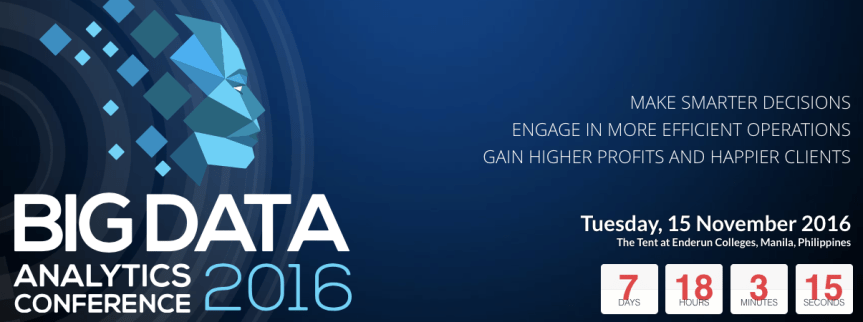
My Take Aways for the Big Data Conference 2016

Had a blast at the Big Data Conference at Enderun College yesterday. Lots of things to discuss in upcoming blogs, but here are a few takeaways that I notated.

There is a strong hunger for a national umbrella organization for analytics, big data and data science.

Engagement at the C-Level of Filipino companies outside the IT-BPO sector to eliminate the biggest adoption roadblock.

Restart of the Government, Industry and Academia collaboration on analytics needs to happen.

More hands on experiential learning for both students and faculty involving the industry.

Both traditional training and certification models as well as mentoring and self-guided training opportunities.

The speed and consistency of the internet is a huge threat.

img_0121

Advocacy for fixing culture before spending on costly technology and high priced talent.

Conversion of up to 70% of Customer Facing BPO Workers to doing analytics and data science as a hedge against automation and political decisions.

Im convinced that a lot of good can come out of the conference as the analytics and data  science industry is at about the same point the call center industry was 10 years ago.

However, given the global demand for data savvy talent and the exponential proliferation  of data, we need todo in 3-5 years what the BPO industry did in 10.

More to come!

News & Events- DMAIPH is a highly engaged leader, sponsor and participant in analytics events across the U.S. and the Philippines. As an Analytics Champion I write, blog, speak and lecture about analytics in a wide variety of forums. I authored several publications on analytics including my latest book, Putting Your Data to Work. Contact DMAIPH now at analytics@dmaiph.com or connect with me directly to learn more about where I will be talking about analytics next.

Philippines Analytics Review – 2016

There is no doubt that analytics is now a big deal in the Philippines.

Now that 2016 is in the books, I can proudly say I spent the better part of the past year helping Filipino get more analytics in their businesses.

My primary goal for the year has been meet, so let’s recap how that happened…

My involvement in empower Filipino companies, students and professionals to make data-driven decisions has renewed my passion for being a top name brand for analytics in the Philippines.

As I think back the Recruitment Analytics training that DMAIPH and Sonic Analytics put on early in the year, I think about how HR professionals are now actively looking to get more analytics in their business.

The simple fact is there are more white collar, professional staff jobs out there then there are qualified candidates. And its only getting worse. Recruitment Analytics is the only way to stay on the cutting edge.

This was even more evident when I spoke in front of close to 100 HR professionals at a workshop called HR & Recruitment Analytics Techniques put on by my good friends at Ariva Events Management.

We spent the day talking about how get IT when it comes to recruitment. The 3 I’s of analytics; identify, inventory and integrate data as well as the 3 T’s; talent, technology and technique needed to make sense to the data.

I once again joined Ariva for their annual Philippines HR Congress. One of the central themes of the conference attended by over 1000 HR professionals was Aligning HR Strategy with Analytics.

HR teams are sitting on a gold mine of insightful data, but in most cases have not been able to take advantage of it.

Big Data Analytics has come so fast and furious, that it takes a lot of effort to become analytics champions and try and move a company culture towards more data-driven decision-making. This was top of mind for all the attendees.

At the same time I have been doing speaking and public training, CHED has been training teachers on how to teach business analytics. Their efforts to explain the Fundamentals of Business Analytics to faculty and students will go a long way in making the Philippines a significant analytics hub.

I have been honored to have helped several schools in adding my two centavos to the discussion about analytics careers for fresh grads.

Another moment of great personal pride came when I published my newest book, Putting Your Data to Work. This guidebook is designed to help Filipino professionals who aren’t too familiar with analytics, get started.

In early November, I was part of a panel discussion at the Big Data Conference at Enduran college. I was and still am super excited about the topic, The Future of Big Data Analytics in the Philippines. This is my passion, turning students and young professionals interested in analytics on to the huge opportunity they have in front of them.

A week later I conducted a Data Analytics seminar with DMAIPH and Sonic Analytics. The primary goal here was to demonstrate how having a thorough understanding of the data environment in a business can lead to huge successes.

Next up was a job fair at Trinoma mall put on by Job Quest PH. My goal here was to recruiting a few young professionals looking to get started in analytics as DMAIPH is looking for some marketing analysts.

A few days later I attended a Data Science event being set up by my good friends at Talas. This free event saw a meeting of the minds of a lot of thought leaders in data science as well as industry leaders in employing analysts and data science. Pretty exciting stuff.

The final 2016 event on my schedule was another full day training organized by my key business partner Ariva. The topic, Big Data and Business Intelligence, which proved to be a great opportunity to help people gain a stronger handle on analytics and how they can be an analytics champion in their business.

IMG_6912

2016 turned out to be my most successful year yet. Analytics in now mainstream and I love it.

Analytics in the Philippines – The Philippines is at the center of the action when it comes to solutions to the global need for analytics. Blessed with a solid foundation of young, educated and English speaking workforce, companies around the world are look for Filipino analytics talent to fill analytics positions. DMAIPH was set up to facilitate these solutions and bring the talent and the business together. Contact DMAIPH now at analytics@dmaiph.com or connect with me directly so we can help you take advantage of this unique global opportunity.