Mastering The Art Of Account Management

I have been thinking a lot lately about what its take manage the relationship we have with our clients.

A long time ago, I learned that to be a good account manager you need a rare combination of professional and personal characteristics, some of which can’t be taught. To me account management is the art of representing my business to clients and vice versa.

The job requires skill, advocacy, diplomacy, leadership, expectation setting, intelligence, method, heart, patience, experience, and wisdom. It is not easy and it is something I am constantly trying to improve at.

With this concept top of mind, I thought I’d share some of my tips for being an effective account manager.

  1. Under Promise and Over Deliver. I have always strived to under promise and over deliver. Most people get it wrong. They promise to something they cannot deliver and things go downhill quickly from there. Losing your client’s trust is a surefire way to doom your company.
  2. Do What They Want, Not What You Want. We often get so busy we think we have to do it the way we are doing it. Even when it’s clearly not what the client wants. This is another way to doom yourself and your business. They are paying you to do what they want, so don’t expect them to keep paying you to do what you want.
  3. Communicate Bad News Early. It is far, far better to tell you client you will be late on a deadline, or you can meet the requirement or you have to modify what you promised then it is to go silent. Not communication bad news early, or worse to communicating the bad news at all is another strike against you and your hard work, not matter what you intentions.
  4. Be the Expert. When it comes to dealing with a client, they are expecting you to know every answer, sometimes even before they ask it. They are paying you for your expertise. So you need to be the one to find problems before they are problems, fix things before they break and always have a solution at hand. If you are not an expert on what you are being paid for, they will find someone else.
  5. Always Have the Most Data. When your client tells you there is something wrong because they saw it in a report, then you know you have pretty poor analytics. You are doing the job, so you should be the one churning out the reports, championing the sharing of information and setting the agenda for the next meeting.

10592010_10152674958362425_1982237172_n

That’s just a few of the things that come to mind when it comes to being a good account manager.

And just in case I need to remind anyone, and not trying to brag… but I am pretty awesome at this.

Being good at account management is without a doubt one of the key reasons I have thrived throughout my career is keeping the clients happy.

DMAIPH has successfully set up Filipino analytics teams for over a dozen U.S. based businesses. Offering both virtual and office based teams that specialize in problem solving using data, new technology and analytics techniques is our strength. Finding and empowering analytics talent is increasingly challenging, but we have it down to a science.

DMAIPH specializes in arming the Data-Driven Leader with the tools and techniques they need to build and empower an analytics centric organization. Analytics leadership requires a mastery of not just analytics skill, but also of nurturing an analytics culture. We have guided thousands of Filipino professionals to become better analytics leaders. Contact DMAIPH now at analytics@dmaiph.com or connect with me directly to discuss a uniquely tailored strategy to ensure you are the top of your game when it comes to Analytics Leadership.

IBM’s Six Ways To Use Analytics To Manage A Workforce

http://www.forbes.com/sites/ibm/2015/04/06/6-ways-to-use-analytics-to-better-manage-a-workforce/

Interesting article about how to use more analytics in areas that are traditionally data rich, but not a focus of most enterprise analytics solutions.

Right now in the BPO industry in the Philippines, two of the bullet points really got me thinking.

Using analytics in HR to predict if and when employees might leave is a pretty cool concept. Their is plenty of historical data to look at resignation and termination patterns and segment the data in various buckets to see if any meaningful patterns jump out.

This goes hand in hand with higher employee expectations for work life balance and having a strong sense of community within the work place.

Both are things that might require a lot of unstructured analytics as well… although it blurs employee privacy issues, Facebook and Twitter can be an excellent place to glean insights into employee mood and their intentions.

I am curious to see how deep analytics can go into looking at data and trying to predict employee loyalty and stickiness.

The recruitment and retention of top talent is the biggest challenge facing just about every organization. DMAIPH is a leading expert in empowering HR & Recruitment teams with analytics techniques to optimize their talent acquisition and management processes.

jobspicture2

DMAIPH also specializes in arming the Data-Driven Leader with the tools and techniques they need to build and empower an analytics centric organization. Analytics leadership requires a mastery of not just analytics skill, but also of nurturing an analytics culture. We have guided thousands of Filipino professionals to become better analytics leaders. Contact DMAIPH now at analytics@dmaiph.com or connect with me directly to discuss a uniquely tailored strategy to ensure you are the top of your game when it comes to Analytics Leadership.

What Does A Business Analyst Actually Do?

For the sake of the CHED course on business analytics, lets look a little more closely at business analysts.

The International Institute of Business Analysis (IIBA) describes the role as “a liaison among stakeholders in order to understand the structure, policies, and operations of an organization, and to recommend solutions that enable the organization to achieve its goals.”

With that in mind, the next question often asked is, “What does a business analyst do?”

This is a reasonable question, because the fact is a business analyst is not limited to doing one thing. He or she wears multiple hats. He or she will be skilled in communication, negotiation, listening, and will also need to be a good team leader. They have to be good at solving problems. This means he or she will have the skills necessary to look at data and other relevant information in order to determine where the losses are within a company. They also have to understand the technology used to capture, store and analyze the data used in their company. It takes a lot to be a good business analyst.

This is where things like deep thinking and curiosity really separate good analysts from great analysts. Of the many  essential skills a business analyst will utilize here are my top 3:

(1) – Know the data. They will compare the past facts and figures to the current numbers, this will give the analyst the information to deduce or predict failure within the company.

(2) – Know the business – A business analyst is always an objective listener. They will determine the needs that management want by speaking to shareholders. This requires the analyst to ask questions, to find out what is needed, which will more than likely lead to new discoveries that may have been overlooked previously.

(3) – Know the players – Within a business there are usually different departments. A Business analyst will seek to associate and involve them-self with the various departments. This will help them identify conflicts within the various departments, which can be used to bring departments together.

As you can see it takes a lot to be a business analyst. BAs are truly a rare breed of technology loving people, who can solve problems and work well with others.

FBA0001

The Not So Elusive Unstructured Data – Part 2

Historically people have been talking about data within the firewall, document management or collaboration information that is not structured, such as video, photos, documents and diagrams.

However now that we are at a tipping point: There is as much value in unstructured data in terms of what customers are thinking on the web and what businesses can derive from other organizations’ data

Good Analysts know how to identify, inventory and integrate unstructured data right along side the structure business data they have always had.

Structured-and-Unstructured-Data-02

Recently, BI and warehousing suppliers have been adding support for unstructured data management to their tool sets.

Many IT organizations have built their own platforms for converting unstructured data into structured records, for example, through knowledge management systems.

And new businesses are popping up to offer unstructured data collection, storage and analysis options that are integrated into the enterprise analytics solution.

Companies who get unstructured data will have a huge competitive advantage. DMAI can give you the training, consulting and analytics talent you need to stay ahead of the pack. #GrowMoreDMAI

Finding The Right Data To Help A Business Is The Key To Being A Great Analyst

Knowing where to go to find the data you need is one of the most important keys to being a successful analyst.

There are three basic areas where you can go to find data:

  1. Private Company Databases and sources
  2. Public Databases and sources
  3. The Internet

Each company treats its data a little different, but you can expect them to store their data in data bases that fall into the following couple of categories:

  1. Proprietary Databases. All of the data used for analysis is kept in databases that are built and maintained by an internal IT team. They may use heavily personalized commercial software.
  2. Off the Shelf Databases. Most data is housed in a commercial database solution like Oracle, Teradata, MS Access, etc. where IT team often work in partnership with the database manufacturer.
  3. External Databases. The company does not have its own IT team and receives its data from external resources. Usually analysis is conducted via a connection to the data through the vendor.

In addition to using internal data sources, you may also find yourself surfing the web to find data for your analysis.

A lot of time it takes a combination of internal business data and things from the web to give you an overall picture.

In my experience there are three places I generally go to in search of publicly available data on the internet. I generally find what I need from either:

  1. As a general starting point for just about anything you can begin with a Wikipedia search.
  2. Google Search. To pull together press releases, news articles, images, and other pieces of data that are not statistically driven, Google is your best bet.
  3. Government Databases. The are billions upon billions of datasets out there on just about every kind of public data in terms of demographics, government spending, monetary flows and many, many other type of data.

So when you look to provide a well-rounded and detailed analysis of any business problem, the first step is always knowing where to go to get your data.

10406025_10152524531307425_1404103117_n

Finding Data For A Case Study In Outsourcing

Taking a business projects I did a few years ago and turning it in to a case study exercise for a group of students.

Project Goal – To determine the viability of outsourcing 3-5 engineering jobs (Project Engineer and Draftsman) from the home office in Rotterdam to the rep office in the Philippines.

Current Situation – There is currently a rep office in Makati that has the space to add at least 3-5 engineering jobs. This study will determine if outsourcing these positions will result in cost savings as well as add value to the overall company operations.

This study will provide answers to three questions:

Is Makati an viable outsourcing solution?

What is the average salary for talent in Makati?

Is anyone else outsourcing along similar lines?

Recommendations – We recommend the following actions to ensure the overall success of an outsourcing transition.

  1. Conduct a thorough cost-benefit analysis comparing current and future salaries and benefits of staff in Rotterdam and Manila.
  2. Post a job listing to see what kind of candidates apply and screen them as future hires.
  3. Market to OFWs as they return from aboard as they are the most likely pool of experienced candidates.
  4. Contract a local Subject Matter Expert who can be hired as the Team Lead who can take the lead in filling out the staff.

Analytics Outsourcing – DMAIPH has successful set up Filipino analytics teams for over a dozen U.S. based businesses. Offering both virtual and office based teams that specialize in problem solving using data, new technology and analytics techniques is our strength. Finding and empowering analytics talent is increasingly challenging, but we have it down to a science. Contact DMAIPH now at analytics@dmaiph.com or connect with me directly to learn more about how to set up an analytics-centric team in the Philippines.

Why The Philippines? The Shift In Services Across The Globe Leads to My Adopted Country

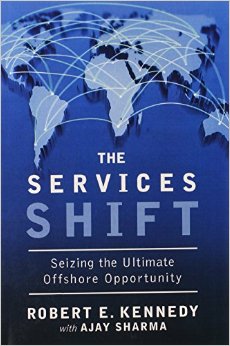
“The world is currently witnessing a fundamental reorganization in the way services are delivered to customers. This is what is behind the movement to outsource. It’s a lot more than just saving money by shipping jobs overseas.” – Harvard Professor Robert E. Kennedy

In his book the Services Shift, Kennedy outlines 5 primary reasons for this shift in services. All 5 have a great deal of influence on why the Philippines has become the call center capital of the world.

The globalization of services, in which different tasks are being carried out by different individuals in different locations, is about gaining access to the best combination of talent, resources and markets.

  • Technological Innovations like easy access to the internet and stored data.
  • Emerging Market Growth in traditionally closed markets
  • Global Macroeconomic Liberalization of government polices toward trade
  • The Corporate Imperative to both reduce costs and improve quality
  • The Convergence of a Global Business Culture based on the English language and American business models.

RA_Mar28_2


There are so many forces for this move to outsource and analytics has moved to the top of everyone’s wish list of things to look globally for.

If you have been thinking about getting your feet wet in setting up a team in the Philippines, I can help. I have set up a dozen different teams of all shapes and sizes for various U.S. companies.

Adding a team in the Philippines will add a lot of value to your business, so connect with men and we can discuss a specific solution for you.

HR & Recruitment Analytics – The recruitment and retention of top talent is the biggest challenge facing just about every organization. You really have to Think Through The Box to come up with winning solutions to effectively attract, retain and manage talent in the Philippines today.

DMAIPH is a leading expert in empowering HR & Recruitment teams with analytics techniques to optimize their talent acquisition and management processes. Contact DMAIPH now at analytics@dmaiph.com or connect with me directly to learn how to get more analytics in your HR & Recruitment process so you can rise to the top in the ever quickening demand for top talent.

SWOT > Great Tool For Analysts To Know

One of the reasons I love working with students is often something that is old to me and to many analysts, is actually new to them. SO getting to explain SWOT to students, or in this case having a student share with me their understanding of SWOT is pretty cool.

SWOT can be very helpful in general consulting and also in process optimization projects that many analysts find themselves assigned to.

How the SWOT ANALYSIS helps the business

One of the best way of evaluating a business unit opportunities is conducting the SWOT Analysis. Using a SWOT Analysis in your business, you can provide a necessary tools and information to establish your goals and objectives. And it will measure the progress of the business. The Strengths’ and the Weakness and the Weaknesses will be the inside Factors; the Opportunities and Threats will serve as the exterior factors.

Evaluating the Strengths

Evaluating what does the company do well, does the company has strong sense of purpose and the culture to support that purpose and is the company strong in its market. It could be your marketing expertise, or your excellent customer service. It’s important to try to evaluate your strengths in terms of how they compare to those of your competitors.

Recognize the Weaknesses

Recognizing the weaknesses will aid the decision-making process designed to improve you’re company. Don’t just make a list of mistakes that have been made but instead learned from what happened. Be prepared to hear things you may not like, but which, ultimately, may be extremely helpful. Business weaknesses can include accessibility of product, higher prices than other competitors and poor quality of products and services. By this you can minimize your weaknesses.

Look for the Opportunities

In this section you can identify what are the new opportunities for your business and interesting trends which you can take advantage of.  Example of opportunities includes potential new uses of products or services, social factors and the use of marketing or promotional techniques to market the business.

Be ready for the Threats

Threats to your business can be also as weaknesses and can be adversely affect your business but it can be a short- term circumstances that can be resolved immediately. For external Threat it could be new legislation or a new competitor in your market and for internal threats could include the company’s skill or staff shortage.

analytics_robo_people

What Is Strategy?

http://bakerstreetpublishing.com/decisioncoaching/2015/02/12/what-are-the-strategic-decisions-we-face/

I came across this perfectly timed blog post on LinkedIn. Tomorrow we will be having our first real leadership planning session in a while and we have a lot of topics on the agenda.

However, before we get into the nitty gritty, I will spend the first part of the meeting talking about strategy. And these concepts will form the core of that conversation.

jobspicture2

“Every business must have three things to be successful: good leadership, good strategic decision making, and the ability to execute. “

  • Good Leadership: To me this means inspiring and empowering team members to take the initiative, to be bold in problem solving and being able to balance client, customer, business and team member needs.
  • Strategic Decision-Making: Taking a logical and data-driven approach to decision-making is the best way to map out your business plan.
  • The Ability to Execute: Good leaders know how to implement decisions quickly and efficiently because they work in a sound framework of empowerment and intelligence.

Looking at closely at the data is key part of this. Good leaders do much more than just manage, and it’s important to constantly remind ourselves of this.

Analytics Leadership – DMAIPH specializes in arming the Data-Driven Leader with the tools and techniques they need to build and empower an analytics centric organization. Analytics leadership requires a mastery of not just analytics skill, but also of nurturing an analytics culture. We have guided thousands of Filipino professionals to become better analytics leaders. Contact DMAIPH now at analytics@dmaiph.com or connect with me directly to discuss a uniquely tailored strategy to ensure you are the top of your game when it comes to Analytics Leadership.