Data Science with Talas at the Mind Museum

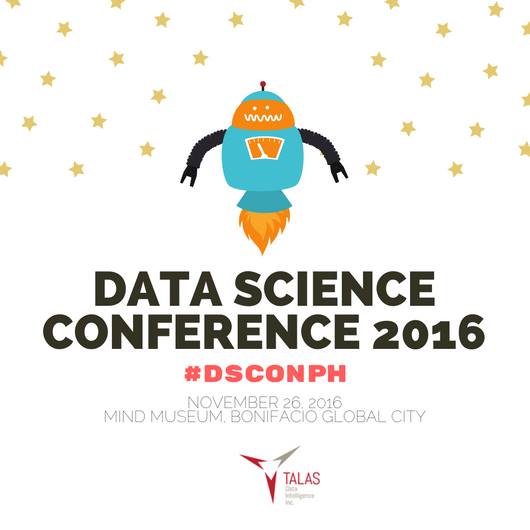
Really looking forward to meeting some of the top minds in Data Science in the Philippines this Saturday, November 26th at the Mind Museum in Taguig.

talas

The speaker line up looks awesome and the networking opportunities will be plenty.

I understand the event is sold out, but I believe there is a waiting list. Contact my good friends at Talas to find out more.

This has been the best month yet for analytics and data science in the the Philippines. The sky truly is the limit!

Hope to see many of you there!  #DSCONPH and #DSCON2016

talas2

News & Events- DMAIPH is a highly engaged leader, sponsor and participant in analytics events across the U.S. and the Philippines. As an Analytics Champion I write, blog, speak and lecture about analytics in a wide variety of forums. I authored several publications on analytics including my latest book, Putting Your Data to Work. Contact DMAIPH now at analytics@dmaiph.com or connect with me directly to learn more about where I will be talking about analytics next.

Where’s the Analytics? The Analytics Challenges of Malls in Metro Manila

I spend a lot of time in malls when I’m in Metro Manila.

Business meetings at coffee shops.

Staff meetings at restaurants.

Getting exercise why walking to hit my FitBit goal.

I see a lot of movies.

And I am not alone.

Malls are where everyone goes. To beat the heat, to meet up with friends, to conduct business, and of course to shop and eat.

Given that I spend so much time in malls, I think a lot about the analytics that can take place behind the scenes.

Or in many cases, the apparent lack of analytics.

Now don’t get me wrong. I love the Philippines.

The heart and spirit of the Filipino people is the primary reason I set up a business here.

But I do sometimes wonder, how much better things could be in my adopted home if there was more widespread use of analytics in decision-making.

The malls are full of great examples of decisions that are pretty much done without much data analysis.

At least that is how it appears to me.

So in this series of blog posts I will discuss several topics that come to my mind when being in a mall in Metro Manila and how I would go about using analytics to investigate my observations.

Analytics in the Philippines – The Philippines is at the center of the action when it comes to solutions to the global need for analytics. Blessed with a solid foundation of young, educated and English speaking workforce, companies around the world are look for Filipino analytics talent to fill analytics positions. DMAIPH was set up to facilitate these solutions and bring the talent and the business together. Contact DMAIPH now at analytics@dmaiph.com or connect with me directly so we can help you take advantage of this unique global opportunity.

My Take Aways for the Big Data Conference 2016

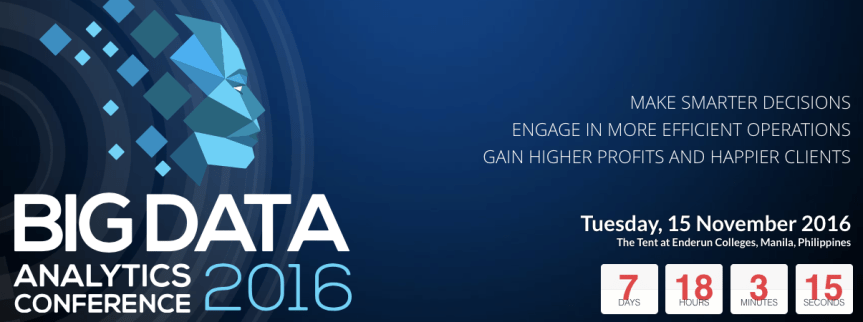
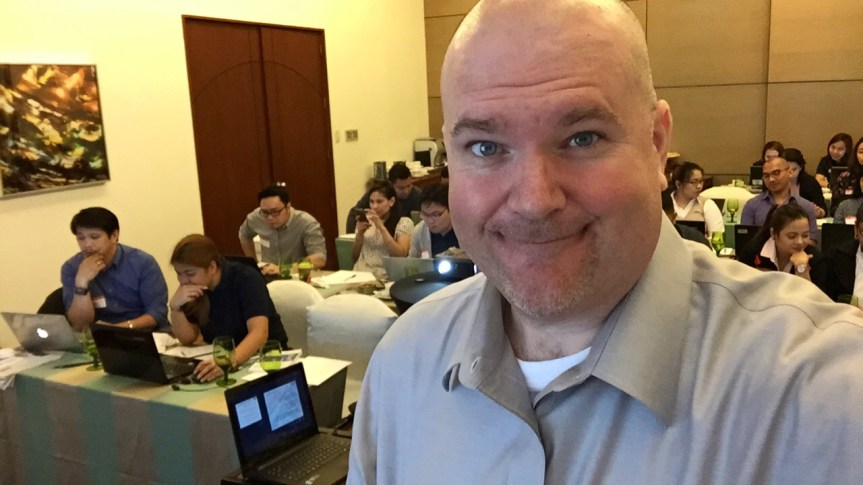
Had a blast at the Big Data Conference at Enderun College yesterday. Lots of things to discuss in upcoming blogs, but here are a few takeaways that I notated.

There is a strong hunger for a national umbrella organization for analytics, big data and data science.

Engagement at the C-Level of Filipino companies outside the IT-BPO sector to eliminate the biggest adoption roadblock.

Restart of the Government, Industry and Academia collaboration on analytics needs to happen.

More hands on experiential learning for both students and faculty involving the industry.

Both traditional training and certification models as well as mentoring and self-guided training opportunities.

The speed and consistency of the internet is a huge threat.

img_0121

Advocacy for fixing culture before spending on costly technology and high priced talent.

Conversion of up to 70% of Customer Facing BPO Workers to doing analytics and data science as a hedge against automation and political decisions.

Im convinced that a lot of good can come out of the conference as the analytics and data  science industry is at about the same point the call center industry was 10 years ago.

However, given the global demand for data savvy talent and the exponential proliferation  of data, we need todo in 3-5 years what the BPO industry did in 10.

More to come!

News & Events- DMAIPH is a highly engaged leader, sponsor and participant in analytics events across the U.S. and the Philippines. As an Analytics Champion I write, blog, speak and lecture about analytics in a wide variety of forums. I authored several publications on analytics including my latest book, Putting Your Data to Work. Contact DMAIPH now at analytics@dmaiph.com or connect with me directly to learn more about where I will be talking about analytics next.

Can Analytics Help a Sari Sari Store?

I had this interesting conversation earlier about analytics.

I started explaining to the person I was sitting next to what I do and he asked can analytics really help any business?

Of course I said yes.

He asked even a Sari Sari store?

For those of you who don’t know much about Sari Sari stores, let me tell you a bit about them.

By far the most common form of self-employment in the Philippines are small, family operated convenience stores. Called Sari-Sari stores, there are an estimated 1 million Sari Sari stores across the Philippines. Per wikipedia, this counts for an estimated 30% of all retail sales in the Philippines.

Sari-Sari, which is Tagalog for variety, are an important economic and social pieces of just about every Filipino community. Most are privately run, family owned and are operated from the front of the owners house.

Commodities are displayed behind a large mesh screen to both allow customers to see what is available and to prevent shoplifting. The most common goods sold are candy, snacks and other non-perishable food items. Cigarettes and mobile phone cards are also popular items for sale. Household needs like soap, detergent and cleaning supplies are also common. Some stores have small refrigerators to offer cold drinks like soda and beer.

Sari-sari stores generally have higher prices when compared to supermarkets which is a tradeoff for proximity to their customers. It is also common to buy single units of a product versus an entire package as paying more to meet a quick need is valued over planning and budgeting bulk purchase over the long term.

Some Sari Sari stores also offer credit to neighbors. Micro lending of this scale is wide spread and generally done under the rule that if the credit is not repaid, the store owner will report this to the local government officials.

Some Sari Sari stores barter goods and services with farmer, fishermen and other businesses.

Most Sari Sari store proprietors buy their goods at supermarkets then mark up the prices for resale (on the average 20%). In some areas, businessmen make act a middle man offering bulk products to the Sari Sari store.

It is my belief that most Sari Sari stores can benefit from a simple strategic business plan and some very basic analytics.

My understanding is that Sari Sari stores operate on a very tactical level with little long term planning and operate with little market awareness.

If I ever to consult with the owner of a Sari Sari store, my initial approach would be to develop a business strategy plan and build a basic analytics process to gather data and provide a proof of concept.

This approach would be broken into the following steps:

  1. Business Strategy Assessment – How do they conduct business?
  2. Competitive Landscape – Who do they compete with?
  3. Demographic Profile – Who are their customers?
  4. Market Assessment – How much upside is in their market?
  5. Inventory Analysis – How to they optimize inventory?
  6. Facilities Assessment – Are they getting the most of their location?
  7. Risk & Security Assessment – What risks do they face?

I will flesh out each of these steps in upcoming blog posts.

Once I have complied data from these 7 steps, I can develop a business strategy plan unique to the individual Sari Sari store.

After my presentation of the business plan, I can make a determination if they Sari Sari store will enter Phase Two of the plan.

I would work with the proprietor store for a set period of time in a consulting role to determine viability of operations and if they meet our program standards (detailed later in this document).

In addition to offering a consulting solution, through my company, I can also offer additional services including cash management, accounting, marketing, inventory and fulfillment assistance, and other solutions as they arise.

Its my experience that the busiest Sari Sari stores offer something unique. Some might have an ice cream maker, or a special dish they prepare, or some have home baked goods. Regardless, they generally have something that sets them apart from a store that just offers traditional goods.

So, the final piece of my involvement would be cross selling our unique products to Sari Sari stores in need of a unique product to build their business around.

After that consultation, I would expect that three things would happen:

  1. the Sari Sari store proprietor would have a better grasp of a strategic business strategy.
  2. the Sari Sari store would increase profits and
  3. the Sari Sari store would expand its customer base and build up loyalty with existing customers.

So, to get back to the question… how can analytics help a Sari Sari store?

By applying some lessons from the corporate world.

Dr. Data_Analytics in the Philippines

Analytics in the Philippines – The Philippines is at the center of the action when it comes to solutions to the global need for analytics. Blessed with a solid foundation of young, educated and English speaking workforce, companies around the world are look for Filipino analytics talent to fill analytics positions. DMAIPH was set up to facilitate these solutions and bring the talent and the business together. Contact DMAIPH now at analytics@dmaiph.com or connect with me directly so we can help you take advantage of this unique global opportunity.

 

The Self-Imposed Ceilings of Two Filipino Friends

I recently had two conversations on FB that happened simultaneously. Its amazing how we can do that now days, be engaged on two (or more different topics) with different people at the same time. But that’s a conversation for another time.

Right now, I want to talk about self-imposed ceilings people put on themselves.

One conversation was centered on being stuck in their current station in life.

The other conversation was about a resistance to embracing non-traditional learning methods.

In both cases, I was in empower mode. Trying to inspire both hope and self-determination to not continue down a path that seems locked in.

I will be the first to admit that as an educated, middle class, straight, white American male, there are few ceilings in life for me to break then just about every other demographic on the planet.

And most likely, my recognition of that at an early age has thrust me forward on a lifelong quest to help others who don’t have all the privilege I enjoy.

I am convinced that the blessing I have enjoyed in life need to be paid back in the form of me trying to uplift others to achieve success in life like I have.

10592010_10152674958362425_1982237172_n

And through a series of circumstances (which feel like a divine plan) I have ended up focusing most of my empowerment efforts in the Philippines. I love working with students and young professionals interested in analytics careers. That is what I have devoted the 2nd half of my life too.

And both conversations are stronger reminders that I am doing exactly what I was created to do.

Holding the ladder, or offering a hammer, or identifying a new approach to breaking through self-imposed ceilings for Filipinos has over the years become my great cause.

My Analytics Story – My passion is solving problems by bringing together the best talent, cutting edge technology and tried and true methodologies. DMAIPH is all about empowering people towards better Decision-Making through the use Analytics and business Intelligence. This is what I do best. Contact DMAIPH now at analytics@dmaiph.com or connect with me directly for a free consultation about getting more analytics into your career and your business.

How Does a Foreigner Become a Successful Speaker in the Philippines?

“As a foreigner, how do you market and sell yourself as a speaker in the Philippines.”

A good friend of mine asked me that a little while ago.

After letting it rattle around in my head a bit, I came up with this reply.

As cliché as it sounds you have to be yourself. Although high powered, dynamic speakers can come to the Philippines to speak and make money, the ones who keep coming back are the ones who are authentic.

I also understand the heart of the Filipino. I am just one of a network of maybe several dozen Philippines based, non-Filipino speakers who routinely are asked to speak at conferences and seminars.  The fact that we have expertise in our fields of specialty is important, but I think what’s more important is that we all have chosen to live in the Philippines. That makes a significant difference.

To a person not familiar with the Philippines, who is just visiting to be a speaker, it will be much harder to really understand the heart of the Filipino. And therefore you would have to work much harder to be an impactful speaker. There will always be a lot of value in sharing knowledge and being a subject matter expert, but if you can’t put that in context of what it means to live and work in the Philippines, you will likely not succeed long term.

That said, I can point out a few things that I think would help a visitor who really wants to learn what it takes to know be successful in the Philippines.

Get outside the comfort zones. Most foreigners stay in relatively rich, safe and easy to get around areas in Metro Manila. To really get to know the Philippines you need to go to the palengke (market place), ride a Jeepney (local transit) and eat some street food (I love BBQ pork on a stick). Now, I recommend you go with a local your first time, but if you can talk about these experiences, you audience will be able to relate to you and have much more respect for you.

Traffic congestion is horrible in Metro Manila. Its an easy target for a shared experience. Saying you were worried you might be late because “Traffic sa Edsa” (traffic was bad on EDSA, the major north-south traffic artery in Manila) will also help. Actually just learning and using a few Tagalog phrases will make a huge difference.

Another suggestion I would make is don’t use up most of your time talking. Breaking into small groups discussions and having interactive learning activities will take the burden off of the audience having to always listen to having a fast-talking and intelligent, foreigner. It can be very intimidating for the audience when that happens. They end up getting, what Filipinos humorously refer to as “nosebleed”. Too much English, too fast and with too much information being the cause. So building in breaks from you speaking is another key to success.

The final suggestion I’d offer my friend, would be to be social. Mix with the audience before the event starts. Be ready to say Maghanda Umaga (Good Morning) when they come in. After the first session and you are on AM break while everyone is having snacks, be ready to mingle some more. And at the end, build in time to take a group photo and group pics. The Philippines is proud to be the most Social Media driven country in the world. Selfies reign. Embrace that fact and you will win a lot of support.

As for marketing, social media and mobile are of paramount importance. You have to push a lot of mobile friendly content through social media to really draw attention to you and your training. And the more that you do to show your interest in empowering Filipinos the more success you will have.

Hope that helps!

My Analytics Story – My passion is solving problems by bringing together the best talent, cutting edge technology and tried and true methodologies. DMAIPH is all about empowering people towards better Decision-Making through the use Analytics and business Intelligence. This is what I do best. Contact DMAIPH now at analytics@dmaiph.com or connect with me directly for a free consultation about getting more analytics into your career and your business.

Big Data Analytics:Big Data—It’s Not Just Size > 2/21/17

I will be speaking on February 21, 2017 at Discovery Suites, Ortigas Center, Pasig City  on Big Data Analytics and Business Intelligence.

With that in mind, I wanted to go into a little more detail about each section, starting with…

Enabling Your Business to Make Smarter Decisions Section 1 : Big Data—It’s Not Just Size

Participants will learn to Describe the Importance of Effectively Analyzing Big Data in Business Today
. Being able to explain analytics to non-technical people is very important for any analytics solution to work.

We will also come up with a Data Map to Analyze the Big Data in your business. A data map allows you to see how data comes into the business, where it is stored and how it is accessed. Knowing you data environment is key to having clean and valid data in your analysis.

Another goal will be Establish Clear Objectives When Analyzing Big Data. Knowing exactly what your end user needs, how they want your reports and what will happen to the fruits of your analysis will allow you to be much more value to the business.

I will show attendees how to Recognize and Apply Various Data Collection Methods
. Way to often we get stuck by not having documented are process clearly. Having an easily traceable and repeatable process will make your analytics life much easier.

In addition, we will talk about how to Identify and Resolve Problems Associated with Data Collection
. Not all data is good data. In fact cleaning data can eat up a lot of time, but it’s a better alternative to reporting based on bad data.

We will discuss the difference between Data Warehouses and Data Lakes. Knowing how data is used in your organization, who has access to it and what they do with it goes a long way in making sure your entire organization becomes more data-driven.

Finally, we will determine when to use Data Blending in your analysis. How to take all of the Big Data you have both inside and around your business and bring them together to give you a 360 degree view of things is also very important to success.

Thats section one… i’ll over the next 3 sections over the next few days.

If you are interested in attending this training, I can connect you with my good friends at Ariva Events Management who will be facilitating the program.

Analytics Training – DMAIPH offers a wide range of analytics centric training solutions for professionals and students via public, in-house, on-site, and academic settings. We tailor each training event to meet the unique needs of the audience. If you need empowerment and skills enhancement to optimize the use of analytics in your organization, we are here to help. Contact DMAIPH now at analytics@dmaiph.com or connect with me directly to set up a free consultation on which of our DMAIPH analytics training solutions is best for you.


Big Data Analytics and Business Intelligence

Enabling Your Business to Make Smarter Decisions

Are you tired of being under constant pressure to make the right number-based decisions for your organization?

Are you too often overwhelmed by an out-of-control flood of numerical information, much of it conflicting and confusing?

Big data is booming ast as organizations devote new technology resources to tapping the terabytes (if not petabytes) of data flowing into their organizations.

Today big Data is flooding into the business both through internal processes and externally via social media.

What does this all mean for business intelligence (BI) users and systems?

With all the attention on advanced analytics for big data, what’s the play for BI?

Integrating advanced analytics for big data with BI systems is an important step toward gaining full return on investment.

Advanced analytics and BI can be highly complementary.

Advanced analytics can provide the deeper, exploratory perspective on the data.

BI systems provide a more structured user experience through there richness in dashboard visualization, reporting, performance management metrics, and more can be vital to making advanced analytics actionable.

Recently on December 6, 2016 I was at Astoria Plaza, Ortigas Center, Pasig City for a dynamic and empowering one-day training on Big Data Analytics and Business Intelligence.

Course Description:

Make smarter business decisions using these powerful data analysis techniques

Information is supposed to make us smarter, but more often than not, it simply overwhelms us.

This program is for you if you feel like you’re drowning in data and unsure which data to use to drive your company initiatives.

The truth is that the amount of data available to help run your business is greater than ever before. To effectively use this information, managers must consider the practical side of big data…what matters to you is how do you grow and build a team to make smarter decisions.

Much of the information out there just discusses the promise of the data deluge. The challenge is not the volume of data but rather the judgment needed to use it.

This seminar goes beyond the qualitative side of data analysis to explore proven quantitative techniques and technologies for identifying, inventorying and integrating data, so that more informed and reliable business decisions can be made.

Learning Objectives


  • Apply Best Techniques and Cutting Edge Technologies to Organize, Interpret, and Summarize Quantitative Data
  • Create a Process to Analyze Data and Identify Patterns Not Apparent at First Glance
  • Reduce “Analysis Paralysis” and Go from Hard Data to Well-Reasoned Conclusions in Less Time

What Was Learned

  • Specific skills to effectively frame the problem you’re addressing to uncover key opportunities and drive growth
  • Critical marketing steps of orientation necessary before engaging tools and technology
  • How to simply and quickly amplify decision making by separating the signal from the noise
  • A framework for asking the right questions, allowing the ability to link analytics to business strategy

What Was Covered

  • Using data and statistics effectively in business today
  • Improper data manipulations and their consequences
  • Exploring quantitative data collection methods
  • Improving analysis success by effectively utilizing software
  • Understanding regression, trend lines, and scenarios in Excel
  • Utilizing the power of business intelligence software
  • Finding and analyzing data patterns, trends, and fluctuations
  • Interpreting and translating data into decisions

Who Attended

Over 80 business professionals who needed to learn more about the basic tools to quantitatively and accurately analyze the mountains of data that come across their desk each minute of every day.

Section One

Big Data—It’s Not Just Size

  • Describe the Importance of Effectively Analyzing Big Data in Business Today
  • Come up with a Data Map to Analyze the Big Data in your business.
  • Establish Clear Objectives When Analyzing Big Data
  • Recognize and Apply Various Data Collection Methods
  • Identify and Resolve Problems Associated with Data Collection
  • Discuss the difference between Data Warehouses and Data Lakes
  • Determine when to use Data Blending in your analysis

Section Two

Analysis—Using Business Intelligence Tools

  • Assess Your Current Analytics Culture
  • Describe the Issues and Trends in Today’s Analytics Field
  • Optimize your use of MS Excel for Big Data analytics
  • Discuss the concept of Data Visualization
  • Utilize BI Tools like Tableau Public
  • Build a Business Dashboard Prototype

Section Three

Interpretation—Assessing Results

  • Articulate the Importance of Accurately Interpreting Data
  • Determine and Analyze Risk, Uncertainty, and Probability
  • Spot Patterns, Trends, and Fluctuations Through Correlation, Regression, and Descriptive Statistics
  • Understand when to employ Descriptive, Predictive or Prescriptive Analytics
  • Build Data Models

Section Four

The Art of Presenting Big Data

  • Apply a Process to Present Big Data Clearly
  • Select the Appropriate Presentation Format to Communicate Your Findings Effectively to Your Audience
  • Master the Power of Enchantment
  • Use Findings from Big Data to Drive Decisions Within Your Organization

Too often people dive into the data only to be lost in haze of data.

This discussion will be pragmatic and immediately applicable to analysts, professional using analytics and managers of analysts across all industries.

Analytics Training – DMAIPH in partnership with Ariva Events Management, offers a wide range of analytics centric training solutions for professionals and students via public, in-house, on-site, and academic settings. We tailor each training event to meet the unique needs of the audience. If you need empowerment and skills enhancement to optimize the use of analytics in your organization, we are here to help. Contact DMAIPH now at analytics@dmaiph.com or connect with me directly to set up a free consultation on which of our DMAIPH analytics training solutions is best for you.

Data Analytics to the Rescue

I am a big fan of super hero movies.

One of the reasons why is that in many ways I consider myself to be somewhat of a super hero.

According to Webster’s Dictionary, a super hero is “a figure endowed with extraordinary or superhuman powers which are used for fighting evil.”

IMG_6912

In my world, evil is analogous to ignorance… or the lack of information needed to make good decisions.

I live to fight this fight.

My extraordinary gifts are being blessed with a keen analytical mind and the ability to empower others to unleash their analytical abilities.

Analytics was not my career choice, but my innate curiosity and passion for answering questions put me in a position to become an analytics expert.

I have all the training and skills an educator needs, but instead of teaching in the classroom I train out in the business world.

On February, 21, 2017 I will be hosting a training on Data Analytics. E-mail us at analytics@dmaiph.com to register or get more info.

This will be so awesome.

I get to do what I do best.

And I get to do it in my adopted homeland.

I get to use my gifts to help Filipino professional unlock the curiosity buried inside them and use that to help empower more data-driven decisions in their organization.

#IamDMAIPH

Analytics Training – DMAIPH offers a wide range of analytics centric training solutions for professionals and students via public, in-house, on-site, and academic settings. We tailor each training event to meet the unique needs of the audience. If you need empowerment and skills enhancement to optimize the use of analytics in your organization, we are here to help. Contact DMAIPH now at analytics@dmaiph.com or connect with me directly to set up a free consultation on which of our DMAIPH analytics training solutions is best for you.

Unlock the Power in Your Data Using Analytics – All Attendees Get A Copy of My Book!

E-mail us at analytics@dmaiph.com to register for the training or to request more information! 

By now just about everyone knows that there is almost limitless opportunity buried in their business data. The big question facing business analysts, leaders, managers, and owners is how do I unlock that potential.

For a lot of us, we just aren’t sure where to start.

Do we go out and hire an expert analyst or data scientist and hope they can make it all work out?

Do we buy a new business intelligence or data modeling software and hope our current team can figure it out?

Do we send our people to training so they can learn new ways to identify, inventory and integrate business data into our decision-making processes?

Well, successful companies do all three. They line up the talent, technology and technique to empower the business with solid analytics.

Hiring a new employee or brining in a consultant will help you address the lack of talent you have working with your business data. Curious people, adept at working with technology and being able to translate your business questions in to valuable insights is generally step one.

As you bring that new person into the fold though, it is just as important to make sure your team is ready to start using more data in their business processes. You can’t expect one person to fix it all, you need to open up your business culture to embrace more data-driven decision-making.

Once you have the talent in place then I suggest you focus on technique.

Invest in some training to get everyone on the same page. If you have a technological solution in mind, then have them trained on that too. So much time is lost because people tasked with analytics are under trained.

Then, when you have everything lined up. That’s when you spend on a software solution. New tools for data acquisition, storage, analysis and reporting generally fail if you don’t have the talent and technique in place first.

If you still aren’t sure how to get started, I will be facilitating a training class on February 21, 2017 at Discovery Suites in Ortigas.

I will help you come up with a analytics action plan to help you start taking advantage of the business data you have in order to increase efficiency and grow profits.

img_7737

Analytics Training – DMAIPH offers a wide range of analytics centric training solutions for professionals and students via public, in-house, on-site, and academic settings. We tailor each training event to meet the unique needs of the audience. If you need empowerment and skills enhancement to optimize the use of analytics in your organization, we are here to help. Contact DMAIPH now at analytics@dmaiph.com or connect with me directly to set up a free consultation on which of our DMAIPH analytics training solutions is best for you.