So Just How Many Filipino Data Scientists Are There Anyway?

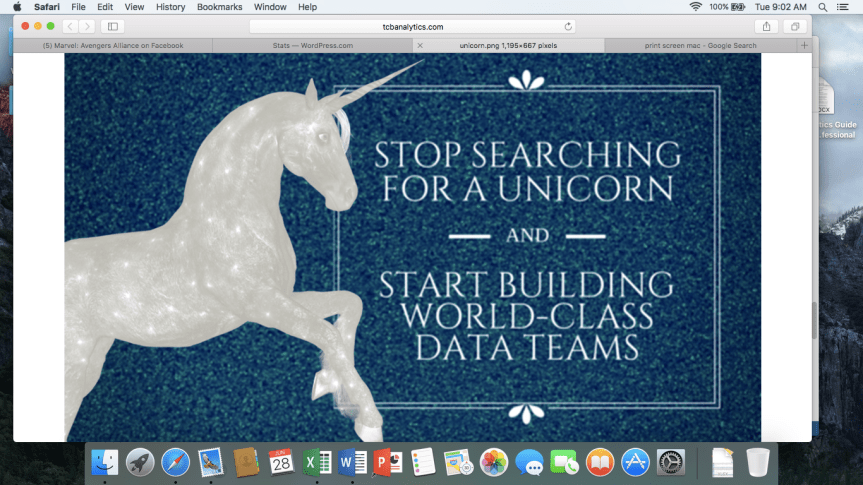
One Question I have been asking myself for awhile is just how many Filipino Data Scientists are there anyway?

I ask this  question because based on my observations of job postings and job titles and industry buzz, there are way more data scientist jobs open here in the Philippines then there are actual data scientists to fill them.

And I’m not even trying to separate the “true” data scientists with the “quasi” data scientists that are doing data science but without all the pre-requisites required.

Lumping everyone together into one number, I wonder what it is. An educated guess would be a few hundred at best. Yet, there are literally 1000 job postings out there right now for data scientist.

This speaks to a fundamental lack of awareness across the country as to what truly a data scientist is and what they do. But that’s for another blogpost.

Right now Im simply going to do some research, survey my network and try and come up with a best guess on exactly how many data scientists there currently are here in the Philippines.

Please feel free to contribute to the conversation… its not going to be easy to get a universally acceptable answer without a lot of discourse first.

Let the hunt for a unicorn head count begin!

Screen Shot 2016-06-28 at 9.02.36 AM

Analytics in the Philippines – The Philippines is at the center of the action when it comes to solutions to the global need for analytics. Blessed with a solid foundation of young, educated and English speaking workforce, companies around the world are look for Filipino analytics talent to fill analytics positions. DMAIPH was set up to facilitate these solutions and bring the talent and the business together. Contact DMAIPH now at analytics@dmaiph.com or connect with me directly so we can help you take advantage of this unique global opportunity.

Key Analytics Tip – Build A Data Map

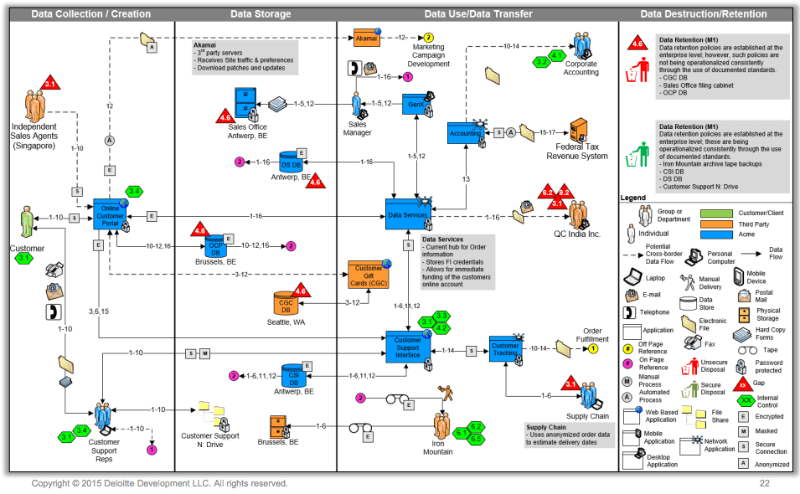
One of the keys to being successful with analytics is having a clear view of how all the data flows into and through your business.

Building a data map to show all the entry points, all the places where data is stored, who and how it is  accessed  and what filters might change your data is one of the things I can help you do.

This is step one towards data integration and is a great exercise for a half day in-house training/seminar for any business or organization that is struggling to get valued out of it’s big data.

Per Wikipedia… Data integration involves combining data residing in different sources and providing users with a unified view of these data. Data integration appears with increasing frequency as the volume and the need to share existing data explodes.

If you can imagine a map of your business in your mind you are half way there. The next step is to build a flow chart like the one below

datamap

If you have something like this then you are on ahead of the game.

If you don’t, let us set up some time to discuss how to get started.

Analytics Culture – The key to using analytics in a business is like a secret sauce. It is a unique combination of analytics talent, technology and technique that are brought together to enrich and empower an organization. A successful analytics culture is not easy to create, but DMAIPH can show you how. Contact DMAIPH now at analytics@dmaiph.com or connect with me directly so we can build a strategic plan to turn your company into analytics driven success story. 


Analytics for the Small Business

Analytics is about looking for patterns in data to help answer questions. Most businesses use analytics to help ensure more data-driven decision-making.

No matter the size, scale or scope, every business generates a wealth of business data. Every business has an opportunity to uses that data to drive more intelligent decisions.

The primary people responsible for conducting analytics on the massive amounts of data we have today are analysts. Analysts are skilled in using various technologies and methodologies to identify, inventory and integrate large amounts of data quickly.

The term analytics can often be used interchangeably with statistics and data science. What separates analytics from disciplines like statistics and data science is generally the speed of the analysis and the focus on solving business problems.

The most common form of analytics is business analytics that are generally used by owners, senior leaders and decision-makers to investigate problems, validate assumptions and to guide strategic planning. As a generalist, business analysts can help in a number of areas of the business.

Business analysts are therefore the most common type of analyst, especially in a small business. If you do a job search on the title analyst, as many as half the posting will likely be business analysts. However, analytics can be used in an almost limitless number of business functions in specific areas like HR, recruitment, marketing, finance, and so on. Each one can have its very own analyst.

Analysts have been around a long time, but recent technological advances have both allowed us to produce and capture more data as well as give us the ability to analyze immense data sets quickly. Thus we are amidst a huge boom in the applications of analytics and the need for analytics talent across the globe. Analytics is something just about every business leader is trying to figure out how to use more effectively in their business. To add to our challenge, the demand for good analysts is booming just as fast as the explosion in big data.

As a result, there is a huge shortage of people who are skilled in working with data to answer questions and solve problems. This is why you have seen the number of analyst job postings increasing at an amazing rate. In the first few chapters of the book we will discuss the quickening demand for analytics talent and why it is so hard to find good analysts, especially at the small business level.

If you are a business leader, manager, owner, and/or executive are not actively trying to surround yourself with analysts and if you are not infusing an analytics centric culture in your business, you will most likely soon see your business fail.

1075177_10151826941667425_1417094118_n

A small business needs analysts to make sense of big data, manage the storage of the data, and know when to use which of the 3 types of analytics (descriptive, predictive, and prescriptive). To be effective, analysts need to have business intelligence tools to create data visualizations and build business dashboards.

If you need an analyst or want to be trained in analytics, connect with me and I can show you how to get started.

Small Business Analytics – The field of small business analytics is just starting to blossom as companies are looking for more data-driven decision-making to prosper in the age of Big Data. DMAIPH is at the fore front of providing analytics training, consulting and outsourcing options to small businesses. Contact DMAIPH now at analytics@dmaiph.com or connect with me directly to set up a free consultation on how to get more analytics in your small business.

Outsourcing Tips for Small Businesses

Small Business Analytics is not a very well established discipline.

You generally see analytics across all kinds of businesses in just about every industry, but for the most part these businesses are large in size.

The concept of analytics is something that most small businesses have not embraced because of two perceptions that hinder the adoption of best practices; a good analytics solution is too time consuming and too expensive.

These perceptions are often false. Just about any small business can benefit from a number of analytics techniques and technologies that do not require significant amounts of time or financial resources.

When talking with a small business owner about their business, I like to ask a series of questions to gain and understanding of the data they have to work within their business.

Generally, I find that they rarely, if ever they even think about the data they have.

So that is often where we start. Trying to map out their data environment.

Once we have an idea how data is (or could be) collected and stored, then we can turn to talking about analysis.

And after I have a good idea of what (if anything) they are doing with their data we can move to reporting. How is data and analysis presented within the business.

14045878_10154480087262425_4779154686875783746_nOften I find that pieces of the data collection, storage, analysis and reporting process are happening in subtle ways that don’t, on the surface, look like an analytics solution.

Over the next several blog posts in this series, I will offer up some tips to small business leaders, managers to point out where more analytics can be used with minimal time or cost impact to themselves.

To date I have helped over a dozen small businesses come up with an analytics solution tailored to their unique needs. We have been able to address key challenges that only a deeper understanding of the data in their business can uncover.

Analytics Outsourcing – DMAIPH has successful set up Filipino analytics teams for over a dozen U.S. based businesses. Offering both virtual and office based teams that specialize in problem solving using data, new technology and analytics techniques is our strength. Finding and empowering analytics talent is increasingly challenging, but we have it down to a science. Contact DMAIPH now at analytics@dmaiph.com or connect with me directly to learn more about how to set up an analytics-centric team in the Philippines.


When They Go Low, We Go High

When They Go Low, We Go High

Michelle Obama’s quote from the recent Democratic convention will go down as one of the greatest quotes ever.

And I’ve been thinking about what that quote means for me as an American in the Philippines.

I often talk about why I love the Philippines and how I have so much faith in the Filipino people.

My passion comes from way down deep and is has been unshakeable during my 5+ years of living in the Philippines. Talking about analytics in the Philippines has been the time of my life.

Although there have been bad times. Burned by bad partners, taken advantage of by greedy individuals and flustered by arcane bureaucracy. But they haven’t stopped me.

Because when others go low, I keep going high.

Trying as much as possible to do the right thing. Valuing integrity and accountability over success and profit. These things are the high road.

As a guest in the Philippines, I strive to show appreciation and gratitude whenever possible for the once in a life time opportunity to chase my dream of empowering Filipinos with analytics.

There have been and will be detractors. Roadblocks and hurdles will continue to be a burden. Perhaps even a rift between the governments of my home county and my adopted country may cause more challenges.

But as long as I keep going high when things go low, I will survive.

My faith in the Filipino people has not diminished.

In fact, it has only gotten stronger.

My Analytics Story – My passion is solving problems by bringing together the best talent, cutting edge technology and tried and true methodologies. DMAIPH is all about empowering people towards better Decision-Making through the use Analytics and business Intelligence. This is what I do best. Contact DMAIPH now at analytics@dmaiph.com or connect with me directly for a free consultation about getting more analytics into your career and your business.

Monetize Our Content

It really is not that hard to create a lot of content.

Maybe for me it’s easier than most because I like to talk, I like to write, I like to share and I like to educate.

But it’s still not as hard as so many other things people do every day to make money.

What is hard is creating content that is engaging. That enables curiosity and bring an emotional response. Content that is truly enchanting is rare.

If you can create engaging content, then you should be monetizing it.

There are so many ways to make money off of good content. Sometimes it takes some creativity. Sometimes it takes extra effort. Occasionally you have to spend money upfront to make money long term.

For DMAI we have a lot of content. Here is how we monetize it.

Books are the most traditional method. Given the amount of writing I have done on analytics these past few years, there is enough content for a half dozen books. And there are hundreds more in my head. Publishing a book and selling it on the side at speaking engagements is a nice, but fairly inconsistent revenue stream. But it is a good place to start.

IMG_7203

E-Books is less costly than traditional books, but as whole still far popular. Getting people to pay for online content remains a very elusive prospect for most content creators. Still having that option available will add a little more revenue over time for very little cost.

Online only content for sale is another option. One I have as of yet, not tried. But again if there is a such a needs for analytics training and the ability to speak in person is limited, then providing online only content for a reasonable fee makes a lot of sense.

Webinars and videos are additional online revenue options. Getting people to pay for a series of online trainings is not something I have seem work with much success. YouTube kinda makes that nearly impossible. But in some cases, where you an offer a high quality production that delivers as well as the in person trainings do is something that some people would pay for. Need to look into this one some more.

Still though, the best money maker for DMAI is the fees I get when speaking or conducting training. The market price for these events continues to rise as the reality of their not being enough analytics experts to go around combines with the pressure people feel to get more out of their time and look to analytics as the solution.

That is why we are already planning our 2017 training schedule, blocking off dates for big events and getting on the calendars of companies looking for in house training.

Monetizing our content is not hard, it just takes sticking to a plan.

Small Business Analytics – The field of small business analytics is just starting to blossom as companies are looking for more data-driven decision-making to prosper in the age of Big Data. DMAIPH is at the fore front of providing analytics training, consulting and outsourcing options to small businesses. Contact DMAIPH now at analytics@dmaiph.com or connect with me directly to set up a free consultation on how to get more analytics in your small business.


Stick to the Primary Goal

When you start feeling like you are going in several directions at once, but you are not happy with the progress you are making overall, then you need to sit down and do some strategy planning.

It has been awhile since I added some structure to what we are doing with DMAI so we don’t spend time doing things that don’t drive us towards  our primary goal.

The primary goal of DMAI is to bet the name brand when it comes to analytics in the Philippines. The reason we exist is to take advantage of the huge gap between supply and demand when it comes to analytics talent in the Philippines labor pool.

In the past few years the demand for analytics talent has boomed at a rate that has far outpaced efforts to attract, train and empower the supply. The past year or so has seen a great number of new players enter into the analytics and data science training space, but it is not enough to meet the global demand for analytics that the Philippines is caught up in.

As I add more and more data scientist and analysts every day on LinkedIn, I am seeing a pattern that is both concerning and exciting. Like in the U.S. and across the globe, the number of data science and analyst jobs mushrooms, but by and large the people filling the openings lack the experience to really be effective at them. Which of course means they will need more training. DMAI is in a good place to address this opportunity.

We have worked hard on building the brand and getting the name out. Working with key business partners to speak at conferences, conduct public training workshops and appear in the media has given us a lot of access. The amount of content we have created between social media, blogs, training materials and now books adds to our ability to share content.

So for the next 18 months, we will be asking ourselves every day this simple question. Is what we are doing right not working towards that goal of being the name brand in analytics in the Philippines? If not, then it’s not a priority no matter how much money it makes or how important it seems.

There can be only one top dog. And the dog’s name is DMAI.
#IamDMAI

IMG_1224

Small Business Analytics – The field of small business analytics is just starting to blossom as companies are looking for more data-driven decision-making to prosper in the age of Big Data. DMAIPH is at the fore front of providing analytics training, consulting and outsourcing options to small businesses. Contact DMAIPH now at analytics@dmaiph.com or connect with me directly to set up a free consultation on how to get more analytics in your small business.


Why Analytics Projects Fail – #13: Over Reliance on External Help

The final reason I will articulate in this series of why analytics projects fail is an over reliance on external help. Historically the over reliance would happen when a team is “too busy” to learn the ins and outs of the analytics software they using.

An example would no one internally has the training to maintain or update the software themselves. Any fixes, patches or enhancements have to be done with the help of someone not on the company payroll. This has obvious limitations like not being top priority or made to wait longer the necessary, as well the potential slowdown caused be internal review and QA processes. Not having someone on the insides trained to handle external products is a major risk to an analytics project.

Another examples is when internal analyst don’t have the initiative to own the software. Meaning they just do the minimums, never really learn all the things the software can do and do not offer any new idea of solutions. Being totally dependent on a vendor to keep you up to date on all the new possibilities for use of the software is extremely short sighted. This often causes going the long way on a project instead of knowing about short cuts.

20141203193138-5-tech-tool-help-compete-with-big-guys

A third example is that your team is not empowered to work independently and their schedule is dictated by the availability of the vendor. Important deadlines might be missed or extended because the vendor resource is not available when you need them.

Regardless of the impact, relying too heavily on your analytics software vendor leaves open the risk of what if the external expert leaves. I have seen this happen a number of times, where analytics projects were halted or even cancelled because the expert was outside the company and left the project. The most common outcome of losing your expert is that things stop working and you have to either use workarounds or start over.

The key lesson here, if you are an analyst working with externally supported software, it behooves you to become the expert on it. This will mitigate any the risk of being over reliant on the vendor. It will also assure you of having more control of maintaining, fixing and upgrading your own analytics process yourself, which makes you more valuable to the organization you work for.

Analysts who know why things fail, are proactive, find solutions and become analytics champions are the ones you want to measured by. In the end, the best way to make sure your analytics projects don’t fail is to be awesome at what you do.

Analytics Culture – The key to using analytics in a business is like a secret sauce. It is a unique combination of analytics talent, technology and technique that are brought together to enrich and empower an organization. A successful analytics culture is not easy to create, but DMAIPH can show you how. Contact DMAIPH now at analytics@dmaiph.com or connect with me directly so we can build a strategic plan to turn your company into analytics driven success story.

Why Analytics Projects Fail – #11: No End User Participation

One the most overlooked and under appreciated parts of assuring a successful analytics implementation is getting the participation of end users. End users being defined as the consumers of either the data, the analysis and/or the reports that come out of the project.

I can tell you countless horror stories about stacks of reports that go unread, email summaries that are never opened and business dashboards that are rarely clicked on. In most cases, all because the end user was not involved in the project or its development process.

One example of this is when the ones who need the reports are not asked what they need in the report.  This is more common than you might think. Requirements, no matter how well thought out, will always overlook something someone needs. Another reason is not finding out how the end users want it to look. They often are omitted from the design phase and just left to use it. Worse it’s possible that what is delivered in not even compatible with other things they do. This leads to failure by not being useful, a complete waste of time and resources, especially yours.

TPS-Report

The best way to assure end user use is to have them involved at the earliest stages of the project. If you are selecting the project team or have influence on the team makeup, make sure you get an end user who can speak for that audience. It might be more than one person.

Another way is to keep the end-users informed and allow for feedback. Finding ways to work feedback into your project is another place you would be surprised by how often it is not done.

And finally make sure you build in a testing period before your project goes into production. In some cases this might include the feedback phase, but in big projects there is often a need for end user testing. If you don’t shepherd this effort, who will?

If you are no sure how to go about involving the end users and/or are not sure of who all the end users might be, then you should really answer those questions as early as possible. No one wants to see their hard earned work just end up in the trash bin because it does not fit the need it was designed for.

The key to using analytics in a business is like a secret sauce. It is a unique combination of analytics talent, technology and technique that are brought together to enrich and empower an organization. A successful analytics culture is not easy to create, but DMAIPH can show you how. Contact DMAIPH now at analytics@dmaiph.com or connect with me directly so we can build a strategic plan to turn your company into analytics driven success story.

Analytics Culture – The key to using analytics in a business is like a secret sauce that fuels Data-Driven Decison-Making. It is a unique combination of analytics talent, technology and technique that are brought together to enrich and empower an organization.

A successful analytics culture is not easy to create, but DMAIPH can show you how. Contact DMAIPH now at analytics@dmaiph.com or connect with me directly so we can build a strategic plan to turn your company into analytics driven success story.

Why Analytics Projects Fail – #5: Organizational Politics

One of the biggest hindrances to the success of analytics projects is something most of us have experienced, organizational politics.

Organizational politics are informal, unofficial, and sometimes behind-the-scenes efforts to sell ideas, influence an organization, increase power, or achieve other targeted objectives. This is what happens when you find yourself being thrown under the bus… taken a fall for someone else’s mistake.

If you are lucky to have escaped organization politics for the most part and wondering just how they can lead to the downfall of an analytics project, let me share with you an idea what that looks like.

Data is horded. People don’t like sharing because its not encouraged or rewarded. In some cases people can be outright mean about it. Keeping data that they know can have a positive impact for others just to hold power over someone. It’s nasty.

This generally comes because senior leaders don’t really see the big picture and don’t share much themselves. This trickles down to the ones with the data and they build castle walls around their information and act as gatekeepers.

Print

Projects can also be hindered, stalled or killed for no reason other than your boss lost to another boss. I once had a million dollar analytics project shelved because my boss got in trouble with the big boss. Nothing to do with me or my project or its cost or its benefits, it was completely because of something out my control.

When asking around you might hear of an experience like this as well. People hoard, manipulate and/or alter data not because it is being rewarded or encouraged, but because they are afraid being caught red-handed. A good analyst has to be willing to  report the good with the bad.

One area of organizational politics you can control though is your likability. I make the comment a lot, that you have to be likeable to be an effective analyst. If people like you they share data with you, they advocate for analytics, they support you in a multitude of ways.

If they don’t like you, then its gonna be hard to be seen as an asset to the organization. An analysts job is to educate, illuminate, and inspire… you can’t do that with a bad reputation. This is a lesson many of us have to learn the hard way, but once we learn it we can see opportunities to increase our likability factor and actively use them to push our projects forward.

So the outcome of an analytics project you are working with is in jeopardy if you are in an organization rife with office politics. SO short of updating your resume, what can you do to turn the boat around?

Here are 3 things I suggest:

  1. Get buy in from the top. Make sure what you do feeds its way up the food chain. Make sure the top dog’s analytics needs are being met and if they are not show how they can be.
  2. Use your data to show win-wins. Find examples of where if we combined data from one source with data from another source you would have the makings of something even greater.
  3. Buy lunch for the ones hording the data. Extend the olive brand, multiple times if need be. If you don’t stating being the catalyst for data sharing, who will?

If you can start impacting some of the negative consequences of your organization’s internal politics then your analytics projects will start seeding positive change. And that will eventually make all the difference in your success or failure.

If you need help combating some of the office politics in your organization that are hindering you analytics projects, connect with me and we will figure it out.

img_7737

Analytics Culture – The key to using analytics in a business is like a secret sauce that fuels Data-Driven Decison-Making. It is a unique combination of analytics talent, technology and technique that are brought together to enrich and empower an organization.

A successful analytics culture is not easy to create, but DMAIPH can show you how. Contact DMAIPH now at analytics@dmaiph.com or connect with me directly so we can build a strategic plan to turn your company into analytics driven success story.