
em·pa·thy > the ability to understand and share the feelings of another

From Our Recent Customer Care Empathy Training for the DMAIPH team

em·pa·thy > the ability to understand and share the feelings of another.

Per Webster’s… Empathy is

…the action of understanding, being aware of, being sensitive to, and vicariously experiencing the feelings, thoughts, and experience of another of either the past or present without having the feelings, thoughts, and experience fully communicated in an objectively explicit manner.

Per Wikpedia…

Empathy is the capacity to understand what another person is experiencing from within the other person’s frame of reference, i.e., the capacity to place oneself in another’s shoes.

So any way you slice it, empathy is about feeling the pain of another in a way that helps ease some of that pain.

Empathy training is sorely lacking across the call center industry as this kind of soft skills training is taught like a technical skill. You can’t just lecture of empathy. You have to role play and write open ended scripts and practice it until its second nature.

If DMAI is to succeed, we need to have better the average empathy training. If we want to be a great company then we need to have best in class empathy training to make sure we are there for our customers.
Picture1

Analytics Leadership – DMAIPH specializes in arming the Data-Driven Leader with the tools and techniques they need to build and empower an analytics centric organization. Analytics leadership requires a mastery of not just analytics skill, but also of nurturing an analytics culture. We have guided thousands of Filipino professionals to become better analytics leaders. Contact DMAIPH now at analytics@dmaiph.com or connect with me directly to discuss a uniquely tailored strategy to ensure you are the top of your game when it comes to Analytics Leadership.

Outsourcing For Expertise Is The Way To Go

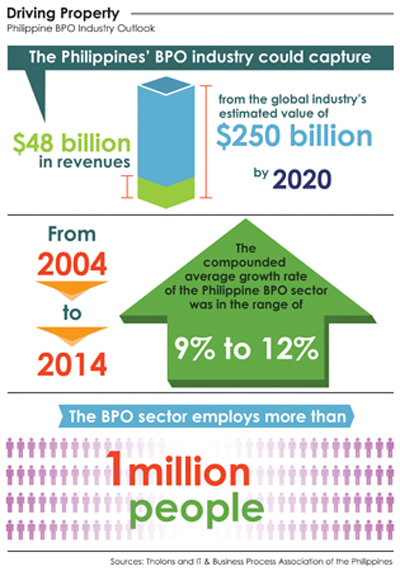
Increasingly, both large and small companies are engaging with specialized service providers as partners to their business goals. As we see in the visual below, the Philippines is still amidst a boom in this phenomena.

The continued rise in outsourcing is due to a companies’ decisions to focus more on their core strengths. In general, service providers concentrate on one or more specialized activities that the sponsor company doesn’t wish to do or doesn’t have as broad in-house capabilities to perform. We see a lot of this with our current client line-up here in DMAI.

However, in additional to taking on tasks that the sponsor companies view duties for specialty providers, it is also now becoming more of the overall business strategy to integrate both businesses rather than you the service provider as a patch.

It’s actually a long-term business model to truly partner on delivery solutions, and as a result, sponsor companies have built strong relationships with providers upon whom they can rely to contribute to their business goals in a manner that complies with both their quality and vision—yet without the need for redundant supervision.Again, this is a model DMAI has been successful at implementing with U.S. based clients.

Providers like DMAI, must be able to engage in a hunt for  talent in order to guarantee expertise and quality. They need to be able to locate the very best talent in a given region and business function in order to provide their sponsor-clients with the best-in-class service those sponsors are paying for.

This line of thinking, outsourcing for expertise is the way to go for medium sized businesses in the U.S. looking for an outsourcing solution with smaller BPOs in the Philippines.

township03-052115

Big corporations can outsource entire business lines to big BPOs. Small businesses can outsource specific functions to virtual assistants. But for medium sized companies, looking to find like minded partners, they need to be paired up with service providers who are able to both integrate into the business and find the talent to grow the business.

Analytics Outsourcing – DMAIPH has successful set up Filipino analytics teams for over a dozen U.S. based businesses. Offering both virtual and office based teams that specialize in problem solving using data, new technology and analytics techniques is our strength. Finding and empowering analytics talent is increasingly challenging, but we have it down to a science. Contact DMAIPH now at analytics@dmaiph.com or connect with me directly to learn more about how to set up an analytics-centric team in the Philippines.

Building An Employee Engagement Road Map

My good friend and BPO colleague, Martin Conboy’s most recent blog is pretty awesome and well timed for my leadership meeting on Monday.

http://theoutsourcing-guide.com/strong-employee-engagement-exceptional-customer-experience/

Here are a few of his key points:

“Employee engagement is a workplace methodology designed to ensure that employees are committed to their organization’s goals and values, inspired to contribute to organizational success, and are able at the same time to enhance their own sense of well being.”

When I think about all the places I have worked over the years from scooping ice cream, filing library books, teaching, customer service, business analytics to setting up call centers, I often reflect on the cultural lessons I gained from those experiences.

As Martin says, engagement is a direct result of the methods  used to drive a business… its how people are bossed, managed and/or lead. That impacts how people feel about and treat each other. Most people generally look at their job as just a job, but they look at their co workers as friends or even family.

When companies are able to get people to think of their job with the same level of interest they think of their co-workers, then you have an indicator of engaged employees, That is far from the only one, but its an easy to see indicator.  They go to lunch together, but do they work together to solve problems for the customer?

“Creating exceptional customer experiences and engagement requires understanding and mapping the customer’s journey. Likewise employee engagement is dependent on creating exceptional experiences based on understanding and mapping the employee’s journey.”

Mapping the journey… from pre-hire, to job offer, to onboardinng, to training, to production, to coaching, to mentoring, to career development. Is it all mapped out? If not its hard to have good employee engagement. Are there leaders within the organization that help others read the map? If not then most employees are going to get lost. The journey will not likely be a success without the map and people who know how to both read the map and teach others how to read it.

Thanks Martin for the inspiration.

HR & Recruitment Analytics – The recruitment and retention of top talent is the biggest challenge facing just about every organization. DMAIPH is a leading expert in empowering HR & Recruitment teams with analytics techniques to optimize their talent acquisition and management processes. Contact DMAIPH now at analytics@dmaiph.com or connect with me directly to learn how to get more analytics in your HR & Recruitment process so you can rise to the top in the ever quickening demand for top talent.

A Few More Thoughts On Leadership

Most of my blog posts the past few weeks have been focused on leadership.

As my company grew from 6 to almost 100 in just 18 months we were forced to make a lot of quick decisions that have not always turned out to be the best long term solutions. So now I reflect on those lessons. How to move away from making snap judgments based and move more into data-driven decision making. That’s always been the goal.

Here are so of my favorite quotes on leadership and how I plan to wrap them into my leadership meeting next week.

Jack Welch said that, “Before you are a leader, success is all about growing yourself. When you become a leader, success is all about growing others.” I firmly believe this and have tried hard to instill this sense of purpose in my leaders. However, we have a lot more work to do before we have an organization full of people looking out for the success of others before looking out for their own success first.

A big part of this is to constantly be pushing the organization to evolve and to never rest. Peter Drucker said that “Leadership is lifting a person’s vision to high sights, the raising of a person’s performance to a higher standard, the building of a personality beyond its normal limitations.” That’s my point exactly. We look at the data, analyze our performance and determine what to improve next.

From our recent survey, we know our team members crave feeling valued and being appreciated more than they depend on being paid well. We need to focus on this and build a recognition program that show value and share appreciation. Sam Walton once said, “Outstanding leaders go out of their way to boost the self-esteem of their personnel. If people believe in themselves, it’s amazing what they can accomplish.” For us to reach the next level of success as a company this sense of empowerment needs to permeate through the ranks.

I hate when I have to manage people because things aren’t being done they way I expect them to get done. Part of that comes from my own failures in instilling this lesson in others. “Leadership is the art of getting someone else to do something you want done because he wants to do it.”  from General Dwight Eisenhower. We do too much bossing and not enough uplifting others to dream the same dream we do.

And finally, from John Quincy Adams, “If your actions inspire others to dream more, learn more, do more and become more, you are a leader.” To me that is the most important measurement for us to look at. Everything else comes next.

8d16381e-298f-4646-a7e2-c8929ffb08cf-medium

Analytics Leadership – DMAIPH specializes in arming the Data-Driven Leader with the tools and techniques they need to build and empower an analytics centric organization. Analytics leadership requires a mastery of not just analytics skill, but also of nurturing an analytics culture. We have guided thousands of Filipino professionals to become better analytics leaders. Contact DMAIPH now at analytics@dmaiph.com or connect with me directly to discuss a uniquely tailored strategy to ensure you are the top of your game when it comes to Analytics Leadership.

Leading vs. Managing vs. Bossing

The definition of Leading is exercising leadership by providing direction or guidance.

The definition of Managing is to direct or supervise employees or other staff by exerting control.

The definition of Bossing is to give orders to, especially in an arrogant or domineering manner.

Leaders generally try and empower, educate and uplift people working under them in an organization. At times they many need to manage employees who have gone off track, but generally only use this to optimize short term results. Although sometimes managing and bossing can feel the same to the employee, good leaders never have to result to bossing.

Managers generally try to motivate employees to meet business needs. At times the pressure for results will force managers to exert control over their employees to get results. This can generally fee like bossing. Employees that feel like they are constant being directed to do things that are unclear to them how and/or why they are doing it never feel like they are being lead.

People who are in positions of authority who are always bossing are not well liked by their employees. Employees do not feel valued or appreciated when they are constantly being bossed. Bosses use fear and intimidation to drive results, which generally fall short of business goals.

The ironic thing about these definitions is Bosses don’t generally realize they are Bosses. They think they are good managers and even good leaders. Managers generally know they are not Bosses, which is good, but they generally are not in a situation where they can be good leaders.

On the other hand, Good Leaders are always cautious of trying not to fall into the traps of managing people or being the boss.  They constantly appreciate feedback to help themselves improve and see their own style of running a business as always evolving.

For a business to be successful you need leaders who can occasionally manage and once in a while be a boss, but most of their time is spent trying take the business to a higher level. That’s my dream for DMAIPH.

10322847_10202261942091034_7017264038085105214_n

Analytics Leadership – DMAIPH is a founding member of the Analytics Council of the Philippines and specializes in arming the Data-Driven Leader with the tools and techniques they need to build and empower an analytics centric organization.

Analytics leadership requires a mastery of not just analytics skill, but also of nurturing an analytics culture. We have guided thousands of Filipino professionals to become better analytics leaders. Contact DMAIPH now at analytics@dmaiph.com or connect with me directly to discuss a uniquely tailored strategy to ensure you are the top of your game when it comes to Analytics Leadership.

To Strive For Operational Excellence

Analytics is key for any organization to be able to strive for operational excellence and succeed.

https://www.linkedin.com/pulse/operational-excellence-manifesto-joseph-paris

Came across this blog post on LinkedIn talking about operational excellence. The author provided 5 pieces in the flow of a continual cycle of operational excellence:

  1. Strategic Clarity – Clarify the business model and sources of competitive advantage for each business line
  2. Culture of Excellence – Instill a philosophy of relentless passion for operational improvement
  3. Advantaged Architecture & Process – Design operational architecture, processes and production system to create competitive advantage
  4. Well-Orchestrated Journey – Disaggregate journey into a sequence of digestible pieces driven by real change leaders
  5. Superior Alignment & Execution – Align organization with objectives and reinforce with superior execution

Looking at how we put these ideas into action, here is what I hope the DMAI team can do.

We can continue to look at each business line to make sure its running optimally. Often we focus our energy just on what’s broken, and rarely focus on what’s working. We lost track of the fact that just because its working, doesn’t mean it’s optimal.

We can demand more from people. Allowing mediocrity to become the norm is a sure sign we have lost our passion to improve ourselves and our business.

We can document more. We can share the documentation more. We can use the documentation as a living, evolving part of the business that will keep things innovative and forward looking.

We can set tactical goals. We can reward ourselves to celebrate these successes. And we can use these successes to springboard us to the next tactical goal as we string together success after success towards out ultimate strategic goal. Be the name brand in analytics here in the Philippines.

operational excellence

We can constantly promote, motivate and empower each other to strive towards operational excellence and never accept operational mediocrity.

We can all get behind the core values of the company, behind our strategic vision and more in unison in our never ending pursuit of operational excellence.

Analytics is the application of using data and analysis to discover patterns in data. DMAIPH specializes in empowering and enabling leaders, managers, professionals and students with a mastery of analytics fundamentals. Contact DMAIPH now at analytics@dmaiph.com or connect with me directly to find out what we can do to help you acquire the analytics mastery you and your organization need to be successful in today’s data-driven global marketplace.

The Challenge Ahead

How do we get better? That’s what is on my mind every day. Most people get up every day and go to work. They have family obligations to meet so they take a job that helps them meet these obligations. However, most people don’t find job that add much more value to their lives then a pay check.

Sometimes we get lucky and find a good place to work. Where we are valued as not just a worker, but a person. Where we are allowed to have more work/life balance then we might have in other places of employment. This is a special place to be. Its not what 90% of the global workforce face every day.

  • So what happens when we find that awesome company to be a part of? In some cases we are empowered to be innovative and to help be part of the success of the company as keep it moving forward. For people who feel this sense of positive energy, work is actually pretty fun most days.
  • However, in some cases we find that even though the company is good to us and we like working there, we find things start to feel routine. We have challenges every day that are either not fun to fix or when we fix it, no one seems to notice. This eats away at our positive feelings about our company.
  • And then we have a third group of people who for whatever reason are in the wrong place at the wrong time. They have challenges in their lives that prevent them from being at work every day. And often when they are at work they don’t feel very engaged. They have a low sense of satisfaction that makes each day on the job more work than its seems worth.

707022c7-f35e-4427-91c0-653a382a3689-medium

So as DMAIPH grows from a company of a half dozen to one of several dozen, how do we keep people trained? How do we make sure we keep as many team members as possible in the first category of engaged and empowered workers?

These is no simple answer. For some more money, for others more responsibility and for others more job variety.  There is no magic solution. It takes a lot of effort from not just the leaders but also from the employees who want to keep enjoying their work and like to work every day for the same company.

The answer of course is analytics. We need to know exactly what they need to stay engaged and to stay with us.

That is what I think about every day. That is THE big challenge ahead. And so should you.

Join us on Feb 21, 2017 in Ortigas to find out what metrics you need to interpret and access the data you have in your business that will tell you exactly what to do to keep attrition low and satisfaction high.

Analytics Leadership – DMAIPH specializes in arming the Data-Driven Leader with the tools and techniques they need to build and empower an analytics centric organization. Analytics leadership requires a mastery of not just analytics skill, but also of nurturing an analytics culture. We have guided thousands of Filipino professionals to become better analytics leaders. Contact DMAIPH now at analytics@dmaiph.com or connect with me directly to discuss a uniquely tailored strategy to ensure you are the top of your game when it comes to Analytics Leadership.
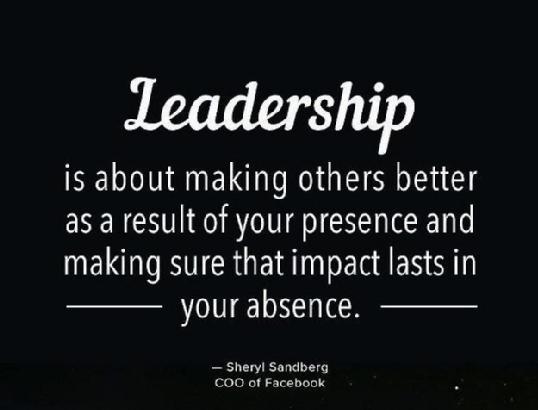
Adding Value

One of the keys to my success is that I make sure to add value to what ever it is I am doing.

As an analyst, putting in a little extra time to make sure I had the right data to answer questions. In addition, I’d not just answer the question, I’d get into the head of the person who wanted my analysis and think about what new questions they might have and answer them too. I’d always be one step ahead and that added a lot of value to the business.

As a manager, I always look at each team member in terms of how much and what kind of value can they add to the business both now and long term. In each of my interactions, even the “negatives” can be used to add value long term to that persons career development as well as to the business.

As a businessman, I look at what we can do to add value to the life and well beings of our customers. What kind of training or analysis work can we provide to help them be more successful and add value in what ever it is they do.

Adding value is something that is not just a catch phrase or a motto… its something deeply ingrained in who I am as a person and what my company DMAIPH stands for.

Adding value is not just about customer service, integrity, professionalism or things like that… to me its about doing the making the world a better place one interaction at a time.

img_7737

So ask yourself… what adds value to your work, to your life and what do you do that adds value to someone else’s work or life. It the answer is not immediately obvious, then you are doing something wrong.

General Analytics – Analytics is the application of using data and analysis to discover patterns in data. DMAIPH specializes in empowering and enabling leaders, managers, professionals and students with a mastery of analytics fundamentals.

Analytics Leadership – DMAIPH is a founding member of the Analytics Council of the Philippines and specializes in arming the Data-Driven Leader with the tools and techniques they need to build and empower an analytics centric organization.

Analytics leadership requires a mastery of not just analytics skill, but also of nurturing an analytics culture. We have guided thousands of Filipino professionals to become better analytics leaders. Contact DMAIPH now at analytics@dmaiph.com or connect with me directly to discuss a uniquely tailored strategy to ensure you are the top of your game when it comes to Analytics Leadership.

The Analytics Driven Leader: Demystifying Strategy

As I prepare for spending the bulk of the upcoming year in Philippines I have several goals in mind; publish my next book, launch a new side business and spend quality time with as many of my team members as possible. And when I think of the conversations I want to have with the team, demystifying strategy and empowering more data-driven decision making are top of mind.

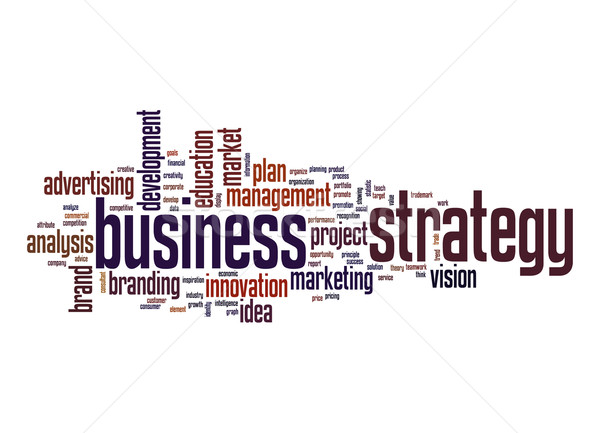
img_7737

Business Strategy can be a complicated thing for many reasons. First and foremost because although you can have big goals that everyone can see, the fluid nature of pushing a business forward makes it hard for many to conceptualize.

In our case we have gone from a company of 6 with one business line to a company of over 100 with six business lines in just 18 months. On top of that we have diversified from one legal entity with one purpose to three legal entities with complimentary purposes. It’s a lot to take in.

Data-Driven Decision Making can be challenging for mean reasons as well. First of all, few people on the team have a solid foundation in business analytics. Most come from companies where they either didn’t have a direct role in developing the analytics or where in companies that really didn’t value analytics. So it takes some time for people to get on board with the idea of using both data and wisdom to make decisions.

There are so many things that we can do to improve performance, enhance communication and enable more proactive thinking. Refining process flows, building better reports and having more forums for information sharing are all places to start.

My goal is by the end of the 1st quarter of 2017 we have accomplished a lot of these things. By then we will have taken some of the mystery out of our business strategy and empowered more people to look at the data as they make decisions.

Analytics Leadership – DMAIPH specializes in arming the Data-Driven Leader with the tools and techniques they need to build and empower an analytics centric organization. Analytics leadership requires a mastery of not just analytics skill, but also of nurturing an analytics culture. We have guided thousands of Filipino professionals to become better analytics leaders. Contact DMAIPH now at analytics@dmaiph.com or connect with me directly to discuss a uniquely tailored strategy to ensure you are the top of your game when it comes to Analytics Leadership.

Mastering The Art Of Account Management

I have been thinking a lot lately about what its take manage the relationship we have with our clients.

A long time ago, I learned that to be a good account manager you need a rare combination of professional and personal characteristics, some of which can’t be taught. To me account management is the art of representing my business to clients and vice versa.

The job requires skill, advocacy, diplomacy, leadership, expectation setting, intelligence, method, heart, patience, experience, and wisdom. It is not easy and it is something I am constantly trying to improve at.

With this concept top of mind, I thought I’d share some of my tips for being an effective account manager.

  1. Under Promise and Over Deliver. I have always strived to under promise and over deliver. Most people get it wrong. They promise to something they cannot deliver and things go downhill quickly from there. Losing your client’s trust is a surefire way to doom your company.
  2. Do What They Want, Not What You Want. We often get so busy we think we have to do it the way we are doing it. Even when it’s clearly not what the client wants. This is another way to doom yourself and your business. They are paying you to do what they want, so don’t expect them to keep paying you to do what you want.
  3. Communicate Bad News Early. It is far, far better to tell you client you will be late on a deadline, or you can meet the requirement or you have to modify what you promised then it is to go silent. Not communication bad news early, or worse to communicating the bad news at all is another strike against you and your hard work, not matter what you intentions.
  4. Be the Expert. When it comes to dealing with a client, they are expecting you to know every answer, sometimes even before they ask it. They are paying you for your expertise. So you need to be the one to find problems before they are problems, fix things before they break and always have a solution at hand. If you are not an expert on what you are being paid for, they will find someone else.
  5. Always Have the Most Data. When your client tells you there is something wrong because they saw it in a report, then you know you have pretty poor analytics. You are doing the job, so you should be the one churning out the reports, championing the sharing of information and setting the agenda for the next meeting.

10592010_10152674958362425_1982237172_n

That’s just a few of the things that come to mind when it comes to being a good account manager.

And just in case I need to remind anyone, and not trying to brag… but I am pretty awesome at this.

Being good at account management is without a doubt one of the key reasons I have thrived throughout my career is keeping the clients happy.

DMAIPH has successfully set up Filipino analytics teams for over a dozen U.S. based businesses. Offering both virtual and office based teams that specialize in problem solving using data, new technology and analytics techniques is our strength. Finding and empowering analytics talent is increasingly challenging, but we have it down to a science.

DMAIPH specializes in arming the Data-Driven Leader with the tools and techniques they need to build and empower an analytics centric organization. Analytics leadership requires a mastery of not just analytics skill, but also of nurturing an analytics culture. We have guided thousands of Filipino professionals to become better analytics leaders. Contact DMAIPH now at analytics@dmaiph.com or connect with me directly to discuss a uniquely tailored strategy to ensure you are the top of your game when it comes to Analytics Leadership.