Q5: What are some basic strategies an analyst can use to find the right data at the right time? – Part 1

Several years ago I came across a book called the Accidental Analyst. After reading the book I was inspired to come up with a way to teach analytics to college students and fresh graduates.

The core of both the book and my program hinges on the ability of an analyst to find the right data at the right time.  The authors suggested that identifying your data is where it all starts. Identifying exactly what you need to address whatever it is that you need to report.

When I am training newbies, I generally brake finding data into two parts… the process of getting the data and the process of making sure the data is valid.

Back at Wells Fargo, the single greatest attribute that I had that made me successful was my ability to size up how long it would take me to deliver something. Knowing what data I would need, where I would find it and how long it would take me to analyze it to come up with something useful made me somewhat of a wizard in the minds of the team.

Finding the right data at the right time requires one to first off know their data. You have to know how the data is captured, where it is stored and how it makes it way to you. Knowing the data architecture in your business is the key.

So you have to get to know the people who know where you data comes from and how it gets there. Learn from them. Partner with them. Buy them doughnuts.

A few months ago I came across an analogy being used to describe data in a business. That of a data lake. A data lake is the living, breathing, evolving pool of all the data in a business. If you have a good data architecture, and you can navigate it fairly easily, then you have a data lake.  Ideally, your business has data structured in such a way you can live off it. Data to a business is like water to living things… it sustains life

07_data-lake-walter-fishing

So once you have the lake mapped out, then you have to learn how to fish it. Knowing where the fish are biting is another key. Once you know what data you need, you have to know how to get to it quickly.

Business Intelligence tools help us here. As does coding languages to extract data from a database. These are your fishing tools. You have to practice using them to be good at getting the right data at the right time.

Another way to optimize your data search is to save your work. Of as I call it leave yourself breadcrumbs. Save the query. Cut and paste the code into a document and save it. Write down the steps. Whatever you need to do to replicate what you just did so you can do it again in the future without starting over from scratch.

So to recap, how to you find the right data at the right time? You know its structure, you understand how its stored and you leave yourself clues to do things faster next time.

Now the other part of the equation is knowing if the data you are using is the right data. Finding data quickly doesn’t do you any good if you bring back the wrong data. We’ll talk about data validation and data quality in a future post.

The Fundamental of Business Analytics – Business Analytics is the application of talent, technology and technique on business data for the purpose of extracting insights and discovering opportunities. DMAIPH specializes in empowering organizations, schools, and businesses with a mastery of the fundamentals of business analytics. Contact DMAIPH now at analytics@dmaiph.com or connect with me directly to find out how you can strengthen your business analytics fundamentals.

Q4: Can you please describe the current state of analytics in the Philippines? – Part 1

Let me tackle this question in two parts. The history major in me demands we look at how we got to where we are now before we talk too much about where we are going.

To start, both the appreciation for and the use of analytics has grown tremendously over the past few years. When I first started thinking about setting up a business in the Philippines back in 2011, hardly anyone knew much about analytics. Big banks, large call centers, multinational corporations and only the top schools were even talking the concept.

It was a challenge to fill my initial training classes due to lack of general awareness. Even at industry events and conferences it was rare to hear much about the idea of using data to drive business decisions.

Doing a search on the top job board in the Philippines back in 2012 for the jobs with analyst in the title netted about 1,000 job postings on any given day.  The average salary was some here around 30,000 PHP a month. It was a challenge to find good talent and those who could do analytics were all gainfully employed.

It wasn’t until 2013 that I stated seeing other analytics training options and those were just ones being done by IBM to meet the CHED (Commission on Higher Education) requiring the implementation of a six class elective tract in business analytics. The was accompanied by the launching of Analytica, and IBM backed effort to push the Philippines towards being more a viable option for analytics outsourcing.

At this time a job search for analyst would bring back about 1,500 jobs. Salaries were starting to rise for analysts as well with the market average getting closer to 50,000 PHP.  Still not a lot of public training or analytics centric organizations around then.

About the same time I started getting invited to schools on a regular basis to lecture about analytics to IT, CompSci and Management students. For the most part they had no idea of the career opportunities out there for those with analytics talent. I consulted with several schools on how to implement the CHED memo and how to prepare their students for analytics careers.

In 2014, an analyst job search was yielding closer 2,000 open jobs. The average salary climbed north of 50,000 Pesos for an experience analyst. I did a lot more trainings, being able to routinely fill a class of people hungry to learn more about analytics and how it could help them in their jobs.

The most in demand analytics skills up to this point where many centered on management reporting, production analysis and workforce management. Most analysts used some kind on proprietary database to store data and did just about all their analysis in Excel.

By 2015, analytics was finally in the mainstream.  Job posting now routinely called for specific skills sets in programming languages and business intelligence tools. Multiple organizations made up of analytics professionals started coming together. The number of jobs open hit 2,500 on any given day and salaries for really good analysts hit 70,000 PHP a year.  By this time, many outsourcing companies focused on setting up team of analysts to offer analytics as an outsourcing option.  Big data jobs and even data scientist positions started showing up in large numbers.


So here, we are now in early 2016. The sky is the limit when it comes to Filipinos with analytics talent being able to enjoy good career growth and make substantial salaries. The schools are now starting to churn out talent with analytics careers in mind. Things look great on the supply side of analytics talent and the market growth opportunity for businesses offering analytics is huge.

An additional complexity in the analytics world is the vast number of tools out there to gather, store, analyze and present data. Although IBM is by far the biggest player in training people, they are not the universal solution when it comes to the methodologies and technologies people use every day.

The biggest challenge today is that the demand for analytic talent dwarves the actual current and near term talent supply. The global need for not just analysts, but also data scientists has quickened to a point where catching up for the Philippines seems almost impossible.

hrcloudblog-967x380

HR & Recruitment Analytics is the application of talent, technology and technique on business data for the purpose of extracting insights and discovering opportunities. DMAIPH specializes in empowering organizations, schools, and businesses with a mastery of the fundamentals of business analytics.

The recruitment and retention of top talent is the biggest challenge facing just about every organization. You really have to Think Through The Box to come up with winning solutions to effectively attract, retain and manage talent in the Philippines today. DMAIPH is a leading expert in empowering HR & Recruitment teams with analytics techniques to optimize their talent acquisition and management processes.

Contact DMAIPH now at analytics@dmaiph.com or connect with me directly to learn how to get more analytics in your HR & Recruitment process so you can rise to the top in the ever quickening demand for top talent.

DMAIPH and Sonic Analytics is looking for a Marketing Analyst/Administrative Assistant

http://www.sonicanalytics.com/

Sonic Analytics is an analytics-centric consulting, outsourcing and training company with teams in the United States and the Philippines. We specialize in corporate analytics consulting, public analytics training and small and medium business analytics outsourcing. We maintain an office in Ortigas, Pasig City.

We are seeking an Administrative Assistant, which is a full-time entry-level business operations position. The position is predominately office based, working out of our Oritgas location. We are looking for a flexible, hard-working and analytics minded individual to take on the following tasks:

  • Prepare Monthly Ledger
  • Meet with book keeper for tax reporting once a month
  • Safe keep Permits, Government Certificates, Receipts and other business documents if needed
  • Update expense and income trackers
  • Act as a POC for any analytics seminar/service related inquiries
  • Provide guidance to interns/OJT
  • Help develop an effective marketing campaign
  • Attend events on behalf of Sonic Analytics
  • Assist with setting-up public and in-house seminars
  • Assist with Payroll

Successful candidates need to meet the following requirements:

  • Previous work experience working in an office environment and/or customer service.
  • Familiar with MS Office, particularly MS Excel.
  • Basic understanding of business analytics and using data to solve problems.
  • Strong internet research skills and knowledge of social media.
  • Strong communication and organizational skills
  • Self-motivated and a willingness to learn
  • Above average written and conversational English.
  • A bank account with BPI or the ability to open a bank account

sonic_first_logo

Basic compensation: Base monthly salary is P12,000.

  • – Up to P2,500 in tax-free allowances.
  • – 5-10% performance bonus upon normalization.
  • – Complete 40 hours of work. This is a full-time job commitment.
  • – Regular Hours are 9:30am-6pm, Monday to Friday.
  • – Annual performance evaluation and compensation increases.
  • – Standard employee benefits as mandated by Philippine law.

Interested candidates should send their most recent resume to jen.ifer@sonicanalytics.com for consideration.

Analytics Jobs – Sonic Analytics in partnership with DMAIPH; hires, refers and connects Filipino analytics talent. The Philippines is at the center of the action when it comes to solutions to the global need for analytics. Working with DMAIPH to find work, hire analytics talent or set up analytics teams will ensure you are tapped into the best of the best when it comes to analytics in the Philippines. Contact DMAIPH now at analytics@dmaiph.com or connect with me directly to find out how to take advantage of this booming opportunity.

20 Questions with Dan Meyer about the Fundamentals of Analytics.

Recently I was asked to put together an FAQ about analytics. Based on my experiences from training people how to better use analytics, these 20 questions are the ones I most commonly get asked.

  1. To start can you provide us with a basic overview of what is analytics?
  2. Can you tell us what makes you an analytics guru?
  3. What are some of the current trends in analytics?
  4. Can you please describe the current state of analytics in the Philippines?
  5. What are some basic strategies an analyst can use to find the right data at the right time?
  6. Can you provide some tips on how to manage data?
  7. What exactly is data science and why the rapid rise of data scientists?
  8. Here something a lot of us are wondering, what exactly is big data and how can we use it?
  9. Can you please describe the concepts of storing data in a data ware house?
  10. Please talk about how, when and why we use should descriptive analytics?
  11. Can you next describe how to best use predictive analytics?
  12. Next please explain when and how we can use prescriptive analytics?
  13. A lot of us want to know what is business intelligence and how does it add value to analytics?
  14. What is data visualization and how does it help drive better decision-making?
  15. What is a business dashboard and how is it used in a business?
  16. Can you tell us more about current trends and hot new tools in social media analytics?
  17. Many of us work in recruitment or HR. What are some best practices and technologies used in HR and recruiting?
  18. Can you please talk about recent developments in higher education on how to train more analysts?
  19. How would you describe your approach to teaching analytics?
  20. So in conclusion can you explain a little more about your own method for using data to drive better decision making?

Each day for the next several days, I will take each question and elaborate and share with you my own personal FAQ on the Fundamentals of Analytics.

coverpicture1

The Fundamentals of Business Analytics – Business Analytics is the application of talent, technology and technique on business data for the purpose of extrating inights and discovering opportuniites. DMAIPH specializes in empowering organizations, schools,  and busiensses with a mastery of the fundamentals of business analytics.  Contact DMAIPH now at analytics@dmaiph.com or connect with me directly to find out how you can strengthen your business analytics fundamentals.
 

Probing For Curiosity

Finding a good assessment to measure curiosity is something I am always looking for. Lots of ways to try and find it, but a true penchent towards curiosity can still be elusive during the hiring process.

Lot’s of probing questions like, asking candidates to explain how they solve problems and what they do when they come across something unexpected is a good start.

Taking personality tests like the MBTI and its ilk is another way.

Giving them a quick research assignment with fairly vague directions and open ended results can also help too.

Reading for fun is also another good indicator.

IMG_1310

Whatever it is you do, make sure its something you are probing for.

Of all the data points in HR & Recruitment Analytics, that is the one I care most about.

HR & Recruitment Analytics – The recruitment and retention of top talent is the biggest challenge facing just about every organization. DMAIPH is a leading expert in empowering HR & Recruitment teams with analytics techniques to optimize their talent acquisition and management processes. Contact DMAIPH now at analytics@dmaiph.com or connect with me directly to learn how to get more analytics in your HR & Recruitment process so you can rise to the top in the ever quickening demand for top talent.

Infusing HR Analytics into Organizational Behavior and Human Resource Management Classes

One of the things I have been working on is helping a top school here in the Philippines develop a strategy to infuse more HR Analytics into their Organizational Behavior and Human Resource Management Classes.

This effort is a precursor to a class specifically on HR Analytics, which is to the best of my knowledge, the first ever here in the Philippines.

So as I put more thought into the syllabus of each class, it occurred to me that a good way to approach analytics is to introduce it slowly over the length of the 3 classes, which follow in a natural progression.

Starting with the OB class, we can focus on how to identify data in an organization that will be useful to a HR team to measure things over time. To help really get at causality of human behavior on a wide scale, you need to have the data to understand context.

In the HR Management class, we will spend more time working on the inventory part of analytics, which is to bring the data into an analysis and reporting structure that helps us discover patterns and trends based on that data.

Then the HR Analytics class, we will then proceed on how to integrate the data and the analysis into tool like a business dashboard.

At a high level, the students will gain an appreciation for the wealth of data HR can access in an organization and how the analysis and reporting of this data can lead to more data-driven decision making.

Its great to have an understanding of why people leave a job, and to have good reporting on attrition patterns, but you also need to have the ability to enable strategic action based on data and not just observation or simple metrics.

That is what our students will be able to do that will separate them from other Psychology grads entering the workforce. They will be ready day one to be HR Analysts who can bring a much needed data centric skills set to a very people driven discipline.

If you are a school administrator or professor and need to get more analytics in your course work so your students are better prepared for the analytics centric jobs, connect with me. I can show you how. I even have a textbook you can use. My new book Putting Your Data to Work is ideal for the nascent analytics learner.

9b9b0d_9e1b0bda82a944ed9d8845fb26bc2b7b-png_256


Analytics Education – Facilitating a mastery of the fundamentals of analytics is what DMAIPH does best.

All across the world, companies are scrambling to hire analytics talent to optimize the big data they have in their businesses. We can empower students and their instructors with the knowledge they need to prepare for careers in analytics.

Contact DMAIPH now at analytics@dmaiph.com or connect with me directly so we can set a guest lecturer date, On-the-Job Training experience or other analytics education solution specifically tailored to your needs.


Training Analysts: And The Tasks Keep Getting Bigger

Wrote this over two years ago… its still relevant!

When I first came to the Philippines in 2012 to set up an analytics training business I was ahead of my time. No one was really talking about analytics and most people didnt really get what I was trying to do.

I saw  a huge opportunity to be at the forefront of a shift in services that would propel the Philippines forward as a place where analytics outsourcing would be successful.

After a few years of doing seminars, speaking engagements and training manily to build awareness, things are really start pick up steam.

Attendance is way up in our public training offerings, I am getting invited to more and more schools and companies are starting to really look for analytics training to both enhance their own decision-making as well as exploring offering analytics as a service.

This goes hand in hand with a memo by CHED (Commission on Higher Education) published two years ago that schools are now trying to figure out how to implement.

I have worked with a few schools already by doing a one day overview of how to meet some of the course objectives outlined in this memo, and now I am looking to expand that to a five day training. Here is what it might look like.

CHED_BA_LO_CO

This five day training will need to be eventually expanded into a semester/trimester long class.

Which is precisely what I had in mind when I did my very first Introduction to Analyitics training back in May 2012.

And now that dozens of schools need this, so my tasks keep getting bigger. I couldn’t be happier.

16649482_10155094449802425_5080201225679087647_n

Analytics Education – Facilitating a mastery of the fundamentals of analytics is what DMAIPH does best. As a key parnter of the Data Science Philippines Meetup Group, DMAIPH champions the use of using data. All across the world, companies are scrambling to hire analytics talent to optimize the big data they have in their businesses. We can empower students and their instructors with the knowledge they need to prepare for careers in analytics. Contact DMAIPH now at analytics@dmaiph.com or connect with me directly so we can set a guest lecturer date, On-the-Job Training experience or other analytics education solution specifically tailored to your needs.

Implementing the CHED Memo on Business Analytics > How DMAIPH Can Help

In 2013, the Commission for Higher Education (CHED), the governing body for Higher Education in the Philippines, published a memorandum requiring accredited colleges and universities to establish a Business Analytics Specialization Program for Business Admin and IT students.

The objectives of the business analytics specialization track aims to provide Filipino students the skills needed for different forms of Analytics namely, Descriptive, Predictive and Prescriptive Analytics. This track enables students to identify opportunities and implement or enact solutions for which these analytics can be used to solve business problems to aid intelligence and informed business decision-making.

One of the analytics training solutions that DMAIPH offers, is partnering with schools  on curriculum and instruction enhancement.  We are also more than willing to meet with you to explore possibilities of collaboration.

The key areas DMAIPH can assist with are as follows:

  1. Consultation with Key School Administration Decision Makers
  2. Initial Faculty Training via a 1-Day hands on workshop
  3. Building Student Awareness by speaking at student events
  4. Guest Speaking in classrooms and academic events
  5. OJT Opportunities with DMAI and out partner companies
  6. Fresh Grad Training for analysts looking to start their career
  7. Provide a textbook for business analytics based on the CHED memo

DMAIPH is adapt at providing staff and students with an overview of the current trends in business analytics that drives today’s businesses, as well as providing an understanding on data management techniques that can help organizations achieve their business goals and address operational challenges.

The need for more analysts and professionals with analytics training in the Philippines continues to quicken at an amazing rate. On any given day you can see over 2,000 analyst jobs posted on jobstreet.com

The demand of analytics talent in the Philippines far outweighs the demand. Even with specialized tracks like the Fundamentals of Business Analytics starting up over the Philippines, more needs to be done.

jobspicture2

DMAIPH is uniquely positioned to help schools deliver on CHED’s memo and help supply the demand Filipino businesses, BPOs and Call Centers are asking for.

We have been doing analytics training, consulting and outsourcing in the Philippines since May 2012. In addition, DMAIPH has helped over two dozen companies bring more analytics into their business and have trained over 100 batches of analytics trainees.

Analytics Education – Facilitating a mastery of the fundamentals of analytics is what DMAIPH does best. As a key parnter of the Data Science Philippines Meetup Group, DMAIPH champions the use of using data.

All across the world, companies are scrambling to hire analytics talent to optimize the big data they have in their businesses. We can empower students and their instructors with the knowledge they need to prepare for careers in analytics. Contact DMAIPH now at analytics@dmaiph.com or connect with me directly so we can set a guest lecturer date, On-the-Job Training experience or other analytics education solution specifically tailored to your needs.

PATIENCE AND FAITH ARE OUR BEST FRIENDS

I wish i could remember where i found this, but it definitely speaks to me so I wanted to share it again.

“No one can determine the final destination of our life’s journey. Therefore, the next best thing to do is to keep our cool and have faith in ourselves. Whenever I feel I am detouring from my destiny, I try to remind myself that my journey is my path. It’s a journey full of peaks and valleys, sunshine, and rain. This faith allows me to explore unchartered territory with confidence. I am at ease to fail forward. Because even when we fail, we do not lose it all—we can learn valuable lessons, and build the foundation for our next chapter.”

Keeping a can-do attitude helps us to never give up on ourselves. It allows us to recharge, reinvest, and reinvent ourselves by melting down our fear.

And that’s how I will start 2017!

jobspicture2Analytics Leadership – DMAIPH specializes in arming the Data-Driven Leader with the tools and techniques they need to build and empower an analytics centric organization. Analytics leadership requires a mastery of not just analytics skill, but also of nurturing an analytics culture. We have guided thousands of Filipino professionals to become better analytics leaders. Contact DMAIPH now at analytics@dmaiph.com or connect with me directly to discuss a uniquely tailored strategy to ensure you are the top of your game when it comes to Analytics Leadership.


Outsourcing For Expertise Is The Way To Go

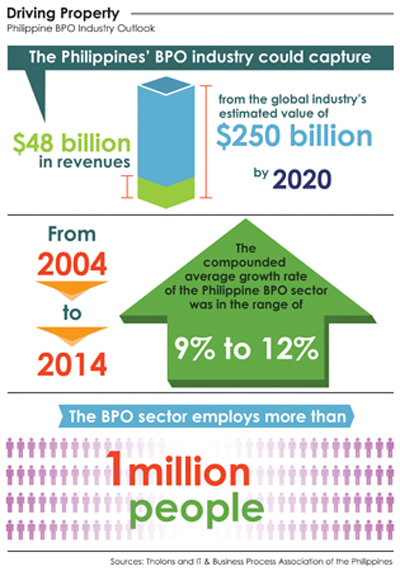
Increasingly, both large and small companies are engaging with specialized service providers as partners to their business goals. As we see in the visual below, the Philippines is still amidst a boom in this phenomena.

The continued rise in outsourcing is due to a companies’ decisions to focus more on their core strengths. In general, service providers concentrate on one or more specialized activities that the sponsor company doesn’t wish to do or doesn’t have as broad in-house capabilities to perform. We see a lot of this with our current client line-up here in DMAI.

However, in additional to taking on tasks that the sponsor companies view duties for specialty providers, it is also now becoming more of the overall business strategy to integrate both businesses rather than you the service provider as a patch.

It’s actually a long-term business model to truly partner on delivery solutions, and as a result, sponsor companies have built strong relationships with providers upon whom they can rely to contribute to their business goals in a manner that complies with both their quality and vision—yet without the need for redundant supervision.Again, this is a model DMAI has been successful at implementing with U.S. based clients.

Providers like DMAI, must be able to engage in a hunt for  talent in order to guarantee expertise and quality. They need to be able to locate the very best talent in a given region and business function in order to provide their sponsor-clients with the best-in-class service those sponsors are paying for.

This line of thinking, outsourcing for expertise is the way to go for medium sized businesses in the U.S. looking for an outsourcing solution with smaller BPOs in the Philippines.

township03-052115

Big corporations can outsource entire business lines to big BPOs. Small businesses can outsource specific functions to virtual assistants. But for medium sized companies, looking to find like minded partners, they need to be paired up with service providers who are able to both integrate into the business and find the talent to grow the business.

Analytics Outsourcing – DMAIPH has successful set up Filipino analytics teams for over a dozen U.S. based businesses. Offering both virtual and office based teams that specialize in problem solving using data, new technology and analytics techniques is our strength. Finding and empowering analytics talent is increasingly challenging, but we have it down to a science. Contact DMAIPH now at analytics@dmaiph.com or connect with me directly to learn more about how to set up an analytics-centric team in the Philippines.