Key Analytics Tip – Build A Data Map

One of the keys to being successful with analytics is having a clear view of how all the data flows into and through your business.

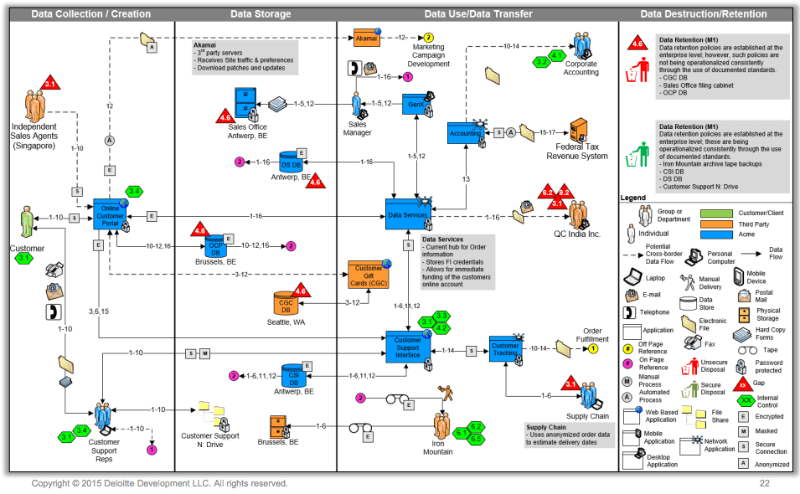
Building a data map to show all the entry points, all the places where data is stored, who and how it is  accessed  and what filters might change your data is one of the things I can help you do.

This is step one towards data integration and is a great exercise for a half day in-house training/seminar for any business or organization that is struggling to get valued out of it’s big data.

Per Wikipedia… Data integration involves combining data residing in different sources and providing users with a unified view of these data. Data integration appears with increasing frequency as the volume and the need to share existing data explodes.

If you can imagine a map of your business in your mind you are half way there. The next step is to build a flow chart like the one below

datamap

If you have something like this then you are on ahead of the game.

If you don’t, let us set up some time to discuss how to get started.

Analytics Culture – The key to using analytics in a business is like a secret sauce. It is a unique combination of analytics talent, technology and technique that are brought together to enrich and empower an organization. A successful analytics culture is not easy to create, but DMAIPH can show you how. Contact DMAIPH now at analytics@dmaiph.com or connect with me directly so we can build a strategic plan to turn your company into analytics driven success story. 


In The Information Age Knowledge Truly is Power > Power Up on Feb 21

SO many companies are trying to figure out how to get more valued of their data, but most dont know where to start.

Let me show you how on February 21, 2017 @ Discovery  Suites in Ortigas (Pasig City, Metro Manila).

E mail for more information about our data analytics seminar, so you can learn to unlock that elusive knowledge buried within the data of your business. 15442108_1022250554587054_3902952314714042475_n

Analytics Culture – The key to using analytics in a business is like a secret sauce. It is a unique combination of analytics talent, technology and technique that are brought together to enrich and empower an organization. A successful analytics culture is not easy to create, but DMAIPH can show you how. Contact DMAIPH now at analytics@dmaiph.com or connect with me directly so we can build a strategic plan to turn your company into analytics driven success story.

Adding Three More Metrics to the Next 5-Year Plan

So, as year five winds down and I have reflected on the key metrics I established back in 2012, it seems the right time to add a few more data points to the mix.

For me, having metrics that you can measure against progress and use to make educated course corrections is the most important part of any business plan.

My first five-year plan was all about establishing myself as one of the top Analytics experts in the Philippines. Based on the number of Filipinos I have trained, the number of Filipino colleges and universities I have worked with and having established a profitable business, it is now time to think about how to expand my horizons.

Going forward the goal is not to just have one of the top analytics brands in the Philippines, but to expand that brand name outward. We will expand in terms of both geography and in terms of content offerings.

I love new things, so the sky is the limit, but I have these 3 things in mind.

The first new metric I will add will be number of trainings with partner speakers. I want to take analytics out of just being for analyst and find ways to use my gifts to empower and educate non analytics people as well.

To do this, we will partner with other innovative and progressive minded trainers and speakers here in the Philippines.

The second metric will be based on geography. I have given talks and trainings mostly in Metro Manila. On the average I have visited about one province a year to deliver a presentation or conduct a training.

Over the next 5 years we will plan activities outside not only Manila, but outside the Philippines as well. I already have one webinar lined up for a U.S. audience in February and will be looking for more places to talk about analytics. Sharing my passion with the world!

The third metric will involve revenue. I can’t imagine any business being successful and not having good analytics when it comes to increasing revenue and growing profits.

Originally the primary financial metric I cared about was net profit. Could I build a business based on analytics that could generate enough money for me to comfortably live on?

Now that we can positively answer that question with a resounding yes, the next question is can we sustain it?

When I started, I had one source of income, analytics training.

As of now we have revenue coming in from 4 sources of income; analytics training, management consulting, outsourcing and book sales.

I need to add at least 3 more streams of income over the next five years to reach my personal goal of having 7 streams of income.

The most likely source will be investing in side business that can generate income without my day to day involvement.

So, I have just doubled the key metrics I am tracking to measure the success of my efforts.

Over the next few years I will monitor the results to see if I need to make more course corrections to get me to the end goal of successfully having executed my second 5-year plan.

Stay tuned! It’s going to be even more of an adventure then the last five years!

Business Strategy with Analytics – Aligning a business strategy to drive an organization forward requires a robust analytics solution. Businesses who have good analytics tend to be much more profitable and efficient then ones that do not. DMAIPH has helped dozens of companies in both the U.S. and the Philippines with adding more data analysis in their business strategy. Contact DMAIPH now at analytics@dmaiph.com or connect with me directly to find out what we can do to help you align your business strategy with analytics.

Data Science with Talas at the Mind Museum

Really looking forward to meeting some of the top minds in Data Science in the Philippines this Saturday, November 26th at the Mind Museum in Taguig.

talas

The speaker line up looks awesome and the networking opportunities will be plenty.

I understand the event is sold out, but I believe there is a waiting list. Contact my good friends at Talas to find out more.

This has been the best month yet for analytics and data science in the the Philippines. The sky truly is the limit!

Hope to see many of you there!  #DSCONPH and #DSCON2016

talas2

News & Events- DMAIPH is a highly engaged leader, sponsor and participant in analytics events across the U.S. and the Philippines. As an Analytics Champion I write, blog, speak and lecture about analytics in a wide variety of forums. I authored several publications on analytics including my latest book, Putting Your Data to Work. Contact DMAIPH now at analytics@dmaiph.com or connect with me directly to learn more about where I will be talking about analytics next.

Big Data Analytics > The Art of Presenting Big Data


It has been my experience that presenting Big Data requires quite a bit of artistic ability.

I will be talk about the Art of Presenting Big Data among other topics at an event this coming February 21 in Ortigas.

For me there is a clear need to Apply a Process to Present Big Data Clearly
. This process has 3 parts.

  1. Selecting the Appropriate Presentation Format to Communicate Your Findings Effectively to Your Audience
  2. Mastering the Power of Enchantment
  3. Sharing Findings from Big Data to Drive Decisions Within Your Organization

Knowing How to Select the Appropriate Presentation Format to Communicate Your Findings Effectively to Your Audience is where we will stat.

To that end I have a checklist I use before every presentation I share involving Big Data:

  • Know Your Audience
  • Consider Time Constraints
  • How Will The Data Be Consumed?
  • Can The Data and Analysis Be Accessed?
  • Make it Interactive

DMAIPH offers a wide range of analytics centric training solutions for professionals and students via public, in-house, on-site, and academic settings. We tailor each training event to meet the unique needs of the audience. If you need empowerment and skills enhancement to optimize the use of analytics in your organization, we are here to help. Contact DMAIPH now at analytics@dmaiph.com or connect with me directly to set up a free consultation on which of our DMAIPH analytics training solutions is best for you.


Philippines Analytics Review – 2016

There is no doubt that analytics is now a big deal in the Philippines.

Now that 2016 is in the books, I can proudly say I spent the better part of the past year helping Filipino get more analytics in their businesses.

My primary goal for the year has been meet, so let’s recap how that happened…

My involvement in empower Filipino companies, students and professionals to make data-driven decisions has renewed my passion for being a top name brand for analytics in the Philippines.

As I think back the Recruitment Analytics training that DMAIPH and Sonic Analytics put on early in the year, I think about how HR professionals are now actively looking to get more analytics in their business.

The simple fact is there are more white collar, professional staff jobs out there then there are qualified candidates. And its only getting worse. Recruitment Analytics is the only way to stay on the cutting edge.

This was even more evident when I spoke in front of close to 100 HR professionals at a workshop called HR & Recruitment Analytics Techniques put on by my good friends at Ariva Events Management.

We spent the day talking about how get IT when it comes to recruitment. The 3 I’s of analytics; identify, inventory and integrate data as well as the 3 T’s; talent, technology and technique needed to make sense to the data.

I once again joined Ariva for their annual Philippines HR Congress. One of the central themes of the conference attended by over 1000 HR professionals was Aligning HR Strategy with Analytics.

HR teams are sitting on a gold mine of insightful data, but in most cases have not been able to take advantage of it.

Big Data Analytics has come so fast and furious, that it takes a lot of effort to become analytics champions and try and move a company culture towards more data-driven decision-making. This was top of mind for all the attendees.

At the same time I have been doing speaking and public training, CHED has been training teachers on how to teach business analytics. Their efforts to explain the Fundamentals of Business Analytics to faculty and students will go a long way in making the Philippines a significant analytics hub.

I have been honored to have helped several schools in adding my two centavos to the discussion about analytics careers for fresh grads.

Another moment of great personal pride came when I published my newest book, Putting Your Data to Work. This guidebook is designed to help Filipino professionals who aren’t too familiar with analytics, get started.

In early November, I was part of a panel discussion at the Big Data Conference at Enduran college. I was and still am super excited about the topic, The Future of Big Data Analytics in the Philippines. This is my passion, turning students and young professionals interested in analytics on to the huge opportunity they have in front of them.

A week later I conducted a Data Analytics seminar with DMAIPH and Sonic Analytics. The primary goal here was to demonstrate how having a thorough understanding of the data environment in a business can lead to huge successes.

Next up was a job fair at Trinoma mall put on by Job Quest PH. My goal here was to recruiting a few young professionals looking to get started in analytics as DMAIPH is looking for some marketing analysts.

A few days later I attended a Data Science event being set up by my good friends at Talas. This free event saw a meeting of the minds of a lot of thought leaders in data science as well as industry leaders in employing analysts and data science. Pretty exciting stuff.

The final 2016 event on my schedule was another full day training organized by my key business partner Ariva. The topic, Big Data and Business Intelligence, which proved to be a great opportunity to help people gain a stronger handle on analytics and how they can be an analytics champion in their business.

IMG_6912

2016 turned out to be my most successful year yet. Analytics in now mainstream and I love it.

Analytics in the Philippines – The Philippines is at the center of the action when it comes to solutions to the global need for analytics. Blessed with a solid foundation of young, educated and English speaking workforce, companies around the world are look for Filipino analytics talent to fill analytics positions. DMAIPH was set up to facilitate these solutions and bring the talent and the business together. Contact DMAIPH now at analytics@dmaiph.com or connect with me directly so we can help you take advantage of this unique global opportunity.

 

Analytics for the Small Business

Analytics is about looking for patterns in data to help answer questions. Most businesses use analytics to help ensure more data-driven decision-making.

No matter the size, scale or scope, every business generates a wealth of business data. Every business has an opportunity to uses that data to drive more intelligent decisions.

The primary people responsible for conducting analytics on the massive amounts of data we have today are analysts. Analysts are skilled in using various technologies and methodologies to identify, inventory and integrate large amounts of data quickly.

The term analytics can often be used interchangeably with statistics and data science. What separates analytics from disciplines like statistics and data science is generally the speed of the analysis and the focus on solving business problems.

The most common form of analytics is business analytics that are generally used by owners, senior leaders and decision-makers to investigate problems, validate assumptions and to guide strategic planning. As a generalist, business analysts can help in a number of areas of the business.

Business analysts are therefore the most common type of analyst, especially in a small business. If you do a job search on the title analyst, as many as half the posting will likely be business analysts. However, analytics can be used in an almost limitless number of business functions in specific areas like HR, recruitment, marketing, finance, and so on. Each one can have its very own analyst.

Analysts have been around a long time, but recent technological advances have both allowed us to produce and capture more data as well as give us the ability to analyze immense data sets quickly. Thus we are amidst a huge boom in the applications of analytics and the need for analytics talent across the globe. Analytics is something just about every business leader is trying to figure out how to use more effectively in their business. To add to our challenge, the demand for good analysts is booming just as fast as the explosion in big data.

As a result, there is a huge shortage of people who are skilled in working with data to answer questions and solve problems. This is why you have seen the number of analyst job postings increasing at an amazing rate. In the first few chapters of the book we will discuss the quickening demand for analytics talent and why it is so hard to find good analysts, especially at the small business level.

If you are a business leader, manager, owner, and/or executive are not actively trying to surround yourself with analysts and if you are not infusing an analytics centric culture in your business, you will most likely soon see your business fail.

1075177_10151826941667425_1417094118_n

A small business needs analysts to make sense of big data, manage the storage of the data, and know when to use which of the 3 types of analytics (descriptive, predictive, and prescriptive). To be effective, analysts need to have business intelligence tools to create data visualizations and build business dashboards.

If you need an analyst or want to be trained in analytics, connect with me and I can show you how to get started.

Small Business Analytics – The field of small business analytics is just starting to blossom as companies are looking for more data-driven decision-making to prosper in the age of Big Data. DMAIPH is at the fore front of providing analytics training, consulting and outsourcing options to small businesses. Contact DMAIPH now at analytics@dmaiph.com or connect with me directly to set up a free consultation on how to get more analytics in your small business.

Big Data Analytics: Using Business Intelligence Tools – 7/11/17 in Ortigas

A good analyst uses Business Intelligence Tools like Batman uses devices stored in his utility belt.

Per Wikipedia, business intelligence (BI) tools are “a type of application software designed to retrieve, analyze, transform and report data for business intelligence. The applications generally read data that have been previously stored, often, though not necessarily, in a data warehouse or data mart.”

Knowing what business intelligence tool to employ to what data set in order to conduct analysis and present your findings requires a thorough understanding of what tools are available and what they can do.

The key general categories of business intelligence applications include:

  • Spreadsheets
  • Reporting and querying software: applications that extract, sort, summarize, and present selected data
  • Online analytical processing (OLAP)
  • Digital dashboards
  • Data mining
  • Process visualization
  • Data warehousing

By far the most common business intelligence tool used is MS Excel. Having at least a intermediate masterly of Excel is a good start in understanding how business intelligence tools work.

Learning to run formulas, insert pivot tables and produce simple visualizations using charts and graphs give a foundation in how to take data and do something with it to inspire analysis.

Using Excel also teaches you how data needs to be structured, formatted and managed. You can’t run even basic analysis activities if your data is not encoded in a way that your tools can make sense of.

Once you have mastered the use of Excel then the logical next step is using BI tools that pull data from Excel. For example, Tableau is a BI tool that can extract data from Excel to build more powerful data analysis and visualizations.

BI tools can also be used to mine data from large data storage systems like data warehouses, data lakes and data marts. Again, understanding how data is structured in important. Knowing how queries are written (for example in SQL) to extract data is important.

If you are looking to get a better understanding of what tools you should be using to analysis the data in your business, you can join my next training seminar (July 11, 2017) in Ortigas.

jobspicture2

Analytics Training – DMAIPH offers a wide range of analytics centric training solutions for professionals and students via public, in-house, on-site, and academic settings. We tailor each training event to meet the unique needs of the audience. If you need empowerment and skills enhancement to optimize the use of analytics in your organization, we are here to help. Contact DMAIPH now at analytics@dmaiph.com or connect with me directly to set up a free consultation on which of our DMAIPH analytics training solutions is best for you.

Data Analytics Training on Feb 21

Did you know that most successful businesses have solid data analytics in place across their entire organization?

Organizations that invest in data analytics generally make much better business decisions then one’s that don’t.

In fact, IBM found a few years back that companies who use data analytics are up to 10x more efficient and 33% more profitable the ones who don’t.

By bringing data together data from across the business, companies can get real-time insights into finance, sales, marketing, product development and much more.

Data analytics enables each team within the business to collaborate, achieve better results and outsell the competition.

Join us on February 21, 2017 in Ortigas, and learn how to turn your business data into insightful and actionable analysis.

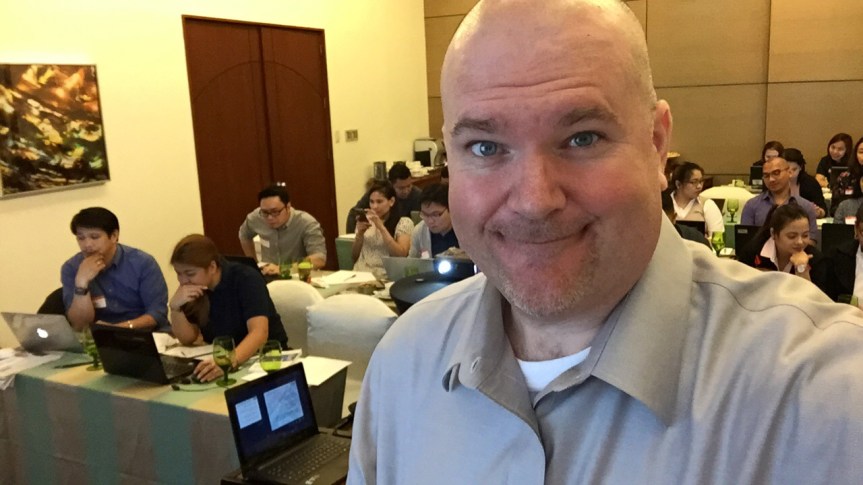
img_7737

Analytics Training – DMAIPH offers a wide range of analytics centric training solutions for professionals and students via public, in-house, on-site, and academic settings. We tailor each training event to meet the unique needs of the audience. If you need empowerment and skills enhancement to optimize the use of analytics in your organization, we are here to help. Contact DMAIPH now at analytics@dmaiph.com or connect with me directly to set up a free consultation on which of our DMAIPH analytics training solutions is best for you.

Which Analytics Training Is For You?

From my perspective analytics training options fall into the following categories:

  1. Introduction to and/or Overview of Analytics
  2. Technical Training on Specific Analytics Topics
  3. Data Science/Advanced Analytics Training

Knowing which type of training you are selecting is super important as people just starting to get comfortable with analytics will probably be lost in a data science training.

On the flip side, a seasoned data geek will get bored in a introduction or overview class.

SO how can you tell which is which?

Here are a few suggestion on how to separate the intro classes from the technical classes from the data science classes .

First, most people who train on predictive analytics, using lots of math, statistics and building data models are probably talking data science. To get your bang for your buck in these classes you need to have a lot of exposure to the science side of analytics and be completely comfortable finding, analyzing and reporting data.

Second, if you are already working with data and you have specific tools you are working with for specific data functions, then you might be best served by going to a technical centric training. Like if you are using a tool like Tableau or Qlik or IBM Cognos to do marketing analytics or sending workforce management reports.

That leaves people who are either new to the idea of analytics or are just not sure where to start. Then you need an overview of analytics to figure out what you need in your business. Once you have a handle on your data, then you can really focus on certain technical aspects and get into data science.

The training I am conducting on November 22 is of the third kind. I will be giving an overview of various analytics techniques and technologies and introducing you to a variety of concepts to make the idea of using data to make decisions a reality.

On February, 21, 2017 I will be hosting a training on Data Analytics. E-mail us at analytics@dmaiph.com to register or get more info.

As a bonus, all attendees will also get a copy of my new book, Putting Your Data to Work. It’s a guidebook specifically designed for Filipino professionals looking to up their analytics games.

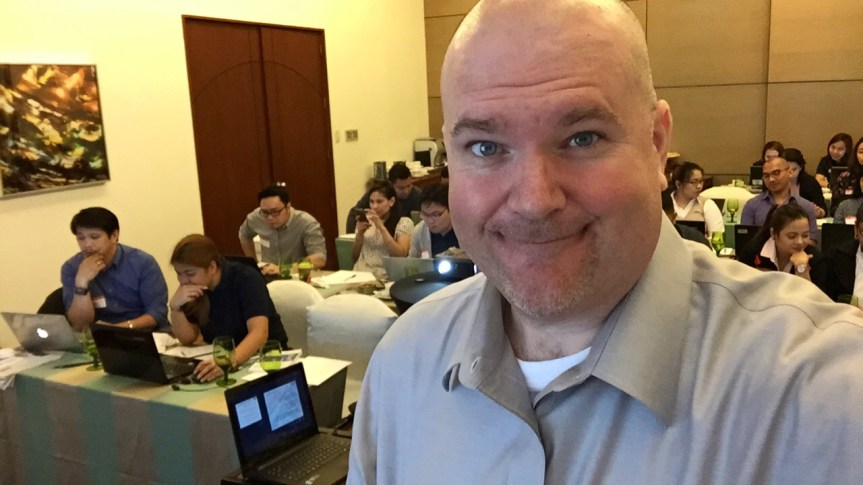
img_7737

Analytics Training – DMAIPH offers a wide range of analytics centric training solutions for professionals and students via public, in-house, on-site, and academic settings. We tailor each training event to meet the unique needs of the audience. If you need empowerment and skills enhancement to optimize the use of analytics in your organization, we are here to help. Contact DMAIPH now at analytics@dmaiph.com or connect with me directly to set up a free consultation on which of our DMAIPH analytics training solutions is best for you.