In The Information Age Knowledge Truly is Power > Power Up on Feb 21

SO many companies are trying to figure out how to get more valued of their data, but most dont know where to start.

Let me show you how on February 21, 2017 @ Discovery  Suites in Ortigas (Pasig City, Metro Manila).

E mail for more information about our data analytics seminar, so you can learn to unlock that elusive knowledge buried within the data of your business. 15442108_1022250554587054_3902952314714042475_n

Analytics Culture – The key to using analytics in a business is like a secret sauce. It is a unique combination of analytics talent, technology and technique that are brought together to enrich and empower an organization. A successful analytics culture is not easy to create, but DMAIPH can show you how. Contact DMAIPH now at analytics@dmaiph.com or connect with me directly so we can build a strategic plan to turn your company into analytics driven success story.

The Four P’s of Marketing for Analytics Training

I get asked a lot about how I apply the 4 P’s of Marketing to my analytics training business.

The 4 P’s (Product, Place, Price, Promotion) of marketing are the foundation of our marketing efforts which have made DMAIPH and Dan Meyer, name brands in the analytics space within the Philippines.

img_0121

Our product is analytics training. That in itself is not easy to market.

Over the past few years it has gotten easier as analytics has entered the mainstream consciousness of Filipino businesses. Still, given the propensity for the subject matter to cause nose bleeds among non-data geeks it takes a lot of effort and foresight to be successful.

Product

Big Data Analytics, Business Analytics and HR/Recruitment Analytics are our primary types of training. Our training is for students, for analysts, for professionals using analytics and for decision-makers. Each type and audience taking distinct approaches to market.

Our product is unique in that no one else in the Philippines approaches analytics trainings like I do. Most analytics training is highly technical and narrowly focused on using a certain method or tool. My method is much more universal and focuses on unlocking the analyst inside the participant so they can select the appropriate methodology and/or tool needed for the analytics project at hand.

DMAIPH analytics training in the Philippines is what we do, and are very, very good at it.

Place

Our place is generally in Metro Manila, specifically Ortigas. Most of our trainings are conducted in hotel function rooms or business conference rooms. I have trained groups as small as 4 and as many as 80. However, the size and location though, our place is getting into the minds of the audience to educate, enable and empower the use of data in decision-making.

We have done trainings outside Metro Manila, anywhere in the Philippines is possible. I have also adapted my training for speaking engagements at conferences and workshops, as part of analytics expert panels and in college class rooms.

DMAIPH analytics training can happen just about anywhere, for any audience of any scope or level of knowledge. Our flexibility allows us to go to any place to train people to use analytics.

Price

Our price is now about 6,000 PHP a head per training. That is right in the middle of the market. There are more expensive ones that offer certain technical perks, but when it comes to a generalist approach to analytics we are the best bang for your buck.

We constantly look at competitors to make sure we set our price accordingly. The market dictates our price given the plethora of training options out there available to potential customers.

We also base venue, scope and size of each training on certain revenue targets to make sure we optimize our time and investment to assure handsome profits.

DMAIPH’s pricing is above all else fair. Our goal is to charge a competitive price that reflects the wide range of choices our customers have to get training on analytics topics.

Promotion

We promote on Facebook, via LinkedIn and using e-mail marketing. We also use the book and marketing visuals like tarpaulins and flyers at job fairs and business conferences.

We make great use of selling our brand, which is built on my experience of 20 years doing analytics and reputation of being one of the top minds in analytics in the Philippines.

DMAIPH stands for quality analytics training based on real world insights and cutting edge techniques delivered in an easy to understand way.

Adding key metrics to the 4 P’s of your organization’s marketing strategy is something DMAIPH can help you with.

Business Strategy with Analytics – Aligning a business strategy to drive an organization forward requires a robust analytics solution. Businesses who have good analytics tend to be much more profitable and efficient then ones that do not. DMAIPH has helped dozens of companies in both the U.S. and the Philippines with adding more data analysis in their business strategy. Contact DMAIPH now at analytics@dmaiph.com or connect with me directly to find out what we can do to help you align your business strategy with analytics. 

What % of Companies Can Both Afford Data Science Teams and Understand How to Use them?

Woke up this morning thinking about the future of analytics and data science in the Philippines.

I created this image to help visualize one of the biggest challenges. From my perspective the majority of companies out there don’t really understand data science and probably cant afford a traditional data science team.

who-can-afford-it

Best guess is ever 50% of companies operating in the Philippines aren’t yet at a place where data science is practical.

The smallest group are ones who both understand data science and know how to use it. These are the ones who are players in the data science consulting, training and outsourcing business.

Best guess its about 10% of the companies operating here and just about all of them are big corporations with lots of resources.

The next segment is the ones who do understand the value of data science, but don’t have the resources to compete for a the talent it takes to build a top data science team.

I’ll peg this at about 15%. But its  growing quickly. Awareness and adoption are actually ahead of the talent, as you see so many “data scientists” in name only out there filling open jobs right now.

That leaves the 25% of companies operating in the Philippines who have money and resources but just don’t know how to get started using data science and building a team. This is the target market of companies like mine.

DMAIPH has the capability to educate your managers and decision-makers on how to use data science to add value to the business. We can also train your team in the basics of data science to allow you to cultivate a data driven culture and promote from within to build a data science team. And we can also take some of the load off your shoulders in the terms doing some of the data science for you.

Analytics Consulting – DMAIPH specializes in a variety of analytics consulting solutions designed to empower analysts, managers and leaders with the tools needed for more data-driven decision-making. We have helped dozens of companies get more analytics in their business. Contact DMAIPH now at analytics@dmaiph.com or connect with me directly so we can tailor an analytics solution made just for your unique requirements.

Five Year Plans – What Analytics Do You Use?

As the 5th year of my original business plan comes to a close, it seems like a good time to reflect on how things have played out.

There are plenty of data points to look at to determine how sound my original plan was and if the course changes made along the way proved to be the right ones to take.

The single most important metrics in my 2012 business plan where # of Filipinos trained to be analysts, # of schools I have worked with and $ of revenue I have generated.

Looking first at the revenue, because if you cant make a profit after 5 years then you are doing something seriously wrong. I started making a profit I year 3, which is pretty typical of business startups.

I made my most money in year 4, but had a more diversified revenue stream in year 5. Revenues have been closer to my actual target as year 4 was one of almost too much growth.

Originally just making money from public trainings, over the years I have added paid speaking engagements, consulting, outsourcing and most recently publishing a book.

SO based on $, I have achieved my original plans and am able to comfortably move on to the financial goals of my next 5 year plan.

When it comes to working with schools, who represent the future of analytics in the Philippines, I have consistently given talks, been part of activities and mentored interns/OJT.

When I check off the list of schools I have worked with in the past 5 years I can definitely say I have met this metric.

The third data point I look at is number of Filipinos trained.

When talking about public trainings we are about 1000 persons over the past 5 years. When we add the number of attendees of public speaking engagements, the number gets closer to 5,000. And that’s paid events.

If I add the number of students and free events we are getting close to 10,000.

SO, I have fall surpassed my expectations from 5 years ago on that metric.

When assessing the success of a business plan you need to measure data over time to make sure you are making progress.

You also need to be able to make course corrections.

Before the training business started taking off, I did some consulting. To generate consistent revenue, I got into outsourcing.

Both course changes allowed me to continue pursuing my original goal of training Filipinos to use more data in their decision making and to empower analytics centric cultures.

So what are the key metric of your business plan? How do you measure them and make sure you are making progress. Do you have a threshold that you set to make course changes if you are not meeting that threshold?

To effectively execute a business plan, you need good analytics in place.

Dr. Data_Analytics in the Philippines

Analytics in the Philippines – The Philippines is at the center of the action when it comes to solutions to the global need for analytics. Blessed with a solid foundation of young, educated and English speaking workforce, companies around the world are look for Filipino analytics talent to fill analytics positions. DMAIPH was set up to facilitate these solutions and bring the talent and the business together. Contact DMAIPH now at analytics@dmaiph.com or connect with me directly so we can help you take advantage of this unique global opportunity.


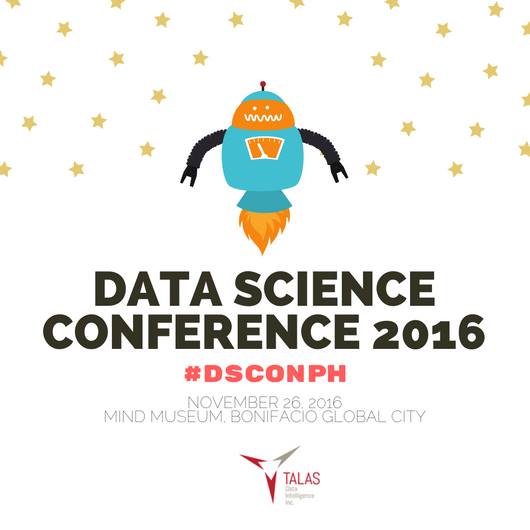
Data Science with Talas at the Mind Museum

Really looking forward to meeting some of the top minds in Data Science in the Philippines this Saturday, November 26th at the Mind Museum in Taguig.

talas

The speaker line up looks awesome and the networking opportunities will be plenty.

I understand the event is sold out, but I believe there is a waiting list. Contact my good friends at Talas to find out more.

This has been the best month yet for analytics and data science in the the Philippines. The sky truly is the limit!

Hope to see many of you there!  #DSCONPH and #DSCON2016

talas2

News & Events- DMAIPH is a highly engaged leader, sponsor and participant in analytics events across the U.S. and the Philippines. As an Analytics Champion I write, blog, speak and lecture about analytics in a wide variety of forums. I authored several publications on analytics including my latest book, Putting Your Data to Work. Contact DMAIPH now at analytics@dmaiph.com or connect with me directly to learn more about where I will be talking about analytics next.

Where’s the Analytics? The Analytics Challenges of Malls in Metro Manila

I spend a lot of time in malls when I’m in Metro Manila.

Business meetings at coffee shops.

Staff meetings at restaurants.

Getting exercise why walking to hit my FitBit goal.

I see a lot of movies.

And I am not alone.

Malls are where everyone goes. To beat the heat, to meet up with friends, to conduct business, and of course to shop and eat.

Given that I spend so much time in malls, I think a lot about the analytics that can take place behind the scenes.

Or in many cases, the apparent lack of analytics.

Now don’t get me wrong. I love the Philippines.

The heart and spirit of the Filipino people is the primary reason I set up a business here.

But I do sometimes wonder, how much better things could be in my adopted home if there was more widespread use of analytics in decision-making.

The malls are full of great examples of decisions that are pretty much done without much data analysis.

At least that is how it appears to me.

So in this series of blog posts I will discuss several topics that come to my mind when being in a mall in Metro Manila and how I would go about using analytics to investigate my observations.

Analytics in the Philippines – The Philippines is at the center of the action when it comes to solutions to the global need for analytics. Blessed with a solid foundation of young, educated and English speaking workforce, companies around the world are look for Filipino analytics talent to fill analytics positions. DMAIPH was set up to facilitate these solutions and bring the talent and the business together. Contact DMAIPH now at analytics@dmaiph.com or connect with me directly so we can help you take advantage of this unique global opportunity.

Philippines Analytics Review – 2016

There is no doubt that analytics is now a big deal in the Philippines.

Now that 2016 is in the books, I can proudly say I spent the better part of the past year helping Filipino get more analytics in their businesses.

My primary goal for the year has been meet, so let’s recap how that happened…

My involvement in empower Filipino companies, students and professionals to make data-driven decisions has renewed my passion for being a top name brand for analytics in the Philippines.

As I think back the Recruitment Analytics training that DMAIPH and Sonic Analytics put on early in the year, I think about how HR professionals are now actively looking to get more analytics in their business.

The simple fact is there are more white collar, professional staff jobs out there then there are qualified candidates. And its only getting worse. Recruitment Analytics is the only way to stay on the cutting edge.

This was even more evident when I spoke in front of close to 100 HR professionals at a workshop called HR & Recruitment Analytics Techniques put on by my good friends at Ariva Events Management.

We spent the day talking about how get IT when it comes to recruitment. The 3 I’s of analytics; identify, inventory and integrate data as well as the 3 T’s; talent, technology and technique needed to make sense to the data.

I once again joined Ariva for their annual Philippines HR Congress. One of the central themes of the conference attended by over 1000 HR professionals was Aligning HR Strategy with Analytics.

HR teams are sitting on a gold mine of insightful data, but in most cases have not been able to take advantage of it.

Big Data Analytics has come so fast and furious, that it takes a lot of effort to become analytics champions and try and move a company culture towards more data-driven decision-making. This was top of mind for all the attendees.

At the same time I have been doing speaking and public training, CHED has been training teachers on how to teach business analytics. Their efforts to explain the Fundamentals of Business Analytics to faculty and students will go a long way in making the Philippines a significant analytics hub.

I have been honored to have helped several schools in adding my two centavos to the discussion about analytics careers for fresh grads.

Another moment of great personal pride came when I published my newest book, Putting Your Data to Work. This guidebook is designed to help Filipino professionals who aren’t too familiar with analytics, get started.

In early November, I was part of a panel discussion at the Big Data Conference at Enduran college. I was and still am super excited about the topic, The Future of Big Data Analytics in the Philippines. This is my passion, turning students and young professionals interested in analytics on to the huge opportunity they have in front of them.

A week later I conducted a Data Analytics seminar with DMAIPH and Sonic Analytics. The primary goal here was to demonstrate how having a thorough understanding of the data environment in a business can lead to huge successes.

Next up was a job fair at Trinoma mall put on by Job Quest PH. My goal here was to recruiting a few young professionals looking to get started in analytics as DMAIPH is looking for some marketing analysts.

A few days later I attended a Data Science event being set up by my good friends at Talas. This free event saw a meeting of the minds of a lot of thought leaders in data science as well as industry leaders in employing analysts and data science. Pretty exciting stuff.

The final 2016 event on my schedule was another full day training organized by my key business partner Ariva. The topic, Big Data and Business Intelligence, which proved to be a great opportunity to help people gain a stronger handle on analytics and how they can be an analytics champion in their business.

IMG_6912

2016 turned out to be my most successful year yet. Analytics in now mainstream and I love it.

Analytics in the Philippines – The Philippines is at the center of the action when it comes to solutions to the global need for analytics. Blessed with a solid foundation of young, educated and English speaking workforce, companies around the world are look for Filipino analytics talent to fill analytics positions. DMAIPH was set up to facilitate these solutions and bring the talent and the business together. Contact DMAIPH now at analytics@dmaiph.com or connect with me directly so we can help you take advantage of this unique global opportunity.

 

It’s No Longer Just Enough To Know

In a recent conversation about using more analytics in the measurement and evaluation of public policies and programs, one of my colleagues said that in today’s world, “It’s no longer just enough to know.”

The point being if you aren’t using data and analysis to enhance your efforts and empower decision-makers with actionable insights, then you are not serving the public to the best of your ability.

A lot of government programs, non-profits and philanthropic organizations are what he called, “Information Rich, but Data Poor.”

Check out my upcoming webinar on Feb 15, 2017! https://dmaiph.com/2017/01/14/analytics-and-data-driven-decision-making-webinar-on-feb-15/

Just because you gather massive amounts of information in the form of data points, does not mean the data is adding value. In fact one of the biggest challenges the corporate world has been dealing with the past few years is how to optimize Big Data.

We live in a world where so much data is produced and captured, then analyzed and published in reports and article, yet the data and analysis alone is often not having the impact our policies and projects were intended to have.

In effect, we might know things, but we aren’t able to influence decisions because our data is not compelling enough.

To this end, I have advocated importing some analytics themed best practices from the corporate world to educate more on what to do with the data and how to put the data to use. To in short, be Information Rich, Data Rich to move towards more Data-Driven Decision-Making.

Starting backwards, I will first focus my training on the How. How do we make more data-driven decisions?

The I will focus on the Why. Why do we need to make more data-driven decisions?

From there we will go into several business analytics concepts like Data Visualizations, Public Data Mining, Data Lakes, Demographic Profiling using Big Data, and Data Blending.

amupicture1

A final topic of interest that I will bring to the discussion is the Plus Minus Implications for Unstructured and Qualitative Data. Things that at first can be hard to assign a number too, but are just important as any piece of traditional data used in decision-making.

At the conclusion of my work, public policy and project reporting will be much more data rich, influence will improve and decision-making enhanced.

Now we won’t just know, we will be able to champion what we know in ways that will make a difference.

Analytics Education – Facilitating a mastery of the fundamentals of analytics is what DMAIPH does best. All across the world, companies are scrambling to hire analytics talent to optimize the big data they have in their businesses. We can empower students and their instructors with the knowledge they need to prepare for careers in analytics. Contact DMAIPH now at analytics@dmaiph.com or connect with me directly so we can set a guest lecturer date, On-the-Job Training experience or other analytics education solution specifically tailored to your needs.

Big Data Analytics: Interpretation and Assessing Results > 2/21/17

I will be speaking on  February 21, 2017 at Discovery Suites, Ortigas Center, Pasig City on Data Analytics.

With that in mind, I wanted to share a little more detail about each section, next up…

Enabling Your Business to Make Smarter Decisions Section 3:  Interpretation—Assessing Results

Participants will be able to Articulate the Importance of Accurately Interpreting Data. Having the right data at your fingertips is essential to being successful with analytics.

We will also be able to Determine and Analyze Risk, Uncertainty, and Probability. With so much data, you need to know what data to analyze when to stay ahead of the game.

I will also talk about how to Spot Patterns, Trends, and Fluctuations Through Correlation, Regression, and Descriptive Statistics. Analytics techniques like these will keep you on the cutting edge.

Attendees will be able to Understand when to employ Descriptive, Predictive or Prescriptive Analytics. Each type has a specific use, make sure you know when to use each one.

And finally we will discuss how to Build Data Models. You don’t need to have high priced, complicated software to do some basic data modeling. I’ll show you some examples.

That’s section three… I’ll go over the last section in the next few days.

DMAIPH offers a wide range of analytics centric training solutions for professionals and students via public, in-house, on-site, and academic settings.

We tailor each training event to meet the unique needs of the audience.

If you need empowerment and skills enhancement to optimize the use of analytics in your organization, we are here to help.

Contact DMAIPH now at analytics@dmaiph.com or connect with me directly to set up a free consultation on which of our DMAIPH analytics training solutions is best for you.

jobspicture2


Being A Great Analyst > Key Attribute #4 > Be Enchanting

If you are a good analyst or a decision-maker that uses analytics, being enchanting makes your job much, much easier.

One key to using data and analysis effectively is understanding how to enchant people by being likable, trustworthy and using data and analysis to further a great cause.

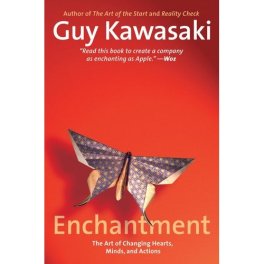
A few years back, I came across a book by Guy Kawasaki called Enchantment. It is my all-time favorite business book.

5.5

Guy Kawasaki is a marketing expert and used to be Apple’s Chief Evangelist (aka Chief Marketing Officer). At Apple their goal is to convert customers to being loyal to Apple products for life.

In Enchantment, Guy talks about how Apple and other successful companies are able to create enchantment in their customer base that fuels passionate and long lasting relationships.

As an analyst there are many lessons that you can draw from Enchantment to being an incredibly impactful member of your organization.

One of the pillars of Enchantment is being Trustworthy. As an analyst, you have to be trustworthy for people to want to follow the direction your data and analysis point.

Your data has to be clean, valid, and accurate.

Your analysis has to be easy to understand, easy to replicate and easy to boil down into a few bullet points.

When you accomplish these things you are creating trust. Getting decision-makers to listen to what the data is telling them comes when the analysts have their trust.

That’s just one part of Enchantment. I use many examples of how to apply Guy’s concept to data and analysis in my training classes and in my company.

If you are looking for a way to add value to your company, which in turn can make the business more successful then this book is a must read.

Analytics Culture – The key to using analytics in a business is like a secret sauce. It is a unique combination of analytics talent, technology and technique that are brought together to enrich and empower an organization. A successful analytics culture is not easy to create, but DMAIPH can show you how. Contact DMAIPH now at analytics@dmaiph.com or connect with me directly so we can build a strategic plan to turn your company into analytics driven success story.