APEC Data Science & Analytics Key Competency #1: Operational Analytics

According to the APEC (Asia Pacific Economic Cooperation)  Advisory Group, Operational Analytics is one of the key competencies of a Data Science & Analytics professional working in the region.

By definition, a DSA professional uses data analytics and specialized business analytics (i.e. business intelligence) techniques for the investigation of all relevant data to derive insight in support of decision-making.

Operational analytics is made up of all the analytics processes within an organization that take data and transforms the data into actionable intelligence. In short, this is management reporting.

Without a doubt the most widely used form of analytics, management reporting is deeply ingrained into the culture of data-driven organizations.

I often liken management reporting to a pyramid. The bottom of the pyramid is the data or the base of decision-making in an organization.

The middle of the pyramid is the processes of operational analytics. Where the data is transformed.

The top of the pyramid is the decision-making. Managers need intelligence that comes in the form of insights. Great analysts deliver these insights in reports, dashboards and visualizations.

DMAIPH offers a wide range of analytics centric training solutions for professionals and students via public, in-house, on-site, and academic settings. We tailor each training event to meet the unique needs of the audience. If you need empowerment and skills enhancement to optimize the use of analytics in your organization, we are here to help.

Contact DMAIPH now at analytics@dmaiph.com or connect with me directly to set up a free consultation to learn which of our DMAIPH analytics training solutions is best for you.
Teaching Analytics: APEC List of Competencies

Teaching Analytics: An Instructor’s Guide to implementing the recommendations of Project DARE (Data Analytics Raising Employment).

APEC (Asia Pacific Economic Cooperation) hosted an event on May 4-5 bringing together over 50 analytics experts and visionaries from over 14 counties across the Asia-Pacific region to form an advisory group.

The APEC Project DARE (Data Analytics Raising Awareness) Advisory Group started with an agenda set to develop recommended “APEC Data Analytics Competencies.

There are still being finalized, but as of last week here is a high level of the competencies that we came up with:

Business and Organizational Skills

  1. Operational Analytics: Use data analytics and specialized business analytics (i.e. business intelligence) techniques for the investigation of all relevant data to derive insight in support of decision-making.
  2. Data Visualization and Presentation: Ability to create and communicate compelling and actionable insights from data using visualization and presentation tools and technologies.
  3. Data Management and Governance: Develop and implement data management strategies and governance, incorporating privacy, data security, polices and regulations, and ethical considerations.
  4. Domain Knowledge and Application: Apply domain-related knowledge and insights to effectively contextualize data, achieved by practical experience (e.g. apprenticeships) and exposure to emerging innovations.

Technical Skills

  1. Statistical Techniques: Apply statistical concepts and methodologies for data analysis.
  2. Computing: Apply information technology, computational thinking and utilize programming languages and software and hardware solutions design and development for data analysis.
  3. Data Analytics Methods and Algorithms: Capture, clean and inspect data. Evaluate and implement data analytics and machine learning methods and algorithms on the data to derive insights for decision making.
  4. Research Methods: Utilize the scientific and engineering methods to discover and create new knowledge and insights.
  5. Data Science Engineering Principles: Use software and system engineering principles and modern computer technologies, incorporating a data feedback loop, to research, design, and prototype data analytics applications. Develop structures, instruments, machines, experiments, processes, and systems to support the data lifecycle.

Workplace Skills

  1. 21st Century Skills: Exhibit crosscutting skills essential for DSA at all levels including, but not limited too; collaboration, customer focus, communication and storytelling, organizational awareness, critical thinking, planning and organizing, problem solving, decision making, business fundamentals, awareness of social and societal awareness, intelligibility, cross cultural awareness, dynamic (self) re-skilling, professional networking, ethical mindset and entrepreneurship.

Once this list is finalized I will update you all.

My end goal is two fold, (1) to help craft a version of the competencies into an academic discipline that the Analytics Council can present to CHED for adoption and (2) to design a vocational education track to address the basic skills needed for entry level DSA work here in the Philippines.

Stay Tuned!

IMG_9107

Analytics Training – DMAIPH offers a wide range of analytics centric training solutions for professionals and students via public, in-house, on-site, and academic settings. We tailor each training event to meet the unique needs of the audience. If you need empowerment and skills enhancement to optimize the use of analytics in your organization, we are here to help. Contact DMAIPH now at analytics@dmaiph.com or connect with me directly to set up a free consultation to learn which of our DMAIPH analytics training solutions is best for you.

Top 5 Reasons to Attend the Digital Transformation Summit 2017

From the Global Chamber® Manila Newsletter

May 9, 2017

  1. Be inspired by an all-star lineup of speakers, who are already gaining significant benefits from adapting new technologies
  2. Learn about various technological platforms such as AI, IOT, Big Data, Analytics, and how it’s disrupting businesses
  3. Reflect, reexamine your company’s issues and goals, and set your vision and new strategy for the next decade
  4. Engage and network with executives and fellow thought leaders
  5. Empower the culture of innovation within you!

Not registered yet? It’s not too late to sign up!

I will be one of the speakers, talking about Data Storytelling. It is quite an honor to part of this awesome event! 🙂

Attend one or both days of the Digital Transformation Summit this May 24 and 25 at SMX Aura Convention Center.

Become a Data Science & Analytics Pro! Apply for the DMAIPH Apprenticeship Program

A standard definition of Apprenticeship is a kind of job training that involves following and studying a master of the trade on the job instead of in school.

Learning to become an analyst for the most part has been something done on the job.  after working in a company and gaining subject matter expertise, those who had good analytics skills often found themselves going down the analyst career path.

Big Data and technological advancements in analytics processing and data science have changed all that.

IMG_9107

Nowadays, there are so many analyst jobs available that the natural order of learning to become an analyst isn’t working fast enough.

Higher education is trying to come up with solutions to offer analytics themed course, a few are already in place. But that’s only training 100’s when industry needs 1,000’s.

SO, to help fill the skills gap between the very finite supply of Data Science and Analytics (DSA) talent and the huge demand in the form of open jobs, we have to get outside the box.

You will see a lot more ideas like the DMAIPH Data Science & Analytics Apprenticeship program coming in the near term.

But don’t wait for the future, get ahead of the game.

Learn the DSA skills you need for a long and profitable career as an analyst.

E-mail me your resume today if you would like to learn more.  danmeyer@dmaiph.com

I will be taking on a few more apprentices in the coming months as we grow the program to implement APEC’s Project DARE recommended approach to gaining a basic understanding of what it means to be a DSA professional.

Hope to hear from you soon!

Dan

jobspicture2

Analytics Training – DMAIPH offers a wide range of analytics centric training solutions for professionals and students via public, in-house, on-site, and academic settings. We tailor each training event to meet the unique needs of the audience.

If you need empowerment and skills enhancement to optimize the use of analytics in your organization, we are here to help. Contact DMAIPH now at analytics@dmaiph.com or connect with me directly to set up a free consultation to learn which of our DMAIPH analytics training solutions is best for you.

The Automation Storm is Coming… is Your IT-BPO Ready?

The number of posts like this one that talk about downsizing in traditional IT-BPO firms are getting more and more common every day.

Some naysayers think statements like this are just hyperbole, “saw their aggregate workforce shrink by seven the same year, highlighting a situation created by a perfect storm of tough business conditions and increasing automation.” But not me. I’m preparing for it.

And then there is this statement… that can easily be talking directly about the IT-BPOs in the Philippines. “This is a war of many battles being fought where smart service providers are aggressively implementing RPA (robotic process automation) into their own operations to drive down their delivery costs and reduce their own headcount. Hence, services providers will be hell-bent on destroying each other and the winners will be those who eventually succeed in winning more work than they lose amidst all the destruction”

I would add to this nationalistic pressures to counter the flow of globalization and “bring jobs back home”.

There are plenty of signs on the horizon that will spell doom for companies that aren’t ready for the coming storm.

Which is where DMAIPH can help.

DMAIPH has successfully set up Filipino analytics teams for over a dozen U.S. based businesses. Offering both virtual and office based teams that specialize in problem solving using data, new technology and analytics techniques is our strength. Finding and empowering analytics talent is increasingly challenging, but we have mastered Surfing Into The Storm and can show you how to succesfully set up a team.

may 17-18

The Philippines is at the center of the action when it comes to solutions to the global need for analytics. Blessed with a solid foundation of young, educated and English speaking workforce, companies around the world are look for Filipino analytics talent to fill analytics positions.

DMAIPH was set up to facilitate these solutions and bring the talent and the business together. And that is exactly why I wrote Putting Your Data to Work, the first analytics guidebook designed specifically for the Philippines. Contact DMAIPH now at analytics@dmaiph.com or connect with me directly so we can help you take advantage of this unique global opportunity.


Why Focus on Data Analytics Competencies?

Later this week I will be attending the APEC Project DARE (Data Analytics Raising Awareness) Advisory Council in Singapore to discuss Recommended APEC Data Analytics Competencies.

Why Focus on Data Analytics Competencies?

Jobs requiring a familiarity with data analysis are forecasted to dramatically rise, resulting in a massive shortage of qualified employees. According to reports, some economies face a shortage of up to 1.5 million data analytics-enabled managers and analysts, costing billions of dollars in lost revenue annually. There is an urgent need to ensure that the future workforce is equipped with data analytics competencies to secure the jobs of tomorrow and move with ease in the labor market.

This is where Project DARE comes in. Project DARE aims to facilitate development of a data analytics-enabled workforce across the APEC region to effectively support sustainable economic growth and prosperity in the Asia-Pacific region. To do so, Project DARE developed a set of Recommended APEC Data Analytics Competencies which will be a resource to academic institutions and governments to align curricula, courses and programs so APEC economies are equipped to educate its workforce with the data analytics skills needed by employers in a data-driven future.

How was the Recommended Data Analytics Competencies Developed?

The Recommended APEC Data Analytics Competencies was developed through a public-private partnership with input from over 40 Advisory Group members (see Acknowledgements) comprised of distinguished business and higher education leaders who oversee data science and analytics needs for their organization and data science inter-disciplinary initiatives and curriculum. The Advisory Group was led by the private sector partner co- chairs, global skills and knowledge company Wiley and the Business Higher Education Forum (BHEF), with technical support by the EDISON (Education for Data Intensive Science to Open New Science Frontiers) Project.

17426122_1095825400562902_5936762267508985241_n

DMAIPH and Analytics Education

Facilitating a mastery of the fundamentals of analytics is what DMAIPH does best. As a key parnter of the Data Science Philippines Meetup Group, DMAIPH champions the use of using data. All across the world, companies are scrambling to hire analytics talent to optimize the big data they have in their businesses. We can empower students and their instructors with the knowledge they need to prepare for careers in analytics. Contact DMAIPH now at analytics@dmaiph.com or connect with me directly so we can set a guest lecturer date, On-the-Job Training experience or other analytics education solution specifically tailored to your needs.

About Project DARE

Project DARE is an initiative of the Asia-Pacific Economic Cooperation led by the United States (U.S. Department of Labor) with co-sponsorship from the governments of Australia, Japan, Malaysia, Peru, Chinese Taipei, and Viet Nam. As a project of APEC’s Human Resources and Development Working Group (HRDWG), Project DARE seeks to enable APEC workforce with the data analytics competencies demanded by employers today and to secure the jobs of tomorrow.

Analytics in the Philippines 2020

The year 2020 used to sound like it was so far off in the future.

Yet, there it is on the calendar… just a little more then 2.5 years away.

recipes-for-unlocking-value-from-big-data-3-638

2017 is the fifth year of my original five year plan for DMAIPH.

Now I’m starting to think about the next big strategic plan and for this iteration I’m gonna work with a 2.5 year plan. Because things are evolving so quickly when it comes to analytics in the Philippines.

For the rest of 2017 the big goal is to evolve our public and in-house training options with our partners at Ariva Events Management and the Rock Stars of Data.

At the same time we will work in solidifying several key business partnerships with the Analytics Council, APEC Project DARE, BASE (Business Analytics Society of Educators), Data Science Philippines and Global Chamber Manila.

There are so many amazing things happening right now in the Philippines that about a year ago seemed to be distant horizon stuff. Its both amazing and a little scary to think where things might be a year for now. Let alone 5.

17426122_1095825400562902_5936762267508985241_nSo the birth of the 2.5 year strategy plan is here.

By 2017, my goal was to make DMAIPH one of the top names in analytics in the Philippines. Mission accomplished.

By 2020, my goal is to make DMAIPH “the” top name for analytics training in the Philippines.

Come along for the ride!

Business Strategy with Analytics – Aligning a business strategy to drive an organization forward requires a robust analytics solution. Businesses who have good analytics tend to be much more profitable and efficient then ones that do not. DMAIPH has helped dozens of companies in both the U.S. and the Philippines with adding more data analysis in their business strategy. We have joined up with our key business partner PMCM Events Management to showcase our solutions at #TechToniPH in July 2017. Contact DMAIPH now at analytics@dmaiph.com or connect with me directly to find out what we can do to help you align your business strategy with analytics.

Sales Analytics Tip: How To Size Your Market

The Sales Champ, Jonathan Petalver, and the Analytics Guru, Dan Meyer, will be conducting a two day workshop on Sales Analytics on July 24-25 in Ortigas.

https://dmaiph.com/analytics-solutions/sales-analytics-quantitative-results-through-qualitative-approaches/

One of the tips we will share with attendees is our strategies for assessing the size of your market. Every business, every product or service, every salesperson has a unique market that it is trying to capture.

As analytics guru, Bernard Marr said, “If you don’t understand the size and potential of your market you can easily jump to conclusions about how viable your business proposition is. Market size analytics is the process of working out how large the market is for your products and services, and whether there is sufficient growth potential.”

The size of your market can be measured terms of volume (how many units sold), value (money spent in that market) or frequency (how often a product or service is sold). It is important to start to gather data points like these and track them over time. You will be able to build a strategy built on numbers, not just gut feel or your best guess.

Useful data includes government data, trade association data, financial data from competitors, and customer surveys. You will be surprised how much data is available just by doing a google search. They you can look at sites that produce and share data for free. And finally you might even consider buying data for your analytics.

strategy_istock_olm26250_thumb800Another important tip Just because a market is large doesn’t mean it’s profitable – especially if most of the customers that want a particular product or service already have one and are unlikely to want another. A lot of people get caught up in the width of the market, but forget about the depth. Sales analytics will help you determine opportunity in both dimensions.
Analytics in the Philippines – The Philippines is at the center of the action when it comes to solutions to the global need for analytics. Blessed with a solid foundation of young, educated and English speaking workforce, companies around the world are look for Filipino analytics talent to fill analytics positions. DMAIPH was set up to facilitate these solutions and bring the talent and the business together. And that is exactly why I wrote Putting Your Data to Work, the first analytics guidebook designed specifically for the Philippines. Contact DMAIPH now at analytics@dmaiph.com or connect with me directly so we can help you take advantage of this unique global opportunity.

Chief Data Officer – The Data Geek in the Room

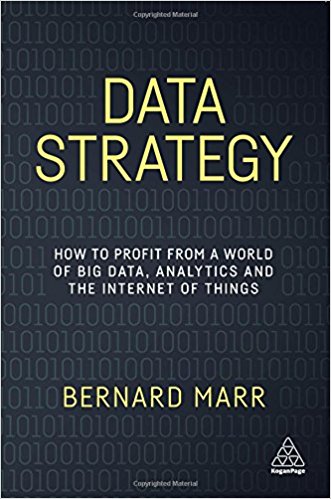
In his latest book Data Strategy, analytics guru Bernard Marr, discusses how to profit from a world of big data, analytics and the internet of things. Marr breaks down the importance of having a data strategy to ensure data-driven decision-making, improve business operations and to monetize the data in a business.

data strategy

One of the key takeaways from his book is the emerging role of Chief Data Officer. This is a separate C-Level Suite position form the more traditional Chief Technology Officer or Chief Information Officer as this person should serve as both an analytics cheerleader and data-driven decision-making champion.

Big companies have CDOs, but even smaller and medium sized companies need to have someone who acts in this role even if its not an official title. I often say that analysts have to not only analyze data, but be champions of using data for decision-making. They have to be the data cheerleaders to educate, enable, and empower the use of data and analytics across the organization.

There are six primary areas a CDO should oversee; (1) high level vision, (2) implementations, (3) data governance, (4) business opportunities, (5) data culture leader and (6) sees data as a commodity.

  1. CDOs have to have either a seat at the C-Suite table or the ear of the top decision-maker in the company. They are the ones who make sure that data is properly channeled to the right people at the right time to ensure data-driven strategies.
  2. CDOs have to be the one ultimately responsible for data project implementations. This is not an IT thing. IT should be involved, but not the owners of data and analytics.
  3. CDO’s have to make sure good data governance is followed. Data has to be stored, secure and accurate.
  4. CDO’s are the ones who have the task of discovering business opportunities and identifying risks. They should have access to all the data they need to do both.
  5. CDO’s are the ones who consistently and clearly articulate the importance of data and the value of data-driven decision-making.
  6. CDO’s see data for its monetary value. Data is a commodity that in itself can be used to not just help the company, but to generate revenue itself.

So if you have a Chief Data Officer, or just a chief data geek, you are on the right path. If you don’t have one of these in your organization then your organization are likely going to be left behind.

may 17-18Analytics Culture – The key to using analytics in a business is like a secret sauce that fuels Data-Driven Decison-Making. It is a unique combination of analytics talent, technology and technique that are brought together to enrich and empower an organization. A successful analytics culture is not easy to create, but DMAIPH can show you how. Contact DMAIPH now at analytics@dmaiph.com or connect with me directly so we can build a strategic plan to turn your company into analytics driven success story.

DMAIPH Analytics Apprenticeship Program Starts May 15, 2017

Analytics Apprenticeship Program Starts May 15, 2017

This is a 3-6 month, paid apprenticeship program that will provide in-depth and hands on training with a range of analytics skills needed across various industries today. At the end of the apprenticeship, you will a very strong change of staying with DMAIPH or being referred to one of our key business partners.

We are looking for 3-4 highly motivated, tech savvy, young professionals or fresh grads to join our program. Past apprentices have gone on to have successful analyst careers in a wide range of companies including HP, Emerson, Citibank, Wells Fargo and

Skills all analysts will learn

  • How to apply the DMAI methodology of business analytics
  • Advanced Excel Skills like Pivot Tables, Marcos, Formulas and Data Visualization
  • Using Tableau for Business Dashboards
  • Using SQL and R for Predictive Analytics
  • The key aspects of Data Storytelling

In addition, each track will focus on specific skill sets including but not limited to:

  1. Business Analyst
  • Analytics Assessment Facilitation
  • Project Planning and Documentation
  • Management Metrics Reporting
  1. Finance Analyst
  • Financial Forecasts
  • Budget Planning
  • Expense Tracking & Reporting
  1. Events Management Analyst
  • Competitor Intelligence
  • Market Research
  • Lead Generation, Tracking and Reporting

Compensation package is dependent on experience and skills, but in the range of P20,000 a month.

Interested applicants should send an updated resume to danmeyer@dmaiph.com as well as plan on attending a group interview exercise on April 29 in Ortigas.  Group interviews will be held from 10am-12noon and from 5pm-7pm at Unit 1704 Prestige Tower on Emerald Ave (F. Ortigas Jr. Rd) at the office of IBA.

jobspicture2

Analytics Jobs – DMAIPH hires, refers and connects Filipino analytics talent. The Philippines is at the center of the action when it comes to solutions to the global need for analytics. Working with DMAIPH to find work, hire analytics talent or set up analytics teams will ensure you are tapped into the best of the best when it comes to analytics in the Philippines. Contact DMAIPH now at analytics@dmaiph.com or connect with me directly to find out how to take advantage of this booming opportunity.