Let Your Data Tell You When It’s Time To Say Goodbye – Habitual Tardiness

Came across this blog post the other day and it inspired me to write about how use analytics to know when to let go of troublesome employees.

The first type I’ll blog about is ones who are habitually tardy.

“Handling employees who are constantly tardy for work is one of the difficulties of being a manager — no matter the industry. Simply firing them isn’t always the best policy when you consider the effort spent trying to hire their replacement. On the other hand, if your organization thrives on teamwork, having one team member not pulling their weight is bad for office morale.” Wise words form the blog I read.

The best way to deal with tardy employees is to look at the various data points that are generated by their behavior.  This allows you to be unbiased in your decision-making when it’s time to say goodbye. The 5 data points I suggest you focus on are:

  1. Total Down Time. What % of their shift did they miss plus what time it takes for them to get ready to work (logging in, opening systems, etc.) plus any time out of production you use to counsel them. Take this number and compare it to someone who comes in early, is ready to go when the clock starts and you never have to pull out of production to give warnings too. You will see a surprising difference of how much less time habitually late employees are contributing for the same pay
  2. Distance To Work. Look at how far they have to travel every day to get to the office. I am betting its further than most. There is generally a strong correlation between schedule adherence and distance to work. Not always, but a high % of the time.
  3. Difficulty of Commute. Look at the commute they have every day. How much time do they spend in traffic? Do they have to switch transportation modes? Is their route full of unpredictable impediments? It’s likely that challenges in their commute also have something to do with their consistent tardiness.
  4. Quality Scores. Again, as a general rule, employees who have trouble getting to work on time also have lower than average quality scores.
  5. Primary Production Metrics. Likewise, you generally see lower production metrics from employees who don’t start their shift ready to go.

“When simply walking by their desk to acknowledge a late arrival doesn’t stop the issue, it is probably time for a one-on-one meeting with a frank discussion.” Use this one-on-one time to review these metrics. Share with the employee some insights into why they might be late so often as well as how it effects the business.

It’s my experience that when you show them the data, it generally has a much more profound impact then just talking about things in a general sense. The power of your total down time is the highest on the team. You have the longest and most challenging commute. Your QA scores and production metrics are in the bottom 25% of the entire team. All of these can either be more motivating to the employee or they can provide a good reality check.

Time-to-say-goodbye-300x225

“Being proactive as a manager while showing you understand and even relate to their personal situation might enhance that employee’s performance over the long haul. It is vital you take the steps to get to the bottom of the issue before contemplating further discipline.” Using these data points in your verbal, written and final warnings add much more weight to your counseling. And when/if they finally hit the 3rd strike, you have a lot more data-based rationale behind your final decision. See the original article here:

How long until You Give Up on an Employee Who Keeps Showing Up Late?

If you need help in coming up with a way to build more analytics in your schedule adherence and discipline process, just let me know. I am happy to help.

HR & Recruitment Analytics – The recruitment and retention of top talent is the biggest challenge facing just about every organization. DMAIPH is a leading expert in empowering HR & Recruitment teams with analytics techniques to optimize their talent acquisition and management processes.  Contact DMAIPH now at analytics@dmaiph.com or connect with me directly to learn how to get more analytics in your HR & Recruitment process so you can rise to the top in the ever quickening demand for top talent.

Using Analytics To Validate A Candidates Primary Motivation For Work

I am often asked how to better use analytics in recruitment. Besides the fairly obvious ways like analyzing your pipeline for trends or looking at candidate demographics, I sometimes suggest coming up with a way to correlate candidate answers to items in their resume.

For example, what motivates the candidate to work. The question can be asked a number of ways. Here in the Philippines, it is pretty standard to ask a candidate why do they want to work. This is a different question then the more universal why did you apply for this job question.

The rationale for the question is generally to learn more about the candidate as it applies to commitment and work ethic. Common answers are I need to help meet my family’s financial needs, support my children, pay for a younger sibling’s education. The problem I with this question is that it set’s up a situation where the interviewer can feel sympathetic to the candidate.

As a counter to this, I train my team to look for a few queues in the resume to help validate the genuineness of the candidate’s answer. In short to do some analysis, and record some data for future analysis.

Most resumes here have a biodata section that includes things like parent’s occupation. This is a good place to probe more if the reply to the what is your primary motivation to work is family financial needs. You should also notate this and start compiling data on each candidate response that can then be used down the road in looking at their success as an employee if hired. You can also get a sense for what types of people are being attracted to apply for open jobs. Both can be very valuable insights when building some predictive analytics into candidate screening.

You can also look for employment gaps. If they are working to serve an overarching financial hardship, then there should not be significant gaps in their work experience and/or job hopping. This is a great insight into dependability and work ethic. Make sure to capture this data as well.

You can also ask them specifically how working will meet their primary motivation. Do they have specific costs and amounts at hand, or is the answer more general or even vague? Have they really thought through the cost versus their compensation? Probe to see if they have done analysis themselves on their own needs.

4.6

SO you get the idea, one simple questions with a short reply can actually lead you to much deeper analysis both during the interview and when looking at trending over time.

Ideally, every question you ask is something you can use to generate data. Every answer they give should be validated against the data in their application or resume. And here you create and capture more data.

In the end you will amass a wealth of information on candidates that you can analyze to look for patterns showing you who to hire and who not too. It can also help you determine that if you do hire them, what kind of employee will they become. Adding some simple analytics at the front end opens things up to a whole new level of data-driven decisions making in your talent acquisition process.

If you need a little help in adding or enhancing analytics in your recruitment process, let me know. Happy to help!

HR & Recruitment Analytics – The recruitment and retention of top talent is the biggest challenge facing just about every organization. DMAIPH is a leading expert in empowering HR & Recruitment teams with analytics techniques to optimize their talent acquisition and management processes.

Contact DMAIPH now at analytics@dmaiph.com or connect with me directly to learn how to get more analytics in your HR & Recruitment process so you can rise to the top in the ever quickening demand for top talent.

Looking for Unicorns – One Reason It Is So Hard To Find Good Analytics Talent

When I look at job requirements for analytics jobs I generally find myself thinking, is this person recruiting from the same talent pool the rest of us are? Or do they really believe that the narrowly focused and hyper specific skill set they are looking for don’t really exist.

Often I am asked by HR and Recruitment professionals here in the Philippines to help them figure out how to bring more analytics into their talent acquisition process. Before going to deep, I generally review job requirements to see how realistic the requirements are.

You would be surprised how often the people doing the hiring have no idea how hard it will be to find candidates, let alone if they even exist.

For example, a Data Analysts with an advanced degree in analytics, 5+ years related experience, with knowledge in a wide range of specific coding languages (SQL and R) and business intelligence applications (Tableau and IBM Cognos), and who also know how to perform advanced predictive modeling. And willing to work in an office (Eastwood in QC), that is hard to get to during commute hours for a total compensation package that is way below market rates (45,000 PHP).

That’s a real posting I just pulled off jobstreet.com

Good Luck with that.

05_a_q_winhoffer

Seriously, recruiters are often tasked to find analytics professionals that in reality are few and far between. There are no degree programs in analytics. You need to know what related course work will potentially make a good analyst like statistics or computer science. This broadens your talent pool when you know what schools have been producing graduates who have the foundation of analytics when they leave school.

Work experience is a tough one to gauge based on titles. I have seen far more “analysts” who are just doing basic reporting then I have true analysts with the ability to discover patterns in business data and turn them into actionable insights. You need to dig deeper to find out what data they were working with, what tools they used to analyze it and how they presented it to decision-makers.

Knowing certain coding languages is a plus, but given few businesses have the exact same data structures, it will take as much adaptability as experience to be successful in your job. Same with BI tools, just because you know how to refresh and share a business dashboard in Tableau doesn’t mean you know how to build a new one from scratch. Having experience is important as it lessens ramp up time. But don’t be fooled that it gaurantees success.

Analysts are in super high demand right now. Getting them to work like a traditional office worker lessens their ability to optimize your business. They need space to be curious, autonomy to discover and flexibility to put energy into projects that make a significant difference. 9 to 5 office hours, chained to a desk, following all the controls in place for a traditional office staff member is a waste of a beautiful mind.

And when it comes to pay. Six figures is not as farfetched as it might sound.  If you are able to do a real cost analysis of what the analyst will save the company and/or new revenue they can help generate, they really are priceless.

SO before posting that job requirement, do a little analytic yourself to make sure you are not hunting for a unicorn.

Let me know if you need helping recruiting analytics talent. I can help you attract their attention and assure they will be successful once you get them.

General Analytics – Analytics is the application of using data and analysis to discover patterns in data. DMAIPH specializes in empowering and enabling leaders, managers, professionals and students with a mastery of analytics fundamentals.

To this end we have parterned with Ariva Events Management/Ariva Academy to offer a wide range of analytics themed trainings across the Philippines. Our next learning event will be on March 31 in Ortigas. It is called Data-Driven Decision-Making for Owners, Managers and Leaders. Click here to find out more >>>

Contact DMAIPH now at analytics@dmaiph.com or connect with me directly to find out what we can do to help you acquire the analytics mastery you and your organization need to be successful in today’s data-driven global marketplace.


Results Of My Quick Analytics Survey

As you may know, I have been working on a book about analytics and the data-driven cultures of companies who successfully use analytics. So, to help me in my research, I sent our a short survey to all 10,000 of my LinkedIn connections.

I asked just one question. “If the following business lines, which one is the business line in your organization that in your opinion best uses analytics when making key business decisions?”

  1. Sales & Business Development
  2. Marketing
  3. Operations
  4. Supply Chain/Inventory
  5. Legal, Risk & Compliance
  6. Customer Service
  7. Human Resources/Recruitment
  8. Strategic Planning
  9. No one really uses analytics in decision-making effectively.

Thanks to all of you who replied.

Now, I’ll share my results.

7% of my 10,000 Connections
Sales & Business Development – 20%
Marketing  – 17%
Operations  – 15%
Strategic Planning  – 14%
No One Uses Analytics Well  – 10%
Customer Service  – 9%
Human Resources/Recruitment – 7%
Supply Chain/Inventory – 4%
Legal, Risk & Compliance – 3%

To no surprise about a third of my connections indicated that Sales, Business Development and Marketing where the top users of analytics in their business. Using analytics to help track success in growing the business and making a profit is nothing new.

As expected, HR/Recruitment was not well represented. Given I will be conducting a training on Analytics Techniques for HR & Recruitment in a few weeks, this shows I’m spot on about the biggest need right now.

My U.S. Based LinkedIn Connections
Sales & Business Development – 18%
Marketing – 18%
Operations – 14%
No One Uses Analytics Well-  14%
Strategic Planning – 13%
Human Resources/Recruitment – 7%
Supply Chain/Inventory – 5%
Legal, Risk & Compliance – 5%
Customer Service – 5%

The most significant difference I saw when breaking our just U.S. based connections was that Customer Service was so low. Given how metrics rich most customer service environments are,  I suspect the low ranking was mainly due to the fact that nothing cutting edge or amazing is going on in this area for the most part.

I was also surprised to see that 14% of American respondents listed No One Uses Analytics well as the top answer. Still a lot of opportunity here in the U.S. for analytics coaching and training.

My Philippines Based LinkedIn Connections
Strategic Planning – 22%
Sales & Business Development – 19%
Marketing – 14%
Operations – 14%
Customer Service – 11%
No One Uses Analytics Well – 11%
Supply Chain/Inventory – 3%
Legal, Risk & Compliance – 3%
Human Resources/Recruitment – 3%

Given that a significant percentage of my LinkedIn connections work in HR and/or Recruitment in the Philippines, I was both surprised and intrigued by the fact that it scored lowest on the analytics survey.

So if you just happen to be in that 97%, then I have a great opportunity for you. I will be doing training in two weeks on this very topic

13350236_1069524879763933_7282179244107132925_o.jpg

Let me throw out a little disclaimer, this survey is really just for directional purposed and is far from the scientifically sound type of survey I would recommend in most situations. But my goal was to validate my  recent observation, that we still have  a long way to go before analytics has taken deep roots in HR and Recruitment in the Philippines.

Why Analytics Projects Fail – #7: Lack of Talent

When analytics projects fail due to lack of talent, this is generally symptomatic of a bigger cause. Lack of talent is something that can be much harder to fix then just hiring someone.

One of the reasons behind the lack of talent may be a misunderstanding of the project by senior leadership or just an overall lack of management support. As I mentioned in a previous blog, the best thing you can do is work with a senior leader to help them understand what level of talent is needed. When you do this you can enhance your analytics solutions and have them advocate for you to get the right talent.

Lack of vision and/or focus by your organization can also result in not having the right talent available for the job. It might not even be the analyst, but the it might be something missing within the development team or the project implantation team. This generally ends up with analytics solutions being full of patchwork shortcuts that limit their impact.

Lack of funding can also be an issue, where your organization just can’t offer a competitive package to the available talent. This is becoming even more of an issue lately as good analytics talent is in high demand and the supply can’t come close to keeping up.

Having the right analyst, with the right skills sets, the right training and the right tools aligned to give your business a good analytics solution misfires a lot. There are hundreds of business intelligence tools, thousands of types of databases, all generating very unique reports. When one of these elements does not match up it can easily cause a failure due to lack of talent.

1960033_10152334044802022_1470432615_n chili

My suggestion if you think you have a lack of talent problem is draw some kind of process flow. Who are all the players in each part of the process? What applications are used to collect, store, analyze and report your data? What programming or language skills are required?  When you lay all this out then you have an idea of what skills and experience your analyst needs. Combine this with the people side of the job, what communication skills, what data visualization skills, what project skills does your analyst need? If you don’t have anyone in the organization with this list of skills, you need to either hire one or create one.

When you look at job postings right not for analysts, its easy to see that requirements vary greatly across positions.  No two companies have the exact same analytics needs not employee analysts the exact same way. So if you are going out to hire one, make sure you have a clear idea of what you need and not get caught up in looking for an analytics rock star.

It is often easier to actually look inside and find someone who can be trained to take on the role. Having internal business knowledge and knowing the organizational culture are huge plusses. A lot of time because that person doesn’t have the skills on their resume yet, they get excluded. However, I have always favored promoting from within and upskilling then going out and hiring an unknown variable.

So if you think lack of talent is killing you analytics project and are not sure what to do next. Connect with me. Let’s build a job description that tailor fits your needs and see where the best place is to find them. It’s probably someone sitting in a cube next to you.

Analytics Culture – The key to using analytics in a business is like a secret sauce that fuels Data-Driven Decison-Making. It is a unique combination of analytics talent, technology and technique that are brought together to enrich and empower an organization.

A successful analytics culture is not easy to create, but DMAIPH can show you how. Contact DMAIPH now at analytics@dmaiph.com or connect with me directly so we can build a strategic plan to turn your company into analytics driven success story.

The Five Stages of HR & Recruitment Analytics

I’ve seen a couple of articles recently espousing a set number of stages  in HR and/or Recruitment Analytics. Based on my knowledge, the 5 stages of analytics a people-centric department can experience are the following:

Stage 1 – The Data Dark Age – No analytics at all. Pipelines are either in MS Excel, a very old proprietary data based or maybe even on paper. Nothing is really analyzed, data quality is bad, and reports are pretty useless. Not collaboration exists between HR, Recruitment and other business lines.

Stage 2 – Living in Data Castles – Only a few people use analytics and most key management decisions are not made based on data, but on experience. Every department has data stored within its own data base. Its nearly impossible to share data due to poor data architecture. HR data is incomplete and the recruitment process does not have any dynamic reporting.

Stage 3 – The Flat Data Organization – Some people use some analytics to make some decisions, but its generally inconsistent across the organization. Data is generally historical and used tactically to understand simple patterns and effects. Some of the data castles have evolved to data explorers, venturing out to find and use new data sources, but many castles still remain in the organization. Generally HR and Recrutiment are using a people management and/or recruitment management software. Reports are useful and drive some decisions by management, but there is major room for improvement. Some data leads to buried treasure, but some leads you off the map… data quality is inconsistent.

Stage 4 – Civilized Data Flow – Most decision makers have access and generally use analytics. Several key team members have strong analyst backgrounds. Data is easily shared between teams. Most managers look at data before making a decision, and analysts have a say in business strategy based on their analysis. People are empowered to do their own discovery and analysis. The organization has answers  to questions about recruitment efforts and HR trends. Waste is controlled with effective people and recruitment management software.  Business dashboards are being used to convey a lot of information.

Stage 5 – Data Nirvana – Every team member from top down knows analytics, has access to the data they need and are empowered to take action on it. There are minimal hindrances to sharing data. It is hard to find a place like this but, when you do recruitment works like a well-oiled machine,  HR analytics are predictive and driving recruitment efforts. There is never a question management asks, that there is not a data driven explanation to answer with. Business dashboards are interactive and real time. Surprises are minimal and solutions come quick and founded on business data and insight. Open posts are filled quickly and people stick around because there needs are proactively being addressed.

So what phase is your organization in? Where do you want it to be? I can help you assess where you are and we can design steps to get your where you want to go.

11756770_934770113231654_1677809504_o


HR & Recruitment Analytics – The recruitment and retention of top talent is the biggest challenge facing just about every organization. DMAIPH is a leading expert in empowering HR & Recruitment teams with analytics techniques to optimize their talent acquisition and management processes.

Contact DMAIPH now at analytics@dmaiph.com or connect with me directly to learn how to get more analytics in your HR & Recruitment process so you can rise to the top in the ever quickening demand for top talent.
Mixing Technique With Empowered Curiousity

Last year I spent some time helping a couple of schools build more analytics centric training into their psychology curriculums. The goal being to help prepare future HR managers and analysts to be ready to deal with real world analytics challenges.

Over the next few blogs, I will share several of the topics I listed in these curriculums that are equally balanced in both the technical and intellectual aspects of HR analytics.

It is a common misconception that HR analytics is all about using tools and techniques to generate reports and share information to management in a way that makes the business more successful. This concept will not generally work because the analysts are not empowered to question, explore and discover new opportunities or to understand hidden risks. All they are expected to do is report things faster and with more flash.

Some of the topics typically taught in your basic HR and/or Recruitment Analytics class include:

  • Stages of HR Analytics
  • HR Metrics – Calibration and Measurement
  • Statistical Analysis Tools like DCOVA (define, collect, organize, visualize and analyze)
  • Enhancing HRIS (Human Resources Information Systems)
  • Optimizing MS Excel for HR Analytics
  • Business Intelligence Tools for HR Teams
  • Predictive Analytics Methods and Models
  • Big Data Analytics for HR Teams

Each topic can be its own training module if you have the time to sit in a class and approach the use of HR analytics academically. The problem is few of us can spare the time.

522

My solution is a mixture of self-education, internal team building dynamics and an empowerment based model of analytics training that will not just make your team better at building reports, but will unlock their minds and free their curiosity allowing them to get outside the box and discover things you can’t even imagine.

No one wants a team of drones who just follow steps in a technique or use a technology to do just exactly what it was designed to do. To really have an HR Analytics team that make a difference, you need a team that thinks differently. If you are serious about building this kind of culture in your business, then I can show you how.

Analytics Culture – The key to using analytics in a business is like a secret sauce. It is a unique combination of analytics talent, technology and technique that are brought together to enrich and empower an organization. A successful analytics culture is not easy to create, but DMAIPH can show you how. Contact DMAIPH now at analytics@dmaiph.com or connect with me directly so we can build a strategic plan to turn your company into analytics driven success story.

HR Analytics – Curiosity Trumps Technique

I came across an advertisement for an upcoming HR Analytics training a few days ago.

It’s a three-day class that goes pretty heavy into the technical side of HR Analytics. Like most analytics training classes being offered in the market right now there is a lot of emphasis how to gather data and report it. I am starting to see a little more emphasis in data visualization and building more dynamic reports, which is encouraging.

However, no matter what analytics tool you have, and how well your HR analysts are in using the technology, if your HR analysts aren’t empowered to really ask questions and unleash their curiosity on the people data they have access to, then you really won’t see a significant success when it comes to using data.

In addition, if your business is not ready to have an ongoing discussion about how to use the data to improve decision-making at all levels of the organization then you are not going to be successful either. You need an analytics centric culture to really benefit from all the amazing tools and techniques now available to HR teams.

10406025_10152524531307425_1404103117_n

When you look over the agenda of an HR Analytics training class and you don’t see anything about culture, empowerment, data-driven decision-making, or dynamic reporting using interactive tools… then it is highly unlikely you will benefit much from sending anyone to these types of trainings.

If you would prefer to send your team to a training where your HR analysts and managers will not just learn a few techniques and demo a few tools, but really get into what it means to be an HR analyst and how HR can be at the forefront of building an analytics centric culture, then I would be happy to include them in my next HR analytics training class.

HR & Recruitment Analytics – The recruitment and retention of top talent is the biggest challenge facing just about every organization. DMAIPH is a leading expert in empowering HR & Recruitment teams with analytics techniques to optimize their talent acquisition and management processes. Contact DMAIPH now at analytics@dmaiph.com or connect with me directly to learn how to get more analytics in your HR & Recruitment process so you can rise to the top in the ever quickening demand for top talent.
Explosive Growth In People Analytics

https://www.jibe.com/ddr/telling-the-story-of-a-data-driven-future-for-talent-acquisition/

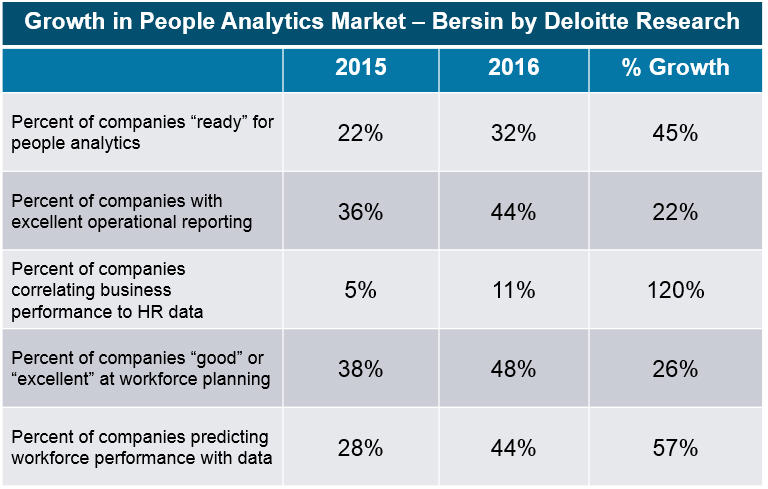
Came across this really interesting table about the explosive growth in HR Analytics.

data-driven-human-resources

(Source:  Deloitte Human Capital Trends 2015 and 2016, 3,300 and 7,100 respondents, respectively) 

The blogger who shared this, Mike Roberts, stated “With advancements in technology, as well as more awareness of the power of data, this is starting to change. Since 2014, we’ve seen an incredible transformation in the way talent acquisition professionals view data. And research from leading analyst firms has been backing that up.”

This is exactly why I have been doing HR & Recruitment Analytics training classess. There is a growing number of options out there, so make sure you get the bang for you buck you are hoping for.

IMG_6912

Connect with me if you want to know more about my approach to using data to drive decision-making in HR and Recruitment. I have recently published a book, Putting Your Data to Work, that can be your guidebook to how to get more people analytics in your HR and Recruitment processes.

HR & Recruitment Analytics – The recruitment and retention of top talent is the biggest challenge facing just about every organization. You really have to Think Through The Box to come up with winning solutions to effectively attract, retain and manage talent in the Philippines today. DMAIPH is a leading expert in empowering HR & Recruitment teams with analytics techniques to optimize their talent acquisition and management processes. Contact DMAIPH now at analytics@dmaiph.com or connect with me directly to learn how to get more analytics in your HR & Recruitment process so you can rise to the top in the ever quickening demand for top talent.
 

HR Recruitment Analytic Techniques

Every recruiting organization is looking for a way to better understand what’s working and what’s not working in their recruiting strategy. By using meaningful HR Recruitment Analytics techniques, your recruitment efforts can be greatly enhanced.

With real-time recruitment metrics & reporting, we can finally know what’s happening in our pipelines and what channels provide us with most qualified candidates.

New technologies like social networks, applicant tracking systems and business intelligence applications are fundamentally changing the entire recruitment process from sourcing to placement.

The pressure to deliver results has never been greater. HR and Recruitment managers are now more than ever required to demonstrate the return on investment their efforts are contributing to the bottom line.

Building analytics centric teams and using techniques taught in this training session will empower more data-driven decision making. This will result in both process efficiency and better return in investment in the recruitment process.

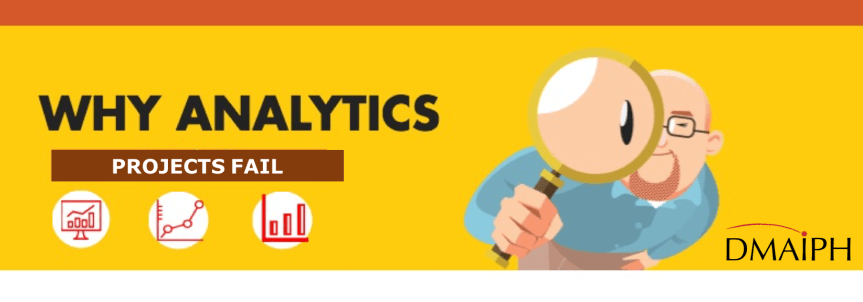
A few months ago, I facilitated a training class on HR Recruitment Analytic Techniques.

The Learning Session Objectives from the training were:

1. To learn analytics techniques that will allow quicker, deeper and more impactful analysis of HR Recruitment Big Data.
2. To be exposed to cutting edge technology being used in other companies to build HR Recruitment business dashboards and design more powerful reports.
3. To assess the current state of analytics in your HR Recruitment process and build a strategy to empower the greater use of analytics in your organization.

The Key Benefits from Attending this Learning Session were:

1.Develop analytic techniques that you can use to improve decision-making and improve the bottom line.
2. Explore analytics tools like business dashboards and data visualization to improve reporting.
3. Build a strategy to move your organization from current state to ideal state when it comes to the use of analytics.

Topics covered in the training included:

  • What is Recruitment Analytics?
  • Self-Assessment of your Recruitment Analytics
  • Analytic Techniques for Finding the Right Data at the Right Time
  • Applicant Tracking Systems & Social Media
  • Big Data and Recruiting Analytic Strategies
  • Business Intelligence, Data Visualization & Business Dashboards Technologies
  • Building Meaningful HR Recruitment Techniques

img_7502

Overall it was a great training class with lots of great discussion. Given that the recruitment and retention of top talent is the biggest challenge facing just about every organization. more conversations are needed.

DMAIPH is a leading expert in empowering HR & Recruitment teams with analytics techniques to optimize their talent acquisition and management processes. Contact DMAIPH now at analytics@dmaiph.com or connect with me directly to learn how to get more analytics in your HR & Recruitment process so you can rise to the top in the ever quickening demand for top talent.