Data-Driven Leaders

Came across this blog post recently

https://analyticsweek.com/content/the-10-commandments-for-data-driven-leaders/

I love the points made here. For the sake of brevity, data-driven leaders do these 10 things:

  1. Don’t try to do it all alone.
  2. Do what you say, actions need to follow words.
  3. Analytics leadership has to come from the top. The boss has to be a user of data.
  4. Data-Driven Leaders use analytics to make sure they have a feel for the culture of their business. They have the pulse of it at their fingertips.
  5. You need to surround yourself with people who speak data. It has to be ingrained in your leaders for your leadership to work.
  6. When your data brings business problems to light, then tackle them swiftly.
  7. Always look for new data geek recruits. Find apostles.
  8. Tell your story. If you are doing it right with analytics, then you need to let the world know about it. IMG_6912
  9. Constantly refresh your strategy with new data and new analysis. Dont make decisions on stale information.
  10. Always keep an eye on the long term. Balance your time and focus between tactical and strategic needs.

When you strive to do these things, you make those around you better. You will empower them to start doing the same thing and you will be well on your way to not just being a Data-Driven Leader, But running a Data-Driven Organization.

Analytics Leadership – DMAIPH specializes in arming the Data-Driven Leader with the tools and techniques they need to build and empower an analytics centric organization. Analytics leadership requires a mastery of not just analytics skill, but also of nurturing an analytics culture. We have guided thousands of Filipino professionals to become better analytics leaders. Contact DMAIPH now at analytics@dmaiph.com or connect with me directly to discuss a uniquely tailored strategy to ensure you are the top of your game when it comes to Analytics Leadership.

Key Analytics Tip – Build A Data Map

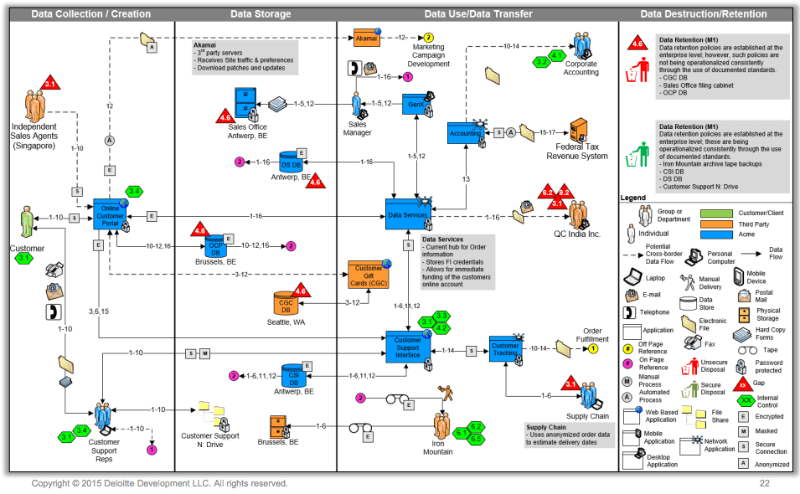
One of the keys to being successful with analytics is having a clear view of how all the data flows into and through your business.

Building a data map to show all the entry points, all the places where data is stored, who and how it is  accessed  and what filters might change your data is one of the things I can help you do.

This is step one towards data integration and is a great exercise for a half day in-house training/seminar for any business or organization that is struggling to get valued out of it’s big data.

Per Wikipedia… Data integration involves combining data residing in different sources and providing users with a unified view of these data. Data integration appears with increasing frequency as the volume and the need to share existing data explodes.

If you can imagine a map of your business in your mind you are half way there. The next step is to build a flow chart like the one below

datamap

If you have something like this then you are on ahead of the game.

If you don’t, let us set up some time to discuss how to get started.

Analytics Culture – The key to using analytics in a business is like a secret sauce. It is a unique combination of analytics talent, technology and technique that are brought together to enrich and empower an organization. A successful analytics culture is not easy to create, but DMAIPH can show you how. Contact DMAIPH now at analytics@dmaiph.com or connect with me directly so we can build a strategic plan to turn your company into analytics driven success story. 


In The Information Age Knowledge Truly is Power > Power Up on Feb 21

SO many companies are trying to figure out how to get more valued of their data, but most dont know where to start.

Let me show you how on February 21, 2017 @ Discovery  Suites in Ortigas (Pasig City, Metro Manila).

E mail for more information about our data analytics seminar, so you can learn to unlock that elusive knowledge buried within the data of your business. 15442108_1022250554587054_3902952314714042475_n

Analytics Culture – The key to using analytics in a business is like a secret sauce. It is a unique combination of analytics talent, technology and technique that are brought together to enrich and empower an organization. A successful analytics culture is not easy to create, but DMAIPH can show you how. Contact DMAIPH now at analytics@dmaiph.com or connect with me directly so we can build a strategic plan to turn your company into analytics driven success story.

The Four P’s of Marketing for Analytics Training

I get asked a lot about how I apply the 4 P’s of Marketing to my analytics training business.

The 4 P’s (Product, Place, Price, Promotion) of marketing are the foundation of our marketing efforts which have made DMAIPH and Dan Meyer, name brands in the analytics space within the Philippines.

img_0121

Our product is analytics training. That in itself is not easy to market.

Over the past few years it has gotten easier as analytics has entered the mainstream consciousness of Filipino businesses. Still, given the propensity for the subject matter to cause nose bleeds among non-data geeks it takes a lot of effort and foresight to be successful.

Product

Big Data Analytics, Business Analytics and HR/Recruitment Analytics are our primary types of training. Our training is for students, for analysts, for professionals using analytics and for decision-makers. Each type and audience taking distinct approaches to market.

Our product is unique in that no one else in the Philippines approaches analytics trainings like I do. Most analytics training is highly technical and narrowly focused on using a certain method or tool. My method is much more universal and focuses on unlocking the analyst inside the participant so they can select the appropriate methodology and/or tool needed for the analytics project at hand.

DMAIPH analytics training in the Philippines is what we do, and are very, very good at it.

Place

Our place is generally in Metro Manila, specifically Ortigas. Most of our trainings are conducted in hotel function rooms or business conference rooms. I have trained groups as small as 4 and as many as 80. However, the size and location though, our place is getting into the minds of the audience to educate, enable and empower the use of data in decision-making.

We have done trainings outside Metro Manila, anywhere in the Philippines is possible. I have also adapted my training for speaking engagements at conferences and workshops, as part of analytics expert panels and in college class rooms.

DMAIPH analytics training can happen just about anywhere, for any audience of any scope or level of knowledge. Our flexibility allows us to go to any place to train people to use analytics.

Price

Our price is now about 6,000 PHP a head per training. That is right in the middle of the market. There are more expensive ones that offer certain technical perks, but when it comes to a generalist approach to analytics we are the best bang for your buck.

We constantly look at competitors to make sure we set our price accordingly. The market dictates our price given the plethora of training options out there available to potential customers.

We also base venue, scope and size of each training on certain revenue targets to make sure we optimize our time and investment to assure handsome profits.

DMAIPH’s pricing is above all else fair. Our goal is to charge a competitive price that reflects the wide range of choices our customers have to get training on analytics topics.

Promotion

We promote on Facebook, via LinkedIn and using e-mail marketing. We also use the book and marketing visuals like tarpaulins and flyers at job fairs and business conferences.

We make great use of selling our brand, which is built on my experience of 20 years doing analytics and reputation of being one of the top minds in analytics in the Philippines.

DMAIPH stands for quality analytics training based on real world insights and cutting edge techniques delivered in an easy to understand way.

Adding key metrics to the 4 P’s of your organization’s marketing strategy is something DMAIPH can help you with.

Business Strategy with Analytics – Aligning a business strategy to drive an organization forward requires a robust analytics solution. Businesses who have good analytics tend to be much more profitable and efficient then ones that do not. DMAIPH has helped dozens of companies in both the U.S. and the Philippines with adding more data analysis in their business strategy. Contact DMAIPH now at analytics@dmaiph.com or connect with me directly to find out what we can do to help you align your business strategy with analytics. 

The Four P’s (Principles) of Marketing

I was recently asked how I apply the Four Principles of Marketing to my business.

The 4 P’s being Product, Place, Price and Promotion.

When I was with Wells Fargo, I spent a significant portion of my time working with marketing teams to help analyze market opportunity, assess market penetration, and to measure marketing campaign success.

I learned quite a bit about how to attach metrics to each of the 4 P’s to determine our strategy.

When it comes to product, the most common metric is sales. How many products have been sold and how much revenue that translate too is a cornerstone of any business plan.

It can be just important though to blend in analysis that is not reflected by internal data alone. Knowing how your product stacks up to the competition and what your customers are saying about your product are much more challenging data points to capture.

As for place, the general data point most business decision-makers start with is how much sales activity comes out of a location or geographic area.

IMG_6912

Place can also be reflected in marketing channel; in-store, direct, online, etc. Decision-makers tie this concept to market place and always look within that place to determine marketing plans.

I also like to add demographic data to place to help understand overall opportunity and trends in how the market place is evolving.

Price is much more than just what it costs to produce and sell a product. Marketing expense must also be counted in the amount ultimately charged for a product. Price usually contain several components that can be analyzed to make sure price covers expense and allows for profit.

Again, I look to competitor data to help assess if the price we are charging is optimal. As a rule, you don’t want to be too expensive or too cheap when your customers have a choice.

Finally, when looking at promotion, its more than just where you sell your product and what marketing materials your use. Using the right delivery channel and leveraging your company brand also factor into the equation and should have metrics attached to them.

So, as you can see, marketing is more than just counting products sold, finding a place to sell the product, setting a price and beginning a promotion. For a good marketing analytics strategy, that is just the beginning.

An effective marketing analytics approach should have at least 10-20 data points to more accurately capture the things you need to know like how big is your market, how competitive is your product, how deeply have you penetrated your market, and what delivery options are the most effective ways to promote your product.

The 4 P’s of Marketing can easily be built into a marketing analytics dashboard where you see your key performance indicators and make swift, decisive business decisions.

Since setting up my business about 5 years ago, I have helped dozens of businesses get a better handle on their 4 P’s using marketing analytics.

Let me show you how we can do the same for your business.

Business Strategy with Analytics – Aligning a business strategy to drive an organization forward requires a robust analytics solution. Businesses who have good analytics tend to be much more profitable and efficient then ones that do not. DMAIPH has helped dozens of companies in both the U.S. and the Philippines with adding more data analysis in their business strategy. Contact DMAIPH now at analytics@dmaiph.com or connect with me directly to find out what we can do to help you align your business strategy with analytics.

What % of Companies Can Both Afford Data Science Teams and Understand How to Use them?

Woke up this morning thinking about the future of analytics and data science in the Philippines.

I created this image to help visualize one of the biggest challenges. From my perspective the majority of companies out there don’t really understand data science and probably cant afford a traditional data science team.

who-can-afford-it

Best guess is ever 50% of companies operating in the Philippines aren’t yet at a place where data science is practical.

The smallest group are ones who both understand data science and know how to use it. These are the ones who are players in the data science consulting, training and outsourcing business.

Best guess its about 10% of the companies operating here and just about all of them are big corporations with lots of resources.

The next segment is the ones who do understand the value of data science, but don’t have the resources to compete for a the talent it takes to build a top data science team.

I’ll peg this at about 15%. But its  growing quickly. Awareness and adoption are actually ahead of the talent, as you see so many “data scientists” in name only out there filling open jobs right now.

That leaves the 25% of companies operating in the Philippines who have money and resources but just don’t know how to get started using data science and building a team. This is the target market of companies like mine.

DMAIPH has the capability to educate your managers and decision-makers on how to use data science to add value to the business. We can also train your team in the basics of data science to allow you to cultivate a data driven culture and promote from within to build a data science team. And we can also take some of the load off your shoulders in the terms doing some of the data science for you.

Analytics Consulting – DMAIPH specializes in a variety of analytics consulting solutions designed to empower analysts, managers and leaders with the tools needed for more data-driven decision-making. We have helped dozens of companies get more analytics in their business. Contact DMAIPH now at analytics@dmaiph.com or connect with me directly so we can tailor an analytics solution made just for your unique requirements.

Adding Three More Metrics to the Next 5-Year Plan

So, as year five winds down and I have reflected on the key metrics I established back in 2012, it seems the right time to add a few more data points to the mix.

For me, having metrics that you can measure against progress and use to make educated course corrections is the most important part of any business plan.

My first five-year plan was all about establishing myself as one of the top Analytics experts in the Philippines. Based on the number of Filipinos I have trained, the number of Filipino colleges and universities I have worked with and having established a profitable business, it is now time to think about how to expand my horizons.

Going forward the goal is not to just have one of the top analytics brands in the Philippines, but to expand that brand name outward. We will expand in terms of both geography and in terms of content offerings.

I love new things, so the sky is the limit, but I have these 3 things in mind.

The first new metric I will add will be number of trainings with partner speakers. I want to take analytics out of just being for analyst and find ways to use my gifts to empower and educate non analytics people as well.

To do this, we will partner with other innovative and progressive minded trainers and speakers here in the Philippines.

The second metric will be based on geography. I have given talks and trainings mostly in Metro Manila. On the average I have visited about one province a year to deliver a presentation or conduct a training.

Over the next 5 years we will plan activities outside not only Manila, but outside the Philippines as well. I already have one webinar lined up for a U.S. audience in February and will be looking for more places to talk about analytics. Sharing my passion with the world!

The third metric will involve revenue. I can’t imagine any business being successful and not having good analytics when it comes to increasing revenue and growing profits.

Originally the primary financial metric I cared about was net profit. Could I build a business based on analytics that could generate enough money for me to comfortably live on?

Now that we can positively answer that question with a resounding yes, the next question is can we sustain it?

When I started, I had one source of income, analytics training.

As of now we have revenue coming in from 4 sources of income; analytics training, management consulting, outsourcing and book sales.

I need to add at least 3 more streams of income over the next five years to reach my personal goal of having 7 streams of income.

The most likely source will be investing in side business that can generate income without my day to day involvement.

So, I have just doubled the key metrics I am tracking to measure the success of my efforts.

Over the next few years I will monitor the results to see if I need to make more course corrections to get me to the end goal of successfully having executed my second 5-year plan.

Stay tuned! It’s going to be even more of an adventure then the last five years!

Business Strategy with Analytics – Aligning a business strategy to drive an organization forward requires a robust analytics solution. Businesses who have good analytics tend to be much more profitable and efficient then ones that do not. DMAIPH has helped dozens of companies in both the U.S. and the Philippines with adding more data analysis in their business strategy. Contact DMAIPH now at analytics@dmaiph.com or connect with me directly to find out what we can do to help you align your business strategy with analytics.

Five Year Plans – What Analytics Do You Use?

As the 5th year of my original business plan comes to a close, it seems like a good time to reflect on how things have played out.

There are plenty of data points to look at to determine how sound my original plan was and if the course changes made along the way proved to be the right ones to take.

The single most important metrics in my 2012 business plan where # of Filipinos trained to be analysts, # of schools I have worked with and $ of revenue I have generated.

Looking first at the revenue, because if you cant make a profit after 5 years then you are doing something seriously wrong. I started making a profit I year 3, which is pretty typical of business startups.

I made my most money in year 4, but had a more diversified revenue stream in year 5. Revenues have been closer to my actual target as year 4 was one of almost too much growth.

Originally just making money from public trainings, over the years I have added paid speaking engagements, consulting, outsourcing and most recently publishing a book.

SO based on $, I have achieved my original plans and am able to comfortably move on to the financial goals of my next 5 year plan.

When it comes to working with schools, who represent the future of analytics in the Philippines, I have consistently given talks, been part of activities and mentored interns/OJT.

When I check off the list of schools I have worked with in the past 5 years I can definitely say I have met this metric.

The third data point I look at is number of Filipinos trained.

When talking about public trainings we are about 1000 persons over the past 5 years. When we add the number of attendees of public speaking engagements, the number gets closer to 5,000. And that’s paid events.

If I add the number of students and free events we are getting close to 10,000.

SO, I have fall surpassed my expectations from 5 years ago on that metric.

When assessing the success of a business plan you need to measure data over time to make sure you are making progress.

You also need to be able to make course corrections.

Before the training business started taking off, I did some consulting. To generate consistent revenue, I got into outsourcing.

Both course changes allowed me to continue pursuing my original goal of training Filipinos to use more data in their decision making and to empower analytics centric cultures.

So what are the key metric of your business plan? How do you measure them and make sure you are making progress. Do you have a threshold that you set to make course changes if you are not meeting that threshold?

To effectively execute a business plan, you need good analytics in place.

Dr. Data_Analytics in the Philippines

Analytics in the Philippines – The Philippines is at the center of the action when it comes to solutions to the global need for analytics. Blessed with a solid foundation of young, educated and English speaking workforce, companies around the world are look for Filipino analytics talent to fill analytics positions. DMAIPH was set up to facilitate these solutions and bring the talent and the business together. Contact DMAIPH now at analytics@dmaiph.com or connect with me directly so we can help you take advantage of this unique global opportunity.


Whatever Happened to Free Wifi for Everyone? – Analytics @ TriNoma

As I sit here enjoying a Big Mac, I have been thinking about WiFi access here in the Philippines.

15220172_10154796376872425_148074038239599249_n.jpg

Everyone knows its bad overall. Connectivity is a big challenge for the average Filipino. Although for me it seems better then it used to be.

I enjoy the benefit of a Globe postpaid plan now, but for a long time I used prepaid load like most Filipinos do. Its a definite frustration in life.

In the past few years malls across the Philippines, have been offering free WiFi but its a crap shoot at best, often down more the it seems to work. To balance load SM malls offer a free hour of WiFi and then you are cut off.

This all has me thinking about why it has been so hard to provide better wifi, at least in the malls. It would encourage more mobile payments and help the slow, slow migration away from cash.

It could also make the lines go faster.

Regardless though, it wouldn’t take a lot of effort to analyze the user data, optimize bandwidth and offer a better wifi experience, especially in the smaller lifestyle malls.

It could also be a boon to retailers who offer online promotions to cut back on the number of staff passing out promo flyers as well as the cost of the marketing materials itself.

As time passes, I fully expect that to enter mainstream but as of now WiFi in the malls here is not anywhere close to where it has the potential to be.

A simple cost/benefit exercise using available data  coupled with some usage and capacity analytics would most likely expedite that adoption.

At least thats is where I would start if I was consulting with a mall about how to both improve customer satisfaction and drive more retail profits to electronic models.

Thanks Bam for the topic idea.

Analytics in the Philippines – The Philippines is at the center of the action when it comes to solutions to the global need for analytics. Blessed with a solid foundation of young, educated and English speaking workforce, companies around the world are look for Filipino analytics talent to fill analytics positions. DMAIPH was set up to facilitate these solutions and bring the talent and the business together. Contact DMAIPH now at analytics@dmaiph.com or connect with me directly so we can help you take advantage of this unique global opportunity.

Where’s the Analytics? The Analytics Challenges of Malls in Metro Manila

I spend a lot of time in malls when I’m in Metro Manila.

Business meetings at coffee shops.

Staff meetings at restaurants.

Getting exercise why walking to hit my FitBit goal.

I see a lot of movies.

And I am not alone.

Malls are where everyone goes. To beat the heat, to meet up with friends, to conduct business, and of course to shop and eat.

Given that I spend so much time in malls, I think a lot about the analytics that can take place behind the scenes.

Or in many cases, the apparent lack of analytics.

Now don’t get me wrong. I love the Philippines.

The heart and spirit of the Filipino people is the primary reason I set up a business here.

But I do sometimes wonder, how much better things could be in my adopted home if there was more widespread use of analytics in decision-making.

The malls are full of great examples of decisions that are pretty much done without much data analysis.

At least that is how it appears to me.

So in this series of blog posts I will discuss several topics that come to my mind when being in a mall in Metro Manila and how I would go about using analytics to investigate my observations.

Analytics in the Philippines – The Philippines is at the center of the action when it comes to solutions to the global need for analytics. Blessed with a solid foundation of young, educated and English speaking workforce, companies around the world are look for Filipino analytics talent to fill analytics positions. DMAIPH was set up to facilitate these solutions and bring the talent and the business together. Contact DMAIPH now at analytics@dmaiph.com or connect with me directly so we can help you take advantage of this unique global opportunity.